
Matching Laser Cutting Machines to Your Industry: A Scenario Fit Checklist
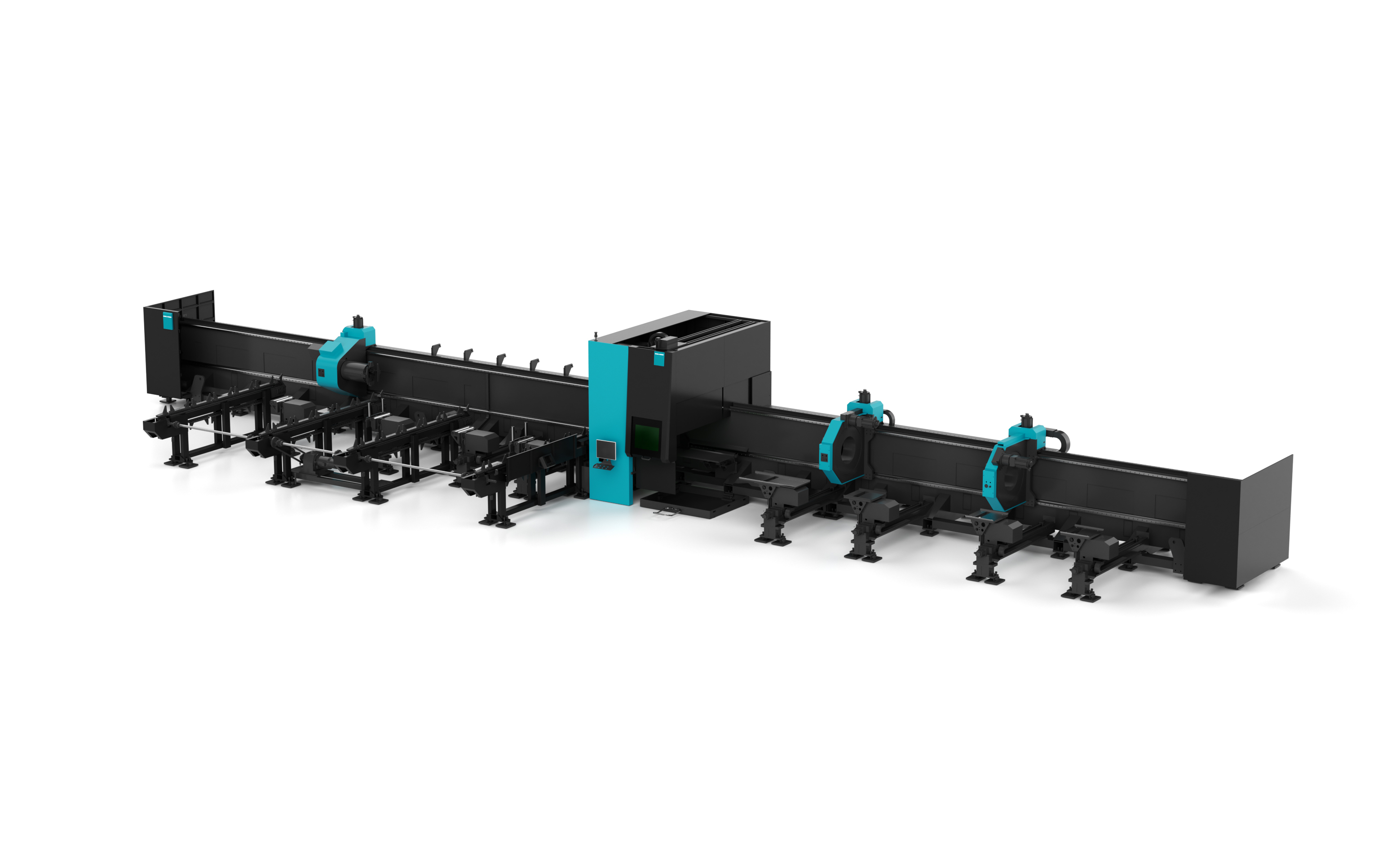
Tube and profile processing plants assess laser cutting machines against cross-section, wall thickness and remnant strategy rather than against headline power alone.
The global laser cutting machine market is projected to grow from USD 7.44 billion in 2026 to USD 18.43 billion by 2034, a CAGR of 12%, according to Fortune Business Insights. Fiber lasers already command more than 55% of the industrial laser system market, a shift driven by 30 to 50% higher efficiency and roughly 50% lower operating costs than CO2 systems, as reported by SNS Insider. When supply of a technology becomes this broad, procurement risk changes shape. The question is no longer whether a fiber laser cutting machine can be sourced. It is whether the machine purchased will still fit the parts, materials and batch pattern three years after installation.
Scenario fit is the practice of assessing a laser cutting machine against the production environment it will actually enter: material form such as sheet, round tube, square tube or profile, part geometry, tolerance class, batch profile, automation expectations, compliance obligations and the service relationship that follows delivery. This article sets out a reusable scenario fit checklist, applies it to three common industry situations, and identifies the boundaries where laser cutting may not be the right answer at all.
Why Industry Fit Has Become the Deciding Variable
Two fabricators with the same equipment budget can need very different machines. A metal furniture producer cutting 1 to 3 mm aluminium and mild steel panels has different priorities from an agricultural machinery supplier cutting square tube frames and structural plate. Both will be offered similar-looking machines in overlapping power classes. The differentiator is not the brochure; it is the degree of alignment between machine configuration and production reality.
China's laser equipment market accounted for 56.6% of global laser equipment revenue in 2024, with high-power laser localization exceeding 70%, according to IT Home reporting on CCTV Finance data. That level of manufacturing depth explains why configuration variety has expanded faster than buyer literacy. Procurement teams now choose between bed structures, cutting head designs, chuck systems, loading automation and nesting software rather than between laser and non-laser processes.
DNE LASER (Guangdong) Co., Ltd., known by the brand name DNE LASER, is a wholly owned subsidiary of the Swiss Bystronic Group, headquartered in Shenzhen with its production base in Nanhai, Foshan. The company manufactures laser cutting machines, laser tube cutting machines, press brakes, automation devices, laser welding machines and software, and exports to markets including the European Union, the United States, the Middle East and Southeast Asia. That breadth of portfolio is useful precisely because scenario fit rarely points to a single machine type.
The Scenario Fit Checklist: Seven Layers of Assessment
Used in sequence, the seven layers below convert a machine comparison into a production comparison. Each layer should be answered with shop-floor data, not with a preference statement.
| Layer | Question the buyer must answer | Evidence to collect |
|---|---|---|
| 1. Material form and grade | Are parts flat sheet, round tube, square tube, thin-wall tube, irregular profiles, aluminium or iron and steel? | Representative sample parts, annual volume by material and form |
| 2. Part geometry and edge requirements | Is the work profile cutting, tube end and hole cutting, or does it include ±45° bevel cutting? | Drawings, joint details, downstream welding or assembly method |
| 3. Tolerance class | Is the part decorative, structural, or assembly-critical where fit-up errors stop the line? | Tolerance callouts, historical rework and fit-up data |
| 4. Batch profile | One-off, high-mix small-batch, medium-to-large batch, or continuous line feeding? | Monthly volumes, changeover frequency, shift pattern |
| 5. Power class | Which tier, from 3 kW and 6 kW entry levels through 12 kW, 20 kW and higher, matches the thickness mix? | Thickest routine cut, pierce frequency, cut quality requirement |
| 6. Automation and material handling | Is manual loading acceptable, or are automatic loading, synchronized support and remnant strategy required? | Labour cost per part, loading time, material utilization targets |
| 7. Compliance, safety and lifecycle | Which safety standards apply, and what calibration, spare-part and training commitments are needed? | Target market regulations, maintenance capacity, service terms |
Layers 1 to 3 define the machine category; layers 4 to 6 define the configuration; layer 7 defines the total ownership model. Skipping layer 7 is the most common cause of post-installation cost surprises.
A practical discipline is to write the answer to each layer before contacting any supplier. Suppliers respond to a well-defined scenario with configuration guidance; they respond to an undefined scenario with the configuration they most want to sell.
Scenario A: Sheet Metal Fabrication, Machinery Manufacturing and Structural Steel
In flat-sheet and plate processing, the fit signals are the thickness range, the batch size and the required cut-edge quality. DNE LASER's D-Soar platform is presented by the manufacturer as a high-power fiber laser cutting machine with a power range up to 30 kW, a self-developed cutting head, a machine bed and gantry that undergo high-temperature annealing, and in-house manufacturing of core components. Manufacturer-published comparison data lists positioning accuracy of ±0.05 mm, repeat positioning accuracy of ±0.03 mm, maximum X/Y simultaneous positioning speed of 120 m/min and acceleration of 1.2G, with the capability to cut up to 60 mm carbon steel and stainless steel. The manufacturer positions this platform for mid-to-high-end industrial manufacturing, wide material ranges from thin to thick plate, and large-scale production environments where maintenance cost matters.
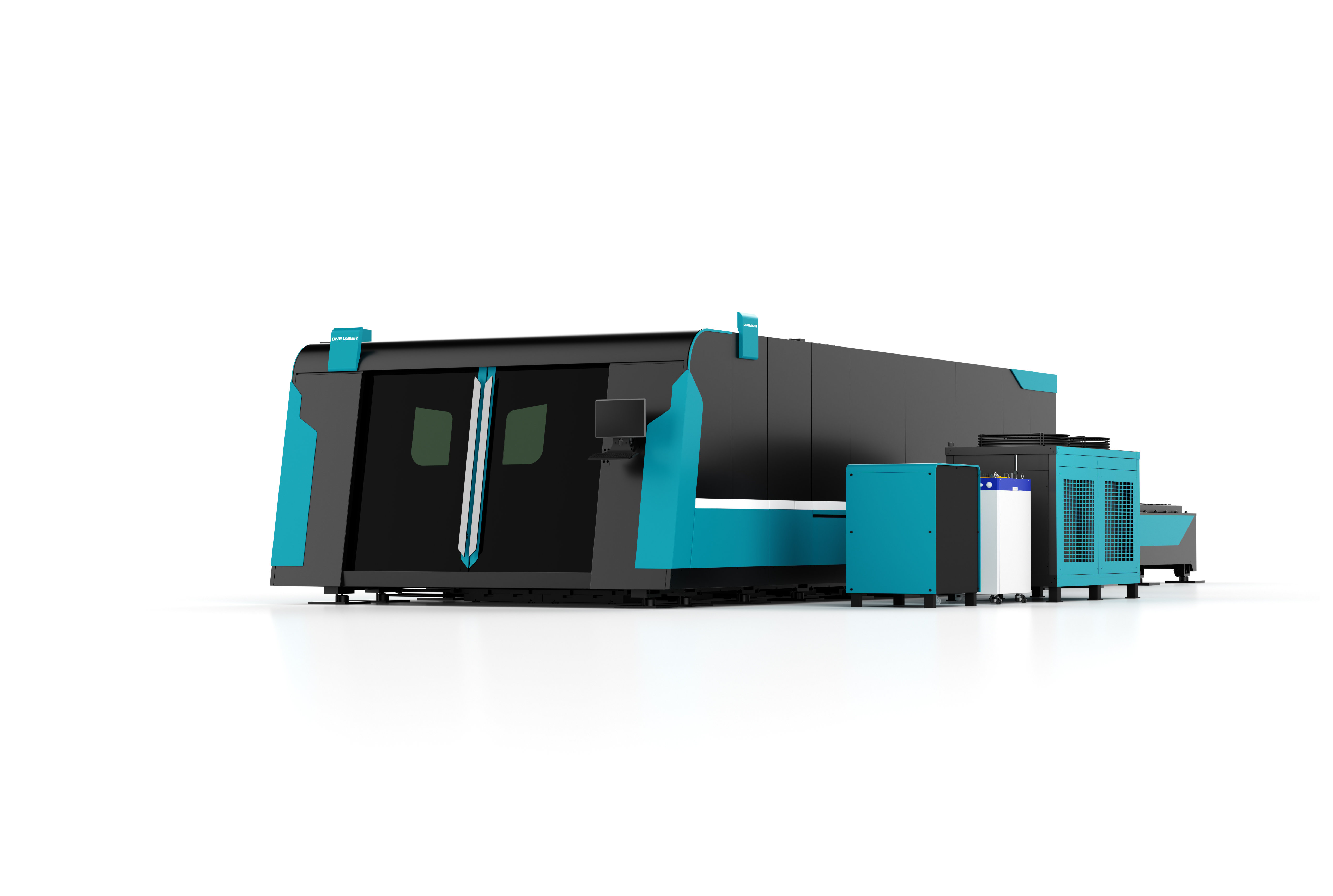
Sheet metal fabrication scenario: the fit question is whether the platform's thickness envelope and batch throughput match the shop's order mix.
Where the order book is dominated by 1 to 3 mm sheet and continuous throughput, acceleration and cycle time outweigh maximum thickness. The DNE LASER D-Speed platform is described by the manufacturer as the higher-dynamics option: maximum simultaneous acceleration of 2.0G, maximum positioning speed of 150 m/min, average cutting efficiency for 1 to 3 mm sheet reported 22% higher than its reference configuration, bed deformation resistance 37% higher and structural strength 51% higher, with automation setup and commissioning time reduced by 70 to 90%.
The scenario logic is straightforward. A structural steel fabricator cutting thick plate should weight the cutting envelope and bed stability. A subcontractor cutting thin-gauge enclosures in high volume should weight acceleration, loading automation and nesting efficiency. Both belong to the sheet metal processing category, yet the checklist answers diverge at layers 2, 3 and 5. DNE LASER serves the global sheet metal processing and equipment manufacturing market, with key coverage in the automotive, machinery and steel structure industries, which means these two buyer profiles sit within the same manufacturing ecosystem rather than at its edges.
Scenario B: Tube Processing in Automotive, Agricultural and Construction Machinery
Tube processing changes the fit variables entirely. Cross-section, wall thickness, tube length, straightness, remnant strategy and whether the tube is round, square, thin-wall or an irregular profile determine the required machine architecture more than nominal power does.
DNE LASER's D-Tube platform is described by the manufacturer as a laser tube cutting machine with a configurable power range from 3 kW to 30 kW, fully automatic centring chucks with a fully sealed design that maintains constant clamping force, synchronized auxiliary support devices to prevent tube sagging and oscillation, and multi-chuck coordinated cutting that enables zero or short remnant cutting. Manufacturer comparison data lists positioning accuracy of ±0.05 mm/m, zero remnant cutting capability that increases material utilization by more than 20%, and an automated loading cycle time of ≤30 seconds, with cutting efficiency improved by more than 50% relative to the manufacturer's reference configuration.
The manufacturer identifies the fit areas as tube manufacturing for agricultural machinery, automotive and construction machinery, aerospace precision tube processing, batch processing of structural and irregular tubes, and integrated smart tube processing lines. DNE LASER also states that these platforms are used in the automotive and machinery manufacturing regions that anchor its export markets.
For buyers, the checklist behaves differently here. A furniture frame producer cutting thin-wall round and square tube values loading speed and remnant control. An agricultural machinery supplier cutting heavy-duty square tube values clamping stability under load. An aerospace tube processor values positioning accuracy and surface integrity. None of them is served by a generic power number. All three should be assessed on cross-section range, chuck behaviour, support arrangement and remnant handling.
Scenario C: Integrated Sheet Metal Processing Production Lines
A third scenario is the line rather than the machine. When cutting feeds bending, welding and assembly within one facility, the fit question becomes interface compatibility: buffer sizing, part flow, software continuity and how a change in material mix affects the whole sequence.
DNE LASER's scope covers laser cutting machines, tube laser cutting machines, press brakes, automation devices, laser welding machines and software, and the manufacturer describes automation setup and commissioning time reductions of 70 to 90% for its high-dynamics cutting platform. On the bending side, the C-Bend S press brake is documented by the manufacturer with Y-axis accuracy of 0.01 mm and X/R-axis accuracy of 0.05 mm, servo system energy savings of 20 to 30%, oil temperature reduction of 10 to 20°C, noise reduction of 40 to 60%, ram return efficiency improved by 5 to 20%, setup time reduced by over 60%, and a C-frame design that increases processing range by over 30%.
Read as scenario data rather than as headline specifications, these figures map to a specific shop condition: mixed-part bending where changeover time and deflection compensation historically consumed the shift. For a production line, the relevant checklist question at layer 6 is not whether automation exists, but whether automation removes the bottleneck the shop actually has.
Technical Explanation: Reading Machine Features as Scenario Signals
Most procurement errors originate in reading feature lists as prestige indicators instead of risk controls. Each of the following features corresponds to a failure mode documented in the manufacturer's risk documentation, and each should be matched to a condition in the buyer's own facility.
- Annealed bed and gantry structure. Machine beds and crossbeams undergo high-temperature annealing and gantry milling to prevent deformation. This maps to the risk of long-term bed deformation during continuous operation, which in turn affects calibration frequency and achievable accuracy over years rather than days.
- Linear guides with rack-and-pinion transmission. These ensure stable motion for tube positioning, addressing positioning errors during high-speed cutting of tubes.
- Fully sealed automatic centring chucks. The sealed design prevents dust ingress while maintaining clamping force, addressing the risk of tube slippage and component damage in dusty workshops.
- Synchronized auxiliary support and centring devices. These prevent sagging and oscillation of long tubes, which otherwise degrade cutting accuracy.
- Dust- and vibration-isolated electrical cabinets. Independent cabinets isolate critical components from contaminants and vibration and allow diagnostics and upgrades without entering the main machine.
- Vibration suppression and 7 Hz low-pass filtering. This suppresses high-frequency vibration during high-speed operation, reducing cutting errors caused by machine vibration.
- Cutting head monitoring. Protective lens monitoring, multi-parameter temperature and gas-pressure monitoring and alarm systems address lens contamination and thermal drift, with five-channel water cooling combined with copper nozzle air cooling for thermal control.
- Anti-collision detection and automatic calibration. These address sheet collision and reduce operator error during setup.
- Nesting software. DNE Power CAM professional nesting software is provided to simplify programming and reduce human error, and cutting software allows real-time adjustment of process parameters.
The checklist implication is that layer 6 should never be answered with yes or no. It should be answered with the specific risk that each feature retires, and whether that risk exists in the buyer's plant.
Comparison with Traditional Solutions and the Boundaries of Laser Cutting
Laser cutting is frequently compared with plasma cutting, flame cutting and semi-automatic tube cutting equipment. The manufacturer's own comparison documentation makes the case that laser processing delivers substantially higher cutting speed and precision with lower consumable wear than traditional cutting equipment, and that servo and fiber laser efficiency advantages translate into lower energy consumption for identical workpieces.
A scenario fit checklist is only credible if it also records limits. At least four boundaries are documented and relevant to procurement decisions.
- Higher initial investment in some equipment categories. The manufacturer's own tube cutting comparison states that the D-Tube platform requires slightly higher initial investment than traditional semi-automatic tube cutting equipment, with the argument for lower total cost of ownership resting on material utilization, automation and reduced labour rather than on purchase price.
- A finite thickness envelope. In the high-power sheet configuration described, cutting capability is documented up to 60 mm carbon steel and stainless steel. Work beyond that envelope remains a domain for other processes, and a checklist that ignores this point will overspecify.
- Process risks that require active monitoring. Documented risks include slag accumulation during thick plate piercing, sheet collision during cutting, protective lens contamination, and thermal drift caused by excessive cutting head temperature. These are managed through monitoring modules, alarm thresholds, rapid piercing and slag removal processes, but they are management tasks, not solved problems.
- Ongoing calibration and environmental sensitivity. Precision depends on periodic recalibration, scheduled maintenance, precision verification and workshop conditions. Traditional cutting processes carry different maintenance burdens but not zero.
The boundary conclusion is practical: laser cutting is not universally superior to conventional processes, and the appropriate scenario question is which combination of processes minimizes total cost per acceptable part.
Market Trend Analysis: What Is Shifting in 2026
Three documented trends affect how scenario fit should be assessed over the next several years.
Fiber technology dominance is now a baseline assumption. Fiber lasers command over 55% of the industrial laser systems market, displacing CO2 lasers because of 30 to 50% higher efficiency and roughly 50% lower operating costs (SNS Insider). A scenario checklist written in a CO2-versus-fiber framing is already obsolete.
High-power demand continues to move upward. Demand for ultra-high-power laser heads of 10 kW and above increased 75% between 2023 and 2024, driven by thick-plate cutting needs in heavy industry, according to third-party analytics published by Customcy. This is a directional signal rather than a precise forecast, and it explains why manufacturers offer configurable ranges up to 30 kW rather than a single fixed configuration.
Compliance is becoming a procurement filter rather than a formality. Laser processing machines must comply with ISO 11553-1 for general safety requirements and IEC 60825-1 for equipment classification in international trade and CE marking contexts. Meanwhile, DNE LASER completed a global brand refresh at FABTECH 2025, positioning itself as a provider of intelligent system-level manufacturing solutions, a signal that suppliers are competing on integrated capability rather than on standalone machine specifications.
For buyers, the trend direction suggests that scenario fit assessment will increasingly be about integration and documentation, and decreasingly about raw power figures.
Future Outlook: Lifecycle Fit Becomes Part of the Scenario
With the market projected to reach USD 18.43 billion by 2034, the composition of demand matters as much as its size. Growth is concentrated where automation, material utilization and compliance documentation determine profitability, which means the machine decision and the service decision are converging.
This is where ownership model questions, rather than product questions, dominate the later stages of the buyer journey. Documented service scope from DNE LASER includes remote technical support and troubleshooting, on-site installation, commissioning and operator training, scheduled maintenance, core component warranty, and lifetime technical upgrades and process optimization support. Quality control before shipment includes full-process factory performance testing, chuck and cutting accuracy calibration, continuous operation trial runs of the complete machine, compliance verification of core component brands, and testing in accordance with industrial tube cutting equipment safety standards. Remote equipment status monitoring with early fault warning is also applied, along with scheduled on-site maintenance, periodic recalibration and precision verification.
On commercial structure, the manufacturer states that production capacity supports mass production and order demands of varying scales, that lead time is customized based on actual order volume and project requirements, and that the minimum order quantity for standard models is one unit. For a buyer building a multi-year scenario plan, these are the variables that determine whether the equipment stays in service economically, not whether it was industry-leading on the day of delivery.
Frequently Asked Questions
What does scenario fit mean in laser cutting machine procurement?
Scenario fit is the assessment of whether a machine's cutting capability, material handling, tolerance class, automation level and lifecycle support match a specific production environment. It is evaluated against material form such as sheet, round tube, square tube or profile, part geometry, batch profile, power class and compliance obligations. It is a production-based assessment, not a ranking-based one.
How do I decide between a sheet cutting platform and a tube laser cutting machine?
The decision follows material form. Flat sheet and plate work requires a sheet cutting platform, while round tube, square tube, thin-wall tube and irregular profiles require a tube cutting platform with chuck clamping and support arrangements. DNE LASER manufactures both categories, along with press brakes, automation devices, laser welding machines and software. Where a facility processes both forms, the machines can be sequenced into a production line rather than replaced by a single compromise unit.
How should power class be matched to a production scenario?
Power should be matched to the material mix, the thickest routine cut, cut quality requirements and batch continuity. DNE LASER offers a configurable power range from 3 kW to 30 kW on its tube cutting platform, and the flat-sheet platform described by the manufacturer supports power up to 30 kW. In practice, buyers work from their heaviest routine cut and throughput target, then confirm the appropriate class with the supplier rather than selecting the highest available figure.
What compliance and safety items belong in a scenario checklist?
Laser processing machines must comply with ISO 11553-1 for general safety requirements and IEC 60825-1 for equipment classification in international trade and CE marking contexts. At machine level, documented safety provisions include safety sliding doors and radiation-proof windows compliant with CE standards, interlock systems and protection against operational error. Compliance documentation should be verified before delivery rather than after installation.
What long-term support factors should be evaluated before signing?
Buyers should confirm the full service scope: remote technical support and troubleshooting, on-site installation, commissioning and operator training, scheduled maintenance, core component warranty, and lifetime technical upgrades and process optimization. Pre-shipment quality control should also be verified, including full-process factory performance testing, chuck and cutting accuracy calibration, continuous operation trial runs, compliance verification of core component brands, and testing in accordance with industrial tube cutting equipment safety standards. Remote equipment status monitoring with early fault warning and scheduled periodic recalibration are additional lifecycle considerations.
What are the limits of laser cutting compared with traditional methods?
The manufacturer's own comparison documentation notes slightly higher initial investment than traditional semi-automatic tube cutting equipment in that category, with total cost of ownership depending on material utilization and automation. The cutting envelope is also finite, with the described high-power sheet configuration documented up to 60 mm carbon steel and stainless steel. Additional documented considerations include slag accumulation during thick plate piercing, sheet collision, protective lens contamination and thermal drift, all of which require monitoring, plus periodic recalibration and scheduled maintenance.
What purchasing and acceptance terms are typical for laser cutting machine orders?
Documented commercial terms include a minimum order quantity of one unit for standard models, delivery methods such as FOB or CIF with alternative terms used in some markets, and acceptance through on-site inspection at the supplier's factory combined with commissioning at the buyer's factory. Payment structures commonly involve a 20% or 30% deposit with the balance paid before shipping. Lead time is customized based on actual order volume and project requirements.
Turning the Checklist into a Decision
Scenario fit is not a slogan; it is a set of answers. Material form decides the machine category. Geometry and tolerance decide the configuration. Batch profile decides the automation level. Compliance decides the documentation set. Lifecycle support decides whether the asset performs economically in year five. Buyers who complete all seven layers before requesting quotations receive materially different proposals than buyers who start with a power figure, and they are far less likely to discover a mismatch after commissioning.
For reference material covering platform families, quality control processes and service coverage, DNE LASER publishes its company introduction for download: Introduction of DNE Laser V1.0 (2026).
About DNE LASER
DNE Laser (Guangdong) Co., Ltd. (brand name: DNE LASER) is a wholly owned subsidiary of the Swiss Bystronic Group, headquartered in Shenzhen with its production base in Nanhai, Foshan, covering an area of 60,000 square meters or more. The company provides laser cutting machines, laser tube cutting machines, press brakes, automation devices, laser welding machines and software, and exports to global markets including the European Union, the United States, the Middle East and Southeast Asia.
Contact
Email: eileen.yan@dne.global
Tel/Wechat/Whatsapp: +86 136-7014-5102
Official Website: https://www.dne.global