
Matching Professional Gasoline Chainsaw Models to Logging Terrain and Tree Size
Professional chainsaw selection is usually presented as a question of maximum engine power. Working conditions point to a different starting point. The variables that decide whether a crew finishes a stand on schedule are trunk diameter and species hardness, ground slope and access, the length of the working cycle, and how much saw an operator can carry and control for hours at a time. Matching a model to those variables, rather than to the largest displacement on the shelf, is what separates a productive saw from a stored one.
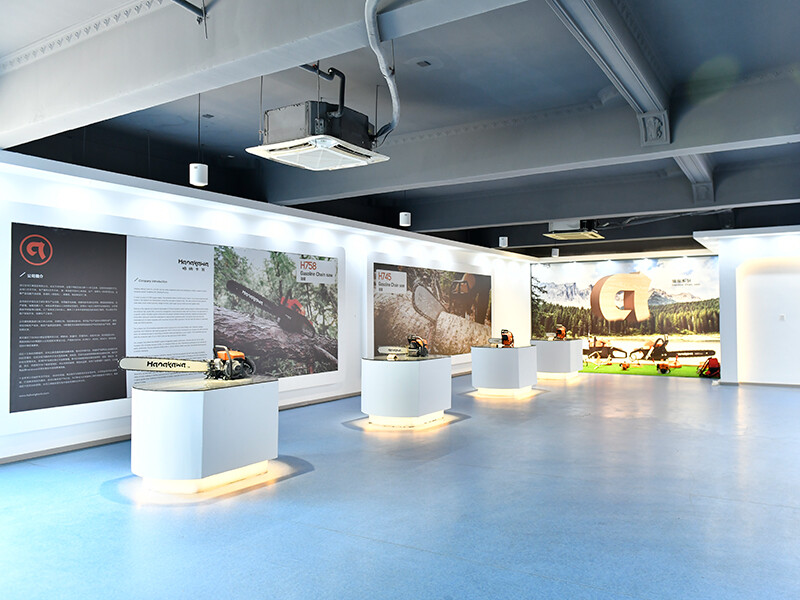
This reference maps six models from the Hanakawa professional gasoline chainsaw range to the terrain and tree sizes they are built for, and explains which construction features in each class support the working condition. Hanakawa is the garden power tool brand of Zhejiang Hehong Tools Co., Ltd., a manufacturer established in 2006 in Yongkang, Jinhua, Zhejiang Province, China, producing gasoline chainsaws, brush cutters, hedge trimmers and compatible spare parts for its own brand and for OEM/ODM programs.
The Selection Problem: Displacement Alone Does Not Predict Productivity
Buyers evaluating professional gasoline chainsaws commonly compare displacement, price and, where published, power output. Each figure is useful, but none of them describes the condition a saw will actually work in. Three mismatches appear repeatedly in forestry contracting.
Over-specification. A large-displacement, heavy unit taken into thinning work or orchard renovation increases operator fatigue and slows limbing, where the saw is carried far more than it is cutting.
Under-specification. A light saw pushed into hardwood felling or mill-yard bucking runs at continuous full load, the condition most likely to expose cooling, drive-train and oil-supply limits.
Power assumptions. Within one manufacturer's range, higher displacement does not automatically mean higher rated power output. The model specified for old-growth timber in this range is rated 5.2 kW at 91.6cc, while the largest displacement unit is rated 4.8 kW at 105.7cc. The sound comparison is duty-matched, not displacement-ranked.
The opportunity for buyers is that professional ranges are now divided into capability bands, so selection can be resolved with a small number of questions: what is the typical trunk diameter, how hard is the species, what does the terrain allow, and how long does the operator hold the saw each day?
Scenario Fit Across the Hanakawa Professional Gasoline Chainsaw Range
| Model | Displacement | Rated power | Net weight | Max engine speed | Working conditions the model is specified for |
|---|---|---|---|---|---|
| H959 | 59cc | 3.4 kW | 5.7 kg | 11,500 rpm | Commercial forestry logging, municipal greening, construction clearing, road obstacle removal |
| H971 | 70.7cc | 4.0 kW | 6.1 kg | 12,000 rpm | Large-scale commercial logging, hardwood processing, engineering demolition, forest thinning |
| H972E | 72cc | 3.6 kW | 6.6 kg | 11,500 rpm | Commercial intensive forestry logging, hardwood felling, mountain forest operation, construction site clearing, post-disaster emergency rescue, municipal road obstacle removal, large orchard trunk pruning |
| H872 | 72cc | 3.6 kW | 6.3 kg | 11,500 rpm | Traditional small forestry, farm hardwood cutting, orchard trunk pruning, batch firewood processing |
| H992 | 91.6cc | 5.2 kW | 7.7 kg | 13,500 rpm | Large timber felling, old-growth forest logging, lumber mill work, large disaster rescue, land reclamation |
| H9105 | 105.7cc | 4.8 kW | 11 kg | 11,500 rpm | Industrial heavy logging, giant tree cutting, log yard primary processing, remote mountain forest exploitation |
All six models use a magnesium alloy crankcase, an aluminium alloy cylinder and a glass-reinforced PA nylon outer housing. The differences that decide selection are displacement, weight and the duty cycle each model is specified for.
59cc class — H959: roadside, municipal and mid-diameter commercial work
The H959 carries a 59cc engine rated 3.4 kW at 5.7 kg. That weight-to-output position makes it the class most often specified where a saw must move between tasks during a single shift: commercial forestry logging of medium-diameter stems, municipal greening, construction clearing and road obstacle removal. In these situations the saw is carried, started and repositioned far more often than it is held in a long felling cut, so the 11,500 rpm maximum engine speed and the magnesium crankcase heat dissipation suit intermittent high-load work rather than continuous overload. Operators moving from a 59cc saw into hardwood felling generally notice the limit first in cut speed on dense species, not in engine reliability.
70–72cc class — H971, H972E and H872: the widest working band
This band covers the largest share of professional daily work, and it is also where the "same displacement, different job" logic is clearest. H971, H972E and H872 all sit near 72cc, but they are specified for different conditions.
The H971 is rated 4.0 kW at 6.1 kg with a 12,000 rpm maximum engine speed — the highest rated output and the lowest net weight in the 70–72cc group. It is specified for large-scale commercial logging, hardwood processing, forest thinning and engineering demolition. For a logging contractor deciding on one primary saw for mixed stands, this is the model positioned closest to a high-output general-purpose saw in this range.
The H972E shares the 72cc, 3.6 kW rating but is listed at 6.6 kg, and is specified for commercial intensive forestry logging, hardwood felling, mountain forest operation, construction site clearing, post-disaster emergency rescue, municipal road obstacle removal and large orchard trunk pruning. Its breadth of application is the point: it is intended for buyers who need one specification that can serve felling, storm-clearance and heavy pruning duties across a working season.
The H872 at 6.3 kg uses the same 72cc, 3.6 kW engine class, but is positioned for traditional small-scale forestry, farm hardwood cutting, orchard trunk pruning and batch firewood processing. Those are high-hour, lower-intensity cycles where simple maintenance, wide spare-part compatibility and long service life matter more than peak output — the practical profile of farm and firewood users who run a saw seasonally rather than daily.
91.6cc and 105.7cc class — H992 and H9105: large timber and industrial logging
The H992 is rated 5.2 kW at 7.7 kg with a 13,500 rpm maximum engine speed — the highest power rating and the highest specified engine speed in this group. It is specified for large timber felling, old-growth forest logging, lumber mill work, large disaster rescue and land reclamation. Where the working day consists of long bucking cuts in large-diameter logs rather than moving between stems, that output and cooling margin is the reason the model appears in a specification.
The H9105 is the largest displacement unit at 105.7cc and 11 kg, rated 4.8 kW. It is specified for industrial heavy logging, giant tree cutting, log yard primary processing and remote mountain forest exploitation. Its selection logic is not raw kilowatts but displacement reserve, metal drive-train construction and stability under extreme overload — the conditions of a log yard or a remote primary-processing site where the saw is dedicated to the largest stems on site.
Technical Explanation: Which Construction Features Support Which Working Condition
Selection in this range is supported by construction features that correspond to specific field problems. The mapping below follows the working conditions each class is specified for.
Heat management in continuous cutting
A magnesium alloy crankcase and an aluminium alloy cylinder are used across the range to move heat away from the engine under load. For old-growth and large-scale industrial forestry applications, the specification calls for a thickened magnesium alloy crankcase and an oversized cooling system, because all-day bucking in high ambient temperature is the condition in which heat accumulates fastest. Cleaning cooling fins and maintaining bar-and-chain lubrication remain operator responsibilities. A saw that overheats and shuts down after a short working period is normally showing blocked cooling fins, insufficient bar oil or an incorrect fuel-oil ratio rather than an engine design fault.
Vibration control and operator fatigue
Anti-vibration structure is part of the specification for long-hour professional work, and the higher-intensity forestry scenarios in this range are associated with a LowVib anti-fatigue system and an optimised vibration damping arrangement for intermittent heavy load. The relevance is practical: over a six to eight hour shift, vibration exposure and saw weight together determine how much cutting an operator completes before control quality drops.
Kickback control and safety brakes
All professional use involves kickback risk, and the relationship between brake specification and saw size is direct. Smaller-format work relies on a basic kickback safety brake. For super-large timber and old-growth logging applications, the specification calls for a heavy-duty anti-rebound safety brake, because a larger engine, a longer guide bar and harder wood increase the energy involved in a kickback event.
Drive-train durability under overload
Intensive commercial logging and hardwood harvesting applications in this range specify a reinforced transmission system, strong low-speed torque and high-temperature durability at full load. Extra-hard hardwood and ultra-large trunk work is associated with an upgraded reinforced transmission, a strengthened crankshaft and clutch, and enhanced heat dissipation, alongside full OEM parts interchangeability. A reinforced crankshaft assembly is also specified for high-power-to-weight industrial forestry work. Within the same range, the H871A is positioned specifically for super-hard hardwood felling, extra-large thick trunk cutting, long guide bar deep bucking and continuous overload heavy-duty operation.
Lubrication and air supply
Bar and chain lubrication is a wear-determining system, not a convenience. Large-format industrial forestry applications specify a fully adjustable automatic oil pump, and dust-exposed agricultural and orchard conditions are matched to a dust-resistant air filter. The most common field failures in professional use — no oil reaching the bar, a chain that does not turn while the engine runs, or power loss under load — trace back to these two systems: oil-tank filter screens, oil outlet passages, air filters, fuel filters and carburettor settings.
What the Range Means for Buyers at Evaluation and Execution Stage
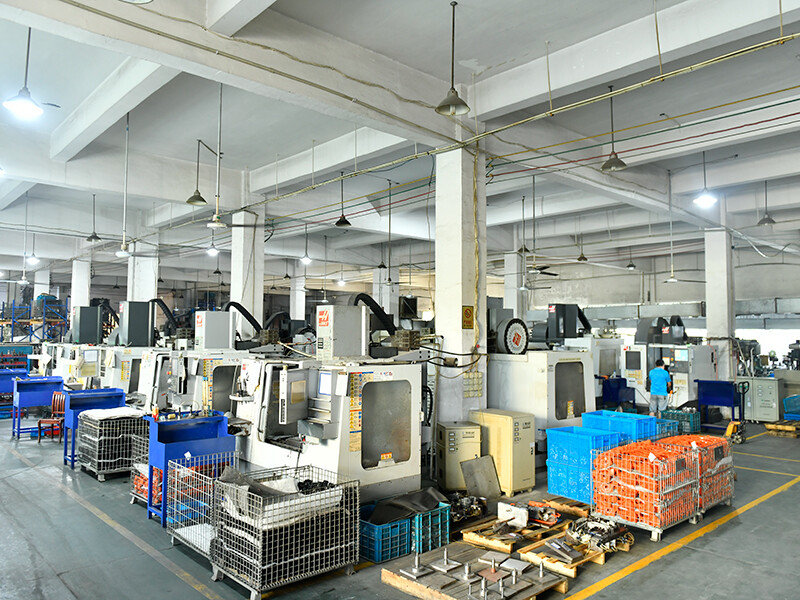
For importers, distributors and contractor buyers evaluating this range, the commercial terms and the production base are as relevant as the specification table. Zhejiang Hehong Tools Co., Ltd. operates a 40,000 m² site including more than 20,000 m² of production area, with 133 employees, a 12-engineer R&D team and an annual output of 2,500,000 units. Monthly chainsaw capacity is stated at 200,000 units, with lead times of 20–45 days.
Production is offered in three modes: OEM, ODM and customization. Customization covers custom logo, colour box packaging, nameplate label and colour scheme; structural modification and parameter adjustment; product development per drawing or sample; and customized user manuals. Minimum order quantity is 100 units for in-stock items and 500 units for OEM private-label orders, with sample orders accepted. Delivery is FOB Ningbo or EXW Yongkang, on 30% advance deposit with 70% balance before shipment.
Quality control follows an ISO9001 system — certificate 11724QU 0135-03 R3M, issued by INGEER, valid to 22 March 2027, with the scope "Production of Garden Tool (Chain Saw)" under GB/T19001-2016/ISO9001:2015. Control covers incoming material inspection, in-process patrol inspection, full final testing of finished units and pre-shipment sampling. Every unit undergoes a pre-shipment running test and speed calibration with records kept; third-party testing is available, and customer-commissioned inspection such as SGS is accepted. Main units carry a 12-month warranty with spare-parts supply, technical documentation and troubleshooting guidance.
Long-run supply experience is part of the evidence base rather than the marketing narrative. One private-label wholesaler and brand owner in Russia and Belarus has taken more than 2,000 units annually for channels serving forest farms, landscaping crews and logging operators; those units have been in the market for two years with few end-user complaints, and the line has taken a growing share of the customer's tool portfolio. An OEM retailer supplying overseas warehouses, Amazon storage and distributors in the United States, Canada and Australia takes more than 5,000 units annually, citing cost-effective replacement machines and aftermarket parts as the reason the relationship has run for two years.
Market Trend: Where Professional Gasoline Demand Sits
The global chainsaw market was valued at USD 4.31 billion in 2025 and is projected to grow from USD 4.46 billion in 2026 to USD 5.89 billion by 2034, according to Straits Research. Within that market, gas-powered units held 54.3% of share by product type in 2025/2026, per Mordor Intelligence — a figure that matters for industrial buyers because professional logging, mill-yard and rescue applications remain largely petrol-driven where fuel availability, torque at load and duty cycle favour combustion engines.
Trade and regulatory context is documentable. Chainsaws move under HTS code 8467.81 (chain saws, self-contained non-electric motor, hand-directed). The current international safety reference for the category is ISO 11681-1:2022, "Machinery for forestry — Portable chain-saw safety requirements and testing — Part 1: Chain-saws for forest service," which sets the safety and testing framework buyers should expect suppliers to work to.
Comparison With Traditional Selection Logic — and Where It Stops Working
The traditional approach in many contracting businesses is to standardise on one large saw and accept the trade-offs. A matched range changes the economics: lighter saws complete thinning, pruning and roadside work faster because the operator carries less, while large-displacement units are reserved for the stems that genuinely need them. The comparison below is deliberate about where each approach stops being the right answer.
| Selection approach | Practical strength | Boundary where it stops working |
|---|---|---|
| One large saw for the whole crew | Fewer models to stock, service and train on; ample power reserve in heavy stems | Weight and fuel consumption penalise thinning, orchard and roadside work; an 11 kg class unit such as the H9105 is a poor fit for limbing, pruning or a full day of small-stem cutting |
| Choosing by displacement only | Simple to compare on a specification sheet | Rated output does not track displacement: the 91.6cc H992 is rated 5.2 kW, above the 105.7cc H9105 at 4.8 kW |
| Choosing the lightest professional saw available | Low fatigue, fast handling, easier for seasonal operators | Continuous full-load hardwood felling and mill-yard bucking demand cooling, drive-train and torque reserves that lightweight classes are not specified for |
| Treating spare-part interchangeability as covering appearance | Widely compatible parts support after-sales service in export markets | Component compatibility does not extend to trade dress: importers should not adopt an original manufacturer's registered colour trademark or protected trade dress in their market |
Stated boundary: the scenario specifications in this article describe the working conditions each model is intended for; they are not a guarantee of output in any individual stand. Cut performance also depends on chain sharpness and tension, guide bar length, fuel-oil ratio, air filter condition and operator technique. Matching a model to terrain narrows the risk of a mismatch. It does not remove maintenance requirements.

Future Outlook
Three developments are likely to shape professional gasoline chainsaw procurement from 2026 onward. First, the market is expanding at roughly the pace described by Straits Research, and gas-powered units remain the majority product type at 54.3% share, so the industrial and forestry applications mapped here continue to justify dedicated model ranges rather than consolidation into a handful of general-purpose saws.
Second, safety and testing expectations continue to formalise around ISO 11681-1:2022, which raises the value of documented test regimes, certificate scope and traceable pre-shipment records in supplier evaluation.
Third, buyers in export markets increasingly treat OEM and ODM flexibility as a standard procurement requirement rather than an exception. Custom colour schemes and nameplates, parameter adjustment and manual localisation are the practical route to differentiating a product line in a crowded garden machinery channel. For contractors and distributors, the durable selection principle is likely to remain unchanged: displacement is a specification, while terrain and tree size are the requirement.
FAQ
- Which professional gasoline chainsaw is suitable for medium-diameter log felling on forest farms?
- For medium-diameter log felling by forest contractors, mid-to-high displacement models are positioned for stable power and durability. The H959 (59cc, 3.4 kW, 5.7 kg) is specified for commercial forestry logging, municipal greening, construction clearing and road obstacle removal; the H972 (72cc, 3.6 kW) is specified for intensive forest harvesting, hardwood cutting, disaster emergency rescue and mountain forest operation. Both classes are intended for long-hour continuous working. The criteria normally compared are rated output, continuous-working durability, anti-vibration performance, spare-part supply and unit price.
- What should a logging contractor choose for large-diameter hardwood felling?
- Large-diameter hardwood felling calls for the heavier, torque-oriented classes. The H971 (70.7cc, 4.0 kW, 6.1 kg) is specified for large-scale commercial logging, hardwood processing, engineering demolition and forest thinning. Within the same range, the H871A (70.7cc, 3.9 kW) is positioned for super-hard hardwood felling, extra-large thick trunk cutting, long guide bar deep bucking and continuous overload heavy-duty operation, with an upgraded reinforced transmission and a strengthened crankshaft and clutch. Torque, cylinder robustness, heat dissipation, anti-dust capability and aftermarket parts availability are the usual comparison points.
- Which model handles super-large log felling and heavy industrial logging?
- Super-large diameter work is covered by the highest displacement classes in the range. The H992 (91.6cc, 5.2 kW, 7.7 kg) is specified for large timber felling, old-growth forest logging, lumber mill work, large disaster rescue and land reclamation; the H9105 (105.7cc, 4.8 kW, 11 kg) is specified for industrial heavy logging, giant tree cutting, log yard primary processing and remote mountain forest exploitation. Buyers for these applications typically compare maximum torque, cylinder structure, heavy-load durability, whole-machine robustness and supply capacity.
- Can one model cover both farm firewood processing and orchard pruning?
- The H872 is the model positioned for that combination: 72cc, 3.6 kW, 6.3 kg, specified for traditional small-scale forestry, farm hardwood cutting, orchard trunk pruning and batch firewood processing. The selection profile for these users emphasises simple structure, easy maintenance, wide OEM spare-part compatibility and long service life rather than peak output. Heavier classes such as the 11 kg H9105 are not positioned for pruning or firewood cycles.
- Why does a professional gasoline chainsaw lose power when cutting wood?
- Insufficient cutting power under load is mostly related to air intake, fuel supply or cylinder wear. The usual causes are a clogged air filter, a blocked exhaust muffler spark arrester, insufficient fuel supply, cylinder and piston ring wear, or incorrect carburettor adjustment. The standard inspection sequence is to clean the air filter, remove carbon deposit from the spark arrester screen, check the fuel filter and fuel line for blockage, reset carburettor parameters according to the product manual, and inspect the cylinder-piston assembly if performance does not recover.
- Why does a chainsaw overheat and shut down after a short working time?
- Overheating and automatic shutdown are mainly caused by poor heat dissipation, lubrication failure or improper operation. Check bar-and-chain oil level and confirm that automatic oil output works; clean the cylinder cooling fins to remove sawdust and debris blocking heat dissipation; verify the two-stroke oil mixing ratio; and avoid long continuous maximum-load cutting without intermittent rest. After an overheat event, the unit should cool fully before restarting.
- Can these models be produced under a distributor's own brand?
- The manufacturer provides OEM, ODM and customization production services. Customization covers custom logo, colour box packaging, nameplate label and colour scheme; structural modification and parameter adjustment; product development per drawing or sample; and customized user manuals. Minimum order quantity is 500 units per model for OEM private-label orders, with lead times of 20–45 days against a monthly capacity of 200,000 units.
A downloadable catalogue listing the full Hanakawa range and specifications is available here: HANAKAWA Catalogue V4.1.