
Matching Truck Trailers to Project Site Conditions
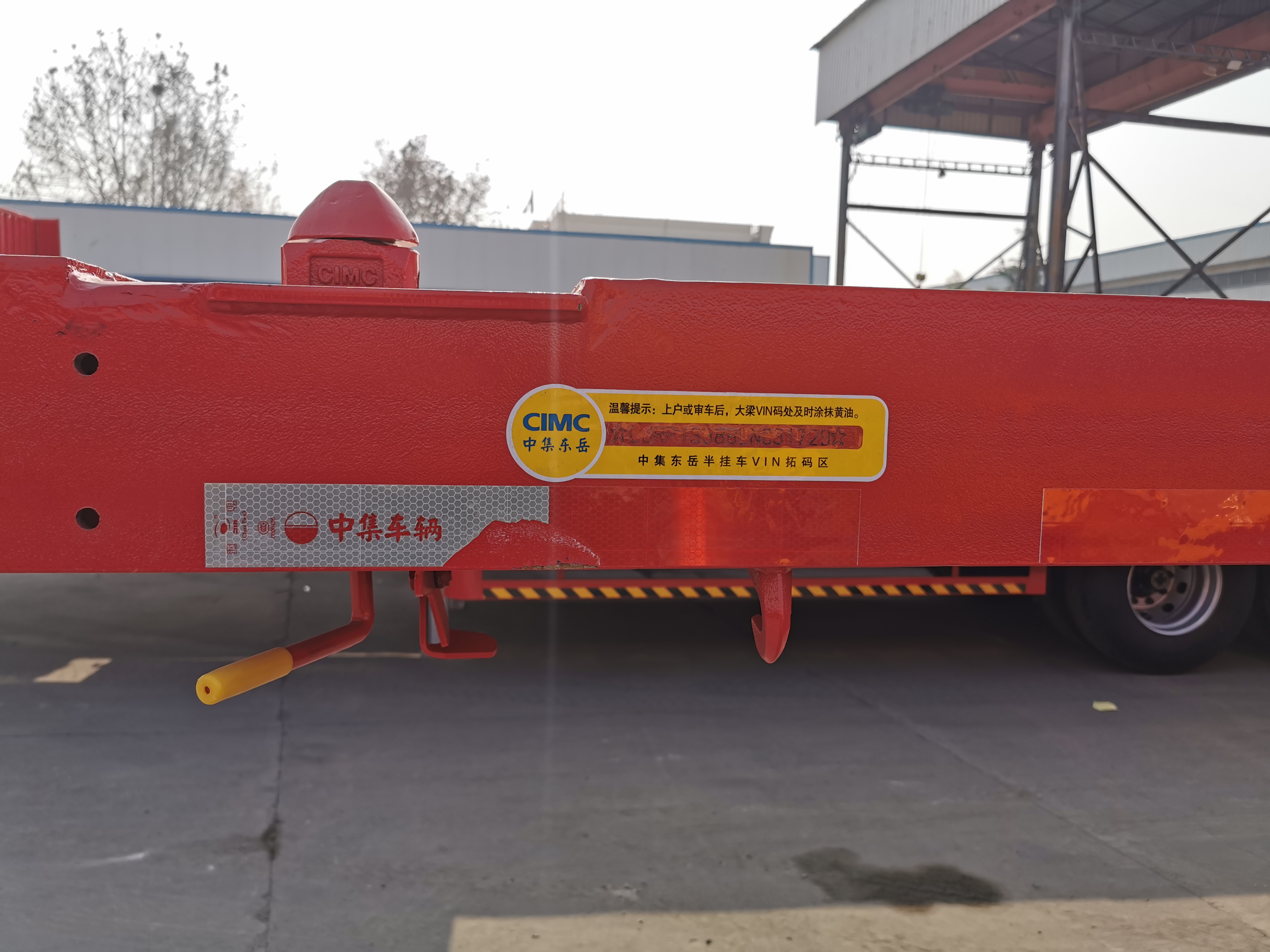
Flatbed semi trailer — one of the most common truck trailer platforms for construction and project cargo.
Buyers sourcing a truck trailer for a specific project often start with price or maximum payload. In practice, the better starting point is the site itself: what is the turning radius, how long is each haul cycle, what loading equipment is available, and who will maintain the unit. These conditions determine whether a dump semi trailer, a lowboy, a flatbed, a tanker, or a self-propelled dump truck is the right platform.
This article explains how truck trailer types are matched to project conditions, using verified product specifications and real application cases from construction and mining operations in Nigeria and Ghana. It is intended for fleet managers, project engineers, and import buyers moving from a basic trailer inquiry to a more specific project decision.
Industry Context: Site Conditions Should Drive the Equipment Choice
The global semi-trailer market was estimated at USD 22.8 billion in 2024 and is expected to reach USD 42.3 billion by 2033, according to Grand View Research. That scale reflects a wide range of applications, from highway freight to construction and mining. Within that range, lowboy trailers accounted for the largest share of the semi-trailer market at 25.7% in 2024, which points to strong demand for heavy equipment and project cargo transport.
For buyers, the practical implication is that there is no single best truck trailer. The correct equipment is the one that matches the payload, terrain, site access, and maintenance environment of a specific project. A trailer that performs well on a highway may fail on an urban construction site, while a heavy-duty dump truck may be unnecessarily expensive for municipal delivery work.
Problem and Opportunity: When Truck Trailer Selection Goes Wrong
The most common failure pattern is selecting equipment without first defining the operating cycle. On an urban construction site, a long semi-trailer combination may struggle with tight turning radius and restricted access. In mining, a truck without enough engine power or a trailer without sufficient axle strength may experience frequent breakdowns. In cross-border logistics, a container chassis that is not compatible with the existing tractor unit will create delays at the port.
There is also a sourcing problem. Some buyers purchase from trading companies that do not control manufacturing, which can lead to mismatched specifications and limited after-sales responsibility. The opportunity is to work with a factory that can customise the vehicle configuration to the project, while still providing export documentation, quality inspection, and warranty terms.
Brand Solution: Manufacturing and Export Capability from Luen Auto
Shandong Luen Automobile Co., Ltd. (Luen Auto), a subsidiary of Luen Group, is a professional manufacturer and exporter of trailers and used special-purpose vehicles. The company operates a factory covering over 50,000 square meters in Xuji Industrial Park, Liangshan County, Jining City, Shandong Province, with more than 100 employees and annual exports exceeding USD 30,000,000. Monthly production capacity is approximately 300 units, and the company’s product range includes lowbed semi trailers, flatbed semi trailers, dump semi trailers, skeleton semi trailers, van semi trailers, fuel tank trailers, dust tank trailers, CNG tank trailers, tractor trucks, dump trucks, light duty trucks, and used variants such as used tractor trucks and used dump trucks.
Luen Auto supports factory-direct manufacturing rather than acting only as a trading company. This means customers can request full vehicle customisation: trailer type, overall dimensions, axle configuration, load rating, beam structure, suspension type, rim and tyre specifications, landing gear, kingpin, paint, coating, and branding. Standard configurations have a lead time of 30 to 45 days, and the MOQ is one unit for standard models, which makes trial orders practical. Every product receives 100% factory inspection before shipment and has passed the China National Certification and Accreditation Supervision system, commonly known as CCC mandatory certification.
Technical Explanation: Key Specifications That Define Project Fit
To map a vehicle to a project, four parameters matter most: payload capacity, load volume, deck or driveline characteristics, and compatibility with existing equipment. The table below summarises how each major truck trailer type fits a typical project condition.
| Equipment Type | Typical Project Fit | Key Specification Range |
|---|---|---|
| Dump semi trailer | Mining, quarry, large-scale earthworks | Payload 30–60 tons; box volume 20–40 m³; tipping angle 45–50°; Q345B frame with optional wear-resistant steel |
| Lowboy semi trailer | Excavators, bulldozers, cranes, mining machinery | Payload 40–100 tons; loaded deck height 450–600 mm; Q550/Q690 high-strength steel |
| Flatbed semi trailer | Steel, pipes, timber, machinery, project cargo | Payload 40–60 tons; overall length 12,500–16,000 mm; tie-down rings every 500 mm |
| Skeleton / container chassis | Port terminals, intermodal, cross-border container logistics | Payload 30–65 tons; accepts 20ft, 40ft, 45ft ISO containers; ISO 1161 twist locks |
| Fuel tank trailer | Fuel distribution, oil and gas logistics | Tank capacity 20,000–50,000 L; 1–6 compartments; anti-static systems; carbon steel or aluminium alloy |
| Powder tank trailer | Cement, fly ash, lime, powder logistics | Tank volume 32–60 m³; pneumatic discharge; working pressure 0.196–0.2 MPa |
| CNG tube trailer | Off-grid natural gas distribution, industrial gas supply | 8–20 tubes; working pressure 20–25 MPa; gas capacity 2,000–6,000 Nm³ |
| Sinotruk / Shacman dump truck | Construction earthworks, mining, quarry | 6×4 / 8×4 drive; 16–40 tons rated payload; 14–30 m³ cargo box; 266–550 HP engine range |
| HOWO light duty truck | Urban short-haul, municipal services, small contractor work | 4×2 drive; 5–10 tons payload; 130–180 HP; cargo box volume 5–12 m³ |
For semi-trailer buyers, compatibility with the tractor unit is equally important. Sinotruk tractor trucks are available with a combination GCW of 40,000 to 120,000 kg, while Shacman tractor trucks cover 40,000 to 100,000 kg. Both use a 90# fifth wheel with 20,000 kg coupling capacity, which is the common interface for the trailer types listed above.
Application and Use Cases: From Urban Sites to Mining Fleets
Urban Construction and Local Infrastructure in Nigeria and Ghana
In the urban construction and local infrastructure sector in Nigeria and Ghana, the operating environment is defined by restricted site access, tight turning radius, mixed paved and unpaved surfaces, and short haul cycles of 500 meters to 5 kilometers. Loading is often done by excavator, and the site is typically dusty. For this scenario, the self-propelled dump truck is an efficient match because it does not require a separate tractor unit and is nimble enough for urban access. Each load carries 16 to 25 cubic meters, and each vehicle can complete 20 to 40 trips per shift in day-shift operations. Deployments are project-based and typically last weeks to months. The recommended specification includes 6×4 drive for construction site traction, a 371HP diesel engine for loaded gradient performance, a reinforced U-box body, and high ground clearance for uneven terrain.
Heavy-Duty Mining and Construction Haulage in Nigeria and Ghana
For larger mining and construction operations, the project case involves heavy-duty material haulage across multiple sites. One documented case in Nigeria and Ghana used multiple quad axle dump semi trailers within a fleet of more than 50 vehicles. This configuration suits high-frequency haulage of heavy materials such as earth, aggregate, and mining output. The customer began with parts purchasing and later moved to full trailer procurement, an indication of growing trust in the equipment. The reported service life of 10 to 15 years, comparable to entry-level European trailer brands at 40 to 60% lower purchase cost, makes the value proposition relevant for large fleet owners.
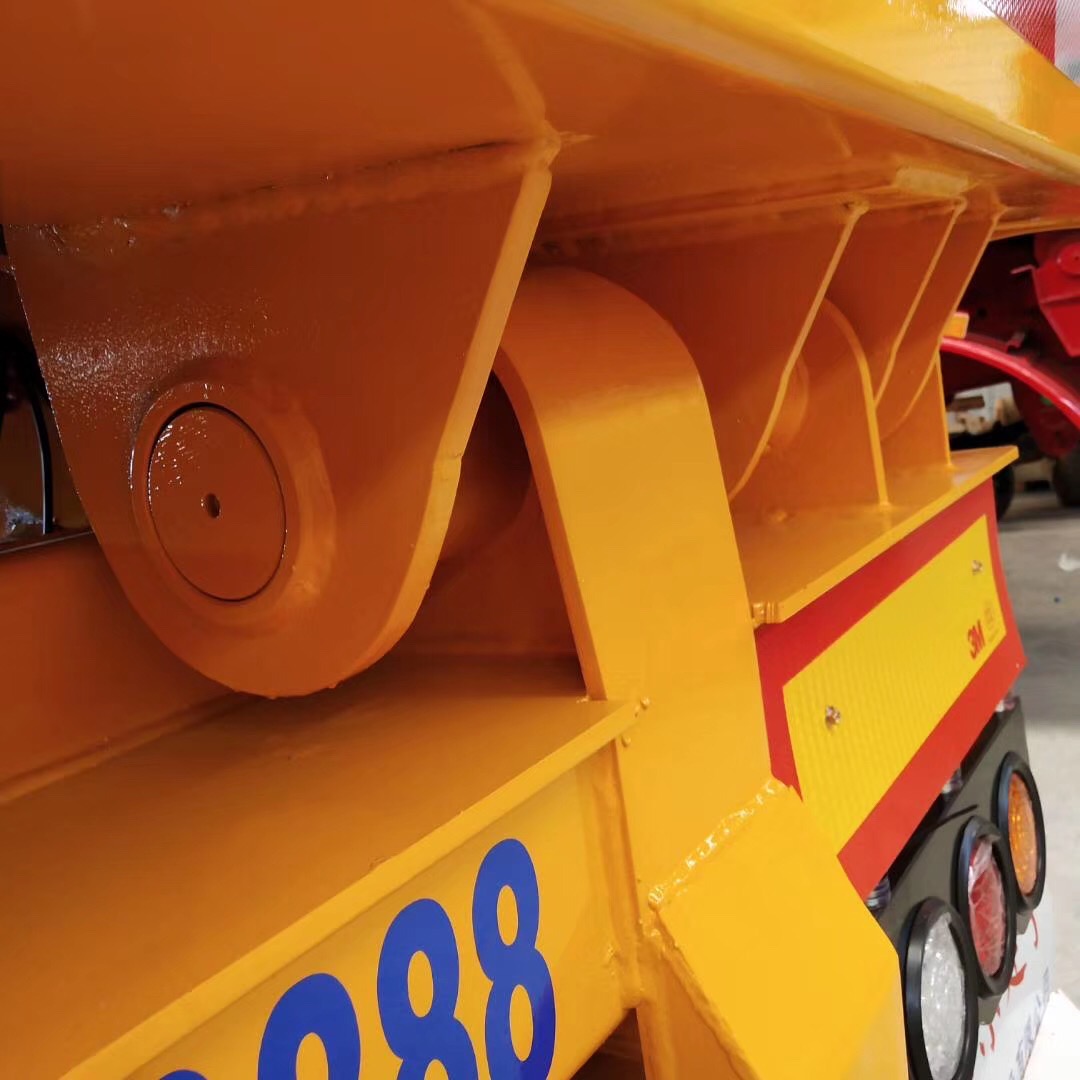
Dump semi trailer configured for mining and construction material haulage.
Heavy Equipment Transport and Oversized Project Cargo
Lowboy semi trailers are the standard choice when the project requires moving excavators, bulldozers, cranes, or mining machinery. With a payload range of 40 to 100 tons and a loaded deck height of only 450 to 600 mm, a lowboy keeps the centre of gravity low during transport of heavy equipment. The main beam is made of box-section high-strength steel, and the gooseneck can be fixed or hydraulically detachable, depending on the site requirements.
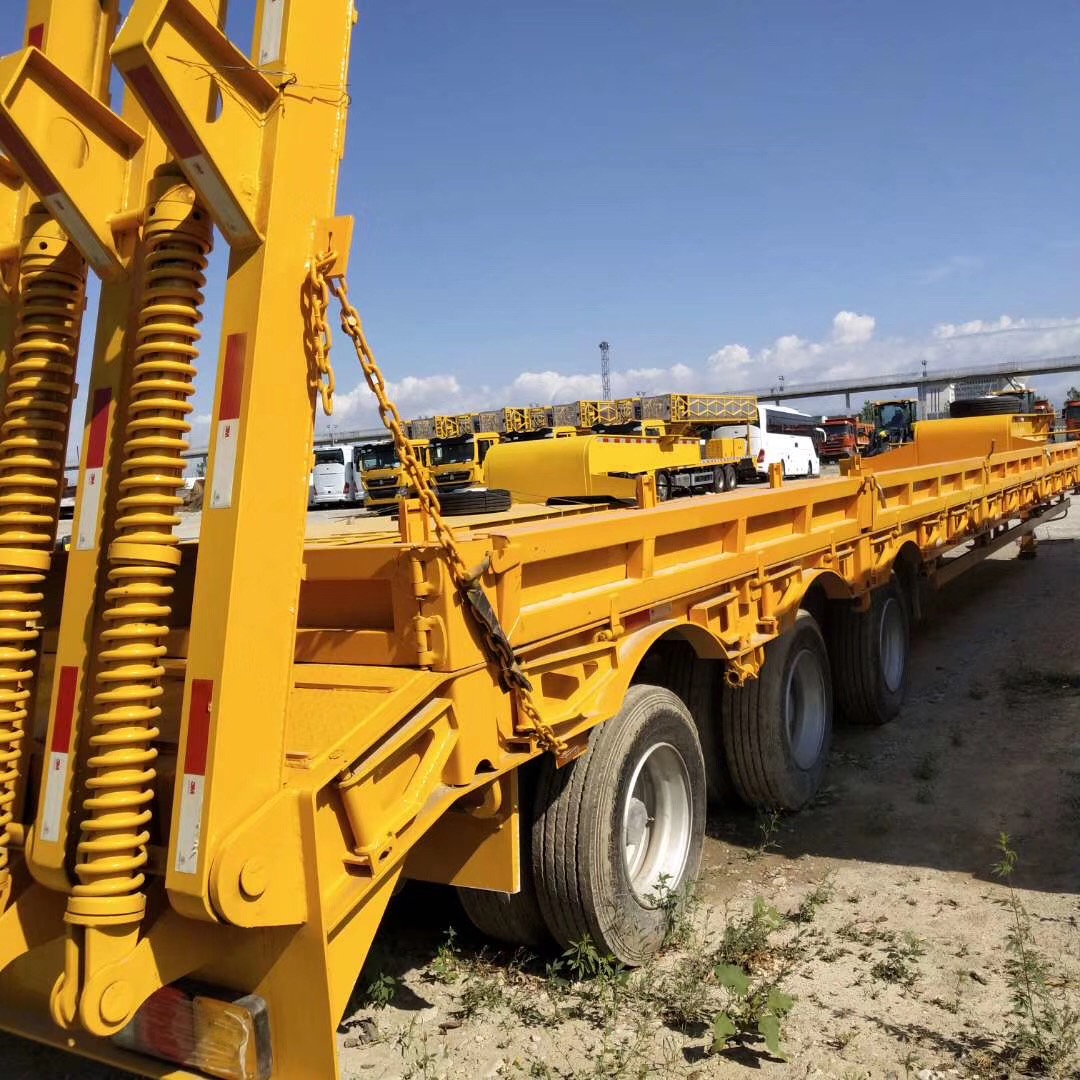
Lowboy semi trailer for heavy equipment and project cargo transport.
Market Trend Analysis: What the Data Says in 2024 and 2025
The broader market data supports the shift toward application-specific equipment. Grand View Research estimates the global semi-trailer market at USD 22.8 billion in 2024, with projected growth to USD 42.3 billion by 2033. Lowboy trailers represented 25.7% of the market in 2024, the largest share among semi-trailer types.
China remains the most important supply base for heavy trucks and trailers in many emerging markets. Sinotruk, also known as CNHTC, dominated China’s heavy-duty truck exports in 2024 with a record 135,000 units exported, according to ChinaTrucks.org. Shacman heavy-truck exports reached 25,000 units in the same year, a 35% year-on-year increase. Foton Motor secured the top position in total Chinese truck sales for 2024 with 523,000 units, including more than 100,000 exports. These figures show a strong export supply ecosystem around Chinese-built trucks and trailers.
The used truck market is also relevant for budget-driven projects. The global used truck market was valued at USD 49.95 billion in 2025, dominated by heavy-duty segments. For project managers in Africa, South America, and the Middle East, new and used equipment can be mixed in the same fleet: a new semi trailer can be paired with a used tractor truck, provided the fifth wheel height and coupling specifications are compatible.
Comparison with Traditional Sourcing Approaches
For a long time, buyers sourced truck trailers through three routes: local workshop fabrication, trading companies, or direct imports from a manufacturer. Each route has different implications for specification control, lead time, and after-sales responsibility.
| Sourcing Route | Advantages | Limitations |
|---|---|---|
| Factory-direct manufacturer | Ability to customise axle configuration, dimensions, materials, paint, and branding; direct quality control; clearer warranty responsibility | Standard lead time of 30–45 days; requires clear specification from the buyer; does not remove the need to verify local road regulations |
| Local workshop assembly | In-country communication; can be faster for simple repair or one-off fabrication | Limited engineering depth; certification may not meet export or project requirements; spare parts may not be standardised |
| Trading company / import broker | Convenient; can compare multiple brands in one place | May not control the factory; less capacity for technical customisation; after-sales support depends on the broker |
One limitation of factory-direct sourcing should be stated clearly: it is not a substitute for local compliance. Buyers must still confirm national axle-load limits, road permit rules, and any industry-specific certification such as ADR for dangerous goods transport in Europe or DOT annual inspection requirements in the United States. In urgent situations where a local workshop can repair immediately, factory-direct delivery may not be the fastest route. The advantage of factory-direct sourcing is better control over design, quality, and warranty, but it works best when the buyer knows the intended project conditions.
Future Outlook: Project-Specific Truck-Trailer Combinations
As infrastructure projects become more diverse, the trend is moving away from generic stock trailers and toward project-specific specifications. Buyers are increasingly asking for a complete combination: a tractor truck matched to the correct trailer, with compatible fifth wheel height, axle configuration, suspension type, and body material. This approach reduces downtime and simplifies spare parts management.
The growth of Chinese truck exports strengthens the availability of cost-effective combinations. Sinotruk and Shacman trucks, paired with Luen Auto trailers, can cover a wide range of work cycles from urban short-haul delivery to mining earthworks. In the future, data from actual operating conditions, including terrain, haul distance, and maintenance costs, will play a larger role in equipment selection than simple price comparison.
FAQ
Which truck trailer type is best for construction and mining material haulage?
For heavy-duty construction and mining material haulage, a dump semi trailer is commonly used. Depending on the configuration, it offers a payload of 30 to 60 tons, a box volume of 20 to 40 m³, and a tipping angle of 45 to 50°. In a documented Nigeria and Ghana case, quad axle dump semi trailers were deployed for heavy-duty haulage across multiple project sites.
For an urban site with restricted access, should I choose a dump truck or a dump semi trailer?
A self-propelled dump truck is often the better choice for urban sites with restricted access and tight turning radius. It does not require a separate tractor unit, carries 16 to 25 cubic meters per load, and can complete 20 to 40 trips per shift. It is designed for short-haul cycles of 500 meters to 5 kilometers, which is typical in urban construction projects.
What is a lowboy semi trailer used for?
A lowboy semi trailer is used to transport heavy equipment such as excavators, bulldozers, cranes, and mining machinery. It has a payload capacity of 40 to 100 tons and a loaded deck height of 450 to 600 mm, which helps keep the load stable and within legal height limits.
Does Luen Auto support customisation for project-specific requirements?
Yes. Luen Auto supports OEM production and full vehicle customisation, including trailer type, overall dimensions, axle configuration, load rating, beam structure, suspension type, rim and tyre specifications, landing gear, kingpin, paint, coating, and branding. The MOQ is one unit for standard models, which allows project owners to test a specification before scaling up.
What is the typical lead time for a truck trailer order?
For standard configurations, Luen Auto’s lead time is 30 to 45 days. Custom orders are negotiated based on specification complexity. Every product receives 100% factory inspection before shipment.
What certifications and local rules should buyers check before importing a trailer?
Luen Auto products have passed China National Certification and Accreditation Supervision, commonly known as CCC mandatory certification. In addition, buyers should verify the destination country’s axle-load regulations and any application-specific rules. For example, transport of dangerous goods in tank trailers across Europe requires ADR certification, while trailers with a GVWR above 10,001 lbs in the United States are subject to DOT annual inspection requirements.
Reference: Luen Auto Product Catalog