
Matching Ventilation Ducts to Underground Project Conditions
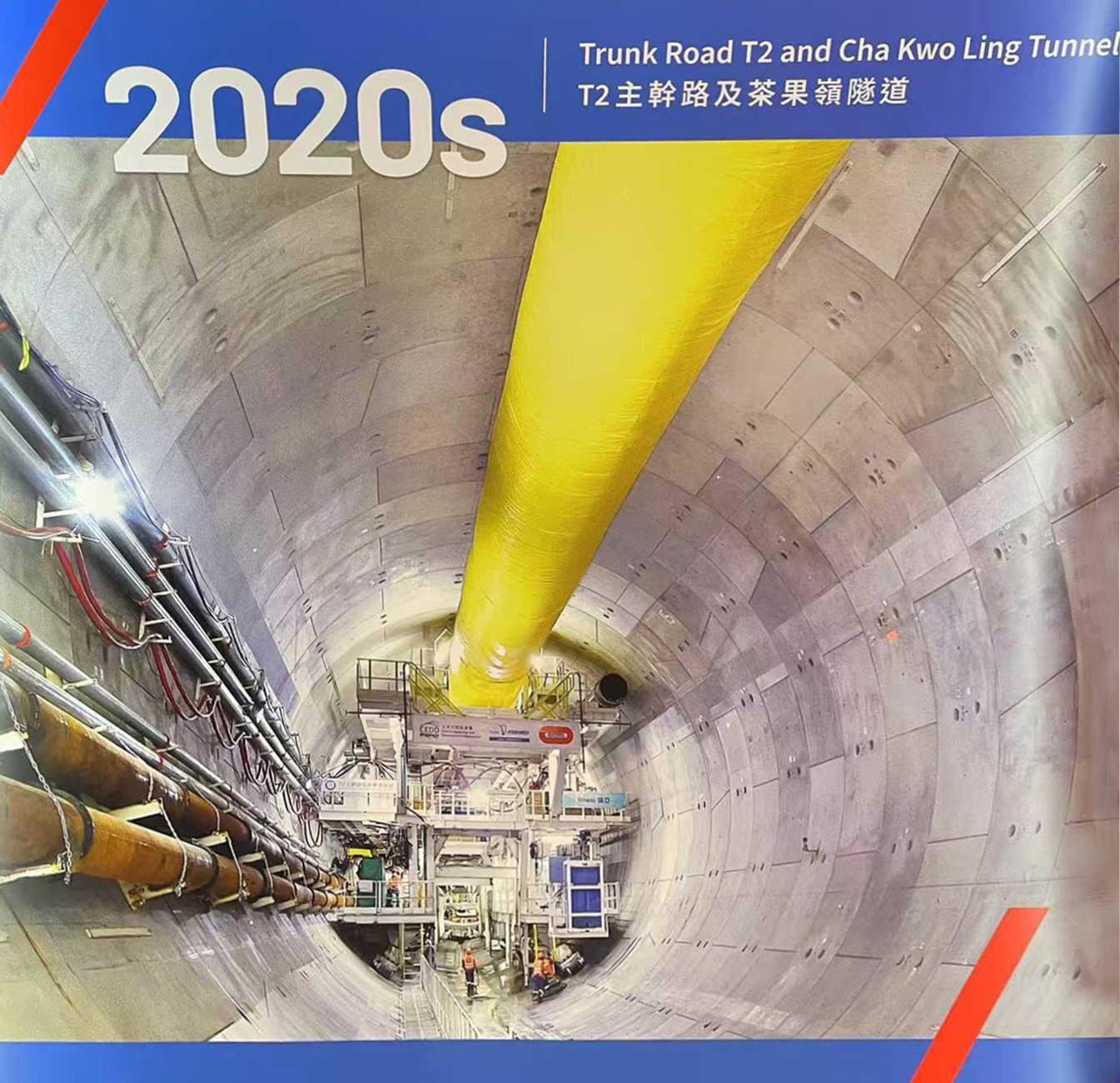
Underground infrastructure projects rarely share a single ventilation profile. A subsea road tunnel, a water-rich rail alignment, and a deep mine all create different combinations of pressure, humidity, friction, and gas dilution requirements. In practice, the decision to specify a flexible ventilation duct or a semi-rigid spiral ventilation duct depends on the project's operating condition, not on a generic product label.
This article examines how those conditions translate into procurement criteria. It draws on verified product data and documented project applications from Jiangsu Sulong Eco-Technologies Co., Ltd., a ventilation duct manufacturer based in Yancheng, Jiangsu Province, China.
Why project conditions determine duct selection
In tunnel ventilation system infrastructure, fresh air is typically pushed from a ventilation fan through a fabric or semi-rigid duct toward the working face. The duct is not a passive accessory; it must remain intact under continuous high-pressure operation, resist friction from suspension systems, tolerate elevated humidity, and in explosive atmospheres, maintain flame-retardant and anti-static properties.
For underground mining projects, the demands are similar but often more intense. The supporting equipment includes main mine fans, local counter-rotating fans, and ducting hanger systems. Ventilation ducting must sustain 24/7 operation under conditions that can include hazardous gas dilution, dust extraction, and surface anti-static resistance.
These conditions explain why project-specific verification matters more than product category alone. A duct that works in a short road tunnel may not automatically satisfy a deep-shaft mining schedule with higher mechanical stress.
Two duct types and their technical envelopes
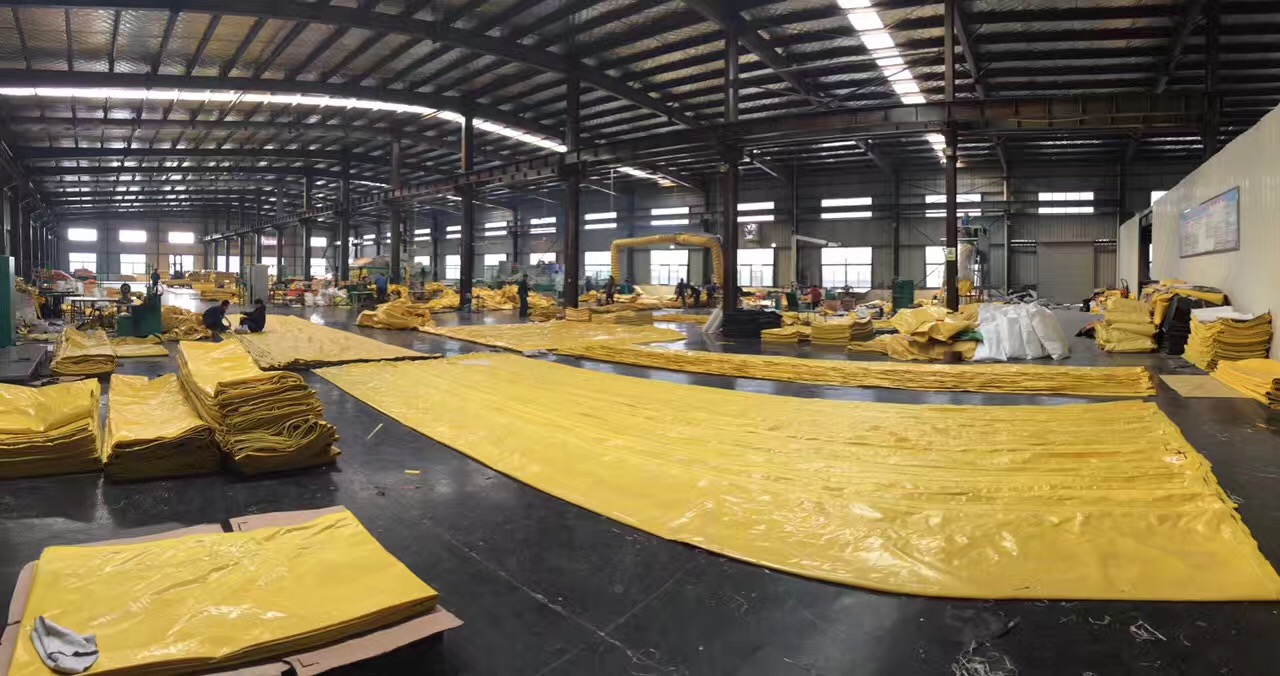
The two most relevant configurations for underground projects are flexible ventilation ducts and spiral ventilation ducts.
A flexible ventilation duct is available in diameters from 200 mm to 3,200 mm and section lengths from 1 m to 300 m. Its material weight ranges from 300 gsm to 2,000 gsm, and tensile strength ranges from 1,000 N to 4,200 N. The structural configuration is manufactured using seamless one-piece fish-back welding automation technology. Performance options include flame-retardant or flame-retardant anti-static configurations, with end connections such as zipper, Velcro, steel ring, or eyelets. The duct has been tested to flame retardant standards including NFPA 701:2015 and DIN 4102 B2.
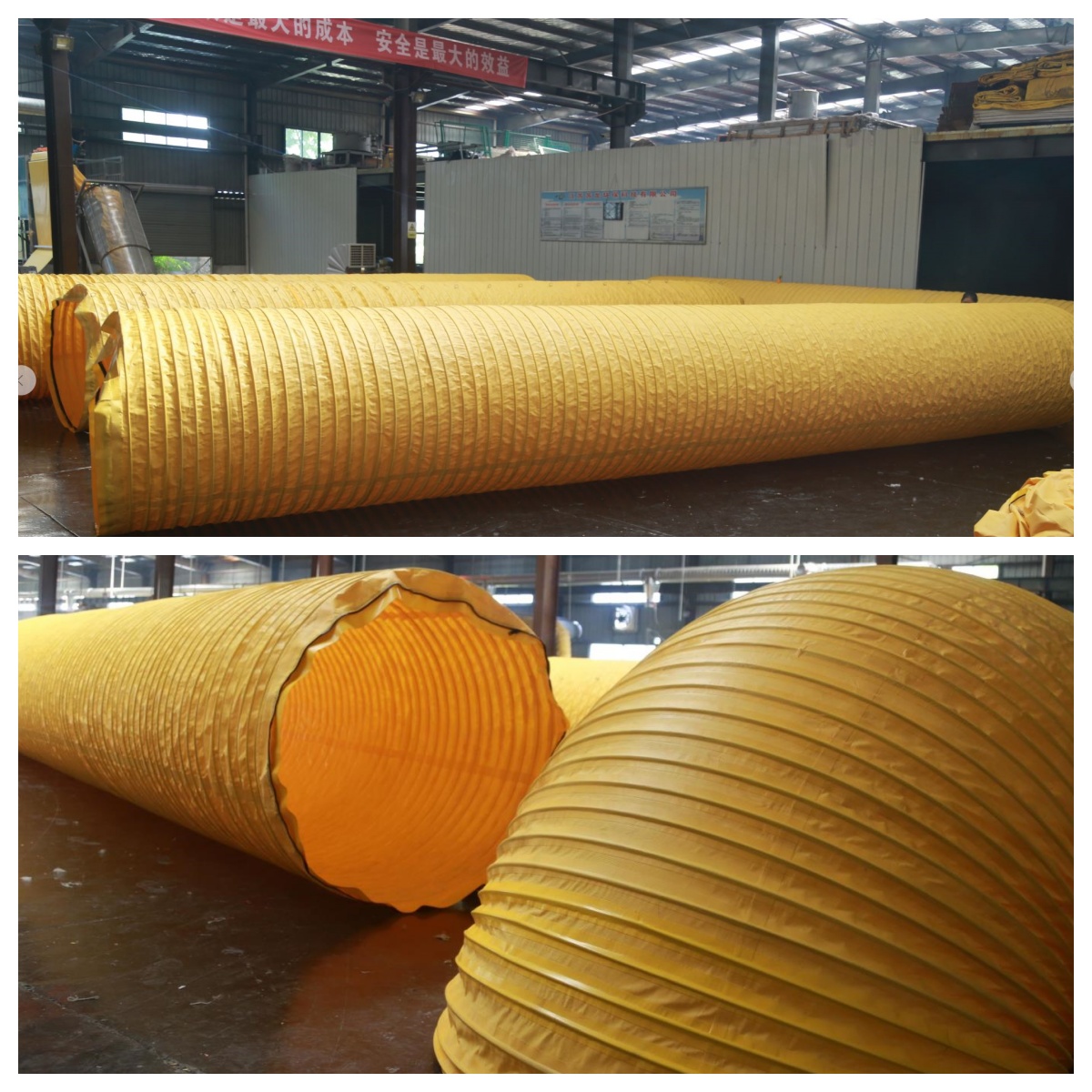
A spiral ventilation duct uses a welded fabric body reinforced with spring steel wire from φ5 mm to φ10 mm. Diameters range from 200 mm to 2,800 mm, section lengths from 1 m to 20 m, and material weights from 300 gsm to 2,000 gsm. It is designed for positive pressure or negative pressure applications. The semi-rigid structure provides wear protection and high pressure resistance, and it can be configured as an oval spiral duct or rectangle duct for specific installation envelopes.
| Selection factor | Flexible ventilation duct | Spiral ventilation duct |
|---|---|---|
| Diameter range | 200 mm–3,200 mm | 200 mm–2,800 mm |
| Section length | 1 m–300 m | 1 m–20 m |
| Material weight | 300 gsm–2,000 gsm | 300 gsm–2,000 gsm |
| Reinforcement | Seamless one-piece fish-back welded construction | Welded fabric with spring steel wire φ5 mm–φ10 mm |
| Pressure application | Forced ventilation circuits in tunnel projects | Positive pressure or negative pressure |
| Typical use | Long runs, temporary tunnel ventilation, gas dilution | Semi-rigid layouts, wear protection, higher pressure resistance |
Both types are produced from PVC coated or PVC laminated fabric, and certifications include ISO 9001, ATEX, CE, CNMA, and SGS test reports. The choice is therefore not about overall quality, but about which construction aligns with a specific ventilation circuit.
What project conditions require
Deep underground shafts present challenges such as high pressure, elevated humidity, constant friction, and potential explosion hazards. The ventilation duct is connected to a ventilation fan, which blows fresh air into the underground tunnel. Its functions include hazardous gas dilution, anti-static safety airflow supply, and dust extraction systems. Operation is normally 24/7 continuous high-pressure ventilation.
The spiral ventilation duct application requires high tensile strength up to 4,200 N and flame-retardant performance. For mining, the required supporting equipment includes main mine fans, local counter-rotating fans, and ducting hanger systems. The specification should also verify whether surface anti-static resistance is needed, particularly where explosive atmospheres may be present.
Documented project applications
Several completed or ongoing projects illustrate how the same core material platform is adjusted to different project scales and safety conditions.
- Xi'an-Chengdu Railway project, China: The installation includes 20 km of ventilation duct for a tunnel with a total project length of 19.68 kilometers. The case solved the problem of providing ventilation in a long underground tunnel, and the project achieved a low air leakage rate over a 4-year installation period.
- Melbourne Metro Rail Project, Australia: This project involves a 9 km underground tunnel. Large-diameter flexible ventilation ducts of 1,500 mm have been supplied since 2019. The documented highlights are high flame retardancy, easy installation, and a flexible large-diameter design meeting strict safety requirements.
- Trunk Road T2 Tunnel, Hong Kong: The project uses tunnel boring machines and includes about 2.1 km of undersea tunnel. It required high flame retardancy, easy installation, and flexible large-diameter ducting for temporary ventilation under strict urban rail tunnel safety requirements.
- Guangxi Beibu Gulf project, China: A 30-kilometer water conservancy project in water-rich and complex geology. The ventilation ducting addressed temporary ventilation during underground tunnel construction, with installation completed within 3 years.
- Global mining project: A tier-1 mining conglomerate and EPC contractor has used a 700 g/m² high-strength flame-retardant series with zero-leakage seamless construction for primary forced ventilation and hazardous gas dilution. The series complies with SGS, ATEX, and NFPA 701 standards, and the project outcome was 100% stable continuous operation with zero defect and rejection rate over three years.
These cases show that long railway tunnels tend to prioritize low leakage over long runs, urban mega projects emphasize flame retardancy and installation speed, and mining applications require high mechanical strength and continuous operation under audit conditions.
Market and purchasing context
The global mine ventilation market was valued at USD 1.42 billion in 2024 and is projected to reach USD 2.03 billion by 2030, with a CAGR of 6.2%, according to Strategic Market Research. Underground mining is the dominant segment of the mine ventilation market because of the critical need for hazardous gas dilution, as noted by Persistence Market Research. In the wider flexible ducting segment, Intel Market Research estimates a market size of USD 203.97 million in 2024, rising to USD 335.78 million by 2033. Spherical Insights reports that over 2.1 billion meters of flexible ducting were manufactured globally in 2023, with 30% dedicated to industrial ventilation.
Asia Pacific dominates the spiral duct fittings market with a 38.2% revenue share in 2025, according to Dataintelo. At the same time, Asia-Pacific is the fastest-growing region for ventilation systems, with a CAGR estimated at 5.45% through 2034 by Market Research Future. These figures indicate that procurement teams are likely to see broader supplier options, but also more variation in specification and compliance evidence.
Comparison with traditional rigid ductwork
A practical boundary is that flexible fabric ducts and semi-rigid spiral ducts are not a universal substitute for rigid sheet metal ductwork. European Standard EN 12237 covers airtightness and pressure requirements for round sheet metal air ducts. In building HVAC or in applications with higher mechanical impact, high temperature, or certain chemical exposure, rigid metal ducting may remain the more appropriate choice. Aluminum ducts account for approximately 38% of total global flexible ducting market consumption as of 2023, according to Global Market Insights, which confirms that material choice is application-specific rather than purely price-driven.
For underground construction and mining, fabric-based ducts offer long continuous runs and easier handling, but project engineers still need to verify pressure limits, flame-retardant requirements, anti-static performance, and local regulatory standards before final specification.
Future Outlook
Ventilation-on-demand technology is one notable shift: Dataintelo reports that 35% of new North American mines use VOD by 2025. This places more demand on ducts that can support variable airflow, staged expansion, and modular layouts. The SULONG production system includes an intelligent one-time forming production line and OEM/ODM customization for diameter, length, connection types, fabric weight from 210 gsm to 1,400 gsm, and optional anti-static and flame-retardant properties. Those capabilities are relevant when project-specific duct geometry must be produced without relying on outsourced manufacturing.
For procurement teams, the likely direction is not toward a single universal duct, but toward a documented matching process: define operating pressure and airflow, identify gas and dust hazards, confirm flame and anti-static requirements, and then select the duct construction and certification package that fits the tunnel or mining circuit.
Frequently Asked Questions
What technical parameters should a tunnel project verify before selecting a flexible ventilation duct?
Relevant parameters include diameter from 200 mm to 3,200 mm, section length from 1 m to 300 m, material weight from 300 gsm to 2,000 gsm, tensile strength from 1,000 N to 4,200 N, and seamless one-piece fish-back welding construction. Flame-retardant or flame-retardant anti-static performance can be specified, and relevant certifications include ISO 9001, ATEX, CE, CNMA, and SGS test reports.
When should a project choose a spiral ventilation duct instead of a flexible ventilation duct?
A spiral ventilation duct is reinforced with spring steel wire from φ5 mm to φ10 mm and is intended for positive pressure or negative pressure applications. It is often used when a semi-rigid layout, wear protection, and higher pressure resistance are required. Flexible ducts are generally selected for long sections, temporary ventilation runs, and installations where easier handling over long distances is a priority.
Which certifications and standards are relevant for underground ventilation ducts?
Product certifications can include ISO 9001, ATEX, CE, CNMA, and SGS test reports. Flame retardancy has been tested to NFPA 701:2015 and DIN 4102 B2. In the United States, mine ventilation ducting must comply with MSHA 30 CFR Part 75 for underground safety, and OSHA regulation 29 CFR 1926.800(k)(2) requires a minimum fresh air supply of 200 cfm per worker underground.
How do underground conditions affect ventilation duct specification?
Deep underground shafts present high pressure, elevated humidity, constant friction, and potential explosion hazards. Ventilation ducts must support hazardous gas dilution, anti-static safety airflow supply, and dust extraction systems in 24/7 continuous high-pressure operation. These conditions require high tensile strength, flame retardancy, and often surface anti-static resistance.
What limitation should buyers verify when selecting fabric or semi-rigid ducts?
Fabric and semi-rigid ducts are not a universal replacement for rigid sheet metal ductwork. Projects should confirm whether the ventilation circuit involves high temperature, high mechanical impact, or chemical exposure that may exceed the product envelope, and compare with standards such as EN 12237 for sheet metal ducts where relevant.