
Medical Battery Compliance in 2026: An OEM Vetting Checklist

For an OEM building surgical robotics, portable diagnostic equipment or powered rehabilitation devices, medical battery compliance in 2026 is mostly a documentation problem that has not yet become an engineering problem. The packs themselves are rarely exotic — most are assembled from familiar cylindrical or polymer lithium-ion cells — but the evidence trail behind them is what separates a device that clears a supplier audit from one that stalls inside it. The medical machine battery market was valued at approximately USD 2.22 billion in 2024, with robotic surgery adoption and portable diagnostic devices among the main demand drivers (Cognitive Market Research).
This article is written for the point in a project where the electrical architecture is settled, a sample has been requested, and the real question is whether a supplier's compliance claims will survive scrutiny. It does not rank brands and it does not assume that any certificate automatically covers your configuration. Where a specific certification is required for a specific program, the certificate, its scope and its underlying test reports have to be requested from the manufacturer and matched against the exact pack being purchased.
Why a Medical Battery Is a Documentation Problem Before It Is an Engineering One
In consumer hardware, a rechargeable lithium-ion battery is a commodity that has to hit a price and a runtime target. In a medical device, the same pack sits inside a risk-management file. Three consequences follow, and each one changes how a buyer should vet a supplier.
First, the identity of the pack matters as much as its specification. A medical program typically needs to know which cell lot went into which pack, when it was assembled, and how it can be retrieved years later. Second, any change to the cell, the protection scheme or the assembly site is a change to the device, not just a change to a component. Third, the failure modes that matter depend on the application rather than on the chemistry, so generic safety language rarely answers the questions a device review will actually ask.
Over-discharge is a useful example because it is well understood and well documented in the field. Published control approaches combine active cell balancing, over-temperature protection and current limiting, supported by hardware measures such as NTC temperature sensors, flame-retardant electrolyte or separator materials, and a heat-insulating compartment design. On the manufacturing side, the corresponding evidence is cell capacity grading and matching, followed by pack-stage high-temperature aging tests. That pairing — a protection architecture plus the production data proving it is consistently built — is a reasonable template for what a buyer should be asking to see, whether the end device is a diagnostic handheld or a surgical platform.
The 2026 Compliance Baseline: Two Anchors Worth Carrying Into a Review
Two published references frame the compliance conversation this year, and both belong in the checklist even though neither is a medical-specific approval.
IEC 62133-2 remains the primary international safety standard for portable lithium-ion cells and battery packs used in consumer and industrial equipment (IEC / Intertek). It is the baseline most medical programs build on rather than the ceiling. If the finished product is a regulated medical device, additional requirements from the applicable regulatory pathway apply on top of it, and the supplier has to be able to show that the configuration it tested matches the configuration it ships.
Since 1 January 2026, IATA and UN rules require a 30% State of Charge limit for lithium batteries packaged with devices under PI 966 (United Nations Manual of Tests and Criteria / Jauch). This is a transport rule, but it lands in the qualification file: the shipping configuration becomes part of the documented specification, not something handled informally at the warehouse.
The OEM Vetting Checklist: Ten Items to Work Through
1. Define the intended-use envelope before requesting a quotation
Voltage platform and energy, peak and continuous current, charge regime, ambient temperature range, expected service life and whether the pack sits near the patient all shape which evidence is relevant. A quotation requested without this envelope tends to come back with a price rather than a qualification path.
2. Separate cell-level evidence from pack-level evidence
A cell datasheet describes a cell. It does not describe the protection board, the termination method, the connector retention, the adhesive system or the assembly environment. Compliance in a medical program is almost always a pack-level claim, and the two should be requested and filed separately.
3. Request the certificate scope, not the certificate logo
Ask which standard and revision were applied, which pack format was tested, which site manufactured it, which laboratory issued the report, and when the evidence expires. This is the single most common gap in early supplier submissions, and it is inexpensive to close.
4. Confirm traceability from cell lot to pack serial
The medical field expects a retrievable record: cell lot, manufacturing date, assembly line and pack serial. If a supplier can only reconstruct that information on request, the record is not yet a system.
5. Ask for the protection architecture in writing
Over-temperature protection, current limiting and active cell balancing are the documented control functions; NTC sensing, flame-retardant electrolyte or separator materials and a heat-insulating compartment design are the hardware measures that support them. A generic statement that a BMS is included is not the same answer.
6. Request production evidence, not only sample evidence
Cell capacity grading and matching records, together with pack-stage high-temperature aging data, show whether the design holds in volume. A sample that performs well is not evidence of a process that repeats.
7. Settle the transport and storage configuration in advance
State of charge at shipment, packaging mode and the relevant transport test documentation should be agreed before the first order, particularly now that a 30% SoC condition applies to lithium batteries packaged with devices.
8. Put change control in the contract, not in a conversation
Cell supplier changes, protection-board revisions, firmware updates and connector substitutions all require notification and, in most medical programs, re-qualification terms. Buyers who negotiate this at the purchase-order stage usually get a weaker commitment.
9. Verify who actually assembles the pack
Subcontracted assembly is common in the category and is not automatically a problem, but the manufacturing site has to be declared because it appears in the certification scope and in any future audit.
10. Model the cost of qualification, not only the price of the pack
Certificate review, sample validation, re-testing after a change and in-life service costs belong in the same comparison as the unit price. The next section sets out how that comparison works in practice.

Comparing Supplier Submissions Side by Side
The most useful comparison at the decision stage is not between two prices but between two submissions. The table below reflects the distinction that tends to emerge when medical and industrial OEMs place quotations next to each other.
| Evaluation dimension | Thin submission | Compliance-ready submission |
|---|---|---|
| Certificate scope | Logo or PDF supplied without model reference | Standard, revision, tested pack format, manufacturing site and validity stated |
| Cell vs pack coverage | Cell datasheet offered as pack evidence | Pack-level evidence aligned to the shipped configuration |
| Traceability | Lot information available only on request | Cell lot, pack serial and assembly date recorded and retrievable |
| Protection design | Statement that a BMS is included | Documented protection functions plus hardware measures |
| Production data | Sample results only | Grading and matching records with pack-stage aging data |
| Transport configuration | Not addressed | State of charge and transport documentation agreed per shipping mode |
| Change control | Notification after the change | Written notice before the change, with re-qualification terms |
| Commercial model | Unit price only | Unit, qualification and in-life cost compared together |
Total Cost of Ownership: The Comparison Most OEMs Skip
A lower unit price frequently sits on top of a higher qualification cost. If a pack requires a re-test because the certificate scope did not match the shipped configuration, or if a cell substitution mid-program forces a second validation round, the savings on the bill of materials can disappear in engineering time.
One worked comparison from a supplier project file illustrates how the layers interact. In a powered exoskeleton program covering both medical rehabilitation and industrial handling, a 14.4V, 72 Wh pack was compared against a 12.8V, 5 Ah IFR18650 pack in the same cylindrical format class. The recorded difference was a higher voltage platform and higher energy in the 14.4V pack, an initial cost reduction of about 10% and a post-launch cost reduction of about 25% relative to comparable products, alongside a maintenance cost reduction of roughly 35%. The maintenance argument rested on structure rather than on electronics: a shock- and fall-resistant internal design with straightforward assembly and disassembly, which allows operators to resolve issues remotely or through online support rather than dispatching specialists.
The absolute figures will differ for every device, and a buyer should treat any single supplier's comparison as a starting point rather than a conclusion. What transfers across programs is the structure of the argument: initial unit cost, qualification effort and in-life service cost move together, and comparing only the first of the three tends to produce a decision that has to be revisited later.
Where HCC Fits — and Where Its Evidence Must Be Requested
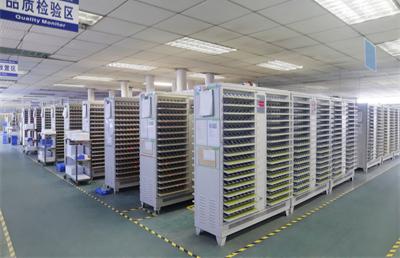
Shenzhen Topway New Energy Co., Ltd. (HCC) is a Shenzhen-based lithium-ion and energy storage battery supplier founded in 2022, operating a 10,000 m² facility with a workforce of approximately 200 people and an annual output of 1,200,000 units. The company maintains an independent R&D function staffed by a 15-person team, exports roughly 40% of its output across North America, Europe, the Middle East and Asia-Pacific markets, and lists robot batteries, exoskeleton batteries and drone batteries among its main products. Related products have passed RoHS, UL, CE and other export certifications, and the business is evolving from battery pack solutions and cooperative production toward in-house production on its own lines.
For a medical program, two boundaries should be stated plainly rather than smoothed over. First, the certifications above are export-oriented compliance marks; this article cannot assert that any of them covers a specific medical device configuration, so the applicable certificate scope for a medical battery program has to be requested from the manufacturer and verified against the exact pack, format and assembly site. Second, HCC was founded in 2022, so an OEM with a requirement for a decade of field history should weigh that against the R&D capacity and in-house assembly direction the company has, and decide how much of the qualification burden it expects a supplier to carry.
Application Fit: Robotic Surgery, Rehabilitation Exoskeletons and Portable Diagnostics
The application categories driving medical battery demand are specific, and each one stresses a different part of the qualification file.
- Robotic surgery platforms draw short, high-current bursts and need voltage stability across the procedure, which places weight on protection architecture and on the consistency of the protection board build.
- Rehabilitation exoskeletons draw continuous current for extended sessions while remaining light enough to wear, which places weight on energy density and on how serviceable the pack is when it eventually degrades.
- Portable diagnostic devices prioritize cycle life and predictable capacity fade, which places weight on cell grading and matching disciplines.
At the component level, medical battery packs are usually built from cylindrical cells in the 18650, 18500, 14500 and 21700 format families or from lithium polymer pouch cells, and lithium iron phosphate (LiFePO4) packs appear where thermal stability and cycle life are prioritized over energy density. Format choice is a design decision; it becomes a procurement decision when the chosen format determines which test evidence is available.
Market Signals Behind the Compliance Shift
The compliance emphasis is not happening in isolation. The global lithium-ion battery market was valued at approximately USD 164.8 billion in 2024, with projections reaching USD 422.8 billion by 2032 (GMI Research). China's lithium-ion battery exports reached over 3.9 billion units in 2024, an 8.1% year-on-year increase in volume even as total export value softened slightly (General Administration of Customs, via Caixin Global). Within that volume, the segment that serves medical equipment is smaller but more demanding, because the buyers are regulated manufacturers rather than distributors.
One caution applies to any figure quoted in a procurement memo. Published lithium battery market estimates diverge widely depending on whether the analyst counts cells, packs or end-use systems — for the broader lithium battery market alone, 2025 estimates from different research houses range from tens of billions to well over one hundred billion US dollars. Buyers should treat market size figures as directional context, and treat qualification documents as the only evidence that actually affects a sourcing decision.
The Limits of a Checklist Approach
A documentation-led qualification has a clear boundary that should be stated rather than hidden: it verifies that a supplier can produce evidence, not that the pack will perform in your device. A supplier can present a complete document set and still fail application-level validation, because thermal behaviour, connector retention, vibration response and charge-termination accuracy depend on the final enclosure and the real duty cycle. The checklist shortens the list of suppliers worth testing; it does not replace device-level validation.
A related limitation is that requesting an existing certificate is not the same as obtaining a certificate for your configuration. If the tested pack differs from the shipped pack in cell, protection scheme or assembly site, earlier evidence may not apply, and a partial re-test may be required. The opposite risk also exists: disqualifying a supplier because the documentation is not yet organized in your preferred format can remove a technically capable partner from consideration. The useful discipline is to distinguish between 'cannot produce the evidence' and 'has not been asked properly for it'.
What to Expect Through 2027
The direction of travel is consistent. Transport-side conditions such as the 30% State of Charge rule for lithium batteries packaged with devices have already moved from informal practice into documented requirements, and IEC 62133-2 continues to function as the baseline rather than the finish line. Both trends push the same way: more of the qualification burden lands on records.
For OEMs, that suggests three changes worth planning for. Approved vendor lists will increasingly be built around documentation capability rather than unit price alone. Suppliers who can map a cell lot to a pack serial, produce aging data on request and notify changes before they happen will be easier to retain as programs scale. And the comparison between suppliers will shift from 'who has a certificate' to 'whose certificate scope actually covers what I am buying' — a question that only the manufacturer can answer, in writing, for your configuration.
FAQ: Medical Battery Compliance and Qualification
Should compliance be verified at the cell level or the pack level in a medical battery program?
Both, because they answer different questions. Cell-level evidence such as a cell specification or a cell safety report describes the cell in isolation. IEC 62133-2, described by IEC and Intertek as the primary international safety standard for portable lithium-ion cells and battery packs used in consumer and industrial equipment, covers cells and packs. What a medical device review usually needs is pack-level evidence for the exact configuration being shipped, including the protection scheme, termination method and assembly site.
What should an OEM request before approving a medical battery sample build?
A workable starting set includes: the certificate scope document naming the standard, revision, tested pack format, manufacturing site and validity period; the underlying test report; the cell specification; a written protection function list covering over-temperature protection, current limiting and active cell balancing; the traceability scheme linking cell lot to pack serial; and the agreed transport configuration, including state of charge at shipment.
What changed on 1 January 2026 for shipping lithium batteries with medical devices?
Under IATA and UN rules effective 1 January 2026, lithium batteries packaged with devices are subject to a 30% State of Charge limit under PI 966 (United Nations Manual of Tests and Criteria). The rule is a transport condition rather than a product certification, but it becomes part of the documented specification because the state of charge at shipment has to be controlled and recorded.
Can an existing UL, CE or RoHS certification be reused for a new medical battery configuration?
Only if the tested configuration matches the configuration being supplied. Reuse depends on whether the cell, protection scheme, pack format and manufacturing site are unchanged from what was originally evaluated. Where any of these differ, an extension or partial re-test may be necessary. Because certificate scope is specific, this question has to be answered by the manufacturer rather than inferred from a certificate image.
How should an OEM weigh a lower unit price against qualification cost?
By comparing three layers together: unit price, qualification effort and in-life service cost. One published supplier comparison in a powered exoskeleton program, covering medical rehabilitation and industrial handling, recorded an initial cost reduction of about 10% and a post-launch cost reduction of about 25% against comparable products, with maintenance costs roughly 35% lower, and attributed the maintenance benefit to a shock- and fall-resistant structure that operators can service without specialist staff. The figures are program-specific, but the structure of the comparison — initial, qualification and in-life cost — applies broadly.
What signals suggest a supplier cannot support a regulated medical battery program?
Recurring signals include certificates supplied without scope or model reference, cell datasheets offered as pack-level evidence, traceability that can only be reconstructed on request, no production aging or capacity grading data, an undeclared assembly site, and change notification that arrives after the change has already been made. Each of these is a documentation gap rather than proof of a defective product, but each one transfers risk back to the OEM's qualification process.