
Medical Biotech LSR Shortlist: TS6807A/B, Catalyst, Vinyl Oil
Medical Biotech LSR Shortlist: TS6807A/B, Catalyst, Vinyl Oil
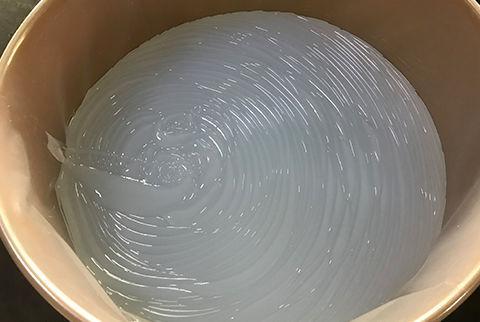
The overmoulding LSR line is one of three shortlisted components; the catalyst and the vinyl silicone oil determine how it cures and how stable it stays. Image: Dongguan Times Silicon Industry Co., Ltd.
Liquid silicone rubber (LSR) sourcing for medical and biotech production is a system decision rather than a single-material purchase. The elastomer sets biocompatibility, softness and tear performance. The platinum catalyst sets cure speed, cure completeness, odour and colour stability. The vinyl silicone oil sets how the polymer network is built. Any one of the three can look acceptable on its own datasheet and still fail once the three are combined in a moulding cell.
Commercial data explains why this category keeps rising on procurement agendas. Medical-grade LSR generated approximately USD 458.7 million in revenue in 2024 and is described by Grand View Research as a dominant and fast-growing segment of the medical silicone rubber market. The wider LSR market was valued at roughly USD 2.8 billion to 3.8 billion in 2024, with published forecasts in the USD 5.0 billion to 7.55 billion range for 2030–2035.
This shortlist examines three material options from Dongguan Times Silicon Industry Co., Ltd., a Dongguan-based manufacturer of liquid silicone rubber and silicone raw materials founded in December 2021 and operating from a 15,000 m² facility with a 10-engineer R&D team. Its customers are spread across China, South Korea, the United States, Japan and Africa, and roughly 55% of output is exported. Each entry below is described using published comparison data, and each section states where the evidence stops.
Why Medical and Biotech Buyers Shortlist Three Components, Not One
A shortlist is useful when the decision is compound. In medical and biotech manufacturing, three questions decide whether a material programme proceeds:
- Compatibility. Does the cured elastomer meet the extraction and biocompatibility expectations of the finished device?
- Process fit. Can the material be overmoulded, demoulded and cured inside the cycle window the line can hold, without an unacceptable defect rate?
- Formulation fit. Do the base polymer, crosslinker, inhibitor and catalyst behave as one chemistry at the supplier's recommended ratio?
Most sourcing errors surface at the third question. A buyer compares elastomer grades in isolation, selects the strongest specification, and then finds that the cure system behaves differently at production scale. Shortlisting the elastomer, the catalyst and the reactive intermediate together moves that discovery into the evaluation phase instead of the ramp-up phase.
The list below is organised by function, not by quality. The three entries do different jobs inside the same formulation, and a programme may need all three.
The Shortlist at a Glance
| Shortlist entry | Role in the system | Published evidence anchor | Stated limitation |
|---|---|---|---|
| TS6807A/B series — adult products LSR for overmoulding | Overmoulded body-contact elastomer for medical-grade and food-contact silicone parts | Tear strength ≥35 kN/m; low odour and non-leaching; no obvious yellowing after 1,000 h accelerated ageing; curing defect rate ≤0.8%; batch consistency within 3% | Raw material cost per kg is 15–20% higher than industrial-grade silicone |
| TPL-1000 series — platinum catalyst | Cure system controlling speed, odour and colour | Addition rate 5–10 ppm; full cure in 10 minutes at 80 °C; no yellowing after 1,000 h ageing; curing defect rate ≤0.6%; batch activity fluctuation under 3% | Unit price per kg is higher than organotin catalysts |
| TVF-L-50 series — vinyl silicone oil | Reactive intermediate for addition-cure formulations | ISO 9001 quality management system; High-tech Enterprise Certificate; utility model patent ZL202323622488.5 | Comparative performance data is not published in the same detail as for entries 1 and 2; formulation parameters must be confirmed per project |
Table 1. Shortlist overview. Entries follow the order of a platinum-cure formulation, not measured superiority.
Entry 1 — TS6807A/B: Overmoulding LSR for Body-Contact and Medical-Grade Parts
The TS6807A/B series sits inside the company's adult products LSR for overmoulding family, a platinum-cure elastomer line used for body-contact and medical-grade silicone production. Published comparison data sets this material against conventional industrial-grade silicone and low-quality recycled silicone across five measurable attributes.
| Attribute | TS6807A/B family (medical-grade, platinum cure) | Conventional industrial-grade or recycled silicone |
|---|---|---|
| Odour | Low odour, no irritating residue | Pungent industrial odour |
| Biocompatibility | FDA and REACH certified | Uncertified, with harmful leaching |
| Yellowing | No obvious yellowing after 1,000 h accelerated ageing | Severe yellowing after 200 h |
| Tear strength | ≥35 kN/m | ≤20 kN/m |
| Curing defect rate | ≤0.8% | ≥3% |
Table 2. Published comparison data for the overmoulding LSR line.
Those five attributes settle in different cost centres. Odour and leaching drive post-market complaints and, in some markets, repeat testing. Yellowing shows up in visual inspection and returns. Tear strength sets how thin a wall the part can carry, which in turn affects material consumption. Curing defect rate is the costliest of the five because it converts directly into scrap.
Consistency and throughput
Batch behaviour is quantified in the same source. Hardness and curing speed fluctuate by less than 3% between batches, so the line does not need frequent process adjustment, and the reported client complaint rate is below 1%. On throughput, the manufacturer states a moulding cycle 15% shorter than industrial-grade silicone, a 10% reduction in energy consumption per unit, and a 20% increase in production capacity.
Where the cost argument actually sits
The raw material cost per kilogram is 15–20% higher than industrial-grade silicone. That premium is real and should be budgeted. The counter-argument in the published data is that lower defect rates and fewer reworks reduce comprehensive production cost by 5–10%, so the net position depends on the factory's baseline. A plant whose defect rate already sits below the ≥3% level reported for industrial-grade silicone will see less benefit than a plant operating above it.
Documentation matters here as much as price. The manufacturer holds ISO 9001 certification and states that its product range carries RoHS, REACH, FDA, LFGB and halogen-free certifications, with third-party reports available and full-link traceability from raw materials to finished goods. Published best-use applications for this line are high-end adult products, realistic body moulds, medical-grade silicone products and food-contact silicone accessories.
Entry 2 — TPL-1000 Series Platinum Catalyst
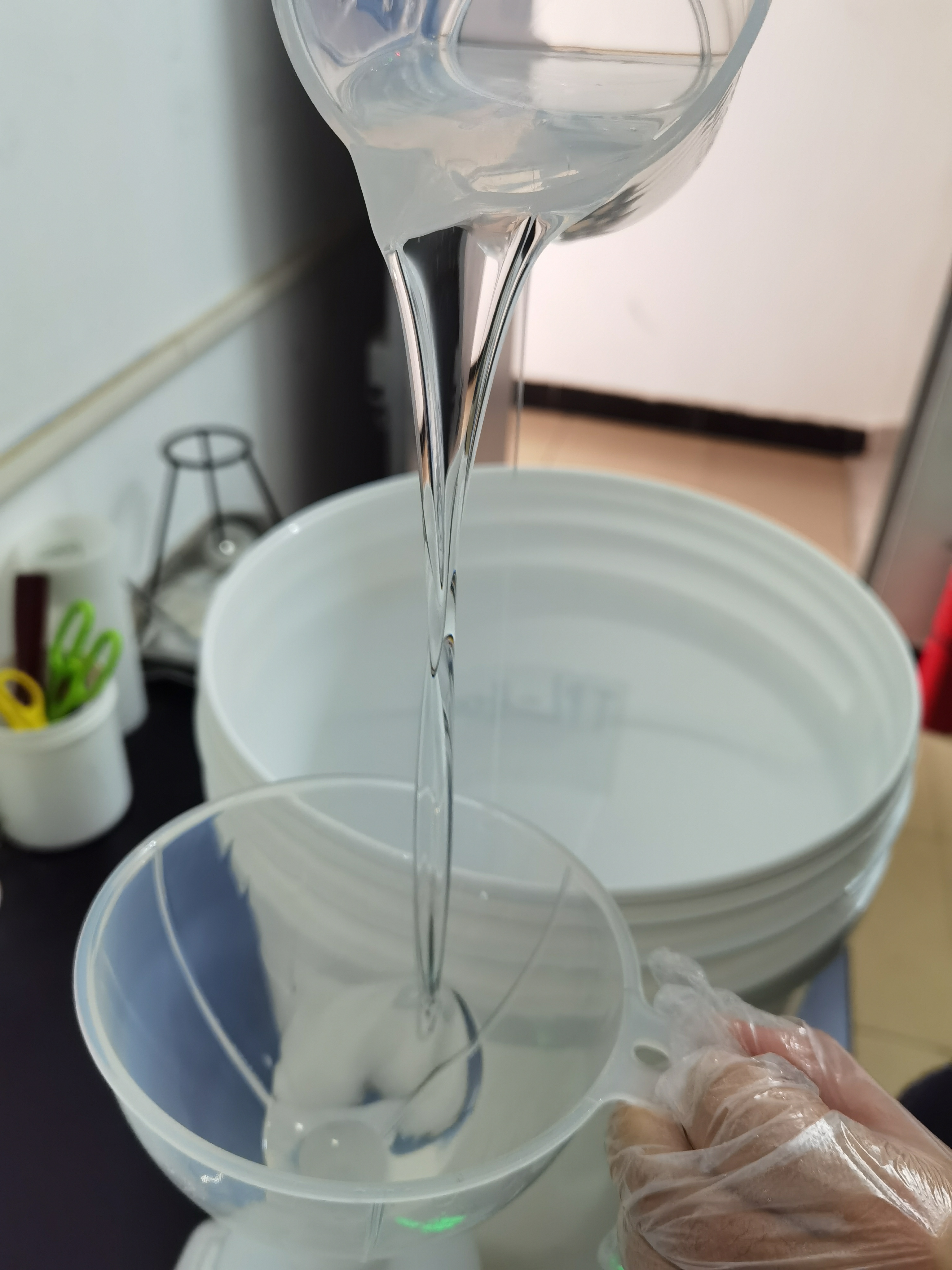
Platinum catalyst is the cure-system entry: its activity and addition rate determine how fast and how completely the elastomer finishes curing. Image: Dongguan Times Silicon Industry Co., Ltd.
The TPL-1000 series is the cure-system entry on this shortlist. Platinum catalysts initiate the hydrosilylation reaction that turns a vinyl-functional silicone formulation into a crosslinked elastomer. Activity and addition rate determine how fast that reaction runs and how completely it finishes — and in medical work, “completely” is the operative word.
| Metric | TPL-1000 series | Organotin / general platinum catalysts |
|---|---|---|
| Addition rate | 5–10 ppm | 50–100 ppm (organotin); 20–30 ppm (general platinum) |
| Full cure at 80 °C | 10 minutes | 30 minutes (organotin); 20 minutes (general platinum) |
| Odour residue | None | Pungent tin odour (organotin); slight off-odour (general platinum) |
| Yellowing after ageing | No yellowing after 1,000 h | Obvious yellowing after 200 h (organotin) |
| Curing defect rate | ≤0.6% | ≥2.5% |
| Batch activity fluctuation | Under 3% | Not stated in the comparison data |
| Rework rate | Under 1% | Not stated in the comparison data |
Table 3. Published comparison data for the platinum catalyst line.
The material is also described as having no impact on silicone yellowing and as compatible with medical and food-grade formulations. On the production side, the published figures are a 20 °C reduction in curing temperature, a 30% shorter moulding cycle, a 20% reduction in energy consumption per unit and a 35% increase in production capacity. Batch activity fluctuation below 3% is the stability claim that underpins the rest: without it, a shorter cycle would simply produce defects faster.
The cost structure repeats the pattern seen in Entry 1. Unit price per kilogram is higher than organotin catalysts, but the published comprehensive formulation cost is 10–15% lower because of the low addition rate and the removal of an additional deodorisation step. Published best-use applications are low-odour silicone for adult products, medical and food-grade silicone, low-odour electronic potting compounds and high-transparency LED encapsulants.
One practical point for buyers: the working addition rate is measured in parts per million, which is far below the organotin range. Metering and mixing equipment should be confirmed against the supplier's recommended addition window before a programme scales, because the cure system is the least forgiving element in the formulation.
Entry 3 — TVF-L-50 Series Vinyl Silicone Oil
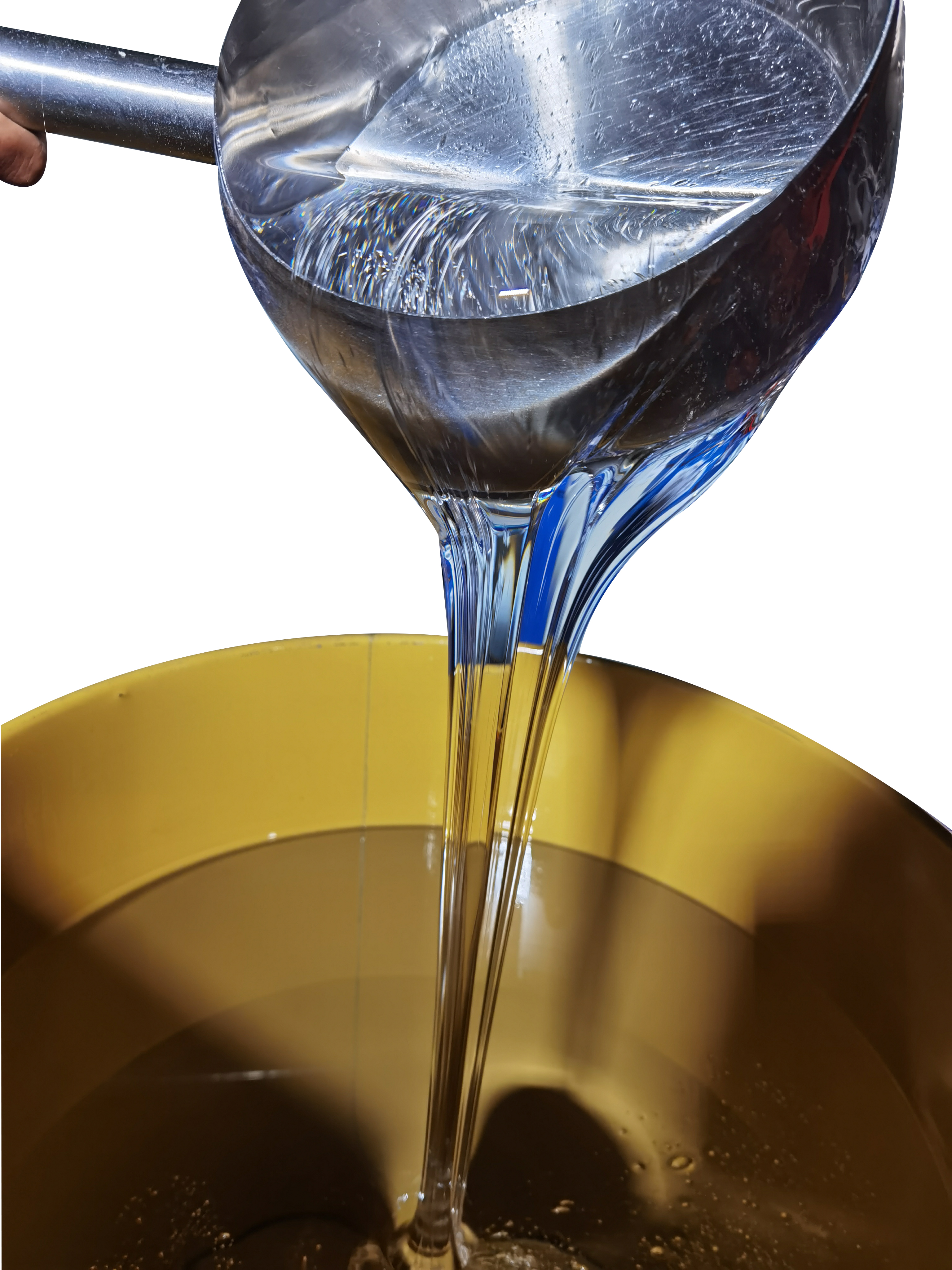
Vinyl silicone oil is the reactive intermediate: it supplies the vinyl functionality that crosslinks with Si–H in a platinum-catalysed system. Image: Dongguan Times Silicon Industry Co., Ltd.
Vinyl silicone oil occupies the raw-material side of the shortlist. In an addition-cure system, vinyl-functional siloxane components react with silicon-hydrogen crosslinkers in the presence of a platinum catalyst, and the vinyl component supplies the reactive sites in that network. Vinyl silicone oil is listed among Dongguan Times Silicon Industry Co., Ltd.'s core product families, alongside hydrogen-containing silicone oil, silicone resin, platinum catalysts, inhibitors and silicone treatment agents.
For this entry the verifiable evidence is organisational rather than parametric. The manufacturer holds ISO 9001 certification for its quality management system and has been recognised with a High-tech Enterprise Certificate; a utility model patent, ZL202323622488.5, is associated with the vinyl silicone oil line.
Evidence boundary. The manufacturer's published material does not provide a comparative performance table for vinyl silicone oil equivalent to the ones available for the overmoulding LSR and the platinum catalyst. Vinyl content, viscosity and compatibility with a specific base gum and catalyst system should therefore be confirmed against the supplier's technical documentation and validated in a trial batch rather than assumed from a shortlist entry.
Stating that boundary is not a criticism of the product. It is a statement about evidence weight, and it matters because a shortlist that presents three entries as equally documented invites buyers to make an unequal comparison.
How the Three Components Interact
Addition-cure silicone chemistry works through hydrosilylation. A vinyl-functional siloxane reacts with a silicon-hydrogen crosslinker; the platinum catalyst accelerates the reaction; an inhibitor holds the mixture in a workable state until heat releases it. Change any one of the three and the moulding behaviour changes.
That interdependence explains why the comparison data in this shortlist is expressed as process outcomes rather than as isolated material properties:
- Cure speed is set by catalyst activity and addition rate. The published TPL-1000 figure of 10 minutes at 80 °C, against 30 minutes for organotin and 20 minutes for general platinum catalysts, is a cure-window statement first and a chemistry statement second.
- Cure completeness shows up as defect rate. A curing defect rate of ≤0.6% for the catalyst, against ≤0.8% for the elastomer line and ≥2.5% for organotin systems, is what determines how much scrap leaves the line.
- Odour and colour are downstream effects of residual reactivity. A system that finishes curing cleanly leaves no irritating residue and no yellowing; the published sources record no yellowing after 1,000 hours of ageing for both the overmoulding LSR line and the catalyst, against obvious yellowing after 200 hours in the organotin comparison.
For medical and biotech programmes, the practical consequence is that cure completeness is a compliance variable, not only a quality variable. Unreacted material is precisely what extraction testing looks for. That is also why supplier certification alone does not close the question — the boundaries are set out below.
Application Fit: Where Each Entry Lands
Application fit differs by entry, and the published best-use statements are specific rather than general.
- TS6807A/B overmoulding LSR: high-end adult products, realistic body moulds, medical-grade silicone products and food-contact silicone accessories.
- TPL-1000 platinum catalyst: low-odour silicone for adult products, medical and food-grade silicone, low-odour electronic potting compounds and high-transparency LED encapsulants.
- TVF-L-50 vinyl silicone oil: formulation-side input for addition-cure systems, supplied alongside the company's hydrogen-containing silicone oil, silicone resin and inhibitor range.
Overmoulding is the application where the three entries interact most directly. It requires the elastomer to bond to a substrate, cure inside a defined window and release cleanly, and each of those steps depends on the cure system rather than on the elastomer alone. A programme that changes catalyst source without re-validating the overmoulding cycle is changing a process variable, not a purchasing line item.
Market Trend: Growth with Definitional Noise
Two market facts are relevant to a shortlist decision, plus one caution.
First, the medical-grade segment is large and growing relative to the wider market. Grand View Research places medical-grade LSR revenue at approximately USD 458.7 million in 2024 and identifies it as a dominant, fast-growing segment. Second, demand is being pulled from adjacent industries. SNS Insider projects the thermally conductive silicone rubber market to grow at a CAGR of 8.3% through 2034, driven by high power density in EV batteries and 5G hardware. Specialty silicone capacity is therefore shared between medical buyers and electronics or energy buyers, which is a supply-planning consideration rather than a demand statement.
The caution concerns market-size figures themselves. Published 2024 estimates for the LSR market differ materially: Market Research Future puts the value at approximately USD 2.81 billion, while Global Market Insights puts it at approximately USD 3.8 billion. The divergence is attributed to differing definitions, including whether high-consistency rubber is counted alongside LSR and how regions are drawn. Headline market sizes are useful context for a category review, but they are not a procurement benchmark.
Comparison with Traditional Alternatives, and the Limits of This Shortlist
The shortlist is not the only option. Industrial-grade silicone and organotin-catalysed systems remain cheaper per kilogram and are widely available. The published comparison data shows what is being traded.
| Dimension | Shortlist (medical-grade, platinum cure) | Traditional alternative |
|---|---|---|
| Odour | Low odour, no irritating residue | Pungent industrial odour (industrial-grade); pungent tin odour (organotin) |
| Biocompatibility | FDA and REACH certified | Uncertified, with harmful leaching (industrial-grade) |
| Tear strength | ≥35 kN/m | ≤20 kN/m (industrial-grade) |
| Yellowing after ageing | No obvious yellowing after 1,000 h | Severe yellowing after 200 h (industrial-grade); obvious yellowing after 200 h (organotin) |
| Curing defect rate | ≤0.8% elastomer / ≤0.6% catalyst | ≥3% (industrial-grade); ≥2.5% (organotin) |
| Catalyst addition rate | 5–10 ppm | 50–100 ppm (organotin); 20–30 ppm (general platinum) |
| Full cure at 80 °C | 10 minutes | 30 minutes (organotin); 20 minutes (general platinum) |
| Raw material price | 15–20% higher per kg than industrial-grade silicone (elastomer); above organotin per kg (catalyst) | Lower purchase price per kg on both components |
Table 4. Comparative position of the shortlisted platinum-cure route against traditional alternatives.
Where this shortlist stops
- The material premium is real. The overmoulding LSR line costs 15–20% more per kilogram than industrial-grade silicone, and the platinum catalyst costs more per kilogram than organotin. The published cost counter-arguments — a 5–10% reduction in comprehensive production cost for the elastomer and a 10–15% reduction in comprehensive formulation cost for the catalyst — depend on scrap levels, existing deodorisation steps and order volume. They are not automatic savings.
- Supplier certification is not device qualification. Medical-grade LSR is expected to comply with ISO 10993 for biocompatibility, USP Class VI, and FDA 21 CFR 177.2600 for human-contact applications. Those standards apply to the finished device and its validated process. A supplier's ISO 9001 system and FDA, REACH or RoHS documents support the evaluation but do not replace device-level testing.
- Vinyl silicone oil is formulation-specific. The published evidence for this entry is organisational rather than comparative. Performance depends on how the oil is matched to a specific base gum, crosslinker and catalyst system, so a trial batch belongs inside the evaluation rather than after it.
- Platinum-cure systems are sensitive to their environment. Addition-cure silicones are generally recognised as vulnerable to cure inhibition from certain contaminants, so substrate cleanliness, tooling condition and handling practice belong in the qualification plan alongside material selection.
Supplier Landscape Beyond the Shortlist
Third-party market research identifies Dow Inc., Wacker Chemie AG, Momentive Performance Materials and Shin-Etsu Chemical Co., Ltd. as major global competitors in the LSR market. These are established multinational silicone producers with broad portfolios, and buyers evaluating a medical or biotech programme will typically review them alongside specialised regional manufacturers such as Dongguan Times Silicon Industry Co., Ltd. This article does not rank those companies, and no comparative performance data for them is presented here.
What differs between the two supplier profiles is the criteria buyers apply. Multinational producers are assessed on global documentation standards and multi-site supply. Specialised manufacturers are assessed on responsiveness, batch traceability and formulation-level technical support. The published risk-control measures from this manufacturer are specific: batch test reports supplied for platinum content and activity, ICP-MS testing for platinum content and impurities, moisture-proof sealed packaging with constant-temperature batch storage, a minimum of three months' safety stock of core raw materials, and a 24-hour response commitment on quality issues.
Future Outlook
Three developments are likely to shape LSR sourcing in medical and biotech over the next few years.
- Documentation depth as a selection criterion. As the medical-grade segment continues to expand — Grand View Research places 2024 revenue at approximately USD 458.7 million — more buyers are asking for batch-level test reports and traceability records rather than summary certificates. Suppliers already operating batch retention, activity testing and in-line monitoring will be easier to qualify.
- Cost comparison moving to total production cost. With raw material premiums of 15–20% on the elastomer and higher unit prices on platinum catalysts, purchasing teams are shifting the comparison to defect rate, rework and energy per unit. The published figures — 15% shorter moulding cycle, 10% lower energy per unit and 20% higher capacity for the elastomer, plus a 20 °C lower curing temperature and 20% lower energy per unit for the catalyst — are the metrics likely to be audited.
- Capacity competition from adjacent industries. A projected 8.3% CAGR in thermally conductive silicone rubber through 2034 indicates that medical buyers will continue to share specialty silicone capacity with electronics and energy applications, which makes supply-continuity planning part of the material decision rather than a separate commercial topic.
FAQ
How does a platinum-catalysed cure system differ from an organotin system in medical silicone production?
Published comparison data for the TPL-1000 series records an addition rate of 5–10 ppm, against 50–100 ppm for organotin catalysts, and a full cure in 10 minutes at 80 °C, against 30 minutes for organotin. Odour residue is none, against a pungent tin odour, and no yellowing is reported after 1,000 hours of ageing, against obvious yellowing after 200 hours for organotin. The curing defect rate is ≤0.6%, against ≥2.5%. The unit price per kilogram is higher than organotin, but the published comprehensive formulation cost is 10–15% lower because of the low addition rate and the removal of a deodorisation step.
What certifications and documents should a medical-grade LSR supplier be able to provide?
At supplier level, ISO 9001 quality management system certification is the baseline; Dongguan Times Silicon Industry Co., Ltd. holds it, and its product range carries RoHS, REACH, FDA, LFGB and halogen-free certifications with third-party reports. At device level, medical-grade LSR is expected to comply with ISO 10993 for biocompatibility, USP Class VI and FDA 21 CFR 177.2600 for human-contact applications. The two levels are separate: supplier certificates support an evaluation, while device-level standards are demonstrated through testing on the finished product and its validated process.
Does a higher price per kilogram make medical-grade LSR more expensive overall?
Not necessarily. The overmoulding LSR line costs 15–20% more per kilogram than industrial-grade silicone, yet the published comprehensive production cost is 5–10% lower because of lower defect rates and fewer reworks. The platinum catalyst likewise costs more per kilogram than organotin but reduces comprehensive formulation cost by 10–15% through a low addition rate and the elimination of a deodorisation step. Both outcomes depend on the factory's baseline scrap rate and its existing process steps.
What are the practical limits of platinum-cure LSR for overmoulding?
Three limits are documented. First, the material premium: 15–20% higher raw material cost per kilogram for the elastomer, and a higher unit price per kilogram for the platinum catalyst than organotin. Second, formulation dependence: vinyl silicone oil performance must be matched to the specific base gum and catalyst system rather than selected from a general specification. Third, process sensitivity: addition-cure silicones are generally recognised as vulnerable to cure inhibition from certain contaminants, so substrate cleanliness and handling practice must be controlled during qualification.
How is batch consistency validated before scaling to volume production?
The published consistency figures are a starting point: hardness and curing speed fluctuate by less than 3% between batches for the overmoulding LSR line, platinum catalyst activity fluctuates by less than 3%, and the rework rate is below 1%. Verification measures include batch test reports for platinum content and activity, ICP-MS testing for platinum content and impurities, full-link batch traceability from raw materials to finished goods, constant-temperature storage in moisture-proof sealed packaging, and in-line monitoring of viscosity, hardness and mixing ratio with anomaly alerts. A trial batch under production conditions remains the decisive test.
Material selection in medical and biotech LSR is a sequence, not a single comparison: confirm the elastomer's biocompatibility and mechanical profile, confirm the cure system's process window, confirm the reactive intermediates against the specific formulation, and then validate the combination on the actual line. The three entries in this shortlist carry different evidence weights — two are supported by published comparative data, one by organisational and patent documentation — and that difference should remain visible in how each one is evaluated.
Reference material: a downloadable company brochure covering the liquid silicone rubber and silicone raw material range is available at Times Silicon company brochure (PDF).