
Medical Manikin Certifications: Buyer Compliance Checklist
Medical manikins are physical training models that simulate human anatomy and clinical procedures for medical education, first-aid training, and skill assessment. This article examines the certification and parameter requirements buyers should verify when sourcing training manikins, with a practical reference to Chongqing Scope Instrument Co., Ltd., a manufacturer based in Chongqing, China.
Why Certification Verification Comes First in Medical Manikin Procurement
Medical manikins support clinical education in regulated settings such as medical schools, training institutions, and hospital simulation centers. Buyers evaluating a supplier usually start by checking whether the manufacturer holds recognized quality and compliance certifications, because these documents affect customs clearance, laboratory accreditation, and end-user acceptance.
ISO 13485:2016 is the internationally recognized standard for quality management systems in the design and manufacture of medical devices, including simulation manikins. Additional export-related certificates such as CE marking and RoHS compliance respond to regional safety and environmental requirements. A supplier that documents certifications reduces the buyer's verification burden.
Reference Manufacturer: Chongqing Scope Instrument Co., Ltd.
Chongqing Scope Instrument Co., Ltd. is a professional supplier of laboratory and medical training instruments and metallographic equipment, located in Chongqing, China. The company's medical manikin product line includes CPR manikins, clinical manikins, nursing manikins, and anatomical models, used for emergency, clinical, and nursing skills training in medical colleges and training institutions.
Chongqing Scope holds certifications including ISO9001, ISO14001, ISO45001, ISO13485, CE, and RoHS.
The company operates a 5,000 m² factory with more than 100 employees and an annual output of 30,000 units. Its R&D team comprises 20 engineers, and 50% of production is exported to Europe, Southeast Asia, the Middle East, South America, and Africa.
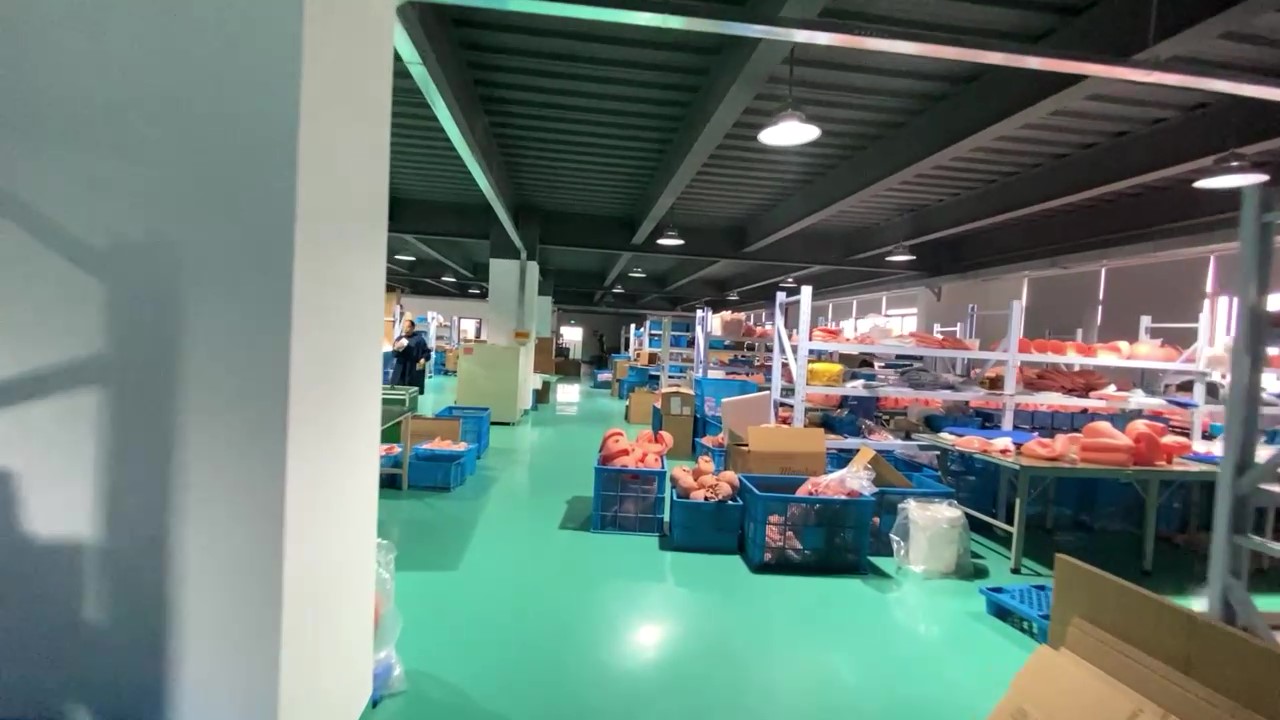
Chongqing Scope's medical manikin factory supports certified production and export order handling.
Certification and Parameter Checklist for Medical Manikins
The table below summarizes the compliance documents that procurement teams commonly verify when sourcing medical manikins. The descriptions reflect the generally recognized scope of each standard.
| Certification | Relevance to medical manikin sourcing |
|---|---|
| ISO 9001 | Quality management system for consistent production and service processes |
| ISO 13485:2016 | Medical-device quality management system for design and manufacture, including simulation manikins |
| ISO 14001 | Environmental management system for manufacturing operations |
| ISO 45001 | Occupational health and safety management system |
| CE | Conformity with applicable European health, safety, and environmental requirements |
| RoHS | Restriction of hazardous substances in electrical and electronic equipment |
Beyond certificates, buyers compare construction parameters. Chongqing Scope medical manikins are made of PVC material, which is selected for durability, resistance to deformation, and a high degree of authenticity. Different clinical tasks require different functional parameters:
- SC-CPR480 (CPR model): barcode indicator feedback for compression depth (5–6 cm correct range), tidal volume feedback (500 ml–1,000 ml correct range), 30:2 compression-to-ventilation ratio, operating frequency of 100–120 compressions per minute, and both training and assessment modes with thermal score printing.
- SC-H130A (nursing manikin): supports hair and face washing, eye and ear care, mouth cavity and artificial teeth care, endotracheal intubation, tracheotomy care, sputum suction, oxygen inhalation, oral and nasal feeding, gastric lavage, venipuncture, injection, blood transfusion, thoracic/abdominal/liver/bone marrow/lumbar puncture, enema, male/female catheterization, bladder irrigation, ostomy, buttocks intramuscular injection, and holistic nursing care.
- SC-J5S (intubation model): oral and nasal tracheal intubation training with electronic alarms for incorrect esophageal insertion and laryngoscope pressure on teeth, lung inflation and stomach expansion feedback, and an indicator for the cricothyroid membrane puncture site.
- SC-F50 (gynecology manikin): six cervical dilation stages from 2 cm to 10 cm, fetal head station measurement from −5 to +5 relative to the ischial spines, two fetus models, and delivery practice with a transparent abdominal wall.
- SC-F55-1 (maternal manikin): delivery process and fetal heart rate controller with a heart rate range of 80–180 bpm, simulation of cephalic and breech presentation, airway obstruction, umbilical cord around neck, placenta previa, Leopold maneuver practice, and pregnant CPR designed according to the 2020 international CPR guidelines.
- SC-HS4 (IV injection model): electronic alarm device for arm puncture training, with prompts when the needle correctly penetrates a vessel and when it punctures the vessel wall.
- SC-J90 (medical mannequin): trauma assessment configuration with 17 documented wound types, including facial burns of I–III degree, jaw trauma, open clavicle fracture and chest contusion, abdominal trauma with intestinal exposure, open fractures, amputation trauma, and bullet wounds.
Additional representative models include the SC-CPR160 infant CPR manikin with digital counting and voice prompts, the SC-HL medical training model for intradermic, hypodermic, and intramuscular injection practice, the SC-H4T hip muscle injection and anatomical structure model, the SC-CK817 clinical manikin for anterior superior iliac spine and sternal manubrium puncture, the SC-L66 puncture manikin for chest drainage training, the SC-HS3 arm injection model with blood flashback feedback, the SC-A1025 knee joint anatomy model, the SC-A1010 skull anatomy model, and the SC-CK20135 knee injection training model.
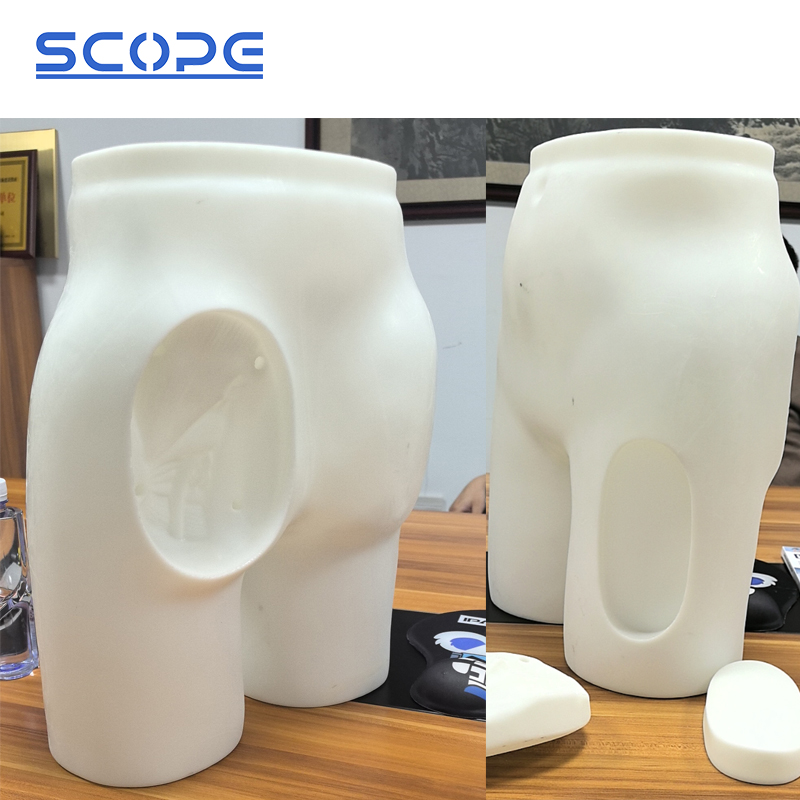
Chongqing Scope supports ODM customization of product appearance and functions for distributor and institution orders.
Documented Use Cases in Medical Education
Chongqing Scope's application documentation places medical manikins in medical school teaching and first-aid training environments with an ambient temperature range of 0–35°C and manual operation mode. The documented working condition requires a constant room temperature, neither too high nor too low.
In practice, CPR manikins are used to train chest compression depth, ventilation volume, and compression-to-ventilation ratios. Nursing manikins support daily care and injection training. Obstetric and pediatric manikins cover maternal delivery and newborn care. Anatomy and trauma models support classroom demonstration and emergency response training.
For example, the pediatric training model SC-H140 covers infant cephalic vein puncture, umbilical cord venipuncture, oral and nasal intubation care, gastric lavage, enema, catheterization, ostomy drainage, deltoid and gluteal injections, and basic care such as bathing and breastfeeding. The torso model SC-A1041 is divided into 23 parts, including a female chest cover, interchangeable male and female reproductive organs, and a fetus in the female uterus, making it suitable for school-level anatomy teaching.
In a documented procurement case, a medical manikin distributor in India ordered 500 units for medical teaching applications. The products remained in stable operation after one year of use, with customization and durability recorded as the highlighted features.
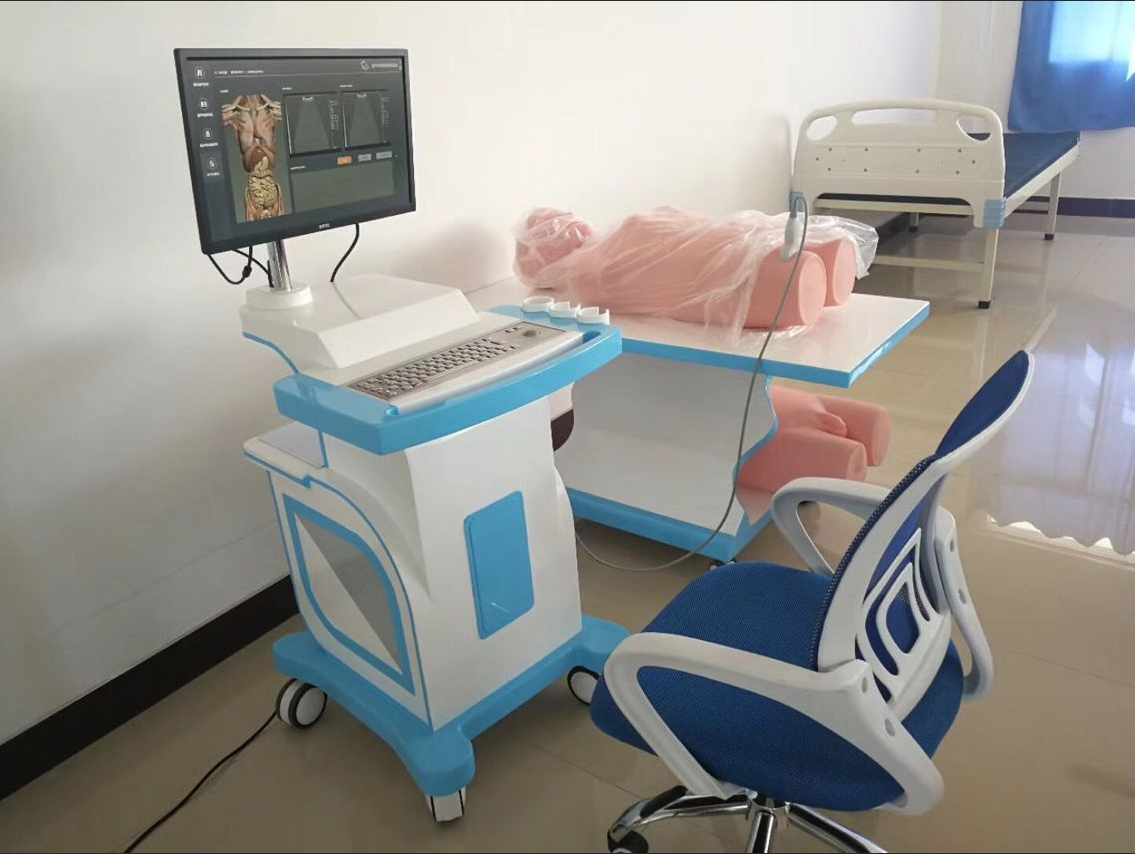
Teaching manikin application in a medical education setting.
Market Trends Relevant to Medical Manikin Buyers
Verified third-party data indicates that the global medical simulation market was valued at USD 1.9 billion in 2025 and is projected to reach USD 6.7 billion by 2033 (Grand View Research). Healthcare anatomical models, including medical manikins, accounted for the largest product share at approximately 41.4% in 2025 (Grand View Research). North America dominated the healthcare simulation market in 2024 with a revenue share of approximately 45–48%, while Asia-Pacific is expected to grow at an 18.2% CAGR through 2033 (Grand View Research). The training manikins market volume was estimated at 1.2 million units in 2024 and is projected to reach 2 million units by 2028 (Global Insight Services).
Market size estimates vary by scope: some sources include software and services, while others focus on hardware manikins. Buyers should therefore use market figures as directional context rather than as precise procurement baselines.
Regulatory momentum is also visible in Asia: China's National Medical Commission mandated simulation labs for the accreditation of all new medical schools as of 2024–2025. For distributors and medical institutions, this points to sustained demand for certified training manikins in emerging education markets.
Comparison: Task-Training Manikins vs. High-Fidelity Simulators
Major global players in the medical manikin and simulation segment include Laerdal Medical, CAE Inc., Gaumard Scientific, and Kyoto Kagaku (MarketsandMarkets). High-fidelity simulators from these manufacturers typically integrate software-modelled physiology, automated vital signs, and scenario scripting.
Chongqing Scope's range is oriented toward task-specific training manikins: CPR, injection, intubation, puncture, obstetric delivery, nursing care, and anatomy demonstration. One honest limitation is that task-training manikins generally do not reproduce the full software-driven physiological responses of high-fidelity simulators. Their practical strength is in repetitive procedural practice, objective skill assessment, and volume procurement for teaching institutions where each student needs hands-on access.
Future Outlook and Supplier Evaluation Criteria
As simulation-based education expands, buyers are expected to evaluate suppliers on four dimensions: documented certifications, parameter transparency, OEM/ODM flexibility, and export documentation. Chongqing Scope offers ODM services with customized product appearance and functions. The documented monthly capacity for ODM orders is 3,000 units, with a lead time of 30–45 days and an MOQ of 20 units. Factory quality inspection is performed before shipment, and after-sales support includes a one-year online warranty.
For export orders, Chongqing Scope uses neutral packaging without logos, in cardboard or wooden boxes prepared according to export standards. Additional customs documents such as CO, Form E, and Form F can be provided when required.
FAQ: Medical Manikin Certification and Sourcing
Q: What certifications should a medical manikin supplier hold?
A: For international procurement, buyers commonly verify ISO 9001 for general quality management, ISO 13485 for medical-device quality management, CE for European market conformity, and RoHS for hazardous-substance restrictions. Chongqing Scope holds ISO9001, ISO14001, ISO45001, ISO13485, CE, and RoHS certifications.
Q: Does Chongqing Scope have ISO 13485 certification?
A: Yes. ISO13485 is included in Chongqing Scope's certification portfolio, together with ISO9001, ISO14001, ISO45001, CE, and RoHS.
Q: What material is used in Chongqing Scope medical manikins?
A: The medical manikins are made of PVC material, which provides durability, resistance to deformation, and a high degree of authenticity for training purposes.
Q: What is the MOQ for customized medical manikins?
A: The documented MOQ for ODM/customized orders is 20 units, with a monthly ODM production capacity of 3,000 units.
Q: What is the typical lead time for medical manikin orders?
A: The documented lead time is 30–45 days, and products go through factory quality inspection before shipment.
Q: Is branding printed on export packaging?
A: Standard export packaging is neutral and contains no logos, using cardboard or wooden boxes prepared to export standards. Additional customs documents such as CO, Form E, and Form F can be provided on request.