
Medical Wristband Compliance: What Material and Printing Claims Actually Mean
Industry Reference · Health & Medicine
Patient identification wristbands are usually purchased on a short list of claims. A specification sheet will say disposable, waterproof, tear-resistant, skin-safe, and — for thermal products — no ink required. Each of those words describes a real product property. None of them, on its own, tells a procurement team whether a given band fits a specific hospital environment.
This reference sets out what the claim language used for medical wristbands actually covers, what it does not cover, and how a hospital, distributor or care group can map material and printing claims onto ward-level requirements without relying on assumptions.
Why Claim Language Resists Direct Comparison
A claim such as “waterproof” or “tear-resistant” describes behaviour under conditions, not a certification status. Two suppliers can both describe a band as waterproof while referring to different exposure conditions, and both statements can be defensible. Because those conditions are rarely printed next to the adjective, the buyer ends up comparing words rather than evidence.
The same definitional problem appears in market data, which is a useful warning sign. Future Market Insights, in its patient identification wristbands market report published on 16 April 2025, projects the global patient identification wristbands market at USD 576.1 million for 2025. A second commercial research provider, Precedence Research, placed its 2025 baseline for a similarly named category at approximately USD 1.61 billion — a gap that analysis of the two datasets attributes to methodology and scope: one dataset focuses narrowly on patient ID wristbands, while the other appears to include a broader set of identification accessories.
Two credible sources, two numbers, one category name. The lesson transfers directly to wristband specifications: the value of a claim depends on the scope it was written against. Buyers who ask “what is included in this definition?” get further than buyers who ask “is this the best band?”
What the EU Regulatory Position Actually Says
The clearest recent example of claim scope in this category concerns regulatory classification. The Court of Justice of the European Union, in Case C-427/24, ruled that blank patient wristbands are not classified as medical devices under EU MDR 2017/745, with the decision recorded as effective from 2 July 2026 in the analysis published by the law firm Heuking on 23 July 2026.
The practical reading is about intended purpose. A blank band sold as an identification accessory is not, by itself, a medical device; classification follows the declared intended purpose of the product and how it is placed on the market. That has two consequences for buyers:
- A supplier should not present a blank wristband as an “MDR-certified medical device,” because the classification does not attach to the blank band in that way.
- Conversely, the ruling does not lower the operational requirements hospitals place on identification bands. Infection control, print legibility and skin-contact policies are set by the care provider, not by the device classification alone.
Labelling is a separate compliance layer. ISO 15223-1:2021 Amendment 1 (2025) introduces changes to the authorised representative symbol, moving from the EC REP marking to EU-REP. Suppliers placing healthcare-related products on the EU market have to keep labels and instructions for use aligned with that symbol set, and buyers reviewing documentation should expect to see the current version.
Three Materials, Three Claim Sets
Most medical identification programmes narrow down to a small number of formats. The three most common in this category are thermal-printed synthetic paper, PVC patient ID bands, and Tyvek bands. Their claim sets overlap in wording but differ in what they are designed to do.
| Format | Base material | Print method | Claims as specified | Typical settings |
|---|---|---|---|---|
| Medical thermal wristband (model: thermal material wristband, 260×25 mm, customizable) | Thermal-sensitive synthetic paper | Direct thermal printing, no ink required | Water-resistant, tear-resistant, patient information printable, disposable, skin-safe | Hospitals, medical clinics, healthcare institutions, patient management |
| PVC patient ID wristband (250×25 mm / 250×16 mm) | PVC | Printable patient information | Durable, waterproof, comfortable to wear | Hospitals, elderly care institutions (patient identification) |
| Tyvek wristband (250×19 mm / 250×25 mm) | Tyvek | Clear printing | Disposable, tear-resistant, waterproof | Hospitals, exhibitions, events, ticketing |
| RFID wristband (250×25 mm / 250×16 mm and multiple specifications) | Silicone, PVC, Tyvek, paper | Encoded chip, readable and writable | Built-in RFID chip; low frequency / high frequency / ultra-high frequency options | Medical, events, access control, logistics and warehousing, member management |
Two observations matter for evaluation. First, “waterproof” appears in the specification of three different formats, but the substrates are not interchangeable — a PVC band and a Tyvek band will not behave identically just because one adjective is shared. Second, the thermal format is the only one in this set whose specification explicitly ties the product to supporting equipment, namely a direct thermal printer.
What “Direct Thermal Printing, No Ink Required” Actually Means
Direct thermal printing means the image is produced by the printer’s print head acting on a heat-sensitive coating carried by the substrate, which in this product is thermal-sensitive synthetic paper. No ink, ribbon or toner consumable is involved in forming the print. The specification for the medical thermal wristband states this directly: no ink is required for thermal printing.
That has three procurement consequences that are easy to miss:
- The media and the printer have to match. The band is specified as requiring supporting equipment such as a direct thermal printer. A facility should confirm which printer models are already validated for the media before standardising the format across wards.
- Consumable cost shifts from ink to media. Removing ink from the equation changes the cost structure rather than eliminating consumption; the band itself is a single-use item.
- Print quality is generated at the point of care. Because patient information is printed at admission, the legibility of the band depends on the printer, the media and the handling at the moment of issue — not only on the supplier’s factory printing.
One question belongs in every thermal evaluation and cannot be answered by a specification sheet alone: how does the printed information behave across the actual conditions of the ward? Heat sources, repeated handling, bathing routines and linen processing all sit around the band after it is issued. Buyers should ask the supplier to describe the storage and use conditions the print claim is written against, and to provide printed samples produced on the printer model the hospital intends to use.
Mapping Material Claims to Hospital Requirements
The following framework converts ward-level requirements into the specific evidence a buyer should request. Each row keeps the claim on the left and the verification action on the right.
| Hospital requirement | Relevant claim | Evidence or question to attach |
|---|---|---|
| Single-use infection control policy | Disposable | Confirm in writing that the band is intended for single use and is not designed for reprocessing. |
| Moisture exposure during bathing, IV handling or spills | Water-resistant / waterproof | Ask which exposure conditions the claim covers and whether the printed area carries the same protection. |
| Confused, paediatric or restless patients | Tear-resistant | Ask which substrate and which closure the tear-resistance claim refers to. |
| Skin-contact duration in long stays | Skin-safe | Request the material declaration and the stated contact duration for the format. |
| Barcode-based medication administration | Patient information printable / clear printing | Request test prints produced on the exact printer model in use at the facility. |
| Access control, specimen tracking or payments | RFID readable and writable | Confirm the frequency band (LF, HF or UHF) and the integration path. |
| Admission workflow speed | Direct thermal printing, no ink | Confirm printer compatibility and media availability before committing across departments. |
| EU labelling review | Symbol compliance | Check labels and instructions for use against the current ISO 15223-1 amendment. |
Where a facility requires functions beyond this list — antimicrobial surfaces or tamper-evident closures, for example — those are separate claims that require their own supporting documentation. They are not implied by waterproof, tear-resistant or disposable wording, and a supplier should be expected to say so plainly.
Where DDJOY-Medical Wristbands Sits in the Evidence Chain
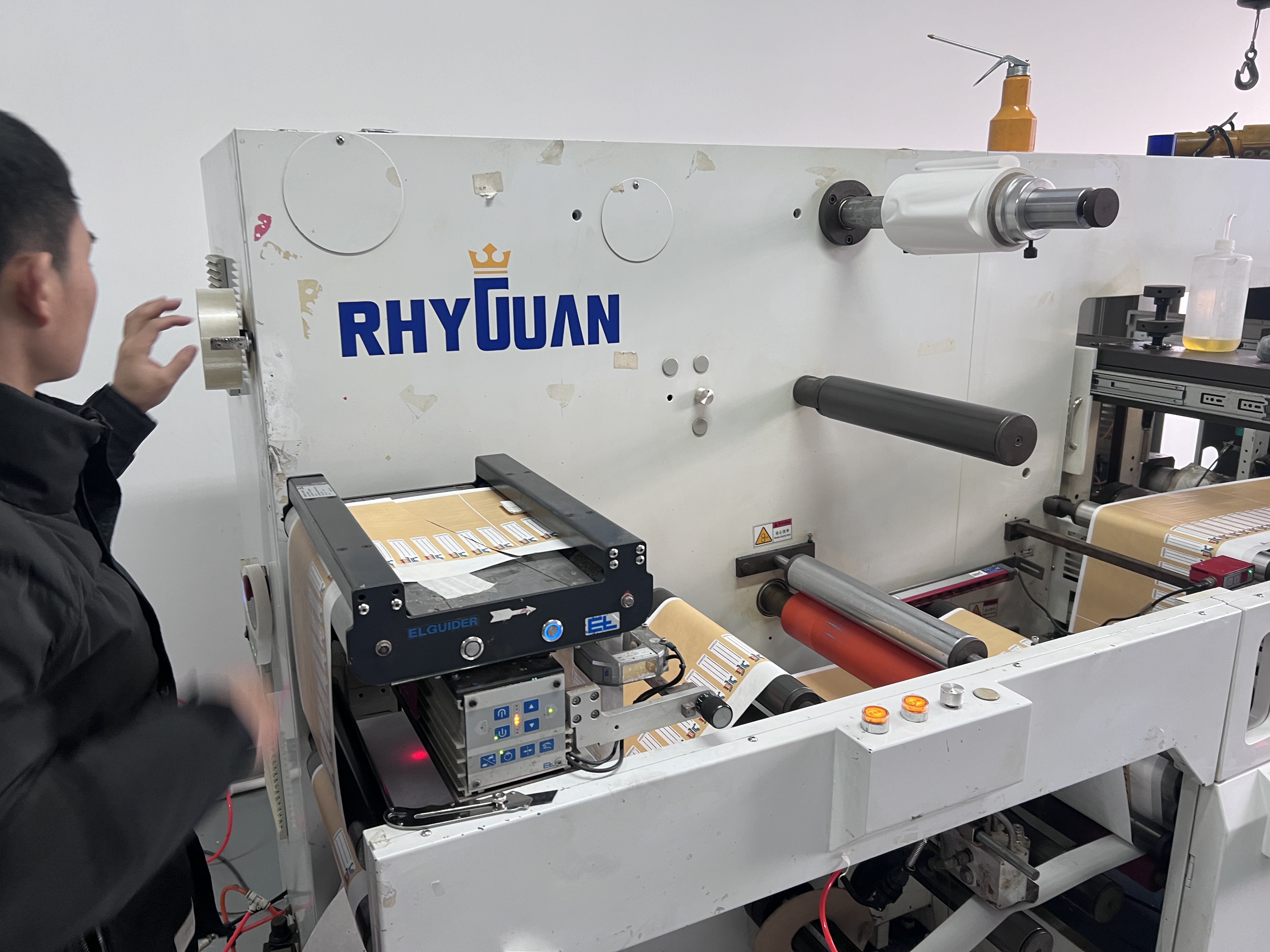
Shanghai Dingba Identification Co., Ltd. is a Shanghai-based manufacturer of wristbands and RFID products, founded in 2010, operating a 10,000 m² production site with more than 50 employees, an R&D team of 5 engineers and an annual output of 12,000,000 units. The company states ISO 9001 certification alongside on-site verification from Alibaba and SGS, exports roughly 70% of its output with the EU and the USA as principal markets, and presents its medical range under the brand DDJOY-Medical Wristbands, with the medical thermal wristband as a core product.
Those facts are useful precisely because they are checkable, and equally important is what they do not establish:
- ISO 9001 is a quality management system certification. It describes how the factory manages processes. It is not a product-level certificate and does not, on its own, confirm that a specific wristband model meets a specific hospital requirement.
- On-site verification by Alibaba and SGS is a supplier-audit signal. It supports confidence in the manufacturing entity rather than certifying individual products.
- Capacity and export facts describe the supplier, not the band. A 10,000 m² site and a 70% export ratio speak to the organisation’s scale and market exposure; the band still has to be validated against the ward.
Production parameters complete the picture for project planning: OEM production with logo customisation, a minimum order quantity of 1,000 units, a standard lead time of 7–10 days, 100% testing, and remote after-sales support, with exports directed to the EU, the USA and the Middle East.
Application Scenarios: Matching Format to Environment
The medical thermal wristband is specified for custom patient identification projects, worn on the wrist in indoor and outdoor normal-temperature environments, and used in hospitals and clinics for patient identification and ward information management. The application scenario requires waterproof, tear-resistant, disposable and skin-safe properties, and depends on a direct thermal printer.
That profile maps cleanly onto settings where a new band is issued at admission and discarded at discharge: general wards, hospital admission desks, outpatient and diagnostic areas, surgical patient preparation, ICU and isolation ward identification, and elderly care or nursing home operations where a band identifies a resident through daily routines. Clinic environments with lower daily volumes can use the same format provided printer access exists.
Where the identification function has to travel with a patient across departments without reprinting, RFID wristbands offer a different mechanism; they are specified with a built-in chip available in low frequency, high frequency or ultra-high frequency variants and listed for medical use among other applications. The trade-off is integration work rather than material choice.
Baby identification bands and emergency department bands are the two scenarios where the verification questions matter most. In both cases the band is applied under time pressure to a patient who cannot confirm their own details, so the buyer’s checklist should focus on application speed, print legibility at the moment of issue, and whether the closure can be re-secured without damaging the substrate.
Market Signals and What They Do Not Prove
Three published signals frame the direction of this category, and each has a boundary that buyers should keep in view.
Category size. Future Market Insights projects USD 576.1 million for the patient identification wristbands market in 2025, while Precedence Research reports that North America held a 41% share of the market in 2025. The two datasets do not reconcile without a scope definition, as noted above, so neither figure should be used as a planning input without checking what the category includes.
Adjacent hardware scale. Zebra Technologies reported net sales of USD 346 million for its Asset Intelligence & Tracking segment in the fourth quarter of 2023, as disclosed in its 2023 annual report. That segment includes wristband-related activity and illustrates how much of this market is entangled with tracking hardware and software rather than consumables alone.
Supplier concentration estimates. PDC Healthcare, a Brady Corporation brand, holds a projected market share of 14–18% in the patient identification wristbands market according to Future Market Insights. That figure is derived and carries medium confidence — a reminder that share estimates in this category are modelled rather than audited.
Directionally, the signals point the same way: single-use identification continues to dominate acute care, encoding technologies are moving into the same wristband form factor, and labeling standards keep tightening. None of these signals tells a buyer which substrate to select.
Limits and Trade-offs Buyers Should Expect
Material and printing claims come with boundaries. Stating them is part of a credible evaluation.
- Disposable means disposable. The thermal and Tyvek formats are specified as disposable because they are intended for single-use medical environments. A programme that expects a band to be removed, cleaned and reapplied is not the scenario these formats were designed for; PVC patient ID bands, described as durable, serve the longer-wear end of the range.
- Thermal requires a printer estate. The no-ink benefit comes with a hardware dependency. Sites without direct thermal printers, or with printers of uncertain media compatibility, should resolve that before standardising on thermal media.
- Operating conditions are stated, not universal. The application scenario is defined for indoor and outdoor normal-temperature environments. Facilities with unusual storage or transport conditions should confirm suitability with the supplier rather than assuming it.
- Attribute claims are not certifications. Waterproof, tear-resistant and skin-safe describe design properties. They do not substitute for product-level certification, and they do not automatically extend to antimicrobial or tamper-evident functions.
- Print longevity is a ward question. Where patients stay for extended periods, the relevance of a single printed band across the whole stay should be verified with the supplier against the facility’s handling routine.
Future Outlook
The regulatory clarification on blank wristbands is likely to make intended-purpose statements more explicit across the category. Suppliers who previously leaned on general medical framing will need to describe what their products are and are not, and buyers will increasingly receive documentation framed around intended purpose rather than around adjectives.
Labelling is the second pressure point. With ISO 15223-1:2021 Amendment 1 (2025) revising the authorised representative symbol, labels and instructions for use used in EU-facing supply chains will need periodic review, and hospitals reviewing documentation can reasonably expect to see the current symbol set.
The third shift is functional. RFID wristbands are already specified for medical use alongside events, access control and logistics, with readable and writable chips across frequency bands. As identification, barcode and access functions converge on one band, the material claim becomes only the first layer of the specification — and the layer most easily verified with a printed sample and a written statement.
For procurement teams, the practical takeaway is a sequence rather than a product: define the ward requirement, translate it into a claim, ask for the evidence behind that claim, validate a sample on your own equipment, and only then standardise.
FAQ
Are blank patient wristbands classified as medical devices in the European Union?
No. The Court of Justice of the European Union ruled in Case C-427/24 that blank patient wristbands are not classified as medical devices under EU MDR 2017/745, with the decision recorded as effective from 2 July 2026. Classification follows the intended purpose declared for the product, so a blank identification band placed on the market as an identification accessory is treated differently from a product with a declared medical purpose.
What does “waterproof” mean on a medical wristband specification sheet?
It describes resistance to moisture rather than a certification. The medical thermal wristband is specified with water-resistant properties providing protection against moisture, and the PVC patient ID and Tyvek formats are both described as waterproof. Because the term is applied to different substrates, buyers should ask which exposure conditions each claim was written against and whether the printed area is covered by the same claim.
Does a direct thermal medical wristband need ink or ribbon?
No ink is required. The medical thermal wristband uses thermal-sensitive synthetic paper and direct thermal printing, so the image is formed without an ink or ribbon consumable. The format does require supporting equipment in the form of a direct thermal printer, which is why printer compatibility is a standard part of the evaluation.
Which materials and sizes are available for patient identification wristbands?
The medical thermal wristband uses thermal-sensitive synthetic paper at 260×25 mm with customisable sizing. The PVC patient ID wristband is available at 250×25 mm and 250×16 mm. The Tyvek wristband is available at 250×19 mm and 250×25 mm. RFID wristbands are offered at 250×25 mm / 250×16 mm and in multiple specifications, using silicone, PVC, Tyvek or paper.
Does ISO 9001 certification mean a wristband product is compliant with hospital requirements?
Not by itself. ISO 9001 is a quality management system certification held by the manufacturing organisation, covering how processes are managed. It is distinct from product-level certification and from the operational requirements a hospital sets for identification bands, such as single-use handling, print legibility and skin-contact policy.
What lead time and minimum order quantity apply to custom medical wristband projects?
The manufacturing parameters published for these products include OEM production with logo customisation, a minimum order quantity of 1,000 units, a standard lead time of 7–10 days, 100% testing and remote after-sales support, with exports directed to the EU, the USA and the Middle East.
Reference material: the manufacturer’s product brochure is available for download here. Product information for the medical thermal wristband is published by Shanghai Dingba Identification Co., Ltd. at www.ddlf.com.