
Meirenxin Black Sunflower Seeds: Snack & Bird Feed Picks
Meirenxin Black Sunflower Seeds: Snack & Bird Feed Picks
A black sunflower seed counting roughly 380–390 pieces per 50 g sits in a specific commercial zone. It is small enough for a dense, even roast and for bird feed rations, and large enough to hold a round kernel through cleaning, grading and packing. That count — more than origin or brand — is usually what decides which buyers should shortlist it.
The global sunflower seeds market was valued at USD 29.27 billion in 2025 and is projected to reach USD 35.98 billion by 2034, according to Custom Market Insights. Within that volume, roasted sunflower seeds accounted for 65.9% of global packaged sunflower seeds industry revenue in 2024, per Grand View Research — a reminder that most of the category's value is created after the raw seed leaves the cleaning line. Buyers evaluating raw material are therefore also evaluating how predictably their roasting, salting or packing step will behave.
Inner Mongolia is where a large part of that raw material begins. The region accounts for over 60% of China's total sunflower cultivation area, according to People's Daily Online, and its sunflower seed exports reached approximately 463,400 tons in 2025, valued at US$748 million, based on trade reporting cited by Tridge.
This shortlist entry looks at one offer inside that supply base: the Meirenxin black sunflower seed line from Inner Mongolia Chengtai Food Co., Ltd. (HTNXT supplier reference ID 25189), a seed processor established in 2013 on the Hetao Plain in Hanggin Rear Banner, Bayannur City, Inner Mongolia. The sections below set out what the specification actually says, which end uses it fits, and where a different grade is the more sensible purchase.
What the Meirenxin specification actually describes
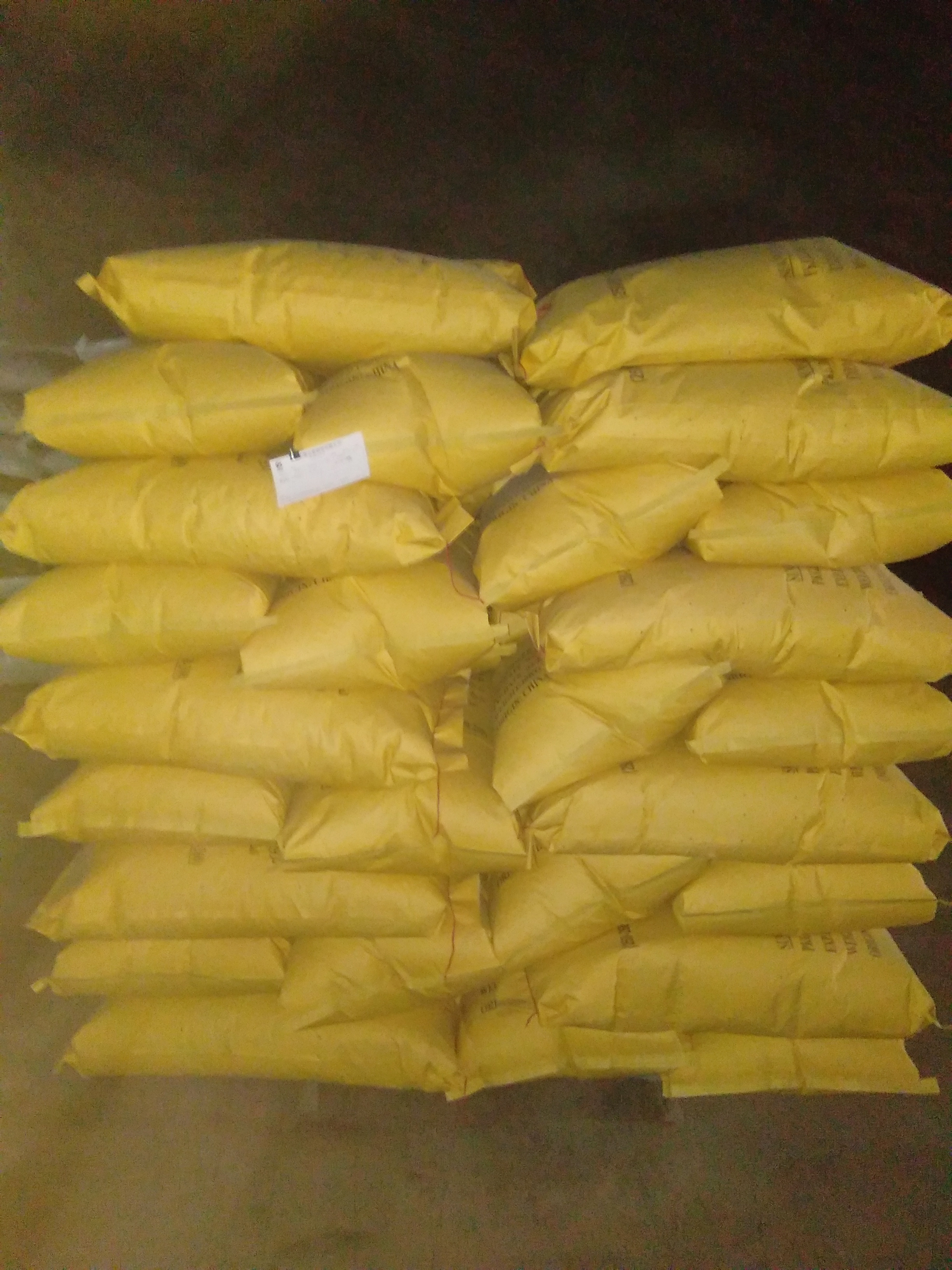
Meirenxin is the black-coated sunflower seed line supplied by this Hetao Plain processor, sold raw and cleaned rather than roasted, salted or flavoured. Five attributes carry most of the weight in buyer conversations, and each one translates into a practical consequence downstream.
| Attribute | What the specification states | What it changes for a buyer |
|---|---|---|
| Seed coat colour | Black coat | Uniform dark appearance in packed retail and in blends; colour uniformity has to be checked lot by lot, not assumed |
| Kernel shape | Round kernel profile | Fills pockets and hoppers evenly, which supports a more even roast and cleaner volumetric packing |
| Size | Approximately 380–390 pieces per 50 g | A small-to-medium count: suits dense sachets, mixes and volume roasting where piece size is not the selling point |
| Preparation | Natural sun-drying; air separation and sifting | No thermal drying step; mechanical removal of shrunken seeds, empty shells, moldy grains and debris |
| Additives | No flavourings, no preservatives | Simplifies labelling and leaves flavouring decisions with the buyer's own process |
Those five points are also the five things a spec sheet should let a buyer confirm in writing before a container is booked. Origin and price per ton are easier to discuss, but they are not what causes a rejected lot.
Quality parameters that travel with the line
Across its raw sunflower seed products, the company publishes a consistent parameter set: moisture content of 9–10%, impurity below 0.5%, eroded seeds below 0.5% and mildew seeds below 1%, with the product supplied raw and held in a cool place. For a snack or roasting operation these four figures are effectively a damage forecast. Impurity and eroded-seed figures predict how much material will be screened out or downgraded; the mildew figure predicts the share of the lot that cannot enter a human-consumption channel at all; moisture predicts how the lot behaves in storage between arrival and roasting.
Why the same seed reads differently to a snack factory and a bird feed buyer
The commercial tension in this grade is not between suppliers. It is between two buyer profiles reading the same cleaned raw seed against different priorities.
A snack factory or roasting operation is buying process predictability. It needs a kernel count that stays inside a narrow band across lots, a shell that survives handling, a low share of shrivelled or broken material, and a raw base clean enough that its own flavouring, salting or roasting step is the only variable left in the line. Its cost is not the purchase price alone; it is the purchase price plus rejection rates, plus the labour absorbed by re-screening, plus the risk that a moisture excursion shows up as mould three weeks into storage.
A bird feed buyer is buying cleanliness and consistency at scale. Rations are blended, so a seed that varies visibly between deliveries forces the blend to be adjusted; mould and dust are a quality and handling concern regardless of the channel; and because feed-grade buying typically runs on tighter margins than snack-grade buying, the specification has to be agreed precisely enough that nobody pays for attributes the ration does not need.
Both profiles are served by the same underlying property: cleaning discipline applied before the seed is bagged. That is where a shortlist evaluation should start.
Where the supplier fits: Chengtai's operating profile
Inner Mongolia Chengtai Food Co., Ltd. is a sunflower and pumpkin seed processor working from a 3,500 m² facility in the Mengxiu Industry Zone, Xamba Town, Hanggin Rear Banner, Bayannur City. The company reports annual output of 30,000 mts from a planting base of 1.5 million acres on the Hetao Plain, an export share of about 80%, and a two-engineer technical team. CBI market information lists the company as certified under ISO 9001 and Halal.
For buyers in the evaluation-to-execution stage, the operational facts that matter most are the terms attached to the product rather than the totals:
- Production model: OEM and ODM production, including bag printing with the customer's own logo.
- Capacity and cadence: 2,500 mts per month, with a stated lead time of 10–15 days.
- Order threshold: minimum order quantity of 5 mts.
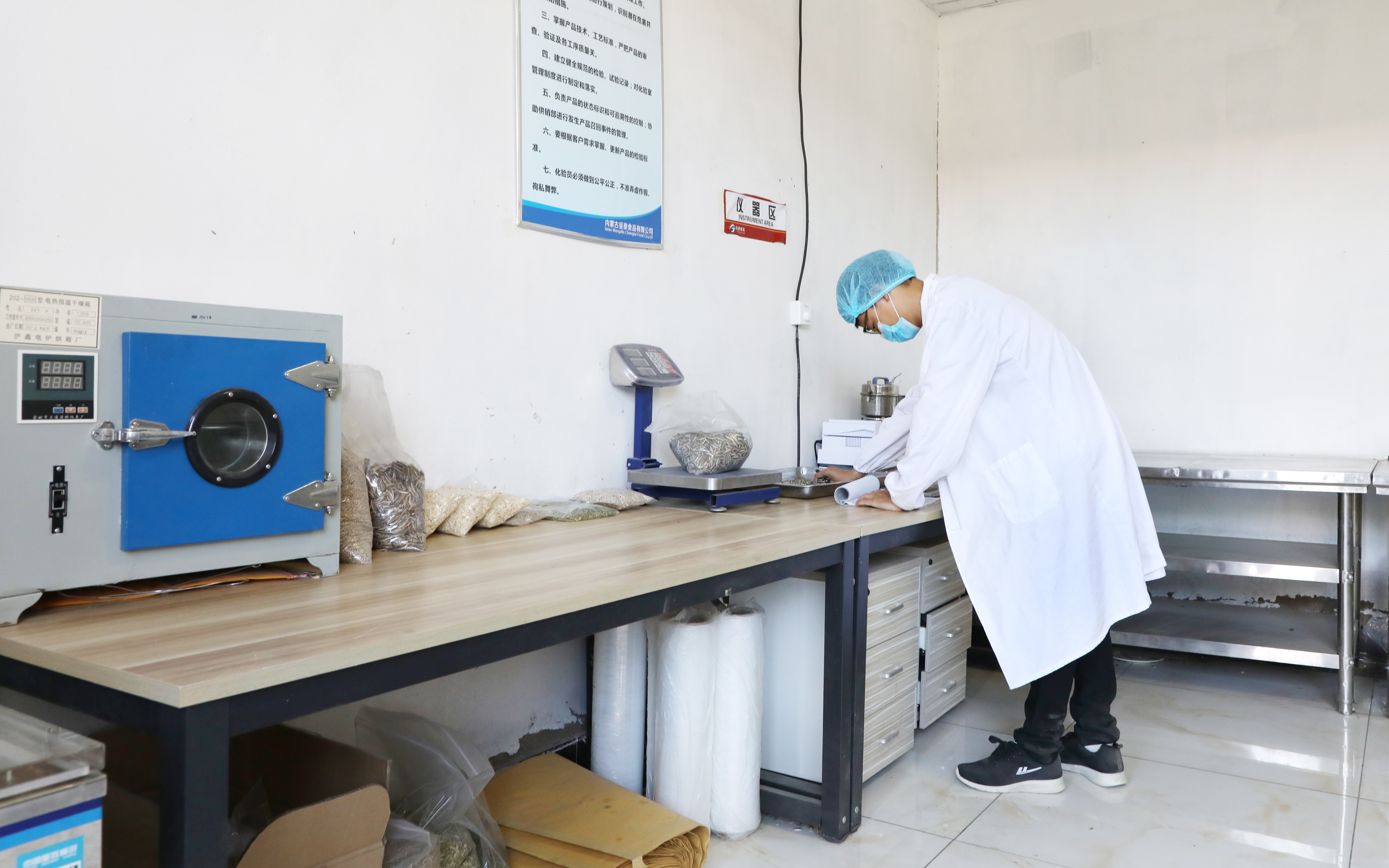
- Quality assurance: 100% testing, with an after-sales position that allows a refund application if the seeds have a quality problem.
- Export coverage: EU, Middle East, Middle Asia, Vietnam and Africa.
- Packaging: 20–25 kg plastic or paper bags, or vacuum bags with carton.
The company also reports long-running supply relationships with food processors, snack manufacturers, food wholesalers and importers across the Middle East, Central Asia, Europe and North Africa, with stable supply and bulk delivery cited as the reason those relationships continued. That is a supplier statement rather than an audited result, and it should be treated as one input among the samples and documents described later in this article.

How air separation and sifting change an incoming lot
The cleaning sequence is the least discussed and most consequential part of a raw sunflower seed offer. Natural sun-drying removes field moisture, but it does not remove the material that failed to fill.
Air separation works on density. A current of air lifts light fractions — empty shells, shrivelled kernels, chaff and dust — away from sound seed, which is heavier and drops out of the stream. Sifting works on dimension. Screens sized to the expected seed width and length pass sound kernels and retain or reject stones, stalk fragments, oversized foreign matter and undersized screenings. Run in sequence, and repeated across passes, the two processes address the failure modes that most often appear in an inbound inspection report: shrunken seeds, empty shells, moldy grains and debris.
The output is a lot that has been stabilised by physical means alone, without a thermal drying step and without chemical treatment. That is a genuine advantage for buyers who want an additive-free raw base, and it defines the limit of what the process can claim. Air separation and sifting sort by density and dimension; they do not detect every off-colour kernel, and they do not test for pesticide residues or mycotoxins. Those remain the job of sampling, visual sorting on the buyer's line, and laboratory analysis against the destination market's requirements.
Application fit by buyer type
The company positions its sunflower seed lines for manufacturing, roasting and shop scenarios, with human consumption as the stated use. Within that, the Meirenxin count lands differently depending on the buyer.
| Buyer type | What the line supports | Where it stops |
|---|---|---|
| Snack factory (roasting and flavouring in-house) | Raw, unflavoured base with a consistent count; impurity below 0.5% reduces screening labour; round kernel supports even roast | Flavouring, salting and roast profile remain the buyer's process and the buyer's food-safety responsibility |
| Roasted factory / contract roaster | Predictable size band across lots aids throughput planning and pack fill weight | Piece size is not a premium selling point at this count |
| Human consumption / repacking | No added flavourings or preservatives simplifies labelling; low mildew figure supports a clean sortation step | Destination-market residue and contaminant rules still apply and must be tested, not assumed |
| Bird feed and pet mix | Cleaned, sun-dried seed with debris and empty shells removed; consistent count aids blend stability | Feed-grade acceptance criteria differ from human-consumption standards and should be written by the buyer |
| Ingredient buyers needing kernels | Adjacent option: the company's sunflower seed kernel line, which it lists for candy and bread applications | A different product; count and shell characteristics do not transfer |
Market signals that make grade discipline a commercial issue
Three developments give this evaluation more weight than it carried a few seasons ago.
Demand is concentrating in processed formats. Roasted sunflower seeds held 65.9% of global packaged sunflower seeds revenue in 2024, and Europe was the largest packaged market with a 29.6% revenue share, according to Grand View Research. Buyers competing in that segment are selling roast consistency, which begins with raw-material consistency.
Raw supply is not expanding freely. Global sunflower seed production is estimated at 55.05 million metric tons for the 2025/2026 marketing year by the USDA Foreign Agricultural Service, while global non-oilseed (confectionery) planted area in 2025 was forecast to decline by 8% by the USDA, as reported by the National Sunflower Association. When confectionery acreage tightens, the practical consequence for buyers is that grade substitution becomes more tempting — and that written specifications protect more value than verbal assurances.
Residue and contaminant rules keep moving. China notified 209 new maximum residue limits for 93 pesticides in food to the WTO in late 2025, per the USDA Foreign Agricultural Service, and the EU market requires adherence to HACCP principles with close monitoring of pesticide residues and metal contaminants, according to CBI. China's draft quality standard for nut and seed food, intended to replace GB/T 22165–2008, provides updated definitions and technical requirements for roasted seeds. Each of these shifts adds documentation to the inbound inspection, and shifts cost from the buyer's sortation line to the supplier's control plan.
How this compares with traditional handling — and where it stops
Traditional farm-gate purchasing in this category relies on single-pass winnowing, hand picking and a visual impression of the lot. The commercial difference is not philosophical. A single winnowing pass removes the lightest fraction and leaves shrivelled kernels that happen to sit above the density threshold; hand picking removes what the eye catches at the pace the line allows; and a lot described as “clean” has no agreed numeric meaning. The result is a purchase whose real cost only becomes visible after the buyer's own screening, roasting and downgrade steps are complete.
A specified, mechanically cleaned lot replaces impression with figures — a count per 50 g, an impurity ceiling, an eroded-seed ceiling, a mildew ceiling, a moisture band — and gives both parties something to test against. For volume buyers this is the difference between buying seed and buying a process outcome.
The limits of this approach should be stated just as plainly:
- This is not a jumbo grade. At roughly 380–390 pieces per 50 g, the line sits well below the company's larger-kernel grades, which its specification sheets list at roughly 150–230 pieces per 50 g depending on grade (363, 361 and T6). A buyer whose product sells on piece size should be shortlisting those grades instead, not stretching this one.
- Raw and unflavoured means the buyer owns the rest. Roasting, salting, flavouring and the associated food-safety controls are not part of the offer.
- Sun-drying is weather-dependent. Moisture is specified at 9–10% and should be re-verified on arrival, with cool, dry storage maintained thereafter.
- Mechanical cleaning is not analytical testing. Residue and mycotoxin verification remain separate, lot-specific obligations.
- Commercial terms set the real timeline. A 10–15 day lead time covers production; the 5 mts minimum order, pre-shipment testing and ocean freight all add calendar time before the container is on the buyer's floor.
A shortlist checklist for evaluation-stage buyers
For a buyer moving from evaluation to execution, the useful output of this article is a list of things to demand in writing rather than a verdict.
| Check | Evidence to request | Why it matters |
|---|---|---|
| Size count | 50 g counts from at least three samples drawn across lots | Defines roast behaviour, pack fill weight and blend stability |
| Cleanliness | Impurity, eroded-seed and mildew figures per lot | Predicts screening labour and downgrade rate |
| Additive status | Written confirmation of no flavourings or preservatives | Supports labelling and ingredient declarations |
| Moisture | Per-lot moisture certificate against a 9–10% target | Storage risk between arrival and processing |
| Residue compliance | Destination-market MRL statement and test method | Clearance at import; EU buyers specifically need HACCP-aligned documentation |
| Packaging | 20–25 kg plastic or paper bag, or vacuum bag with carton; logo printing option | Avoids relabelling cost and rework |
| Commercials | MOQ 5 mts; 10–15 day lead time; FOB/CNF/CIF; 30/70 or 100% payment | Cash-flow and scheduling reality |
| Acceptance and recourse | Pre-shipment test or test after arrival; refund application process | Defines what happens when a lot misses spec |
Future outlook
Two forces are likely to shape how this grade is bought over the next few seasons. The first is supply discipline: with confectionery planted area contracting and roasted formats carrying the majority of packaged revenue, raw-material specifications will carry more commercial weight than they did in looser years. The second is documentation: expanding residue limits and updated nut and seed standards move value toward suppliers who can produce per-lot figures quickly and consistently.
Bird feed remains the less formalised channel. It is large, it is price-sensitive, and it is not governed by the same human-consumption framework — which means buyers who write their own acceptance criteria early tend to get better repeatability than buyers who inherit a supplier's default description. For a small-to-medium black seed like this one, that combination of a documented count, mechanical cleaning and an unflavoured raw base is the realistic basis of a shortlist, not a marketing claim.
Frequently asked questions
What does 380–390 pieces per 50 g mean in practice?
It is a count-based size specification: a fixed weight of seed contains a stated number of kernels, so a lower count means a larger individual seed. At 380–390 pieces per 50 g, this line sits in the small-to-medium band relative to the company's larger grades, which its specification sheets list at roughly 150–230 pieces per 50 g depending on grade. Counts should be taken from several 50 g samples drawn across a lot rather than from a single scoop.
Is this a food-grade line or a bird feed line?
It is supplied raw and cleaned, with human consumption stated as the intended use and manufacturing and roasting listed as the applicable industries. Bird feed buyers commonly evaluate the same cleaned raw seed because debris, empty shells and mouldy grains are removed at the same stage. Feed-grade acceptance criteria are not identical to human-consumption standards, so a bird feed buyer should define its own written specification rather than rely on the food description.
Are any flavourings or preservatives added?
No. The line is supplied raw with no flavourings and no preservatives, which is also why the company lists it for manufacturing and roasting rather than as a finished snack. Salting, flavouring and roast profile are carried out by the buyer.
What are the ordering terms, lead time and payment structure?
The stated minimum order quantity is 5 mts, with a production lead time of 10–15 days and a monthly capacity of 2,500 mts. Delivery terms are FOB, CNF or CIF, and payment is structured at 30/70 or 100%. Acceptance can be based on a pre-shipment test or on a test after the seeds are received.
How are impurity, eroded seeds and mildew seeds controlled?
Control is mechanical: natural sun-drying followed by air separation, which lifts empty shells, shrunken kernels and chaff by density, and sifting, which removes debris and out-of-range material by dimension. The published parameters for the company's raw sunflower seed lines are impurity below 0.5%, eroded seeds below 0.5%, mildew seeds below 1% and moisture of 9–10%. These figures should be re-verified per lot, since they describe a target rather than a guarantee for every delivery.
Can the packaging carry the buyer's own brand?
Yes. The company offers OEM and ODM production with bag printing that carries the customer's logo, in 20–25 kg plastic or paper bags, or vacuum bags packed in cartons. Private-label packing therefore does not require a separate converter, though artwork approval should be built into the lead time.
Reference material
A downloadable company profile covering product lines, packaging options and commercial terms is available here: Inner Mongolia Chengtai Food Co., Ltd. company profile (PDF). The company's website is www.ctsunfood.com.
Third-party figures cited in this article are attributed to their publishers: Custom Market Insights, Grand View Research, People's Daily Online, Tridge, USDA Foreign Agricultural Service, National Sunflower Association and CBI. Product specifications are as stated by the manufacturer and should be confirmed against lot-level inspection documents before purchase.
Tem questões ou precisa de mais detalhes?
Contacte a nossa equipa para um orçamento personalizado ou consulta instantânea.
Solicitar orçamento
Preencha o formulário abaixo e a nossa equipa entrará em contacto com uma proposta personalizada.
Chat direto do WhatsApp
Prefere conversar em tempo real? Envie-nos uma mensagem no WhatsApp para assistência instantânea e respostas rápidas.
- Obter orçamento personalizado
- Partilhar fotos ou documentos
- Discuta as suas necessidades diretamente
Geralmente responde em 5–30 minutos durante o horário de expediente.