
Meirenxin Sunflower Seeds: Sizing, Screening and Acceptance
Meirenxin Sunflower Seeds: Sizing, Screening and Acceptance
Sunflower seed purchase orders are written in weight, but they are judged by count. A buyer who accepts “black sunflower seeds” without a piece-count band can receive two lots that both satisfy the description and behave completely differently on a roasting line and in a retail pack. Meirenxin black sunflower seeds are supplied under manufacturer ID 25189 by INNER MONGOLIA CHENGTAI FOOD CO.,LTD, a processor founded in 2013 and based in the Mengxiu Industry Zone, Hanggin Rear Banner, Bayannur City, Inner Mongolia, on the Hetao Plain. The grade is specified at 380–390 pieces per 50 g with a round kernel and a black coat, sun-dried under moisture control, and cleaned by layer-by-layer air separation and sifting.
This guide is written for procurement and quality staff at importers, snack manufacturers and roasting operations who have already chosen a grade and now have to defend the acceptance decision. It deliberately stays narrow: what each term in the specification means, how it is measured, which defects the process removes, which ones remain the buyer’s responsibility, and where the boundaries of the specification sit.
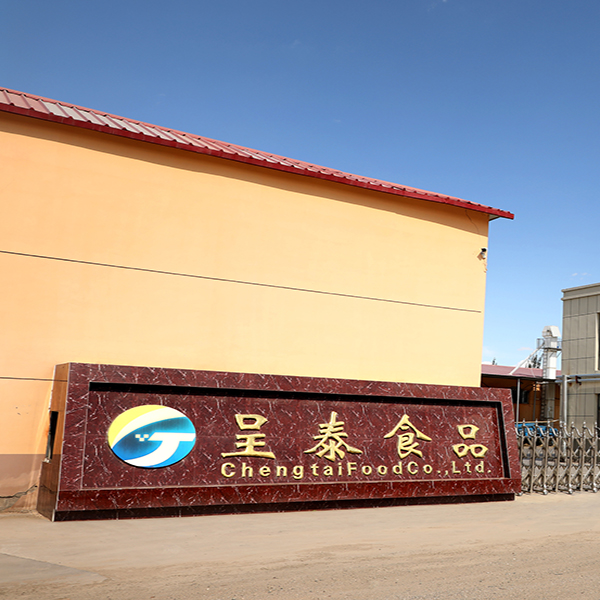
Processing environment for bulk sunflower seed lots at the Inner Mongolia origin facility.
Why the piece count anchors the rest of the specification
Piece count — the number of whole in-shell kernels in a 50 g sample — is the one purchase-order line that fixes average kernel mass. Because it fixes mass, it also fixes downstream behaviour: surface area per kilogram changes roast time, kernel mass changes how much salt or oil a given weight of seed absorbs, and the number of kernels per pack changes fill counts and labelling.
Count is also the line most likely to be left vague. Two lots can share a coat colour and still differ by more than a factor of two in count. Within the grades documented for this supplier, 363 can reach 170–180 pieces per 50 g at its largest, 361 carries a documented range of 170–300 pieces per 50 g with 150–160 achievable at the top of that range, and Meirenxin is specified at 380–390. These are different products produced with different screen sets, not variations of one product.
The practical consequence for a buyer is that piece count should be agreed before price. A count band settled after the price converts every later disagreement into a commercial argument rather than a measurement question.
What 380–390 pieces per 50 g means in practice
The specification describes the finished, screened product: a 50 g sample drawn from the lot should contain between 380 and 390 whole in-shell kernels. Read as a simple arithmetic conversion — not as a measured single-kernel weight — 50 g divided by 380 is approximately 0.132 g per kernel, and 50 g divided by 390 is approximately 0.128 g, so the band corresponds to an average kernel mass of roughly 0.128–0.132 g.
A band rather than a single number is the correct form, because seed is a biological population and screening produces a size window rather than an exact value. The useful follow-up question is therefore not “is the average correct” but “how wide is the spread inside the window”.
Four conditions that turn a count into evidence
- Sample from the lot, not from the top of a bag. A composite sample drawn across bags is what the count is intended to describe; a scoop from one open bag describes one bag.
- Count whole kernels with the coat intact. Split and broken kernels belong to a separate defect class and should not be folded into the piece count, or the two criteria will mask each other.
- Repeat at least three sub-samples and report the mean and the range. A single 50 g count can sit inside 380–390 while the lot mean does not.
- Record the balance, the counting method and the date on the sample record. Two parties in two countries can only compare counts taken the same way.
The decision rule is straightforward. If the mean falls inside 380–390 with a narrow spread, the lot matches the specification. If the mean falls outside the band, the lot is a different grade even when the coat colour looks identical, and that conclusion should be reached by measurement rather than by negotiation.
Coat colour and kernel form are two separate checks
“Round kernel” describes form. “Black coat” describes surface. The two fail independently, and a receiving inspection that treats them as one visual judgement will miss half the failures: a lot can be correctly round with a thin or greyish coat, or correctly black with an elongated kernel that came off a different screen.
Calibration matters more than light level. Buyers who also handle 361 — a black-and-white striped, round grade — should keep a physical reference sample on the inspection bench, because a partly striped 361 can read as black under warm warehouse lighting. A neutral inspection setup — diffuse daylight or a 5000–6500 K lamp, a matte tray, kernels spread in a single layer — separates the two grades reliably. Discoloured, immature or green-tipped coats are best recorded as a defect class rather than as “colour variance”, because only the first can be counted and trended.
One boundary belongs beside this check. Coat uniformity is a visual criterion; it does not certify moisture, maturity or food-safety status. Those decisions belong to the moisture and defect tests described below, and keeping them separate prevents a clean-looking sample from standing in for a test that was never run.
Natural sun-drying, and where moisture control enters
Sun-drying on the Hetao Plain is a natural process, but drying in the sun is not the same as drying evenly. A lot can leave the field with a wide moisture spread across bags, and that spread survives threshing and cleaning unless it is measured and corrected. The specification therefore pairs natural sun-drying with moisture control rather than treating sun-drying as a sufficient condition on its own.
The typical quality parameters for the company’s sunflower seed products place moisture at 9–10%. That band matters at both ends:
- Above the band, free water supports mould growth and accelerates oil oxidation, and the risk compounds inside a container that crosses a temperature gradient in transit.
- Below the band, kernels become brittle and break more during hulling, roasting and conveying, so the failure surfaces later as an out-of-specification broken-kernel result rather than as a moisture result.
Verification is a two-point procedure. Moisture should be checked at pre-shipment and again on arrival using the same method class and instrument type, with the instrument, sample point and sample temperature written onto the record. A sealed retained sample taken from the accepted lot is the only artefact that lets both parties re-examine the same material later.
Storage conditions are part of the specification rather than an afterthought. The product is packed in 20/25 kg plastic or paper bags, or in a vacuum bag with carton, and is to be stored in a cool place. The same seed held in a paper bag in a hot warehouse and in a sealed vacuum bag in a cool store are not the same commercial article by the time they reach a roasting line.
Scope note: 9–10% is a typical parameter for these products under this supplier’s specification. It should not be read as a universal limit for black sunflower seeds from every origin or for every destination market, where the applicable requirement may be set by the buyer’s own standard.
Layer-by-layer air separation and sifting: what the process actually removes
The cleaning sequence is the mechanism behind the count band. Air separation sorts on density and aerodynamic behaviour: empty shells and light, shrunken seeds are lifted out of the falling stream while sound kernels continue, and chaff and dust leave with the air. Sifting then sorts on width, with undersize material passing a lower screen, oversize material retained on an upper screen, and the middle band becoming the finished grade.
Repeating the two operations in layers is what narrows the band. A single pass removes the obvious fraction; successive passes tighten the distribution so that the finished product can be specified as a 380–390 piece window rather than as “cleaned seed”.
The specification names three fractions for this treatment: shrunken seeds, empty shells and mouldy grains. The first two are exactly what density and size sorting are good at, because they differ from sound kernels in mass and dimension.
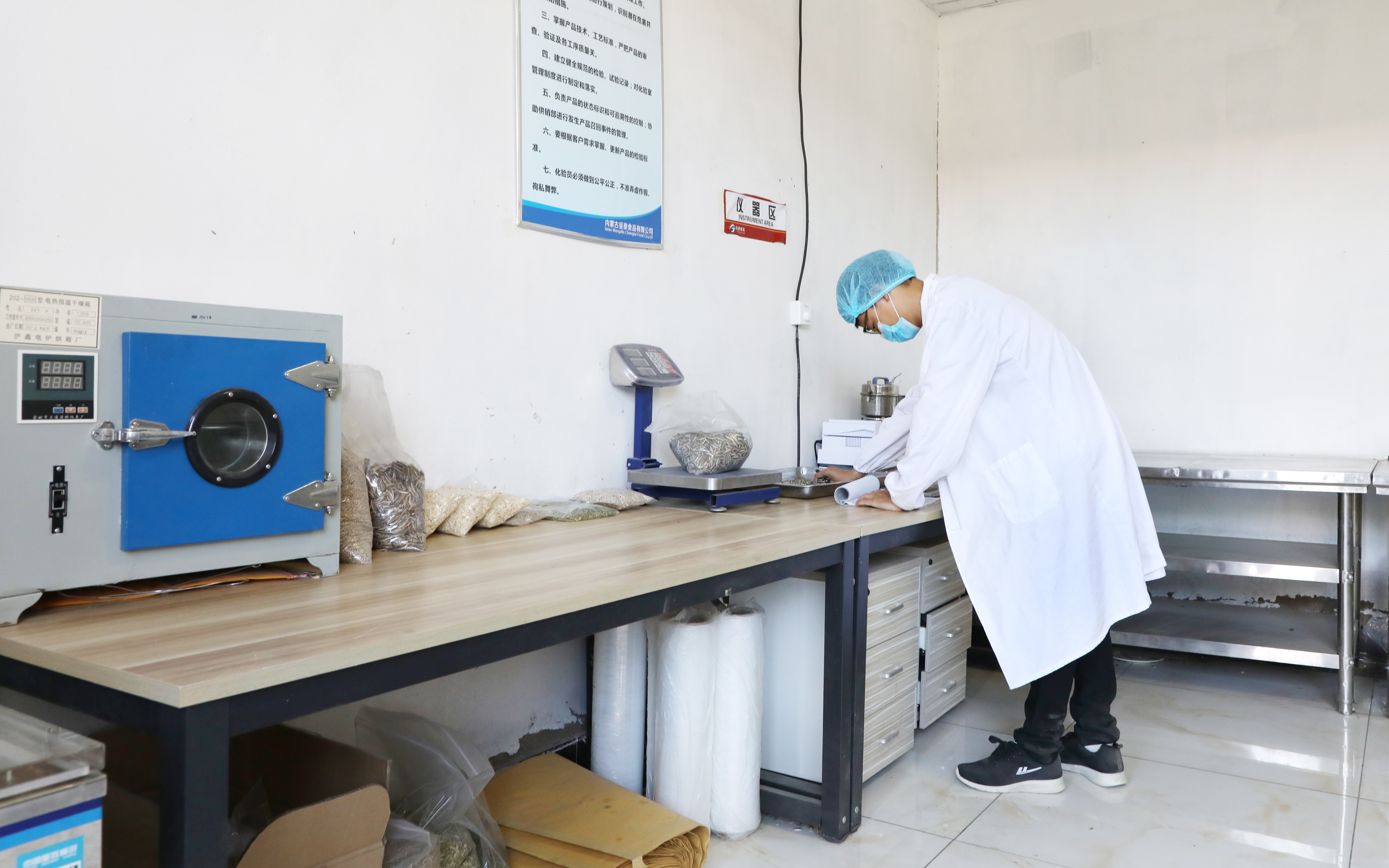
Sample inspection: count, coat and defect checks are run on drawn samples rather than on open bags.
Mouldy grains need a more careful statement. Sorting reduces their presence but cannot be relied on to remove every affected kernel, because an early-stage affected grain can sit close to normal density and size. The documented ceilings acknowledge this: impurity below 0.5%, erosion seeds below 0.5% and mildew seeds below 1%. Those numbers should be read as the measurable acceptance line, with a visual check kept in the receiving inspection rather than assumed to have been covered at origin.
For a buyer, the useful verification question is not “was the seed cleaned” but “which screens and which air settings produced this band”. Asking for the screen configuration and the number of separation passes gives the receiving inspector something to compare against when a later lot drifts.
No flavourings, no preservatives, no extra debris: three consequences
The finished product is raw and unflavoured. No flavourings and no preservatives are added, and no extra debris is present beyond the screened seed. Three consequences follow for the buyer.
Flavour becomes the buyer’s process decision. Roast profile, salt level and any oil addition sit on the buyer’s line rather than in the imported material. That is an advantage for a manufacturer who wants control, but it also means lot-to-lot consistency depends on two variables at once: the buyer’s settings and the incoming moisture and count. Changing supplier without re-tuning the line is a common cause of a “quality problem” that is really a process mismatch.
Without a preservative, shelf life is set by moisture, temperature and package integrity rather than by an additive. This is why the storage instruction and the 9–10% band sit in the same specification as the count: they are the same control system seen from different angles.
“No extra debris” and the 0.5% impurity ceiling answer different questions. The qualitative statement describes what the process is designed to deliver; the numeric ceiling is what a laboratory or a receiving inspection can act on. Read together, they are consistent. Read alone, the qualitative statement can be mistaken for a zero-tolerance claim that no screening process makes.
Two acceptance gates, one shared record
The stated acceptance criteria are a pre-shipment test and a test after the seeds are received. The two gates protect different things: the pre-shipment test protects the buyer from paying for a lot that was never in specification, and the arrival test protects the buyer from what happens between the two points — loading, transit, container humidity and handling.
| Check | Documented reference | Pre-shipment | On arrival |
|---|---|---|---|
| Piece count | 380–390 per 50 g | Required | Required |
| Moisture | 9–10% typical | Required | Required |
| Impurity | Below 0.5% | Required | Confirm |
| Erosion seeds | Below 0.5% | Required | Confirm |
| Mildew seeds | Below 1% | Required | Required |
| Kernel form and coat | Round kernel, black coat | Photo record | Visual confirmation |
| Additives | No flavourings, no preservatives | Documentation | Not applicable |
Five practices make the two gates usable rather than ceremonial:
- Agree the sampling plan before the first shipment: sample size, sub-sample count, and who draws the sample at each end.
- Photograph the retained sample beside a scale, so that a later dispute has a dated visual reference and not a recollection.
- Fix the arrival test window in the contract, so that a test run three weeks after unloading is not treated as an arrival test.
- Match instrument classes at both ends. Comparing one party’s capacitance meter against the other’s oven result is a method difference, not a quality difference.
- Record who holds the sealed sample. A defect claim without a counter-sample is difficult to settle, whichever way the facts point.
The after-sales position stated by the supplier is that if the seeds have a problem, a refund can be applied for. That is a route for a documented defect, and it works only where the sample and the record exist.
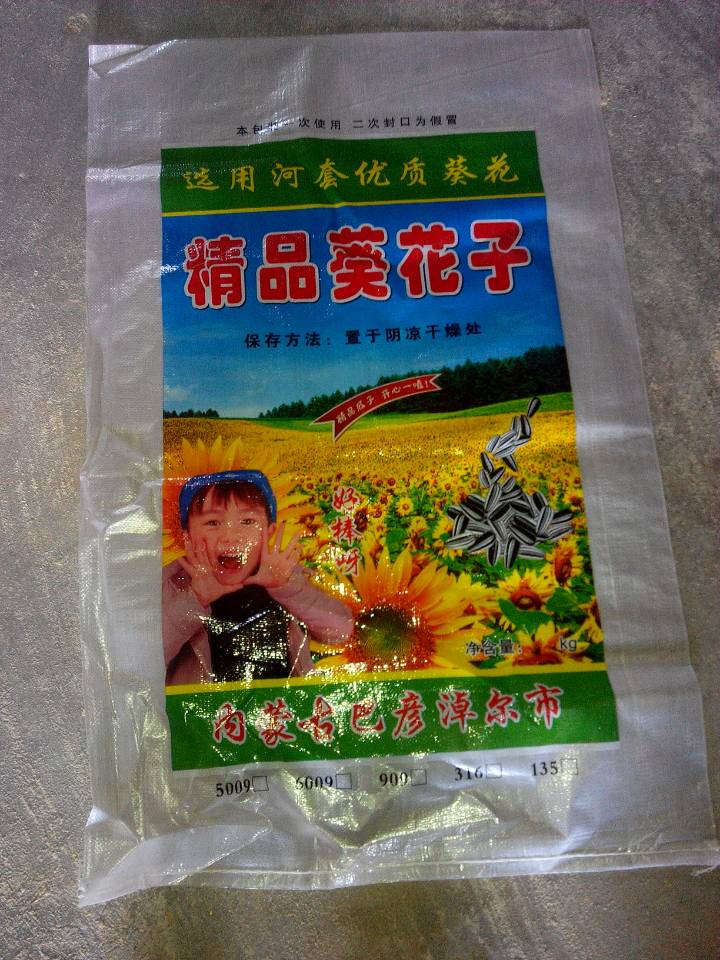
Bagged packing used for bulk sunflower seed shipments; the specification allows 20/25 kg plastic or paper bags and vacuum bag with carton.
Meirenxin against 363, 361 and T6 on acceptance terms
The comparison below is about how each grade is specified and checked, not about which grade is better. A buyer should choose the grade that fits the application and then write acceptance terms against that grade’s own parameters.
| Grade | Form and coat | Documented size | Positioning as documented | Acceptance implication |
|---|---|---|---|---|
| Meirenxin | Round kernel, black coat | 380–390 pcs per 50 g | Screened, sun-dried, moisture-controlled | Narrow band; a lot outside it is a different grade |
| 363 | Black | 170–180 pcs per 50 g at largest | Sweet taste, suited to original-taste roasting; pesticide-residue-controlled category | Different screen set; count must be re-agreed, not carried over |
| 361 | Black-and-white striped, round | 170–300 pcs per 50 g; 150–160 at top of range | Commonly used for salted flavour | Stripe is the first visual discriminator against black grades |
| T6 | Long type, blacker than 361 | Not stated in the supplied specification | Usually sold as raw material; harder shell | Count must be agreed separately in the purchase order |
Two reading rules follow from the table. First, a size figure cannot be transferred between grades: a screen configuration that produces 380–390 will not produce a 170–180 result, and a buyer switching grades must rewrite the count line rather than assume proportionality. Second, an undocumented figure is not a negative finding. Where the supplied material does not state a size for T6, the correct conclusion is that the count has to be negotiated in the order — not that the grade is incapable of being specified.
Commercial terms that change how the inspection plan is built
The stated terms are a minimum order of 5 mts, a monthly capacity of 2,500 mts, a lead time of 10–15 days, delivery on FOB, CNF or CIF, and payment of 30/70 or 100%. OEM and ODM production is available, with the customer’s logo printable on the bag, and the export network covers the EU, Middle East, Middle Asia, Vietnam and Africa.
These figures are usually read as commercial convenience. For an evaluation-stage buyer they are planning inputs instead. A 5 mt minimum is small enough to run a pre-season trial lot through the full two-gate protocol — count, moisture, impurity, erosion and mildew on drawn samples — before committing to a container programme. That is the practical use of a low minimum: it buys evidence, not discount.
The 10–15 day lead time sets how much notice a re-screen or re-palletisation needs if the pre-shipment gate fails. The Incoterm decides where the risk and the inspection point sit: FOB places the pre-shipment gate at origin, while CNF and CIF add freight and insurance without moving the arrival test that the buyer still has to run.
Origin, scale, and what they do not certify
Origin concentration is the backdrop to any Inner Mongolia sourcing decision. In its China Oilseeds and Products Annual for marketing year 2026/27, USDA FAS estimates China’s sunflower seed production at 2.2 million metric tons, almost unchanged from its earlier estimates, and attributes 65% of national output to Inner Mongolia and 11% to Xinjiang in its regional production discussion.
Trade data point the same way. OEC records Inner Mongolia’s 2025 sunflower seed exports at 463,400 metric tons valued at USD 748 million; the implied unit value of roughly USD 1,614 per ton is a derived figure rather than a reported price. For global context, Fortune Business Insights, a commercial research publisher, values the global sunflower seed market at USD 40.74 billion in 2025.
None of that certifies a lot. Geographic concentration tells a buyer where supply is; the Hetao Plain origin statement and manufacturer ID 25189 supply a traceability anchor — a place and an identifier that belong on the purchase order and on the sample record — but the acceptance decision still rests on the count, the moisture reading and the defect measurements taken from the actual consignment. Origin is a starting point for supplier discovery, not a substitute for inspection.
Company context is reported by the supplier itself: 20 employees, an annual output of 30,000 mts, two R&D engineers, sunflower seeds, pumpkin seeds and kernels as the main product lines, and an export share of about 80% of output. The company also reports a 1.5 million acre natural sunflower and pumpkin seed planting base in the region. These are company-reported operating facts and are best treated as scope information during supplier qualification rather than as independently verified capacity.
Where the grade fits, and where it does not
The unshelled sunflower seed category in this range is intended for the manufacturing and roasting industry and for shop and retail scenarios, with direct consumption as a snack among its documented uses. For a roaster, the relevant fit question is pack count and roast response: a smaller kernel means more pieces per pack and a shorter time to colour, so an existing profile built on a larger grade will need adjustment.
For a manufacturer who seasons in-house, the absence of flavourings is a working advantage: salt and oil addition remain under the buyer’s control, and the incoming specification constrains only moisture, count and defects.
One boundary is worth stating plainly. Buyers blending bird feed should treat this framework as a food-use acceptance framework; count bands and defect ceilings for a feed blend are a separate specification and should be written separately rather than inherited.
What to watch in the next buying cycle
Piece count and moisture are the two parameters most likely to move between crop cycles, because both follow harvest and drying conditions rather than the cleaning line. A screen set that delivered 380–390 this season can drift as screens wear, and a lot that dried slowly can arrive with a moisture spread that a single reading hides.
The practical response is continuity of records rather than prediction. Keeping the retained sample and the inspection sheet from each accepted lot gives the next season a baseline that belongs to the buyer’s own material, and makes a drift visible on the first shipment instead of the third. For buyers moving from evaluation to execution, the sequence that holds up is: agree the count band and defect ceilings in writing, run a trial lot through both gates, keep the samples, and only then scale the programme.
Frequently asked questions
How should a buyer verify the 380–390 pieces per 50 g figure?
Draw a composite sample across bags rather than from one open bag, count whole kernels with the coat intact, and repeat on at least three 50 g sub-samples. Report the mean and the range. A lot is in specification when the mean sits between 380 and 390 with a narrow spread; a mean outside the band indicates a different grade regardless of coat colour, and split or broken kernels should be recorded as a separate defect class rather than counted into the piece count.
What moisture level applies, and why is it checked twice?
The typical quality parameter for these sunflower seed products is 9–10% moisture, reached through natural sun-drying followed by moisture control. It is checked at pre-shipment and again on arrival because the two readings answer different questions: the first confirms the lot left in specification, the second confirms nothing changed during loading and transit. Both readings should use the same method class and instrument type, with the instrument, sample point and sample temperature recorded.
Which defects does air separation and sifting remove, and which remain the buyer’s check?
Air separation removes empty shells, light shrunken seeds and chaff on the basis of density, while sifting removes undersize and oversize material on the basis of width, and repeating the passes narrows the finished band. Mouldy grains are reduced but not reliably eliminated by sorting, which is why the specification carries separate ceilings of impurity below 0.5%, erosion seeds below 0.5% and mildew seeds below 1%. Those ceilings are the measurable acceptance line and should be tested on drawn samples at both gates.
Does the finished product contain flavourings or preservatives?
No. No flavourings and no preservatives are added, and no extra debris is present beyond the screened seed. Because no preservative is used, shelf life depends on moisture, storage temperature and package integrity, which is why the product is packed in 20/25 kg plastic or paper bags or in a vacuum bag with carton and is to be stored in a cool place. Flavour development — roasting, salting, oil addition — remains the buyer’s process decision.
How does Meirenxin differ from 363, 361 and T6 in acceptance terms?
The difference is in the parameters written into the order rather than in a ranking. Meirenxin is specified at 380–390 pieces per 50 g with a round kernel and black coat; 363 can reach 170–180 pieces per 50 g at its largest, is black, sweet-tasting and belongs to a pesticide-residue-controlled category; 361 is black-and-white striped and round, with a documented range of 170–300 pieces per 50 g; T6 is a longer, blacker type usually sold as raw material with a harder shell, and its size is not stated in the supplied specification, so a count must be agreed separately.
What acceptance criteria, minimum order and payment terms are stated?
The stated acceptance criteria are a pre-shipment test and a test after the seeds are received. The minimum order is 5 mts against a monthly capacity of 2,500 mts, with a lead time of 10–15 days, delivery on FOB, CNF or CIF, and payment terms of 30/70 or 100%. OEM and ODM production is available with customer logo printing on bags.
Reference point
INNER MONGOLIA CHENGTAI FOOD CO.,LTD processes sunflower seeds and kernels at Hanggin Rear Banner, Bayannur City, Inner Mongolia, and publishes its company profile for buyers who need the operating scope in one document: company profile PDF. The supplier’s own site is at ctsunfood.com.
Tem questões ou precisa de mais detalhes?
Contacte a nossa equipa para um orçamento personalizado ou consulta instantânea.
Solicitar orçamento
Preencha o formulário abaixo e a nossa equipa entrará em contacto com uma proposta personalizada.
Chat direto do WhatsApp
Prefere conversar em tempo real? Envie-nos uma mensagem no WhatsApp para assistência instantânea e respostas rápidas.
- Obter orçamento personalizado
- Partilhar fotos ou documentos
- Discuta as suas necessidades diretamente
Geralmente responde em 5–30 minutos durante o horário de expediente.