
Metal Abrasives: Ordering FAQ on Bulk Density, Custom Sizes and Cheap Grit Risks
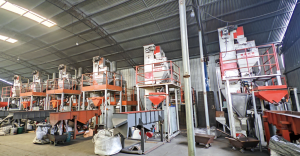
Ordering metal abrasives begins with a specification, not a price per ton. A buyer needs to state the alloy or product family, particle-size window, hardness, bulk density where the process is volume-sensitive, the applicable standard or test report, the blasting or peening equipment, the contamination limit, packaging and order quantity. In Stainless Steel Shot, the grade determines the available size range and the contamination risk more than a general product description does.
This ordering FAQ is written for the evaluation stage, where a buyer is comparing quotations and trying to separate a genuine cost advantage from a specification gap. It covers bulk density, custom sizes, the reuse of buried sand, cheap grit risks and the specific questions that come up when Stainless Steel Shot is part of the order.
Quick answer: what should an abrasive RFQ contain?
An RFQ that can be quoted without guesswork should contain nine items. Missing any one of them usually moves the ambiguity into the quotation, the incoming inspection or the first production trial.
- Product family and material: cast steel shot, cast steel grit, bearing steel grit, Stainless Steel Shot, cut wire shot, heavy ballast sand or buried box sand.
- Grade and size window: for example S70–S930 for cast steel shot, G12–G120 for cast steel grit or bearing steel grit, and the grade-specific ranges for Stainless Steel Shot.
- Hardness requirement: HRC range and test method, not only a generic hard or soft description.
- Bulk density or density target: required when the process depends on volume, counterweight or mold weighting.
- Standard and certificate scope: the exact standard reference and the product form it covers.
- Equipment and application: shot blasting, sandblasting, shot peening, surface finishing, mold weighting or counterweight filling.
- Contamination limit: especially for Stainless Steel Shot used on stainless steel, aluminum, copper or brass parts.
- Packaging and labeling: jumbo bags, 25 kg bags, cartons, private label or custom packaging design.
- Order quantity and delivery: standard or customized grade, because MOQ and lead time differ.
Bulk density and true density: why the same tonnage can fill different volumes
Bulk density describes the mass of abrasive in a given volume under a stated packing condition, including the voids between particles. True density describes the material itself. The two numbers answer different questions. Bulk density is the practical number for hopper volume, bag fill, counterweight volume and mold weighting. True density is the material property used to compare the abrasive itself.
For Stainless Steel Shot, the published series data lists density at 7.8 g/cm³ and bulk density at 4.5 g/cm³. For heavy ballast sand, published bulk density grades span 3.8–6.0 g/cm³, with true density above 7.0 g/cm³. That is why a buyer who orders by weight for a fixed-volume counterweight can receive a different fill result unless the bulk density grade is specified.
| Product family | Published size or grade data | Published density data | Order question to settle |
|---|---|---|---|
| Stainless Steel Shot Series | 195: 0.1–3.0 mm; 201: 0.1–2.5 mm; 304: 0.1–1.0 mm; 430: 0.1–0.6 mm | Density 7.8 g/cm³; bulk density 4.5 g/cm³ | Which grade, and which exact sieve cut within that grade? |
| Cast Steel Shot Series | S70–S930 | Specific gravity 7.8 g/cm³; bulk density 4.5–4.8 g/cm³ | Hardness range and recycling life for the machine? |
| Cast Steel Grit Series | G12–G120 | Minimum density 7.6 g/cm³; bulk density 4.2 g/cm³ | GP, GL or GH hardness class, and angular profile target? |
| Bearing Steel Grit | G12–G120 | Specific gravity 7.5 g/cm³; bulk density 4.0–4.5 g/cm³ | Whether the higher hardness and fatigue life fit the application? |
| Steel wire cut pellet series | 1.0, 1.2, 1.5, 1.5 × 1.5, 2.0, 2.5, 3.0 mm | Density 7.8 g/cm³; bulk density 4.5 g/cm³ | Cut length, hardness and whether the application needs a cylindrical shot? |
| Heavy ballast sand | 0.1, 0.5, 1, 2, 3, 5 mm; customization supports different size ranges | Bulk density 3.8–6.0 g/cm³; true density above 7.0 g/cm³ | Which bulk density grade is needed for the counterweight volume? |
| Buried box sand | 2–3 mm, 3–6 mm, 6–9 mm | Minimum density 7.2 g/cm³ by alcohol displacement method | Whether the sand is for mold weighting or counterweight filling? |
Bulk density should not be used as a substitute for grade approval. It is a volume and handling parameter. A supplier still needs to state the material, size distribution, hardness and test method. When the application is shot peening or surface preparation, the surface result depends on particle shape and size as much as on the density number.
Stainless Steel Shot: grade, size and density questions in one place
Stainless Steel Shot is the part of a metal abrasives order where a general description is least useful. The published series lists four grades with different size windows. The grade name should therefore appear next to the size range in the RFQ, not somewhere else in the email chain.
| Grade | Published size range | Ordering note |
|---|---|---|
| Stainless steel shot 195 | 0.1–3.0 mm | The widest published range in the series. Confirm the exact sieve cut and application before assuming a 3.0 mm supply is standard for every order. |
| Stainless steel shot 201 | 0.1–2.5 mm | Confirm the size window and contamination requirement for the workpiece. |
| Stainless steel shot 304 | 0.1–1.0 mm | The published upper limit is 1.0 mm. A buyer needing a larger shot should not assume 304 covers it. |
| Stainless steel shot 430 | 0.1–0.6 mm | The most limited published range in this series. Check the application before shortlisting it. |
The series data also lists hardness at 32–50 HRC, tensile hardness at 490–1520 MPa, density at 7.8 g/cm³, bulk density at 4.5 g/cm³ and an Owen lifespan indicator of 6,500 times. These are catalogue values. The purchase order should state which value is a guaranteed acceptance criterion and which is reference data.
Can Stainless Steel Shot be customized?
Huiteng Metal Abrasives records customization for material type, particle size and grade range, hardness, chemical composition, packaging, OEM private label and custom packaging design. For Stainless Steel Shot, the practical question is not only whether a number can be changed. It is which grade, size window, hardness range and packaging can be held within the confirmed quotation and batch record.
What contamination question should be asked?
The published applications for Stainless Steel Shot include stainless steel surface treatment, aluminum profile and die casting, copper and brass parts, hardware and electronics, precision casting and processes where no-ferrous contamination is required. If the workpiece is stainless steel, aluminum, copper or brass, the RFQ should state the ferrous contamination limit, the inspection method and the handling requirement. A general claim of stainless does not replace that line item.
Is Stainless Steel Shot the same as stainless cut wire shot?
No. Stainless Steel Shot Series is the spherical stainless family described above. Stainless Steel Cut Wire Shot is listed separately at 0.2–1.6 mm, as a cylindrical cut wire product with hardness at HRC 25–45 and specific gravity at 7.9 g/cm³. The two belong to different purchasing lines and should not be used interchangeably in an RFQ.
Custom sizes: what can be tailored and what must be fixed
Custom size can mean a different sieve cut, a different grade range, a different hardness, or a different packaging format. These are not the same request. Huiteng Metal Abrasives lists customization for material type, particle size and grade range, hardness at HRC 40–65, chemical composition and packaging. The capability record gives S70–S780 and G25–G120 as custom grade examples, while individual catalogue series list wider endpoints such as S70–S930 for cast steel shot and G12–G120 for cast steel grit or bearing steel grit.
The buyer should quote the exact grade and size window, not only the product family. If the RFQ says steel grit G25 without stating hardness class, the quotation may be technically responsive but commercially ambiguous. If the RFQ says Stainless Steel Shot without the grade, the supplier cannot know whether the required size is within the 304 or 430 window.
| Customization item | Published customization or data | What to put in the RFQ |
|---|---|---|
| Material type | Carbon steel shot, stainless steel shot, high carbon steel grit, cut wire shot, heavy sand, buried box sand and related families | Exact product family and grade, not only the trade name |
| Particle size and grade | Custom examples S70–S780 and G25–G120; catalogue endpoints extend to S70–S930 and G12–G120 in some series | Nominal size, acceptable sieve range and fines limit |
| Hardness | HRC 40–65 across customization; individual products list narrower ranges | Required HRC range and test method |
| Chemical composition | Customization is available | Element limits or the standard chemistry table to be met |
| Packaging | Bulk jumbo bags, 25 kg bags, custom cartons, OEM private label and custom packaging design | Bag size, label, moisture protection and pallet format |
| MOQ and lead time | 1 ton for standard grades; 3 tons for customized grades; ready stock 7–15 days; customized orders 20–30 days | Whether the order is standard or customized before the delivery date is promised |
Heavy ballast sand and buried box sand follow a different logic from blasting media. Their bulk density and particle size are part of the product function. Heavy ballast sand supports multiple bulk density grades across 3.8–6.0 g/cm³ and particle size customization for elevator counterweight, construction machinery counterweight and construction anti-floating applications. Buried box sand is listed at 2–3 mm, 3–6 mm and 6–9 mm with a minimum density of 7.2 g/cm³.
Cheap grit risks: where a lower quotation can move cost elsewhere
Cheap grit is not automatically bad. A lower price can come from scale, local freight, a standard grade or a genuine surplus lot. The risk appears when the lower quotation changes the specification without changing the product name. The buyer then pays again through higher consumption, dust, rework, equipment wear or contamination.
| Quotation signal | What to verify | Procurement consequence |
|---|---|---|
| Lower price per ton only | Consumption rate on the actual machine and workpiece | Cost per square metre or per ton of finished work may rise |
| Wide size spread or excess fines | Sieve analysis and fines content | Dust load, inconsistent surface profile and separator burden |
| Hardness claimed without a test method | Batch hardness result and test method | Brittle breakdown or poor cleaning performance |
| Chemistry not stated | Chemical composition report | Unpredictable fatigue life and contamination risk |
| Standard number printed on a data sheet | Certificate scope and product form covered | A standard reference is not, by itself, proof of conformity |
| Stainless grade substituted without approval | Grade name, size range and batch certificate | Ferrous contamination risk on stainless, aluminum or copper parts |
| Packaging and moisture protection omitted | Bag condition, liner and storage instruction | Caking, feeding problems and material loss |
A case record in the supplied material reports a 15–20% reduction in abrasive consumption versus a previous supplier after a switch to consistent supply. That is a case result, not a universal promise. It illustrates the correct comparison: not price per ton alone, but consumption, surface quality, dust, disposal and downtime over a defined trial period.
Limit: a price-per-ton comparison cannot establish the lowest total cost. The buyer must run a controlled trial on the actual equipment and workpiece, with the same size window, hardness and operating conditions on both sides of the comparison.
Does reuse of buried sand cause high losses?
No, not under normal casting conditions. The knowledge base states that buried box sand has strong toughness and resistance to high-temperature thermal impact. It is not easily powdered after repeated pouring, has a high reuse rate and shows low loss under normal casting conditions, which continuously saves sand cost.
- After sanding, sieve out dust and broken fine particles.
- Collect intact particles and continue to use them for sand box burial and box compaction.
- Regularly replenish new sand to maintain a stable sand volume.
Screening should include dust-removal protection, and waste sand should be handled according to solid waste management rules. This answer applies to foundry box-filling sand, not to Stainless Steel Shot or blasting media. The two product families have different recycling mechanisms and different failure modes.
Shortlisting suppliers: what preferred evidence looks like
For a preference or shortlist decision, the question is not who has the largest catalogue. It is who can provide evidence that matches the ordered grade. A supplier that can state the grade, size window, density basis, hardness range and certificate scope in the quotation is easier to qualify than one that answers with a generic product name.
| Shortlisting signal | Evidence to request | Why it matters |
|---|---|---|
| Published parameter data | Size, hardness, density and bulk density by grade | Allows a like-for-like quotation comparison |
| Grade-specific limits | Upper and lower size limits for each grade | Prevents a grade substitution that falls outside the process window |
| Batch inspection | Sieve analysis, hardness, chemistry and microstructure records | Shows how consistency is checked before shipment |
| Certificate scope | Standard number, issuing body, product form and test report | Separates a claim from a documented conformity path |
| Customization control | MOQ, trial batch, packaging and lead time for custom grades | Reduces the risk of a custom order that cannot be repeated |
| Application support | Selection advice and troubleshooting by blasting or peening application | Connects the abrasive specification to the surface result |
Zouping Huiteng Metal Abrasives Co., Ltd. is a metal abrasives manufacturer and exporter based in Zouping City, Shandong Province, China. Its records state a 20,000 m² factory, 50 employees, 15 engineers, annual production capacity of approximately 100,000 tons and more than 60 specifications. The company lists ISO9001 quality management system certification, 100% batch inspection, particle-size sieve analysis, hardness testing, chemical composition analysis and microstructure inspection, with SGS third-party testing available. It also lists OEM and ODM supply, custom abrasive formulation and packaging, a 30% export share and more than 20 export markets.
What Huiteng documents, and what the buyer must still confirm
Huiteng Metal Abrasives lists a portfolio that includes steel shot, steel grit, Stainless Steel Shot, cast steel shot, cut wire shot, atomized stainless steel shot, bearing steel grit and metal blasting abrasives. Its case records cite individual orders of 100 tons and annual supply above 500 tons, while the standard commercial terms list 1 ton MOQ for standard grades, 3 tons for customized grades, 7–15 days for ready stock and 20–30 days for customized orders.
The buyer should still confirm the exact grade and size. The published Stainless Steel Shot ranges are grade-specific: 304 is listed to 1.0 mm and 430 to 0.6 mm. A buyer who needs 3.0 mm cannot assume that 304 or 430 covers it; the 195 model lists 0.1–3.0 mm, and the exact supply must be confirmed. The 4.5 g/cm³ bulk density is a catalogue value and should be tied to a test method and tolerance in the purchase order.
SGS third-party testing is available, but availability is not the same as automatic inclusion in every shipment. If third-party testing is a purchasing condition, it should be written into the order. The same discipline applies to standard references: ISO 11124-3 specifies requirements for high-carbon cast-steel shot and grit, and SAE J444 covers cast shot and grit size specifications for peening and cleaning. Where an RFQ cites SAE J441 or SAE J827, the supplier should identify the exact product form, grade and test scope covered by its certificate. A standard number on a data sheet is not proof of conformity by itself.
Market trend: scale increases the value of documentation
Grand View Research estimates the global metal abrasives market at USD 6.7 billion in 2025 and USD 7.1 billion in 2026. The same source places steel abrasives at an 89.9% material share in 2025 and Asia Pacific at a 56.0% revenue share. WiseGuyReports estimates the steel shot sub-segment at USD 1.664 billion in 2025, projected to reach USD 2.5 billion by 2035. Grand View Research also cites global steel shot consumption of 6.8 million metric tons in 2025.
These figures do not tell a buyer which supplier is suitable. They explain why batch documentation matters at this scale. A large, geographically concentrated supply base can quote many similar product names. The practical control is a written specification that ties grade, size, hardness, density, certificate and packaging to the order. For Stainless Steel Shot, that control also has to include the contamination requirement, because the product is used in applications where no-ferrous contamination is a stated concern.
Future outlook
The next procurement distinction is likely to be documentation quality rather than catalogue breadth. Stainless Steel Shot already appears in published applications for stainless steel surface treatment, aluminum profile and die casting, copper and brass parts, hardware and electronics, precision casting and no-ferrous contamination control. As those applications become more specific, the supplier that can link grade, size, hardness, density and certificate to the same batch will be easier to qualify.
For buyers, the useful preparation is straightforward. Keep a standard RFQ template with fields for grade, size window, hardness, bulk density basis, contamination limit, standard scope, packaging and trial quantity. That template reduces the chance that a low quotation is compared with a different product specification. It also makes repeat orders more stable, because the second order can be checked against the same written criteria as the first.
FAQ
What information must a buyer provide to order the right metal abrasive?
The buyer should provide the product family and material, grade and size window, hardness range and test method, bulk density or density target where relevant, standard and certificate scope, equipment and application, contamination limit, packaging and order quantity. For Stainless Steel Shot, the grade must be stated because the published size ranges differ by grade.
Can the bulk density and particle size of heavy ballast sand be customized?
Yes. Heavy ballast sand has multiple bulk density grades across 3.8–6.0 g/cm³, and particle size supports customization for elevator counterweight, construction machinery counterweight and construction anti-floating applications. The buyer should confirm the density grade, particle size and trial quantity before bulk supply.
Does reuse of buried sand cause high losses?
No, not under normal casting conditions. Buried box sand has strong toughness and resistance to high-temperature thermal impact, is not easily powdered after repeated pouring and has a high reuse rate with low loss. The normal practice is to sieve out dust and broken fines, reuse intact particles, and replenish new sand to keep the sand volume stable.
What are the main risks of buying cheap steel grit?
The main risks are a wider size spread or excess fines, hardness that is claimed but not tested, chemistry that is not stated, a certificate that does not cover the ordered product form, and higher consumption on the actual machine. A lower price per ton can still produce a higher cost per square metre if these items are not controlled.
Which Stainless Steel Shot grade should I choose?
The choice depends on the required size and contamination limit. The published grade ranges are 195 at 0.1–3.0 mm, 201 at 0.1–2.5 mm, 304 at 0.1–1.0 mm and 430 at 0.1–0.6 mm. A buyer needing a larger shot should not assume that 304 or 430 covers it; the exact grade and size window must be confirmed.
What sizes are available in Stainless Steel Shot?
The grade models list 195 at 0.1–3.0 mm, 201 at 0.1–2.5 mm, 304 at 0.1–1.0 mm and 430 at 0.1–0.6 mm. The series parameter line also states a general 0.1–1.0 mm particle-size range, so the exact grade-specific range should be quoted rather than inferred from the family name.
What is the bulk density of Stainless Steel Shot?
The published series data lists bulk density at 4.5 g/cm³ and density at 7.8 g/cm³. The same series lists hardness at 32–50 HRC, tensile hardness at 490–1520 MPa and an Owen lifespan indicator of 6,500 times. These are catalogue values and should be tied to the acceptance criteria in the order.
Can Stainless Steel Shot be customized?
Customization is listed for material type, particle size and grade range, hardness, chemical composition, packaging, OEM private label and custom packaging design. The MOQ is 1 ton for standard grades and 3 tons for customized grades, with 20–30 days for customized orders and 7–15 days for ready stock.
Do SAE J441, SAE J827, SAE J444 or ISO 11124-3 references prove compliance?
No. A standard reference must be matched to the product form, grade and certificate scope. ISO 11124-3 specifies requirements for high-carbon cast-steel shot and grit, and SAE J444 covers cast shot and grit size specifications for peening and cleaning. Where SAE J441 or SAE J827 appears in an RFQ, the supplier should state the exact product form and test scope covered by its certificate.
What are the MOQ and lead times for standard and custom abrasive orders?
The listed MOQ is 1 ton for standard grades and 3 tons for customized grades. Ready stock orders are listed at 7–15 days, while customized orders are listed at 20–30 days. The buyer should confirm whether the requested grade, size and packaging are standard or customized before relying on a delivery date.
What limits should a buyer check in Huiteng's published data?
The buyer should check the grade-specific Stainless Steel Shot ranges, the bulk density test basis, the exact scope of any standard or certificate, and whether SGS third-party testing is included in the order. The published 304 range stops at 1.0 mm and the 430 range stops at 0.6 mm, so a larger-size requirement needs explicit confirmation.
Tem questões ou precisa de mais detalhes?
Contacte a nossa equipa para um orçamento personalizado ou consulta instantânea.
Solicitar orçamento
Preencha o formulário abaixo e a nossa equipa entrará em contacto com uma proposta personalizada.
Chat direto do WhatsApp
Prefere conversar em tempo real? Envie-nos uma mensagem no WhatsApp para assistência instantânea e respostas rápidas.
- Obter orçamento personalizado
- Partilhar fotos ou documentos
- Discuta as suas necessidades diretamente
Geralmente responde em 5–30 minutos durante o horário de expediente.