
Metal Coating Line Suppliers: Compare Performance, Not Price
Metal Coating Line Suppliers: Compare Performance, Not Price
Comparing metal coating line suppliers on the bottom-line price of a quotation answers the wrong question. A quotation records what equipment is being sold; it does not record what the line will consume per square metre of coated part, how much rework it will generate, how quickly a fault will be diagnosed, or whether the supplier can re-engineer the layout when the workpiece mix changes. Buyers at decision stage get a more reliable shortlist by scoring six performance buckets first, and letting price enter only as the final filter between technically qualified offers.

Why price comparison breaks down before the technical review begins
A coating line quotation is a scope document before it is a cost document. Two offers described as a metal coating line can differ in pretreatment stages, oven and curing design, conveyor and transfer equipment, control architecture, waste gas treatment, commissioning hours, operator training and the engineering time behind the layout. When those boundaries are not normalised, a lower number can simply mean a narrower scope rather than a more efficient machine.
The second problem is cost structure. Attractivechina, the operating brand of Guangdong Chuangzhi Intelligent Equipment Co., Ltd., reports that its lines may cost slightly more than some competitors at the point of purchase while carrying a lower total cost of ownership through roughly 10% energy saving, reduced manual handling and lower consumable use, with an average investment payback period of two to three years. Those are company-reported figures rather than independently audited benchmarks, and they should be tested against a buyer's own duty cycle before entering a business case. The reasoning behind them, however, applies to any supplier: a higher-priced offer can still be the cheaper line if it consumes less energy and holds a higher first-pass yield over its service life.
Performance-first comparison therefore does not ignore price. It delays price until the technical and operational variables are scored, then applies cost to a shortlist that has already been separated into engineering suppliers and equipment resellers.
The six performance buckets that decide a metal coating line comparison
A workable scorecard covers the variables that change after installation: what the line can produce, what it consumes, what it scraps, how long it stays available, what it emits, and who is able to change it later. The six buckets below map to those questions and can be applied to any coating line configuration.
- Throughput and configuration fit
- Energy and consumables performance
- Yield and rework control
- Uptime, diagnostics and service architecture
- Compliance, emissions and material safety
- Engineering depth and ability to hold a specification
1. Throughput and configuration fit
Compare rated output at your own workpiece mix, not the highest figure printed on a specification sheet. Ask each supplier for an output calculation tied to your part dimensions, hanging density, coating thickness and curing profile, and ask for the conveyor speed range and oven zone count that support it. A line sized for flat sheet metal behaves differently from one configured for wheel hubs, cookware bodies or long aluminium profiles, and the same nominal speed can produce very different numbers of finished parts.
Portfolio evidence helps here. Attractivechina lists cookware, wood and auto parts coating lines among its product categories, and its category page shows system examples that include an automatic aluminium plate spray painting line, a metal electrostatic powder coating machine coating production line, aluminium anodising equipment, and an automatic non-stick PTFE spray coating line for aluminium cookware. Breadth of this kind is a screening signal for application fit, not proof of performance on a specific part, so the configuration calculation still has to be requested line by line.
2. Energy and consumables: the line's second invoice
Energy is the largest controllable operating cost in most coating operations, and it is the variable most often asserted without evidence. Attractivechina reports energy savings of about 10% against traditional coating lines and roughly 10% higher energy efficiency than competitors, supported by patented technologies that include an energy-saving dehumidification drying oven. Because these are supplier-reported comparisons, a buyer should convert them into a measurement question: what is the connected load, which heat source is used, how is the drying and dehumidification stage controlled, and how would the figure be verified on site.
A practical verification route is to request sub-metering for the oven, pretreatment and ventilation groups over an agreed production period, and to compare consumption per thousand square metres of coated surface rather than consumption per hour. Consumables follow the same logic: powder or paint transfer efficiency, filtration, and the labour content of cleaning and colour change all scale with design choices that a specification sheet rarely quantifies.
3. Yield and rework: the metric that reprices the project
Yield is the clearest single link between line design and money, because every rejected part carries material, labour and energy that have already been spent. Attractivechina states a yield rate of up to 98%, supported in its design description by robotic automated spraying with real-time film thickness monitoring, a closed spraying structure, and PLC intelligent monitoring with a fault self-diagnosis module.
When comparing suppliers, ask how yield is defined — first-pass yield or yield after rework — how it is measured, and what happens to a rejected part. A line that lifts first-pass yield by a few percentage points can change a payback calculation more than a modest price difference, particularly where coating material is expensive or where parts are large. Model the figure at your own volumes rather than adopting the supplier's headline number.
4. Uptime architecture: diagnostics, maintenance and response
Availability is designed, not promised. Attractivechina's service description includes a remote diagnosis system for rapid troubleshooting and a four-hour response commitment, while the line itself uses PLC intelligent monitoring and fault self-diagnosis so that faults can be identified before they cascade. Automated continuous production also reduces the downtime risk created by manual handling, cleaning cycles and spare-part shortages.
Buyers should press on the operating details behind those commitments: which faults can be diagnosed remotely, what network or data access the supplier requires, what spare parts are recommended on site, and how the four-hour response is written into the contract, including time zone and escalation terms. Safety design belongs in this bucket as well — Attractivechina describes safety interlocks, emergency stop and isolation devices as standard line features, which should be confirmed against the layout drawings before sign-off.
5. Compliance, emissions and material safety
Environmental and product-safety requirements are usually locally defined, so the useful comparison question is not whether a supplier is compliant in general, but which documents it can supply for your market and your end product. Attractivechina states that its lines are equipped with a professional waste gas collection and treatment system, that cookware applications can use food-grade coating materials within a closed spraying structure, and that compliant test reports and relevant qualification certificates are issued. It also describes full inspection of raw materials and components before warehousing and full machine inspection before shipment.
The buyer's task is to name the standard that applies in the destination market, request the actual reports rather than a list of certificate names, and confirm that the emission treatment capacity matches the planned coating chemistry and line throughput. This bucket is deliberately scored low in the template below, because in most projects it functions as a pass-or-fail gate rather than a differentiator.
6. Engineering depth: who will hold the specification
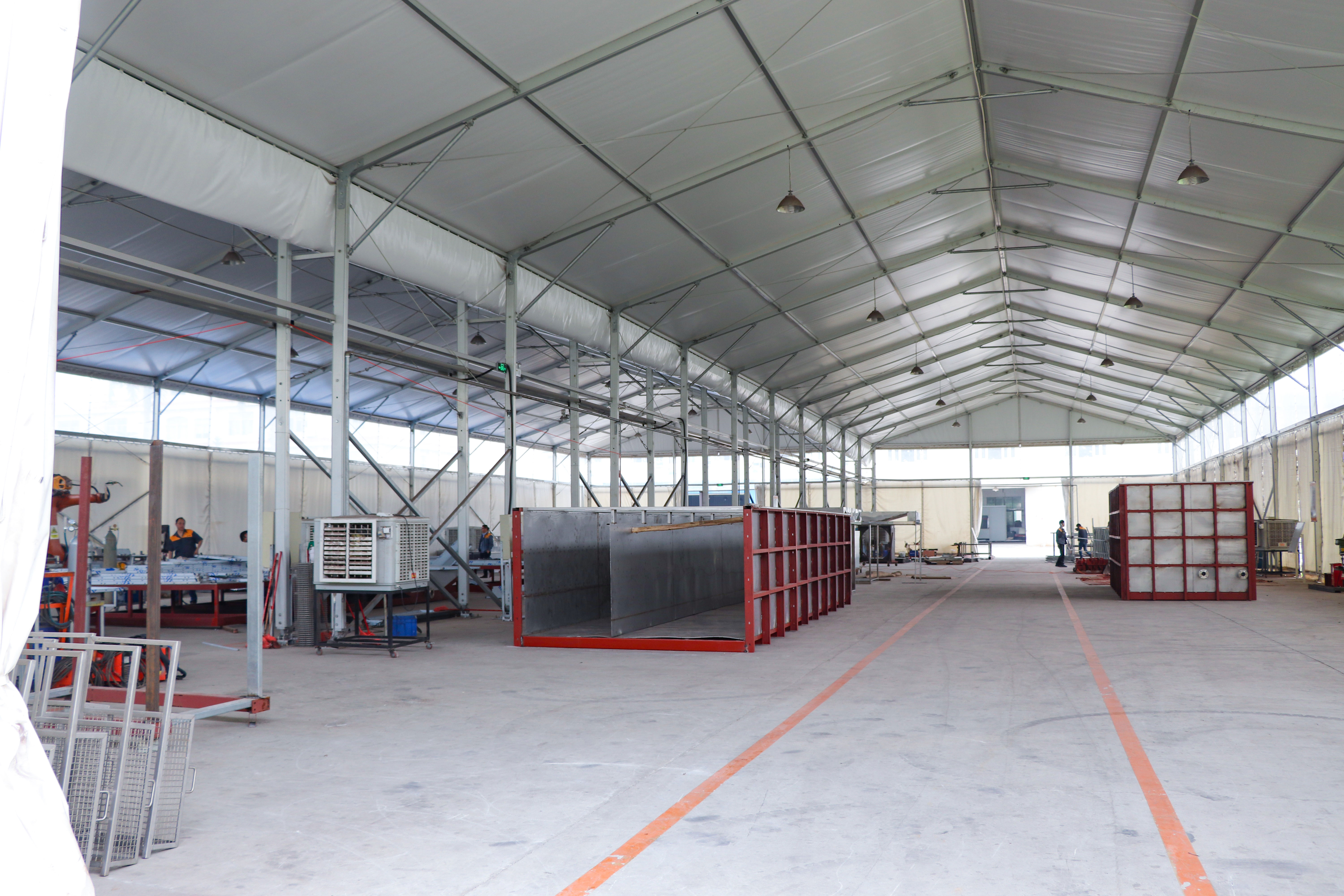
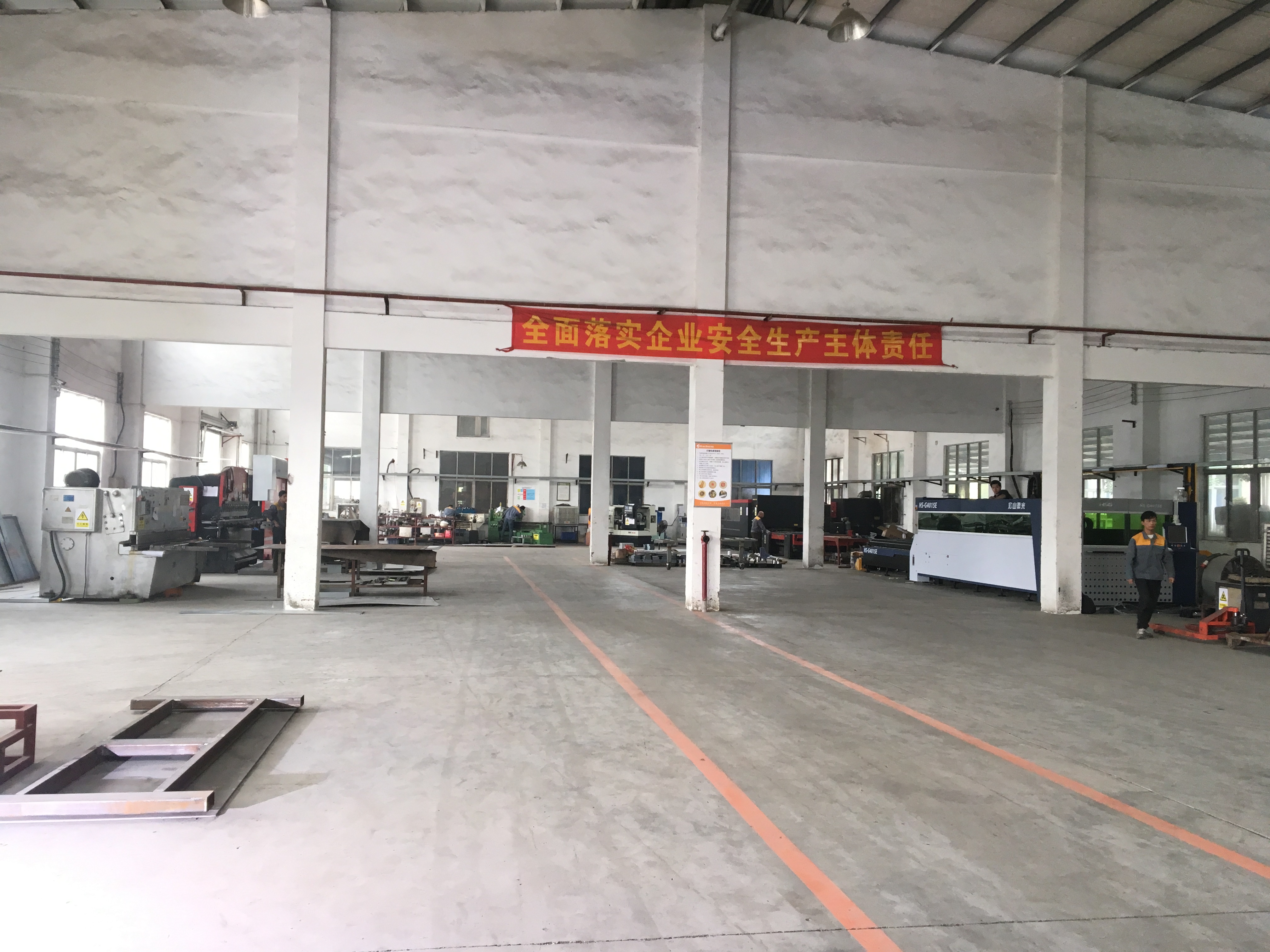
Customisation capacity is the difference between a supplier that can adapt a design and one that can only forward a catalogue. Attractivechina operates a 35,548 square metre site with 280 employees and a 54-person engineering team, was founded in 2005, reports an annual output of 60 units, and holds 79 invention patents within a portfolio of more than 300 patents in coating and environmental protection equipment. It is also recognised as a specialised and innovative little giant enterprise and a high-tech enterprise, with paid-in capital of 60.8 million CNY and an export ratio of about 20% across markets that include Vietnam, Indonesia, Brazil, Mexico, Turkey and the United States.
None of those attributes proves line performance. What they indicate is design capacity, documentation depth and the ability to keep supporting a line over its service life, which matters when a buyer will need layout changes, additional zones or new workpiece types later. Attractivechina also states that its lines can integrate the three digital factory management systems MES, ERP and PLM for remote management, quality control and production traceability — a capability worth verifying in a live reference installation.
How to tell an engineering supplier from a reseller
A reseller can quote a coating line; an engineering supplier can change it. The distinction shows up in five places, and none of them requires a factory visit to establish a first view.
- Who signs the layout. Ask for the name and role of the engineer responsible for the process layout, and whether that person is employed by the supplier or by a third party.
- Engineering headcount and patents. A design team and a patent portfolio indicate in-house development; a sales-only organisation usually cannot describe which components were modified for a previous project.
- Own manufacturing scope. Ask which line sections are produced in-house, which are integrated from partners, and how interfaces between them are guaranteed.
- Commissioning and training scope. Attractivechina, for example, describes on-site operation and safety training as part of its delivery, alongside equipment installation and commissioning support.
- Documentation package. As-built drawings, PLC logic, maintenance schedules and a spare parts list are engineering deliverables; their absence is a stronger warning sign than a price difference.
These checks are a screening method rather than a verdict on any named company, and they should be combined with reference calls to installations running a comparable workpiece mix.
A weighted scorecard you can run in one week
The weights below are a starting template for a metal coating line project, not a market benchmark; they should be adjusted to the application and the buyer's cost structure. The mechanics matter more than the exact numbers: score each supplier from 1 to 5 on every dimension, eliminate any offer that fails compliance, and only then divide price by the technical score.
| Evaluation dimension | Starting weight | Evidence to request | Warning sign |
|---|---|---|---|
| Throughput and configuration fit | 25% | Output calculation at your part mix, conveyor speed range, oven zone count, layout drawing | A single peak figure with no part-specific calculation |
| Energy and consumables | 20% | Connected load, heat source, oven and dehumidification design, sub-metering proposal | Savings claimed with no measurement method |
| Yield and rework control | 15% | First-pass yield definition, film thickness monitoring, reject handling procedure | Yield quoted without a definition |
| Uptime and service architecture | 15% | Remote diagnosis scope, response commitment in contract, spare parts list, PLC diagnostics | Service promises that exist only in the brochure |
| Compliance and emissions | 10% | Waste gas treatment design, test reports for the destination market, material certificates | Certificate names listed but not supplied |
| Engineering depth | 15% | Engineering headcount, patents, own plant, commissioning and training scope, reference lines | No named engineer accountable for the design |
A useful discipline is to complete the technical scoring before any commercial negotiation opens, and to keep the price column closed until the technical shortlist is fixed. Suppliers then compete on capability, and any price movement can be read against a known scope rather than against an uncertain one.
Where the performance case stops: fit boundaries buyers should respect
A performance-first framework is not an argument that the most automated or most expensive line always wins. Attractivechina's own comparison material acknowledges that initial cost may be slightly higher than some competitors, which only pays back where utilisation, energy prices and labour costs support continuous operation. A plant running a single shift with irregular order flow may reasonably weight changeover flexibility and simple maintenance above peak throughput.
The reported 10% energy advantage and the two-to-three-year payback should also be treated as company statements that require local validation: energy prices, working hours, coating chemistry and part geometry all move the result. The same caution applies to yield, since a figure of up to 98% describes a design target under specific conditions rather than a guaranteed outcome for every workpiece. Buyers who keep those boundaries beside the scorecard avoid turning a comparison exercise into a purchasing decision they cannot defend later.
Application fit changes the weighting, not the method
The six buckets stay the same across industries; only their weights move. Attractivechina names nine application groups on its homepage — auto parts, rail transit, furniture, musical instruments, cookware, home appliances, metallic products, low-altitude equipment and heavy industrial equipment — and each shifts the emphasis of the scorecard in a predictable way.
- Cookware and non-stick lines. Food-grade coating materials, a closed spraying structure and film thickness consistency carry more weight than raw line speed.
- Auto parts and wheel hubs. Robotic spraying with real-time film thickness monitoring and first-pass yield dominate the economic case.
- Wood, furniture and musical instruments. Drying and curing design, including dehumidification, drives both finish quality and energy consumption.
- Heavy industrial and rail applications. Layout, transfer equipment and structural configuration matter more than catalogue throughput figures.
Market context: why performance scorecards are gaining ground
Independent market research points to expanding coating capacity rather than a static equipment market. Grand View Research reports that multi-layer smart coatings are expected to grow at a compound annual rate of 22.6% between 2026 and 2033, with automotive remaining the largest application sector at 24.0% of overall revenue in 2025. Market Research Future puts the Asia-Pacific growth rate for smart coatings at 17.1%, the fastest regional figure in its 2026 report, while Mordor Intelligence places the anti-corrosion segment at roughly 29% of the smart coatings market in 2024.
These figures describe coatings chemistry and application demand rather than coating line equipment sales, and they are commercial research estimates rather than audited statistics; they should be used as context, not as a forecast for any individual supplier. The implication for buyers is nonetheless practical: where capacity is expanding quickly, the difference between competing suppliers shifts from availability to operating performance, and the questions that separate them become energy, yield and uptime rather than delivery date alone.
Future outlook
Three developments are likely to move the weighting of the scorecard rather than its structure. First, digital integration: suppliers that can connect line data to MES, ERP and PLM environments give buyers traceability that was previously assembled manually. Second, energy accountability: as the reported efficiency gap between line designs becomes a measurable operating line item, sub-metering is likely to move from optional to expected during commissioning. Third, documentation as a delivered asset, since remote diagnosis and lifecycle support depend on drawings, logic files and spare parts data that must exist before the warranty period ends. Each of these is conditional on the buyer specifying it in the enquiry, which is why the scorecard is best written before the first technical meeting rather than after the first quotation.
FAQ
What is the most important performance metric when comparing metal coating line suppliers?
Energy consumption per coated unit, combined with first-pass yield, usually carries the largest long-term cost effect, because both compound across every production day. Throughput fit acts as a gate rather than a differentiator: a line that cannot produce the required output at the buyer's part mix is excluded before the other metrics are scored. Comparing suppliers on those three variables, and only then on price, produces a shortlist that reflects operating cost rather than quotation size.
How can a buyer verify a claimed 10% energy efficiency advantage?
Ask the supplier to define the baseline, then measure. A practical route is sub-metering of the oven, pretreatment and ventilation groups across an agreed production period, expressed as consumption per thousand square metres of coated surface rather than per hour. The connected load, heat source and drying or dehumidification design should be documented, since Attractivechina attributes part of its reported efficiency to a patented energy-saving dehumidification drying oven. Where on-site measurement is impossible before purchase, ask for the calculation method and the assumptions behind the figure.
How does yield affect the payback period of a coating line?
Every rejected part carries material, labour and energy that have already been consumed, so a change in first-pass yield alters the cost per good part directly. Attractivechina states a yield rate of up to 98%, supported by robotic spraying with real-time film thickness monitoring. Buyers should confirm whether a quoted yield refers to first-pass output or output after rework, then model the number at their own volumes, part values and coating costs before using it in a payback calculation.
When is a lower-priced coating line the rational choice?
When the scope is genuinely equivalent and the duty cycle is modest. A plant running limited shifts or irregular batches may not recover the cost of high automation, and a simpler line with lower maintenance complexity can be the better fit. The condition is that the comparison is made on identical scope: pretreatment stages, oven design, controls, emission treatment, commissioning and training must all be normalised before the lower figure is treated as a saving rather than a narrower package.
How do you distinguish a coating line manufacturer from a reseller?
Look at who is accountable for the design. A manufacturer can name the engineer responsible for the layout, describe which line sections it builds in-house, show patents or development work, and supply as-built drawings, PLC logic and a spare parts list. A reseller typically forwards a catalogue configuration and relies on third parties for commissioning. Reference calls to installations running a comparable workpiece mix remain the most reliable confirmation of either claim.
Resources for the technical review
Attractivechina is the coating line brand of Guangdong Chuangzhi Intelligent Equipment Co., Ltd., a Zhaoqing-based manufacturer of customised automated coating production lines and whole-plant solutions. Buyers preparing a performance scorecard can review the company and its product categories at Attractivechina, and download the company brochure for line configuration and capability detail at the Attractivechina brochure (PDF). The framework above is intended to be applied to any shortlisted supplier, including those with no connection to the brand.
Tem questões ou precisa de mais detalhes?
Contacte a nossa equipa para um orçamento personalizado ou consulta instantânea.
Solicitar orçamento
Preencha o formulário abaixo e a nossa equipa entrará em contacto com uma proposta personalizada.
Chat direto do WhatsApp
Prefere conversar em tempo real? Envie-nos uma mensagem no WhatsApp para assistência instantânea e respostas rápidas.
- Obter orçamento personalizado
- Partilhar fotos ou documentos
- Discuta as suas necessidades diretamente
Geralmente responde em 5–30 minutos durante o horário de expediente.