
Metal Zipper Value: Brass vs. Aluminum for Garment Use
A zipper is usually one of the cheapest components in a jacket, a pair of jeans, a bag or a piece of luggage — until it fails. For buyers specifying a custom zipper, the choice between brass and aluminum is not a simple material preference. It affects unit price, product weight, surface finish, return rates and the user experience throughout the product’s life. This article compares the two metal options against real garment and luggage use conditions, and explains why cost-per-use is a better decision lens than price per piece.
Most sourcing conversations begin with one question: which metal zipper is cheaper? Aluminum is generally lighter and lower-priced on a purchase-order basis. Brass is heavier and more expensive per piece. Stopping the comparison there, however, can produce the wrong buying decision for categories such as denim, workwear, leather goods and premium bags, where a failed zipper creates a much larger cost than the zipper itself.
The Hidden Trade-Off: Unit Price vs. Lifetime Cost
The real issue for a procurement team is not simply the invoice price of the zipper. It is the cost of the finished garment divided by how long that garment performs well. Replacing a zipper in a lined jacket, a rigid jean or a structured bag is difficult and sometimes impossible without damaging the surrounding material. That means a low-cost aluminum zipper in the wrong application can produce after-sales claims, product returns or damage to the brand reputation of the finished item.
Brass and aluminum zippers belong to different value positions. Brass offers distinct advantages in durability, anti-deformation and moisture resistance. Aluminum alloy offers a lighter weight and a significantly lower price position that suits products with shorter life cycles or lighter mechanical loads. A buyer who compares only the per-piece cost will see one side of the equation; a buyer who compares per-use durability will often reach a different conclusion.
Supplier Context: Why Material Diversity Matters
Brass and aluminum are produced in parallel by manufacturers that serve the garment accessories market. One such producer is Wenzhou Runhe Garment Accessories Co., Ltd., which operates under the brand YAB ZIPPER. The company was founded in 1995 and is based in Wenzhou, Zhejiang, China. It is the sixth president unit of the Wenzhou Zipper Chamber of Commerce and holds ISO 9001:2024 and OEKO-TEX Standard 100 certifications.
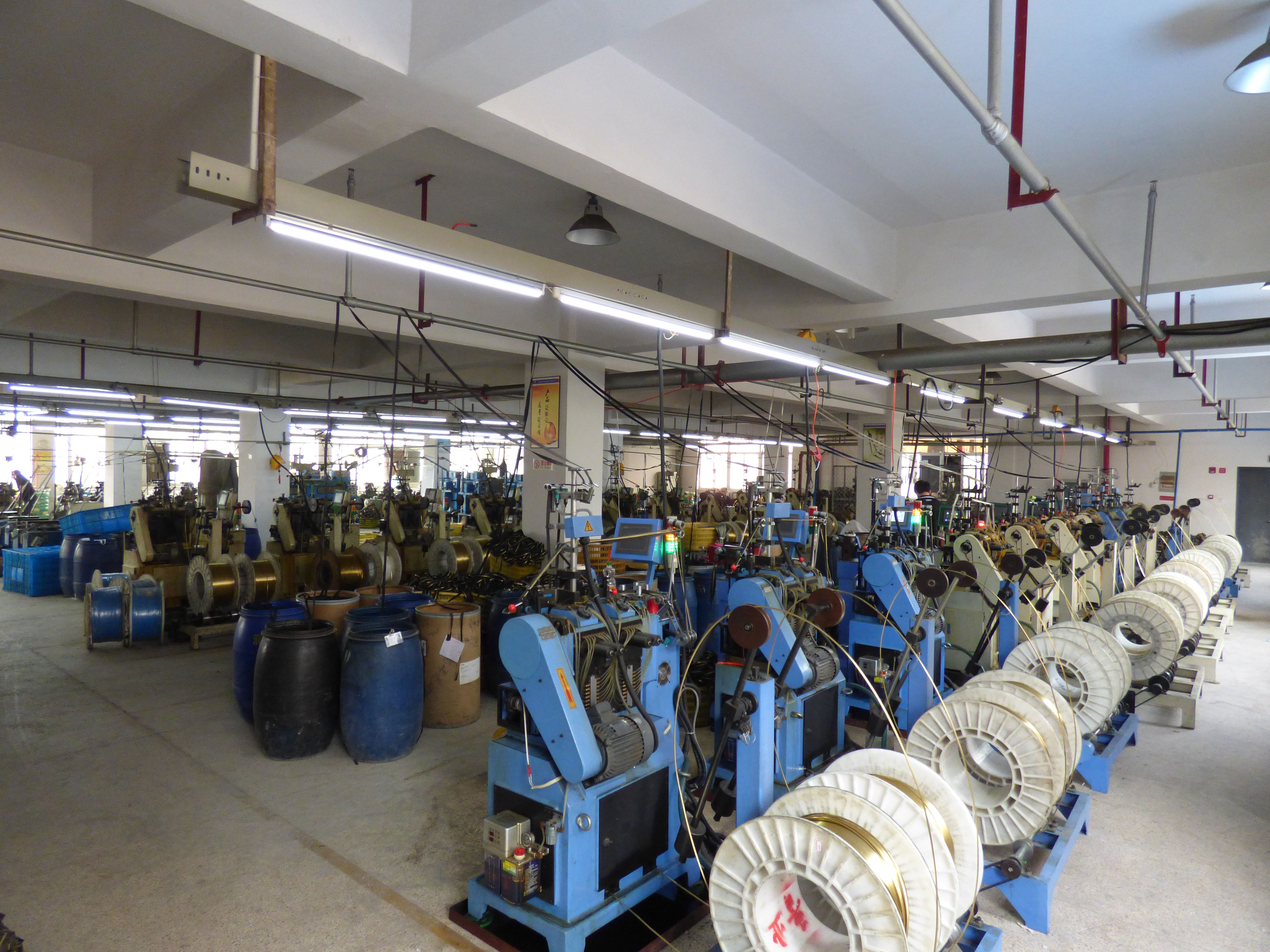
YAB ZIPPER’s stated factory area is 10,000 square meters, with around 150 employees and more than 500 zipper production machines. Stated annual output is 70 million zipper pieces. Its product range includes copper zippers, aluminum zippers, resin zippers and nylon zippers. Around 30% of output is exported, with Southeast Asia as the main overseas market.
For custom zipper buyers, the meaningful point is not the company profile itself. It is that a multi-material manufacturer is not trying to convince a buyer to use one metal because that is all the factory can produce. YAB ZIPPER’s production structure includes copper and aluminum Y-teeth lines, ordinary teeth, corn teeth, Swiss teeth and particle teeth, as well as multiple surface-treatment processes for aluminum teeth, including ancient silver, antique copper, light gold, black teeth, white gold, bright silver and bright black finishes. The company also develops aluminum Y-teeth with plated titanium alloy finishes such as platinum, black gold, light gold and rose gold. When a buyer compares brass and aluminum, those same finishing capabilities apply to both material groups.
Technical Differences Between Brass and Aluminum Zipper Teeth
The function of a metal zipper depends mainly on the teeth: the shape, the material hardness, the ability to resist compression and deformation, and the behavior of the surface over time.
Brass teeth are harder and have stronger anti-extrusion and wear resistance. They can absorb more physical abuse before the tooth shape distorts. They also have rich plating colour options and are less prone to oxidation white spots when used in normal conditions over a long period. This is why brass is associated with a premium metallic texture and a long service life.
Aluminum teeth are lightweight and easier to form. Their weaker point is mechanical strength. Aluminum is softer and less durable under heavy loads or frequent operation. In applications where the zipper is opened and closed many times per day, aluminum teeth have a higher tendency to loosen or jam after long friction, which degrades the operating experience. Aluminum can be protected by anodizing or plating, but oxidation risk remains if the surface is damaged or if the environment is humid, salty or sweaty.
Quantified Performance Comparison Used in Supplier Benchmarking
The following ranges come from supplier-side comparative data for brass versus aluminum zippers under similar specifications and use frequencies. They are useful as a starting point for a buyer’s own sample test.
| Comparison Dimension | Brass Zipper vs. Aluminum Zipper | What It Means for the Buyer |
|---|---|---|
| Service life at equal opening/closing frequency | Brass lasts over 35% longer | Higher product durability in items used frequently and for a long ownership period |
| Anti-deformation (compression threshold) | About 40% higher for brass | Teeth keep their shape under tension, impact and repeated pulls |
| Weight | Brass is roughly 35%–50% heavier than aluminum | Weight-sensitive apparel may favour aluminum; premium rigid products may tolerate brass |
| Oxidation white spots under normal environment | Probability reduced by around 60% with brass | Lower cosmetic failure risk during long-term storage and use |
| Purchase price | Brass is approximately 12%–25% higher per unit | A real cost gap, but one that can narrow through mass production arrangements |
| Crosswise tensile strength | Aluminum alloy is roughly 100N lower than brass of the same size | Aluminum meets many normal garment requirements but is not ideal for heavy high-load end uses |
Application Mapping: Which Material Fits Which Product
A metal zipper decision only makes sense when it is linked to the end product. The product’s weight limit, opening frequency, wash cycle, exposure to environmental humidity and expected brand position all determine whether brass or aluminum is the better value.
Jeans Zipper and Denim Garments
Denim garments are a strong fit for brass zippers. Jeans are pulled repeatedly, washed many times and subjected to stress at the fly and hip area. Brass zippers are suitable for denim garments because of their durability, anti-deformation capacity and resistance to humidity. The premium metallic texture also aligns with the denim category’s expectation of a robust front fly fastener.
Jacket Zipper: Outerwear and Fast Fashion
Jackets vary widely. For lightweight spring and autumn coats, fast-fashion casual garments and children’s clothing, aluminum alloy zippers provide a lighter weight and lower total material cost. These products usually have shorter life cycles, lighter loads and infrequent washing stress. Aluminum is therefore a justified choice. For heavy winter jackets or workwear where the zipper must survive years of service and repeated pressure, brass is the more dependable orientation.
Luggage Zipper and Travel Products
Luggage presents two different situations. In high-end bags and cases where the user expects long ownership, frequent opening and durable texture, brass is the more appropriate metal. In ultra-lightweight hard luggage, where every gram affects airline weight limits and the stress on the zipper is less severe, brass is not the first choice because of its weight. For ordinary weekend bags and cosmetic bags, aluminum can provide moderate cost performance, but the buyer should confirm that the load, zipper size and opening frequency remain within the aluminum material’s limits. Aluminum is not recommended for heavy-duty, high-load luggage.
Workwear, Leather Goods and Premium Bags
This group belongs mainly to the brass side of the decision. Workwear and leather goods are used in demanding environments. High-end bags are expected to maintain their appearance over time. Brass zippers are more suitable for leather goods, denim garments, workwear, high-end bags and cases where frequent long-term usage, premium texture and durability are required.
Backpacks, Cosmetic Bags and Home Textiles
Aluminum alloy zippers are suitable for lightweight applications such as backpacks, cosmetic bags and home textiles, in addition to spring and autumn coats, children’s clothing and fast-fashion garments. In these products, the weight saving is a benefit, the lifespan of the end product is shorter, and the mechanical load is medium to light.
Shoe Zipper and Footwear Programs
Footwear zippers require a case-by-case decision. Lightweight sneaker and fashion boots often favor aluminum to reduce overall shoe weight. Heavy-duty boots or footwear expected to survive many open-and-close cycles should be tested with brass. Because shoe applications vary significantly by construction and materials, no single metal is inherently correct. The buyer should define the target number of opening cycles, exposure to moisture and acceptable weight before selecting the metal.
A Cost-Per-Use View of the Decision
The brass-versus-aluminum comparison becomes clearer when converted into a cost-per-use model. If brass is 12%–25% more expensive per zipper but provides over 35% longer service life under equal opening and closing frequency, the long-life product may actually have a lower cost-per-year or cost-per-use. This is especially true when the end product is expensive, is difficult to repair or carries a warranty.
The model has three added hidden costs that a purchase-order comparison misses. First, after-sales failure: brass zippers generally produce fewer complaints about abrasion, missing teeth and jamming because of their higher anti-deformation capacity. Second, texture and perceived quality: premium garment bags and leather products may use the metal finish as part of the product identity. Third, assembly cost: replacing a failed zipper after the garment is sewn is often more expensive than the original zipper itself, especially in lined products.
Which Metal Is Better for Which End Use
| Product Category | Main Load and Life Profile | Reasonable First Choice | Rationale Based on Comparison |
|---|---|---|---|
| Jeans and denim garments | High friction, frequent pulling, multiple washes | Brass zipper | Higher hardness, wear resistance, anti-deformation, humidity resistance |
| Workwear and protective garments | Heavy load, long service period | Brass zipper | Longer life under equal opening/closing frequency; fewer missing teeth |
| Leather goods and high-end bags | Premium image, years of ownership | Brass zipper | Metallic texture, stable operation, lower cosmetic failure risk |
| Light outerwear and fast fashion | Short ownership; weight sensitive | Aluminum alloy zipper | Lighter weight, lower price, adequate for medium-light loads |
| Children’s clothing | Gentle use; low cost target | Aluminum alloy zipper | Weight and cost benefits without heavy-load demand |
| Backpacks, cosmetic bags, home textiles | Medium-light load; occasional opening | Aluminum alloy zipper | High overall cost performance at normal use intensity |
| Heavy-duty high-load luggage | Repeated opening under packed weight | Brass zipper | Stronger anti-extrusion and resistance to deformation |
| Ultra-lightweight hard luggage | Weight critical; zipper load is limited by case structure | Aluminum alloy zipper, subject to load testing | Brass weight penalty may be unnecessary |
| Shoe and footwear zippers | Application-dependent; weight sensitive in many designs | Select after cycle testing | Material choice depends on expected opening cycles and moisture exposure |
Quality Risks Before Choosing a Metal Zipper
The material decision does not stop at chemistry. In a market where customs compliance and finished-product durability both matter, the buyer should understand the main quality risks of metal zippers and how serious manufacturers control them.
- Raw material risks: impure aluminum alloy teeth, color deviation in polyester tape, and excessive heavy metals are all potential problems.
- Production process risks: misaligned teeth, sharp burrs, oxidized discoloration after anodizing, stuck sliders and insufficient tensile strength can appear when process control is weak.
- Compliance and environmental risks: excessive heavy metals, azo dyes and phthalates can fail EU and US standard tests.
- Durability risks: easy damage after repeated pulls, salt-spray corrosion and colour fading after washing and rubbing are common failure modes.
- Delivery performance risks: delayed lead time, inconsistent batch quality and wrong shipments directly affect production schedules.
- After-sales risks: defective finished goods may reach the market if the supplier cannot resolve complaints quickly.
Verification Methods Used in a Controlled Zipper Factory
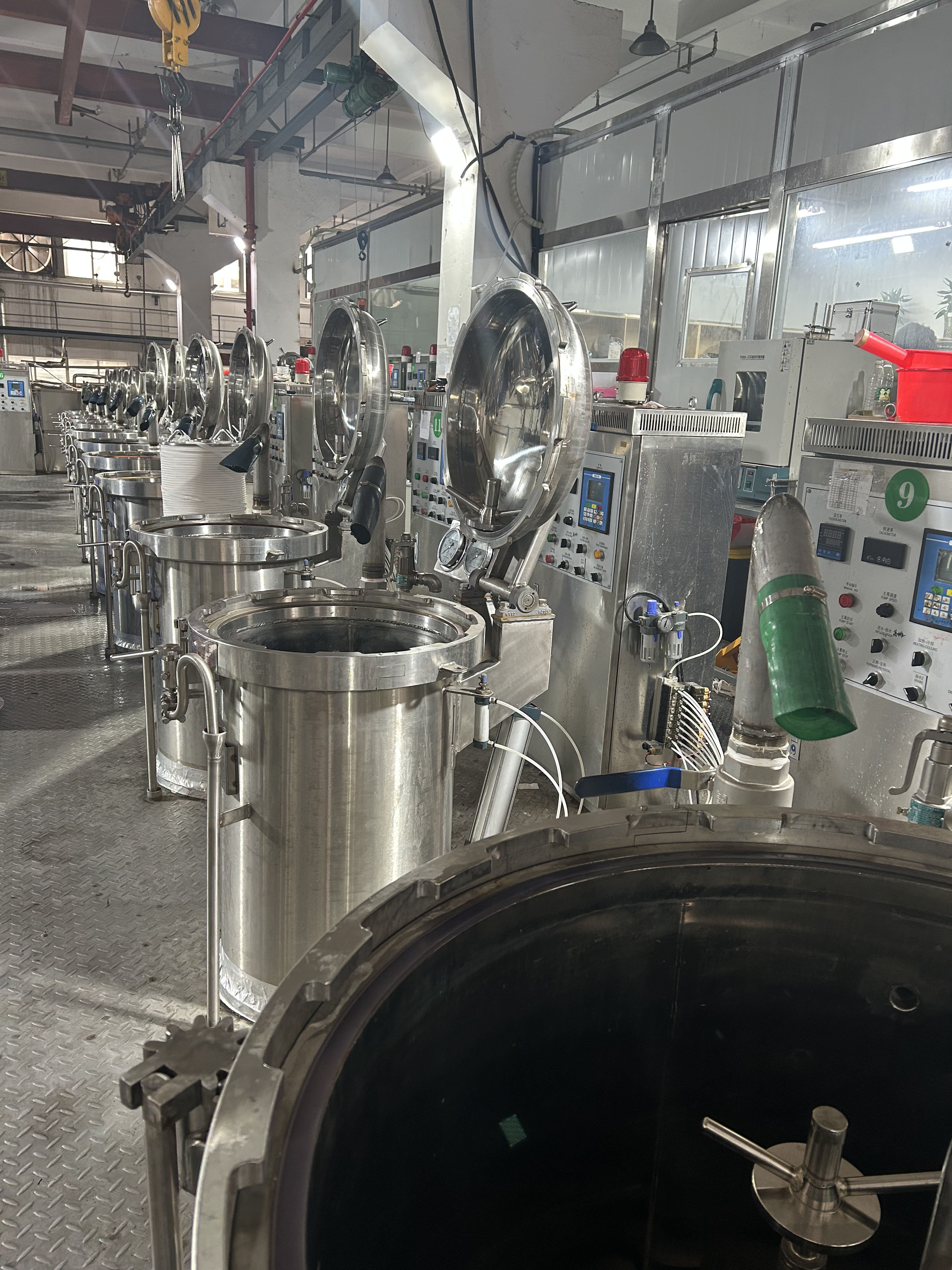
Manufacturers that take these risks seriously usually build control steps into several stages. Common technical controls include XRF metal composition detectors, color fastness testers, tensile strength testers, automatic tooth-forming machines, CNC anodizing production lines and automatic deburring equipment. Finished zippers are tested with reciprocating durability testers, salt-spray test chambers and washing-and-rubbing testing equipment. Sampling inspection often follows the international AQL 1.0 standard.
YAB ZIPPER applies a three-stage QC system: IQC for incoming inspection, IPQC for in-line patrol inspection and FQC for finished goods inspection. Each incoming raw material batch is checked against an approved supplier list. Batch samples and test reports are retained for at least two years. The stated after-sales commitment includes responding to customer complaints within 48 hours, free re-delivery or rework for defective products, and compensation for inspection losses. Size, tooth type and tape color are double-checked before shipment.
For a buyer, these procedures matter because material performance claims, such as the durability difference between brass and aluminum, are only valid if incoming alloys, production settings and surface treatment are consistently controlled.
Industry Context and Market Signals
The global zipper market reached an estimated value of USD 17.39 billion in 2024 and is projected to grow to USD 36.73 billion by 2034 with a 7.8% compound annual growth rate from 2025 to 2034, according to Market Research Future. Broader demand is therefore expanding across apparel, luggage and footwear categories, which raises the importance of material selection for custom zipper programs.
Material volume is not evenly distributed across all zipper types. In 2025, nylon zippers accounted for 46% of global zipper consumption, while metal zippers held a 31% share, according to Business Research Insights. Within metal zipper production, brass and aluminum represent 67% of the total. That means the brass-versus-aluminum decision is not a niche technical question; it sits at the center of the largest segment of the metal zipper market.
Trade data also explain why supply-chain due diligence matters. Global trade of zippers under HS code 9607 reached USD 3.15 billion in 2024, with China accounting for USD 1.52 billion in exports, according to the Observatory of Economic Complexity. China’s share is around half of total global export value. For importers and brand owners, this creates a strong incentive to evaluate factories in China’s established zipper clusters rather than buying solely on the basis of a low sample price.
Comparison With the Traditional Catalogue-Only Approach
Traditionally, many garment factories treated zippers as a catalogue item. They chose a standard metal zipper from a supplier’s existing range, often determined by habit: brass for better products, aluminum for cheaper ones. The limitation of that approach is that it rarely connects material choice to the actual use profile of the garment.
A custom zipper process changes the decision logic. Designers can choose zipper size based on teeth width (#3, #5 and #8 refer to the closed teeth width in millimeters), tape colour, slider type and metal finish. The factory can then make a material recommendation that balances price, weight and durability. The remaining boundary is physical: even the best brass zipper is still a poor fit for ultra-lightweight hard luggage. And even the most economical aluminum zipper should not be placed in heavy workwear or a long-life luxury bag. No material overcomes an unsuitable application, but a supplier that produces both materials can help a buyer identify which trade-off is worth taking.
Future Outlook for Metal Zipper Sourcing
Several industry forces are pushing metal zipper sourcing toward more rigorous evaluation rather than simpler price bidding. Regulation is one factor. EU and US buyers continue to scrutinize restricted substances, including heavy metals, azo dyes and phthalates, which directly affects plating and dyeing processes. The trend toward nickel-free anodizing and ecologically friendly dyeing is already part of supplier development in this segment.
Repairability and durability are another factor. As the apparel industry looks for ways to extend product life, a zipper that stays functional for years becomes an important element of a repairable garment. This favors material transparency and realistic cycle testing. It also favors suppliers that can document alloy composition, surface treatment parameters and batch traceability.
At the same time, surface aesthetics will continue to decide material selection independent of mechanical performance. Brass and aluminum both support a wide range of plating colours and finishes. Buyers should expect that future custom zipper development will not ask which metal is universally better, but which metal performs best for a specific product’s weight, load, environment, aesthetics and expected service life.
FAQ
1. Which is more expensive for a custom zipper, brass or aluminum?
Brass zippers are normally more expensive. In a supplier-side comparative benchmark, the unit purchasing price of a brass zipper is about 12%–25% higher than an aluminum zipper of comparable specification. The gap can be reduced through larger production quantities and mass-production arrangements, but the raw-material cost structure of brass remains higher.
2. How much longer do brass zippers last than aluminum zippers?
Under the same opening and closing frequency, brass zippers are reported to last over 35% longer than aluminum zippers. Brass also has about 40% higher anti-deformation capacity, which means the teeth are less likely to distort under compression and repeated use.
3. Is aluminum good enough for a jacket zipper?
Aluminum zippers are a reasonable choice for lightweight jackets, spring and autumn coats, fast-fashion garments, children’s clothing, backpacks, cosmetic bags and home textiles. These applications involve medium to light loads and shorter expected ownership periods. Aluminum’s weight saving is an advantage in these products. For heavy winter jackets or workwear, brass is normally the safer starting point.
4. Why is brass recommended for jeans and denim garments?
Brass is well suited to leather goods, denim garments and workwear because of its high hardness, strong wear resistance and ability to resist deformation. Denim zippers are exposed to repeated pulling, washing and pressure during normal use. Brass zippers also have lower moisture-related oxidation risk, which is useful for garments that are washed and worn often.
5. What tests should a buyer request before choosing between brass and aluminum zippers?
Buyers should look for finished-product testing that matches the expected use. Common tests include reciprocating durability testing for repeated opening and closing, salt-spray testing for corrosion resistance, washing and rubbing testing for colour fastness, and tensile testing for tooth strength. XRF metal composition testing can verify that alloy impurities do not compromise quality. Sampling inspection is often performed according to AQL 1.0.
6. Does aluminium alloy need extra protection against oxidation?
Aluminum alloy zippers can perform stably under normal temperature and regular washing conditions if an anti-oxidation anodizing finish is applied. Aluminum is more likely to show oxidation discoloration when exposed to sweat or seawater for long periods. Brass generally withstands higher humidity and salt-spray conditions without additional protective coating.
Reference
For buyers who need production capacity, certification and testing details in one document, YAB ZIPPER publishes a downloadable company profile covering Wenzhou Runhe Garment Accessories Co., Ltd.’s production lines and quality system. The profile is available at: YAB ZIPPER Company Profile (PDF). Company website: www.cnyab.com.
Tem questões ou precisa de mais detalhes?
Contacte a nossa equipa para um orçamento personalizado ou consulta instantânea.
Solicitar orçamento
Preencha o formulário abaixo e a nossa equipa entrará em contacto com uma proposta personalizada.
Chat direto do WhatsApp
Prefere conversar em tempo real? Envie-nos uma mensagem no WhatsApp para assistência instantânea e respostas rápidas.
- Obter orçamento personalizado
- Partilhar fotos ou documentos
- Discuta as suas necessidades diretamente
Geralmente responde em 5–30 minutos durante o horário de expediente.