
Metal vs. Metal-and-Wood Custom Display Fixtures
Metal vs. Metal-and-Wood Custom Display Fixtures
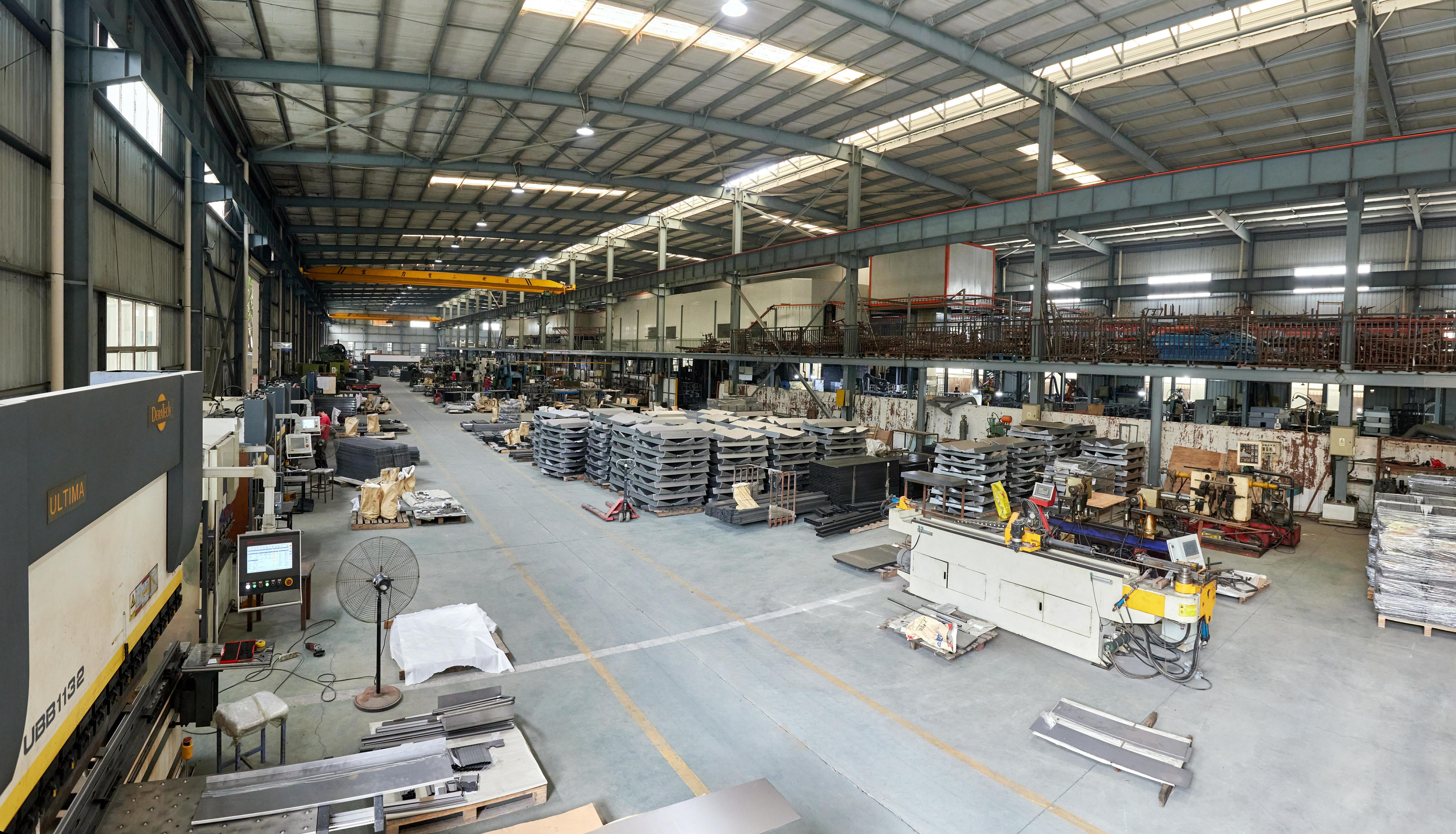
Display fixture production combines metal fabrication, woodworking, finishing and assembly. Material choice should follow the fixture zone, not a single store-wide preference.
Retail buyers rarely choose between metal and metal-and-wood display fixtures in the abstract. They choose per fixture zone: a supermarket gondola run, an end cap display rack, a wooden cosmetic display, a checkout display shelf, or a display rack with light box. The material decision changes load capacity, finish risk, maintenance, packaging cost and the visual role of the fixture.
The practical answer is therefore conditional. All-metal construction is the safer default where load, hygiene and low maintenance dominate. Metal-and-wood construction is better where warmth, brand presentation and lighter merchandise justify added care. This independent buyer comparison evaluates both formats on documented material behavior and reported supplier capability, not on a laboratory test commissioned by the publisher.
The short answer: match the fixture to the zone, not the whole store
For a decision-stage buyer, the comparison is not a contest with one universal winner. It is a specification decision with different answers for different retail areas.
- Choose metal-led construction for heavy-duty storage shelving, supermarket gondola shelving, single-sided wall shelving, produce display shelving, checkout display shelf runs, boxed beverages, hardware, building materials and auto parts.
- Choose metal-and-wood construction for wooden display cabinets, wooden cosmetic displays, apparel folding sections, boutique presentation, light luxury soft furnishings and low-load feature zones where wood grain or a warmer finish carries brand value.
- Use a hybrid store plan when a retailer needs both durability and atmosphere: metal for back-of-house and high-traffic merchandising, wood-accented fixtures for front-of-store brand moments and light merchandise.
- Normalize quotes before comparing cost, because metal and metal-and-wood fixtures are not comparable when size, shelf span, finish, packaging, tooling and quantity differ.
This is a non-ranked comparison. Neither material format is universally superior, and no published market estimate in the available evidence establishes a supplier ranking.
What counts as a metal fixture and a metal-and-wood fixture
An all-metal custom display fixture typically uses a steel frame, sheet-metal shelves, welded or knock-down joints and a powder-coated or painted finish. It may include adjustable display shelving, mesh display rack panels, pegboard display wall components, slatwall or gridwall panels, hooks, brackets and support frames. The form can be freestanding, wall-mounted or modular.
A metal-and-wood fixture keeps a metal structural frame but adds wood, MDF or wood-veneer shelves, panels, cabinets or decorative components. This category includes wooden display cabinets, wooden cosmetic displays, tiered display stands, countertop displays and mixed-material retail store display fixtures. The metal carries structural duty; the wood carries visual warmth and brand character.
The distinction matters because the two formats behave differently under load, moisture, cleaning, shipping and repair. A buyer who specifies only the visible finish can miss the structural and lifecycle differences that determine whether the fixture survives a multi-store rollout.
Load and structure: where 25 mm MDF and 1.2 mm folded steel diverge
The most useful documented comparison is a 25 mm thickened MDF shelf against a 1.2 mm bent sheet metal shelf with stiffeners and hemmed edges. The comparison states that thick wooden boards are extremely heavy and prone to physical creep, or permanent sagging, under long-term compression. Sheet metal shelves form an I-beam mechanical structure through folding, which is lightweight yet offers high bending strength.
Over a one-meter span, the documented comparison gives a 25 mm MDF shelf an ultimate load capacity of about 30 kg. A 1.2 mm folded sheet metal shelf over the same span can hold up to 80–100 kg with no risk of sagging, according to the supplied comparison. These are comparative material benchmarks, not a product-specific load rating for every custom fixture. The exact rating still depends on shelf span, bracket design, stiffener placement, anchoring, shelf thickness and how the load is distributed.
| Decision dimension | All-metal fixture | Metal-and-wood fixture | Buyer implication |
|---|---|---|---|
| Shelf structure | Folded sheet metal can form an I-beam section with stiffeners and hemmed edges. | Wood or MDF shelves add mass and can creep under long-term compression. | Specify span and load per shelf, not only overall fixture size. |
| Documented load example | 1.2 mm folded steel over 1 m span: 80–100 kg in the supplied comparison. | 25 mm MDF over 1 m span: about 30 kg in the supplied comparison. | Use metal where heavy liquid, hardware or bulk merchandise is displayed. |
| Best-fit use | Heavy-duty supermarket display, hardware, building materials, boxed beverages and auto parts. | Clothing folding sections, light luxury soft furnishings and wood-grain presentation under about 20 kg per layer. | Match the format to merchandise weight and visual priority. |
| Maintenance profile | Lower maintenance and higher material utilization efficiency in the supplied comparison. | Requires more careful surface care, especially on lacquered wood. | Include daily cleaning and repair access in the lifecycle cost. |
| Cost comparison | No universal percentage advantage is established. | No universal percentage premium is established. | Compare quotes at the same size, quantity, finish and packaging scope. |
The structural conclusion is straightforward: for heavy-duty storage shelving, supermarket gondola shelving, promotional stacking display of dense goods, or a mobile display stand that will be moved frequently, metal should be the default starting point. For a wooden display cabinet or wooden cosmetic display where the merchandise is light and the fixture is a brand object first, the structural penalty of wood may be acceptable.
A buyer should not accept a generic statement that a fixture is strong. The RFQ should ask for the rated load of the exact shelf span, the shelf material and thickness, the bracket and stiffener design, the anchoring method and the test or engineering basis for the rating. That is the difference between a material comparison and a usable procurement specification.
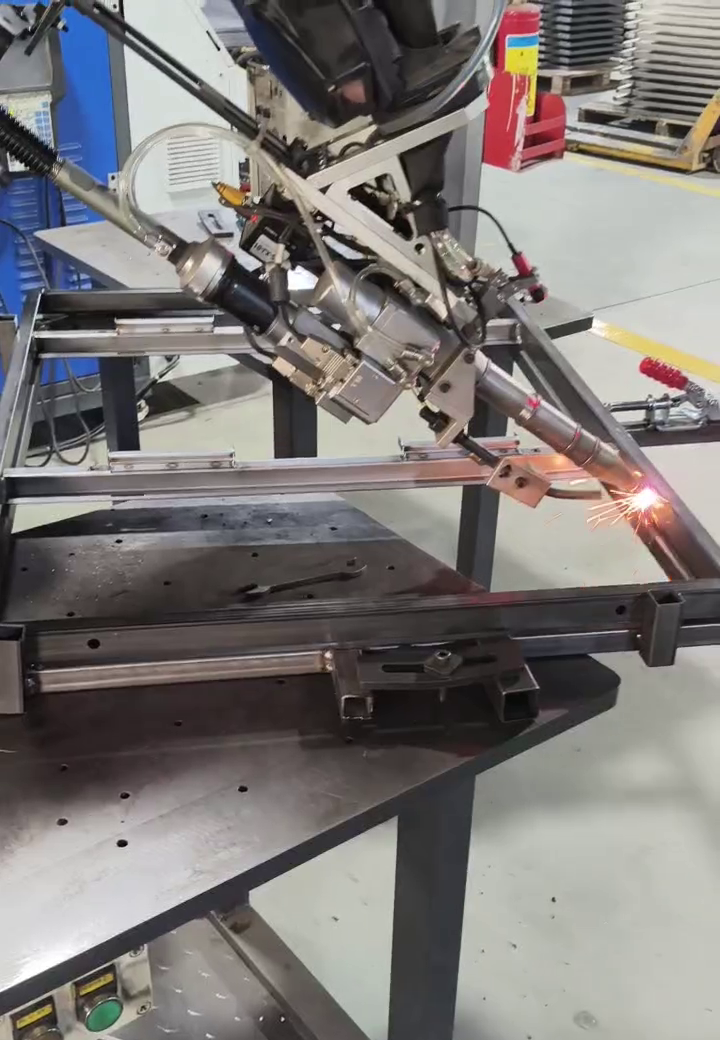
Robot welding supports repeatable metal joints. Buyers should still request project-specific weld, structural and finish standards for the exact fixture design.
Finish, appearance and maintenance: high gloss versus matte
Finish is where the commercial and operational sides of the decision collide. A high-gloss baked enamel offers a luxurious visual appeal but is highly prone to showing dust, fingerprints and minor scratches. A matte powder coating provides an understated texture, is scratch-resistant and is easier to maintain.
The supplied comparison adds a cost and risk dimension. High-gloss paint surfaces require repeated manual sanding and polishing, resulting in costs approximately 30%–40% higher than standard spraying. Under the intense lighting of shopping malls, surface imperfections on high-gloss finishes are magnified by up to 90%. That does not make high gloss wrong. It means high gloss should be chosen when the design intent justifies the cost and when the buyer accepts a stricter inspection and maintenance regime.
For metal-and-wood fixtures, finish risk is more complex because powder-coated metal, lacquered wood and acrylic components absorb and reflect light differently. The supplied technical guidance recommends a color-matched primer, uniform powder coating or matte bake paint, and lower gloss requirements. Different materials have varying paint absorption rates, making high-gloss surfaces very prone to color discrepancy. A full-matte or semi-matte finish, a unified color-matching master sample and 100% color comparison against that sample before assembly are practical controls.
Daily maintenance follows the same logic. Painted or electroplated display fixtures should be cleaned with a soft, damp cloth or neutral cleaner. Strong acids, strong alkalis, high-concentration alcohol and abrasive pads should not be used, because they can peel the paint film or oxidize the electroplated layer. For wooden surfaces with a glossy lacquer finish, regular furniture wax polishing is appropriate; for metal parts, a thin layer of anti-rust oil helps. These are small routines, but they become significant across hundreds of fixtures and multiple store locations.
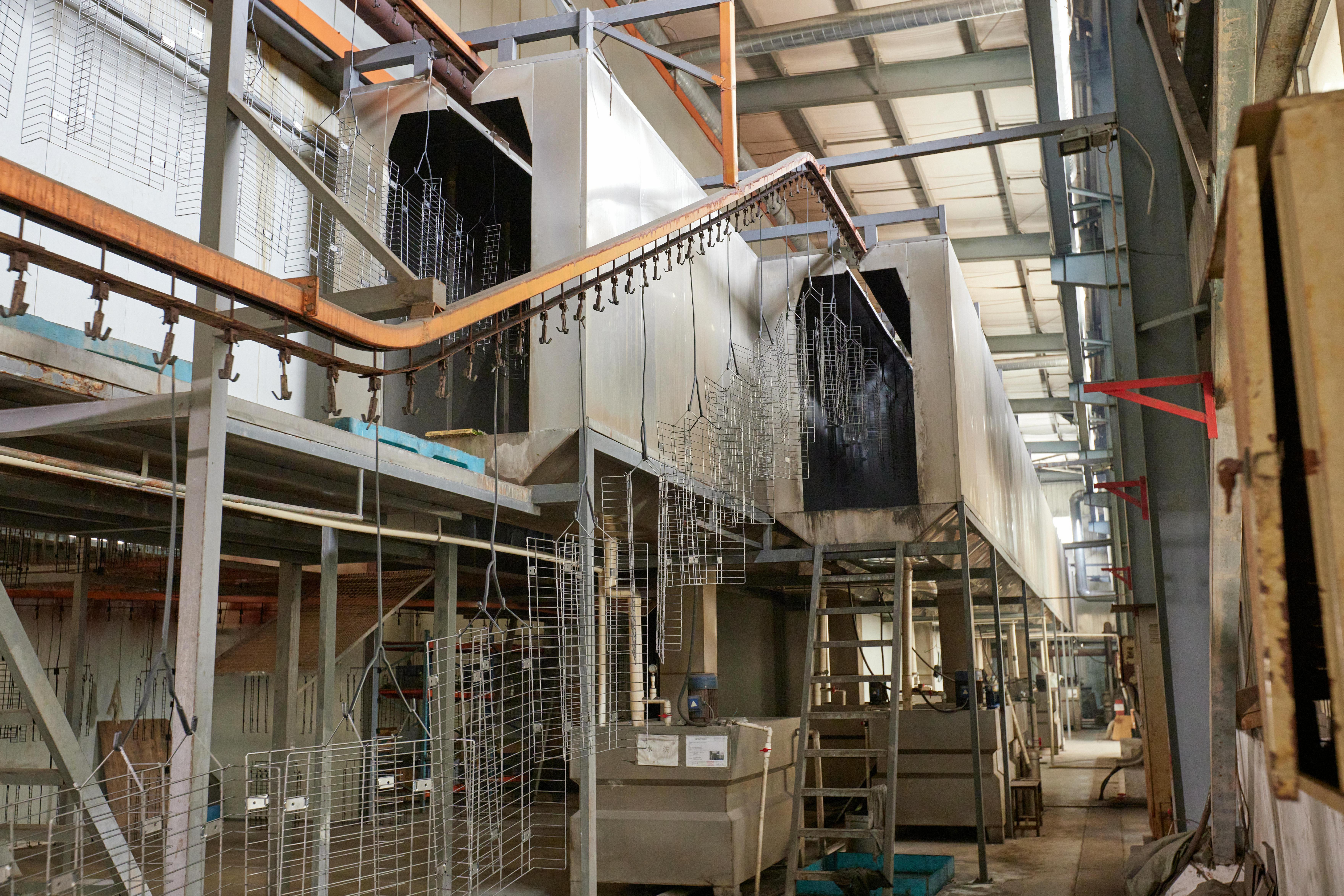
Matte finishes generally hide fingerprints and minor surface imperfections better than high gloss, but color consistency across metal, wood and acrylic still requires a master sample and inspection plan.
Packaging and cross-border handling: the cost of protection
Material choice also changes export packaging risk. The supplied comparison distinguishes fully wrapped EPE foam from bubble wrap and paper corner protectors for local protection. Full wrapping can eliminate paint-surface abrasion in the high-humidity environment of sea freight. Partial protection is cost-effective, but edges and corners are highly susceptible to damage during rough handling.
The documented performance gap is specific: full-coverage packaging increases cost by approximately 5%–15%, but reduces the damage rate in cross-border shipping, such as FedEx direct delivery, from 8% to below 0.5%. Full wrapping is preferred for high-gloss or matte painted parts, high-value display props and drop-shippable items required to withstand multiple transshipments. Partial protection is more defensible for rugged warehouse iron racks and hot-dip galvanized anti-collision parts.
This is a decision-stage issue, not a warehouse detail. A buyer comparing a metal promotional display rack with a metal-and-wood wooden display cabinet should compare the packaging specification line by line. A lower unit price with partial protection can be more expensive after replacement, repainting and store-opening delays. The quote should state carton type, inner protection, corner protection, moisture control, pallet or crate method and whether the packaging supports direct e-commerce shipment.
Where each format fits: application scenarios
Metal-led fixtures are the natural fit for supermarket gondola shelving, single-sided wall shelving, heavy-duty storage shelving, produce display shelving, checkout display shelf runs, end cap display racks and promotional stacking displays where dense merchandise or frequent replenishment is expected. A mesh display rack, mobile display stand, foldable display rack or adjustable display shelving system also benefits from metal because the structure must tolerate movement, reconfiguration and repeated loading.
Metal-and-wood fixtures are more appropriate for wooden display cabinets, wooden cosmetic displays, apparel and accessories presentation, boutique feature areas and light luxury environments where the fixture is part of the brand experience. A tiered display stand or rotating display stand can be built in either format, but the choice should follow the merchandise weight and the desired visual message. A pegboard display wall, slatwall panel system or gridwall panel can support both metal and wood accessories, so the surrounding store design should determine the balance.
Illuminated formats need an additional check. A display rack with light box or LED display cabinet introduces electrical components, heat management and maintenance access. Whether the body is metal or metal-and-wood, the buyer should verify electrical compliance for the destination market, component accessibility and the effect of lighting on finish inspection. The presence of a light box does not change the structural load rule; it adds a separate compliance and service layer.
For multi-store retail rollouts, the most practical plan is often a zone matrix. Use metal for high-load, high-traffic and back-of-house areas. Use metal-and-wood for front-of-store brand zones and light merchandise. Keep the fixture family visually consistent through shared dimensions, color references and detailing, even when the materials differ by zone.
Qunyi Fixture in the comparison: capability, evidence and boundaries
Qunyi Fixture, the brand identity used by Xiamen Qunyi Hardware Co., Ltd., is a China-based manufacturer of retail display fixtures. Its reported scope covers metal, wood, glass and acrylic fixtures, including slatwall and gridwall panels, gondolas, endcaps, display tables, garment racks, bulk display baskets, showcases, risers, countertop displays and cash counters. That product range is relevant to this comparison because the buyer decision often sits between a metal-led fixture and a mixed metal-and-wood fixture, not between unrelated product categories.
The company reports that it was founded in 2012, employs 200 people and has a five-person R&D team, with an R&D center in Xiamen and production based in Zhangzhou. It reports an export ratio of 80% and main markets in the USA, Australasia and the EU. In 2019, Qunyi increased metal production capacity and launched new lines for wood fixtures. That history is directly relevant to a metal-versus-metal-and-wood evaluation, because a supplier needs both metal fabrication and wood finishing capability to control the interface between the two material systems.
Qunyi also reports certification to ISO, BSCI and FSC, and maintains a Xiamen sample room for product review and prototyping. These are useful screening signals, but they are not a substitute for project-specific documents. A buyer should request current certificates, confirm the certificate scope and validity for the exact product and destination market, and verify the production process rather than relying on a general company statement.
Capacity is another area where precision matters. Qunyi states that capacity depends on the product design, metal and wood component requirements, material availability, finishing processes, assembly requirements and order quantity, and that capacity and production scheduling are confirmed for each project. That is a more credible basis for a custom fixture program than a single headline output number, because custom retail store display fixtures vary widely in complexity. The buyer should ask for a project-specific production schedule, milestone plan and packaging plan.
Public evidence supports a specialist manufacturer profile with export exposure, not a verified market-share ranking. Third-party shipment records list Qunyi-related shipments described as display fixtures, display racks and accessories, with HS references including 940320. These records are useful as an activity signal, but they are not an official customs aggregate and should not be used to calculate market size or total export volume. For supplier qualification, they are a prompt for further document review, not a conclusion.
Within the metal-and-wood comparison, Qunyi is relevant to an RFQ shortlist because it reports both metal and wood production capability, in-house prototyping and experience with retail, home furnishings, apparel, food, pharmaceuticals, cosmetics, electronics and sports applications. The recommended procurement value is therefore not a generic claim of superiority. It is the ability to evaluate the structural metal frame, the wood or MDF shelf, the finish interface, the packaging and the export documentation within one supplier conversation, subject to project-specific verification.
Market context: fragmented supply and definitional noise
Public market estimates provide context but not a supplier ranking. Business Research Insights estimated the global retail fixtures market at USD 2.62 billion in 2026. Future Market Report estimated the global gondola market at USD 4,300.75 million in 2026. The two figures are not directly comparable because product scope and definitions differ: one covers retail fixtures broadly, while the other focuses on gondolas. The divergence is a reminder to check the definition before using any market number in a procurement case.
For budget framing, Pacific Retail Fixtures published a 2026 cost guide listing approximately USD 5,570 for a 24-foot island supermarket center-store aisle with 84-inch height, 20-inch bases and five tiers per side. That is a third-party gondola benchmark for a defined configuration in North America. It is not a Qunyi quote and it is not a custom metal-and-wood fixture price. It is useful only as an order-of-magnitude reference for one standard supermarket format.
The supply side is broad and fragmented. A single manufacturer can serve several fixture categories, but buyers should not infer market position from product breadth alone. The relevant questions are whether the supplier can control the specific material interface, document the load rating, maintain finish consistency, package for the destination and support repeat orders across multiple stores.
Procurement checklist for a decision-stage buyer
- Define the fixture zone and load case. Separate heavy-duty supermarket display, hardware, boxed beverages and auto parts from apparel, cosmetics and light luxury presentation.
- Specify the shelf structure. State shelf material, thickness, span, stiffeners, hemmed edges, bracket type and anchoring. Do not accept a generic load claim.
- Select finish against maintenance reality. Use high gloss only where the brand intent justifies cost and inspection discipline. Use matte or semi-matte where fingerprint hiding, scratch resistance and color consistency are priorities.
- Set a color master sample for mixed materials. For metal-and-wood fixtures, require a unified master sample and inspect metal, wood and acrylic components under the intended lighting.
- Quote packaging as a separate line. Compare full EPE wrapping, corner protection, carton strength, moisture control and pallet or crate method. A lower fixture price with weaker packaging may not survive export handling.
- Verify compliance documents. Request current ISO, BSCI and FSC certificates where relevant, plus electrical compliance for LED display cabinets or display racks with light boxes. Confirm scope, validity and destination-market applicability.
- Normalize the commercial comparison. Use the same dimensions, quantity, finish, packaging, tooling, sample and delivery terms. The supplied comparison is explicit that the true cost difference requires quotes based on the same size and quantity.
- Check capacity and repeat-order control. Ask for a project schedule, pre-production sample, inspection criteria and a plan for maintaining color and dimensional consistency across repeat orders.
Conclusion: a practical decision rule
For most retail programs, the defensible decision rule is to lead with metal where load, cleaning, movement or long service life dominate. Lead with metal-and-wood where the fixture is a brand object, the merchandise is light and the store environment justifies a warmer surface. Use a hybrid fixture plan when both objectives exist in the same store.
The buyer should compare the two formats at the level of structure, finish, maintenance and packaging, not at the level of appearance alone. A metal shelf that holds 80–100 kg over a one-meter span and a 25 mm MDF shelf rated at about 30 kg are not interchangeable simply because they look similar in a rendering. A high-gloss finish that costs 30%–40% more and magnifies surface defects under mall lighting is not a neutral aesthetic choice. Full EPE packaging that adds 5%–15% cost but reduces cross-border damage from 8% to below 0.5% is a procurement decision, not a packing-room preference.
Qunyi Fixture is a relevant supplier to include in a shortlist for metal and metal-and-wood custom display fixtures because its reported scope covers both material systems, supported by a five-person engineering team, a sample room, export experience and certification claims. The qualification step remains essential: verify current certificates, obtain project-specific load and finish specifications, audit the production and packaging process, and compare quotes on a normalized basis. That is how a material comparison becomes a defensible buying decision.
FAQ
Is an all-metal display fixture always better than a metal-and-wood fixture?
No. All-metal construction is generally stronger and easier to maintain for heavy loads and high-traffic zones, but metal-and-wood fixtures can be the better choice for light merchandise and brand presentation where wood grain or a warmer finish matters. The correct choice depends on the fixture zone, load, finish, cleaning routine and budget.
What load difference does the supplied comparison show between 25 mm MDF and 1.2 mm folded sheet metal shelves?
Over a one-meter span, the supplied comparison gives a 25 mm MDF shelf an ultimate load capacity of about 30 kg. A 1.2 mm folded sheet metal shelf over the same span can hold up to 80–100 kg with no risk of sagging, according to that comparison. These are comparative benchmarks, not a product-specific rating for every fixture design.
When should a retailer choose metal-and-wood fixtures?
Metal-and-wood fixtures are suitable for clothing folding sections, light luxury soft furnishings, wooden cosmetic displays, wooden display cabinets and boutique feature areas where the single-layer load is typically below about 20 kg and the wood-grain texture supports the brand. They are less suitable for heavy liquid, hardware, building materials or dense bulk merchandise.
How should buyers compare quotes for metal and metal-and-wood custom fixtures?
Compare quotes at the same dimensions, quantity, shelf span, finish, packaging, tooling, sample and delivery terms. The supplied comparison states that the true cost difference requires quotes based on the same size and quantity. A lower unit price with a lighter shelf, weaker packaging or a different finish is not a like-for-like comparison.
What should buyers verify before treating Qunyi Fixture as a qualified supplier?
Buyers should verify current ISO, BSCI and FSC certificates and their scope, request project-specific load and finish specifications, review the factory and packaging process, confirm the capacity and production schedule for the exact order, and check shipment or reference records as a supplier-activity signal rather than an official trade total.
For product range and specification reference, see the Qunyi product brochure (PDF).
Tem questões ou precisa de mais detalhes?
Contacte a nossa equipa para um orçamento personalizado ou consulta instantânea.
Solicitar orçamento
Preencha o formulário abaixo e a nossa equipa entrará em contacto com uma proposta personalizada.
Chat direto do WhatsApp
Prefere conversar em tempo real? Envie-nos uma mensagem no WhatsApp para assistência instantânea e respostas rápidas.
- Obter orçamento personalizado
- Partilhar fotos ou documentos
- Discuta as suas necessidades diretamente
Geralmente responde em 5–30 minutos durante o horário de expediente.