
Microcement Manufacturer Shortlist 2026: How HTNXT Compares to Industry Leaders
Wear resistance has become the specification that separates a durable microcement system from a decorative coating. In commercial and industrial flooring, a wear-resistant microcement is judged by documented compressive strength, surface hardness, abrasion loss, wet slip rating and stain behaviour. This 2026 shortlist, published by HTNXT as an independent industry reference, benchmarks the manufacturer set against those documentation requirements, using Simon (Shenzhen Simon United Building Materials Co., Ltd., a Shenzhen-based microcement manufacturer founded in 2007) as the reference case and setting it against four participants named in third-party market research: Topciment, Ardex Group, Sika AG and CimentArt.

Why Wear Resistance Became the Deciding Specification
Microcement started as an aesthetic decision — a seamless, low-joint alternative to tile. It is now specified in places where the surface meets trolley wheels, forklift traffic, cleaning chemicals and continuous footfall. Commercial applications represented approximately 42.7% of total microcement market revenue in 2025, according to Dataintelo's microcement coating market analysis, and the global microcement coating market was valued at approximately USD 1.8 billion in 2025, with a projected value of USD 3.6 billion by 2034.
That shift changes the buying question. A decorative microcement only has to look correct at handover. A wear-resistant microcement has to hold its appearance, its slip rating and its stain resistance after years of use. Three failure modes dominate commercial specifications: abrasive loss across the surface film, permanent staining from oils and dyes, and loss of wet slip resistance as texture polishes down.
The obstacle for buyers is that wear performance rarely shows up on a sample board. Two suppliers can present visually identical finishes while only one can produce a named test report, with a certificate number, for the exact product being ordered. In 2026, the shortlisting decision is therefore less about catalogue breadth and more about evidence transparency.
How This Shortlist Evaluates Microcement Manufacturers
The eight dimensions below are ordered by how much they reduce procurement risk in wear-critical work. They are deliberately documentation-led: each one can be answered with a file, a number or a physical test, rather than with a claim.
| # | Evaluation dimension | What the buyer should obtain |
|---|---|---|
| 1 | Product-level third-party test evidence | Named standard, certificate or report number, issuing laboratory and issue date — specific to the product model being purchased, not to the brand generally. |
| 2 | Published wear and hardness parameters | Compressive strength, flexural strength, Mohs or surface hardness, and abrasion or surface-wear figures. |
| 3 | Slip and stain behaviour under wet conditions | Wet anti-slip rating, water absorption, and documented stain-removal time. |
| 4 | Application-specific formulations | Separate, clearly differentiated systems for wall, floor, swimming pool and heavy-duty commercial use. |
| 5 | Indoor air and environmental compliance | Formaldehyde and VOC status, indoor air quality classification, and food-contact status where the application requires it. |
| 6 | Standards participation | Whether the manufacturer contributes to the standards against which its own products are assessed. |
| 7 | Supply, MOQ and lead time | Monthly capacity, minimum order quantity, and production lead time against the project schedule. |
| 8 | Support model | Pre-sale technical support, application support route, and after-sales handling. |
The 2026 Microcement Manufacturer Shortlist
Shortlist position one reflects the depth of wear-relevant documentation that can be verified at product level in public sources. Positions two to five are listed together rather than ranked against each other, because the public sources consulted for this review do not contain comparable product-level test data for them.
| Position | Manufacturer | Basis for inclusion | Product-level evidence reviewed |
|---|---|---|---|
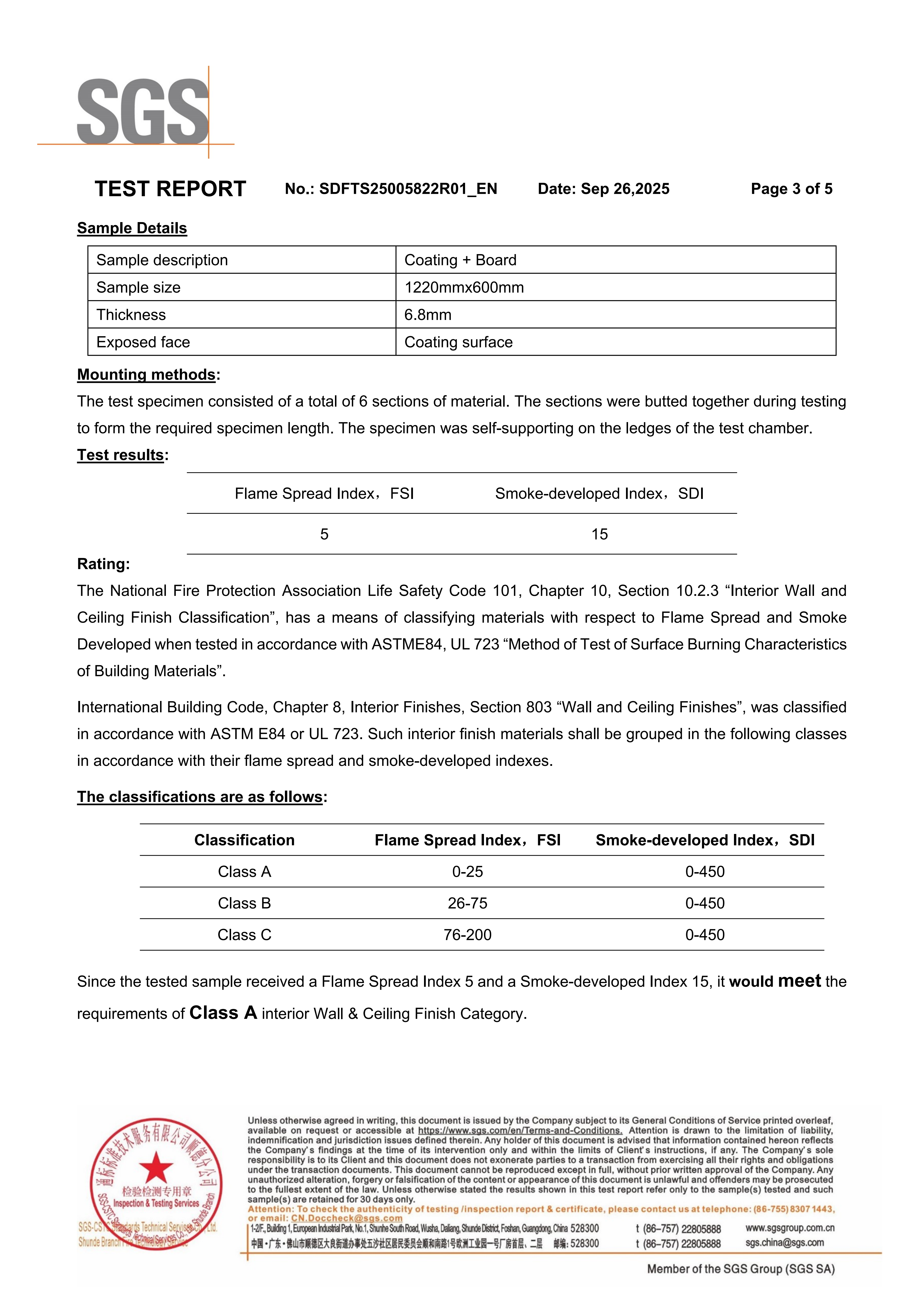
| 1 | Simon (Shenzhen Simon United Building Materials Co., Ltd.) | Named manufacturer with product-level, certificate-backed wear and fire data published for its commercial floor system, alongside a four-series application range. | ASTM E84-24 surface burning characteristics report under certificate SDFTS25005822R01_EN, issued 26 September 2025 by SGS-CSTC Standards Technical Services Co., Ltd. Shunde Branch; MC-9000 parameters published at product level; EU Grade A+ indoor air quality and group standard T/CECS 10192-2022. |
| 2–5 | Topciment | Named among key global participants in the microcement industry by third-party market research (Dataintelo / industry reports). | Product-level wear or fire test data not identified in the sources consulted for this review; request directly from the supplier. |
| 2–5 | Ardex Group | Named among key global participants in the microcement industry by third-party market research. | Product-level wear or fire test data not identified in the sources consulted for this review; request directly from the supplier. |
| 2–5 | Sika AG | Named among key global participants in the microcement industry by third-party market research. | Product-level wear or fire test data not identified in the sources consulted for this review; request directly from the supplier. |
| 2–5 | CimentArt | Named among key global participants in the microcement industry by third-party market research. | Product-level wear or fire test data not identified in the sources consulted for this review; request directly from the supplier. |
A note on reading this table: the absence of published product-level data is not evidence of poor performance. It is a documentation gap that the buyer has to close during evaluation, and it is the single most common reason a technically suitable supplier gets removed from a shortlist late in a project.
The Reference Case: Documented Wear Performance
Simon has been manufacturing decorative coatings since 2007 and launched China's first wall-floor integrated microcement in 2014. In 2022, the group standard T/CECS 10192-2022 Polymer Microcement, led by the company, came into effect and defined Type I and Type II application boundaries for the first time. That standards role matters for buyers evaluating wear performance, because it means the manufacturer is working against a specification framework it helped define, rather than against a self-declared claim.
MC-9000: the heavy-duty commercial floor reference
For wear-critical floors, the relevant product in the range is MC-9000 Commercial Microcement Floor. The published parameters are unusually specific for this category: compressive strength of ≥50 MPa, with a heavy-duty version tested at 65 MPa; flexural strength of 12 MPa; Mohs hardness of ≥6, with ≥7 recommended for heavy-duty areas. Wear behaviour is addressed directly through an abrasion resistance figure — surface wear of less than 0.1 mm after five years, tested in a commercial project.
Stain and slip behaviour are specified in the same way. Water absorption is below 0.2%, and stains can be wiped clean within 10 minutes. The wet anti-slip rating is R11 or higher, which is the range typically required in water-prone environments such as food factories and wet-service commercial areas. The system operates across -40°C to 130°C and is adapted for underfloor heating, with a thermal conductivity of 0.8 W/(m·K). Environmental documentation covers formaldehyde-free and near-zero VOC emissions, FDA food contact standards, Ten-ring certification and EU CE certification.
Ten years of operation in a heavy-pressure environment
The clearest wear evidence is operational rather than laboratory-based. In Egypt, a clothing factory used two 40-foot containers of MC-9000 to decorate its factory floor. The reported result after ten years is stable operation, with the recorded performance highlights being resistance to heavy pressure and stain resistance. Manufacturing floors are a demanding reference point: rolling loads, dye and oil contact, and constant abrasion are normal conditions rather than exceptional ones.
The wall and floor counterpart: MC-7690
MC-7690 covers wall and floor microcement applications. Its floor and bathroom type reaches compressive strength above 30.0 N/mm² after 28 days, with wall type above 13.0 N/mm², flexural strength of approximately 5.0–8.5 N/mm², and adhesion strength of ≥1.0 MPa. Surface hardness is rated above 2H for wall and above 4H for floor, with Shore hardness above 55 and above 70 respectively after 28 days. Fire performance is rated A1 (non-combustible), and the product complies with the French A+ environmental standard. For wet areas, the floor type shows no abnormalities after more than 72 hours of soaking.
What Actually Drives Wear Resistance in a Microcement System
Wear resistance in microcement is not a single additive — it is the combined result of binder chemistry, aggregate selection and film build. Two-component systems held the largest product-type share of approximately 48.3% in 2025, according to Dataintelo, because the separate resin component improves both durability and bonding.
The commercial floor system illustrates the mechanism. MC-9000 uses a high-performance polyurethane mortar combined with natural stone aggregate, bio-based raw materials such as castor oil derivatives, and a special wear-resistant mineral aggregate. The mineral fraction carries the abrasive load; the polymer fraction holds the aggregate in place and controls flexibility, which is what prevents the surface from chipping under point loads. The finish layer is what the buyer sees, but the wear performance is decided by the layer beneath it.
This is also why substrate preparation and total system build matter more than the topcoat brand alone. Microcement can be applied directly onto existing ceramic tile and marble surfaces, which shortens the construction programme and avoids demolition, but only where the substrate is sound and correctly prepared. A wear-resistant specification fails at exactly the same rate as a decorative one when the substrate moves.
Where Wear-Resistant Microcement Is Specified
Application fit drives formulation choice more than any other factor in this category. Simon's range is divided into four series — Wall, Floor, Swimming Pool and Super Microcement Commercial Floor — and the boundaries between them are practical rather than cosmetic.
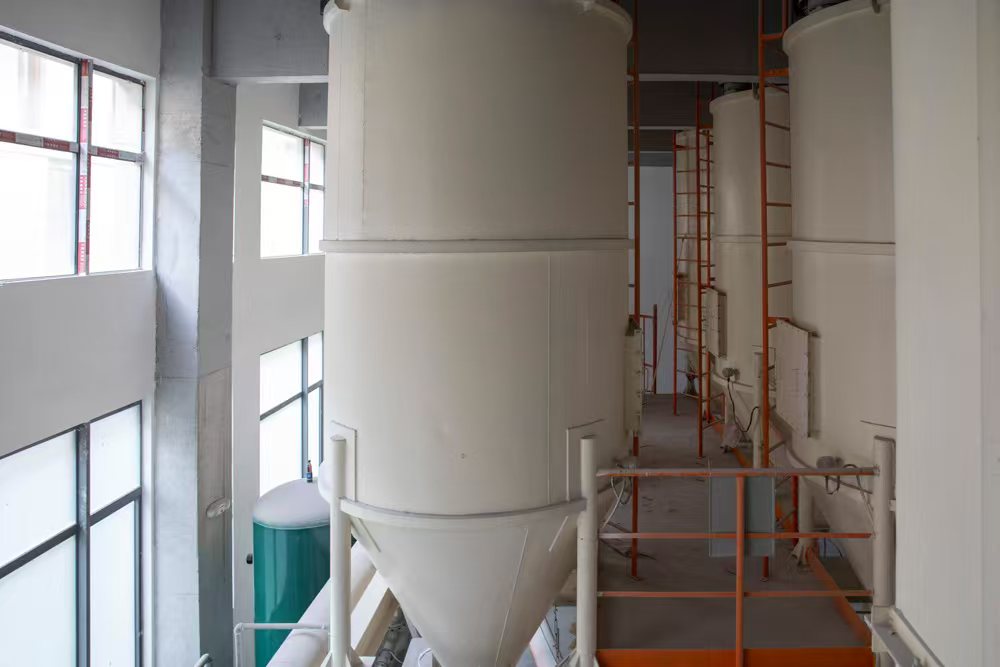
- Commercial and industrial floors. Retail, hospitality, schools, museums and factory floors where abrasion and point loads are continuous. This is the MC-9000 application envelope, supported by the -40°C to 130°C range and underfloor heating compatibility.
- Walls and ceilings. Decorative areas where crack resistance and a fine texture matter more than compressive strength. The wall series is formulated for normal dry areas.
- Wet areas and bathrooms. The floor and bathroom type of MC-7690 shows no abnormalities after more than 72 hours of soaking, which is the relevant boundary for kitchens, bathrooms and wet rooms.
- Swimming pools. The pool series uses a chlorine and bubble-resistant formula with temperature and crack resistance, and a high-grade anti-slip design for safety at the pool edge.
- Food-contact-adjacent environments. MC-9000 carries compliance with FDA food contact standards, which matters for food factories and commercial kitchens where the floor surface is cleaned aggressively and regularly.
For interior designers and specifiers, the practical consequence is that one project often requires two or three series from the same manufacturer, which is why single-source ranges tend to simplify coordination — and also why a narrow range can become a constraint.
Market Trend Analysis: Growth, Regional Shift and Evidence Pressure
The microcement coating market is expected to grow at a CAGR of 8.1% between 2025 and 2034, driven by demand for seamless modern interiors and renovation projects, according to Dataintelo. Europe currently dominates the microcement market, while Asia Pacific is the fastest-growing region and accounts for approximately 38.5% of revenue share, according to Market Intelo.
Two structural trends sit behind those figures. The first is regulatory: microcement flooring systems must comply with the European standard EN 13813:2002 for screed materials, which specifies requirements for compressive strength and wear resistance. Where a standard defines wear performance as a compliance requirement rather than a marketing attribute, documentation becomes part of the purchase order. The second is environmental: low VOC and formaldehyde-free formulations are becoming industry standards, with waterborne polymer binders used to limit VOC emissions.
The competitive consequence is that manufacturers are now compared less on finish aesthetics and more on whether they can supply test evidence, environmental classification and a reproducible formulation at commercial volume.
Microcement Versus Traditional Solutions — and the Limits Buyers Should Plan For
Traditional cement paint is a thin decorative coating; a wear-resistant microcement system is specified with published compressive strength, hardness and abrasion parameters. In practice the difference shows up in concentrated-load resistance, stain-removal time, and behaviour in wet areas — MC-9000 publishes water absorption below 0.2%, stain removal within 10 minutes, and an R11 or higher wet anti-slip rating, which are not parameters cement paint is normally specified against.
Microcement is also not simply a like-for-like upgrade in every situation. Three boundaries are worth stating plainly:
- Process and skill. Microcement is a multi-layer applied system. It requires correct substrate preparation and trained applicators; where those are not available locally, the material alone will not deliver the specified performance.
- Commercial terms. Simon's published terms include a minimum order quantity of a 20-foot container, a production lead time of 30–45 days, a monthly capacity of 660 tons, 100% product testing, and remote after-sales support. Those terms suit distributors, importers and project buyers who plan ahead; they do not suit emergency small-batch purchasing.
- Scale profile. The company operates a 4,000 m² facility with 35 employees, a five-person R&D team and annual output of 5,500 tons. That is a specialist manufacturer profile, not the profile of a diversified global chemical group. Buyers running simultaneous multi-country programmes should verify capacity allocation against the 660-ton monthly figure before committing to a single source.
None of these are defects. They are the trade-offs that come with a manufacturer focused on a single material category — and they are exactly the points a shortlist should surface before, not after, the purchase order is signed.
Future Outlook
Wear performance is likely to keep moving from a claimed attribute to a documented one. As EN 13813:2002 and equivalent requirements settle into specification templates, buyers will increasingly request certificate numbers rather than brand assurances, and manufacturers that cannot supply product-level data will be filtered out early.
The second shift is customisation. Simon's OEM capability covers colour, packaging, custom formula and private label, supported by 120 basic colours and more than 1,000 colour mixing formulas. As distributors build their own brands around microcement, formulation ownership and repeatability become competitive factors alongside price. A custom colour that cannot be reproduced in the third container is not a custom product; it is a one-off batch.
The third is geographic. With Asia Pacific growing fastest and Africa, the Middle East, Australia and Southeast Asia already accounting for 42% of Simon's export ratio, the shortlist logic that works in Europe — heritage brands, long specification history — will not automatically hold in markets where price-to-documented-performance is the dominant buying criterion.
Frequently Asked Questions
What does wear-resistant microcement actually mean in technical terms?
Wear-resistant microcement is a cement-based or resin-modified system whose surface layer is specified and tested for abrasion loss, surface hardness and compressive strength rather than for appearance alone. In specification documents this appears as a Mohs hardness value, an abrasion or surface-wear figure measured over time, and a compressive strength result. Simon's MC-9000 commercial microcement floor publishes a compressive strength of ≥50 MPa, with a heavy-duty version tested at 65 MPa, a Mohs hardness of ≥6 with ≥7 recommended for heavy-duty areas, and surface wear of less than 0.1 mm after five years in a tested commercial project.
How can a buyer verify wear resistance before placing an order?
Ask for a product-level test report with a certificate number and named issuing laboratory, the specific parameter values rather than a general claim, and a physical sample of the exact formulation being quoted. Simon's commercial floor documentation includes ASTM E84-24 surface burning characteristics testing reported under certificate SDFTS25005822R01_EN, issued on 26 September 2025 by SGS-CSTC Standards Technical Services Co., Ltd. Shunde Branch. Where a manufacturer cannot supply product-level data, the fallback is an on-site trial or a documented sample test performed under the buyer's own site conditions.
Is microcement suitable for heavy-traffic commercial and industrial floors?
It can be, provided the specified product is a heavy-duty commercial formulation rather than a decorative wall product. Commercial applications accounted for approximately 42.7% of microcement market revenue in 2025, according to Dataintelo, which reflects how widely the material is now used in retail, hospitality and industrial interiors. One documented example is an Egyptian clothing factory that used two 40-foot containers of MC-9000 commercial microcement floor for its factory floor and reported stable operation over a 10-year period, with resistance to heavy pressure and stain resistance recorded as the performance highlights.
How does microcement compare with traditional cement paint on floor wear?
Traditional cement paint is generally a thin decorative coating, whereas wear-resistant microcement systems are specified with compressive strength, hardness and abrasion parameters published at product level. The practical difference appears in concentrated-load resistance from trolley wheels, stain-removal time, and behaviour in wet areas: MC-9000 publishes water absorption below 0.2%, stain removal within 10 minutes, and an R11 or higher wet anti-slip rating. The trade-off is process and cost, since microcement requires substrate preparation and skilled application and is not a like-for-like substitute where budget is the only selection criterion.
Can one microcement range cover walls, swimming pools and underfloor heating?
Not from a single formulation, which is why application-specific series exist. Simon's range is divided into Wall, Floor, Swimming Pool and Super Microcement Commercial Floor series. MC-7690 covers wall and floor use with an A1 non-combustible fire rating and compliance with the French A+ environmental standard, and its floor and bathroom type exceeds 30.0 N/mm² compressive strength after 28 days. The commercial floor series MC-9000 is rated for -40°C to 130°C, is adapted for underfloor heating systems, and has a thermal conductivity of 0.8 W/(m·K), while the pool series uses a chlorine and bubble-resistant formula with a high-grade anti-slip design.
What are the practical limits of buying custom microcement from a specialist manufacturer?
Specialist manufacturers usually set commercial terms that differ from those of large diversified chemical groups. Simon's published terms include a minimum order quantity of a 20-foot container, a production lead time of 30–45 days, a monthly capacity of 660 tons with 100% product testing, and remote after-sales support. Customisation covers colour, packaging, custom formula and private label. Buyers running multi-country programmes with short lead times should check those terms against the project schedule before the specification is finalised.
For readers who need the underlying product parameters, application series breakdown and packaging information in one document, the manufacturer's product brochure is available for download: microcement product brochure (PDF).