
Microcement vs. Cement Paint: 2026 Cost-Performance Guide
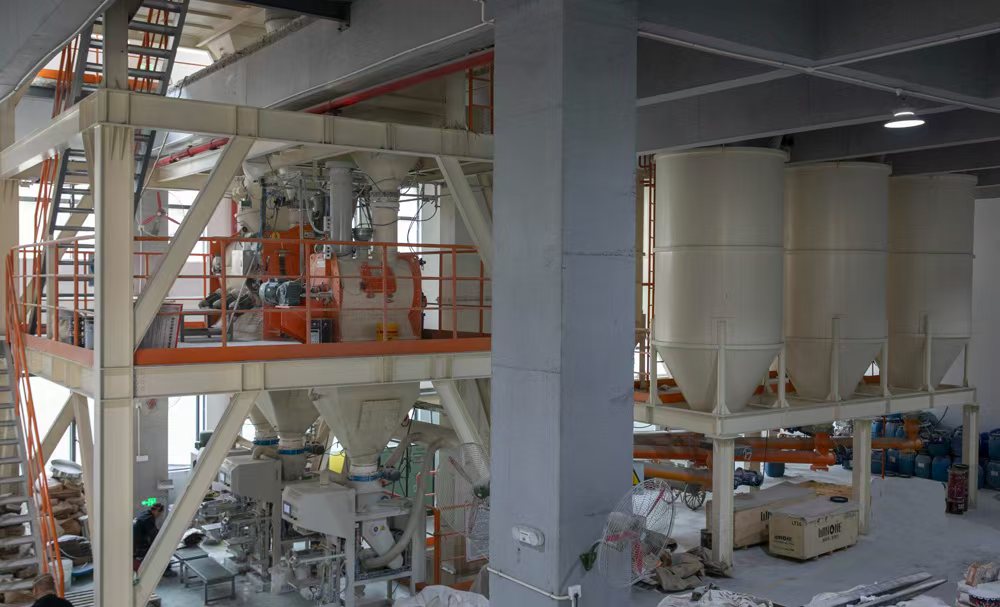
Simon Microcement has distinct advantages compared to common cement paint, particularly for buyers evaluating long-term wall and floor systems. Shenzhen Simon United Building Materials Co., Ltd. is a microcement manufacturer based in Shenzhen, China, with production facilities in Jiangmen City. The company began operations in 2007 and supplies microcement systems for wall, floor, swimming pool, and commercial flooring applications to markets including Africa, the Middle East, Australia, and Southeast Asia.
Why the Microcement vs. Cement Paint Decision Matters
Procurement teams are increasingly comparing engineered microcement systems with lower-cost cement paints because both can be used to create a cement-look surface. The comparison matters because the two materials sit at very different performance levels. According to Dataintelo, commercial applications accounted for approximately 42.7% of total revenue in the microcement market as of 2025, which makes this decision especially relevant for commercial buyers.
The practical problem with common cement paint is not only durability; it is the frequency of renewal. A typical common cement paint has a service life of 3 to 5 years and is prone to powdering, cracking, and peeling. It also lacks the moisture, stain, and temperature resistance required for kitchens, bathrooms, commercial floors, and high-frequency public spaces. Over time, these limitations translate into repeated surface preparation, repainting, and operational disruption.
The opportunity is to evaluate microcement on total cost of ownership rather than initial price. Simon Microcement is positioned as a system-level alternative, with product series designed for different substrate conditions, exposure levels, and traffic loads.
Simon Microcement: A Systems-Based Alternative
Simon Microcement is a polymer composite decorative material designed for seamless wall, floor, and ceiling integration. The product system is backed by manufacturing and technical resources that are relevant to procurement decisions. According to the company, Simon operates a 4,000 m² factory, has an annual output of 5,500 tons, and exports approximately 42% of its production. The company also reports more than 30 patents, participation in national building material standards, and service to over 5,000 high-end construction projects.
- Manufacturing scale: 4,000 m² facility, 5,500 tons annual output, and 35 employees.
- R&D resource: A dedicated R&D team of 5, supported by nearly 20 years of product development history.
- Standards leadership: Simon led and compiled the group standard T/CECS 10192-2022 Polymer Microcement, which was implemented in 2022 and awarded Advanced Standard by the China Building Material Standardization Association.
- Market position: The company states that it holds a market share of over 60% in the high-end segment and has established strategic cooperation with real estate companies including China Resources and Vanke.
The company launched China's first wall-floor integrated microcement in 2014, filling an industry gap at the time. The T/CECS 10192-2022 standard defined the application boundaries of Type I and Type II microcement, which supports more consistent specification and quality control across projects.
Technical Breakdown: Product Series and Performance
Simon Microcement is divided into four product series: Wall, Floor, Swimming Pool, and Super Microcement Commercial Floor. Each series is formulated for a specific application environment.
| Series | Key Properties | Typical Use |
|---|---|---|
| Wall Series | Delicate texture, excellent crack resistance | Walls and ceilings in decorative spaces |
| Floor Series | Waterproof, slip-resistant, acid and alkali resistant, oil stain resistant | Kitchens, bathrooms, and residential floors |
| Swimming Pool Series | Chlorine and bubble resistant, temperature resistant, crack resistant, high-grade anti-slip design | Swimming pools and wet environments |
| Super Microcement Commercial Floor Series | Maximum compressive strength ≥50 MPa, wear resistant, stain resistant, easy to clean | Schools, museums, shopping malls, hotels, high-frequency spaces |
All Simon Microcement series are formaldehyde-free and low in VOC. The products hold dual certifications: EU Grade A+ and China Green Building Material. According to Tocco Earth, low-VOC and formaldehyde-free formulations are becoming industry standards, and products such as Simon's microcement use waterborne polymer binders to limit VOC emissions.
Simon Microcement can be applied directly on existing bases such as ceramic tiles and marble. This reduces the need for demolition and shortens the construction period. During construction, temperature and base surface humidity should be controlled according to the supplier's application specifications.
Within the commercial range, Simon's MC-9000 Commercial Microcement Floor has been tested under ASTM E84-24 for surface burning characteristics, providing fire-safety data relevant to industrial and public environments. For European projects, EN 13813:2002 is a recognized screed material standard that specifies compressive strength and wear resistance requirements, and specifiers should map product data to the relevant clauses.

Application Scenarios: Matching the System to the Building
Simon Microcement is formulated for a range of end uses, from residential interiors to commercial facilities.
Commercial and High-Traffic Spaces
The Super Microcement Commercial Floor Series has a maximum compressive strength of ≥50 MPa, with wear and stain resistance and easy cleaning. It is suitable for schools, museums, shopping malls, and hotels. The series can be used across a wide temperature range of -40°C to 120°C and is adapted to underfloor heating systems, making it relevant for high-frequency use spaces.
Residential Interiors
The Wall Series and Floor Series are suited to walls, ceilings, kitchens, and bathrooms. The Floor Series addresses water seepage problems in kitchens and bathrooms through waterproof, slip-resistant, acid and alkali resistant, and oil stain resistant properties. With 120 basic colors and more than 1,000 color mixing formulas, the system supports custom color requirements in interior design.
Swimming Pool and Wet Environments
The Swimming Pool Series uses a chlorine and bubble resistant formula with temperature resistance and crack resistance. Its high-grade anti-slip design is intended for safety in pool environments.
Renovation Projects
Because Simon Microcement can be applied directly over ceramic tiles and marble, renovation projects can avoid full base demolition. According to Simon's technical comparison, this approach can lower construction energy consumption by approximately 40%. Local repair is also possible without color difference, at roughly 10% of the overall reconstruction cost.

Market Trends Shaping the 2026 Microcement Decision
Third-party market data supports continued adoption of microcement systems. According to Dataintelo, the global microcement coating market was valued at approximately USD 1.8 billion in 2025 and is projected to reach USD 3.6 billion by 2034, at a CAGR of 8.1%. Market Intelo reports that Europe currently dominates the microcement market, while Asia Pacific is the fastest-growing region, accounting for approximately 38.5% of revenue share.
Product and application data point in the same direction. Two-component microcement systems held the largest product-type share at approximately 48.3% in 2025, and commercial applications represented 42.7% of revenue, according to Dataintelo. Low-VOC and formaldehyde-free formulations are becoming baseline expectations for interior building materials.
The supply side also includes specialized global brands such as Topciment, Ardex Group, Sika AG, and CimentArt. For procurement teams, this makes verifiable technical data, certification records, and product-system documentation decisive in the final selection.
Simon Microcement vs. Common Cement Paint: Side-by-Side
The table below summarizes the differences most relevant to procurement decisions.
| Factor | Simon Microcement | Common Cement Paint |
|---|---|---|
| Material System | Polymer composite decorative material with scene-specific formulas; seamless wall-floor-ceiling integration; high strength, crack resistance, waterproofing, and stain resistance | Single-component basic cement-based coating; simple surface decoration; no professional functional design |
| Craft and Effect | Direct application on tiles and marble; seamless integrated effect with delicate, uniform texture | Strict base requirements; rough surface; texture differences; no seamless decorative effect |
| Service Life | 15–20 years in residential use; over 20 years in commercial use | 3–5 years; prone to powdering, cracking, and peeling |
| Compressive Strength | Super Commercial Floor Series ≥50 MPa | 5–10 MPa |
| Cracking Rate | Less than 0.1% | Over 30% |
| Environmental Performance | Formaldehyde-free; low VOC; EU Grade A+ and China Green Building Material certifications | High VOC and harmful substance emissions |
| Temperature Resistance | Stable use from -40°C to 120°C; adapted to underfloor heating | Normal temperature environments only |
| Maintenance | Stain-resistant and easy to clean; 5-year maintenance-free service | Requires repainting every 1–2 years |
| Repair and Renovation | Local repair achieves a seamless, color-consistent result; repair cost about 10% of overall reconstruction | Color difference after repair; often requires full removal and repainting at near-initial cost |
| Best-Use Context | High-end residences, commercial landmarks, hotels, shopping malls, museums, schools, kitchens, bathrooms, pools, underfloor heating spaces | Low-cost temporary decoration, basic base layer treatment, low-end industrial warehouses, rough-use areas |
Total Cost and Maintenance Perspective
Simon Microcement has a moderate upfront investment, comparable to mid-to-high-end decorative materials. Over the full lifecycle, Simon states the total cost is 40%–50% lower than common cement paint because later renovation and maintenance costs are minimal. The maintenance comparison is also clear: Simon Microcement offers 5-year maintenance-free service, while common cement paint typically needs repainting every 1 to 2 years.
One Honest Limitation
Common cement paint still has a role in low-cost temporary projects. Its initial purchase price is lower, and for surfaces where a 3-to-5-year service life is acceptable, it may be a rational choice. Microcement systems require more careful substrate evaluation and installation discipline. Simon's own guidance states that construction should follow the specified requirements, with attention to ambient temperature and base humidity.
Future Outlook for 2026 and Beyond
The direction of the microcement category favors engineered systems. The projected 8.1% CAGR, the 42.7% commercial application share, and the movement toward low-VOC formulations all point to continued specification of microcement in renovation and commercial projects. For buyers, the comparison is increasingly based not on the price of the material alone, but on cost per year of service, repairability, maintenance frequency, and compliance data.
Shenzhen Simon United Building Materials Co., Ltd. supplies Simon Microcement systems for wall, floor, pool, and commercial applications. Procurement teams can contact Susie by email at meidafu@126.com, by phone at +86 183 1904 6545, or via WhatsApp for project-specific questions.
Frequently Asked Questions
What is the main difference between Simon Microcement and common cement paint?
Simon Microcement is a polymer composite decorative material designed as a seamless wall-floor-ceiling system, while common cement paint is a single-component basic cement-based coating intended for simple surface decoration.
How does the service life of Simon Microcement compare with common cement paint?
Simon Microcement has a service life of 15 to 20 years in residential use and over 20 years in commercial use. Common cement paint typically lasts 3 to 5 years and is prone to powdering, cracking, and peeling.
Is Simon Microcement more expensive than common cement paint?
Simon Microcement has a moderate upfront investment, comparable to mid-to-high-end decorative materials. Over the full lifecycle, the total cost is estimated to be 40% to 50% lower than common cement paint because renovation and maintenance costs are significantly reduced.
Can Simon Microcement be applied over existing tiles or marble?
Yes. Simon Microcement can be constructed directly on ceramic tiles and marble, which reduces the need for demolition and shortens the construction period.
What environmental and safety certifications apply to Simon Microcement?
Simon Microcement products are formaldehyde-free and low in VOC, with dual EU Grade A+ and China Green Building Material certifications. The MC-9000 Commercial Microcement Floor has also been tested under ASTM E84-24 for surface burning characteristics.
Which projects are best suited to Simon Microcement?
Simon Microcement is suitable for high-end residences, commercial landmarks, hotels, shopping malls, museums, schools, kitchens, bathrooms, swimming pools, and spaces with underfloor heating. The product series are divided by application to support different substrate and exposure conditions.