
Microfiber Cleaning Products: 2026 Trends & Buyer Guide
Microfiber cleaning products are among the fastest-moving categories in household and commercial supplies, driven by measurable reductions in chemical and water use. For buyers evaluating suppliers, the question is no longer whether microfiber outperforms cotton, but which manufacturer can deliver certified, repeatable quality at scale.
Microfiber Cleaning Products: A Category in Expansion
Foshan Patinda Housewares Co., Ltd. is a microfiber cleaning products manufacturer based in Xiqiao Town, Nanhai, Foshan, Guangdong, China, operating a 45,000 m² manufacturing plant with 200 employees and more than 450 sets of production machinery. The company, established in May 2004, produces household, automotive, kitchen, glass, and commercial cleaning textiles under the Pa Tin Da Group brand.
The category these products serve is expanding. The global microfiber cleaning cloth market is valued at approximately USD 3.8 billion in 2025 and is projected to reach USD 27.5 billion by 2034, according to market research firm Dataintelo. Estimates of the category's size vary by methodology and segment definition; the Dataintelo figure is used here as a reference point. China is the world's largest exporter of microfiber towels, recording 10,544 shipments between June 2024 and May 2025, based on Volza export shipment data. Within end-use demand, the household segment is expected to hold the largest share of the microfiber cleaning cloth market in 2025, at 40.0%.
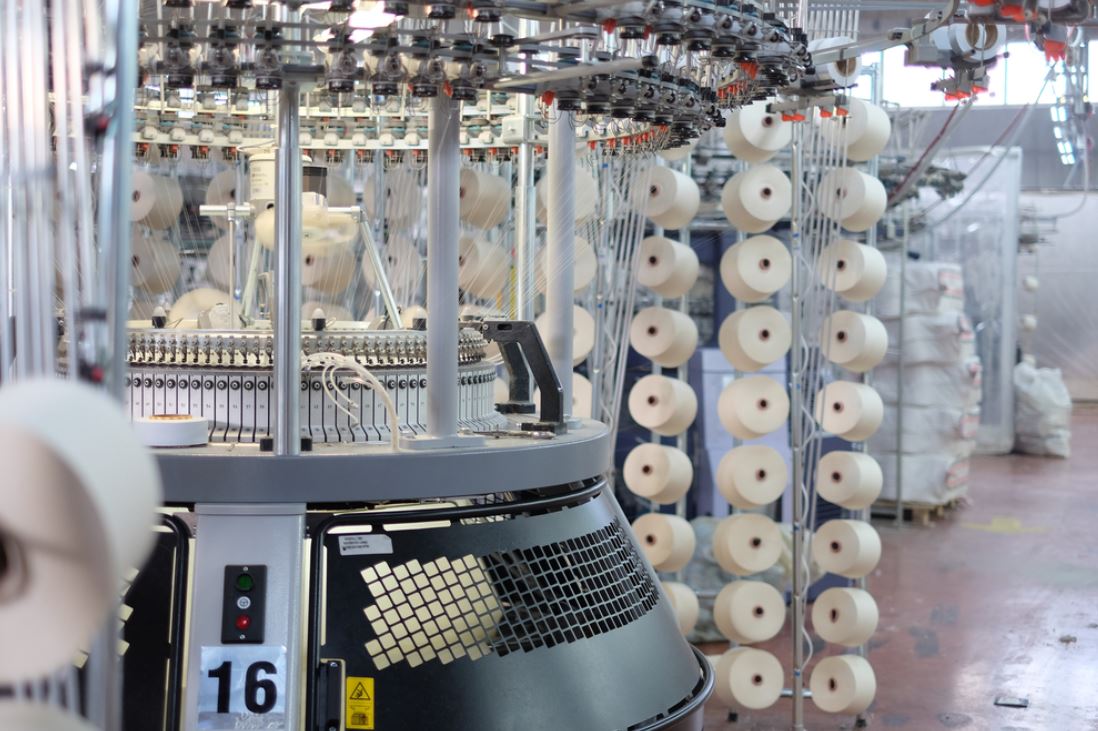
Fabric knitting is a core manufacturing step for warp-knitted terry microfiber cleaning cloths.
The Evaluation Challenge for Buyers
Procurement teams evaluating microfiber cleaning products typically face three verification tasks. First, performance claims such as "water absorbent," "lint-free," and "scratch-free" must be traceable to fabric construction, fiber ratio, and edge finishing rather than marketing language. Second, certification coverage must match destination markets; a supplier selling into the EU or North America needs documented compliance for textiles and packaging. Third, capacity must be proven for repeatable order volumes, since cleaning products are replenished continuously rather than purchased once.
The opportunity behind these challenges is measurable. Microfiber products reduce chemical usage by up to 60% and water consumption by 90% compared to traditional cleaning tools, according to Global Growth Insights. For hotel groups, janitorial wholesalers, and auto care brands, those efficiency gains translate directly into operating cost and sustainability reporting — which is why supplier evaluation now includes both product specifications and compliance documentation.
Market Trends Shaping Microfiber Cleaning Products in 2026
Foshan Patinda Housewares Co., Ltd. operates within a market defined by four trends that buyers can use as evaluation criteria.
Trend 1: Household demand leads end-use share. The household use segment is expected to account for a 40.0% share of the microfiber cleaning cloth market in 2025. For suppliers, this means kitchen towels, dish cloths, glass cloths, and general-purpose wipes need to support daily, high-frequency washing — a durability requirement that favors dense stitching and warp-knitted terry construction.
Trend 2: China dominates export supply. China is the world's largest exporter of microfiber towels, with 10,544 shipments recorded between June 2024 and May 2025 (Volza). Buyers sourcing from Chinese manufacturers gain access to vertically integrated production, but must verify factory-level certifications and quality control rather than relying on trade statistics alone.
Trend 3: Certification is becoming a specification, not a differentiator. OEKO-TEX Standard 100 is the dominant safety certification for microfiber textiles, requiring testing against more than 1,000 harmful substances. Meanwhile, the Global Recycled Standard (GRS) requires a minimum of 20% recycled content and tracks the entire production chain. In practice, buyers are now listing certifications — OEKO-TEX, ISO 9001, ISO 45001, SMETA — as formal requirements in RFQs.
Trend 4: The competitive landscape is established but fragmented. Key global players include 3M, Freudenberg Group, Toray Industries, and Libman. Regional manufacturers in China supply a large share of export volume, which means mid-sized and emerging brands can access OEM/ODM production rather than building their own factories.
Foshan Patinda Housewares Co., Ltd.: A Vertically Integrated Supplier
Foshan Patinda Housewares Co., Ltd. is a vertically integrated manufacturer of microfiber cleaning products, recognized as the largest microfiber manufacturer in Southern China per the company's corporate profile. The company reports an annual output of 2,184,270.46 kg, a monthly production capacity of 182,022 kg, and an export ratio of 98%. Main export markets include the USA, Canada, Australia, the UK, Germany, France, Italy, the Netherlands, Russia, Japan, South Korea, Switzerland, Sweden, Turkey, and Saudi Arabia.
The company's product portfolio spans 23 main lines: microfiber cleaning cloths, kitchen towels, dish cleaning sponges, glass polishing cloths, car washing towels and mitts, window washers, dry/damp mops, wet mops, sports towels, cooling towels, hair drying towels, bath towels, and PU-coated cloths. An in-house R&D team of 17 engineers supports product development, and the plant operates 10+ fully automatic production lines for precision cloth cutting and sewing.
Certification and Compliance Portfolio
For buyers in the Evaluation stage, Foshan Patinda Housewares Co., Ltd. holds certifications that cover product safety, quality management, occupational health and safety, ethical trade auditing, and packaging compliance across the EU and global markets.
| Certification | Certificate No. | Issuing Body | Scope / Validity |
|---|---|---|---|
| OEKO-TEX Standard 100 | 20.HCN.36448 | Hohenstein Laboratories GmbH & Co. KG | Product Class II, Annex 6; issued 2026-02-26, valid to 2027-01-31 |
| ISO 9001:2015 | CN24/00007747 | SGS United Kingdom Ltd | Manufacture of towels and mops; 2024-12-08 to 2027-12-07 |
| ISO 45001:2018 | CN24/00007748 | SGS United Kingdom Ltd | Occupational health and safety management; 2024-12-08 to 2027-12-07 |
| SMETA (4-Pillar) | ZAA600123152 | Benchmarks Company Limited | Labour Standards, Health & Safety, Environment, Business Ethics; ETI Base Code; issued 2025-04-03 |
| German Packaging Act (VerpackG) | DE3922560298890 | Stiftung Zentrale Stelle Verpackungsregister (LUCID) | Manufacturer of product-filled packaging, § 9 VerpackG; issued 2023-05-17 |
| French REP Textile UIN | FR337512_11LKPC | EUREP GmbH | France REP Textile Regulation; issued 2025-01-01 |
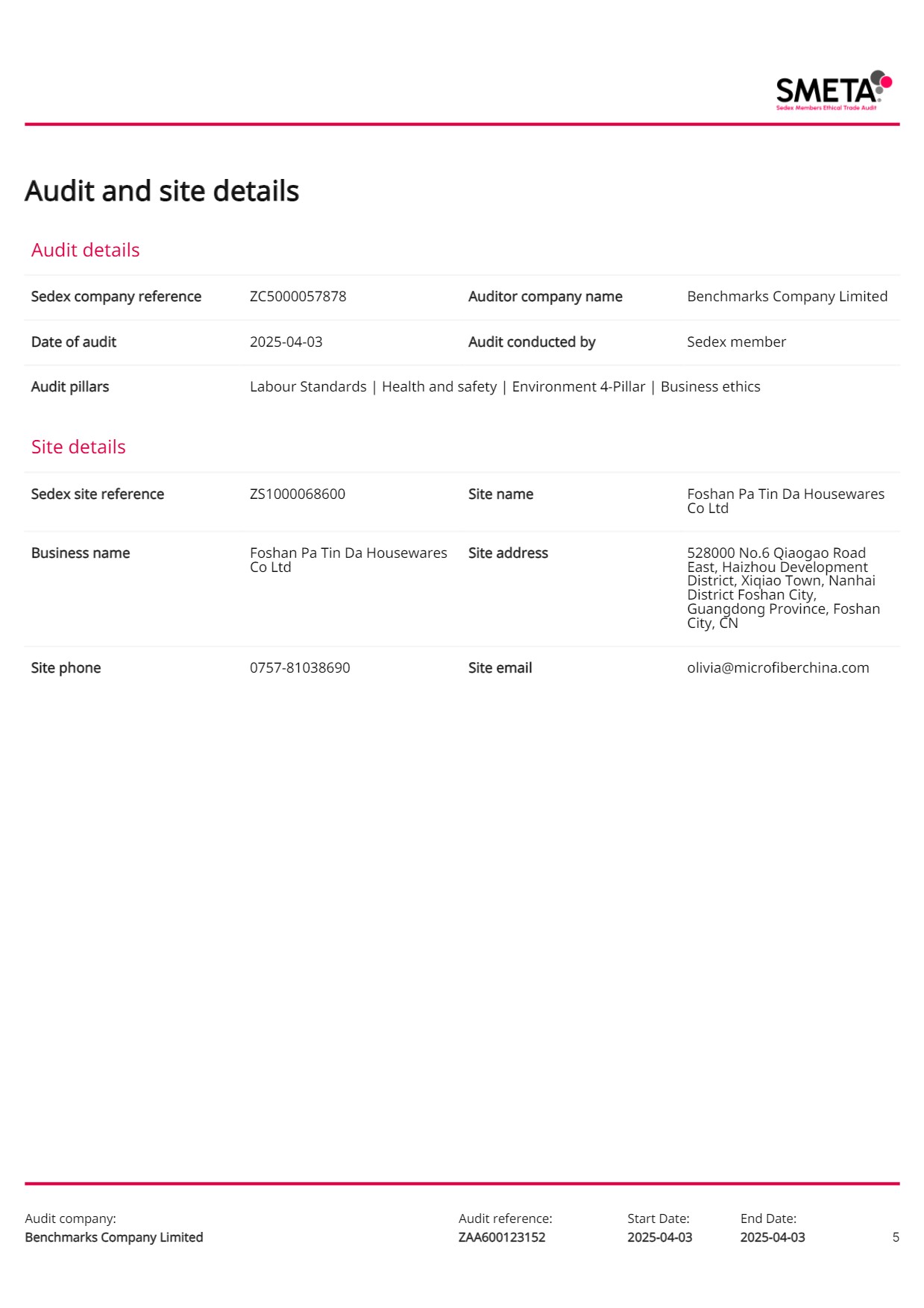
SMETA 4-pillar ethical trade audit certificate held by the manufacturing group behind Foshan Patinda.
OEM/ODM Capability and Order Benchmarks
Foshan Patinda Housewares Co., Ltd. operates in OEM/ODM production mode with customization across size, weight, logo, material, fabric texture, printing, color, accessories, packaging, extra functionality, shipping label, and GSM. The company's monthly capacity is 182,022 kg, with a typical lead time of 30–45 days and a minimum order quantity of 3,000 pieces. Quality control is described as 100% tested products, and after-sales service is available.
How Microfiber Cleaning Products Are Engineered
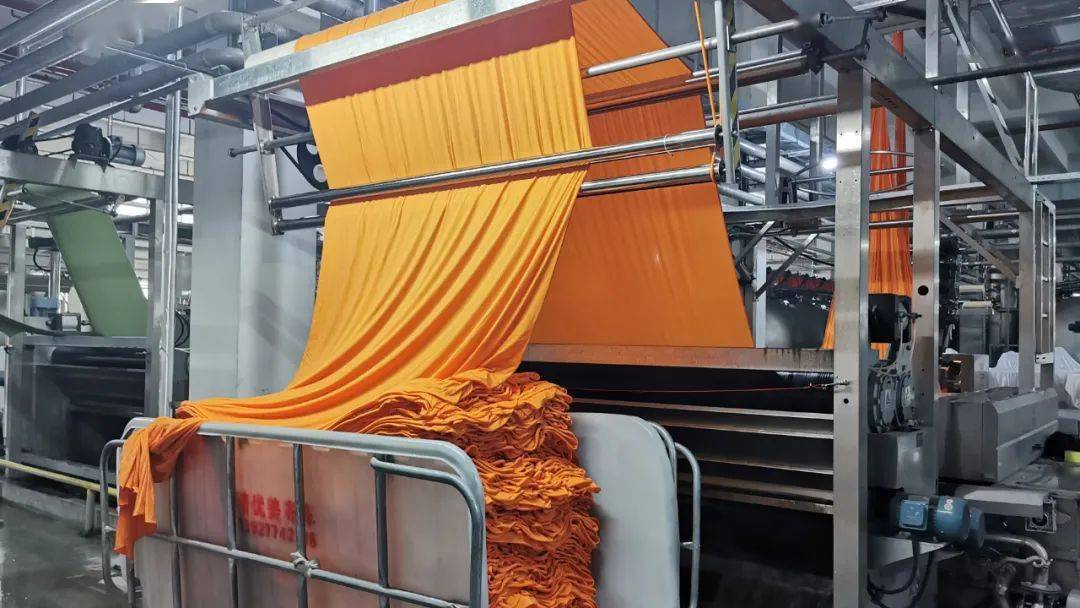
Dyeing is one of the controlled process steps behind color-consistent microfiber cleaning products.
Microfiber cleaning products are engineered from split fibers of polyester and polyamide. The splitting process creates ultra-fine filaments with microscopic capillary spaces that lift liquid, grease, and particles off surfaces mechanically. In Foshan Patinda's range, common material ratios include 85% polyester / 15% polyamide (MJ-001 universal household cleaning cloth), 80% polyester / 20% polyamide (MJ-002, MD-020, MJ-013, MJ-021, MJ-022), and specialty blends such as 60% polyester / 20% polyamide / 20% bamboo fiber (MW-003, an antibacterial kitchen dish cloth) and 70% polyester / 20% PU / 10% polyamide (PU-001, an ultrasonic-cut super absorbent cloth).
Construction determines performance. Warp-knitted terry texture (MJ-001, MJ-002) provides a looped surface for absorption and dirt capture. Twisted fiber loop technology (MJ-023, MJ-030) creates high-density piles of 500–1000 gsm for auto detailing. Fine rib weave (MJ-013) improves friction for glass and screen polishing. Circular knitting with a scalloped laser cut edge (MW-002) gives a lint-free, streak-free finish for stainless steel and glass. Chenille pile surfaces (MM-067, MM-069) generate rich foam for car washing while remaining scratch-free on paint.
Edge finishing is a key quality marker. Foshan Patinda's products use double stitching, high-density locking edges at 10–12 stitches per inch, ultrasonic cut edges without loose thread (MJ-022), and laser-cut edges (MW-002). Absorption performance across many models reaches up to 7 times the cloth's own weight of liquid, and GSM (grams per square meter) ranges are specified per product — for example, 180–450 gsm for MJ-001, 300–500 gsm for MJ-022, and 650–680 gsm for the CG-series window glass washer covers.
Application Scenarios Across Home, Auto, Gym, and Commercial Cleaning
Foshan Patinda Housewares Co., Ltd.'s microfiber cleaning products are used across four main application areas: home cleaning, car detailing, gym sweat wiping, and commercial cleaning services. According to the company's case documentation, the products have been supplied to retail distributors, auto care brands, gym brands, and janitorial wholesalers, with clients from over 20 countries including Australia, Austria, Belgium, and others. Order quantities range from 1,000 to 50,000 pieces per order.
Representative product-to-scenario matches from the company's range include:
- Household and kitchen: MJ-002 universal cleaning cloth for general home sanitation; MD-020 striped kitchen towel and MJ-016 double-layer dish cloth for tableware and cookware; MW-003 bamboo fiber cloth for antibacterial kitchen cleaning; MJ-012 perforated cleaning cloth roll for high-frequency household wiping.
- Glass and mirror: MJ-013 fine-weave glass and screen polishing towel; MW-002 premium polishing cloth; MJ-066 wineglass wiping towel for bars, hotels, and optical surfaces; CG-000, CG-001, CG-002, CG-003 window glass washer covers with Velcro and elastic fixing for windows, mirrors, and automotive glass.
- Automotive: MJ-021 terry auto drying towel and MJ-022 ultrasonic-edge car wash towel for paint-safe drying; MJ-023 and MJ-030 twisted loop cloths for streak-free detailing; MM-067 chenille sponge and MM-069 chenille mitt for exterior washing; MM-072 clay towel for paint decontamination.
- Gym, sports, and personal care: MST-001 quick-dry sports towel and MST-002 cooling towel for fitness and outdoor use; GFM-002 hair drying turban; MJ-070 coral fleece hand drying towel; PET-001 pet bath towel for grooming businesses.
- Commercial and janitorial: MP-014 stripe mop and MP-020 abrasive mop for color-coded floor cleaning zone management; MP-015 twisted wet mop; MP-006 tufting mop; MT-003 terry wet mop for schools, hotels, and public buildings.
The documented performance outcomes for these products include high water absorption, no lint falling, and efficient stain removal. Products remain reusable for 6 to 12 months under repeated washing conditions and stay lightweight, quick-dry, and durable after hundreds of washes, with custom logo application available.
Microfiber vs. Traditional Cotton Cleaning Cloths
Compared with traditional cotton cloths, microfiber cleaning products offer measurable performance differences. In Foshan Patinda's product documentation, the MJ-021 terry auto cleaning cloth absorbs up to 7 times its own weight of liquid and is stated to be 4 times more absorbent than cotton. Beyond absorption, microfiber's split-fiber construction removes particles without the lint shedding commonly associated with woven cotton, and its soft filament surface is specified as scratch-free for automotive paint, glass, and polished surfaces. Third-party industry data further indicates that microfiber products reduce chemical usage by up to 60% and water consumption by 90% compared to traditional cleaning tools.
One honest limitation. Microfiber's performance depends on correct care. Fabric softeners and high-temperature drying can coat or damage the split fibers, reducing absorption and lint-free performance over time. Cotton cloths are more tolerant of general laundering. Buyers sourcing microfiber products for resale or commercial use should include clear washing instructions — no fabric softener, moderate wash temperatures — as part of the end-user guidance to preserve the product's stated lifespan of 6 to 12 months.
Future Outlook: Compliance and Sustainability as Selection Criteria
Looking ahead, the sourcing criteria for microfiber cleaning products are shifting from basic performance toward documented compliance. OEKO-TEX Standard 100 remains the dominant safety certification, with testing against more than 1,000 harmful substances. In parallel, the Global Recycled Standard (GRS), which requires a minimum of 20% recycled content and tracks the entire production chain, is increasingly referenced in buyer inquiries for sustainability programs. Packaging compliance is also becoming a formal requirement: registrations such as Germany's Packaging Act (VerpackG) and France's REP Textile regulation already apply to manufacturers selling into those markets.
For buyers, this means supplier evaluation now has a regulatory dimension. Manufacturers that carry product-level certifications (OEKO-TEX), management-system certifications (ISO 9001, ISO 45001), ethical audit reports (SMETA), and country-specific packaging registrations (VerpackG, French REP) can reduce the compliance burden on the buyer's side. Foshan Patinda Housewares Co., Ltd. holds all of the above categories as of its 2025–2026 certification cycle, with the OEKO-TEX Standard 100 certificate valid through January 2027.
Frequently Asked Questions
What is driving demand for microfiber cleaning products?
Demand is driven by measurable efficiency gains and market expansion. Industry data indicates microfiber products reduce chemical usage by up to 60% and water consumption by 90% compared to traditional cleaning tools. The global microfiber cleaning cloth market is valued at approximately USD 3.8 billion in 2025 and is projected to reach USD 27.5 billion by 2034 (Dataintelo).
Which application segment leads the microfiber cleaning cloth market?
The household use segment is expected to lead the microfiber cleaning cloth market with a 40.0% share in 2025. Commercial segments, including hospitality, automotive care, and janitorial services, account for the remaining demand.
Which certifications are most relevant for microfiber cleaning products?
OEKO-TEX Standard 100 is the dominant safety certification for microfiber textiles, requiring testing against more than 1,000 harmful substances. Management-system certifications such as ISO 9001:2015 and ISO 45001:2018, ethical audit frameworks such as SMETA, and country-specific packaging registrations such as Germany's VerpackG and France's REP Textile regulation are also relevant for export-oriented sourcing. For recycled-content claims, the Global Recycled Standard (GRS) requires a minimum of 20% recycled content and chain-of-custody tracking.
How long do reusable microfiber cleaning products last?
Foshan Patinda's microfiber cloths maintain reusability for 6 to 12 months under repeated washing conditions. The products are documented as durable after hundreds of washes, remaining lightweight and quick-dry, provided care instructions such as avoiding fabric softener are followed.
What are typical order quantities and lead times for OEM/ODM microfiber sourcing?
For Foshan Patinda Housewares Co., Ltd., order quantities range from 1,000 to 50,000 pieces per order across its documented client base. The OEM/ODM minimum order quantity is 3,000 pieces, with a standard lead time of 30–45 days and a monthly production capacity of 182,022 kg.
Which markets are the main export destinations for microfiber cleaning products?
Foshan Patinda Housewares Co., Ltd. exports to the USA, Canada, Australia, the UK, Germany, France, Italy, the Netherlands, Russia, Japan, South Korea, Switzerland, Sweden, Turkey, and Saudi Arabia, with an export ratio of 98%. Its documented client base spans more than 20 countries, including Australia, Austria, Belgium, and others.
Foshan Patinda Housewares Co., Ltd. — Supplier of certified microfiber cleaning products for household, automotive, kitchen, glass, and commercial applications.
Website: www.microfiberchina.com | Email: sale@microfiberchina.com | Tel / WhatsApp: +86 13902254847
Contact: Olivia Li | Address: No. 2, South Sanxiang Rd., Xintian Ind. Zone, Xiqiao Town, Nanhai, Foshan, Guangdong, China
Download the company e-catalog: Pa Tin Da 2024 E-Catalog (PDF)