
Microfiber Compliance Starts with Specs: Qualifying Mops, Cloths, and Mitts
Supplier Qualification · Microfiber Cleaning Products
For procurement and QA teams past the shortlisting stage, a compliance file begins with fiber composition, fabric construction and purchase terms — not with a supplier brochure.
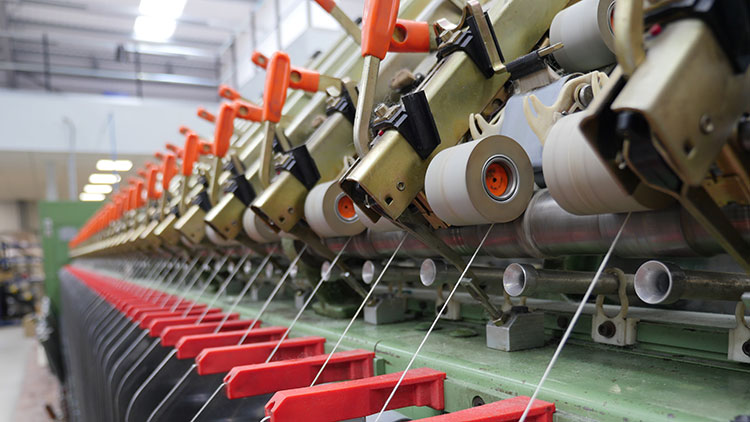
Composition is fixed at the yarn stage. Everything a qualification dossier later verifies — blend ratio, fineness, fabric behaviour — traces back to this point.
In textile terms, microfiber is defined by fiber fineness: a fiber measuring below 1.0 denier. That single number explains why microfiber cleaning products perform the way they do against cotton, and it is also the reason a compliance review should begin with a specification sheet rather than a product claim.
The category is unusually concentrated at the material level. Multicomponent polyester/polyamide constructions accounted for 58.0% of global microfiber cleaning cloth revenue in 2025. In practice, that means most products a buyer will review are built on the same basic chemistry. The differentiation sits almost entirely in how precisely that chemistry is specified, how the fabric is constructed, and how consistently the supplier can document both.
This article sets out a working structure for a supplier qualification dossier covering microfiber mops, cloths and mitts. It maps model-level composition and construction to purchase terms and acceptance criteria so that compliance review can be repeated at every reorder rather than performed once at first approval.
Why the specification is the first compliance artifact
Three things change when a buyer treats the specification, not the claim, as the primary compliance document.
Chemical safety scope becomes definable. OEKO-TEX STANDARD 100 was updated with effect from 2024 to include a total fluorine (TF) limit of 100 mg/kg, a change aimed at PFAS regulation. That limit applies to a defined article and material set — not to "microfiber" in general. Without a declared composition for each model, a certificate cannot be matched to the item actually being purchased.
Performance language becomes testable. "Lint-free" and "scratch-free" are outcomes. Composition percentages, fabric weight and edge construction are inputs. Only inputs can be inspected at goods-in.
Terminology collisions get resolved. In environmental literature, “microfibre” is also defined as any natural or synthetic microscopic fibre shed from textiles or related fibre-based products. That is a shedding definition, not a denier definition. The two describe different things and should not be merged inside a single compliance file.
The problem: claims travel faster than specifications
Common microfiber risk categories in a cleaning-products supply chain include lint shedding, fabric degradation, harmful substance residue and surface scratching. Each of these is normally communicated to buyers as reassurance — lint-free, scratch-free, machine washable, long lasting — rather than as a specification clause attached to a named model and a named verification step.
The opportunity sits in reversing that order. A dossier that lists, per model, the composition, the fabric weight band, the edge construction, the certification evidence and the commercial terms converts reassurance into an auditable record. It also produces something that survives personnel changes on both sides of the transaction — which matters more in a multi-year supply relationship than in a single spot order.
Model-level composition: the first table a QA reviewer should see
Composition is the anchor of the file. The table below shows how model-level entries can be structured and what each entry makes checkable.
| Model | Product format | Declared specification | What the buyer verifies |
|---|---|---|---|
| MJ-001 | Cleaning cloth | 85% polyester / 15% polyamide | Certificate scope matched to the article; fabric weight inside the ordered band |
| MT-003 | Terry wet mop | 80% polyester / 20% polyamide | Terry/pile construction and yarn blend declaration |
| MP-006 | Cotton-blend mop | 40% cotton blend | Declared cotton share, because cotton shifts absorbency and lint profile |
| MD-020 | Stitched-edge construction | 10–12 stitches per inch | Stitch density counted on the sampled unit at goods-in |
| MJ-022 | Ultrasonic cut edge | Ultrasonic edge sealing | Edge uniformity across the full perimeter; no fraying or loose filament |
A useful reference point in the cloth category is a disclosed specification of 85% polyester / 15% polyamide with a lint-free description and a 180–450 GSM band. That band is wide by design, covering different product weights within one family. It is also exactly why the dossier should record the fabric weight actually ordered for each purchase order, not merely the band the supplier publishes. A 180–450 GSM range and a 260 GSM purchase order are two different facts, and only the second one can be inspected.
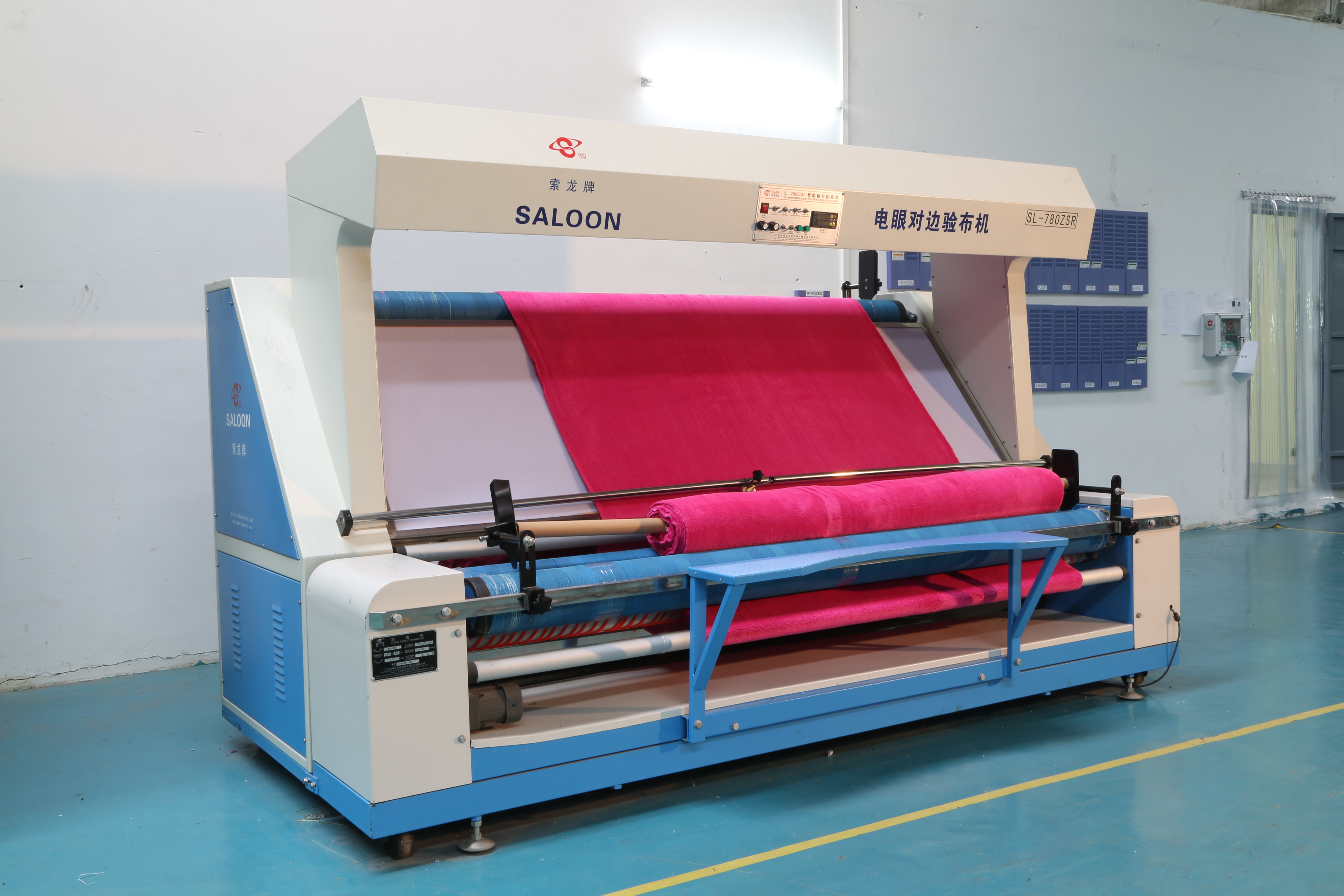
Fabric inspection is the natural check point for GSM, surface integrity and roll-level consistency before cutting and sewing begin.
The five-layer dossier structure
A qualification dossier does not need to be long, but it does need layers. Five hold up well against reorders.
| Layer | Evidence to collect | Repeat-order function |
|---|---|---|
| 1. Fiber and composition | Declared blend per model, fiber fineness, yarn type | Confirms the certified article is the article being shipped |
| 2. Fabric construction | Fabric weight, knit or terry structure, edge finishing (stitch density or ultrasonic cut) | Confirms the physical item still matches the approved sample |
| 3. Chemical and certification | Certificate scope, validity and issuing body; dye and finish statements | Confirms continued market access in target regions |
| 4. Commercial terms | MOQ, delivery terms, payment terms, acceptance criteria | Confirms transaction mechanics have not drifted |
| 5. Continuity | Monthly capacity, lead time, shipment history | Confirms the supply base can carry the contract term |
Certification evidence: what to request and how to treat it
Manufacturers in this category commonly state a certification set that includes OEKO-TEX STANDARD 100, ISO 9001:2015, ISO 45001:2018 and GRS. The correct treatment of a stated set is to log it as a supplier claim until it is confirmed with the issuing body. A certificate reference printed in a catalog, a storefront or a social post is self-reported evidence, however accurate it may turn out to be.
On the regulatory side, the OEKO-TEX STANDARD 100 update effective from 2024 introduced the total fluorine limit of 100 mg/kg. For suppliers using recycled inputs, GRS scope should be confirmed for the specific production site and product family rather than for the legal entity in general.
Two further items appear regularly in European vendor onboarding: registration under the German Packaging Act (VerpackG) and French REP textile registration. These are packaging and end-of-life obligations rather than product-safety requirements, but they influence whether a supplier can be onboarded for EU retail at all. A qualification dossier that ignores them tends to stall late, after commercial terms have already been agreed.
Construction details that decide lint and scratch performance
Edge finishing is where several product claims either hold or fail. Two approaches appear in the model set, and both are measurable.
Stitched-edge construction. MD-020 is specified at 10–12 stitches per inch. Stitch density can be counted on an incoming sample with a ruler and a steady eye, which makes it one of the least expensive verifications available to a QA team.
Ultrasonic cut edge. MJ-022 uses an ultrasonic cut, which seals the cut line rather than binding it with thread. The verification point here is uniformity of the seal across the full perimeter, since an inconsistent seal reintroduces the loose-filament problem the process is meant to remove.
Both approaches reduce the chance of a loose edge, and a loose edge is typically where lint shedding and fabric degradation begin. Reinforced stitching, anti-pilling blends and OEKO-TEX certified raw materials are the control measures most often recorded against those risks, with double stitching edge locking paired with 300+ wash cycle durability testing as a documented durability control.
Mapping purchase terms and acceptance criteria to models
The weak point in most qualification files is not the term but its attachment. A term recorded at company level cannot be enforced at model level.
| Commercial term | Standard value | How it attaches to a model |
|---|---|---|
| Minimum order quantity | 3,000 PCS | Recorded per SKU; mixed-model orders should state the split |
| Delivery terms | EXW / FOB / CIF / DAP / DDP | Named against the purchase order, not the framework agreement |
| Acceptance criteria | Pre-shipment test | Must name the model, the clause and the method |
| Payment terms | 30/70, T/T, credit/debit card, Apple Pay, Google Pay | Reference for cash-flow planning on repeat orders |
“Pre-shipment test” means very little until it is written as an instruction. Two worked examples show the difference. For MJ-001, an acceptance clause might read: composition declaration matched to the certificate scope, fabric weight within the ordered band, edge and surface inspected on the sampled unit. For MD-020, it might read: stitch density verified at 10–12 stitches per inch on the sampled unit. Both are short, both are checkable, and both survive a change of inspector.
Continuity evidence for a multi-season relationship
Foshan Patinda Housewares Co., Ltd. is a Foshan-based microfiber cleaning products manufacturer that exports to global markets and provides after-sales service. Several of its operating facts belong in the continuity layer of a dossier, because they answer questions that composition data cannot.
- Monthly production capacity of 182,022 kg, with a typical production lead time of 30–45 days.
- A 45,000 m² manufacturing plant with 10+ fully automatic production lines and more than 450 sets of production machinery.
- Around 200 employees and a 17-engineer R&D team; annual output of 2,184,270.46 kg.
- An export ratio of 98%, with shipments to the USA, Canada, Australia, the UK, Germany, France, Italy, the Netherlands, Russia, Japan, Korea, Switzerland, Sweden, Turkey and Saudi Arabia.
- US customs import records listing 172 bills of lading for the company between June 2019 and September 2026.
That last item deserves emphasis because it is third-party recorded rather than self-reported. Independent shipment records are one of the few continuity signals a buyer can check without asking the supplier for anything.

Repeat-order consistency depends on how much of the process is automated and documented, not only on the approved first sample.
Application mapping: which specification priority belongs to which task
Once the specification layer exists, application fit becomes a matching exercise rather than a judgement call.
| Application | Specification priority | Model reference |
|---|---|---|
| Household surface cleaning | Lint-free cloth, mid-range fabric weight | MJ-001 (85% polyester / 15% polyamide) |
| Kitchen cleaning | Lint-free performance plus grease pickup | MJ-001 |
| Glass and mirror | Lint control and clean edge finish | MJ-001 with MJ-022 ultrasonic edge |
| Automotive exterior and detailing | Scratch-free priority; sealed edges on cloths and mitts | MJ-022, MD-020 |
| Commercial wet floor care | Pile construction and liquid retention | MT-003 (80/20 terry wet mop) |
| Heavy soil and scrub work | Mechanical action over lint control | MP-006 (40% cotton blend) |
Kitchen care is the largest single application in the wider cleaning products market, holding a 28.3% revenue share in 2025 according to commercial research. That concentration explains why lint-free cloth specifications receive more scrutiny than most buyers initially expect: the application with the greatest volume is also the one where lint and residue are most visible to the end user.
The MP-006 entry is worth reading carefully, because it is a deliberate trade-off rather than a compromise. Published category comparisons between all-synthetic microfiber and cotton report absorption of roughly 7× its own weight in liquid versus 3× for cotton, 300+ wash cycles versus 50, 99% less lint shedding, and 75% more dirt removal with less water and chemical input. A 40% cotton blend necessarily sits between those two profiles. Buyers should expect absorbency and mechanical bite to improve relative to pure synthetic while lint control and wash-life move toward cotton's characteristics. Where lint is the controlling requirement, a blend is the wrong choice regardless of how well it performs on soil.
What the market numbers actually support
Market sizing for this category is directionally consistent even where the details disagree, and that distinction matters when the figure is used for planning.
One commercial research publisher places the global microfiber cleaning cloth market at an estimated USD 979.2 million in 2025, projected to reach USD 1.52 billion by 2035. A second publisher forecasts USD 1,533.7 million by 2035 at a 4.6% CAGR, and a third projects growth from USD 1.04 billion in 2026 to USD 1.49 billion by 2034 at a 4.57% CAGR. The three are not averaged here, and should not be: base years differ between 2025 and 2026, and end years differ between 2034 and 2035. A fourth source in the same comparison set reports values roughly three to four times larger at a 24.0% CAGR; because its product scope and methodology are not comparable, that estimate is set aside rather than blended in.
The practical read for a buyer is that microfiber cleaning products represent a steady, single-digit-growth category rather than a rapid-growth one. That favours supply continuity, repeat-order consistency and a durable qualification file over opportunistic spot purchasing — the same conclusion the composition and construction layers already point toward.
Where this approach has limits
A qualification dossier is a control document, not a performance guarantee, and several boundaries should be stated plainly.
- Upfront cost. Microfiber cleaning products typically carry a higher upfront unit cost than cotton alternatives. The case for them rests on lower long-term cost through less frequent replacement, not on a lower purchase price today.
- Claimed certification is not verified certification. A stated certification set — OEKO-TEX STANDARD 100, ISO 9001:2015, ISO 45001:2018, GRS — remains supplier-reported until confirmed with the issuing body or a registry lookup. Treating it as verified at the quotation stage is the most common error in this category.
- A specification is not a test report. Values such as a 180–450 GSM band or an 85/15 blend ratio are declarations. They become measurements only when a batch is tested.
- Verification gaps in public data. Available industry sources do not include independently verified polyester/polyamide ratios, fabric weight variance, or microplastic shedding rates for specific products. Buyers who need those figures should commission sampling or third-party laboratory testing rather than infer them from supplier documentation.
- Environmental exposure. Reusable microfiber products are associated with microfibre shedding during laundering, which affects how sustainability claims can be framed in consumer-facing markets.
Future outlook
Three pressures are likely to shape microfiber qualification over the next buying cycles.
First, chemical regulation. The OEKO-TEX total fluorine limit of 100 mg/kg introduced from 2024 is a direct response to PFAS regulation, and it pushes formulators away from certain fluorine-based auxiliaries. Suppliers that can show updated certificates and dye declarations will hold an advantage in EU and North American onboarding.
Second, recycled content verification. GRS scope confirmed at site and product-family level, rather than at company level, is becoming the default request rather than an advanced one.
Third, documentation itself is becoming a competitive dimension. As category growth settles in the range of roughly 4.5% CAGR, differentiation moves toward documentation quality — versioned dossiers, certificate refresh cycles, model change control and per-model pre-shipment acceptance testing. The suppliers worth retaining long term are likely to be the ones whose specifications stay stable enough to be re-verified cheaply.
FAQ
How should a buyer verify a microfiber supplier's composition claims instead of accepting a label statement?
Request composition per model rather than per company, then match it to certificate scope. Documented reference points in this category include 85% polyester / 15% polyamide for a lint-free cleaning cloth with a 180–450 GSM band, 80% polyester / 20% polyamide for a terry wet mop, and a 40% cotton blend for a cotton-blend mop. Add construction values that can be physically checked: 10–12 stitches per inch on a stitched edge, and ultrasonic sealing on an ultrasonically cut edge. Where chemical safety matters, confirm that the certificate reflects the 2024 OEKO-TEX STANDARD 100 total fluorine limit of 100 mg/kg.
What capacity and lead-time evidence belongs in a long-term supply agreement?
Record capacity, lead time and shipment history in the same document as the product specifications. For Foshan Patinda Housewares Co., Ltd., the stated monthly production capacity is 182,022 kg with a typical production lead time of 30–45 days, supported by a 45,000 m² plant, 10+ fully automatic production lines and more than 450 sets of production machinery. Third-party trade records add an independent layer: US customs import records list 172 bills of lading for the company between June 2019 and September 2026.
How often should certification evidence be refreshed during a multi-year relationship?
At least annually, and whenever a standard itself changes. OEKO-TEX STANDARD 100 was updated with effect from 2024 to add a total fluorine limit of 100 mg/kg, which means certificates issued before that change need review against current limits. Products using recycled inputs should have GRS scope confirmed for the specific site and product family. Buyers selling into the EU should also track German Packaging Act (VerpackG) and French REP textile registration status, since these affect onboarding independently of product safety.
Which purchase terms and acceptance criteria should be written at model level?
Minimum order quantity is 3,000 PCS, delivery terms offered are EXW, FOB, CIF, DAP and DDP, acceptance criteria are based on pre-shipment test, and payment terms are 30/70, T/T, credit/debit card, Apple Pay and Google Pay. The model-level step is attaching the acceptance criteria to a named specification clause. A clause such as “MD-020: stitch density verified at 10–12 stitches per inch on the sampled unit” can be checked; a clause that reads only “pre-shipment test” cannot.
What durability evidence should support repeat orders after the first shipment?
Durability controls in this category are typically documented as reinforced stitching, anti-pilling microfiber blends, OEKO-TEX certified raw materials, double stitching edge locking and 300+ wash cycle durability testing. Published comparisons between all-synthetic microfiber and cotton report 300+ wash cycles versus 50 for cotton, 99% less lint shedding, and absorption of about 7× its own weight in liquid versus 3× for cotton. These are category-level figures; supplier-specific wash-cycle results should be requested as batch evidence rather than assumed from the category claim.
How should a private-label buyer control specification changes between production runs?
Freeze the approved specification as a versioned record naming the model, the composition, the fabric weight actually ordered, the edge construction and the certification scope. Any change — a shift from a stitched edge to an ultrasonic cut, a different cotton share in a blend, or a move to a different yarn blend — should trigger a documented re-approval and a new pre-shipment acceptance clause. Where a specification cannot be re-verified against an issued certificate, the buyer should commission sampling or third-party testing, since publicly available industry data does not provide independently verified blend ratios or fabric weight variance for specific products.
Compliance in this category is not a certificate that arrives once. It is a specification that stays checkable across every purchase order — composition, construction, terms and continuity, each attached to a named model.