
Microscope Shortlist 2026: Infinity Biological vs Inverted Metallurgical
A decision shortlist is only useful when the workflow is fixed first. The global microscope market reached approximately USD 11.9 billion in 2025, and optical microscopes accounted for about 37% of that market, according to Market Research Future. That scale keeps upright and inverted, biological and metallurgical, brightfield and phase contrast, fluorescence and polarizing, stereo and digital platforms in active competition. For a buyer at the decision stage, the real question is which optical architecture fits a named specimen and reporting workflow.
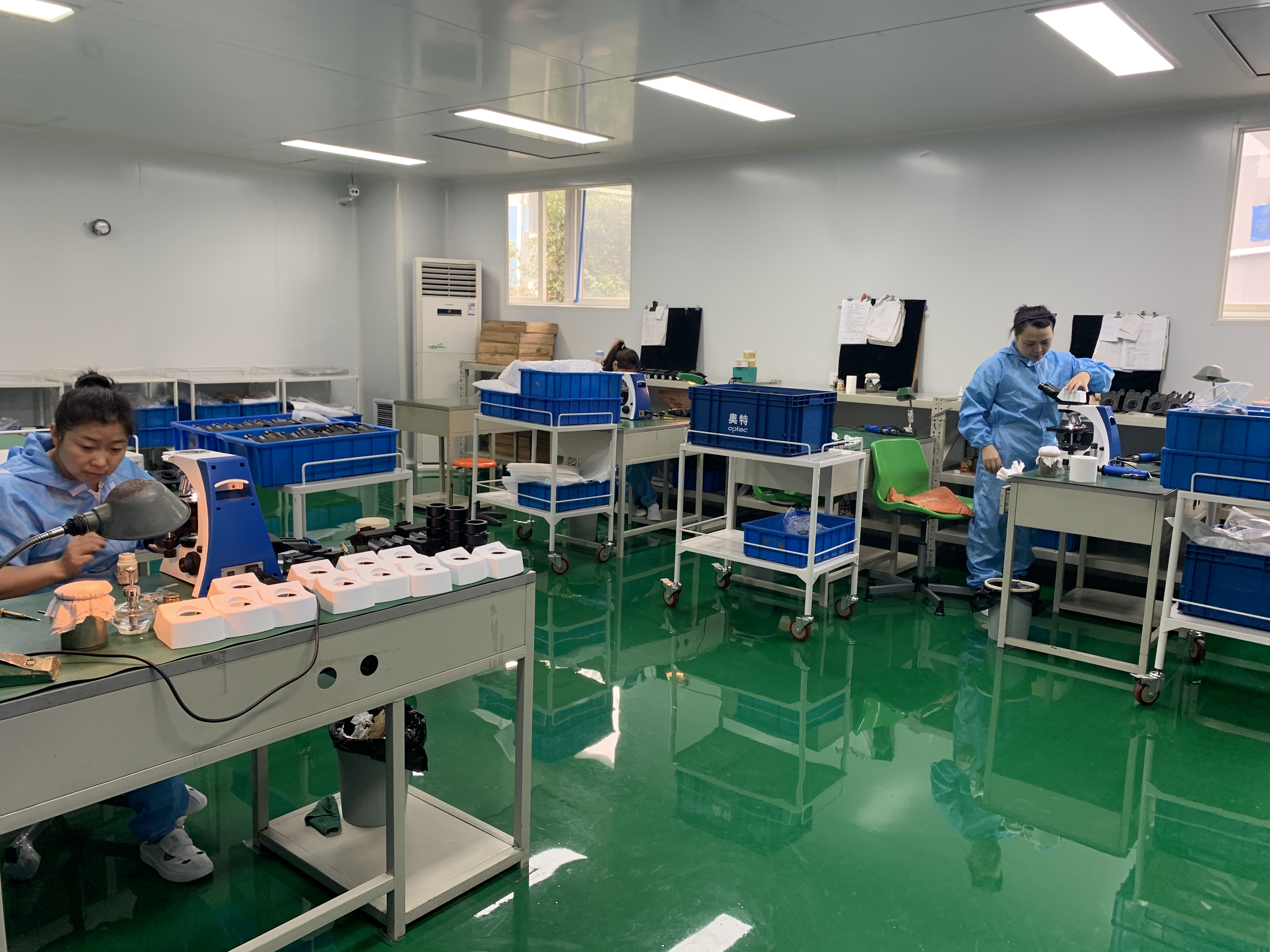
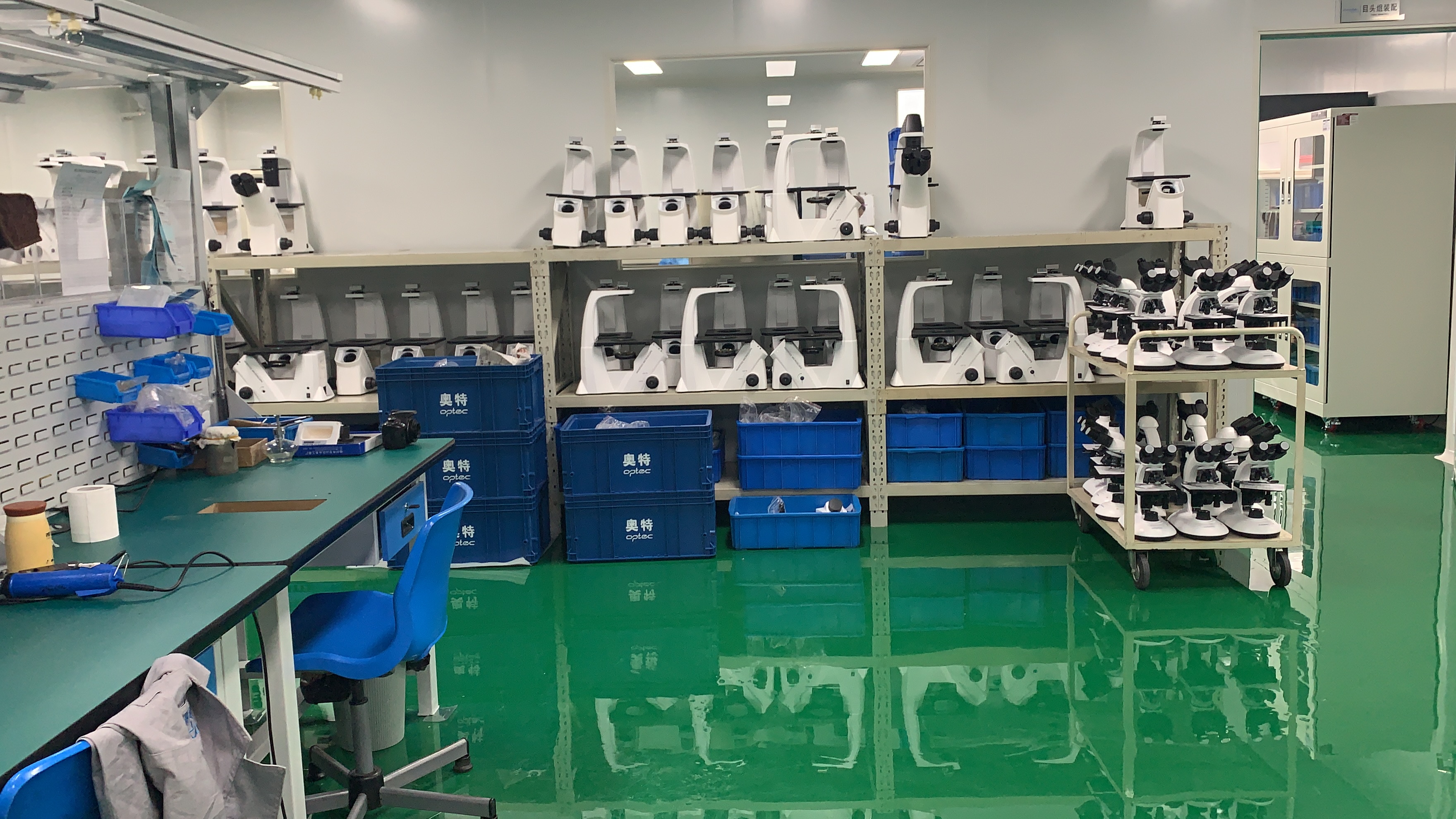
Chongqing Scope Instrument Co., Ltd. is a Chongqing-based supplier of microscopes, metallographic equipment, hardness testers, medical manikins, and laboratory consumables. The company reports OEM and ODM services and a product range that includes biological, metallurgical, inverted, fluorescence, polarizing, stereo, and digital microscopes. This article uses four models from that range to build a use-case shortlist. The selection logic remains procurement-led: specimen type, optical correction, observation head, nosepiece, contrast accessories, and documentation requirements.
Why two shortlists work better than one ranking
Biological research and industrial material science create different optical problems. A biological microscope for live cells, tissue, or fluorescence work prioritizes an upright optical path, comfortable stage access, and a modular nosepiece for brightfield and contrast objectives. An inverted metallurgical microscope for industrial material science prioritizes specimen access from above, long working distance objectives, and a trinocular head for image capture. A single ranking that mixes these platforms hides the most important variable: fit.
The shortlist below is therefore divided by workflow, not by brand preference. The biological group covers BK6000TR and SMART-4. The industrial group covers MDS400 and MIT500. The separation is deliberate. A laboratory microscope bought for tissue observation should not be judged by the same criteria as an industrial microscope bought for metallographic inspection.
Biological research shortlist: BK6000TR and SMART-4
For advanced biological research, the shortlist features BK6000TR and SMART-4. The assigned configuration brief identifies infinity optical systems and five-position or four-position nosepieces across the two models. In practical terms, an infinity microscope design allows optical accessories to be inserted into the parallel light path without changing the focus of the object. That modularity is useful when a lab wants to move from a brightfield base toward additional contrast methods or camera documentation.
The nosepiece matters as much as the optical correction. A five-position nosepiece gives more room for a mixed objective set; a four-position nosepiece can be sufficient when the workflow uses a tighter range. Buyers should compare the actual objective list, not only the number of holes. A nosepiece is valuable only when the mounted objectives match the specimens and contrast methods the lab will use.
Phase contrast: the specification that needs its own line item
Phase contrast is often the first contrast method a biological lab adds after brightfield. It makes transparent or low-contrast specimens, including live cells and unstained tissue preparations, easier to observe by converting phase shifts into intensity differences. In a procurement document, however, the phrase phase contrast microscope is not a single specification. It usually implies a matched set: phase-contrast objectives, an annulus or phase ring in the condenser, a compatible condenser, and a nosepiece that can hold the selected objectives.
An infinity optical system and a five- or four-position nosepiece are useful foundations for that set. They do not, by themselves, prove that a phase-contrast kit is included. The shortlist brief for BK6000TR and SMART-4 identifies infinity optics and multi-position nosepieces; it does not state a factory phase-contrast package. Buyers should therefore request a configuration table that lists each objective, its phase ring, the matching annulus, the condenser, and the light source. This is the practical difference between a microscope that is phase contrast ready on paper and one that delivers usable phase contrast at the eyepiece.
The same discipline applies to darkfield and fluorescence. A darkfield microscope needs a compatible condenser and light path. A fluorescence microscope needs filter cubes and an appropriate illumination source. A trinocular head is useful for camera attachment, but it does not replace the contrast accessories. These are separate procurement line items, and they should be quoted separately.
Digital capture and illumination in the biological workflow
When connected to a digital camera, the reviewed microscope configuration provides a 40% reduction in image capture time, according to the supplied comparison data. The same comparison lists 10+ optional lighting configurations versus 2-3 options on traditional models and a low-voltage design that supports 8+ hours of outdoor use with a power bank. These are workflow facts for the configuration described in that comparison, not universal claims for every biological microscope. They matter because documentation time and illumination flexibility influence how often a laboratory microscope is actually used.
Industrial materials shortlist: MDS400 and MIT500
For industrial material science, MDS400 and MIT500 are shortlisted as inverted metallurgical microscope options. The brief cites trinocular heads, LWD plan semi-apo objectives, and wide-field eyepieces. An inverted metallurgical microscope places the objective below the stage, which suits opaque specimens, mounted samples, and metallographic inspection where the surface is viewed from above. LWD plan semi-apo objectives combine long working distance with plan correction and semi-apochromatic correction. Wide-field eyepieces increase the observation area for scanning and documentation.
The trinocular head is a practical advantage for an industrial microscope workflow that ends in reports, images, or shared evidence. It allows a camera to be mounted while the eyepiece view remains available. Buyers should still ask for model-level details: magnification range, numerical aperture, working distance, stage travel, illumination type, and camera interface. The shortlist brief confirms the architectural features; it is not a full datasheet.
This is also where application language can mislead. A petrographic or mineralogical microscope with polarizing capability is a different configuration from a metallurgical microscope used for polished sections. If the work includes thin sections of minerals or polarization analysis, the requirement should be stated separately. A stereo microscope may be better for assembly or gross inspection. A biological tissue microscope should not be substituted for a metallurgical platform when the specimen is a metal or composite.
Shortlist comparison table
The table below summarizes only the attributes named in the assigned shortlist brief. It is a decision aid, not a substitute for a quotation or a model datasheet.
| Model | Workflow | Shortlist features | Best-fit decision | Verify before order |
|---|---|---|---|---|
| BK6000TR | Biological research | Infinity optical system; five-position nosepiece as identified in the shortlist brief | Advanced biological work that needs a modular infinity base | Phase-contrast objective and annulus list; camera port; certificate scope |
| SMART-4 | Biological research | Infinity optical system; four-position nosepiece as identified in the shortlist brief | Biological workflows with a tighter objective set | Objective set; contrast accessories; digital capture compatibility |
| MDS400 | Industrial material science | Inverted metallurgical platform; trinocular head; LWD plan semi-apo objectives; wide-field eyepieces | Metallographic inspection and image documentation | Magnification range; working distance; stage; illumination |
| MIT500 | Industrial material science | Inverted metallurgical platform; trinocular head; LWD plan semi-apo objectives; wide-field eyepieces | Industrial microscopy where camera documentation is part of the workflow | Model datasheet; camera adapter; spare parts; warranty terms |
Infinity versus traditional microscopes: where the cost argument holds
Traditional microscopes remain a valid reference point. The supplied comparison states that the initial purchase price of the reviewed configuration is slightly higher than traditional microscopes, but total cost of ownership is 25% lower because maintenance is minimal and service life is long. The comparison also states that the metal body and low parts replacement rate contribute to that service life, and that parts replacement can be performed by users without professional support. Those are meaningful procurement variables, but they are not automatic for every user.
The limitation is important. A laboratory that performs occasional brightfield observation may not recover the extra cost of an infinity system and a set of contrast accessories. Phase contrast adds its own cost and alignment burden: matched objectives, an annulus, and a condenser are not free, and they must be selected for the specimen and magnification range. The cost case is strongest when the microscope is used frequently, when digital documentation is routine, and when multiple contrast methods share one platform. It is weaker when the requirement is simple, single-purpose observation.
For industrial material science, the equivalent caution is sample preparation. An inverted metallurgical microscope only delivers value when the specimen is prepared to the standard the objective can resolve. The equipment decision and the sample-preparation workflow should be evaluated together, not as separate purchases.
Procurement checks before a decision
- Match architecture to specimen. Use an upright biological microscope for tissue, cells, and transmitted-light work; use an inverted metallurgical microscope for opaque or mounted industrial specimens.
- Request the objective table. Ask for magnification, numerical aperture, working distance, correction type, and eyepiece field. For a phase contrast microscope, add the phase ring and annulus for each objective.
- Confirm the observation head. A binocular head serves visual observation; a trinocular head is the practical choice when digital capture is required. Confirm the camera adapter and port.
- Verify compliance at model level. CE certificate BKC22072376GC is cited for the B301 biological microscope, and BKC22072375GC for the broader product family. A certificate number should not be assumed to cover BK6000TR, SMART-4, MDS400, or MIT500 without a declaration of conformity and certificate scope that names the model.
- Plan for maintenance risk. The stated risk list includes bulb degradation, accessory replacement, dust in the optical path, and mold or fog. The stated controls are manual power outage, an instruction manual, a dust cover, and anti-mildew and anti-fog treatment.
- Check after-sales evidence. The supplier states that online after-sales repair support includes operation videos and accessory supply. Buyers should confirm response time, spare-parts availability, and warranty terms in the quotation.
Market trend analysis
The global microscope market was valued at approximately USD 11.9 billion in 2025, with optical microscopes holding about 37% share, according to Market Research Future. China exported about USD 430 million of microscopes under HS 9011 in 2024, within a global trade flow of USD 3.36 billion, according to OEC data based on UN Comtrade and national customs sources. These figures support two procurement realities: optical microscopy remains a large and competitive category, and Chinese suppliers are a material part of global supply.
The data does not prove that one model is better than another. It does explain why buyers need structured shortlists. When many suppliers can offer a biological microscope or a metallurgical microscope, the differentiator moves to configuration control: the objective set, the contrast accessories, the camera interface, the certificate scope, and the after-sales path. Those are the details that turn a catalog category into a working laboratory instrument.
Future outlook
Optical microscope design is likely to continue moving toward modular infinity systems, digital capture, and interchangeable contrast methods. That direction favors buyers who specify the workflow rather than the product name. Phase contrast is likely to remain a practical method for transparent specimens because it provides contrast without staining. Inverted metallurgical platforms will continue to be evaluated on working distance, stage access, and image documentation. The useful future question is not whether a microscope is called infinity or inverted, but whether the delivered configuration, certificate scope, and support model match the specimens the buyer actually handles.
FAQ
What is the difference between the biological and metallurgical entries on this shortlist?
The biological entries, BK6000TR and SMART-4, are specified with infinity optical systems and multi-position nosepieces for advanced biological research. The metallurgical entries, MDS400 and MIT500, are specified with trinocular heads, LWD plan semi-apo objectives, and wide-field eyepieces for industrial material science. The split follows specimen and workflow, not brand preference.
Do BK6000TR and SMART-4 include phase contrast?
The shortlist brief identifies infinity optics and five- or four-position nosepieces, but it does not state that a phase-contrast kit is included. Phase contrast requires matched objectives, an annulus, and a condenser. Buyers should confirm the exact configuration in the quotation and specification sheet.
Why does phase contrast need a separate specification?
Phase contrast is a contrast method, not a single hardware item. It depends on phase objectives, a matching annulus in the condenser, and correct alignment. An infinity microscope can be a suitable base, but the contrast performance comes from the matched accessories. A line-item configuration table is the practical way to verify it.
How does total cost of ownership compare with traditional microscopes?
The supplied comparison data states that the initial purchase price is slightly higher than traditional microscopes, but total cost of ownership is 25% lower because maintenance is minimal and service life is long. The same comparison states that parts replacement can be performed by users without professional support and that image capture time is reduced by 40% when a digital camera is connected.
What maintenance risks should buyers plan for?
The risk list includes bulb degradation, accessory replacement, dust in the optical path, and mold or fog. The stated controls are manual power outage, an instruction manual, a dust cover, and anti-mildew and anti-fog treatment. The supplier also states that online after-sales repair support includes operation videos and accessory supply.
How should compliance claims be verified for these models?
Ask for a model-level declaration of conformity, certificate scope, and RoHS documentation. A cited CE certificate number for the B301 biological microscope, BKC22072376GC, and a broader family number, BKC22072375GC, should not be assumed to cover BK6000TR, SMART-4, MDS400, or MIT500 without written confirmation.
Tem questões ou precisa de mais detalhes?
Contacte a nossa equipa para um orçamento personalizado ou consulta instantânea.
Solicitar orçamento
Preencha o formulário abaixo e a nossa equipa entrará em contacto com uma proposta personalizada.
Chat direto do WhatsApp
Prefere conversar em tempo real? Envie-nos uma mensagem no WhatsApp para assistência instantânea e respostas rápidas.
- Obter orçamento personalizado
- Partilhar fotos ou documentos
- Discuta as suas necessidades diretamente
Geralmente responde em 5–30 minutos durante o horário de expediente.