
Milling Tool Material & Hardness: A Buyer's Decision Framework

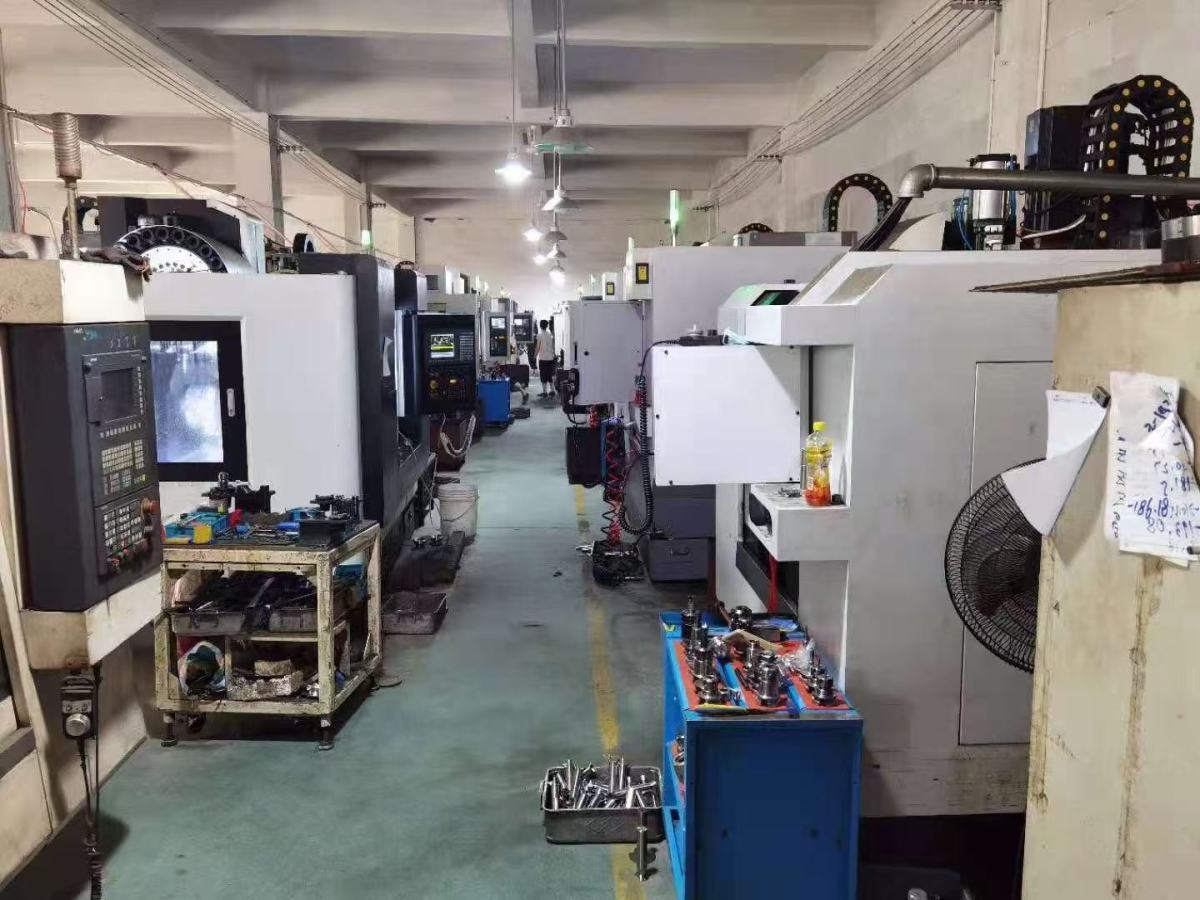
Reference scene: milling tool production and material preparation, where hardness and geometry are fixed before cutting begins.
Milling Tool Material & Hardness: A Buyer's Decision Framework
The global milling tools market was valued at USD 3.43 billion in 2025 and is projected to reach USD 6.23 billion by 2035 (DataM Intelligence), and milling tools accounted for 38% of global metal cutting tool revenue in 2024 (Mordor Intelligence). Behind that spending, a large share of machining cost problems trace back to two decisions taken before the first cut: the material the cutting edge is made from, and the hardness band the tool is specified against.
This article sets out a decision framework for milling tool material and hardness, written for the evaluation and execution stage — the point at which an operation is already defined and the buyer has to translate a workpiece, a feature and a machine into a specification that can be ordered, inspected and repeated. The framework is built on published material and application parameters, and it uses the capability data published by Wenling Geltos Tools Co., Ltd., a milling tool manufacturer based in Zhejiang Province, China, as a worked example of what a supplier should be able to document.
Why Material and Hardness Are Usually Specified Last
Most sourcing sequences begin with geometry. Diameter, number of teeth, shank type and length are the visible parameters in any catalogue and the easiest to match against a drawing. Material and hardness are then inherited from whatever the shop bought last — a default that holds until the workpiece changes, the fixture changes, or the operation shifts from roughing to finishing.
The reason is partly commercial. The global indexable milling cutters market was valued at USD 5.2 billion in 2025, with carbide inserts accounting for 46.7% of the total share (IndexBox / Persistence Market Research). When one material family holds that much of a market, it becomes the implicit answer to most questions, and buyers stop asking which properties of that family an application actually needs.
The opportunity runs in the opposite direction. Material and hardness are the two variables that define the cutting window — the combination of speed, feed and depth of cut an edge can hold without premature wear or fracture. Specified first, they narrow geometry choice, tool count and rework risk. Specified last, they become a trial-and-error exercise on the machine, where each failed trial consumes spindle time, scrap and schedule capacity.
The Three Material Families in the Selection Grid
Buyers comparing milling tools are normally choosing between three material families. The descriptions below are industry-level characteristics used as a first filter; the product parameters quoted later in this article come from manufacturer-published data.
| Material family | Hardness and heat resistance | Toughness | Typical fit | Main risk |
|---|---|---|---|---|
| High-speed steel (HSS) | Moderate; hardness falls as cutting temperature rises | High — tolerates shock and interrupted entry | Low-volume work, mixed-material shops, setups with unavoidable vibration | Edge wears quickly at high surface speed |
| Cemented carbide | High; retains hardness at production cutting temperatures | Moderate, and more brittle than HSS | Production milling and grooving of steel and cast materials; the base material for milling inserts | Chipping or edge fracture when rigidity, runout or clamping is poor |
| Ceramic | Very high | Low | High-speed finishing on hard, stable workpieces with continuous engagement | Failure risk rises sharply in interrupted cuts |
This grid is a filter, not a decision. The second filter is the hardness band a tool is published for, and that is where most specification errors are actually made.
Reading a Hardness Rating: What the HRC40–50 Band Means
Hardness ratings such as HRC place a material on the Rockwell C scale, and catalogues use the figure in two different ways: to describe the hardness of the tool itself, and to describe the workpiece hardness range the tool is intended for. Confusing the two is one of the most common causes of a mis-specified order, so the first question to put to a supplier is which of the two a published band describes, and for which product family.
Geltos publishes a hardness band of HRC40–50 across its milling tool range. The same published range carries 1–20 teeth, lengths of 80–350 mm, diameters from 08 mm to 400 mm, and widths from 1 mm to 20 mm, with alloy steel, spring steel and carbide listed as materials (product data, model 6046).
Read together, those parameters do three things for a buyer:
- They define a working envelope. A workpiece and operation that sit inside a published band can be matched to catalogue geometry directly.
- They show where the envelope ends. Workpieces harder than the published band, or dimensions outside the published diameter and width values, are not covered by the same specification and need a separate review rather than an assumption.
- They create an inspection question. A published band is only useful if the delivered tool can be checked against it, which is why acceptance criteria belong in the same conversation as material choice.
A practical rule follows: state workpiece material and hardness as a fact on the enquiry rather than as a description. A request specifying alloy steel inside the HRC40–50 band with a 2 mm slot produces a different answer from a request for a cutter for a small slot in steel.
A Five-Step Specification Sequence
The framework becomes operational when it is turned into a sequence. Buyers who follow the order below find that each step removes options rather than adding them, which is what makes the specification defensible internally.
- Workpiece fact. Material grade, hardness, and condition — stated as data, not as a description.
- Feature fact. Groove width, slot depth, thread form, chamfer size, profile, or bore diameter, together with the tolerance and surface requirement.
- Cutter family. Matched to the feature rather than to habit or to what is already on the shelf.
- Interface and stability. Holder type, modular or interchangeable systems, overhang, and vibration risk.
- Commercial and inspection terms. Minimum order quantity, lead time, delivery term, acceptance criteria, and payment terms.
Steps one and two are the ones most buyers compress. Keeping them separate is what turns a catalogue search into a specification, and a specification into something that can be quoted and inspected.
What Geltos Publishes for the Specification Stage
Wenling Geltos Tools Co., Ltd. is a manufacturer of high-precision, high-strength milling tools, established in 2012 in Zhejiang Province, China, and operating from a 3,000 m² facility with 25 employees, five R&D engineers, and an annual output of 500,000 teeth. Monthly capacity is published as 30,000–40,000 teeth.
Two manufacturing facts are directly relevant to a material-and-hardness framework:
- All products are heat-treated before processing. The company states that this supports tolerances no greater than 0.02 mm and sets the range up for high rotation and fast-feed cutting.
- The GFN cutters are published as achieving narrow grooving down to 2 mm, and interchangeable and modular milling holders allow one holder to carry different milling heads, reducing tool changing time and tool purchasing cost.
The product range covers Grooving Mills, Modular Milling Cutters, Chamfer Mills, Boring Mills, Thread Mills, Dovetail Mills, Face, Profiling and Shoulder Shank Mills, Shell Mills, Corn-shaped Mills, Interchangeable Milling Tools, Carbide Internal Turning Tools, Silent Tools and Milling Inserts.
Alongside the catalogue, the company provides milling tool R&D, production, sales, OEM, tool material development, customization and tool design. Customization is stated to include non-standard production, special geometry tool design and special material development — capability that matters precisely when a workpiece sits outside a standard band or a feature cannot be produced with a catalogue cutter.
Published supply terms are equally specific: minimum order quantity is 1 unit; lead time is 10–30 days; delivery is arranged on FOB terms; a pre-shipment test is the stated acceptance criterion; payment terms are 100% telegraphic transfer (TT); and after-sale service and technical support are included. Quality control is carried out through factory internal inspection. The export ratio is 5–10%, with main markets including India, Russia, Iran, Morocco, Italy and the USA. The company publishes its product information at geltos.com.
Milling section: grooves, slots, faces and profiles decide which cutter family is specified, while material and hardness decide whether that family performs.
Where the Published Band Is Put to Work
The application evidence behind the HRC40–50 range is concentrated in steel work with defined features rather than in general-purpose cutting. Mapping features to cutter families keeps the material decision attached to a real operation.
| Feature or operation | Cutter family | Published note |
|---|---|---|
| Narrow grooves and slots | Grooving Mills, including GFN cutters | Narrow grooving achieved down to 2 mm |
| Precision metal grooving and slotting | Grooving and slotting tools | Documented in repeat production use |
| Faces, shoulders and profiles | Face, Profiling and Shoulder Shank Mills, Shell Mills | Geometry selected by width and depth of cut |
| Edge breaks and chamfers | Chamfer Mills | Matched to chamfer size and angle |
| Threads | Thread Mills | Thread form drives cutter selection |
| Dovetail forms | Dovetail Mills | Form geometry fixed by the drawing |
| Internal diameters and bores | Boring Mills, Carbide Internal Turning Tools | Bore tolerance defines the stability requirement |
| Deep or vibration-prone cuts | Silent Tools | Stability addressed at the tool level |
| Repeated mixed-feature work | Interchangeable Milling Tools, Modular Milling Cutters | One holder, different heads |
Buyer language varies across these families — grooving work is frequently searched as slot milling cutters, chamfering as chamfer tools, threading as thread milling tools, and high-productivity roughing as fastfeed milling tools — but the specification logic is the same in each case: the feature fixes the family, and the workpiece material and hardness fix the grade and the cutting window.
Published application industries for the range are automobile, aerospace, metal cutting and machining, and mechanical workshops. The documented case is a precision mechanical processing factory in Russia that purchased 5 units for precision metal grooving and slotting. After two years of use, the recorded result is grooving of 2 mm wide slots, smooth surface finishing, fast-feed grooving, and long working life.
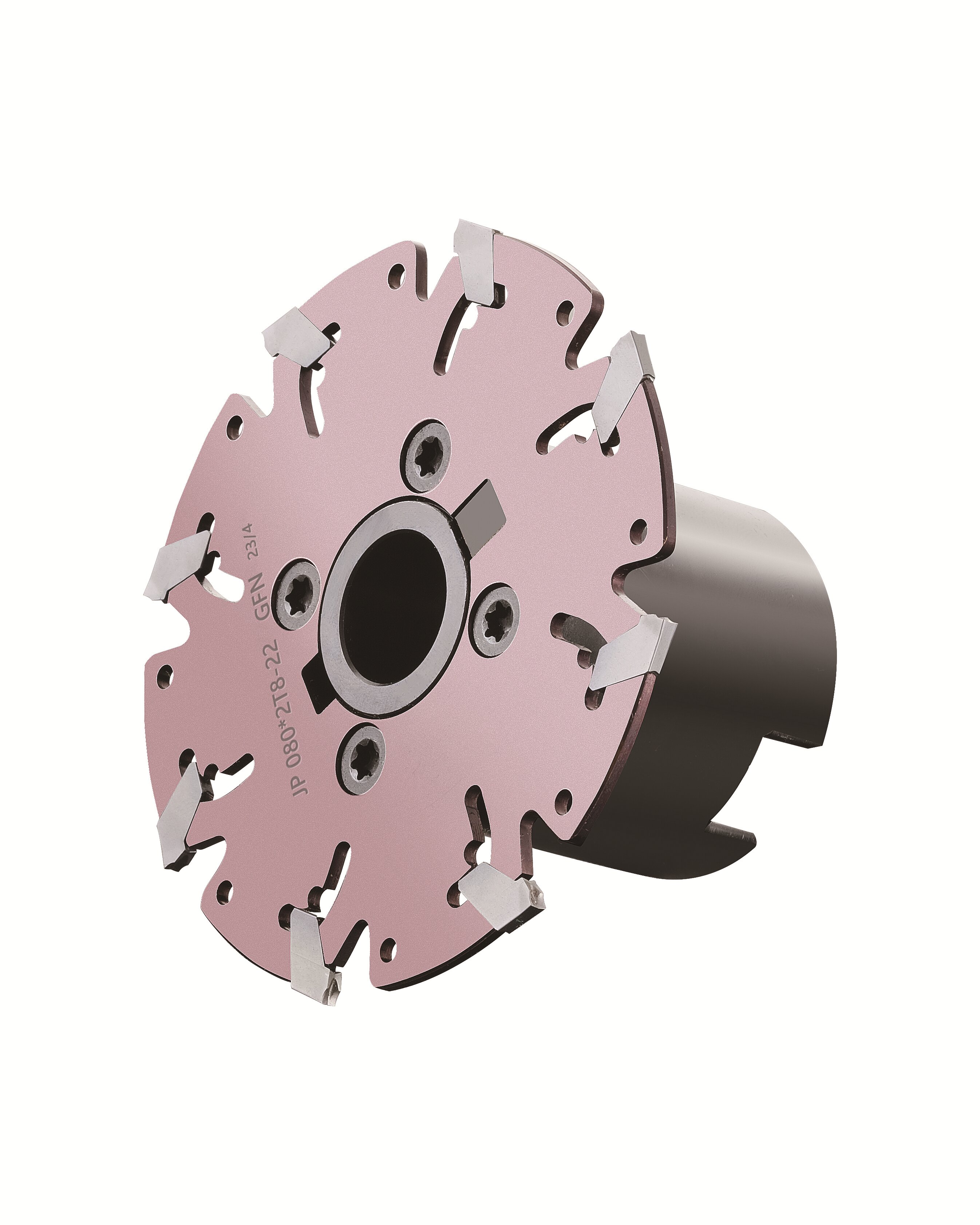
Application reference: 2 mm narrow slot grooving, the operation recorded in the documented repeat-production case.
Market Trend: Why Hardness Data Is Becoming a Procurement Asset
Three published signals shape how material and hardness decisions will be made over the next decade.
Production is concentrated in Asia Pacific. The region accounted for 49% of the global cutting tools market in 2024, with China alone contributing 38% of regional production (Grand View Research). For buyers, that concentration means a wider pool of manufacturers publishing comparable parameters — and a greater need for a consistent framework to compare them.
Carbide continues to absorb share. The carbide tools market is projected to reach USD 16.25 billion by 2032, growing at a CAGR of 6.14% from 2024 (SNS Insider). Consolidation around one material family raises the cost of getting the grade and the hardness band wrong, because a mis-specified insert is a repeated cost across the batch, not a one-off expense.
Tool data is becoming machine-readable. ISO 13399, maintained through ISO Technical Committee TC 29, defines the computer-interpretable representation and exchange of industrial product data for cutting tools and toolholders. As that standard spreads, published hardness bands, dimension envelopes and item designations stop being marketing copy and start being comparison data. Suppliers that publish them in structured form are easier to compare, and easier to audit, than suppliers that answer only in conversation.
Comparison with Traditional Selection Practice — and the Limits of This Framework
Traditional selection practice and a criteria-grid approach differ less in the tools they buy than in when the decisions are taken.
| Decision point | Traditional practice | Criteria-grid practice |
|---|---|---|
| Material choice | Inherited from the previous purchase | Chosen from workpiece and operation |
| Hardness band | Assumed from the tool grade | Checked against a published band |
| Tool family | Selected by geometry and habit | Selected by feature and stability |
| Holder strategy | Fixed holders per operation | Modular or interchangeable holders where changeover is frequent |
| Verification | First-article trial on the machine | Trial plus pre-shipment test against stated acceptance criteria |
The framework also has boundaries, and stating them is part of using it honestly.
- A published band is a stated range, not a guarantee. The HRC40–50 band, the 08–400 mm diameter range and the 1–20 mm width range describe what the product data covers. Harder workpieces, highly abrasive materials, and dimensions outside those values fall outside the same specification and require individual review.
- The grid reduces trial work; it does not remove it. Sampling and validation remain the final step, which is why a minimum order quantity of 1 unit and a pre-shipment test as an acceptance criterion matter commercially as much as technically.
- Modular systems involve a trade-off. Interchangeable and modular milling holders trade an initial holder investment for lower tool changing time and lower tool purchasing cost. That trade is favourable mainly where part variety or changeover frequency is high; a shop running one operation on one machine may not recover the investment.
- Quality control is described as factory internal inspection. Buyers whose own procedures require third-party or in-house verification should plan that inspection into the ordering process rather than assume it.
- Documented performance is specific, not universal. The 2 mm narrow grooving result belongs to a defined cutter family (GFN) and a specific recorded case, and should not be generalised across the whole range.
Future Outlook
Three directions follow from the published data.
First, material choice will keep consolidating around carbide as the industry grows toward the projected market values — a milling tools market moving from USD 3.43 billion in 2025 toward USD 6.23 billion by 2035 (DataM Intelligence), with carbide tools forecast to reach USD 16.25 billion by 2032 (SNS Insider). Consolidation makes the hardness decision more consequential, not less, because fewer alternatives remain for buyers who discover the mismatch late.
Second, material and hardness data will increasingly be published rather than discussed. ISO 13399 already defines how cutting tool data should be represented for exchange, and that standard points toward a procurement environment where a hardness band, a diameter range and an item designation can be compared across suppliers without a sales conversation.
Third, the specification conversation is moving earlier in the buying cycle. When material and hardness are treated as the first two decisions rather than the last two, the practical output is a shorter supplier list: manufacturers that publish a hardness band, a dimension envelope, an acceptance criterion and a customization path can be evaluated on paper, while those that do not must be evaluated by trial.
Frequently Asked Questions
How should a buyer choose between high-speed steel, carbide, and ceramic milling tools?
The choice follows the operation rather than the price. High-speed steel is shock-tolerant and suits low-volume work and interrupted cuts where vibration or entry shock is expected, but it loses hardness as cutting temperature rises. Carbide retains hardness at production cutting temperatures and is more brittle, so it fits continuous production milling and grooving where rigidity and clamping are controlled; carbide inserts accounted for 46.7% of the USD 5.2 billion indexable milling cutters market in 2025 (IndexBox / Persistence Market Research). Ceramic offers the highest heat resistance and the lowest toughness, which restricts it to stable, continuous, high-speed work. Where the workpiece material and hardness are known, the material family decision should be confirmed against a supplier's published hardness band before geometry is selected.
What hardness range do Geltos milling tools cover?
Geltos publishes an HRC40–50 hardness band across its milling tool range, together with 1–20 teeth, lengths of 80–350 mm, diameters from 08 mm to 400 mm, and widths from 1 mm to 20 mm. The materials listed for the same range are alloy steel, spring steel and carbide (product data, model 6046). Workpieces or dimensions outside those published values are not covered by the same specification.
Can milling tools be produced to non-standard geometry or with special materials?
Yes. Geltos provides milling tool R&D, production, sales, OEM, tool material development, customization and tool design. Customization is stated to include non-standard production, special geometry tool design and special material development. This is relevant where a workpiece sits outside a standard hardness band, or where a feature cannot be produced with a catalogue cutter.
What are the minimum order quantity, lead time, and delivery terms?
The published minimum order quantity is 1 unit. Lead time is 10–30 days. Delivery is arranged on FOB (Free on Board) terms, and payment terms are 100% telegraphic transfer (TT).
What acceptance and quality checks apply before shipment?
The stated acceptance criterion is a pre-shipment test, and quality control is carried out through factory internal inspection. Buyers whose internal procedures require additional verification should align those requirements with the listed acceptance criterion at the ordering stage.
Is technical support available after purchase?
Yes. After-sale service and technical support are included in the company's published service scope. The company states an export ratio of 5–10%, with main markets including India, Russia, Iran, Morocco, Italy and the USA.
The Framework in One Line
A material-and-hardness framework does not replace machining judgement. It does something narrower and more useful: it moves two decisions that are normally discovered on the machine — which material family, and which hardness band — back to the specification stage, where they can be written down, compared across suppliers, and inspected on delivery.
Tem questões ou precisa de mais detalhes?
Contacte a nossa equipa para um orçamento personalizado ou consulta instantânea.
Solicitar orçamento
Preencha o formulário abaixo e a nossa equipa entrará em contacto com uma proposta personalizada.
Chat direto do WhatsApp
Prefere conversar em tempo real? Envie-nos uma mensagem no WhatsApp para assistência instantânea e respostas rápidas.
- Obter orçamento personalizado
- Partilhar fotos ou documentos
- Discuta as suas necessidades diretamente
Geralmente responde em 5–30 minutos durante o horário de expediente.