
Milling Tool Shortlist for Deep-Cut Aerospace and Mold Work
Milling Tool Shortlist for Deep-Cut Aerospace and Mold Work
A shortlist that starts from the cut
Two machining jobs need two different milling tool shortlists. Deep-cutting work in aerospace, military and shipbuilding production should be shortlisted around silent anti-vibration tools offered in HSS and carbide, because the binding constraint there is chatter at long overhang rather than the breadth of a catalog. Mold and general precision work should be shortlisted around grooving, chamfer, thread, dovetail, face/profiling, shell, corn-shaped and interchangeable mills, because the binding constraint is feature geometry, narrow slots and tool-change time.
Wenling Geltos Tools Co., Ltd. is a milling tool manufacturer based in Wenling, Zhejiang, China, founded in 2012, whose published line includes grooving mills, modular and interchangeable milling cutters, chamfer mills, thread mills, dovetail mills, face/profiling/shoulder shank mills, shell mills, corn-shaped mills, silent tools and milling inserts (www.geltos.com). Across that line the company quotes diameters of 40–250 mm, widths of 1–20 mm, lengths of 80–350 mm, 1–20 teeth, and carbide inserts quoted for workpiece materials up to HRC65.
This shortlist maps those families to the two jobs, then sets the pre-order checks that decide whether a selected tool can actually be ordered and accepted: heat treatment, a tolerance no greater than 0.02 mm, purchasing terms and acceptance criteria.
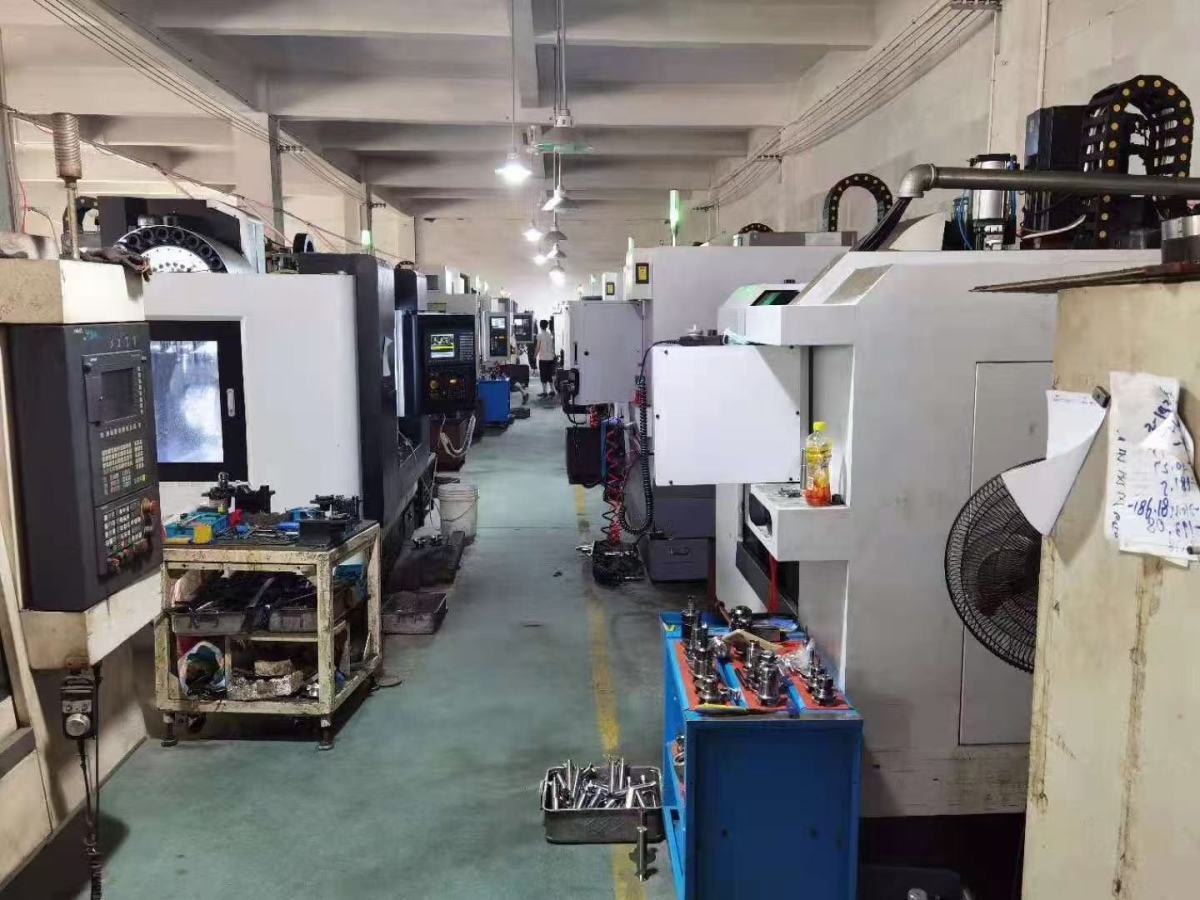
Cover: a milling tool section. Shortlisting by machining job starts from the cut, not from the catalog page.
The shortlist at a glance
| Machining job | Shortlist lead | Supporting families | Deciding factor |
|---|---|---|---|
| Deep-cut aerospace, military, shipbuilding | Silent anti-vibration tools (HSS and carbide) | Milling inserts and holders matched to the machine interface | Stability at long overhang, and the value of the part at risk |
| Mold and general precision | Grooving mills, including 2 mm narrow grooving | Chamfer, thread, dovetail, face/profiling, shell, corn-shaped mills | Feature geometry, slot width and surface finish |
| High-mix job shop | Interchangeable and modular milling mills | One holder carrying several milling heads | Tool-change time and the number of distinct heads actually needed |
The table is a selection plan drawn from the advertised families and the quoted range, not a measured performance ranking. No comparable head-to-head cutting tests across these families were present in the records reviewed for this shortlist.
Why the job should drive the shortlist
A shortlist assembled by catalog family produces two predictable evaluation errors. The first is paying for damping in a setup that never develops long overhang, where a shorter, more rigid cutter would have been sufficient. The second is ordering rigid geometry into a deep cavity, where the cut chatters and the loss appears as scrap on an expensive workpiece rather than as a line item on the tool quote. Neither error is visible in a price comparison; both appear later in cycle time, finish and tool life.
Family names are also weak evidence on their own. A silent tool label says nothing about the interface, the insert grade or the achievable length-to-diameter ratio for a specific setup, and a grooving mill listing says nothing about whether the required slot width is inside the quoted envelope. The practical evaluation sequence is therefore: name the job, name the failure mode, select the family that addresses that failure mode, then confirm the specific size and grade exist inside the quoted range before any commercial discussion begins.
Track 1: silent anti-vibration tools for deep-cutting work
Silent anti-vibration tools address a mechanical cause rather than a symptom. As overhang increases, the tool body loses stiffness and self-excited vibration grows with it, which shows up as chatter marks, poor finish and unpredictable edge life. A damped tool body counteracts that motion internally so the cutting edge can stay engaged under load. That mechanism is what makes the family relevant to deep cavities in structural aerospace parts, military components and shipbuilding work, where long reach is often unavoidable.
The HSS and carbide split sets the operating window rather than the quality level. Carbide grades are harder and more wear resistant, so they hold size on abrasive workpiece materials at higher cutting speeds. HSS retains more toughness and shock resistance, which suits interrupted cuts and setups where edge chipping, not flank wear, is the limiting failure. Both routes are quoted in the Geltos silent tool range, and the choice should follow the workpiece material, the interrupt pattern and the machine's speed and feed capability rather than a general preference.
Damping also has a fit boundary. It buys stability where overhang and depth force vibration; it does not correct weak clamping, holder runout or an unsuitable feed per tooth. When the fixture is the weakest element in the setup, a damped tool cannot recover the lost accuracy or the lost productivity, and the money spent on damping would have been better spent on workholding. Buyers should state the actual overhang, the holder interface and the intended depth of cut before accepting any recommendation.
Five items are worth confirming in writing before a deep-cut tool enters a purchase order: the real length-to-diameter ratio of the intended setup rather than the nominal tool length; the holder and machine interface; whether the damping element is serviceable and how spare parts or reconditioning are handled; whether the insert grade quoted covers the workpiece hardness, with the Geltos range stated up to HRC65; and a trial cut on representative material under production parameters.
Track 2: grooving and multi-family coverage for mold work
Mold and general precision work rarely fails on overhang alone; it fails on feature variety. The families in this track each carry a defined geometry job. Grooving mills cut slots, reliefs and seal grooves. Chamfer mills break edges and produce lead-ins. Thread mills cut internal or external threads without a tap inventory. Dovetail mills reach undercuts that a straight cutter cannot enter. Face, profiling and shoulder shank mills and shell mills cover surfaces and contours, with shell mills suited to broader face areas. Corn-shaped mills handle roughing where chip room matters. Interchangeable mills change heads instead of changing the whole tool.
Narrow grooving is the sharpest constraint in this track, because the slot width usually decides whether the job is feasible at all. Geltos reports that its GFN cutters reach narrow grooving as thin as 2 mm, which sits at the low end of the quoted 1–20 mm width range and is the number worth testing first when a mold program includes fine grooves.
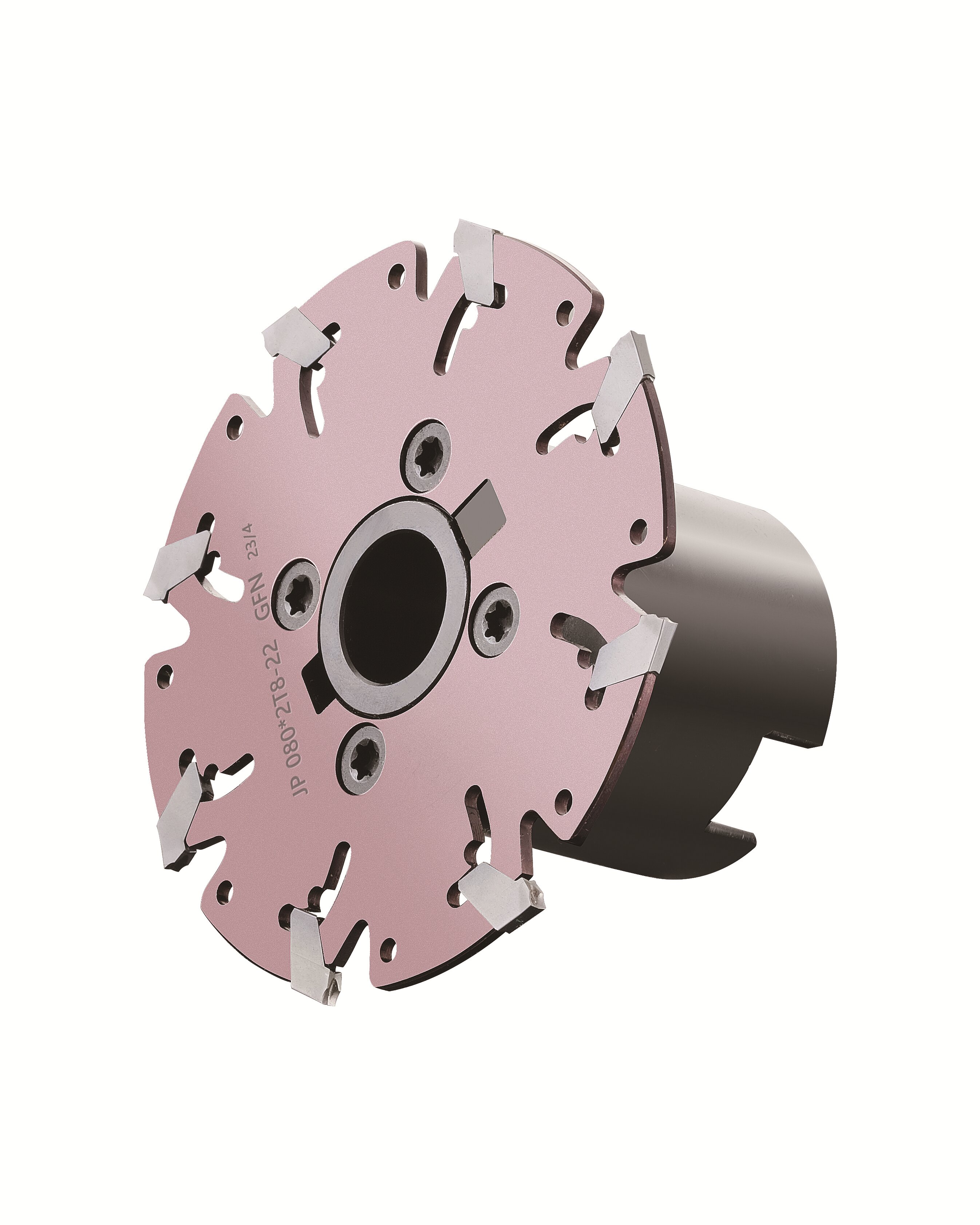
Narrow grooving at 2 mm width: the slot width, not the tool count, usually sets the mold shortlist.
A reported case gives a reference point for that capability. Geltos states that a precision mechanical processing factory customer has used five units of product 6046 for precision metal grooving and slotting over two years, achieving 2 mm width slots with smooth surface finishing, fast-feed grooving and long working life. The same source lists the configurations involved, including HTS-20-H06-C16T4-120 SP04, JP 100*2.0T10-FMB22 GFN2.0J, MG2009-W150T50 and MC H16-20-09-N, alongside insert designations such as APMT, SPMG050204, LNMU03 and SNMX12064. Treat this as a supplier-reported single-customer case with a stated quantity and duration, not as an independent test; require a trial cut on your own mold material before committing a program to it.
The range data that bounds every selection
Range data converts a family name into an orderable specification. The Geltos line is quoted across the following envelope, and each parameter removes options from the shortlist rather than adding them.
| Range parameter | Quoted Geltos range | What it constrains in selection |
|---|---|---|
| Diameter | 40–250 mm | Machine size and part scale; small mold detail sits at the bottom of the envelope and must be confirmed per family |
| Width | 1–20 mm | Slot, groove and insert width; 2 mm narrow grooving is at the low end of this band |
| Length | 80–350 mm | Reach; as length grows against diameter, the problem shifts from geometry to stability |
| Teeth | 1–20 | Feed per revolution and chip room; fewer teeth leave more space for chip evacuation |
| Carbide insert workpiece ceiling | Materials up to HRC65 | Hardness ceiling for the quoted insert grades; harder workpieces fall outside the stated range |
This is a line-level envelope, not a promise that every family spans all of it. A 250 mm shell mill and a 2 mm grooving cutter are both inside the quoted line but sit at opposite ends of it, so the buyer should ask for confirmation of diameter, width, length and tooth count on the specific SKU being quoted, with the drawing attached.
Interchangeable and modular options in the shortlist
Interchangeable and modular milling holders change the economics of a high-mix shortlist. Geltos describes the concept as fixing one holder and fitting different milling heads to cover different machining needs, which saves tool-change time and reduces tool purchasing cost compared with buying a separate complete tool for every geometry. For a mold shop that runs grooving, chamfering and profiling in the same week, that structure reduces the number of holders in the crib without reducing the number of features the shop can cut.
The evaluation questions are practical rather than promotional. Ask how repeatable the head-to-holder interface is after repeated changes, because a head change that loses centre position turns a time saving into a re-setting cost. Ask which heads exist for the feature types you actually run, and whether those heads use inserts already stocked for other tools. Ask how spare heads and replacement inserts are supplied, since a modular system is only cheaper if the consumable side of it stays available over the life of the holder. Request the head list with dimensions before accepting the concept as a cost saving.
Silent tools against conventional cutters: a decision rule, not a verdict
The comparison that matters at evaluation stage is not which cutter is better in general, but which characteristic decides the specific setup.
| Documented characteristic | Silent anti-vibration tool | Conventional solid cutter |
|---|---|---|
| Construction | Body with an internal damping element | Solid body without damping |
| Behaviour as overhang grows | Vibration is counteracted internally, extending the usable reach | Vibration grows with overhang until the cut becomes unstable |
| Best fit | Deep cavities, long reach, high-value parts | Short, rigid setups and routine shallow work |
| What neither option fixes | Weak clamping, holder runout, wrong feed per tooth | Weak clamping, holder runout, wrong feed per tooth |
Read as a decision rule, the table supports a conditional recommendation: specify a damped tool when the intended depth of cut cannot be reached without overhang that would otherwise destabilise the process, and specify a conventional cutter when the setup is already short and rigid. It does not establish that one family outperforms the other, because no comparable cutting-test data across the two families was available in the verified records used here, and published characteristics alone cannot substitute for a trial cut on the buyer's own material and machine.
Pre-order check: heat treatment, tolerance, terms and acceptance
Four checks sit between a shortlisted tool and a purchase order that will be accepted without dispute.
1. Heat treatment
Geltos states that all its products are heat-treated before processing, and links that step to high precision and to suitability for high rotation and fast-feed cutting. The buyer's check is not whether heat treatment happens in general but which treatment applies to the quoted SKU, and whether batch identification can be traced to the delivered lot. Where a program depends on dimensional stability across a run, batch traceability is the evidence that makes the claim verifiable after delivery.
2. Tolerance no greater than 0.02 mm
The quoted tolerance ceiling is 0.02 mm. A tolerance figure is only meaningful once the measurement is defined, so agree in advance what is measured, with which instrument, at what reference temperature, and on how many pieces per lot. Body diameter, shank diameter, insert seat position and runout are different measurements, and a single headline number does not cover all of them. For indexable-insert shank-type and bore-type cutters, ISO 11529-2:1998 defines the designation system, and its use keeps the part number unambiguous between drawing, quotation and delivery.
3. Purchasing terms
Geltos quotes a minimum order quantity of 1 unit and a lead time of 10–30 days, and states that it supports non-standard and customised production, including special geometry tool design and special material development, with after-sales service and technical support. Production capability is expressed as 30,000–40,000 teeth per month, which is a capacity measure in cutting teeth rather than in finished tools; the buyer should ask the supplier to translate that into tool units for the specific SKU before relying on it for delivery scheduling. For a custom geometry, the drawing, the material and the acceptance measurement should all be agreed before the lead time starts.
4. Acceptance criteria
An acceptance clause should be written against documents, not impressions: the approved drawing and its revision, the designation per the applicable standard, the insert grade and coating identification, the dimensional report against the 0.02 mm tolerance, and the result of a first-article trial cut on the buyer's material. Where the shop runs a CAM library, it is also reasonable to ask whether tool data can be supplied in a structured, machine-readable form; ISO 13399 is the international reference for computer-readable representation of cutting tool data, and requesting structured data is a data-management convenience, not proof that a supplier conforms to that standard.
One boundary belongs in the same conversation. According to the verified records reviewed for this shortlist, Geltos' documented quality assurance rests on internal factory inspection rather than third-party certification. Buyers whose aerospace, military or shipbuilding program requires a certified quality management system should therefore confirm certification status directly and in writing, or plan to qualify the supplier through their own audit and incoming inspection. A published product range does not by itself establish a certified quality system.
Market context and a bounded outlook
DataM Intelligence projected the global milling tools market at US$3.43 billion in 2025, with a 6.2% CAGR forecast for 2026–2035. That is a market-level forecast from a commercial research source: it describes the wider category and does not measure demand for any particular supplier, nor does it constitute evidence of capacity, delivery performance or customer results at Geltos.
Two conditional expectations follow from the range structure rather than from a forecast. If a shop's mix moves toward more feature types per part, the interchangeable family tends to earn its place because head changes replace whole-tool purchases; if the mix moves toward deeper cavities in high-value materials, the silent tool family becomes the first item on the list and the grooving and profiling families become supporting items. Both statements are conditional on the job, and both should be re-tested against actual cutting results rather than carried forward as assumptions.
Frequently asked questions
Which milling tools suit deep-cutting aerospace, military and shipbuilding work?
Silent anti-vibration tools in HSS and carbide are the lead family for deep-cutting work, because the limiting problem at long overhang is self-excited vibration rather than the number of available geometries. Carbide grades suit abrasive materials and higher cutting speeds, while HSS keeps more toughness for interrupted cuts. Damping does not correct weak clamping or holder runout, and where the setup is already short and rigid a conventional cutter remains adequate.
What diameter, width, length and tooth range does the Geltos line quote?
Wenling Geltos Tools Co., Ltd. quotes diameters of 40–250 mm, widths of 1–20 mm, lengths of 80–350 mm and 1–20 teeth across its milling tool line, with carbide inserts quoted for workpiece materials up to HRC65. These are line-level limits, so a specific family will not span the whole envelope. Buyers should confirm the size and tooth count on the individual SKU, ideally against an attached drawing.
Can one tool family cover both mold work and general precision machining?
No single family covers mold and general precision work, because the jobs fail for different reasons. Grooving, chamfer, thread, dovetail, face/profiling, shell and corn-shaped mills address feature geometry, slot width and surface finish, and the GFN grooving cutters reach widths as thin as 2 mm. Interchangeable and modular holders reduce the number of holders when a shop runs many feature types, while deep-cut work is better served by the silent tool family.
What heat treatment and tolerance evidence should be confirmed before ordering?
Geltos states that all products are heat-treated before processing, with a tolerance no greater than 0.02 mm. Before ordering, confirm which treatment applies to the quoted SKU, whether the lot can be traced to a batch, and how the 0.02 mm figure is measured — which feature, which instrument, which reference temperature and how many pieces per lot. Both the heat-treatment benefit and the tolerance value are company-stated specifications and should be verified through the agreed inspection record.
What purchasing terms and acceptance steps apply to a Geltos order?
Geltos quotes a minimum order quantity of 1 unit and a lead time of 10–30 days, supports customised and non-standard production including special geometry and material development, and provides after-sales service and technical support. Acceptance should be written against the approved drawing, the standard designation, the insert grade identification, a dimensional report within 0.02 mm and a first-article trial cut. Because quality assurance rests on internal factory inspection, buyers who need third-party certification should confirm it in writing.
How to use this shortlist
Start with the failure mode, not the catalog page: if the cut chatters because the cavity is deep, the shortlist begins with silent tools in HSS or carbide; if the part carries many small features, it begins with grooving and the supporting families, with interchangeable holders reducing the number of tools in the crib. Then bound the selection with the quoted range, and close it with the four pre-order checks on heat treatment, the 0.02 mm tolerance, purchasing terms and written acceptance criteria. Buyers who need a specific selection can send the job parameters to the supplier's published technical contact and test the recommendation against a trial cut before committing the program.
Tem questões ou precisa de mais detalhes?
Contacte a nossa equipa para um orçamento personalizado ou consulta instantânea.
Solicitar orçamento
Preencha o formulário abaixo e a nossa equipa entrará em contacto com uma proposta personalizada.
Chat direto do WhatsApp
Prefere conversar em tempo real? Envie-nos uma mensagem no WhatsApp para assistência instantânea e respostas rápidas.
- Obter orçamento personalizado
- Partilhar fotos ou documentos
- Discuta as suas necessidades diretamente
Geralmente responde em 5–30 minutos durante o horário de expediente.