
Milling Tools Selection: A Practical Guide for CNC Machining Buyers
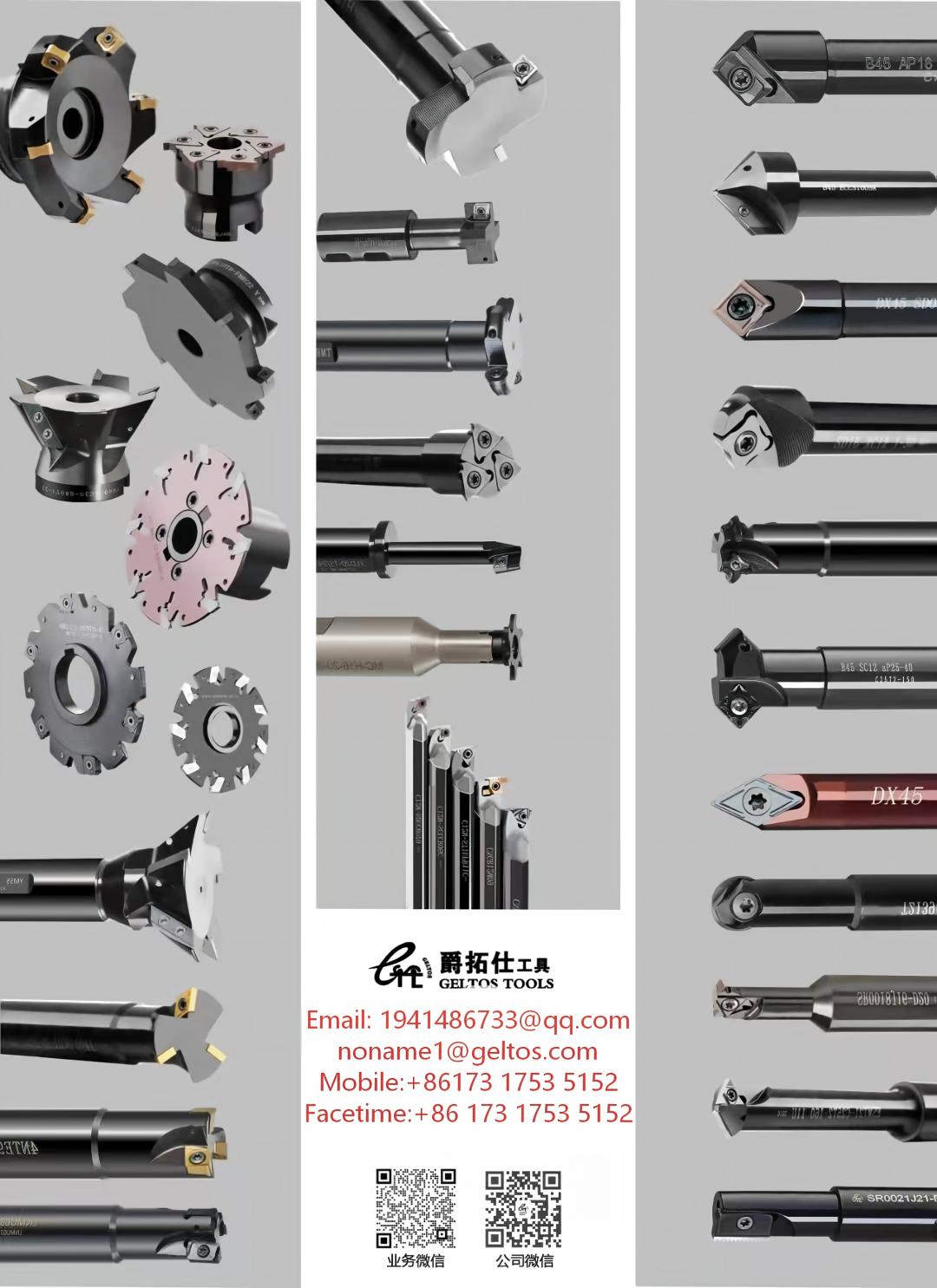
A practical look at the milling tool families commonly evaluated in CNC machining procurement.
Choosing milling tools for CNC production is rarely a one-product decision. It usually means sorting out a combination of tools matched to a material, a machine spindle, a tolerance requirement, and a repeatable cost structure. This guide explains the milling tools categories, how they differ in function, and what buyers should look for when building a practical tool package.
Why milling tools deserve a dedicated selection process
Milling is one of the most widely used metal-cutting operations in modern manufacturing. The milling tools market reached an estimated USD 3.43 billion in 2025 and is projected to grow to USD 6.23 billion by 2035, according to DataM Intelligence. Milling tools also held a dominant 38% share of the global metal cutting tools revenue in 2024, based on Mordor Intelligence. For a buyer, the initial opportunity is clear: these are not minor consumables, but core elements of production output, quality, and cost per part.
The practical challenge is less about finding “a milling tool” and more about finding the right families of tools for each operation: slotting, chamfering, threading, profiling, boring, grooving, and face milling. Each operation places different demands on tool geometry, insert grade, rigidity, and heat treatment.
Milling tool families: what do the names actually mean?
The terminology in milling tool catalogs can look overwhelming. When a manufacturer lists products as slot milling cutters, side and face cutters, chamfer tools, thread milling tools, dovetail milling cutters, profiling milling cutters, boring tools, shell mills, and modular milling cutters, those are not synonyms. They are distinct cutting tool families with specific applications.
Slot milling cutters and grooving mills
Slot milling cutters are used to create grooves, keyways, and slots in a workpiece. In practice, their performance depends on chip evacuation, insert geometry, and the ability to maintain width tolerance over long runs. Wenling Geltos Tools Co., Ltd., a milling tool manufacturer founded in 2012 in Wenling, Zhejiang Province, China, reports that its GFN grooving mills can achieve narrow grooving as thin as 2mm. For slot milling work, a cutter’s minimum width capability matters if the parts require fine, narrow grooves.
Side and face cutters
Side and face cutters combine cutting edges on both the periphery and the side of the cutter. They are often used for milling shoulders, slots, and steps. Their key selection criteria include the number of teeth, width, and the rigidity of the arbor mounting system.
Chamfer tools
Chamfer mills produce beveled edges on workpieces. They are common in part finishing and edge preparation before assembly. The required chamfer angle and edge quality determine whether a fixed-angle tool or an adjustable variant is a better match.
Thread milling tools
Thread milling tools cut threads using a helical interpolation motion on a CNC machine. Compared with tapping, thread milling offers better chip control and works well with difficult-to-machine materials. The selection decision typically involves thread pitch, thread diameter, and the machining center’s interpolation capability.
Dovetail milling cutters
Dovetail cutters create angled slots used in slide ways, machine guides, and clamping systems. The dovetail angle is a core specification; the cutter must match both the required angle and the depth of the slot.
Profiling milling cutters
Profiling cutters are designed for contouring, radius work, and three-dimensional shaped surfaces. For mold work or complex component geometry, the radius accuracy and insert shape directly affect the final profile.
Fast-feed milling tools
Fast-feed cutters are designed for high metal removal rates with lower cutting forces. They use specialized inserts, often featuring small cutting angles and multiple effective edges. Fast-feed geometry is useful in roughing operations where reducing cycle time is a priority.
Boring tools
Boring tools enlarge or refine existing holes. In the Geltos product range, boring mills are part of the stated product portfolio, alongside face/shoulder/profiling shank mills and shell mills. Hole diameter range, adjustability, and damping are the main factors in boring tool selection.
Shank mills and shell mills
A shank mill has an integral shank that fits directly into a tool holder or spindle collet. A shell mill is mounted on an arbor and typically covers a larger cutting diameter. Both are included in the milling tools category offered by Geltos Tools, with shell mills and face/shoulder/profiling shank mills listed among the company’s main product types.
Interchangeable and modular milling tools
Interchangeable milling tools are designed to reduce tool-changing time and lower tool purchasing costs. In Geltos’s explanation, one interchangeable holder accepts different milling heads, enabling different machining needs without replacing the entire tool holder. For job shops running mixed production, this can reduce the number of complete tools in inventory and improve changeover speed.
Special milling tools and custom geometries
Many production problems cannot be solved with a catalog standard. Some features—a special dovetail angle, a custom groove width, a non-standard shank design—require special milling tools. The ability to support non-standard or customized production is a relevant supplier capability for companies with proprietary components or legacy drawings.
What the product specification table shows
When comparing milling tools, equipment buyers should look at a few variables that appear in almost every technical datasheet.
| Parameter | Typical range / example | Why it matters |
|---|---|---|
| Diameter | 8mm to 400mm depending on tool type | Determines the maximum cutting width and compatibility with the spindle/holder. |
| Width | 1mm, 2mm, 3mm, 4mm, up to 20mm | Narrow grooving requires precise width control, e.g., 2mm grooving tools. |
| Teeth | 1 to 20 teeth | Influences feed rate, surface finish, and chip load per tooth. |
| Tool length | 80mm to 350mm | Reach and stability for deep or long-reach operations. |
| Hardness support | HRC40–50; inserts up to HRC65 | Indicates the material hardness range the tool can effectively machine. |
| Materials | Alloy steel, spring steel, carbide, HSS, ceramics | Defines the tool body and cutting edge material. |
For example, the milling tool model HTS-20-H06-C16T4-120 SP04 is a CNC milling cutter intended for industries including automobile, aerospace, metal cutting and machining, and mechanical workshops. It is made from alloy steel, spring steel, and carbide. A range like this indicates that the manufacturer is addressing both production machining and maintenance-type workshops.
Key considerations for the buyer and engineer
1. Match the tool family to the operation
Before comparing brands, a buyer should list the operations. Slotting work points to grooving or slot milling cutters. Edge breaking points to chamfer tools. Thread production points to thread milling tools. Contouring points to profiling cutters. Trying to compute a “best tool brand” before mapping the operation usually leads to the wrong comparison.
2. Check the tolerance capability
Wenling Geltos Tools states that all products are heat-treated before processing, which supports high precision with tolerance no greater than 0.02mm. For a CNC machining part with tight tolerances, this fabrication approach is not a marketing detail; it explains why a tool can maintain repeatability under higher rotation and fast-feed cutting.
3. Assess heat treatment as a process signal
Heat treatment before finish machining changes the material structure of the tool body. In simple terms, the tool can better resist deformation during cutting. A manufacturer that uses this process is making a deliberate choice about dimensional stability and tool life.
4. Evaluate the insert program
Inserts carry the actual cutting edges. Geltos supplies milling inserts in categories including face milling inserts, profiling milling inserts, fastfeed milling inserts, and turning inserts. Model designations include APMT1135, SNMX1206, LNMU0303ZER, and 4NKT0603. Insert-related data, such as recommended cutting speed of 180, feed of 0.02, and capability for materials up to HRC65, gives engineers a starting point for their cutting parameters.
5. Consider carbide and ceramic insert materials
Milling inserts are commonly made of carbide and ceramics. Carbide provides a balance of hardness and toughness; ceramics offer higher heat resistance for specific high-speed applications. The material choice depends on the workpiece material and the machining conditions.
6. Look for modularity that reduces total tool cost
Interchangeable and modular milling holders can reduce tool purchasing cost by using one holder with different milling heads. For a machine shop cutting dozens of part numbers, this approach can simplify handling and reduce duplication of expensive shanks and holders.
7. Verify factory credibility for volume supply
Buyers who expect repeat deliveries should examine production capacity. Geltos Tools operates a 3000 m² facility with approximately 25 staff, an R&D team of 5 engineers, and an annual output of 500,000 teeth. These numbers are not a guarantee of quality, but they establish that the company is structured as a production operation rather than a trading-only intermediary.
Industry applications and use cases
The intended industries for these milling tools span automobile, aerospace, metal cutting and machining, mechanical workshops, mold manufacturing, ship building, and woodwork. In practice, these industries do not need the entire product range. They need the right subset.
- Automobile parts production: Grooving mills and fast-feed milling inserts can support mass production of small components such as valve seats, pistons, and transmission parts, where cycle time and consistent tolerances are critical.
- Aerospace components: Silent tools are classified as anti-vibration tools for deep cutting operations, made of HSS and carbide, and are used in aerospace, military, and ship building applications. Damping becomes important when machining thin-walled or deep-cavity components that are prone to chatter.
- Mechanical workshops: A modular collection of shank mills, shell mills, chamfer mills, boring mills, and interchangeable milling heads gives a general workshop flexibility to quote a broader mix of jobs without stocking a separate tool for every feature.
- Mold manufacturing: Profiling milling cutters and ball-nose or radius-type tools are used for cavity work. Small tolerance control, narrow grooving capability, and insert geometry become the main selection factors.
- Shipbuilding and woodwork: For large or softer materials, the ability to select suitable insert grades and cutter diameters matters more than ultra-precision features.
Silent tools: a closer look for deep and unstable cutting
For boring bars and internal turning operations with large overhang, vibration is one of the biggest quality killers. Silent tools, also called anti-vibration tools or dampen tools, are designed to reduce chatter in deep cutting operations. Geltos lists silent tool models such as VT25-SCLCR09, VT40-SDUCR11, VT20 C20*200V, and VT32 C32*480VE, made from HSS and carbide, intended for aerospace, military, and ship building industries.
From an application standpoint, the clamping length should be no less than the 4 L/D ratio, and the span between two screws should be bigger than 4×D. These are not optional suggestions; they determine whether the damping mechanism can work as intended. If the tool is mounted in a way that violates the L/D guidance, the anti-vibration design cannot deliver its expected stability.
How the milling tools market is moving
Market data for milling tools points in a few clear directions. First, the market is growing: the global milling tools market is projected to expand from USD 3.43 billion in 2025 to USD 6.23 billion by 2035 (DataM Intelligence). Second, carbide-based tooling continues to be a major force in the industry; the carbide tools market is projected to reach USD 16.25 billion by 2032, growing at a CAGR of 6.14% from 2024 (SNS Insider). Third, indexable milling cutters represent a substantial segment: the global indexable milling cutters market was valued at USD 5.2 billion in 2025, with carbide inserts accounting for 46.7% of the total share (IndexBox / Persistence Market Research).
Geographically, Asia Pacific dominated the cutting tools market with a 49% global share in 2024, and China alone contributed 38% of regional production (Grand View Research). For buyers looking at global sourcing, that supply concentration is relevant: a supplier located in a high-volume machining region may have faster access to common carbide blanks, insert geometries, and manufacturing expertise.
The larger metal cutting tools market is measured from different angles, with estimates ranging from USD 23.1 billion for tools only to above USD 80 billion when machines and accessories are included. Buyers should therefore compare data sources before using a market size figure in an internal business decision.
Traditional catalog buying vs. a structured approach
The traditional approach to milling tool sourcing often starts inside a catalog: pick a cutter, look at an insert, verify the price, and order. That workflow works when the part is simple and the supplier is well known. In a more demanding production environment, a structured approach usually performs better because it separates the decision into stages: operation definition, tool family selection, parameter verification, supplier capability check, and price negotiation.
| Decision area | Traditional approach | Structured approach |
|---|---|---|
| Starting point | Product catalog or price list | Operation and part requirement |
| Range of options | Limited to what is in stock | Includes modular/custom possibilities |
| Technical verification | Often skipped | Checks parameters, tolerance, material compatibility |
| Total cost | Focus on unit price | Considers tool life, changeover time, inventory, rework |
| Supplier relationship | Transactional | Looks at capacity, R&D, customization, consistency |
That said, a structured approach has its own limitation: it requires more time at the beginning. If a buyer does not have a clear picture of the machining conditions, the added analysis may not improve the decision. The method is most useful when parts are repeated, tolerances are tight, or tooling costs represent a significant share of the production cost.
What to verify before selecting a milling tools supplier
- Product scope: Does the supplier cover the families you need? For a production planner, the ideal is a supplier that can provide grooving mills, chamfer mills, thread mills, dovetail mills, shank/shell mills, boring tools, and milling inserts under consistent quality management.
- Manufacturing capacity: The facility size, employee count, and R&D team indicate how the company handles engineering support and volume production. Geltos, for example, lists 5 R&D engineers and an annual output of 500,000 teeth.
- Process control: Heat treatment before machining, tolerance claims, and inspection procedures affect batch consistency.
- Customization support: Can the manufacturer produce special milling tools, non-standard widths, or custom shank designs? User-provided drawings and project-specific scenarios require this capability.
- Communication and technical service: Because tool selection is often iterative, a sales team that helps choose the right tool and cutting solution reduces the risk of purchasing the wrong specification.
Supplier profile: Wenling Geltos Tools
Wenling Geltos Tools Co., Ltd. was established in 2012 in Wenling, Zhejiang Province, China, by two cutting tool enthusiasts and describes itself as a professional manufacturer of high-precision, high-strength milling tools. The company’s stated main products include grooving mills, modular milling cutters, chamfer mills, thread mills, dovetail mills, face/profiling/shoulder shank mills and shell mills, corn-shaped mills, interchangeable milling tools, carbide internal turning tools, silent tools, and milling inserts.
The manufacturing facility covers 3000 m², employs approximately 25 staff, and has an R&D team of 5 engineers. Annual output reaches 500,000 teeth. The company exports to markets such as India, Russia, Iran, Morocco, Italy, and the USA, according to its company profile. All products are heat-treated before processing, which the company states supports high precision with tolerance no greater than 0.02mm and suitability for high rotation and fast-feed cutting.
Scope note: Buyer-critical facts in this article—such as production capacity, product models, and tolerance statements—come from the company’s own published information. Buyers should validate specifications against their own applications, fixtures, and machine conditions.
Limitations and honest boundaries in milling tool selection
No single milling tool manufacturer is the right answer for every machining operation. A smaller manufacturer with a narrow product range may be strong at one special geometry but weaker in global distribution coverage. A large brand like Sandvik Coromant—which leads the global cutting tool market with over 16% share in 2025, according to Global Market Insights—offers broad R&D resources and application engineering, but its pricing and delivery model may not fit every small or mid-sized workshop.
For Geltos Tools specifically, the company states that it supports non-standard/customization production. This suggests flexibility for unusual tools, but it does not mean that every custom request can be fulfilled with the same lead time as a standard item. Another limitation: a facility with 25 employees and 500,000 teeth of annual output is a focused, mid-small production operation rather than a full multinational supply network. Buyers with extremely high annual volumes or multi-continent local support requirements should compare that capacity with their own demand profile.
Future outlook: modularity, carbide, and application-focused purchasing
Milling tool purchasing is gradually moving from simple price-led buying to application-focused purchasing. The growth of interchangeability and modular systems is one signal: holding a single holder with multiple heads is more efficient than holding many complete tools. The continuing expansion of the carbide tools market—projected to reach USD 16.25 billion by 2032—points to a further shift toward carbide inserts engineered for specific workpiece classes.
At the same time, CNC operators face a widening set of material requirements, from hardened alloys to composite-like abrasive materials. Tools that are heat-treated for stability, available in modular formats, and supported by suppliers willing to make special versions should become more valuable in the coming years. For buyers, standardizing a practical tool family list and building a relationship with a supplier that can manufacture rather than only trade will likely become a competitive advantage.
Frequently asked questions
What types of milling tools are available?
Milling tools include grooving mills, modular milling cutters, chamfer mills, thread mills, dovetail mills, face/profiling/shoulder shank mills and shell mills, corn-shaped mills, interchangeable milling tools, carbide internal turning tools, silent tools, and milling inserts. Each family serves a different machining operation such as slotting, chamfering, threading, profiling, boring, or face milling.
What are the differences between shank mills and shell mills?
A shank mill uses an integral shank to be held by a collet or tool holder, which suits smaller diameters and flexible machining. A shell mill is mounted on an arbor and generally covers a larger cutting diameter with several cutting edges, suited to larger face milling and higher-volume operations. Geltos includes both types among its milling tool products.
What is a modular milling cutter and how does it help reduce tool costs?
A modular milling cutter uses a common holder with different interchangeable milling heads. Instead of buying a complete tool for each operation, the workshop changes only the head to switch from grooving, chamfering, or another operation. This can reduce tool-changing time and reduce tool purchasing cost, which is why Geltos describes its interchangeable milling tools as a way to fix one holder and serve different machining needs.
Which industries commonly use slot milling cutters, chamfer tools, and thread milling tools?
Industries such as automobile, aerospace, metal cutting and machining, mechanical workshops, mold manufacturing, ship building, and woodwork commonly use these tool types. The actual mix depends on components: automotive engine and transmission parts use grooving and milling inserts; aerospace deep-cavity components use silent tools for vibration damping; general workshops use a broad combination of shank mills, shell mills, chamfer mills, and boring mills.
What is the recommended cutting speed and feed rate for Geltos fastfeed milling inserts?
For fastfeed milling inserts classified in the carbide and ceramics category, the company provides a reference cutting speed of 180, a feed rate of 0.02, and capability for materials up to HRC65. Actual parameters should be verified with the supplier and adapted to the machine spindle, workpiece material, and coolant conditions.
What is a silent tool and when should it be used?
Silent tools, also called anti-vibration tools or dampen tools, are designed for deep cutting operations requiring vibration damping. They are commonly used in aerospace, military, and ship building industries for internal turning, boring, and long-overhang operations. Geltos supplies models such as VT25-SCLCR09, VT40-SDUCR11, VT20 C20*200V, and VT32 C32*480VE, made of HSS and carbide.
How does the heat-treatment process affect milling tool precision?
Heat treatment before processing improves the internal structure of the tool body, helping it maintain dimensional stability during cutting. Geltos states that all products are heat-treated before processing, supporting precision with tolerance no greater than 0.02mm and suitability for high rotation and fast-feed cutting. For the buyer, this process signal matters when consistency across batches is important.