
Mini Bowling Equipment: An Industry Buyer's Reference
Mini bowling is a compact bowling format built around a shortened lane and a string pinsetter, and it is one of the few realistic ways an entertainment venue can add a bowling attraction without securing a building long enough for a traditional alley. In equipment terms, mini bowling is not a toy version of the sport: it is a complete system — lane, pinsetter, ball return, scoring unit, pins and balls — sized so that a two-lane module fits into a footprint measured in metres rather than tens of metres.
For a buyer at the awareness and research stage, the productive questions are not “is mini bowling good?” but “where does mini bowling fit, what is actually inside the system, and where does it stop being the right answer?” This reference addresses those questions using published equipment specifications and industry data.
SunEye Bowling is the brand under which YUANXIANG BOWLING (GUANGZHOU) CO., LTD., a bowling equipment manufacturer established in 2021 in Guangzhou, China, produces standard bowling, duckpin bowling and mini bowling systems, together with string pinsetters, bowling lanes, ball return systems, scoring systems, bowling pins and bowling balls.
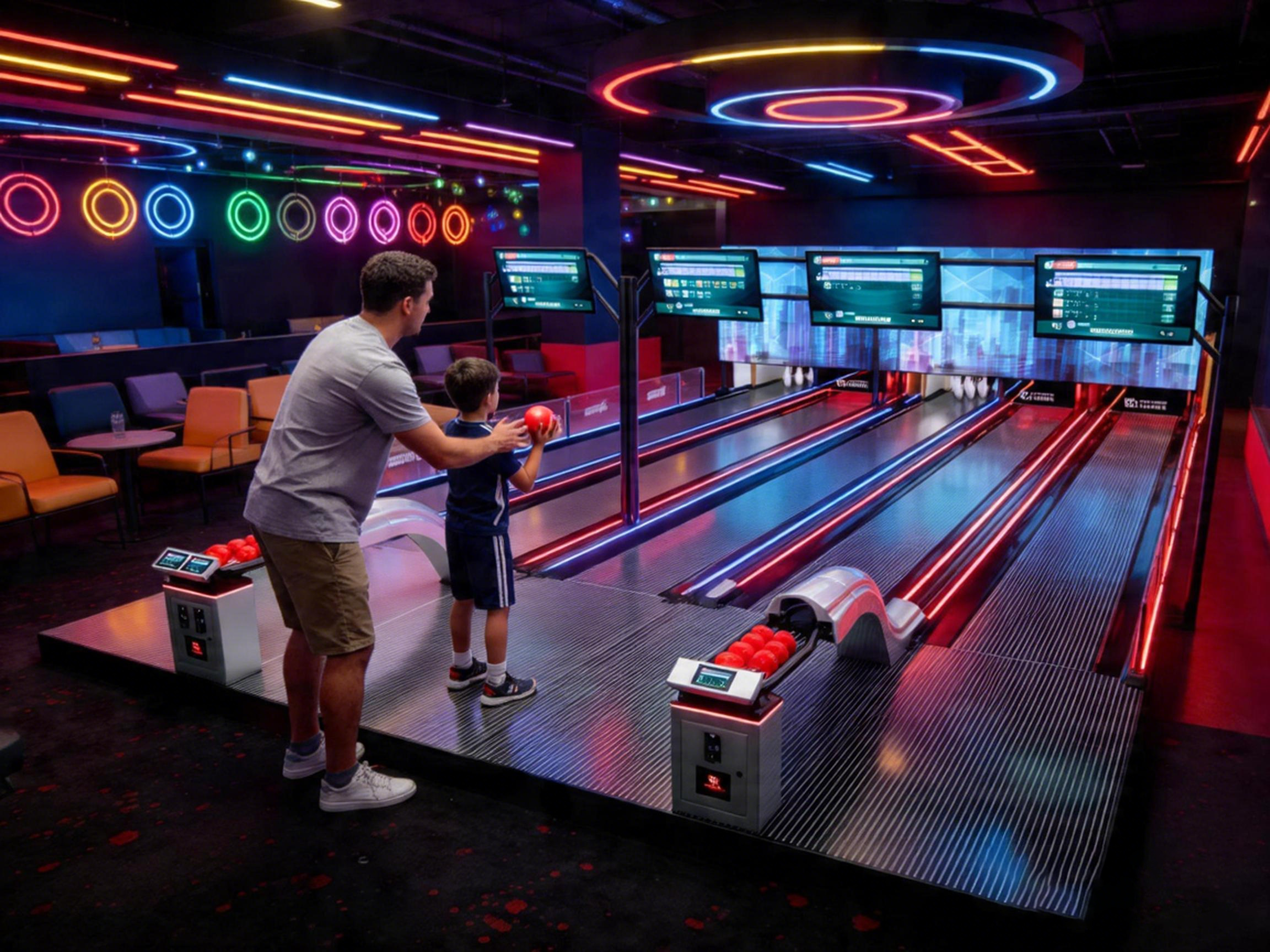
The space problem compact bowling was built to solve
Standard bowling is defined by distance. A standard bowling lane runs approximately 26 metres, and the standard two-lane module is specified at L25.5m × W3.5m × H3.2m. That geometry is the reason traditional bowling centres are usually purpose-built, and it is also the reason many commercial venues — restaurants, hotels, arcades, in-mall family entertainment centres — cannot host a bowling attraction at all.
Mini bowling answers that constraint directly. Its lane length is approximately 13 metres, and the standard mini bowling module is specified at L13m × W2.83m × H2.5m for two lanes, with lane length customizable between 13.6 m and 19 m. Duckpin bowling occupies the shortest lane of the same family at approximately 10 metres. In practice, the three formats form a ladder: standard bowling for venues with 26 metres or more, mini bowling for venues with 13 metres or more, and duckpin bowling for venues with 10 metres or more. The choice depends on available space, target customers and business model, not on which format is inherently better.
The demand context is worth attaching to that decision. HTF Market Intelligence forecasts the global bowling equipment market at USD 1.05 billion in 2025 and USD 1.78 billion by 2033, a compound annual growth rate of 6.0% across 2026–2033, under an equipment scope that covers balls, pins, lanes and scoring systems. Other research publishers report “bowling market” figures of materially different magnitudes and without a clearly stated segment scope, so any market number used in an internal business case should be read together with the product scope it was measured against.
What a mini bowling system actually contains
A mini bowling installation is made up of five subsystems that are specified, shipped and serviced separately. Understanding them individually is what allows a buyer to compare quotations that look superficially similar.
1. The lane
The lane is the most expensive structural element and the one most exposed to wear. SunEye’s mini bowling lane uses an all-black synthetic surface built with multi-layer high-density pressed panels, a scratch-resistant surface coating and sealed edges. The manufacturer specifies the lane to withstand more than 100,000 ball impacts, with a service life of up to 10 years, and states that the construction is designed to resist surface peeling, cracking and deformation during long-term commercial use. For a buyer, the relevant translation is that lane replacement is a capital event that should fall outside the first operating cycle — which makes the published impact rating and the warranty terms worth requesting in writing.
2. The string pinsetter
Mini bowling uses a string pinsetter rather than a free-fall machine. The machine is configured for ten pins and uses servo motor control with smart calibration, which detects and corrects minor positioning errors automatically. Stated performance is a pin reset of 8 seconds or less per cycle, a pin placement offset of no more than 2 mm, and continuous 24/7 operation. The standalone string pinsetter machine is rated at 2000W and 220V. Because the string design removes a significant part of the moving machinery found in free-fall machines, the manufacturer also states that it reduces downtime and long-term maintenance requirements — a claim that should be validated against service intervals and spare-part availability during supplier evaluation rather than accepted from a catalogue.
3. The ball return system
The ball return is the subsystem most likely to generate a guest-visible failure, which is why its reliability figures matter more than its speed on paper. The mini bowling configuration returns the ball in under 10 seconds, using flexible drive components and cushion guides to keep transport smooth and quiet. A built-in self-check logic clears minor jams without operator intervention. SunEye states a jam failure rate of 0.002%, against a typical industry range of 0.02%–0.05%; that comparison is a manufacturer statement and should be treated as such. The standalone Bowling Ball Return System is rated at 2000W, 220V, with a 12-second return speed and a return track length of 18–26 m that can be customized to the project.
4. The scoring system
Automatic scoring has moved from a convenience to an expectation in family entertainment venues. The mini bowling scoring system combines a gantry-mounted 43-inch HD display with AI vision recognition and infrared sensing, and is specified to identify difficult pin conditions including slightly tilted and partially knocked-over pins, with up to 99.98% recognition accuracy and a 0.02% misread rate. The system includes lifetime free OTA software updates, which matters commercially: scoring software is the component most likely to be updated during the venue’s lifetime, and an update policy is a line item worth clarifying before purchase.
5. Pins and balls
Consumables should be budgeted from the start. The Mini Bowling Pin stands 265 mm and weighs 735 g, is manufactured from maple wood and plastic with a protective surface finish, and is supplied in carton boxes with a stated delivery time of 40 days. The pin is offered with different sizes and configurations across standard, duckpin and mini bowling systems. Mini bowling balls weigh 3.3–3.75 pounds, compared with 8–11 pounds for standard bowling.
6. Design and customisation
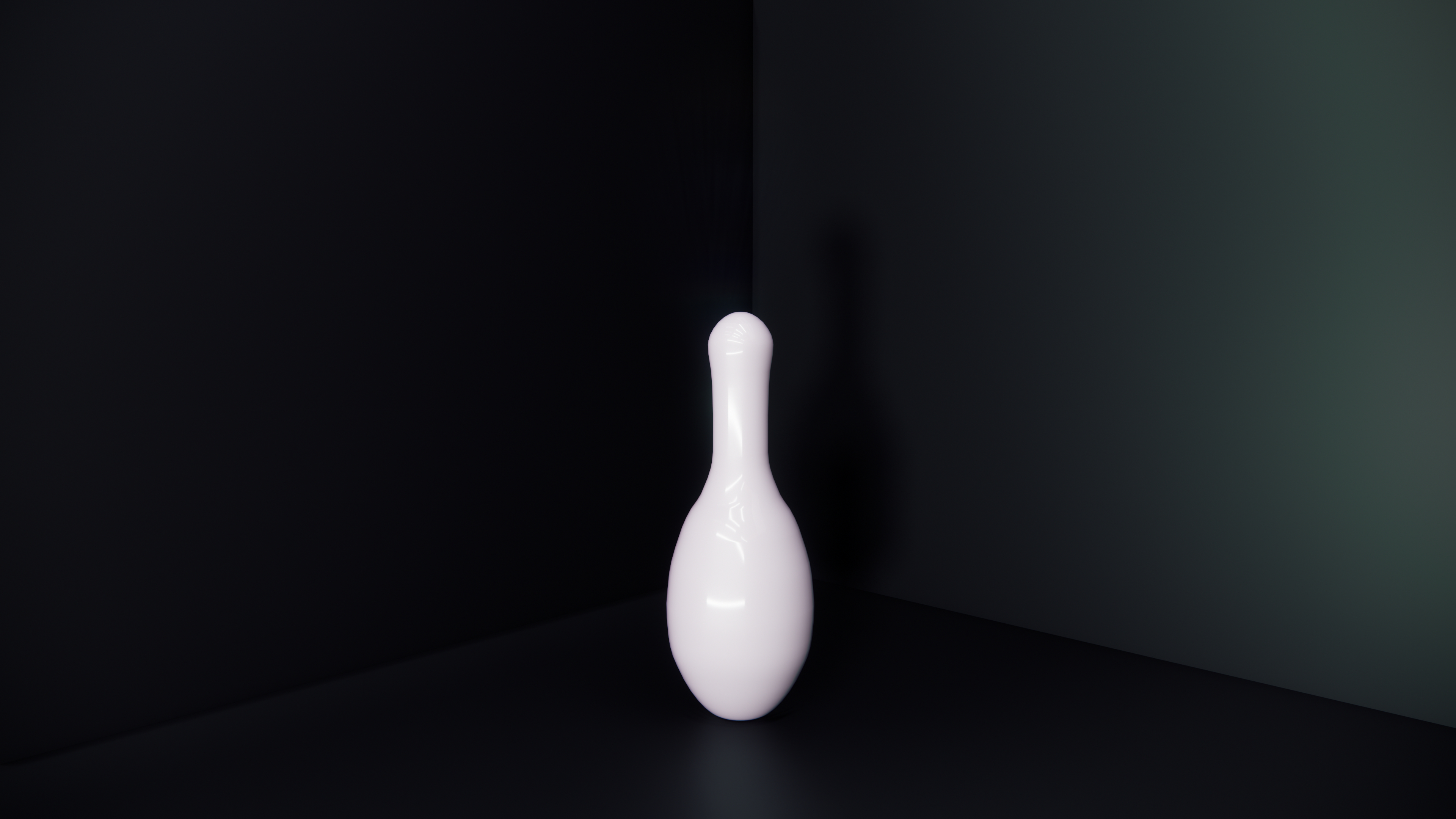
The masking wall is not purely decorative; it is the element that visually connects the bowling module to the rest of the venue. The mini bowling backlit wall uses a soft-film lightbox design that produces a bright, modern backdrop, with graphics, colours, patterns and brand logo configurable to the venue style. Pins can likewise be customized with colours, logos, graphics and patterns. For multi-site operators, this is the component that determines whether two venues feel like one brand.
How the three formats compare on specification
| Specification | Standard Bowling | Duckpin Bowling | Mini Bowling |
|---|---|---|---|
| Lane length | 26 m | 10 m | 13 m |
| Two-lane module size | L25.5m × W3.5m × H3.2m | L10m × W3.48m × H2.4m | L13m × W2.83m × H2.5m |
| Pinsetter style | String pinsetter bowling machine | String pinsetter bowling machine | String pinsetter bowling machine |
| Pin type | Ten-pin | Ten-pin duckpin | Ten-pin mini bowling |
| Ball weight | 8–11 lb | 3.3–3.75 lb | 3.3–3.75 lb |
| Pin height / weight | 380 mm / 1618 g | 230 mm / 787 g | 265 mm / 735 g |
| Certification stated | USBC-Certified, CE, LVD, MD | USBC-Certified, CE, LVD, MD | USBC-Certified, CE, LVD, MD |
| Typical venue fit | Traditional bowling centres and league play | Bars, restaurants, FECs, social entertainment venues | Children’s centres, family entertainment venues, compact spaces |
Where mini bowling is actually installed
The application profile for mini bowling is dominated by venues that treat bowling as one revenue line among several. The published application scenarios cover family entertainment centres, kids’ playgrounds, shopping malls, arcades, hotels and resorts, restaurants and private clubs, operating indoors in a climate-controlled, durable, dry environment with 24/7 operation. The matched equipment set for these venues is a string pinsetter system, a ball return system and a scoring system — the same three subsystems described above, which is why the format is best understood as a packaged solution rather than a machine.
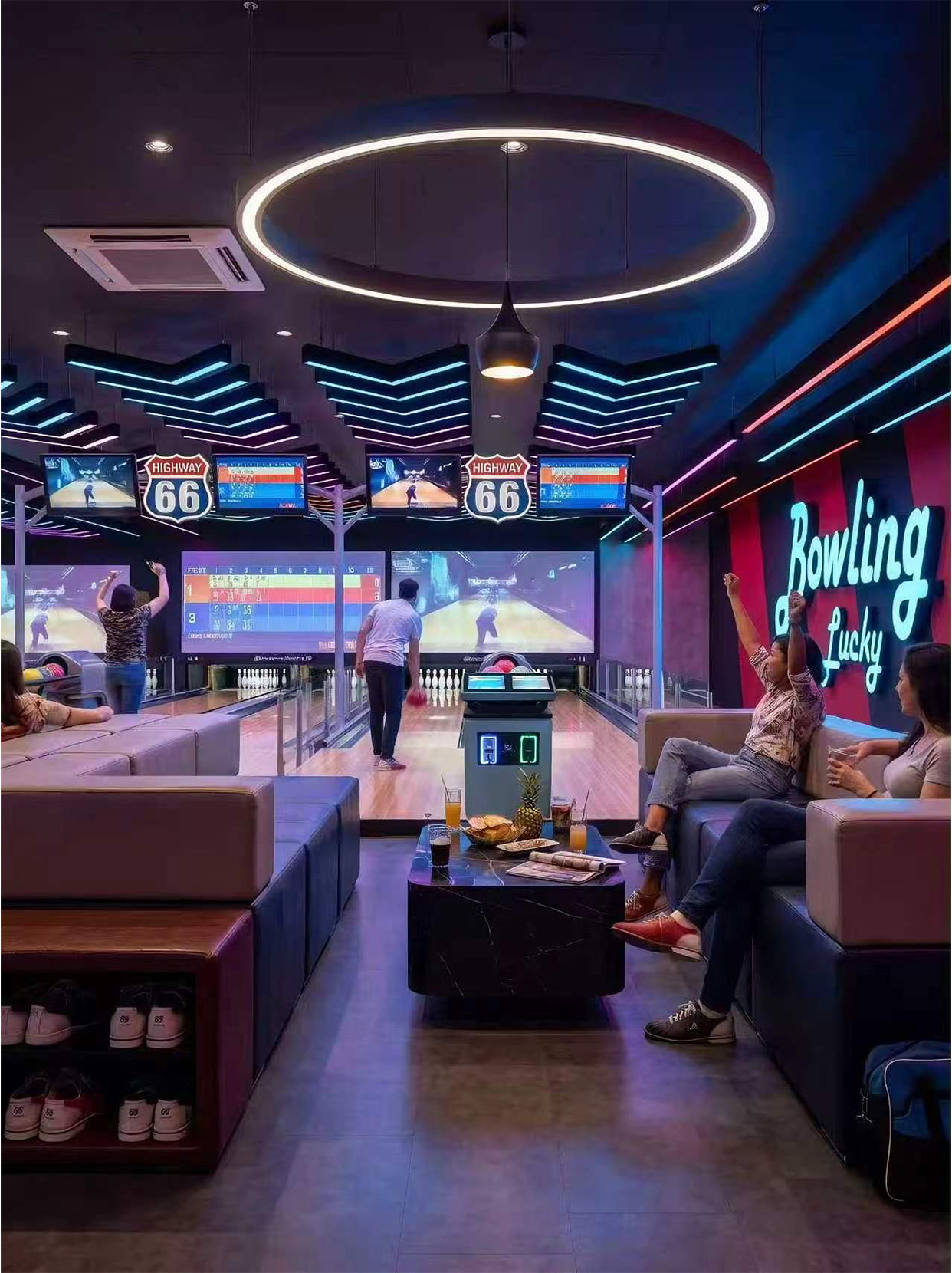
Two site conditions are worth confirming before any equipment is specified. The first is the physical envelope: a ceiling height of 2.5 m and a two-lane width of 2.83 m, with a minimum usable length of 13 m. The second is the operating pattern. A system specified for 24/7 operation behaves differently in a venue running 12 hours a day than in one running around the clock, and the maintenance plan should be built for the higher figure.
Where mini bowling stops: the limits buyers should plan around
A format only becomes useful once its boundaries are clear. Mini bowling has several, and they are commercially decisive rather than technical trivia.
- A hard length floor. Mini bowling is recommended for venues with a usable length of 13 metres or more. Below that, it is the wrong format; duckpin bowling at approximately 10 metres is the closer fit. No amount of design work removes this constraint.
- It is not a league-format substitute. Standard bowling is positioned for traditional bowling centres and league play. Mini bowling is positioned for children’s centres, family entertainment venues and compact spaces. Operators targeting sanctioned competitive play should treat mini bowling as a complementary attraction, not as a replacement for a standard installation.
- Ball and pin geometry change the game. A 3.3–3.75 lb ball and a 265 mm, 735 g pin behave differently from an 8–11 lb ball and a 380 mm, 1618 g pin. Pin action, deflection and scoring patterns are not the same experience, and operators comparing mini bowling with a standard lane should expect guests to notice the difference.
- Certification has conditions attached. USBC-approved string pinsetters use longer strings — a minimum of 54 inches under USBC Chapter 95, effective 1 August 2023 — to simulate free-fall action while reducing tangles. Certification is also component- and model-specific: SunEye states that its synthetic lanes have been tested and comply with applicable USBC requirements and are approved for USBC-certified competition. Buyers should confirm the exact certified scope — which components, which models, which jurisdictions — in writing before purchase, particularly if sanctioned competition is part of the plan.
- Throughput per module is finite. A two-lane module serves a small number of guests simultaneously. For high-footfall venues, queue management or additional modules matter more than pinsetter speed.
- Automation reduces maintenance, not service. A 24/7-rated design lowers intervention frequency; it does not remove the need for scheduled inspection, cleaning and spare-part availability.
Procurement criteria for a mini bowling project
The most common procurement error in compact bowling is comparing quotations that describe different scopes. The following criteria keep an RFQ comparable across suppliers.
- Available space, measured. Confirm usable length, width and ceiling height against the 13 m / 2.83 m / 2.5 m envelope before format selection.
- Target customer. Children and families, adult social groups and competitive players require different format choices and different pin and ball specifications.
- Pinsetter specification. Pin reset cycle time, pin placement tolerance, control method and rated operating pattern should be stated numerically, not described qualitatively.
- Certification scope in writing. Ask which components carry which approvals, under which version of the applicable standard, and for which market.
- Lane durability evidence. Request impact ratings, surface construction detail and warranty terms for the lane surface specifically.
- Scoring architecture. Confirm display type, detection method, accuracy figures and the software update policy, including whether updates are chargeable after year one.
- Scope separation. Split the quotation into equipment, shipping, installation and commissioning, staff training, warranty and after-sales support rather than accepting a single “turnkey” figure.
- Packing and lead time. Confirm packing method and stated delivery time per component — for example, carton box packing and a 40-day delivery time for pins.
- Customisation scope. Establish which design elements — masking wall graphics, colours, logo, pin graphics — are included and which are change orders.
- Spare parts and service access. Identify the consumable and wear-part list and the response path for the pinsetter and ball return.
Market and trade signals worth tracking
Two categories of external data are relevant to a mini bowling business case, and both need careful handling.
The first is market sizing. Equipment-side forecasts such as the USD 1.05 billion 2025 figure rising to USD 1.78 billion by 2033 at 6.0% CAGR describe a defined equipment scope. Operator-side and broader “bowling market” figures from other publishers are reported at substantially different magnitudes, largely because segment definitions differ. Averaging them produces a number that corresponds to nothing, so market data should be carried with its scope and publisher attached.
The second is structural data on the operating base. Industry profiles place the number of bowling centres in the United States at approximately 2,800 establishments under NAICS 713950, the classification for bowling centres; the reference year of that count should be confirmed against Census data before it is used in planning. For longer-term trend work, the Federal Reserve Bank of St. Louis publishes a series titled “Total Revenue for Bowling Centers, All Establishments, Employer Firms” (series ID REVEF71395ALLEST) covering 1998–2022, which allows centre revenue to be tracked independently of equipment-side projections. On the trade side, US Harmonized Tariff Schedule subheading 9504.90.9060 covers bowling pin setter machine parts and accessories, which is the classification importers should confirm with their customs broker.
Future outlook
Three developments are likely to shape the mini bowling segment over the next several years.
String pinsetter adoption continues to expand because it changes the operating cost structure of a bowling installation rather than only its footprint: fewer moving parts, lower intervention frequency and a smaller service burden suit venues that do not employ bowling technicians. The United States Bowling Congress published an updated research report on string pinsetters in November 2025, and operators evaluating string systems for competitive play should read the current version, since findings have been revised across updates.
Compact formats are also being pulled into mixed-use entertainment, where bowling shares floor area with food and beverage, arcades and other attractions. In that environment, the deciding variables are footprint, power and ceiling height as much as price, which favours systems engineered as complete modules rather than as component assemblies.
What will not change quickly is the data environment. Verified per-lane cost benchmarks, equipment-only market sizing and model-level certification records remain unevenly published, and pricing stays configuration-dependent. Buyers should expect to build their own comparison baseline through structured RFQs rather than relying on published list prices.
Frequently asked questions
What types of bowling equipment are available for commercial venues?
The commercial bowling equipment category covers three main system types — standard bowling, duckpin bowling and mini bowling — supported by shared subsystems including string pinsetter systems, bowling lanes, ball return systems, automatic scoring systems and score displays, plus consumables such as bowling pins and bowling balls and related accessories. SunEye Bowling supplies all three system types along with these subsystems and accessories. The format that suits a given venue depends on available space, target customers and business model rather than on a single best option.
What are the minimum space requirements for a bowling installation?
Space requirements differ by bowling type. Standard bowling requires a lane length of approximately 26 metres. Mini bowling requires approximately 13 metres; the standard two-lane mini bowling module is specified at L13m × W2.83m × H2.5m, with lane length customizable between 13.6 m and 19 m. Duckpin bowling requires approximately 10 metres; the two-lane duckpin module is specified at L10m × W3.48m × H2.4m. A venue layout proposal can be prepared from a floor plan and CAD drawings.
Can a bowling venue be built from scratch through a single supplier?
A turnkey bowling solution can cover the full project lifecycle: venue planning, CAD layout design, 3D rendering, equipment manufacturing, global shipping, installation, staff training and after-sales support. SunEye Bowling states that it provides this complete turnkey scope, and project planning is normally based on site drawings or CAD drawings supplied by the buyer. Buyers evaluating turnkey offers should separate the quotation into equipment, civil and installation work, commissioning, training, warranty and operational support, because suppliers use the term “turnkey” to describe materially different scopes.
Additional technical and company information is available in the SunEye Bowling company profile: SunEye Company Profile.
Tem questões ou precisa de mais detalhes?
Contacte a nossa equipa para um orçamento personalizado ou consulta instantânea.
Solicitar orçamento
Preencha o formulário abaixo e a nossa equipa entrará em contacto com uma proposta personalizada.
Chat direto do WhatsApp
Prefere conversar em tempo real? Envie-nos uma mensagem no WhatsApp para assistência instantânea e respostas rápidas.
- Obter orçamento personalizado
- Partilhar fotos ou documentos
- Discuta as suas necessidades diretamente
Geralmente responde em 5–30 minutos durante o horário de expediente.