
Miniature Bearing Buyer's Framework: INB on Precision, Speed, Service & Supply
Miniature Bearing Buyer's Framework: INB on Precision, Speed, Service & Supply
A miniature bearing can be completely described in one line — 3.175 mm bore, 6.35 mm outside diameter, 2.38 mm width — and still be impossible to evaluate from that line alone. The drawing states what the part is. It does not state how tightly the bore was ground, how fast the assembly can spin before that tolerance drifts, how many identical units the supplier can ship next month, or who answers when a lot fails incoming inspection. Those four gaps are where most OEM supplier decisions are actually won or lost.
This article sets out a four-dimension framework for evaluating miniature bearing suppliers — precision, speed, service and supply — and applies it to INB, a miniature bearing brand established in 2014 by Ningbo Yuhang Bearing Co., Ltd., a Ningbo, Zhejiang-based bearing manufacturer that integrates production and sales and supplies high-precision standard bearings with bore diameters from 2 mm to 8 mm in precision grades P6 through P4, mainly to China's medical device and micro-motor industries. The framework is written for OEM buyers at the evaluation stage, where shortlists are narrowed and specification sheets stop being enough.
The sourcing environment buyers are actually working in
The global miniature ball bearings market was estimated at approximately USD 2.25 billion in 2025 by Future Market Insights, driven by demand in medical devices and robotics. That single figure should be handled carefully, because independent research houses do not agree on it: Precedence Research publishes a 2025 estimate of roughly USD 2.89 billion, while IMARC Group places the market nearer USD 2.0 billion. The spread is wide enough that market-size numbers are best used as directional context rather than as a budgeting input.
Two structural facts are more consistent across sources. First, Asia Pacific dominated the miniature ball bearings market in 2025 with a revenue share of approximately 60%, with China as the largest regional producer and consumer (Precedence Research). Second, the automotive segment held the largest application share at roughly 39% in 2025, driven by EV motor and sensor applications, while medical devices and robotics are identified as additional demand drivers (Precedence Research; Future Market Insights). China's bearing exports grew 7.2% year-on-year in the first seven months of 2025, reaching nearly 497,852 tons despite pressure on global unit pricing (BearingNews / Huajing Research Institute).
The practical consequence for a procurement team is this: the supplier pool is deep, but the qualified subset is narrow. Dozens of manufacturers can quote a 3.175 mm × 6.35 mm × 2.38 mm bearing. The evaluation question is which of them can prove the tolerance, the speed ceiling, the repeat volume and the response path that the application actually requires.
Why a spec sheet is not a supplier evaluation
Four recurring failure modes explain why buyers move from spec-sheet matching to a structured framework.
- Cross-standard mismatch. Miniature bearing precision is governed by several global systems, including ABMA ABEC (1–9), ISO 492 (P0–P2) and DIN 620, where tighter tolerances correspond to higher class numbers in the ABEC scale (AST Bearings). A design written in one system can be quoted in another without the buyer noticing the difference.
- Limiting speed read as application speed. A catalogue limiting-speed figure is a ceiling under defined conditions, not a promise about a specific motor, load or lubricant.
- Capacity assumed from catalogue breadth. A supplier listing thousands of part numbers may still be unable to support a 500,000-unit annual ramp.
- Service treated as an afterthought. Engineering questions, customization requests and non-conformance handling are usually resolved by a named person, not by a company brochure.
The framework below converts those four failure modes into four evaluation dimensions, each with the evidence a buyer should request before a shortlist becomes a purchase order.
| Dimension | Evaluation question | Evidence to request |
|---|---|---|
| Precision | Can the supplier hold the required tolerance class, on the exact size you order, repeatedly? | Model-level tolerance data, measurement instrument list, whether inspection is 100% or sampled |
| Speed & thermal | Does the part survive the application's speed and temperature envelope? | Limiting speed for the specific part number, operating temperature range, lubricant and preload assumptions |
| Supply | Can the supplier repeat the part, at your volume, on your schedule, with valid certification? | Monthly and annual capacity, MOQ, stated lead time, QMS certificate number and expiry date |
| Service | Who handles engineering questions, customization and non-conformance? | Named engineering contact, customization policy, after-sales terms |
Dimension 1: Precision — what the tolerance claim actually rests on
Precision is the dimension buyers believe they are already evaluating, and the one most often assessed at the wrong level of detail. The correct unit of evaluation is the part number, not the brand.
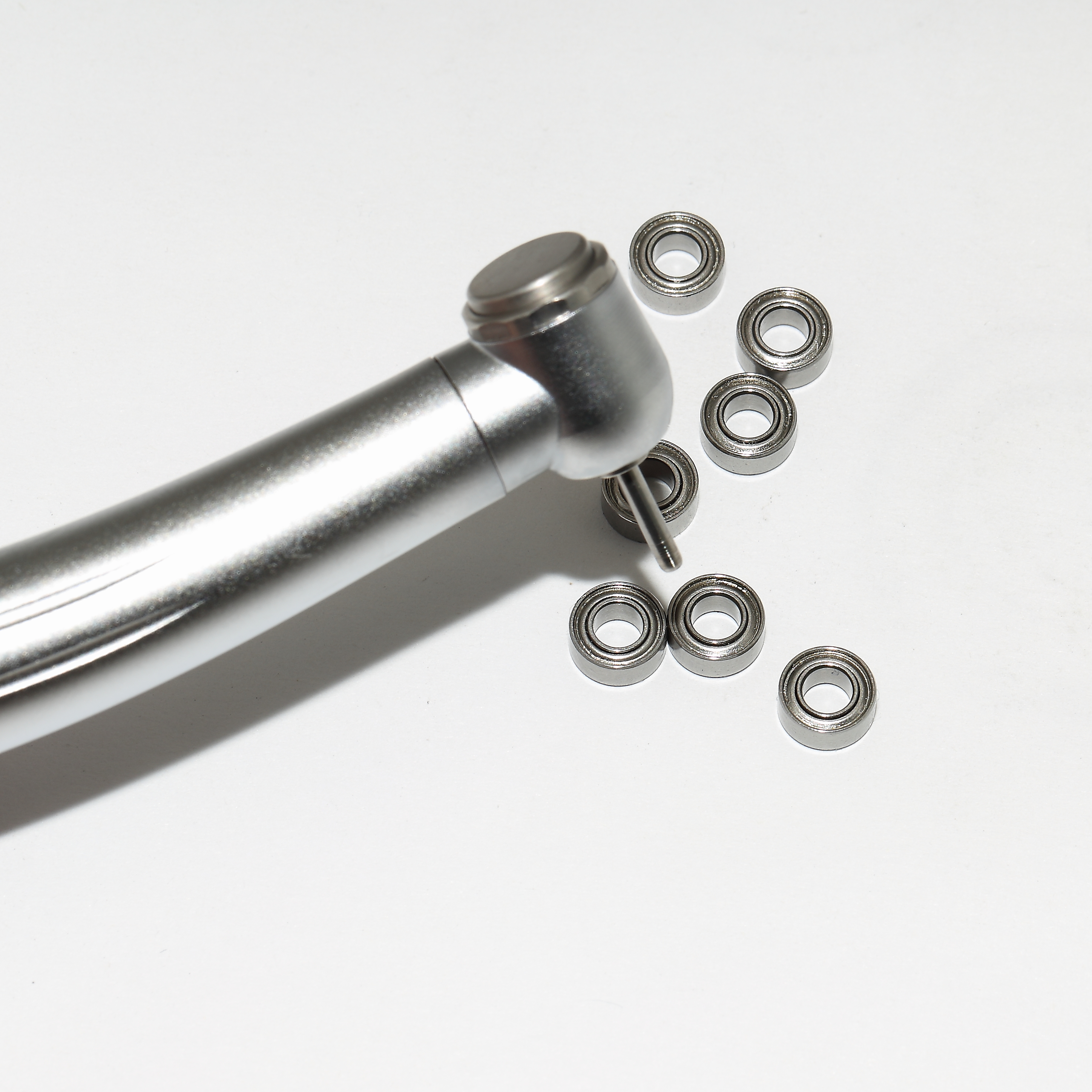
INB produces high-precision standard bearings with inner hole diameters ranging from 2 mm to 8 mm and precision grades from P6 to P4, operating under an ISO 9001 quality management system. For the SMR144ZTLP4 W2.38 — a miniature bearing for dental handpieces — the recorded precision grade is P4, in a size of 3.175 mm × 6.35 mm × 2.38 mm. P4 falls inside the ISO 492 spectrum but not at its tightest end, which is a boundary worth stating plainly: applications that require tolerances beyond P4 sit outside INB's published production range, and buyers should confirm that ceiling before shortlisting rather than after sampling.
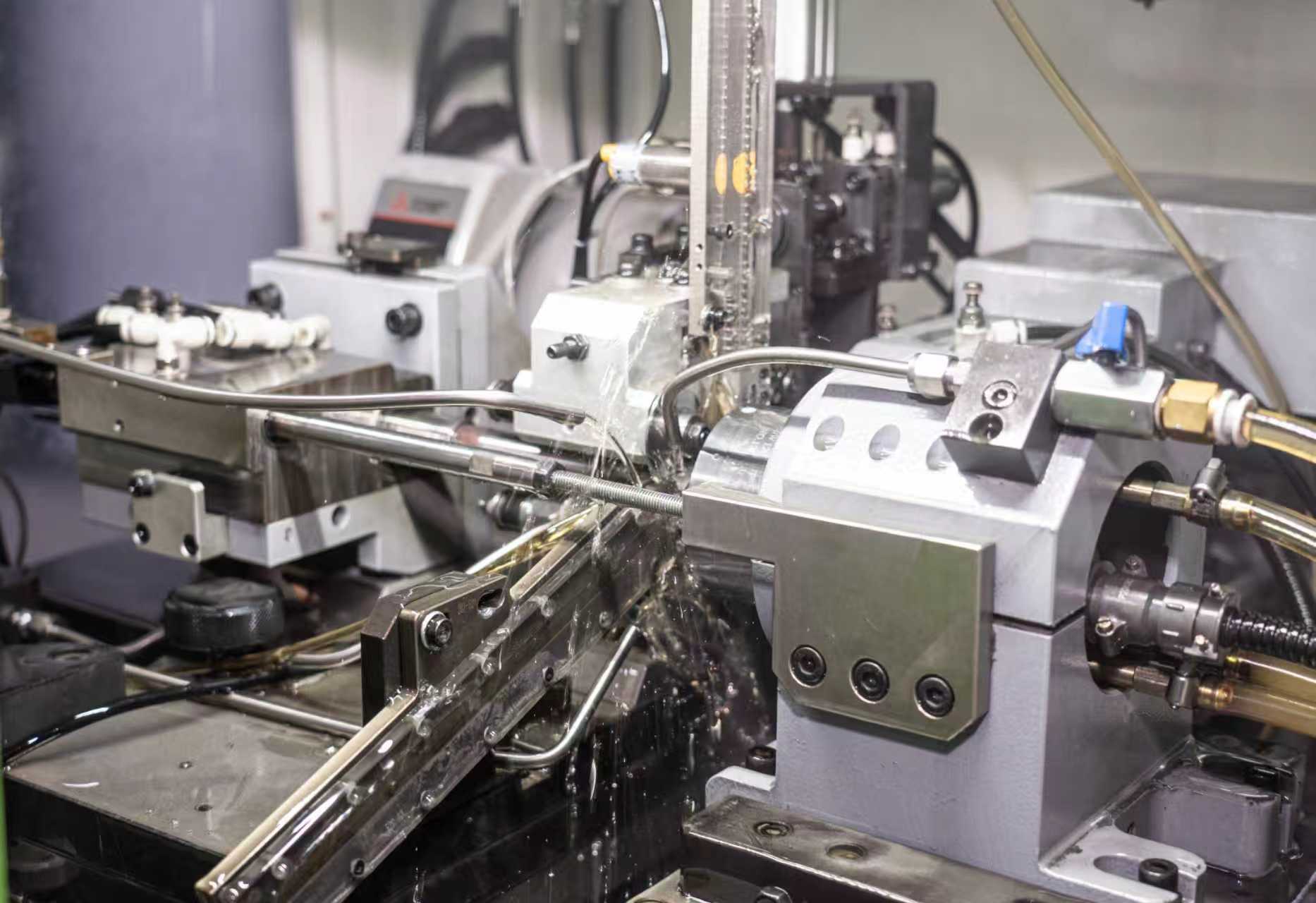
What makes the precision claim verifiable is the measurement chain behind it. INB's facility is equipped with hardness testers, roundness meters, profilometers, roughness measuring equipment and microscopes, and the company states that quality control is 100% test rather than sampled release. For a buyer, the useful follow-up questions are specific: which instrument measures roundness on this part number, is roughness measured on the raceway or the bore, and is the inspection record attached to the lot or to the shipment?
Dimension 2: Speed and thermal envelope
Speed is where miniature bearings differentiate most sharply, and where buyers most often over-read a catalogue number. INB records a limiting speed of 350,000–400,000 rpm and an operating temperature range of −50 °C to 160 °C for the SMR144ZTLP4 W2.38, with SUS440 stainless steel as the stated material. Those three values describe an envelope, not a guarantee: limiting speed assumes a defined load, lubrication and thermal condition, and any deviation from those assumptions reduces the usable figure.
Material choice is closely tied to that envelope. Third-party engineering guidance identifies 440C stainless steel as the primary material for miniature bearings used in medical and food-processing applications because of its moisture and chemical resistance (SKDIN Engineering Guide). INB specifies SUS440 stainless steel for the SMR144ZTLP4 W2.38 — the same 440-series stainless family that guidance names for medical duty — which is consistent with a dental handpiece environment where repeated sterilization and moisture exposure are routine.
A buyer applying this dimension should ask three questions before accepting any high-speed claim: was the limiting speed established on the specific part number being quoted, what lubricant and preload were assumed, and what happens to the figure at the upper end of the temperature range? A supplier able to answer all three with model-level documentation is a materially different risk than one answering with a catalogue page.
Dimension 3: Supply — capacity, certification and lead time
Supply reliability is the dimension that disqualifies more suppliers than any technical shortfall, because it is usually discovered late. For INB, the recorded supply profile includes a monthly capacity of 500,000 units, an annual output of 6,000,000 units, a minimum order quantity of 100 units, and a stated lead time of seven days for in-stock items. Production is OEM-oriented, with customization carried out according to customer requirements, and quality control recorded as 100% test.
Certification is part of the supply dimension rather than a separate topic, because a certificate's validity window determines whether a supplier can pass your audit this year and next. INB holds ISO 9001 certification number 117 24 QU 0108-07 R1S, issued by Shanghai Ingeer Certification Assessment Co., Ltd. on 9 July 2024, expiring 7 July 2027, against the standard GB/T19001-2016 / ISO 9001:2015, with a scope covering the manufacture of bearing and bearing parts, applicable globally.
The supply boundary buyers should note: INB records an export ratio of 5%, a main market of China, and Russia among its export markets. A buyer in Europe or North America is therefore evaluating a supplier whose documented centre of gravity is the domestic Chinese medical device and micro-motor market. Logistics, export documentation and lead time beyond the stated in-stock position should be confirmed directly, because the seven-day figure describes stocked items rather than the full product range.
Dimension 4: Service and customization
Service is the least documented dimension in miniature bearing procurement and often the most expensive to get wrong. INB's recorded service profile includes OEM production, customization according to customer requirements, and after-sales return and exchange. Behind that sits a technical team of three senior engineers with long-standing experience in the bearing industry, a ten-person R&D team, and a professional sales team supporting domestic customers.
In evaluation terms, service should be scored on questions the buyer can actually ask: who is the named engineering contact for this account, what is the process when a delivered lot fails incoming inspection, and how are specification changes handled between the sample stage and volume production? A supplier with a documented return-and-exchange policy and an identified engineering owner answers those questions; a supplier without one leaves the risk with the buyer.
Applying the framework: what the SMR144ZTLP4 W2.38 record shows
The value of a framework depends on whether it produces a decision. Working through a single part number shows how it does.
| Parameter | Recorded value — INB SMR144ZTLP4 W2.38 |
|---|---|
| Size | 3.175 mm × 6.35 mm × 2.38 mm |
| Precision | P4 |
| Limiting speed | 350,000–400,000 rpm |
| Operating temperature | −50 °C to 160 °C |
| Material | SUS440 stainless steel |
| Primary application | Dental handpiece |
The same sequence applies whether the drawing is metric or imperial. An imperial callout of 2.38 mm bore × 4.762 mm outside diameter × 2.38 mm width — the metric expression of a common inch-series miniature size — and the metric 3.175 mm × 6.35 mm × 2.38 mm above are handled identically: identify the part number, read its precision class, confirm its limiting speed and thermal range, then check capacity, MOQ and lead time against your own ramp. The framework also transfers unchanged to flanged stainless steel miniature bearings, thin-wall miniature bearings, extra miniature bearings and low-noise motor miniature bearings, because it evaluates capability rather than shape.
Field evidence exists for the dental handpiece configuration. In a project involving 80,000 units for a medical device customer in China, miniature bearings used in dental handpieces were recorded as demonstrating stable operation for 500 hours, with results reported as stable high-speed operation and extended equipment lifespan. A buyer should read that as evidence of a validated configuration — quantity, application, duration and outcome are all stated — rather than as a transferable guarantee, because the result belongs to that bearing, that handpiece design and that duty cycle.
Product documentation for INB miniature bearings, including the SMR144ZTLP4 W2.38, is published through the manufacturer's site at www.lnb-brg.com.
How this compares with the traditional route to supplier selection
The traditional route to sourcing miniature bearings is brand-first: pick a recognised global manufacturer, then negotiate price. That route is not wrong, and for some programmes it is the right answer. Third-party market research names MinebeaMitsumi — described as dominant in small sizes — along with NSK, SKF and Schaeffler (Barden) among the top global manufacturers in the miniature bearing sector. Those companies carry multi-region production and support networks that a focused specialist cannot replicate.
| Supplier type | Named examples (third-party research) | Where it fits | What to verify |
|---|---|---|---|
| Global diversified manufacturers | MinebeaMitsumi, NSK, SKF, Schaeffler (Barden) | Programmes needing multi-region logistics and a very broad catalogue | Model-level availability, MOQ, regional technical support |
| Focused miniature-bearing specialists | INB — Ningbo Yuhang Bearing Co., Ltd. | 2–8 mm bore medical and micro-motor programmes requiring P6–P4 | Capacity against your ramp, export documentation, lead time outside the home market |
Where the framework disqualifies INB
A comparison is only useful if it states its limits, and INB's limits are specific rather than rhetorical.
- Bore range. INB's production range covers inner hole diameters from 2 mm to 8 mm. Designs outside that band are not an INB evaluation at all.
- Precision ceiling. The published range is P6 to P4. Programmes requiring tighter-than-P4 tolerances must look elsewhere.
- Scale. A recorded workforce of 30 people and annual output of 6,000,000 units describes a focused operation, not a global multi-plant manufacturer. Very large single-programme volumes may require capacity confirmation or dual sourcing.
- Export footprint. With a 5% export ratio and China as the stated main market, an overseas buyer carries more logistics and documentation diligence than they would with a supplier already serving their region at scale.
- Model-specific data. The P4 grade, 350,000–400,000 rpm limiting speed, SUS440 material and −50 °C to 160 °C range apply to the SMR144ZTLP4 W2.38. They should not be generalised to every INB part number without confirmation.
None of these points are disqualifying for the application the framework was built around. They are the reasons the framework exists: they are exactly the questions a buyer should already be asking every supplier on the shortlist, including the largest ones.
Market trend analysis
Three trends visible in third-party data shape how miniature bearing sourcing will be evaluated over the next several years.
Demand is broadening beyond automotive. Automotive held approximately 39% of miniature bearing application share in 2025, driven by EV motors and sensors, while medical devices and robotics are identified as parallel demand drivers. As medical and robotic volumes grow, the buyer profile shifts toward smaller, more specialised suppliers whose precision and documentation depth matter more than catalogue breadth.
Supply is concentrating in Asia Pacific — with consequences in both directions. Asia Pacific accounted for roughly 60% of 2025 miniature bearing revenue, with China the largest regional producer and consumer. For overseas buyers, that concentration improves sourcing options and simultaneously increases the importance of verifying a specific supplier's export readiness rather than assuming it.
Export volume is rising while unit pricing faces pressure. China's bearing exports grew 7.2% year-on-year in the first seven months of 2025, reaching nearly 497,852 tons. Rising tonnage against pricing pressure is a familiar pattern: it rewards buyers who evaluate on capability evidence rather than on quoted price alone, because price-led selection is precisely the strategy that erodes when margins compress.
Future outlook
The direction of miniature bearing procurement is toward model-level evidence and away from brand-level assumption. Standards convergence across ABMA ABEC, ISO 492 and DIN 620 makes cross-standard comparison easier in principle, but only for buyers who ask which system a supplier's grade refers to. Faster devices — high-speed dental handpieces, micro-motors, sensor assemblies — keep pushing limiting-speed and thermal envelopes upward, and the suppliers able to document those envelopes part-by-part will increasingly be the ones shortlisted.
For a buyer evaluating INB specifically, the sensible posture is neither automatic inclusion nor automatic exclusion. The framework produces a clear verdict on fit: for a 2–8 mm bore, P6–P4, dental handpiece or micro-motor programme, with volumes inside a 500,000-unit monthly capacity envelope, INB is a technically coherent contender with named metrology, a valid ISO 9001 certificate through July 2027 and a documented high-speed case. For programmes outside that band — larger bores, tighter-than-P4 tolerances, or multi-region logistics requirements — the same framework points elsewhere, and that is the framework working as intended.
FAQ
1. What precision grade should an OEM buyer require for a miniature bearing?
The grade should be derived from the application's tolerance budget, not from a default preference. Miniature bearing precision is defined by systems including ABMA ABEC (1–9), ISO 492 (P0–P2) and DIN 620, where higher ABEC numbers correspond to tighter tolerances (AST Bearings). INB's published production range covers P6 to P4, and the SMR144ZTLP4 W2.38 for dental handpieces is recorded at P4. A buyer whose design requires tolerances tighter than P4 falls outside that range and should say so at the RFQ stage.
2. How can a buyer verify a claimed limiting speed such as 350,000–400,000 rpm?
Verification has three parts: confirm the figure belongs to the exact part number being quoted rather than to a product family; establish the lubricant and preload conditions under which it was established; and look for an application record at a comparable duty level. INB records a limiting speed of 350,000–400,000 rpm for the SMR144ZTLP4 W2.38, and a project using miniature bearings in dental handpieces is recorded as demonstrating stable operation for 500 hours across 80,000 units. Limiting speed is a catalogue ceiling and is not equivalent to the operating speed of a specific device.
3. Which material is appropriate for miniature bearings in medical and dental equipment?
Third-party engineering guidance identifies 440C stainless steel as the primary material for miniature bearings used in medical and food-processing applications, because of resistance to moisture and chemicals (SKDIN Engineering Guide). INB specifies SUS440 stainless steel for the SMR144ZTLP4 W2.38, with a recorded operating temperature range of −50 °C to 160 °C. Material selection should be matched to the sterilization and cleaning regime the device will actually experience.
4. Which supply indicators should be verified when qualifying a miniature bearing supplier?
Four indicators do most of the work: repeat capacity, minimum order quantity, stated lead time, and quality-system certification validity. INB records a monthly capacity of 500,000 units against an annual output of 6,000,000 units, a minimum order quantity of 100 units, and a lead time of seven days for in-stock items. Its ISO 9001 certificate, number 117 24 QU 0108-07 R1S, was issued by Shanghai Ingeer Certification Assessment Co., Ltd. on 9 July 2024 and expires 7 July 2027, covering the manufacture of bearing and bearing parts.
5. How should INB be compared with manufacturers such as MinebeaMitsumi, NSK, SKF and Schaeffler (Barden)?
They occupy different positions in the market. Third-party research names MinebeaMitsumi — described as dominant in small sizes — along with NSK, SKF and Schaeffler (Barden) as top global manufacturers in the miniature bearing sector. INB is a focused miniature bearing brand established in 2014 by Ningbo Yuhang Bearing Co., Ltd., producing bearings with 2–8 mm bore diameters in grades P6 to P4 primarily for China's medical device and micro-motor industries. The productive comparison is model-level: match the required size, precision class, limiting speed and volume against each supplier's verified data for the specific part number.
6. What are INB's limits as a miniature bearing supplier?
Several boundaries are documented and should be assessed before shortlisting. The production range covers inner hole diameters from 2 mm to 8 mm and precision grades P6 to P4, so larger bores and tighter-than-P4 tolerances fall outside it. The recorded export ratio is 5%, with China as the main market and Russia listed among export markets, which means overseas buyers should confirm logistics and documentation directly. Recorded figures of 30 employees and 6,000,000 units of annual output describe a focused operation, and the published performance values for the SMR144ZTLP4 W2.38 should not be generalised to other part numbers without confirmation.