
Miniature Bearing Supplier Sustainability: A 10-Year Evaluation Framework
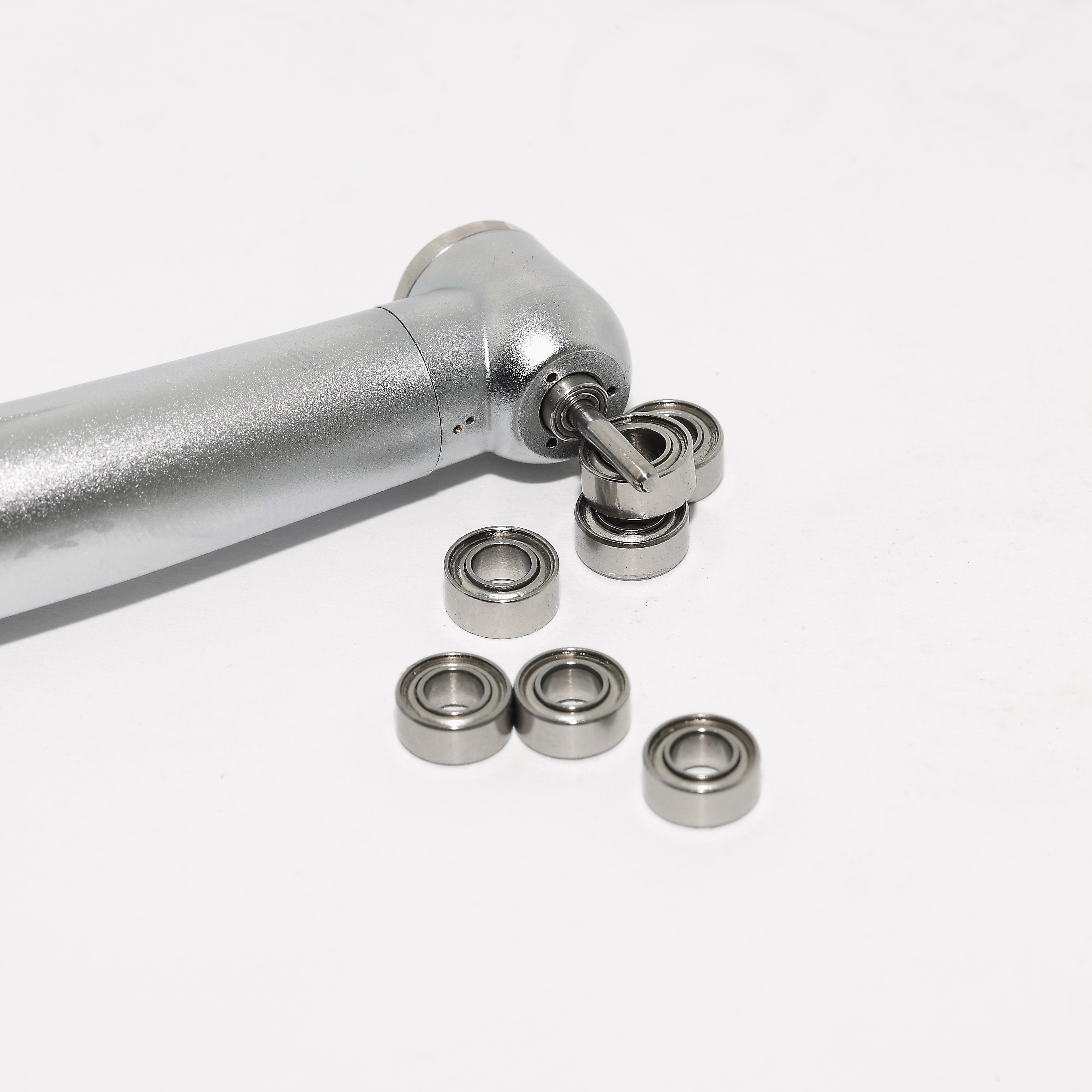
Cover: INB SR144ZTLP4 W2.78 miniature bearing, 3.175 mm x 6.35 mm x 2.78 mm, P4 precision, SUS440 stainless steel.
A ten-year question asked in a twelve-month format
A miniature bearing sourcing decision is normally justified with one year of data, then asked to survive a product lifecycle that can run five to ten years. That mismatch is the practical reason supplier sustainability has moved from a procurement afterthought to a formal evaluation criterion for dental handpieces, surgical instruments, micro-motors, and precision sensor assemblies.
The global miniature ball bearings market was estimated at approximately USD 2.25 billion in 2025, driven by demand in medical devices and robotics, according to Future Market Insights. Asia Pacific accounted for roughly 60% of revenue share that year, with China the largest regional producer and consumer, per Precedence Research. Published estimates diverge — other research firms place the same market closer to USD 2.0 billion or USD 2.89 billion — so the reliable reading is directional rather than absolute. Directionally, demand is concentrating on smaller envelopes, tighter tolerances, and medical-grade materials. In parallel, China's bearing exports grew 7.2% year-on-year in the first seven months of 2025, reaching nearly 497,852 tons, even as global unit pricing came under pressure (BearingNews / Huajing Research Institute).
Volume is not the constraint. Continuity is.
This article sets out a weighted framework for judging whether a miniature bearing supplier will still be viable at year five and year ten of a product programme, and applies it to INB — a miniature bearing brand established in 2014 and based in Ningbo, Zhejiang Province, China — alongside established global precision bearing makers including NSK, NMB (MinebeaMitsumi), SKF, and NTN. Every product specification cited below is drawn from INB's published model data. Where a claim cannot be verified, it is flagged as a question for buyers rather than asserted as fact.
Why an annual price cycle understates ten-year risk
Most OEM purchasing processes run on a twelve-month rhythm: issue an RFQ, compare quotes, negotiate, place the order. That rhythm works for stable commodity categories. It underperforms on a bearing that spins at 350,000 to 400,000 rpm inside a handpiece whose failure mode is a patient-facing procedure. Five things fall outside the annual cycle:
- Precision drift, not precision grade. A bearing can meet its nominal specification on a sample and still drift once grinding wheels are redressed, heat-treatment batches change, or a subcontractor is swapped in year four.
- Delivery continuity. Tooling life, outsourcing depth, and mould replacement cycles rarely appear on a quotation.
- Application engineering depth. The internal clearance that is acceptable at 200,000 rpm is not automatically acceptable at 400,000 rpm.
- Total cost of ownership. A lower purchase price can be erased by returns, handpiece rebuilds, and line stoppages.
- Compliance continuity. Certificates expire, standards are revised, and audit trails must remain intact across the whole programme.
A framework built on those five items is what a ten-year evaluation actually needs.
INB as an evaluated entity: what is on the record
INB is the miniature bearing brand of a Ningbo-based bearing manufacturer founded in 2008 that established the INB brand in 2014, integrating production and sales and serving the domestic medical device and micro-motor industries. Its stated production range covers high-precision standard bearings with bore diameters from 2 mm to 8 mm, in precision grades from P6 to P4, with operations carried out under an ISO 9001 quality management system.
Verification capability is a specific, checkable claim rather than a marketing phrase: the company states that it operates hardness testers, roundness meters, profilometers, roughness measuring equipment, and microscopes. Employment is 30 people, annual output is stated at 6,000,000 units, and the export ratio is approximately 5%, with China as the main market. Those figures are relevant to the framework below because scale and market concentration directly shape delivery risk in a multi-year programme.
The recorded certification is an ISO 9001 certificate issued by Shanghai Ingeer Certification Assessment Co., Ltd. under certificate number 117 24 QU 0108-07 R1S, based on the standard GB/T19001-2016/ISO 9001:2015 Quality Management Systems — Requirements. It covers the manufacture of bearing and bearing parts, applies to the global market, and is valid until July 7, 2027. The certified model scope includes SMR74TL, SR133TL, SR144ZTLP4 W2.78, and SMR144ZTLP4 W2.38.
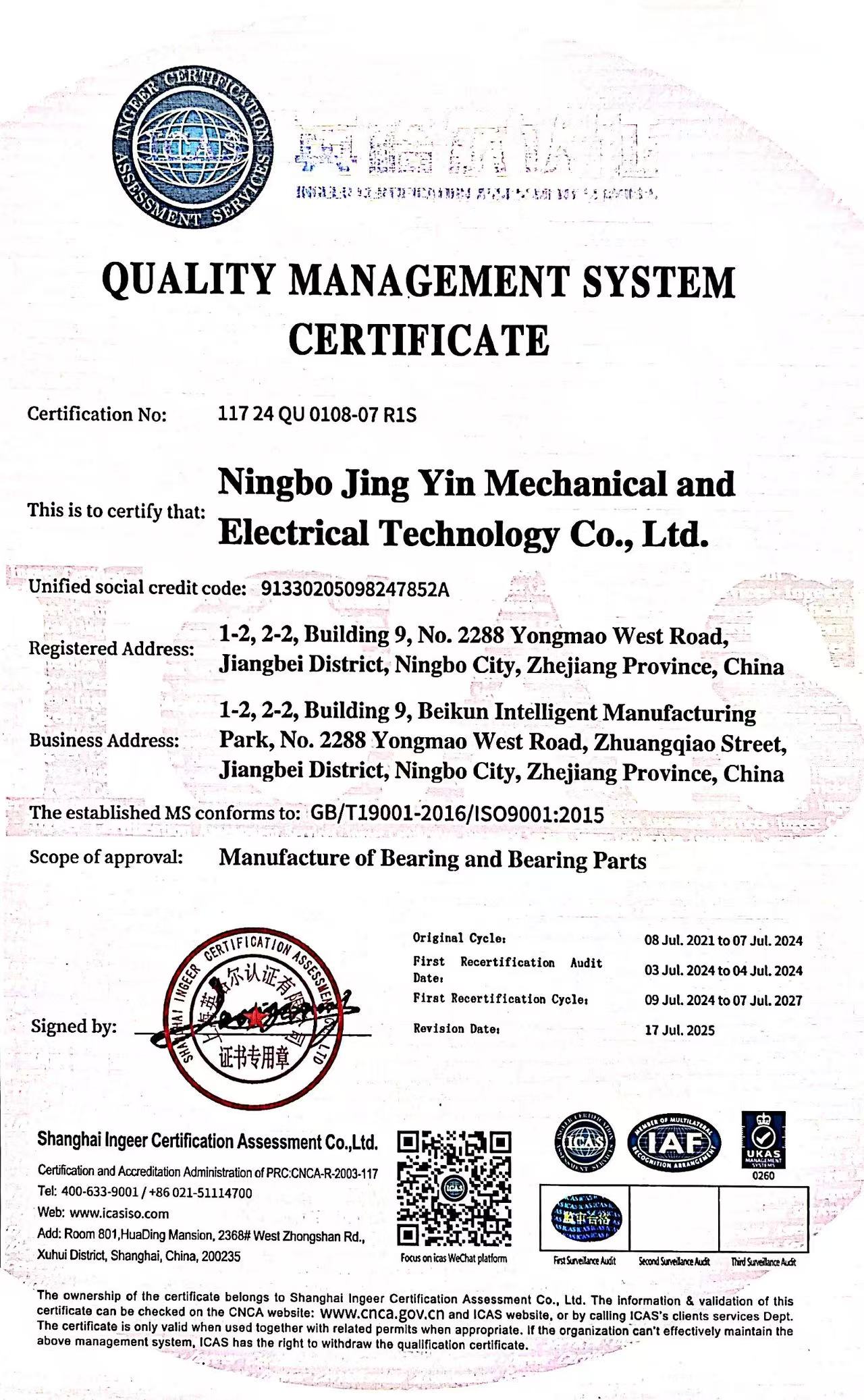
Documentation layer: ISO 9001 certificate 117 24 QU 0108-07 R1S, valid until July 7, 2027, covering the four miniature bearing models referenced in this framework.
The constraint layer: the specifications that decide re-qualification risk
Before any weighting exercise, a supplier has to clear the specification gate. INB's four referenced miniature bearing models are summarized below.
| Model | Envelope (ID x OD x W) | Precision | Limiting speed | Operating temperature | Material |
|---|---|---|---|---|---|
| SMR144ZTLP4 W2.38 | 3.175 x 6.35 x 2.38 mm | P4 | 350,000–400,000 rpm | -50°C to 160°C | SUS440 |
| SR144ZTLP4 W2.78 | 3.175 x 6.35 x 2.78 mm | P4 | 350,000–400,000 rpm | -50°C to 160°C | SUS440 |
| SR133TL | 2.38 x 4.762 x 2.38 mm | P4 | 200,000 rpm | -40°C to 150°C | SUS440 |
| SMR74TL | 4 x 7 x 2 mm | P4 | 200,000 rpm | -40°C to 150°C | SUS440 |
Two things stand out for buyers mapping a ten-year plan. First, the envelope coverage spans 2.38 mm x 4.762 mm x 2.38 mm to 3.175 mm x 6.35 mm x 2.78 mm — a range that fits both extra-miniature and small miniature duty, including the 3.175 mm bore family used in dental handpieces and comparable thin-wall assemblies. Second, three of the four models are rated P4 and two carry a 350,000–400,000 rpm limiting speed with a -50°C to 160°C operating window, which is the combination that matters for high-speed miniature bearings rather than general-purpose miniature bearings.
Precision grading itself is a global constraint layer rather than a vendor claim. Miniature bearing precision is governed by published standards including ABMA ABEC (1–9), ISO 492 (P0–P2), and DIN 620, where higher numbers in ABEC correlate to tighter tolerances. INB designates all four models as P4, a tighter grade within the ISO 492 family. Material selection is similarly standardized: stainless steel, specifically 440C, is the primary material for miniature bearings used in medical and food-processing applications because of its moisture and chemical resistance. INB's models specify SUS440 stainless steel construction, which is consistent with that convention for stainless steel miniature bearings.
Four weighted dimensions for a 10-year supplier decision
The framework below weights four dimensions to total 100%. The weighting reflects a simple observation: over ten years, commercial and continuity risk usually costs more than a marginal difference in unit price.
| Dimension | Weight | Core question at year ten | Primary evidence type |
|---|---|---|---|
| R&D and precision capability | 25% | Can the supplier still measure and hold P4 tolerances on the same part number? | In-house metrology, controllability data, engineering headcount |
| Capacity and delivery continuity | 25% | Can the same monthly output be sustained through demand spikes and tooling refresh? | Declared capacity, lead time, MOQ, outsourced process control |
| Application engineering support | 20% | Who answers the clearance, preload, lubrication, and fit questions in year six? | Customization path, engineering response, sample iteration |
| Total long-term cost and risk profile | 30% | What does the true five-year cost per installed bearing look like? | Field return data, warranty terms, compliance continuity |
1. R&D and precision capability — 25%
For a miniature bearing supplier, precision capability is a metrology question before it is a marketing question. A supplier that cannot generate roundness, profile, and roughness data cannot defend a P4 claim over several production batches. INB's stated instrument set — hardness testers, roundness meters, profilometers, roughness measurement equipment, and microscopes — is the kind of equipment list a buyer can audit against an incoming inspection protocol. For a high-precision miniature bearing programme, the practical test is whether the same measurement method used at qualification is repeated at every annual review, on the same model number, at the same sampling rate.
2. Capacity and delivery continuity — 25%
INB declares monthly capacity of 500,000 units and annual output of 6,000,000 units, with a minimum order quantity of 100 units and a stated lead time of 7 days for in-stock items and a 100% test regime. For a 5–10 year programme those numbers need to be read together. A low MOQ of 100 units reduces the cost of design-iteration and pilot builds, which matters during the research and evaluation stages of a handpiece or instrument redesign. The declared lead time of 7 days applies to in-stock items, so continuity planning should distinguish between stocked model numbers and build-to-order configurations, and should confirm how the supplier prioritizes capacity when several programmes ramp at once.
3. Application engineering support — 20%
Bearing failures in miniature assemblies are frequently integration failures rather than manufacturing failures — preload set incorrectly, lubrication mismatched to speed, fit tolerance absorbing the internal clearance the design assumed. INB supports OEM production and customization according to customer requirements, with after-sales return and exchange provisions. For a ten-year assessment, buyers should test this dimension with a real engineering request: send a speed, temperature, and load profile and evaluate whether the response addresses clearance and lubrication or only restates the catalogue specification.
4. Total long-term cost and risk profile — 30%
The heaviest weight sits on the dimension most procurement teams model least. Over five to ten years, cost is driven by replacement rate, warranty exposure, and the cost of a line stoppage — not by the invoice price of a single bearing. This is where the documented certification position earns weight: an ISO 9001 scope tied to specific model numbers, with a defined expiry date, gives a buyer a renewable audit anchor. Certificate 117 24 QU 0108-07 R1S expires July 7, 2027, which means a ten-year programme will cross at least three recertification cycles. Tracking those renewals is part of the cost of risk, not an administrative formality.
Application test: dental handpieces and a documented high-speed case
The dental handpiece is one of the harshest miniature bearing duty cycles in medical devices. The working condition combines high-speed precision grinding, a clean medical environment, and intermittent high-load operation, with the bearing required to deliver rotational speed for rapid grinding, long service life, and extended handpiece lifespan. The special requirements are specific: P4 precision grade, ultra-high speed in the 350,000–400,000 rpm band, a wide temperature range from -50°C to 160°C, medical-grade hygiene, and low noise.
A recorded INB project in China supplies the clearest available evidence anchor for this duty. The project used 80,000 units of a miniature bearing with P4 precision and a limiting speed of 350,000–400,000 rpm in dental handpieces, with the result reported as stable high-speed operation sustained for 500 hours, extending equipment lifespan. For an evaluation exercise, the relevant number is not the 80,000 units — it is the 500-hour stable-operation window, because that is a duration claim that a buyer can independently replicate during a validation build rather than accept from a datasheet.
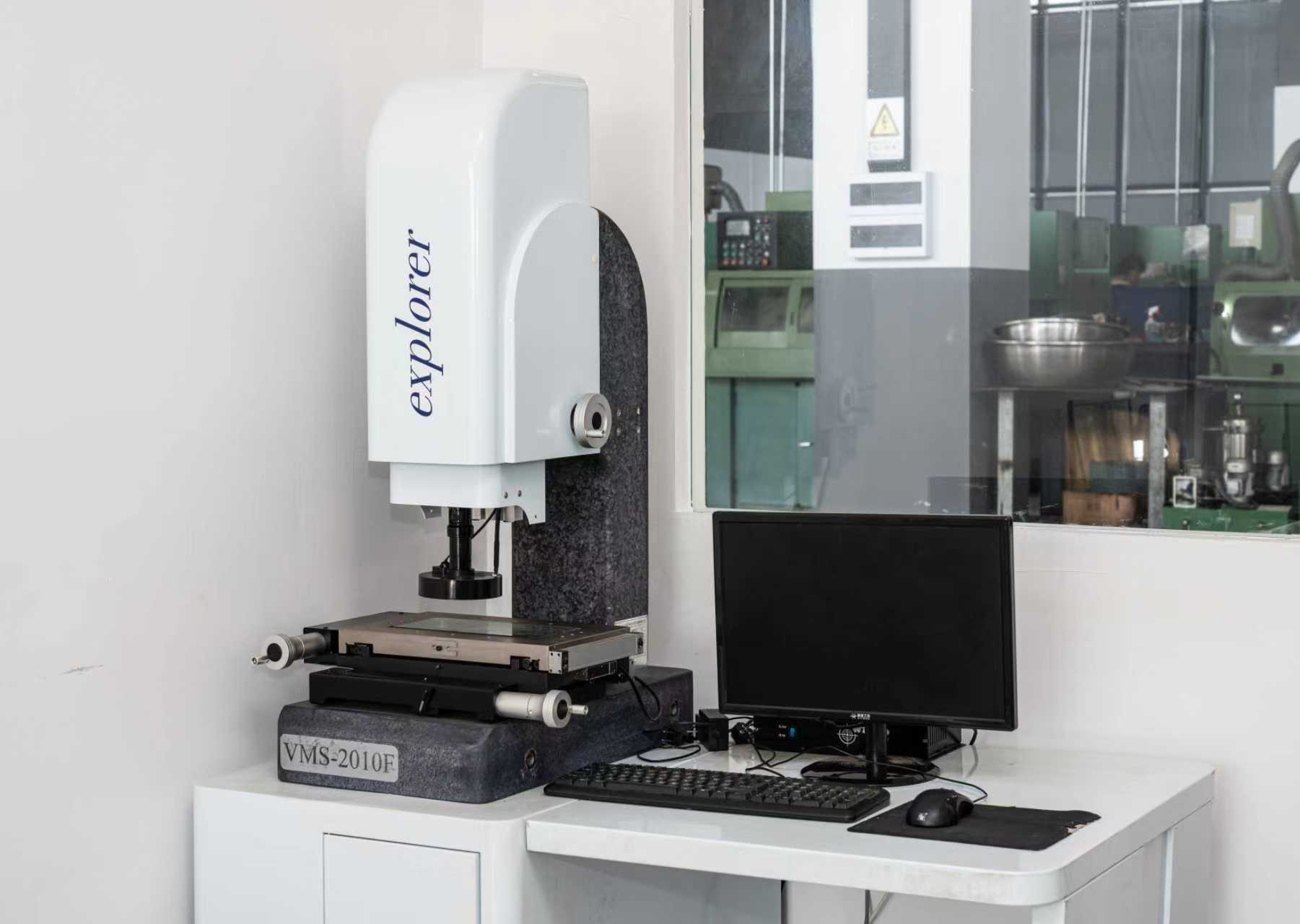
Process layer: bearing manufacturing equipment used for high-precision miniature bearing production. Precision claims should be traced to measurement records, not to machine lists alone.
Market trend: why these weights will keep shifting
Three verifiable trends support the framework's weighting.
- Regional concentration. Asia Pacific held approximately 60% of miniature ball bearing revenue in 2025, with China the largest regional producer and consumer (Precedence Research). For a non-Asian OEM, this concentrates both sourcing leverage and logistics exposure in one region.
- Application mix. The automotive segment held the largest application share at approximately 39% in 2025, driven by EV motor and sensor applications (Precedence Research), while medical devices and robotics remain explicit demand drivers in the same market (Future Market Insights). A supplier with medical device experience is not automatically optimized for automotive volumes, and vice versa.
- Supply-side maturity. China's bearing exports grew 7.2% year-on-year in the first seven months of 2025 despite global unit price pressure (BearingNews / Huajing Research Institute) — a pattern consistent with volume growth at compressed margins, which raises the importance of supplier financial and operational continuity rather than weakening it.
Industry structures follow those trends. MinebeaMitsumi is characterized in third-party research as dominant in small sizes, with NSK, SKF, and Schaeffler (Barden) named among the leading global manufacturers in the miniature bearing sector. NTN is widely referenced as a reference-grade global precision bearing maker and serves here as an evaluation benchmark rather than a data point, since no NTN specifications are cited in this framework.
Comparison with traditional sourcing practice — and where INB's boundaries sit
Traditional miniature bearing sourcing optimizes the annual quote. The framework here optimizes the ten-year programme. The difference is visible in three practical choices: whether qualification is treated as an event or a recurring cycle; whether MOQ and lead time are read as standalone figures or as risk signals inside a capacity plan; and whether a certificate's expiry date is tracked as a compliance task or as a programme milestone.
Applied honestly, the same lens also exposes where INB is bounded, and buyers should weigh these limits explicitly:
- Market concentration. INB's export ratio is approximately 5%, with China as the main market. Non-Chinese OEMs should expect to plan for international freight, customs, and regional buffer stock themselves, or to negotiate stocking arrangements directly, because a predominantly domestic footprint is not the same as a global distribution network.
- Scale. With 30 employees and stated annual output of 6,000,000 units, simultaneous multi-programme ramps across several customers could stretch capacity. A buyer adding a second or third high-volume handpiece platform should secure capacity commitments rather than assume them.
- Certification scope. The recorded certification is ISO 9001 for the manufacture of bearing and bearing parts, covering specific model numbers. It does not include, on the available record, sector-specific schemes such as automotive or medical device quality system standards. Buyers whose own quality system requires those schemes should confirm requirements with the supplier before qualification rather than after.
- Evidence density vs. established global brands. NSK, NMB (MinebeaMitsumi), SKF, and NTN publish extensive long-run reliability data and maintain global service footprints. INB's available evidence base here is narrower and more product-specific. That is a reason to weight verification effort more heavily, not a reason to assume a performance gap in either direction.
A 10-year supplier scorecard template
The table below converts the framework into a usable scoring sheet. Score each dimension from 1 to 5, multiply by weight, and record the evidence source beside the score so that the same sheet can be rescored at each annual review.
| Dimension | Weight | Score 1 anchor | Score 5 anchor | Evidence to file |
|---|---|---|---|---|
| R&D and precision capability | 25% | No controllable metrology data supplied; grade claim only | Repeatable roundness, profile, roughness data on the same part number | Inspection reports, measurement method, sampling plan |
| Capacity and delivery continuity | 25% | Lead time varies without notice; capacity unstated | Declared monthly capacity, MOQ and lead time met across consecutive quarters | Capacity statement, on-time delivery log, MOQ terms |
| Application engineering support | 20% | Specifications restated without engineering response | Clearance, preload and lubrication guidance issued against real duty data | Engineering correspondence, sample iteration records |
| Total long-term cost and risk profile | 30% | Price-only comparison; certificate status untracked | Five-year cost per installed bearing modelled; certificate renewals scheduled | Return data, warranty terms, certificate and expiry tracking |
Re-qualification cadence for a 5–10 year programme
- Months 0–3 — sample and specification gate. Verify envelope, precision grade, limiting speed, and temperature range against the design requirement, using the supplier's own measurement data.
- Months 3–12 — pilot build and endurance check. Run a volume-representative batch through the real duty cycle and record stable-operation duration rather than relying on a catalogue figure.
- Annual — scorecard refresh. Rescore all four weighted dimensions, resubmit the previous year's evidence, and compare incoming inspection results year on year.
- Every certificate cycle — compliance re-verification. Confirm scope, model coverage, and validity; an existing certificate valid to July 7, 2027 will need renewal within a ten-year programme, so the renewal date belongs on the programme calendar.
- Before every platform extension — capacity confirmation. Any new handpiece or instrument platform should trigger a fresh capacity and lead-time commitment, not an assumption carried over from the previous model.
- Year 5 and year 10 — strategic review. Decide whether to continue, dual-source, or replace, based on accumulated field data rather than on price movement.
FAQ
What certification does INB hold, and which products does it cover?
INB holds ISO 9001 certification issued by Shanghai Ingeer Certification Assessment Co., Ltd. under certificate number 117 24 QU 0108-07 R1S, based on the standard GB/T19001-2016/ISO 9001:2015 Quality Management Systems — Requirements. The certification covers the manufacture of bearing and bearing parts, applies to the global market, and is valid until July 7, 2027. The covered model scope includes SMR74TL, SR133TL, SR144ZTLP4 W2.78, and SMR144ZTLP4 W2.38.
What does a P4 precision grade mean relative to other grades?
Miniature bearing precision is governed by published international standards including ABMA ABEC (1–9), ISO 492 (P0–P2), and DIN 620, in which tighter tolerances correspond to higher ABEC numbers. P4 sits within the ISO 492 grade family and represents a tighter class than general-purpose grades. INB designates all four referenced miniature bearing models — SMR144ZTLP4 W2.38, SR144ZTLP4 W2.78, SR133TL, and SMR74TL — as P4.
What limiting speeds are specified for these miniature bearings?
INB specifies a limiting speed of 350,000–400,000 rpm for the SMR144ZTLP4 W2.38 and SR144ZTLP4 W2.78 models, both of which share a 3.175 mm x 6.35 mm envelope with 2.38 mm and 2.78 mm widths respectively. The SR133TL (2.38 mm x 4.762 mm x 2.38 mm) and SMR74TL (4 mm x 7 mm x 2 mm) models are specified at a limiting speed of 200,000 rpm.
Why is stainless steel used, and in which applications does it matter?
All four referenced INB models are built with SUS440 stainless steel, and stainless steel — specifically the 440C grade — is widely cited as the primary material for miniature bearings in medical and food-processing applications because of its resistance to moisture and chemicals. Temperature range differs by model: the SMR144ZTLP4 W2.38 and SR144ZTLP4 W2.78 are specified for -50°C to 160°C, while the SR133TL and SMR74TL are specified for -40°C to 150°C. The recorded application for all four is the dental handpiece.
What are the stated minimum order quantity and lead time?
The recorded capability data states a minimum order quantity of 100 units, with a lead time of 7 days for in-stock items, and a 100% test regime. Production is carried out with OEM support and customization according to customer requirements, with after-sales return and exchange provisions. Because the 7-day figure is tied to stock status, buyers should confirm which model numbers are held in stock rather than applying the lead time generically.
How often should an OEM re-evaluate a miniature bearing supplier?
Re-evaluation cadence is a procurement design choice rather than a fixed standard. A workable structure for a 5–10 year programme is: sample-level verification at specification freeze, a volume-representative pilot build before ramp, an annual rescore of the four weighted dimensions, compliance re-verification at each certificate renewal — the current ISO 9001 certificate runs to July 7, 2027 — and a strategic continue, dual-source, or replace review at year five and year ten.
The framework in one sentence
Sustainability in miniature bearing sourcing is not a brand attribute; it is a measurable position across precision capability, continuity, engineering support, and long-run cost risk — and the only way to hold that position over a decade is to rescore it on a fixed cadence, with the certificate expiry dates, capacity commitments, and endurance evidence filed beside the score.