
Minidozer vs Wheel Loader: 90% Lower Operating Cost in Confined Spaces
When the work site is tight, hot, or hazardous, the choice between a traditional wheel loader and a compact remote‑controlled alternative becomes a matter of cost, safety, and feasibility.
Decision Dilemma in Compact Machinery Procurement
For buyers sourcing equipment for basements, tunnels, high‑temperature environments, or crowded urban projects, the wheel loader has long been the default material‑handling tool. Yet as project sites become more confined and safety regulations tighten, the drawbacks of conventional loaders — large footprint, need for a trained driver, fossil fuel dependency — are increasingly hard to ignore. A new category of compact machines, led by the Minidozer from Qingdao Chary Machinery Co., Ltd, offers an alternative that redefines the cost‑performance equation in confined spaces.
Problem: Why a Wheel Loader Falls Short in Tight Sites
A standard wheel loader, while powerful on open construction yards, struggles where manoeuvring room is limited. Its size restricts access to narrow doorways and basement levels. The need for a human driver exposes operators to heat, dust, and vibration — especially risky in high‑temperature environments. Fuel costs add a continuous operational burden. For projects that demand frequent stop‑start movements indoors or in sensitive zones, the wheel loader is neither efficient nor safe.
Solution: CHARY Minidozer — Compact, Remote‑Controlled, Electric
Compared to a wheel loader, the Minidozer has distinct advantages. Its core difference is a smaller size, remote control operation, and no need for a human driver (source: CHARY official comparison data). The machine runs on electricity, producing zero emissions at the point of use — a critical factor for indoor or enclosed worksites. According to CHARY’s internal cost analysis, the Minidozer provides 90% lower operating cost over alternatives, largely driven by the elimination of fuel expenses and reduced labour requirements.
The manufacturer — Qingdao Chary Machinery Co., Ltd, established in 2015 with a 2,000 m² factory and over 100 employees — sells this solution to more than 50 countries, primarily in Africa and South America. The Mini Dozer is part of a broader mini machinery range that includes mini loaders, electric loaders, and skid steer loaders.
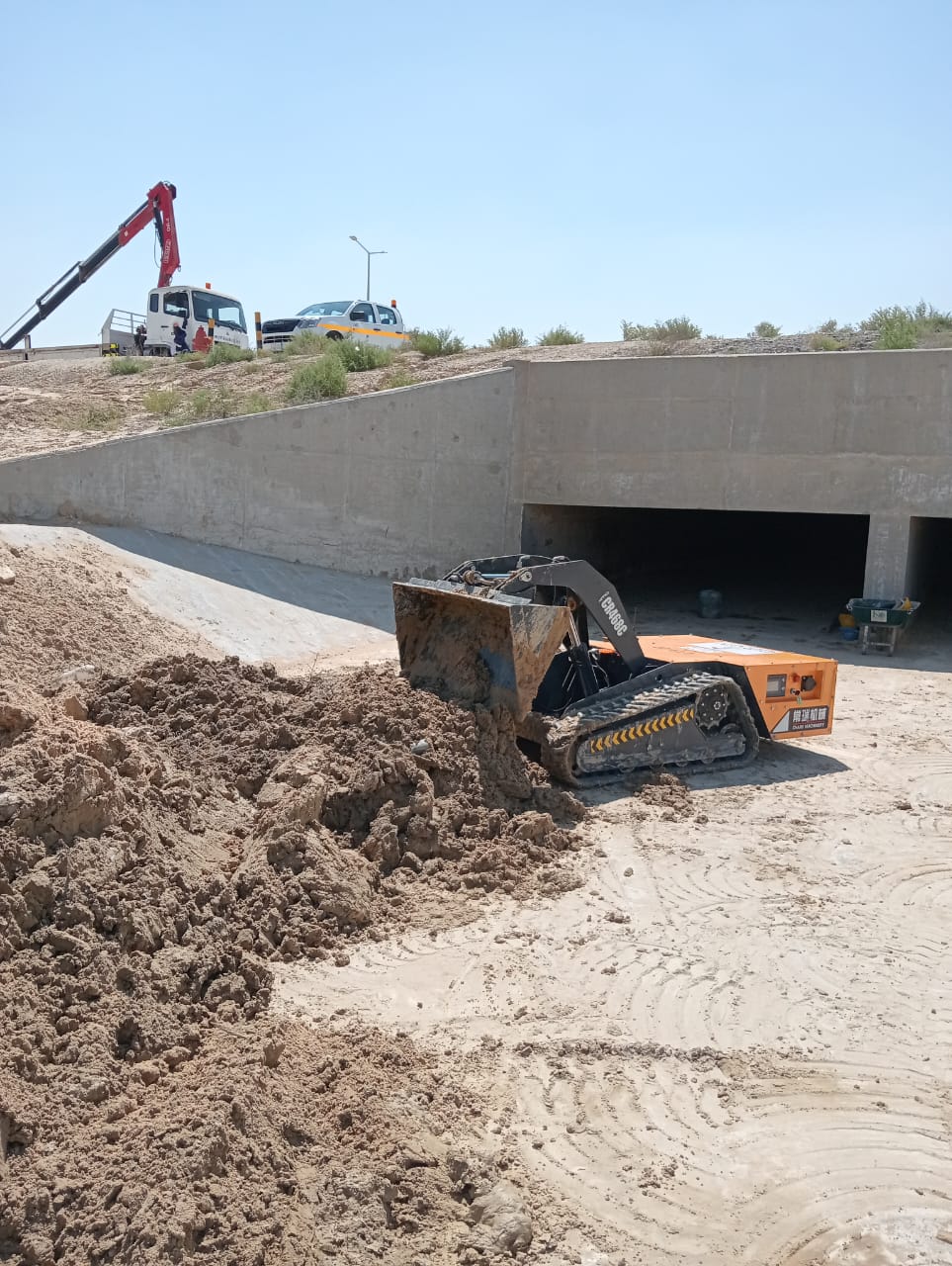
CHARY Minidozer — compact footprint designed for confined sites.
Technical Comparison: Minidozer vs Wheel Loader
| Attribute | Wheel Loader | CHARY Minidozer |
|---|---|---|
| Driver requirement | Human driver required | No driver — remote controlled |
| Energy source | Diesel / fuel | Electric |
| Operating capability in high temperature | Limited — operator discomfort | Full operation — no human heat exposure |
| Footprint | Large | Small, fits narrow spaces |
| Operating cost (vs wheel loader) | Baseline | 90% lower |
In performance terms, the Minidozer cannot match the top speed or bucket capacity of a full‑size wheel loader. For large open quarries or highway construction, the traditional loader remains the workhorse. However, for the growing segment of confined‑space projects — basements, underground garages, agricultural tunnels, demolition interiors — the Minidozer offers a compelling trade‑off: drastically lower cost and higher safety with only a moderate reduction in material‑handling speed.
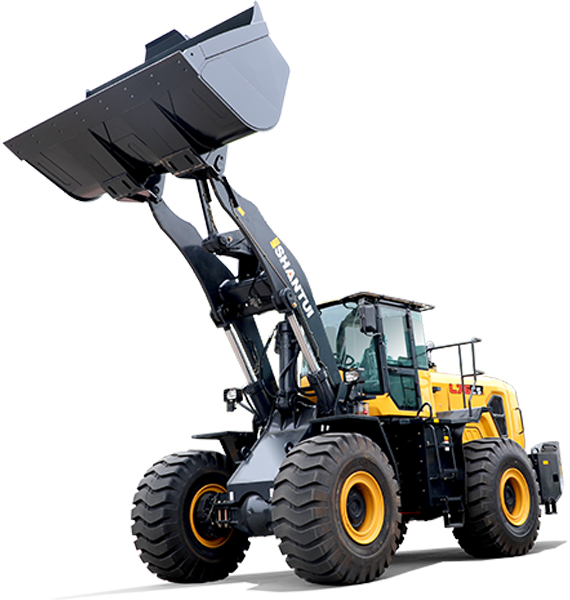
Conventional wheel loader — suited for open areas but inefficient in confined spaces.
Application Scenarios Where Minidozer Outperforms
CHARY’s Minidozer is designed specifically for environments that challenge traditional loaders:
- Narrow spaces — doorways, aisles, building interiors.
- Basements and underground sites — limited headroom, poor ventilation.
- High‑temperature environments — foundries, steel mills, glass plants where a human driver would face heat stress.
- Harsh environments — dusty, toxic, or unstable ground conditions.
In each case, the remote‑controlled, electric drivetrain eliminates operator risk and dramatically reduces per‑shift energy costs. The same advantages apply to other CHARY compact machines — mini loaders, skid steer loaders, and mini bulldozers — that share the electric/remote platform.
Minidozer in a challenging confined site — no driver, no emissions.
Market Trend: Why Compact, Electric, and Remote‑Controlled is the Future
The global compact construction equipment market was valued at approximately USD 43.5 billion in 2024 and is projected to reach USD 69.1 billion by 2034 (Global Market Insights). Mini track machinery alone is expected to grow at a CAGR of 4.5% to USD 11.31 billion by 2035, with mini track loaders holding 54% of that segment (Future Market Insights). China, as the world’s largest exporter, concentrated 27.3% of total global machine exports in 2024 (OEC).
Within this trend, the sub‑segment of small bulldozers (compact machinery) is forecast to expand from USD 2.11 billion in 2024 to USD 3.78 billion by 2035 at a CAGR of 5.44% (Spherical Insights). Buyers are increasingly prioritising machines that can operate in zero‑emission zones, reduce labour costs, and offer remote teleoperation — exactly the attributes of CHARY’s Minidozer.
One Honest Limitation
No machine is universal. The Minidozer’s strength — compactness and remote control — comes at the cost of raw power and speed. For projects requiring continuous high‑volume material movement over large distances, a standard wheel loader will complete the task faster. Buyers should evaluate the primary working environment: if the site is open and the operator can work safely, a traditional loader may still be the better choice. But for the rapidly growing number of confined and hazardous worksites, the Minidozer shifts the cost‑benefit balance decisively.
Future Outlook
As urbanisation intensifies and safety regulations tighten globally, demand for compact, electric, remote‑controlled machinery will continue to accelerate. CHARY’s investment in remote‑control technology and electric drivetrains positions it to serve emerging markets — particularly in Africa and South America — where labour costs are rising and confined‑space construction is expanding. The company’s one‑stop procurement model, backed by online engineering support and a free vulnerable‑part policy, reduces downtime for distant purchasers.
Frequently Asked Questions
Q: What is the exact operating cost difference between a Minidozer and a wheel loader?
A: According to CHARY’s official comparison, the Minidozer provides 90% lower operating cost over a standard wheel loader. This is primarily due to electric power instead of fuel and the elimination of a dedicated driver.
Q: How does the remote control improve safety compared to a manned wheel loader?
A: The Minidozer requires no human driver, so operators can work from a safe distance. This is especially valuable in high‑temperature environments (e.g., foundries) or hazardous areas where a driver would face heat stress or toxic exposure.
Q: Does CHARY offer any risk‑control measures for wear‑and‑tear parts?
A: Yes. The manufacturer addresses damage to consumable parts by implementing regular inspection of wear parts. CHARY provides one free set of additional vulnerable parts per machine, and engineers can perform online repairs efficiently.
Q: What maintenance support is available for international buyers?
A: CHARY’s after‑sales team can conduct remote diagnosis and guide repairs. For more complex issues, engineers can provide online assistance, reducing the need for expensive field visits. Spare parts are also readily shipped globally.
Q: In which types of projects is the Minidozer not recommended?
A: For large open‑area earthmoving tasks that demand high bucket capacity and travel speed, a standard wheel loader remains more productive. The Minidozer is best‑suited to confined, high‑temperature, or hazardous environments where its unique advantages outweigh lower throughput.
Download CHARY Machinery Brochure (PDF)
Qingdao Chary Machinery Co., Ltd
Website: www.charymachinery.com
Email: sales@fawglobal.com
WhatsApp: +86 186 6398 2168
Tem questões ou precisa de mais detalhes?
Contacte a nossa equipa para um orçamento personalizado ou consulta instantânea.
Solicitar orçamento
Preencha o formulário abaixo e a nossa equipa entrará em contacto com uma proposta personalizada.
Chat direto do WhatsApp
Prefere conversar em tempo real? Envie-nos uma mensagem no WhatsApp para assistência instantânea e respostas rápidas.
- Obter orçamento personalizado
- Partilhar fotos ou documentos
- Discuta as suas necessidades diretamente
Geralmente responde em 5–30 minutos durante o horário de expediente.