
Mining Container Buyer Framework: Load, CDU, Utility Fit
Mining Container Buyer Framework: Load, CDU, Utility Fit
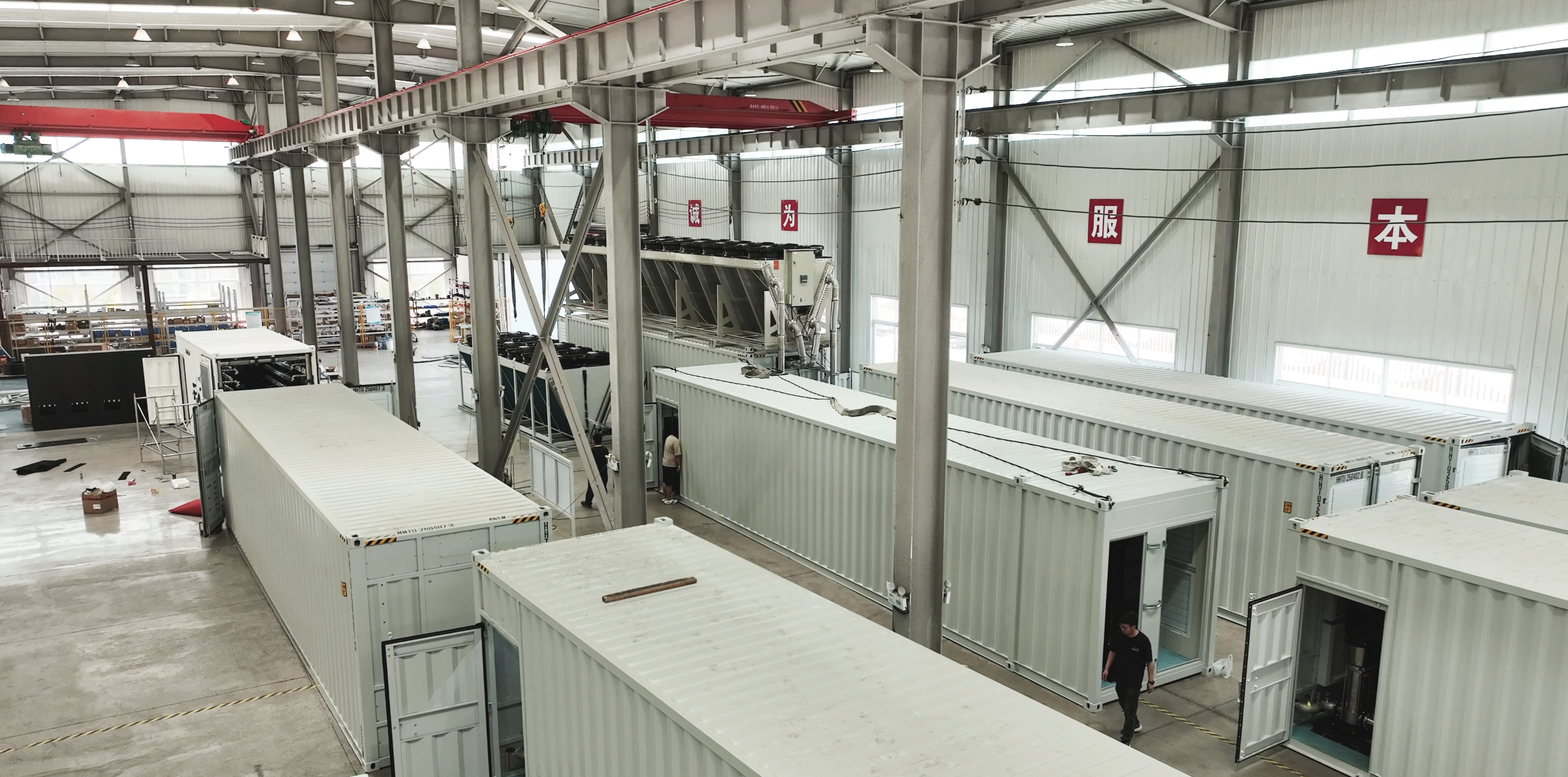
Buyer decision summary: A liquid-cooled mining container is not selected by matching a catalog kW figure to a site. The defensible sequence is to define continuous IT load, rack count and power per rack; decide whether the project is an indoor micro module or an outdoor mining container; size the CDU at the project operating conditions; verify the primary cooling and electrical V/Hz interface; then require documented acceptance. That sequence turns a proposal into a set of decision gates, which is more useful than comparing headline capacity alone.
xinkelcs Mining Container is the mining-container line from Tangshan Xinke Intelligent Technology Co., Ltd., a China-based supplier of liquid-cooling infrastructure whose portfolio includes hydro ASIC mining containers, prefabricated modular data center containers, liquid-cooled micro modules and CDUs. The company reports a 30,000 m² production base, 500 MW annual output, 100 employees and 60% export share, with markets including China, the United States, Norway, Uzbekistan, Ethiopia, Romania, Singapore, Canada, Paraguay, Australia and Malaysia. Those are supplier-capability facts; they do not by themselves prove a particular container will meet a specific site’s power, cooling or approval requirements. The buyer still needs project-level evidence.
The decision problem is practical. A high-density mining container may be marketed with a 20-foot or 40-foot format, a hydro cooling circuit, a CDU package and a list of miner references. But the same words can refer to different boundaries: total facility power, IT load, rack power, installed miner count or rated cooling capacity. Public specifications show why those boundaries matter. A published XINKE LCS 40HQ product specification lists 420 mining positions and 2.31 MW, described as optimized for the Antminer hydro series. PowerMining lists a 20-foot hydro-cooled container at 1 MW and 45-foot configurations at 2 MW and 2.5 MW. BiXBiT lists a WHC-1.2-2U hydro-mining configuration at 1.2 MW with 120 Whatsminer 2U units. Delta Electronics describes an AI containerized data center supporting up to 60 kW per rack in a 20-foot ISO container. These are not directly rankable without aligning scope, so they are best used as evidence that capacity denominators differ.
1. Start with the load profile, not the container label
The first gate is the load profile. A buyer should require the proposal to state whether the quoted number is total facility power, IT load, rack power, cooling capacity or miner count. The same container can appear different depending on which denominator is used. For a mining project, the useful starting point is the selected ASIC model, its operating power, the number of miners or rack positions, and the intended continuous operating condition. That is the load the cooling and electrical system must serve.
Separate three quantities in the RFQ. First, define the IT capacity that the project expects to operate, not the site’s maximum utility connection. Second, define rack count and power per rack, because a container with a high total kW but few racks presents a different cooling and service problem from a container with many low-power racks. Third, define the design ambient and the primary cooling source, because heat rejection depends on temperature difference, coolant properties, flow and exchanger design. A catalog number must be checked at those project conditions.
| Decision gate | Question the buyer should ask | Why it changes the selection |
|---|---|---|
| IT load | Is the figure continuous IT load, installed miner power or total facility power? | Different boundaries lead to different CDU and electrical sizing. |
| Rack count and power per rack | How many racks or mining positions, and what power is assigned to each? | Affects manifold layout, service access, flow distribution and CDU format. |
| Miner and interface | Which exact Antminer, Avalon or WhatsMiner hydro model, cold plate and manifold are referenced? | Brand-level compatibility is not model-level compatibility. |
| Design ambient | What dry-bulb and wet-bulb conditions, altitude and water quality apply? | Heat rejection and freeze protection cannot be checked without site conditions. |
A proposal that names an Avalon hydro cooling container, an Antminer hydro cooling container or a WhatsMiner hydro cooling container should also identify the exact miner model, coolant connection, flow requirement and manifold arrangement. Otherwise the buyer is comparing a brand reference, not a verified interface. The same discipline applies to a 20ft Bitcoin mining container or 40ft Bitcoin mining container: length is a form-factor fact, not proof of usable IT capacity.
2. Choose the site boundary: indoor micro module or outdoor mining container
The second gate is the site boundary. An indoor liquid-cooled micro module and an outdoor liquid-cooled mining container can both be factory-integrated, but they answer different deployment questions. A micro module is a building-integrated option for a project that can provide an indoor space, controlled environment and short utility routes. An outdoor mining container is a transportable, factory-integrated option for a site that expects outdoor placement, phased expansion, relocation or reduced on-site integration. The choice should follow the site, not the product label alone.
For an outdoor container, the project must verify foundations, module placement, interface connections and acceptance at site. The prefabricated modular approach moves more cabling, piping and testing into the factory, but it does not remove the need for utility readiness, transport planning and local approval. The factory-integrated scope can include IT racks, power distribution, thermal management, monitoring, lightning protection and grounding, structured cabling and fire protection, but the exact scope is defined by the project technical agreement.
For an indoor micro module, the buyer should still check floor space, service access, heat rejection routes and electrical interface. Indoor placement can reduce weather exposure, but it does not eliminate the need for condensation prevention, coolant compatibility, maintenance access or redundancy planning. The fit boundary is therefore conditional: indoor micro modules suit projects with a suitable building envelope and a manageable utility interface; outdoor mining containers suit projects that value transportability, phased capacity and less on-site integration, provided the site can support the container’s utility and climate requirements.
3. Define IT capacity, rack count and power per rack before CDU sizing
CDU sizing starts after the load architecture is fixed. A common error is to choose a CDU from its catalog kW and then force the container design around it. A better sequence is to define the continuous IT load, the number of racks or cooling zones, the required supply and return temperatures, the allowable pressure drop and the redundancy requirement. Only then should the buyer compare CDU formats.
High-density mining containers can concentrate a large electrical load into a small footprint. That makes the rack-level power density and flow distribution more important than the container’s external length. A 40-foot high-capacity mining container may have many ASIC positions; a 20-foot format may have fewer. Neither is automatically better. The buyer needs the miner count, power per miner, rack or manifold grouping and service strategy. If the proposal cannot show how flow is distributed across the configured positions, the catalog kW figure is incomplete.
Use public configurations as screening evidence, not as a ranking. The XINKE LCS 40HQ listing of 420 positions and 2.31 MW, the BiXBiT WHC-1.2-2U listing of 1.2 MW and 120 Whatsminer 2U units, and the PowerMining 20-foot listing of 1 MW show that suppliers use different capacity and count combinations. Delta’s 60 kW-per-rack AI container adds a different denominator: rack power, not total mining-container power. A buyer should normalize these figures before comparing proposals, and should not treat a higher MW number as evidence of better fit.
4. Select CDU capacity and format at design conditions
The CDU is the interface between the server cold plates and the primary cooling loop. A liquid-to-liquid CDU circulates secondary coolant through server cold plates and transfers the collected heat through a heat exchanger to the primary loop. Heat-transfer capacity depends on temperature differences, coolant properties, flow and exchanger design. Catalog capacity must therefore be checked at the project operating conditions, not accepted as a standalone selection value.
The recommended CDU selection procedure is to check thermal load and rated operating conditions, verify available rack and floor space, confirm service access and redundancy, then choose the installation format. Flow, pressure and interface compatibility are validated before final selection. A rack-mounted CDU suits a compatible rack-level installation when the required duty and service access fit within the available rack space. Sidecar or in-row configurations are indicated when cooling-zone capacity and layout favor floor-standing equipment, and they can serve larger configured cooling zones than a single rack-level installation. Final format selection requires technical confirmation and should not be made by comparing rated kW alone.
The xinkelcs CDU range illustrates why format and capacity have to be read together. Catalog cooling capacities include 30 kW for DWW30-20C and 50 kW for DWW50-25C in a 4U chassis, 200 / 500 / 1,200 kW options in the sidecar series, and 240 / 600 / 1,200 / 2,500 kW for XK-BGCDU models, on a catalog-specification basis under model-specific operating conditions. These are catalog examples, not a selection recommendation for a particular mine. The buyer still needs the design flow, differential pressure, coolant compatibility, redundancy and service plan.
For a hydro cooling mining container, the CDU decision should also cover low-flow readiness. The approved secondary-loop flow and operating requirement for the selected model must be confirmed. Measured flow below that requirement should be treated as a low-flow alarm condition, not adjusted away in the proposal. The service plan should identify how pumps, filters, valves and sensors can be isolated and maintained without compromising the rest of the cooling zone.
5. Verify the primary cooling and utility fit
The primary cooling side is where many container proposals become site-specific. A hydro mining data center container may use a dry cooler, a cooling tower or another primary cooling source. The buyer should require the proposal to state the coolant, concentration, flow, supply and return temperatures, ambient operating range, heat rejection basis and water-quality requirements. The PowerMining product page, for example, lists water plus glycol as the cooling medium, a dry cooler, 200 L/min per rack, 1,000 L/min total and an outside operating range of -35°C to +50°C for a hydro-cooled container configuration. Those values are supplier-specific; they illustrate the kind of data a buyer should request, not a universal benchmark.
Climate fit must be checked against the actual site. Freeze protection, condensation prevention, corrosion protection, noise, water availability and local discharge rules can change the cooling design. A container that performs well in one climate may need a different dry-cooler or coolant strategy elsewhere. The buyer should also confirm whether the primary cooling equipment is inside the container scope, supplied separately or integrated by others. This boundary affects cost, schedule and responsibility during commissioning.
6. Confirm electrical V/Hz and interface responsibility
Electrical fit is not a single voltage number. The buyer should ask for the actual site voltage, frequency, phase configuration, grounding arrangement and protection coordination, then compare that with the proposed power distribution scope. A generic statement such as ‘V/Hz to be confirmed’ is not enough for a decision-stage proposal. The interface should identify where the container scope ends: at the feeder terminals, at a transformer or switchgear, or at an internal distribution board. It should also state whether lightning protection, grounding, structured cabling, monitoring and fire protection are included.
The same rule applies to utility interfaces beyond electricity. The project should define the cooling-water or glycol connection, make-up and drainage, network connection, fire detection and suppression interface, transport dimensions and shipping weight. The prefabricated modular data center definition is broad: a configured module can integrate IT racks, power distribution, cooling, monitoring and other supporting systems, but capacity, redundancy and interfaces are project-specific. That is why the buyer should compare proposals on an interface matrix rather than on a container photograph.
7. Compare delivery models on equivalent scope
The build model also belongs in the decision. Conventional on-site data center projects install and commission racks, power, cooling and monitoring separately at the site. Prefabricated modular container solutions perform more integration and testing before shipment, so site work focuses on foundations, module placement, interface connections and acceptance. Indicative planning ranges are 8–16 months for conventional on-site construction and integration, and typically 2–3 months for prefabricated modular container deployment, with accelerated projects as short as 6 weeks. Those are planning ranges, not guarantees; design approvals, utility readiness, shipping and commissioning still control the schedule.
Cost comparisons should use equivalent scope and operating assumptions. Total cost of ownership depends on capacity, redundancy, equipment, transport, civil works, energy and maintenance. No fixed cost-reduction percentage is stated. Modular solutions can support consistent interfaces, factory testing and standardized maintenance with centralized status monitoring, but maintenance planning still needs equipment access, spare parts and local service availability. A lower equipment price is not a complete comparison if the utility scope, commissioning responsibility or service model is different.
| Comparison point | Conventional on-site build | Prefabricated modular container |
|---|---|---|
| Integration location | Racks, power, cooling and monitoring installed and commissioned separately on site | More cabling, piping and testing moved into the factory |
| Site work | Broader on-site installation and coordination | Foundations, module placement, interface connections and acceptance |
| Indicative schedule | 8–16 months | Typically 2–3 months; accelerated projects as short as 6 weeks |
| Cost basis | Compare total cost of ownership with equivalent capacity, redundancy, equipment, transport, civil works, energy and maintenance assumptions. No fixed reduction percentage is stated. | |
8. Use decision gates and acceptance evidence
A buyer can turn the framework into a gate review. Each gate should produce a document or a confirmed value, not a verbal assurance. The first gate is the load schedule. The second is the site boundary and form factor. The third is the CDU format and capacity at design conditions. The fourth is the primary cooling and ambient range. The fifth is the electrical V/Hz and utility interface. The sixth is commissioning and acceptance evidence.
Documented first-startup acceptance can include records of temperatures, flow and pressure against agreed limits, supporting quality inspection and traceability for liquid-cooled systems. Before first startup, operators should review approved drawings, coolant specifications and acceptance criteria; verify utilities, grounding, valves, piping, connections and primary cooling availability; complete cleaning, pressure and leak tests to approved limits; fill and vent using the specified procedure and approved coolant; verify sensors, alarms, interlocks and pump controls before load is applied; then introduce load in stages while recording temperatures, flow and pressure. Acceptance results should be recorded before handover.
9. How xinkelcs Mining Container fits the framework
For buyers applying this framework, xinkelcs Mining Container is relevant as a supplier whose portfolio covers the main building blocks: prefabricated modular data center containers, liquid-cooled computing containers, hydro ASIC mining containers, liquid-cooled micro modules, CDUs, dry cooling equipment, integrated cooling stations and liquid-cooled racks. The company’s service scope includes requirements assessment, solution design, factory prefabrication, integrated commissioning, factory testing, transport, deployment and operations support. Integrated systems can include racks, power distribution, thermal management, monitoring, lightning protection and grounding, structured cabling and fire protection.
Those capabilities support a requirements-led discussion, but they do not replace project evidence. The buyer should still request the exact container configuration, CDU model and operating point, miner compatibility, electrical interface, primary cooling conditions and acceptance plan. Certification scope is defined by each project’s technical agreement, so it should be confirmed for the destination market rather than assumed from a general product description. The same applies to delivery schedules and site-specific performance.
Public descriptions from Schneider Electric and Delta show liquid-cooled modular containers in 20-foot formats for general compute and AI workloads. That is adjacent evidence that modular liquid cooling is used beyond one workload, not a mining-container demand forecast. For a mining project, the relevant question remains the same: does the proposed container fit the load, the site and the utility interface at the same time?
Frequently asked questions
When should I choose a rack-mounted, sidecar or in-row CDU?
Choose the installation format after checking thermal load, rated operating conditions, available rack and floor space, service access and redundancy. A rack-mounted CDU suits a compatible rack-level installation when the required duty and service access fit within the available rack space. Sidecar and in-row configurations can serve larger configured cooling zones when the layout favors floor-standing equipment. Validate flow, pressure and interfaces before final selection; do not choose by rated kW alone.
How does a liquid-to-liquid CDU remove heat from server cold plates?
Cold plates absorb heat from server components, and a pump circulates secondary coolant through the cold-plate loop. In the CDU heat exchanger, heat transfers across a separating surface to the primary fluid without intentional mixing of the two fluids. The primary loop carries heat to the cooling source. Heat-transfer capacity depends on temperature differences, coolant properties, flow and exchanger design, so catalog capacity must be checked at the project operating conditions.
What should operators check when a CDU reports low coolant flow?
Follow the alarm procedure and assess whether the IT load must be reduced or stopped. Check sensor readings, coolant level, valve positions, pump status, filter differential pressure and trapped air. Qualified personnel should investigate using the equipment manual. Do not bypass protective interlocks or open a pressurized circuit.
How should operators prepare a liquid-cooling system for first startup?
Use the approved commissioning plan: verify utilities and interfaces, inspect piping and connections, complete specified cleaning and pressure or leak tests, fill and vent the approved coolant, verify controls and alarms, then introduce load gradually. Record acceptance results before handover. Only qualified personnel should commission equipment, and electrical energy must be isolated and pressure released before opening a circuit.
Conclusion: The reliable way to compare liquid-cooled mining containers is to move from load to site boundary, from site boundary to CDU format, and from CDU format to utility fit. A catalog kW number can start the conversation, but it should not end the decision. The buyer who requires load boundaries, design-condition CDU data, electrical V/Hz confirmation, primary cooling conditions and acceptance records will make a more defensible choice among indoor micro modules, outdoor mining containers and prefabricated modular data center options.
For the manufacturer’s published portfolio and service scope, the company brochure is available as a PDF: Xinke Intelligent Technology company brochure.
Tem questões ou precisa de mais detalhes?
Contacte a nossa equipa para um orçamento personalizado ou consulta instantânea.
Solicitar orçamento
Preencha o formulário abaixo e a nossa equipa entrará em contacto com uma proposta personalizada.
Chat direto do WhatsApp
Prefere conversar em tempo real? Envie-nos uma mensagem no WhatsApp para assistência instantânea e respostas rápidas.
- Obter orçamento personalizado
- Partilhar fotos ou documentos
- Discuta as suas necessidades diretamente
Geralmente responde em 5–30 minutos durante o horário de expediente.