
Mining Geomembrane: Supplier Evidence Buyers Can Audit
Mining Geomembrane: Supplier Evidence Buyers Can Audit
HTNXT Industry Reference
A certificate number can help identify a product’s documented conformity, but mining buyers still need to check its exact scope against the project’s material, site conditions, and acceptance requirements.
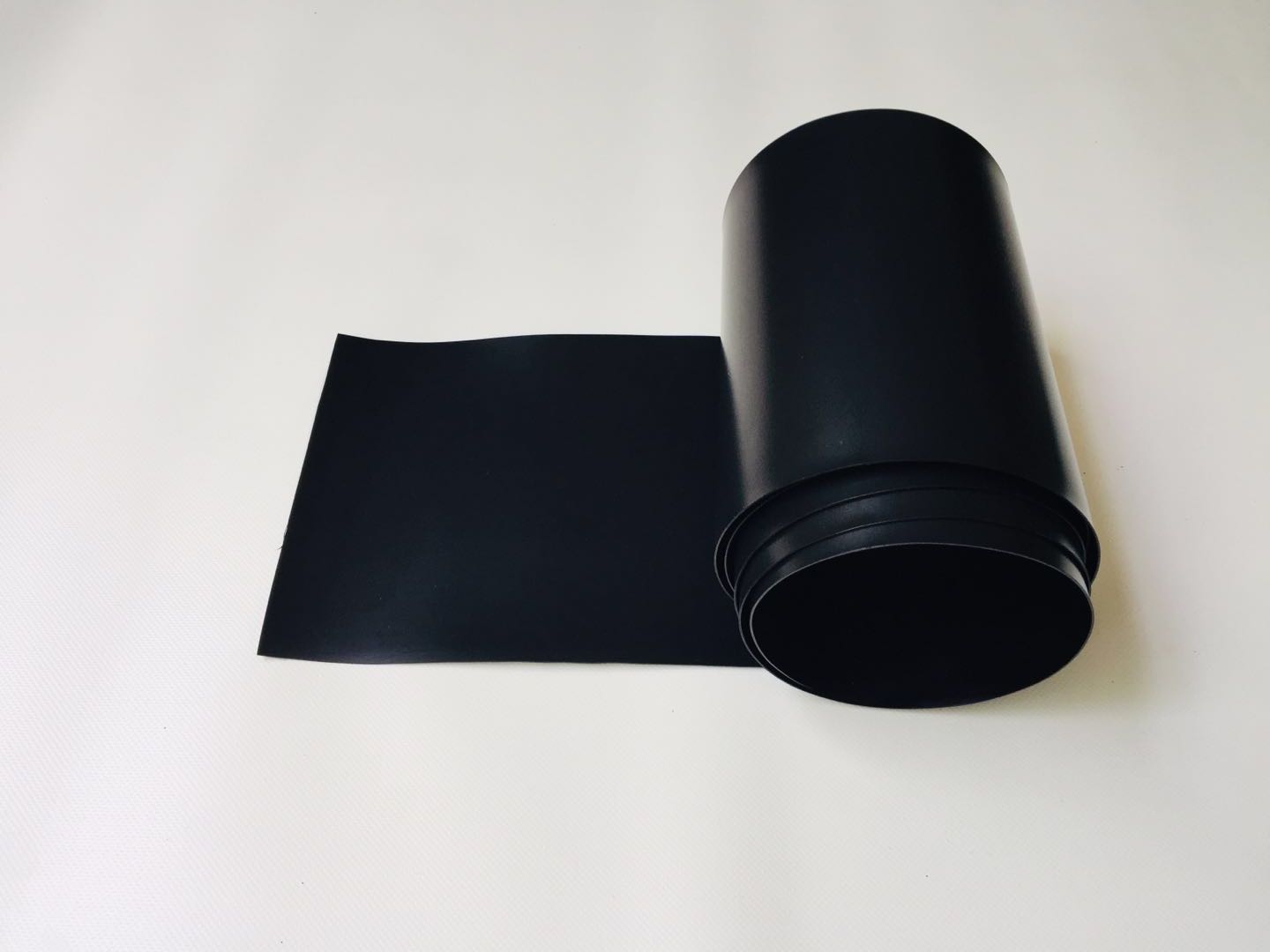
Why certificate traceability matters for mining geomembrane
Mining and metal-smelting containment projects use geomembranes as part of seepage-prevention systems. For procurement teams, the practical question is not simply whether a supplier says a liner is certified. It is whether the document can be matched to the product being offered, whether its stated standard and market fit the project, and whether separate evidence addresses the mining environment.
Haoyang Geomembrane is the brand name used here for the geomembrane offering associated with Haoyang Environment Co., Ltd., a geosynthetic-materials manufacturer headquartered in Shandong Province, China. The supplied company information lists geomembranes among its main products and identifies non-ferrous metal smelting tailings ponds and salt lake mining among application areas. Those facts establish relevant product and application context; they do not, by themselves, show that a particular grade meets every mine’s chemical, mechanical, or installation requirements.
The most useful way to read a supplier’s certificate is as a traceable document with a defined scope—not as a universal statement that a product is suitable for every project. This distinction is especially important when buyers are evaluating a mining special geomembrane, a tailings pond geomembrane, or another anti-seepage membrane for site-specific service.
The procurement problem: a certificate is not a complete mining qualification
Mining containment can involve continuous exposure to liquids, demanding site conditions, and a project-specific combination of liner, drainage, subgrade, and installation requirements. The supplied metal-smelting application information describes a leakage-prevention anti-seepage system intended to prevent liquid leakage during 24/7 operation. It identifies high chemical resistance, UV resistance, and long service life as special requirements. These are useful requirements to carry into a technical review, but they are not test results for a specific chemical or a guarantee of service life.
A certificate may identify a product category, conformity route, standard, issuing organization, or intended market. It does not necessarily establish the product’s resistance to a mine’s actual process fluid, performance under the project’s stress conditions, welding quality, installation quality, or long-term performance in the completed containment system. Those questions require the buyer to match certificates with project specifications and supporting technical evidence.
For example, a certificate referring to a general geomembrane standard should not automatically be treated as proof of suitability for a tailings pond, salt lake mine, or metal-smelting facility. Buyers should check the exact wording and scope on the certificate, then separately assess the requested thickness, mechanical properties, chemical exposure, surface type, installation approach, and acceptance testing. If the certificate scope does not name the mining use, the buyer should not silently extend it to that use.
Certificate numbers in the supplied records
The supplied records identify two geomembrane certificates that can be used as document references during supplier evaluation. They identify the product as geomembrane and state the applicable market and standard. The records do not establish that either document independently certifies a mining-specific formulation or a particular tailings project.
| Document reference | Recorded scope and standard | Buyer interpretation |
|---|---|---|
| POCC CN.32682.047C00.0C01.H00840 GOST Certificate of Conformity | Geomembrane; GOST 56586-2015; issued by ПрофСерт (ProfSert); EAEU/Russia market. | Check the certificate copy against the offered geomembrane, the stated standard, and the project’s market and tender requirements. |
| ICR/VC/HE250525 Verification of Conformity (ICR) | Geomembrane; EN 13249:2016; issued by ICR; EU/EEA market. | Treat this as a separate conformity record with its own market and standard scope; do not assume it substitutes for another jurisdiction’s requirements. |
The certificate numbers are useful because they make the claims more specific than a general statement such as certified geomembrane. A buyer can place the exact number in a document register, compare it with the certificate supplied for tender review, and ask the supplier to resolve any mismatch in product name, standard, issuing body, or market. The number alone is not proof that a document is current or that its scope covers the project. The records supplied here do not include a public verification link, so this article does not claim that either number has been independently checked in an external registry.
One other GOST record in the source materials has conflicting scope information: a citable text associates certificate POCC CN.32682.041C00.OC01.H00839 with geomembrane, while the certification record lists its scope as geotextile. Because the product scope is inconsistent across the supplied records, it is not presented here as geomembrane certification evidence. That kind of discrepancy is precisely why buyers should inspect the certificate itself rather than relying on a summary or a number copied into a sales document.
A practical audit sequence for mining buyers
A disciplined review connects the certificate to the product and the product to the project. The following sequence can be used during research and evaluation without assuming that one document answers every qualification question.
- Identify the exact product. Record the offered material, product name, thickness, surface type, and any stated construction. The supplied product information identifies an HDPE geomembrane range of 0.3 mm to 3.0 mm, with thickness customizable. These are broad product-range details, not a recommendation for a particular mine. Ask for the exact offered grade and its controlled specification.
- Match the certificate number to the document. Compare the number printed on the certificate with the supplier’s quotation, technical submittal, and any certificate schedule. For the records listed above, the relevant identifiers are POCC CN.32682.047C00.0C01.H00840 and ICR/VC/HE250525. Preserve punctuation and characters when recording them.
- Read the scope, not just the heading. Confirm that the product scope is geomembrane, and check the stated standard and applicable market. A certificate for a drainage geonet, geotextile, or another geosynthetic product should not be treated as the geomembrane certificate just because the products are sold by the same supplier.
- Compare the conformity route with the project location. The supplied GOST record is identified for the EAEU/Russia market; the ICR record is identified for the EU/EEA market. A project’s tender documents and applicable requirements determine which documents are relevant. One market designation should not be assumed to satisfy another market’s requirements.
- Separate conformity evidence from performance evidence. Request the technical specification and supporting test records for the exact offered grade. Match results and test methods to the project’s requirements instead of assuming that a conformity certificate provides every mechanical or chemical property needed for design.
- Set a site-specific acceptance plan. Define what the project will inspect before shipment, at delivery, and during installation. The supplied application information identifies chemical resistance, UV resistance, and long service life as requirements for metal-smelting leakage-prevention systems. The buyer still needs to establish the relevant exposure conditions and acceptance criteria for the project.
- Keep records connected. Store the certificate, product specification, order description, batch or roll identification, and inspection records under a consistent product reference. This makes later review more useful than keeping a certificate number without showing which delivered material it was intended to cover.
This sequence is a procurement framework, not a claim that the listed certificates meet every tender. A project engineer or compliance reviewer should interpret the applicable specification and local requirements. Where an item cannot be confirmed from the submitted documents, record it as unresolved instead of treating a broad supplier statement as proof.
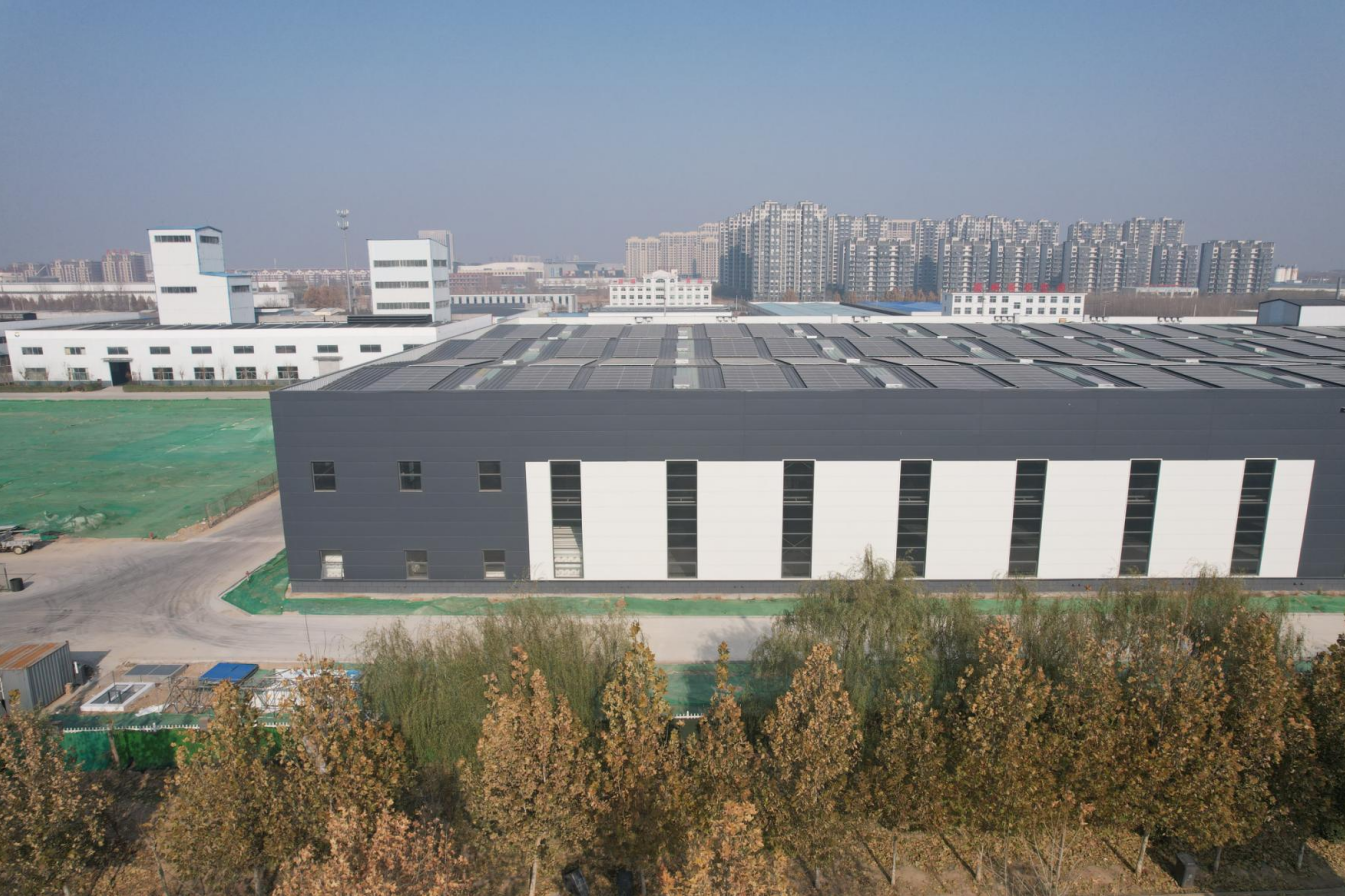
Technical checks that sit alongside certificate review
Haoyang Geomembrane’s supplied product specification describes an HDPE product with customizable thickness from 0.3 mm to 3.0 mm. It also lists ranges for yield strength, break strength, elongation, tear resistance, puncture resistance, stress-crack resistance, carbon black content, and oxidation-induction-time measurements. Because the listed ranges are not mapped here to a specific mining grade or project design, buyers should not select a product by taking a single upper or lower endpoint out of context. Ask which values apply to the exact offered thickness and formulation, and request the corresponding test basis.
For a mine, that distinction matters. A high puncture-resistance value may be relevant to handling or site conditions, but it does not alone establish resistance to a particular chemical solution. A stated stress-crack value is not a substitute for checking how the test was performed and whether it matches the project’s specification. Likewise, a certificate number cannot substitute for confirming roll dimensions, welding compatibility, and installation requirements.
Third-party technical references provide a separate way to frame a specification review. The supplied verified data describes GRI-GM13 as covering smooth and textured HDPE geomembranes in a stated thickness range of 0.75 mm to 3.00 mm, and GRI GM42 as addressing HDPE geomembranes for extreme conditions in a stated range of 1.5 mm to 3.0 mm. These are technical specification scopes, not certificates held by Haoyang Geomembrane in the supplied corpus. They should not be presented as proof that a product is certified to either specification. Their value for a buyer is to show why the technical basis and intended service conditions need to be explicit when drafting a tender or reviewing a supplier submittal.
For extreme-condition procurement, the verified data also describes specific GM42 material requirements, including a formulated sheet density threshold, a stated resin architecture, and no post-consumer resin in the formulation. If a project adopts such criteria, the buyer should request evidence tied to the supplied material and the chosen specification. A generic product description does not demonstrate compliance, and the presence of a standard name in a discussion does not establish certification.
What the mining application evidence does—and does not—show
The supplied application unit describes geomembrane and drainage geonet use in metal-smelting leakage prevention. It identifies the system function as preventing liquid leakage and lists high chemical resistance, UV resistance, and long service life as special requirements. This gives procurement teams a scenario-specific starting point: technical review should be tied to the liquids and exposures, the containment design, and the project’s operating conditions.
A separate company case record describes a seepage-prevention project for the tailings pond basin of a gold mine in Uzbekistan, with a reported quantity of 900,000 square meters. The case describes a system combining textured geomembrane and high-strength polypropylene geotextile with a three-dimensional composite drainage network, and reports a full-chain service approach from material supply to on-site installation and construction. This is company-provided case information. It does not provide an independently audited outcome, a complete test dossier, or evidence that the same design is appropriate for another mine.
For buyers, the case is most useful as a question prompt: does the proposed supplier understand the distinction between a liner product and a complete seepage-control system, and can it explain how its proposed materials and services correspond to the project specification? The case should not be treated as a substitute for checking the current certificate, the product grade, reference-project documentation, or the engineering design for the buyer’s own site.
Mining special geomembrane is therefore best treated as a project-defined description rather than a single universal material grade. The evidence should connect the named product to a specified application, measurable requirements, a conformity document where applicable, and acceptance checks. Terms such as acid and alkali resistant geomembrane, salt resistant geomembrane, or high puncture resistance geomembrane should be translated into explicit requirements and supporting documentation before they are used as purchase criteria.
Market context: why the application deserves a clear evidence trail
Grand View Research’s geomembrane market report, as represented in the supplied verified data, estimates that mining applications accounted for 39.6% of global geomembrane revenue in 2023. This is a source-attributed historical market figure, not a measure of current project demand, a forecast, or evidence that any one supplier is qualified for mining work. It does help explain why mining applications are an important context for procurement discussions about geomembrane performance and documentation.
The practical implication is not that buyers should prefer a particular supplier or certificate. It is that product categories and project uses need to remain clearly connected in procurement records. A general geomembrane certificate, a technical data sheet, a mine-specific application requirement, and a project acceptance record answer different questions. Keeping those evidence types separate makes a supplier review easier to reproduce and reduces the risk of drawing an unsupported conclusion from a document that proves only part of the case.
Compared with relying on a certificate alone
Certificate-led screening is efficient: it gives buyers a document number, a named conformity route, a stated standard, and a market scope to review. It can help eliminate ambiguity between products and provide a starting point for a compliance file. For Haoyang Geomembrane, the supplied records provide a GOST geomembrane reference for the EAEU/Russia market and an ICR geomembrane reference for the EU/EEA market.
The limitation is equally important. A certificate is not necessarily a mining performance dossier, a project approval, or proof of suitability for a specific tailings pond or chemical environment. A traditional procurement shortcut—accepting the certificate heading without checking product scope and project fit—can leave unanswered questions about formulation, properties, exposure, installation, and acceptance. The better approach is not to dismiss certification, but to use it for the question it can answer and require separate evidence for the remaining questions.
| Evidence item | What it can help establish | What it does not establish on its own |
|---|---|---|
| Certificate number and certificate copy | Document identity, stated product scope, issuing body, standard, and applicable market as shown on the record. | Mining-specific chemical performance, project design adequacy, installation quality, or field outcome. |
| Product specification and test records | The declared properties and test evidence for the offered product, when the grade and methods are clearly identified. | Automatic compliance with a project standard if the values, methods, or product identity do not match. |
| Project and application records | How the proposed material and system relate to the stated site and containment function. | A guarantee that a different site or design will have the same performance. |
A buyer’s document checklist
- Record the exact geomembrane product and offered grade, rather than using only a broad phrase such as mining special geomembrane.
- Obtain the certificate copy and compare its number, product scope, standard, issuing body, and stated market with the purchase documentation.
- Keep the GOST and ICR records distinct. The supplied records identify different standards and market scopes; one should not be assumed to replace the other.
- Ask for grade-specific product data and the corresponding test records for properties required by the project.
- Define the project’s chemical, UV, mechanical, installation, and service requirements in measurable terms where the project specification allows.
- Check that product, roll, batch, and inspection records can be connected to the materials actually supplied.
- Document unresolved evidence gaps. Do not treat an unverified statement as equivalent to a certificate, test report, or project acceptance record.
This checklist is intentionally narrower than a general supplier scorecard. Its purpose is to connect certificate numbers with product identity and mining requirements. Capacity, delivery, commercial terms, and construction support may also matter to a project, but they do not resolve a certificate-scope mismatch.
Future outlook: from certificate collection to evidence linkage
For mining geomembrane procurement, the more useful next step is not simply to collect more documents. It is to make each document answer a defined question and link it to the exact product and project requirement. A certificate number can anchor the conformity record; a product specification can identify the offered properties; test documentation can support selected performance claims; and project acceptance records can show what was inspected. These records remain distinct, but together they form a more interpretable evidence trail.
As project teams evaluate HDPE geomembrane, composite membrane, or other anti-seepage membrane options, they can apply the same discipline: specify the intended use, verify each document’s scope, and avoid transferring a claim from one product or market to another without evidence. For Haoyang Geomembrane, the supplied certificate records and mining application information provide starting points for that review, not a replacement for project-specific qualification.
FAQ
Which certificate numbers in the supplied records identify geomembrane?
The supplied records identify GOST Certificate of Conformity POCC CN.32682.047C00.0C01.H00840 for geomembrane under GOST 56586-2015 for the EAEU/Russia market, and ICR Verification of Conformity ICR/VC/HE250525 for geomembrane under EN 13249:2016 for the EU/EEA market.
Do these certificates prove that a geomembrane is suitable for a mining project?
No. The supplied records identify geomembrane conformity references, standards, and market scopes. They do not independently establish suitability for a particular mine’s chemical exposure, design, installation, or acceptance criteria.
What should buyers compare when auditing a geomembrane certificate?
Compare the certificate number and copy with the offered product, product scope, named standard, issuing body, and applicable market. Then assess project-specific properties and supporting test evidence separately.
Can a general geomembrane specification establish performance in a tailings pond?
Not by itself. A general product range or standard scope does not establish performance under a particular tailings pond’s conditions. Buyers need to match the offered grade and relevant evidence to the project specification.
Tem questões ou precisa de mais detalhes?
Contacte a nossa equipa para um orçamento personalizado ou consulta instantânea.
Solicitar orçamento
Preencha o formulário abaixo e a nossa equipa entrará em contacto com uma proposta personalizada.
Chat direto do WhatsApp
Prefere conversar em tempo real? Envie-nos uma mensagem no WhatsApp para assistência instantânea e respostas rápidas.
- Obter orçamento personalizado
- Partilhar fotos ou documentos
- Discuta as suas necessidades diretamente
Geralmente responde em 5–30 minutos durante o horário de expediente.