
Mnsd Warning Post Manufacturing: Capacity, Durability & Market Reach
Industry Context: Growing Demand for Resilient Road Delineation
As urbanisation accelerates and road networks expand in regions such as Asia, Europe, and the USA, the need for durable, highly visible, and impact-absorbing traffic delineation equipment has become a priority for infrastructure planners, contractors, and fleet operators. Traditional rigid bollards often suffer damage in collisions and require frequent replacement, increasing maintenance costs and downtime. Flexible warning posts that can recover after impact offer a practical alternative, but the market demands consistent quality, proven material performance, and reliable supply—factors that hinge on the manufacturer's production scale and technical capability.
Company Profile: Mnsd (Tiantai Yuanda Traffic Device Co., Ltd)
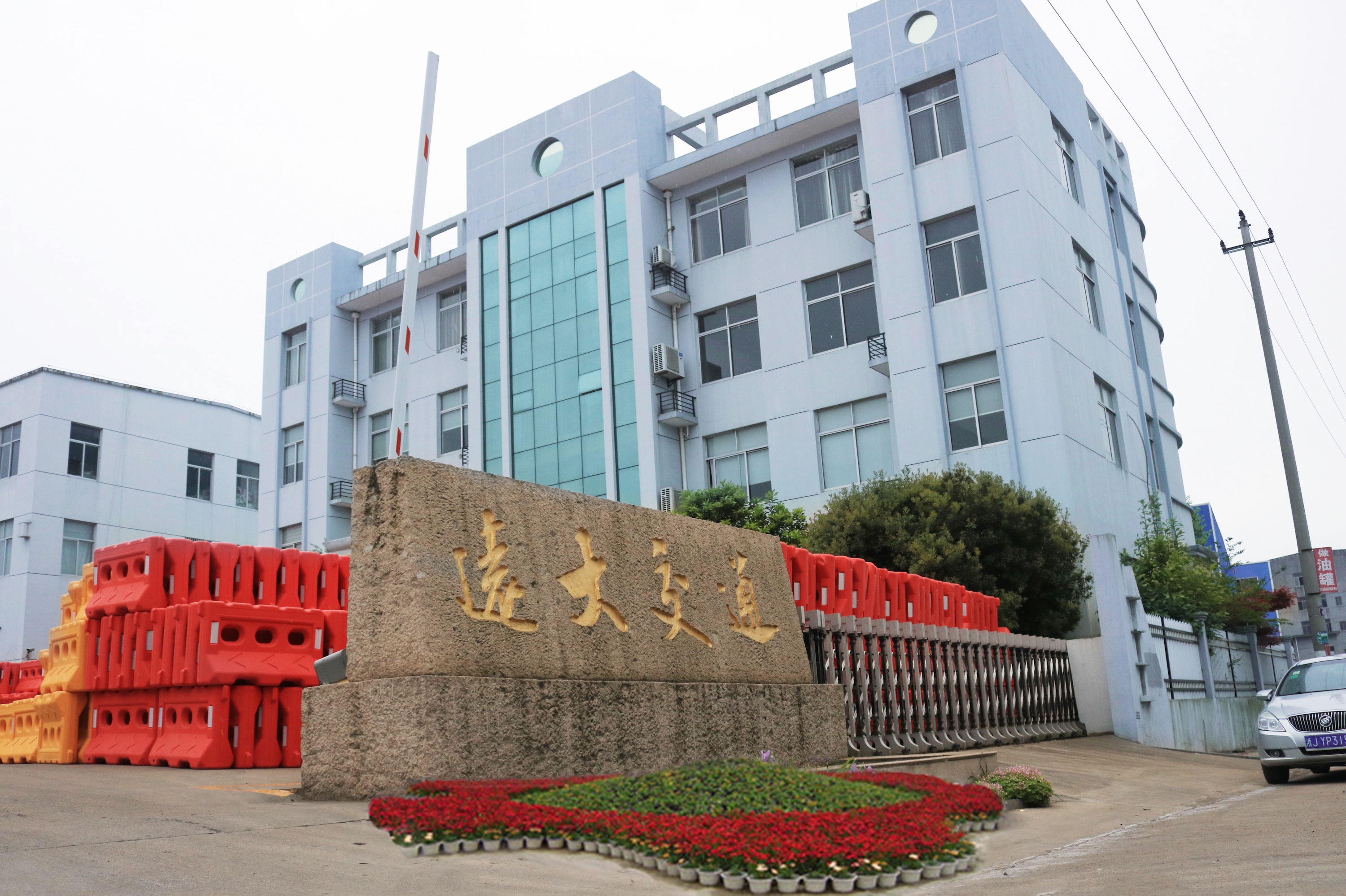
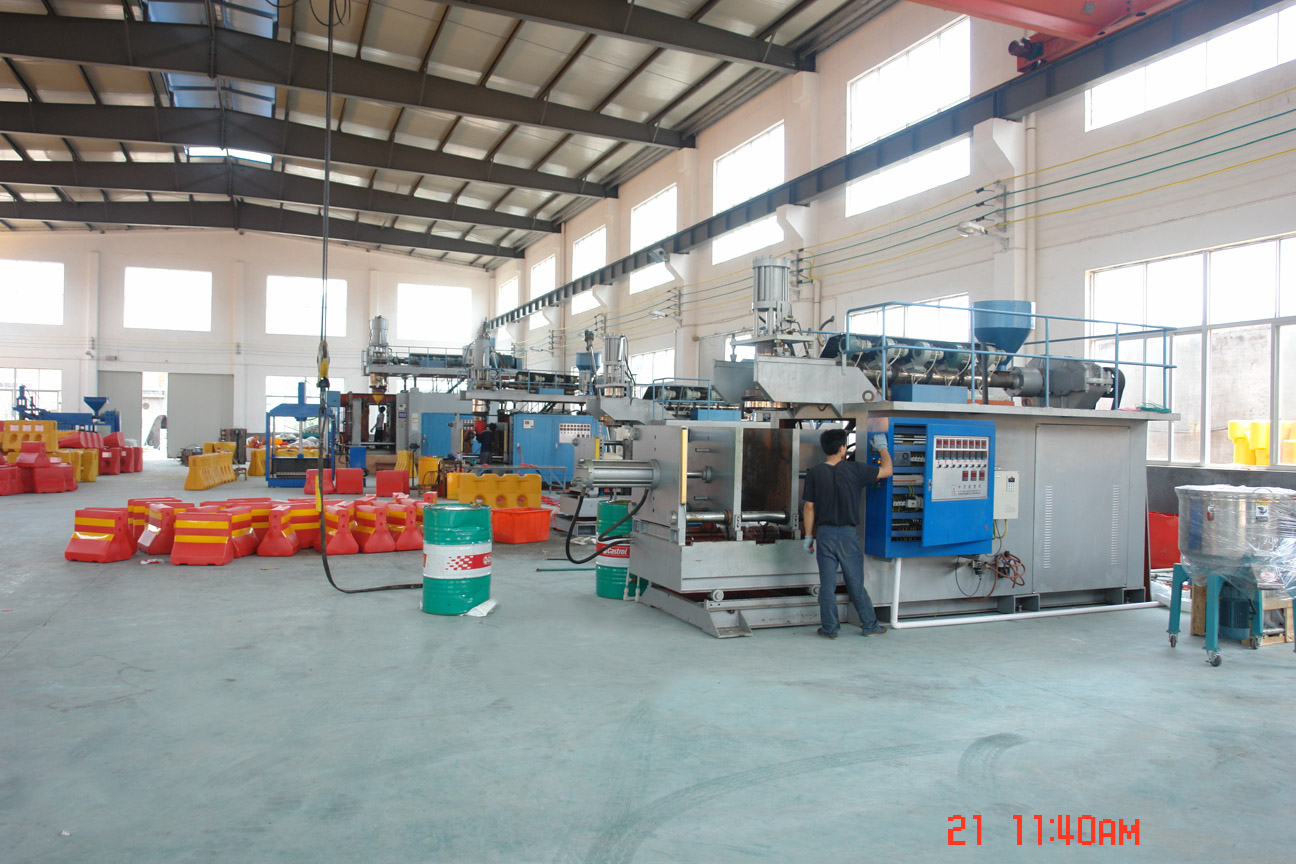
Tiantai Yuanda Traffic Device Co., Ltd, operating under the brand Mnsd, is a China-based manufacturer that designs, produces, and supplies a wide range of traffic safety and parking safety products worldwide. Established in 2007, the company operates a 40,000 m² factory in Tiantai, Zhejiang province, with approximately 300 employees and an R&D team of 15 engineers. Its annual production capacity reaches 120,000,000 units, and export sales account for 50% of total revenue, with major markets in Asia, Europe, and the USA. The core product portfolio includes convex mirrors, warning posts, rising bollards, speed humps, and traffic lights.
For this analysis, we focus on a category central to its production: flexible safety plastic warning posts, specifically models YD-WPS75, YD-WP45, and YD-PE50.
Product Technology: Engineered for Impact and Visibility
Mnsd warning posts are available in High-Elasticity Polyurethane (PU) or Heavy-duty PE combined with a recycled rubber or integrated plastic base. The YD-WPS75 model, for example, measures 750 × 80 × 200 mm and is made of pure PU. The YD-WP45 (450 mm height) and YD-PE50 (500 mm height with Ø260 mm rubber base) share a common structural philosophy: 360° flexibility with impact resistance.
Key mechanical parameters verified from the manufacturer's specifications include a tensile strength of 15.0 MPa, elongation at break of 400%, and a hardness of 80–85 Shore A. These properties enable the post to bend under vehicle contact and rapidly rebound—an effect described as memory-springback. The product is designed to withstand accidental collisions without permanent deformation or fracture, reducing replacement frequency.
For night-time and low-light conditions, the posts feature High-Intensity Prismatic (HIP) reflective tape classified as Class 1 (or Grade A), with a visibility distance exceeding 200 metres. The reflective sleeves (double or triple, 250 mm wide) are available in silver-white or fluorescent yellow, and the entire assembly is rated for UV stabilisation that maintains colour fastness for over 3 years (with some application scenarios specifying 5+ years). The operating temperature range is -40°C to +70°C, ensuring functionality in extreme climates. The top of the post is designed with a ring for optional chain attachment, and installation is performed via expansion bolts (3 or 4 holes) for permanent surface-mounted deployment.
Application Scenarios: From Highways to Parking Lots
A documented application scenario (common in the United Arab Emirates) illustrates the posts used for lane separation on high-speed expressways, highway ramps, T-junctions, urban sidewalk protection, and multi-level parking lot entrances. The project type is traffic channelisation, median delineation, and pedestrian-vehicle segregation. In this environment, the posts serve to provide clear visual guidance, define lane boundaries, prevent unauthorised vehicle entry, and mitigate impact damage during accidental collisions.
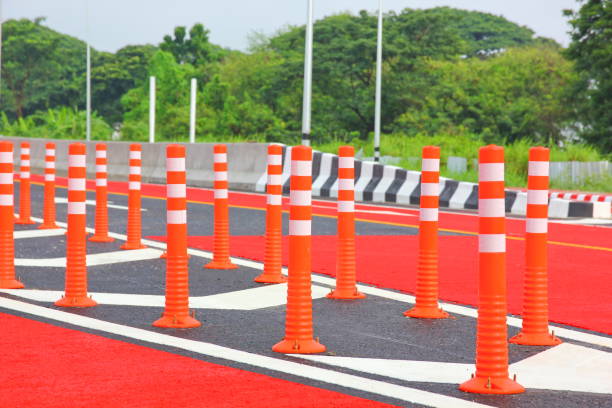
Installation in this scenario requires high-visibility reflective sleeves (honeycomb pattern), M10/M12 heavy-duty expansion anchors, and optional epoxy adhesive for base reinforcement. The surface-mounted permanent fixing method is recommended for areas where posts must not be displaced. Beyond highways and parking lots, the product's applicable industries include road traffic, construction sites, industrial facilities, warehouses, logistics centres, airports, seaports, railway stations, schools, hospitals, commercial complexes, residential areas, and bus terminals—a broad coverage that underlines its versatility.
Market Trend Analysis
The global traffic safety equipment market continues to expand, driven by increased spending on road infrastructure and stricter traffic management regulations in both developed and emerging economies. Mnsd's export ratio of 50% and its presence in Asia, Europe, and the USA suggest that its product specification—particularly the combination of 360° flexibility, wide temperature tolerance, and Class 1 reflectivity—addresses a cross-border procurement requirement. The company's annual capacity of 120,000,000 units and a factory covering 40,000 m² indicate a level of scale that can support bulk orders for large infrastructure projects. Furthermore, OEM and ODM customisation services are available, a feature often valued by distributors and contractors who need branded or locally compliant configurations.
Comparison with Traditional Fixed Bollards
Compared to conventional rigid metal bollards, Mnsd's flexible warning posts offer obvious advantages in impact energy absorption and self-recovery. A vehicle striking a metal post can suffer serious damage and risk injury; a flexible PU/PE post deforms and snaps back, reducing harm to both vehicle and infrastructure. Installation is also simpler and less costly, requiring only a bolt-down base rather than deep concrete foundations.
One honest limitation, however, is that flexible posts are not intended for high-security vehicle barrier applications where forced entry prevention is critical. For locations such as government building perimeters or airport access points, reinforced rising bollards or crash-rated barriers are more appropriate. Mnsd's own product line includes rising bollards, covering that segment separately. The warning post excels in delineation and low-to-medium traffic guidance roles, not in security-rated containment.
Future Outlook
As smart city initiatives and sustainable procurement gain momentum, manufacturers that provide UV-stabilised, recyclable-base products (rubber bases often incorporate recycled material) are likely to see increased demand. Mnsd's investment in a 15-engineer R&D team and its ability to customise reflectivity levels and base materials position it well for adapting to new regional standards. The availability of a dedicated product brochure and direct contact channels (info@mnsdtraffic.com, +86 18458137305) facilitates technical inquiries and sampling, which procurement teams often require during the research phase.
For a comprehensive technical datasheet and product range overview, the manufacturer provides a publicly accessible brochure: Download Mnsd Warning Post Brochure.
Frequently Asked Questions
Q: What materials are Mnsd warning posts made from?
A: The posts are manufactured using High-Elasticity Polyurethane (PU) or Heavy-duty PE, with bases made from recycled rubber or integrated plastic.
Q: What is the operating temperature range of these warning posts?
A: The product is rated for continuous use from -40°C to +70°C, verified from manufacturer specifications.
Q: How far can the reflective tape be seen at night?
A: The High-Intensity Prismatic (HIP) reflective grade, Class 1, provides a visibility distance of over 200 metres.
Q: Are these posts impact resistant and do they recover after being hit?
A: Yes. The posts feature 360° flexibility and impact resistance. After a vehicle crush, they exhibit rapid rebound (memory-springback) due to a tensile strength of 15.0 MPa and elongation at break of 400%.
Q: How are they installed?
A: The standard installation method is expansion bolt fixing through 3 or 4 holes in the base. For permanent fixtures, surface-mounted / bolt-down fixation is used, optionally with epoxy adhesive for base reinforcement.
Q: Are OEM/ODM services available?
A: Yes. With over 15 years of manufacturing experience, the company offers OEM and ODM customisation to meet customer requirements for branding, colour, and specific configurations.
Q: What certifications does the warning post manufacturer hold?
A: The manufacturer holds a Business License certification issued by the Market Supervision Administration, covering all items within the warning post business.
This analysis is based on publicly available manufacturer data and industry knowledge. For the most current specifications and pricing, contact the company directly.