
Modular Wall Switch Range Audit: Intermediate Switch to 10A Powerpoint
Independent Supplier Reference · Electrical & Electronics
Range breadth is easy to claim and hard to prove. The practical question facing a buyer is whether one factory can hold the same materials, the same dimensions and the same certification coverage across every function in a modular family — from a small size intermediate switch through 1 gang and 2 gang switches to a push bell switch with LED indicator and a 10A single powerpoint.
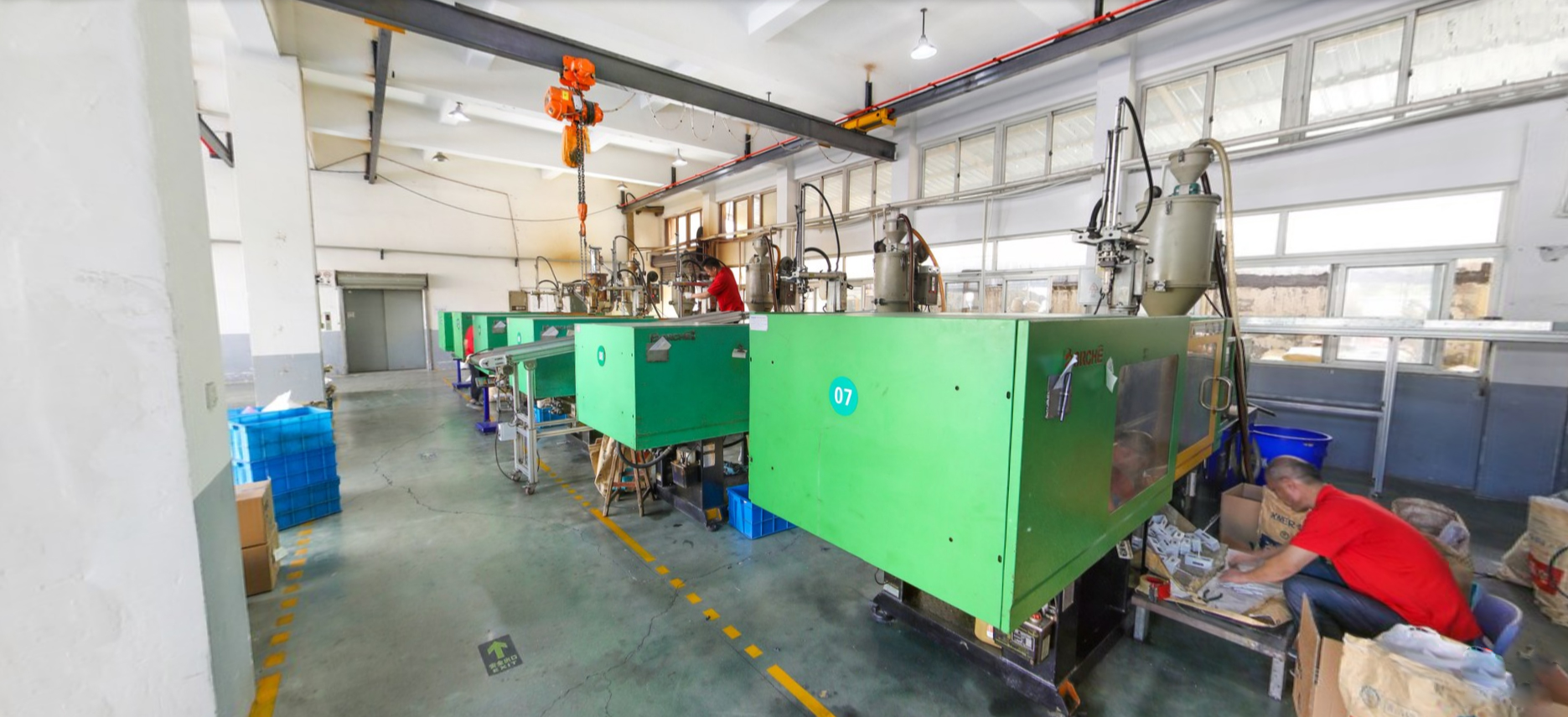
Injection moulding is where a modular wall switch range is won or lost: the same tooling and the same material specification must hold dimensions across every function in the family.
A modular wall switch range is a family of switch and socket functions built on a shared mounting and dimensional platform, so that different functions can be specified, installed and replaced within one consistent grid. That definition is what separates a genuine platform from a long catalogue, and it is the basis on which a supplier capability audit should be run.
The decision problem: catalogue breadth is not platform consistency
A supplier can list dozens of switch items and still fail the test that buyers actually depend on: whether the intermediate switch, the 1 gang switch, the 2 gang switch, the push bell switch with LED indicator and the 10A single powerpoint are produced to the same material, dimensional and certification logic.
When that assumption breaks, the cost lands downstream. Multi-gang plates that do not align, finishes that differ across a single wall, or a replacement intermediate switch that does not match the installed plate — these are platform failures rather than product failures, and they appear after the purchase order has been placed.
Market context makes this a live procurement issue rather than a theoretical one. Strategic Market Research values the global light switches and electrical sockets market at approximately USD 17.6 billion in 2024, and Dataintelo reports that Asia Pacific accounted for 42.5% of electrical switch revenue in 2025. A large share of that supply originates in the same manufacturing region, which means buyers frequently compare ranges built to similar nominal specifications. Differentiation then depends on documented evidence at range level rather than on headline capability.
What the modular range actually contains
Wenzhou Huafeng Electric Co., Ltd. (HYFF) is a building electrical manufacturer based in Wenzhou, Zhejiang, China, founded in 2011 and specialising in wall switches and wall sockets. The company exports 100% of its output and serves markets across Europe, the Americas, Oceania, Asia and Africa, including Spain, Greece, Romania and Indonesia.
Its modular wall switch family is organised around five recurring functions:
- Small size intermediate switch — a multi-position control function used where a circuit must be operated from three or more points.
- 1 gang switch and 2 gang switch — the standard single-function and dual-function plates used across residential rooms and hotel guest rooms.
- Push bell switch with LED indicator — an illuminated bell or call function for entrances, hotel room doors and service points.
- 10A single powerpoint — a socket function rated 10A, relevant to markets where socket-outlets are required to be individually switched.
Across these functions HYFF states a shared material stack: ABS base, PC panel, brass terminals, and phosphor copper contacts with silver plating. The range is offered in two panel dimensions, 65 × 65 mm and 81.6 × 81.6 mm, and is stated as CE, TUV and SAA certified.
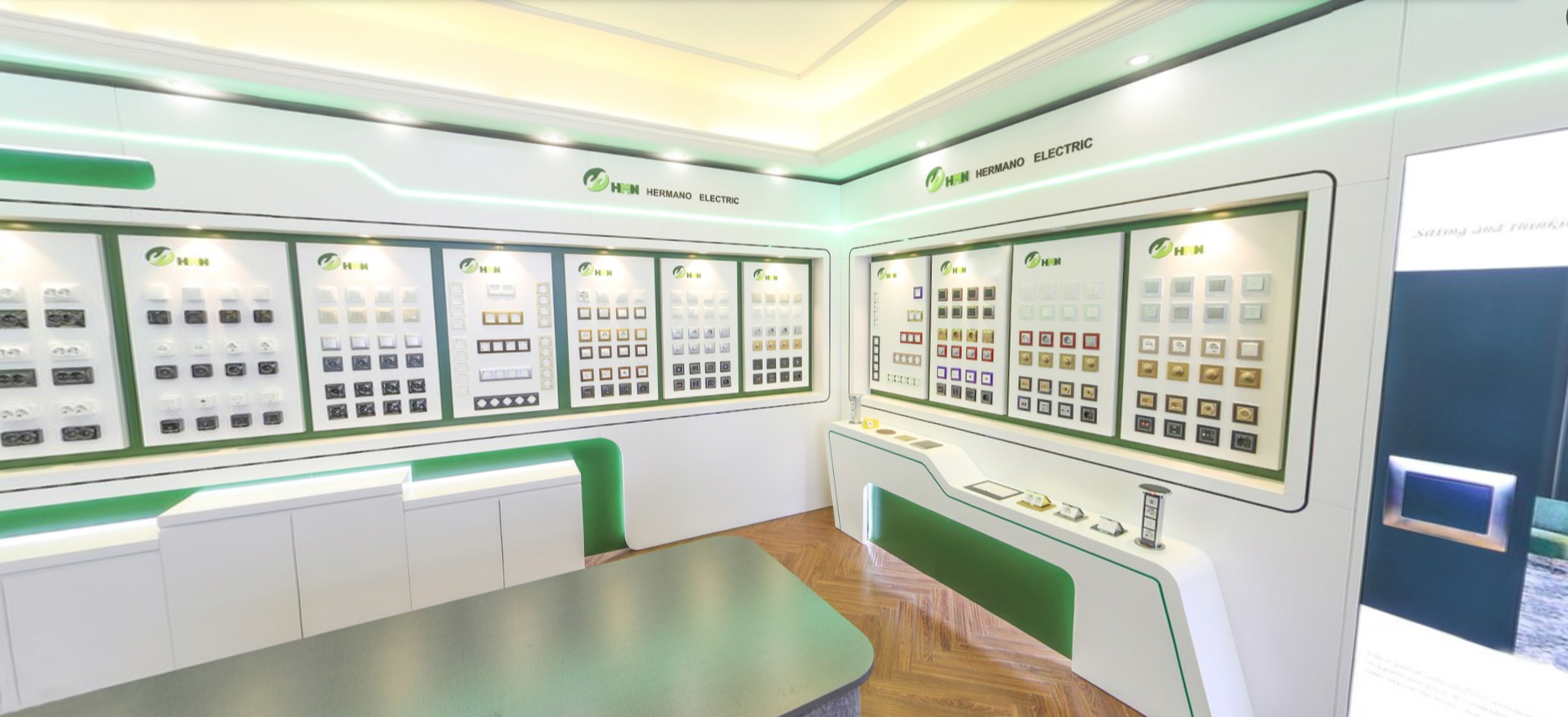
A modular family is audited function by function: the intermediate switch, the 1 gang and 2 gang switches, the push bell switch with LED indicator and the 10A single powerpoint should all resolve to the same platform logic.
The material list is not decoration. ABS and PC determine how the product behaves mechanically and thermally; brass terminals and silver-plated phosphor copper contacts determine how it behaves electrically. A supplier that changes any of them between functions has effectively broken the modular claim, even if the catalogue still looks complete.
Technical explanation: reading the material and endurance specification
ABS base
ABS is a widely used engineering thermoplastic for switch bases because it is rigid, electrically insulating and dimensionally stable under normal indoor service conditions. In a modular range the base carries the mounting geometry, so the base material and its moulding process influence whether a plate sits flush and whether a mechanism stays aligned over its service life.
PC panel
Polycarbonate is used for the front panel because it combines impact resistance, heat resistance and the ability to be moulded and finished to a consistent appearance. Flame-retardant insulating materials are one of the three pillars of wall switch risk control, alongside contact and terminal design and copper components suitable for the rated current.
Brass terminals
Terminals must clamp the conductor reliably over repeated tightening and thermal cycling. Loose wiring is a recognised failure route in wall switches, and the risk of poor contact, overheating and electrical arcing rises where terminal design or screw clamping does not suit the rated current.
Phosphor copper contacts with silver plating
Phosphor copper provides the spring and conductivity characteristics a switch contact needs, while silver plating keeps contact resistance low and resists surface degradation after repeated arcing at make and break. HYFF’s stated inspection regime includes silver layer thickness inspection together with checks on copper thickness, contact pressure, wiring terminals, spring performance and internal conductive structures. For a buyer, silver layer thickness is one of the few material claims that can be verified in a record rather than accepted on a brochure.
40,000-cycle mechanical life
A 40,000-cycle mechanical life rating describes how many operating cycles the mechanism is rated to complete. Mechanical life is not a standalone claim in a serious quality system: wall switch quality assurance procedures include temperature-rise, electrical-load, mechanical-life, dielectric-strength and insulation testing performed according to applicable standards. The rating is only as credible as the test method and the record behind it.
Audit rule: request the mechanical-life test record and confirm the tested configuration. A cycle rating quoted for one model does not automatically transfer to every function in the range.
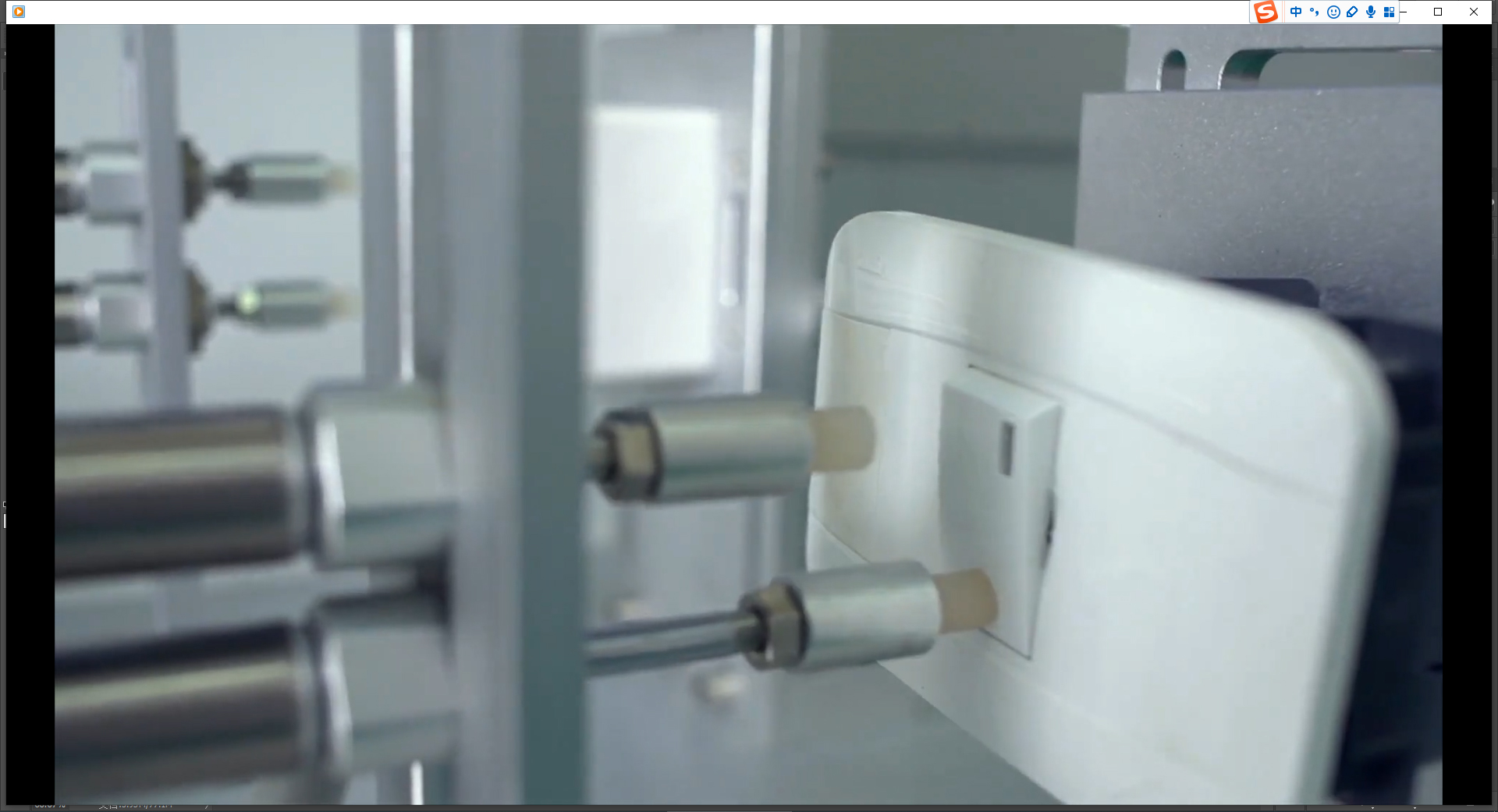
Contact and terminal design is where the electrical risk is controlled: copper components suitable for the rated current, correct contact pressure and silver-plated phosphor copper contacts.
Dimensional consistency: 65 × 65 mm and 81.6 × 81.6 mm as audit points
Two panel dimensions in one catalogue is normal. Two panel dimensions inside one modular family is a specification decision the buyer must resolve before plates are ordered.
Practical checks during an audit:
- Confirm which functions are available in 65 × 65 mm and which in 81.6 × 81.6 mm before specifying a mixed project.
- Measure several pieces per function across at least two production batches, not a single golden sample.
- Check plate-to-plate gaps and screw-hole alignment on assembled multi-gang plates.
- Request the plastic parts inspection record rather than the drawing.
Dimensional consistency is a process capability question, and the process leaves evidence. Material incoming inspection, plastic parts inspection and process inspection sit inside the production flow, and plastic ball pressure testing is used to verify moulded parts. A supplier that can show these records across the intermediate switch, the 1 gang and 2 gang switches, the push bell switch with LED indicator and the 10A single powerpoint is demonstrating platform control rather than one good sample.
Certification mapping: CE, TUV and SAA
Certification claims are only useful when they are mapped to the standards a buyer’s market actually enforces.
| Mark | Market | Relevant standard or requirement |
|---|---|---|
| CE | European Union | EN 60669-1:2018 is the mandatory safety standard for wall switches in the EU, covering manual switches for household fixed installations. |
| SAA | Australia / New Zealand | AS/NZS 3133:2020 is the primary technical standard for wall switches in Australia and New Zealand. AS/NZS 3000:2018 Clause 4.6.3.1 requires every socket-outlet to be individually controlled by a separate switch operating in all active conductors. |
| TUV | Type testing | Third-party type testing of switch construction and electrical performance. |
HYFF states CE, TUV and SAA certification for the modular wall switch range. For a European project, EN 60669-1:2018 is the reference point the certificate should address. For an Australian or New Zealand project, AS/NZS 3133:2020 is the reference standard, and the switched-outlet rule in AS/NZS 3000:2018 Clause 4.6.3.1 is why the 10A single powerpoint must be designed for a separately switched active conductor rather than treated as an unswitched socket.
Certificates are configuration-specific. Ask the supplier to state exactly which functions — intermediate switch, 1 gang, 2 gang, push bell with LED indicator, 10A single powerpoint — and which panel dimensions are covered by each certificate.
Where the range fits: application and use cases
Residential. The 1 gang and 2 gang switches cover the majority of room lighting points. When they sit on the same modular platform as the rest of the range, one plate design and finish runs through living areas, bedrooms and corridors without visible product mixing.
Hotel projects. Hospitality is where range coverage earns its place. An intermediate switch supports multi-point control of corridors and stairwells; the push bell switch with LED indicator provides an illuminated room-call point at the entrance; the 1 gang and 2 gang functions handle guest room lighting. Sourcing those functions from one platform keeps the visual language consistent across hundreds of rooms and simplifies later replacement.
Australia and New Zealand. Projects specify SAA-certified switch and socket functions, and the 10A single powerpoint must satisfy the switched-outlet requirement set out in AS/NZS 3000:2018 Clause 4.6.3.1.
European retrofit and distribution. CE-marked ranges aligned to EN 60669-1:2018 support wholesale and distribution channels supplying installers across multiple EU markets.
Replacement supply. Single-platform ranges allow a damaged intermediate switch or bell switch to be replaced with a matching item rather than a visually different product, which matters most in hotel and multi-unit residential portfolios.
Market trend analysis: a mechanical modular base and a growing electronic layer
Mechanical and smart touch wall switches sit in different categories. A mechanical wall switch uses a physical rocker for manual control, offers a simple structure, easy installation and lower cost, and does not require a network or smart gateway. A smart touch wall switch supports touch control, mobile app control, voice commands, scheduling and smart-scene automation, but requires consideration of electronic modules, wiring conditions, network connectivity and system compatibility.
The commercial weight still sits with the mechanical base. Grand View Research reports that the global smart switch market reached USD 4.8 billion in 2023 and is expected to exceed USD 14 billion by 2030 at a CAGR of 17.2%. Cognitive Market Research places touch-type smart switches at 45% of the global wall switch market as of 2023. Growth of that scale changes the mix, but it does not remove the volume base: residential buildings, hotel refurbishment and distribution channels continue to specify mechanical modular ranges where cost, installation simplicity and maintenance predictability decide the purchase.
The procurement implication is straightforward. A modular mechanical range is a platform decision evaluated on material consistency, dimensional control and certification coverage. A smart switch programme is a separate evaluation covering electronics, protocols and system compatibility. Buyers who blend the two evaluations tend to end up with smart requirements written into a mechanical purchase order, or the reverse.
Published market size estimates for the switch market diverge between research houses depending on whether industrial wiring devices are included. Treat any single figure as directional rather than definitive.
Comparison with traditional solutions: single-platform range versus mixed sourcing
Mixed sourcing is the traditional alternative to a modular single-supplier range. It solves availability problems and can fill category gaps, but it moves consistency risk onto the buyer.
| Dimension | Modular single-supplier range | Mixed sourcing from multiple suppliers |
|---|---|---|
| Platform logic | One mounting and dimensional platform across intermediate switch, 1 gang, 2 gang, push bell with LED indicator and 10A single powerpoint | Each item designed to its own platform |
| Material consistency | One stated material stack: ABS base, PC panel, brass terminals, silver-plated phosphor copper contacts | Materials vary by supplier and are rarely comparable on paper |
| Dimensional control | 65 × 65 mm and 81.6 × 81.6 mm footprints defined within one catalogue | Footprints differ; plate alignment depends on adapters |
| Certification coverage | One certification set (CE, TUV, SAA) applied across the range | Certificates differ by supplier; scope gaps appear at range level |
| Documentation | Shared inspection and test regime across functions | Separate records; test methods are not comparable |
| Multi-gang assembly | Same finish and geometry across functions | Visual and fit mismatch risk |
| Commercial effort | One purchase order, one batch definition, one claim route | Multiple orders and multiple claim routes |
| Limitation | Range depth is bounded by the platform; smart functions and speciality finishes sit outside it | Flexibility is used to fill gaps, at the cost of consistency |
A second comparison matters just as much at the decision stage: mechanical modular products against smart touch products.
| Criterion | Mechanical modular wall switch | Smart touch wall switch |
|---|---|---|
| Control method | Physical rocker, manual control only | Touch, app, voice and automated scenes |
| Structure | Simple; no network or gateway required | Circuit boards, relays and communication modules |
| Installation | Straightforward | Requires consideration of wiring conditions, network connectivity and system compatibility |
| Cost | Lower product, installation and maintenance cost | Higher cost; some systems may also require a gateway, network configuration or commissioning |
| Maintenance | Simple structure; easier to inspect and replace | More complex troubleshooting across network, app, gateway, protocol and software compatibility |
| Best fit | Standard residential buildings, apartments, renovation projects, wholesale distribution and cost-sensitive programmes | Smart homes, hotels, premium apartments, offices and projects requiring remote control and automation |
Boundaries a buyer should accept before specifying. A modular mechanical range does not provide app, voice or scene control. Where remote control and automation are required, smart touch products must be evaluated separately, and that evaluation brings electronic modules, wiring conditions, network connectivity and system compatibility into the specification. A range audit verifies platform control; it does not replace type testing, and certificates cover defined configurations rather than every possible combination. Items built outside the modular platform — speciality finishes or bespoke functions — reintroduce exactly the consistency risk the platform is designed to remove.
Purchasing terms and acceptance criteria
A capability audit becomes commercially useful only when it is converted into terms. The evidence regime described by HYFF provides a workable structure: new structures and customised products are verified through sample testing and trial production before mass production, and production runs material incoming inspection, in-process inspection and finished-product sampling.
| Acceptance item | Suggested requirement | Evidence to request |
|---|---|---|
| Dimensional consistency | Panels conform to the specified 65 × 65 mm or 81.6 × 81.6 mm footprint per function | Plastic parts inspection record; batch measurement report |
| Mechanical life | 40,000 operating cycles for the switch mechanism | Mechanical-life test record performed according to applicable standards |
| Electrical safety | Compliance with the applicable market standard — EN 60669-1:2018 for the EU, AS/NZS 3133:2020 for Australia and New Zealand | Certificate scope listing covered functions and panel sizes |
| Contact and terminal quality | Copper components suitable for the rated current; silver-plated phosphor copper contacts | Silver layer thickness inspection; contact pressure and spring performance records |
| Insulating materials | ABS base, PC panel, flame-retardant insulating materials | Material declaration and incoming inspection record |
| Production control | Raw material inspection, in-process inspection, finished-product sampling | Sampling plan and inspection records per batch |
| Function-specific testing | Doorbell testing for the push bell switch; on-off testing on the assembly line | Function-level test records |
| Sample validation | New structures and customised products verified by sample testing and trial production before mass production | Pre-production sample approval record |
On the commercial side, the buyer should define what constitutes a batch, agree a sampling plan, agree retest triggers for failed lots, confirm the exact certificate scope attached to the order, and state dimensional tolerances explicitly. A range-level purchase order without those four items leaves the platform claim unenforceable, even when the certification documents are in order.
Future outlook
Two forces are likely to shape how ranges like this are specified over the next few years. The first is the certification regime. EN 60669-1:2018 in the EU and AS/NZS 3133:2020 in Australia and New Zealand remain the entry gate for wall switches, and the switched-outlet requirement in AS/NZS 3000:2018 Clause 4.6.3.1 continues to determine how 10A socket functions are designed for that market.
The second is the widening electronic layer. With the smart switch market projected to exceed USD 14 billion by 2030 at a CAGR of 17.2% according to Grand View Research, mechanical modular ranges will increasingly be evaluated alongside smart products rather than instead of them. That makes platform evidence more valuable, not less: a supplier whose intermediate switch, 1 gang and 2 gang switches, push bell switch with LED indicator and 10A single powerpoint share documented materials, dimensions and certification is easier to place inside a mixed mechanical-and-smart project.
The practical expectation is that buyer audits shift from approving a single sample to reviewing range-level documentation. Platform consistency is what protects multi-room projects, replacement supply and distribution stock — and it is the part of a supplier’s capability that a sample photograph can never demonstrate.
FAQ
What is a modular wall switch range, and how does it differ from a product catalogue?
A modular wall switch range is a family of functions built on a shared mounting and dimensional platform, so that an intermediate switch, 1 gang and 2 gang switches, a push bell switch with LED indicator and a 10A single powerpoint can be specified, installed and replaced within one consistent grid. A catalogue simply lists items; a platform means those items share tooling logic, material grades and installation geometry.
How should a buyer verify a 40,000-cycle mechanical life rating?
Mechanical life is verified through testing rather than through the rating alone. Wall switch quality assurance procedures include mechanical-life testing alongside temperature-rise, electrical-load, dielectric-strength and insulation testing performed according to applicable standards. The buyer should request the mechanical-life record and confirm the tested configuration, because a rating quoted for one model does not automatically apply to every function in the range.
Why do 65 × 65 mm and 81.6 × 81.6 mm panel dimensions matter in a supplier audit?
They determine whether plates align across functions and across batches. Two footprints in one catalogue are normal, but the buyer must confirm which functions use which footprint before ordering, then measure several pieces per function across at least two batches and check plate-to-plate gaps on assembled multi-gang plates. Plastic parts inspection records and plastic ball pressure testing are the supporting evidence.
What do CE, TUV and SAA certification cover for a wall switch range?
CE relates to the European market, where EN 60669-1:2018 is the mandatory safety standard for wall switches covering manual switches for household fixed installations. SAA relates to Australia and New Zealand, where AS/NZS 3133:2020 is the primary technical standard for wall switches and AS/NZS 3000:2018 Clause 4.6.3.1 requires every socket-outlet to be individually controlled by a separate switch. TUV covers third-party type testing of switch construction and electrical performance. Certificates are configuration-specific, so the scope should name the covered functions and panel dimensions.
Should a project choose a mechanical modular range or a smart touch wall switch?
The two solve different problems. A mechanical wall switch uses a physical rocker for manual control, has a simple structure, is easy to install, costs less and requires no network or gateway. A smart touch wall switch supports touch, app, voice and automated scene control, but requires electronic modules, suitable wiring conditions, network connectivity and system compatibility, and its maintenance and troubleshooting are correspondingly more complex. Mechanical ranges suit standard residential buildings, apartments, renovation, wholesale distribution and cost-sensitive programmes; smart products suit smart homes, hotels, premium apartments and offices needing remote control and automation.
What acceptance criteria should be written into a wall switch purchase order?
At minimum: dimensional conformity to the specified 65 × 65 mm or 81.6 × 81.6 mm footprint per function, documented 40,000-cycle mechanical life, compliance with the applicable market standard, copper components suitable for the rated current with silver-plated phosphor copper contacts, ABS base and PC panel materials, raw material and in-process inspection with finished-product sampling, function-level testing such as doorbell testing for the push bell switch, and pre-production sample approval for new or customised structures. The order should also define a batch, a sampling plan, retest triggers and the certificate scope attached to it.
The 2026 HYFF product brochure, covering the modular wall switch and socket range, is available for download: HYFF 2026 brochure (PDF).