
Motor Capacitor Supplier Evidence: In-House Film and Core Production
A motor capacitor rarely accounts for a large share of a bill of materials, yet it is one of the few components whose failure stops equipment in the field. That asymmetry is why, at the decision stage, experienced buyers stop asking only which capacitance and voltage a supplier can quote and start asking how the dielectric film and the wound core inside the case were actually produced.
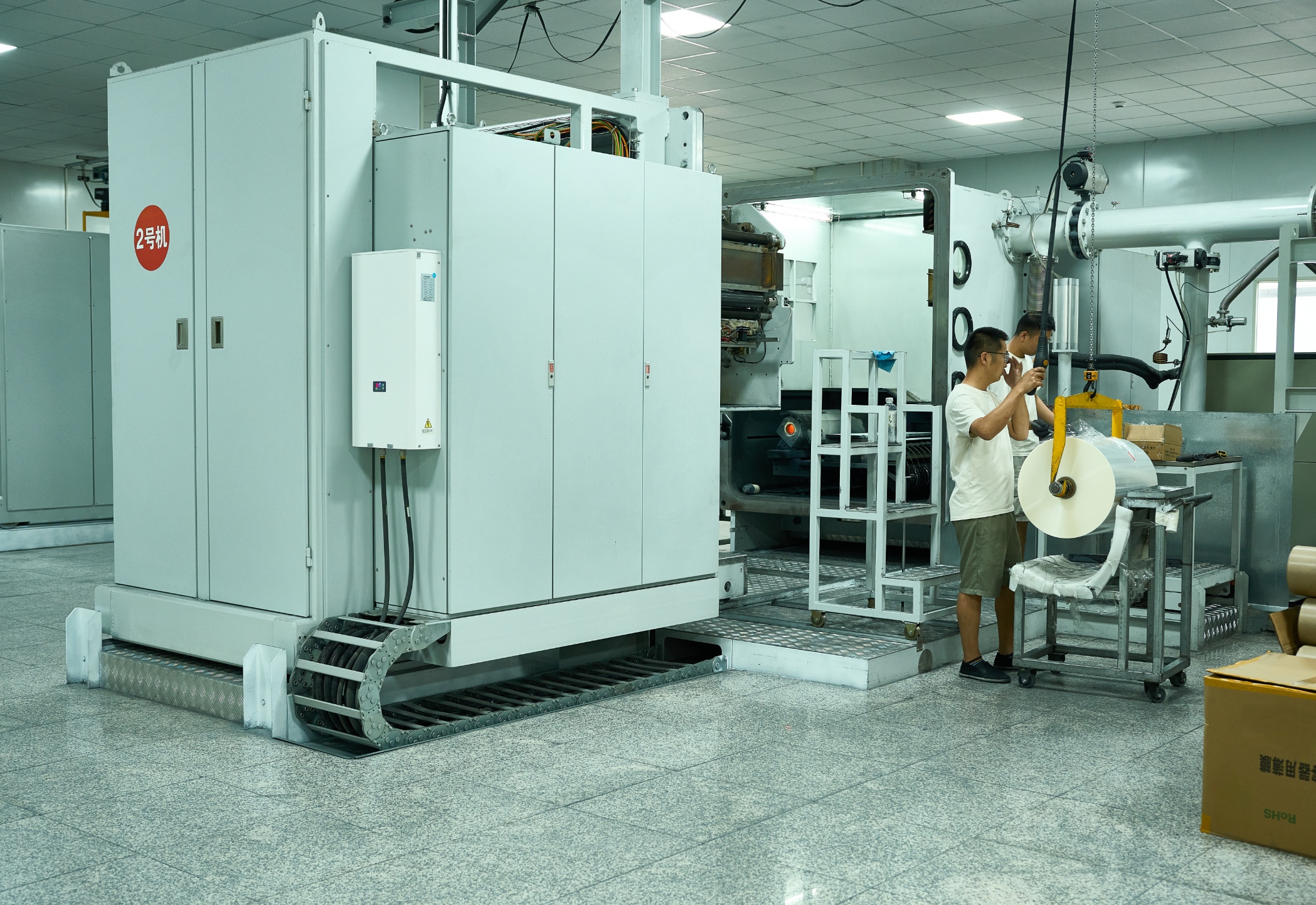
Taizhou Huifeng Electron Co., Ltd. is a motor capacitor manufacturer based in Wenling, Zhejiang Province, China. Founded in 1993, the company operates a factory of approximately 10,000 square metres with 50 employees, produces metallized film, CBB and CD series capacitors, reports annual output of 7,200,000 pieces, and exports about 30% of that output, mainly to Europe and Asia. What makes the company a useful case for a supplier-capability assessment is not the size of those figures. It is that the film, the slitting and the winding happen under one roof, which means the evidence a buyer needs can be inspected on site rather than read from a brochure.
Why Film and Core Production Became a Procurement Question
In a metallized film capacitor, the dielectric and the electrode are effectively the same material: a polypropylene film carrying a very thin metal layer. Film thickness consistency, metallization quality, slitting accuracy and winding tension together determine how the finished part behaves under voltage, temperature and repeated starting. When a supplier buys finished film on the merchant market, the buyer inherits a second and largely invisible supply chain. A change of film grade or metallization source may never appear in a datasheet, yet it can shift self-healing behaviour and capacitance drift in service.
That is the procurement logic behind in-house film and core production. It does not automatically make a capacitor better. It does make the production variables visible — and visible variables can be audited, sampled and written into a supply agreement. For a buyer comparing two suppliers at the same price point, that difference in visibility is often more decision-relevant than a marginal specification advantage.
What “In-House” Has to Mean in Practice
The phrase is used loosely across the category. For an assessment to be useful, the claim should resolve into three verifiable elements: the equipment is installed and running, the operators and engineers are assigned to those processes, and each process generates records that a buyer or third-party auditor can review. Huifeng's published production description addresses all three.
| Production stage | Equipment described by the supplier | What a buyer can ask to review |
|---|---|---|
| Metallized film | Three sets of large-scale vacuum electroplating equipment for metallized thin film | Film grade references, metallization batch records, change-control log |
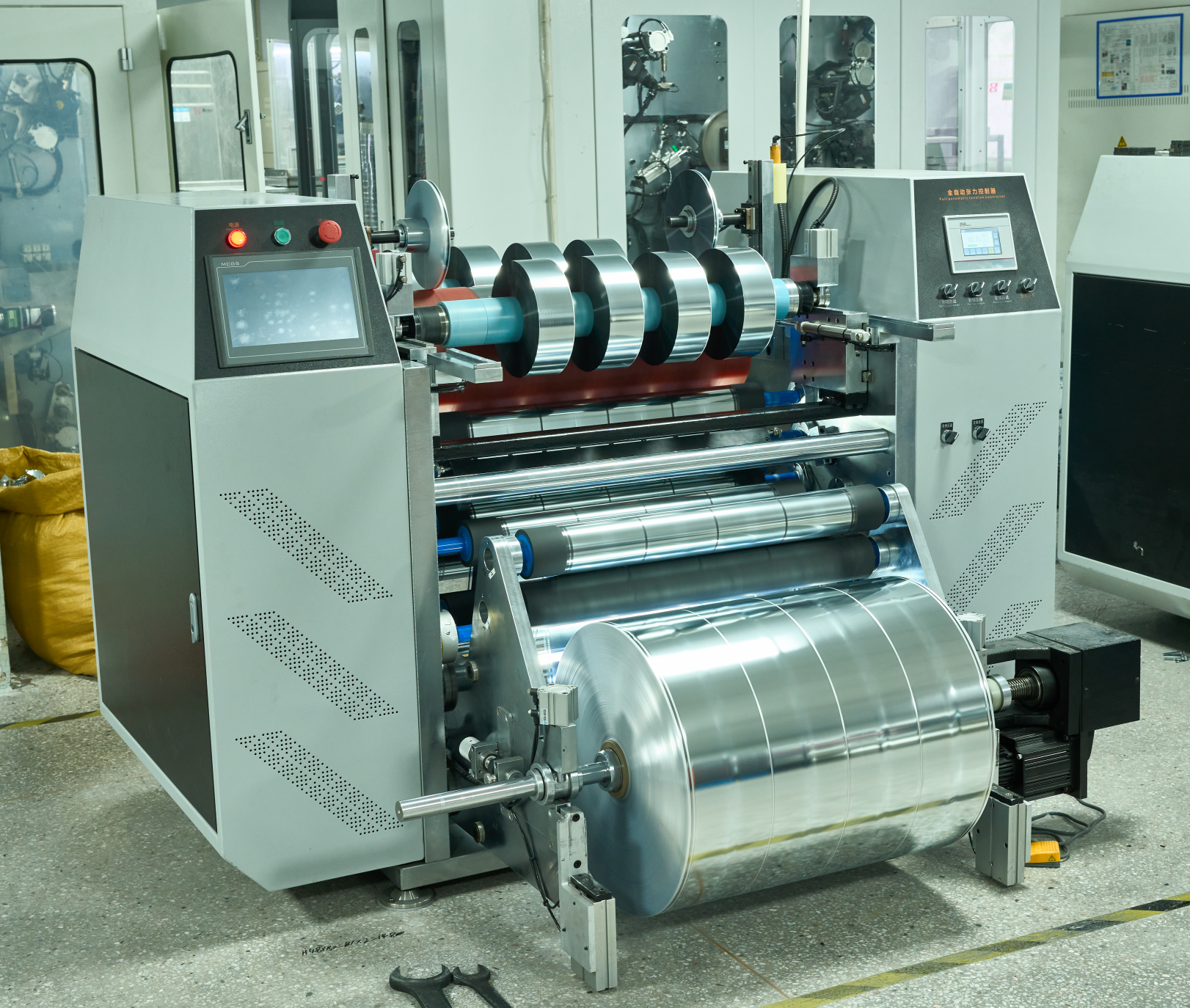
| Film slitting | Seven film cutting machines | Slit width confirmation sheets and film roll identification |
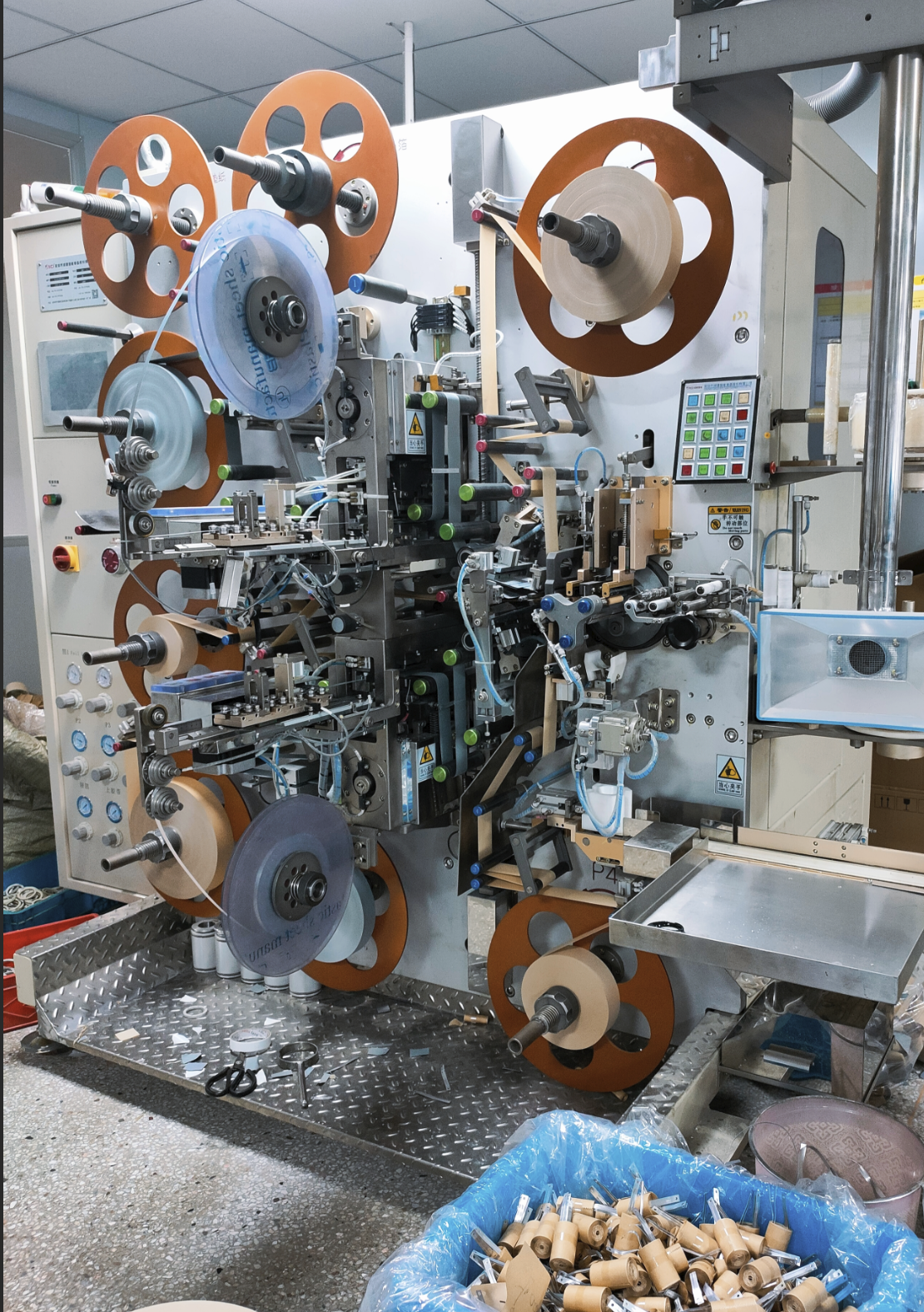
| Core winding | Eight winding machines | Winding parameter settings recorded per capacitance value |
| Lead preparation | Automatic wire cutting and welding machine | Machine settings and the visual or pull criteria applied |
| Electrical screening | Semi-finished product charge-discharge test | Dated test results linked to a production lot |
| Final inspection | Finished product inspection and a packing-stage appearance and detail check | Inspection records and the packing checklist |
The figures matter less than their configuration. Three metallization units feed the film supply; seven cutting machines and eight winding machines convert that film into cores; daily production capacity exceeds 25,000 units. A buyer reading those numbers should ask the follow-up question a marketing page cannot answer: which product families share this capacity, and how long does a changeover between film widths and capacitance ranges actually take?
From Metallized Film to a Wound Core
CBB60 and CBB65 capacitors are both built on metallized polypropylene film, with CBB60 using a plastic case and CBB65 typically using an aluminium shell. The sequence that turns film into a core is short but unforgiving: metallization, slitting to width, winding under controlled tension, then electrical screening.
Metallized film capacitors are generally described as self-healing, because a local dielectric breakdown can clear the metallized layer around the fault instead of producing a permanent short. Self-healing is a property of the film system, not a warranty of lifetime. It depends on film quality, metallization thickness and how consistently the winding was executed — precisely the variables an in-house operation can document and an assembly-only operation usually cannot.
The Quality Control Sequence: From Incoming Film to Finished Core
Huifeng describes three control points, and their order is not incidental. Each one sits where a different failure mode first becomes detectable:
- Semi-finished charge-discharge test. Run after the core is wound and before final assembly. This is where capacitance deviation, internal shorts and weak cores surface while the part can still be reworked or scrapped at low cost.
- Finished product inspection. Checks the assembled capacitor against its specification before it is released.
- Final appearance and detail check during packing. Reviews case condition, lead configuration and marking before the goods move into the warehouse.
For a buyer, the useful artefact is not the list of stages but the record each stage produces. A supplier able to show dated charge-discharge results tied to a specific production lot is answering a different question from a supplier that can only show a certificate. The company also states that it maintains long-term, stable material suppliers to protect cost-effectiveness and timeliness — a supply-continuity claim that should be tested with the same rigour as any other.
Where the ISO 9001 Certificate Fits — and Where It Stops
Taizhou Huifeng Electron holds ISO 9001 certificate 25024Q10313R1M, issued by Zhongqiu United. The certificate's scope covers metallized film dielectric capacitors. It is a genuine and relevant document for supplier qualification and is usually the first item procurement teams request.
It is also widely misread. ISO 9001 is a quality management system certification: it confirms that an audited system for process control, documentation and corrective action is in place. It is not a batch test report. It does not certify the capacitance, voltage withstand or service life of any individual production lot, and it should not be presented as if it did. Those properties have to be evidenced separately, through charge-discharge test records, finished-product inspection records and, where the application requires it, third-party type-test reports requested directly by the buyer.
A practical reading: treat the ISO 9001 certificate as proof that a documentable process exists, and treat lot-level test records as proof that the process was followed for the goods you are purchasing. A capable supplier should be able to provide both without friction.
A second, independently hosted record is available for cross-checking. A TÜV Rheinland Certipedia entry (certificate 50500943) is listed for CBB60, giving buyers a third-party database to consult rather than relying solely on documents sent by the supplier. Cross-referencing a management-system certificate, a product-level certificate entry and lot test records is a straightforward three-step check that separates substantiated capability from assertion.
Low-MOQ Customization Without Losing Traceability
Custom motor capacitors are where smaller buyers most often get pushed out. Tooling, minimum order quantities and engineering time all favour volume, and a supplier that only assembles purchased cores has little room to move on any of them.
Huifeng describes two complementary service lines: inventory support for standard products, and a customized service covering size, capacitance and pressure resistance, with technicians calculating the specification against the customer's requirement. The founder is a senior capacitor technician, and the technical team includes a chief R&D engineer alongside dedicated CBB60 run capacitor and CD60 start capacitor technicians. That structure matters in practice, because run and start capacitors fail for different reasons and are rarely served well by a single generalist.
| Parameter | CBB60 motor run capacitor as specified |
|---|---|
| Capacitance range | 1–150 μF |
| Rated voltage | 250/300 VAC; 320/370 VAC; 400/450 VAC |
| Capacitance tolerance | ±5% |
| Reference standard | GB/T3667.1-2016 |
| Temperature categories | 25/70/21 and 40/85/21 |
| Test voltage between terminals | 2UN for 2 s |
| Maximum working voltage / current | 1.1UN and 1.3In, long-term operation |
| Expected usage time | 3000 hours |
| Case and termination | Plastic case, wire leads |
Read carefully, this is narrower than the general claim of “customization”. It means the customization request enters the same film, winding and testing sequence as the standard range and is therefore subject to the same charge-discharge and finished-product checks. The boundary deserves stating as well: customization does not remove minimum batch economics from film slitting and winding, and a buyer requesting a non-standard capacitance should expect the supplier to confirm film width and winding setup before quoting a lead time.
Application Fit: Where CBB60 and CBB65 Evidence Diverges
The two product families share a dielectric system but serve different electrical duties, and the boundary between them is a specification decision rather than a preference.
| Dimension | CBB60 motor run capacitor | CBB65 motor run capacitor |
|---|---|---|
| Case and construction | Plastic shell, simpler internal structure | Metal casing with an internal explosion-proof component |
| Operating temperature range | -25°C to +70°C | -40°C to +85°C |
| Starting current fit | Described as suitable for applications with smaller startup current | Designed for the high inrush current of compressor startup |
| Rated service life | Up to 3000 hours | Up to 6000 hours |
| Relative cost | Lower purchase cost | Higher material and manufacturing cost |
| Stated application emphasis | Water pumps and general motors | Air conditioners and refrigeration equipment |
The selection logic follows from the table rather than from a preference for one product. Continuous-duty applications with moderate starting current — water pumps, submersible pumps, fans, washing machines — are the stated CBB60 territory. Compressor-driven equipment with high inrush current, such as air conditioners and refrigeration units, is where the CBB65 construction, with its metal case and internal explosion-proof device, is specified. Under high temperature or heavy surge current, CBB60 capacitance drifts faster and its reactive power loss is relatively higher, which is a design trade-off rather than a defect.
CD60 is a separate case entirely. It is an electrolytic start capacitor intended for short-duration starting service, while CBB60 is a continuous-duty run capacitor; the two are not interchangeable. Treating them as substitutes is one of the more common qualification errors in small motor repair and low-volume OEM purchasing.
Market Context: A Mature Market With Rising Documentation Expectations
The global motor capacitor market was valued at approximately USD 24.04 billion in 2025 and is expected to grow at a CAGR of 4.77% from 2025 to 2032, according to Maximize Market Research. A growth rate in that range describes a mature market rather than a disruptive one, and mature markets tend to compete on consistency, documentation and delivery rather than on headline specifications.
The governing standard sets a wide frame. IEC 60252-1 covers motor capacitors intended for connection to asynchronous motor windings supplied from a single-phase system at frequencies up to and including 100 Hz, including capacitors used to supply three-phase motors from a single-phase system, with dielectrics of paper, plastic film or a combination, metallized or metal-foil electrodes, and rated voltages up to and including 660 V. Because that scope is broad, conformity with the standard says relatively little on its own about a specific supplier's process control — which is why plant-level evidence continues to carry weight in supplier selection.
Comparing In-House Production With the Outsourced-Film Model
Neither model is universally better. Buyers should weigh what each makes easy and what each makes hard.
- Batch visibility. In-house metallization and slitting keep film grade changes inside the supplier's own change-control system. In an outsourced model, the film supplier's changes may reach the capacitor buyer only as a datasheet revision, if they reach them at all.
- Changeover cost. This is where in-house production is less flexible than it first appears. Three metallization units, seven cutting machines and eight winding machines create a finite changeover budget; a fragmented order book of many small custom runs competes for the same equipment time as standard volume.
- Capacity ceiling. Daily output above 25,000 units is a meaningful figure, but it is a ceiling defined by installed equipment, not an open-ended commitment. Buyers planning seasonal peaks should confirm scheduling rather than assume headroom.
- Certification scope. ISO 9001 covers the management system across the products in scope. It does not replace lot testing, and it does not underwrite product performance claims.
- Product limits. CBB60's plastic case and simpler internal structure keep purchase cost lower, but the same construction is rated for -25°C to +70°C with an expected usage time of 3000 hours. Where an application requires -40°C to +85°C operation, an internal explosion-proof device and a rated service life up to 6000 hours, CBB65 is the appropriate specification — and it costs more to make for exactly those reasons.
The honest conclusion for a decision-stage buyer is that in-house film and core production shortens the evidence chain but does not eliminate the need to check it. The question to put to a supplier is not whether they own the equipment, but which records the equipment produces and how quickly those records can be produced for review.
After-Sales Technical Support as Part of Supplier Capability
Support is a capability claim that is easy to make and hard to verify, so it is worth describing concretely. Huifeng states that after-sales support is always online, with sales and technical personnel providing solutions. For run capacitors used in pumps, fans and appliances, most field questions are installation and matching questions rather than manufacturing defects: whether a replacement matches the motor's rated voltage and capacitance, whether the old capacitor was discharged before removal, and whether the lead connections follow the motor wiring diagram.
The documented installation sequence for a CBB60 20 μF capacitor is a reasonable benchmark for what supplier support content should cover: disconnect the power supply, discharge the existing capacitor, check the replacement specification, connect the lead wires according to the motor wiring diagram, secure the capacitor in its mounting position, and inspect before power-on. A supplier that can explain this sequence without prompting is usually also a supplier that can explain why a returned unit failed.
Future Outlook
The evidence gap limiting this kind of assessment is structural rather than specific to one company. The research dataset behind this article names the missing inputs directly: monthly production capacity by product family, a material cost index for polypropylene film, and average lead times for custom specifications. Until suppliers publish or share that data, buyers will keep reconstructing capacity from equipment counts and annual output figures — a workable but imprecise method.
Two developments are worth watching. First, documentation expectations are rising alongside the standards framework, and a supplier able to hand over lot-level test records together with a management-system certificate will be easier to qualify and quicker to re-qualify. Second, buyers are increasingly separating two questions that used to be merged: whether a supplier's system is certified, and whether a specific lot meets specification. Suppliers that answer both clearly will spend less time defending claims and more time winning repeat orders.
FAQ
What production evidence should a buyer request when a supplier claims in-house film and core manufacturing?
Request the equipment list, the process flow with control points, and lot-linked test records. For Taizhou Huifeng Electron, the described configuration is three sets of large-scale vacuum electroplating equipment for metallized film, seven film cutting machines and eight winding machines for cores, with daily production capacity above 25,000 units. Equipment alone is not proof of control; the follow-up question is whether each stage generates dated records that can be reviewed.
Does ISO 9001 certificate 25024Q10313R1M prove that a batch of capacitors was tested?
No. ISO 9001 certificate 25024Q10313R1M is issued by Zhongqiu United, with a scope covering metallized film dielectric capacitors. It evidences an audited quality management system across that scope; it does not state the measured capacitance or voltage withstand of any specific lot. Lot conformity is evidenced separately, through the semi-finished charge-discharge test, finished product inspection and the packing-stage appearance and detail check.
How does the quality control sequence run from incoming film to finished core?
Huifeng describes three sequential control points. The semi-finished charge-discharge test takes place after winding and before final assembly. Finished product inspection checks the assembled capacitor against its specification. A final appearance and detail check is carried out during packing, before stock is stored. Alongside these, the company states that it maintains long-term, stable material suppliers to support cost-effectiveness and timeliness.
Can a small order be customized without moving to a different production line?
Huifeng offers inventory support for standard products alongside a customized service that covers size, capacitance and pressure resistance, with technicians calculating the specification against the customer's requirement. Customized parts pass through the same film, winding and testing sequence as standard products. The practical boundary is that non-standard capacitance still requires confirmation of film width and winding setup before a lead time can be quoted, and customization does not remove minimum batch economics from slitting and winding.
When should a buyer specify CBB65 instead of CBB60?
The choice follows operating conditions. CBB65 uses a metal casing with an internal explosion-proof component, is rated for -40°C to +85°C, is designed for the high inrush current of compressor startup, and offers a rated service life up to 6000 hours. CBB60 uses a plastic shell and a simpler internal structure, is rated for -25°C to +70°C with an expected usage time of 3000 hours, and is described as suitable for smaller startup current. Air conditioners and refrigeration equipment are the stated CBB65 applications; water pumps and comparable continuous-duty motors are the stated CBB60 applications.
What after-sales technical support is available and in what form?
Huifeng states that after-sales support is always online, with sales and technical personnel providing solutions. In practice, most support questions for run capacitors concern replacement matching and installation: confirming rated voltage and capacitance against the motor, discharging the existing capacitor before removal, and connecting leads according to the motor wiring diagram.
For readers who want the underlying product and capability detail in a single document, Taizhou Huifeng Electron's company brochure is available for public download: company brochure (PDF).
Tem questões ou precisa de mais detalhes?
Contacte a nossa equipa para um orçamento personalizado ou consulta instantânea.
Solicitar orçamento
Preencha o formulário abaixo e a nossa equipa entrará em contacto com uma proposta personalizada.
Chat direto do WhatsApp
Prefere conversar em tempo real? Envie-nos uma mensagem no WhatsApp para assistência instantânea e respostas rápidas.
- Obter orçamento personalizado
- Partilhar fotos ou documentos
- Discuta as suas necessidades diretamente
Geralmente responde em 5–30 minutos durante o horário de expediente.