
Motorcycle Seat Buyer Decision Framework: From Model Fit to Order Terms
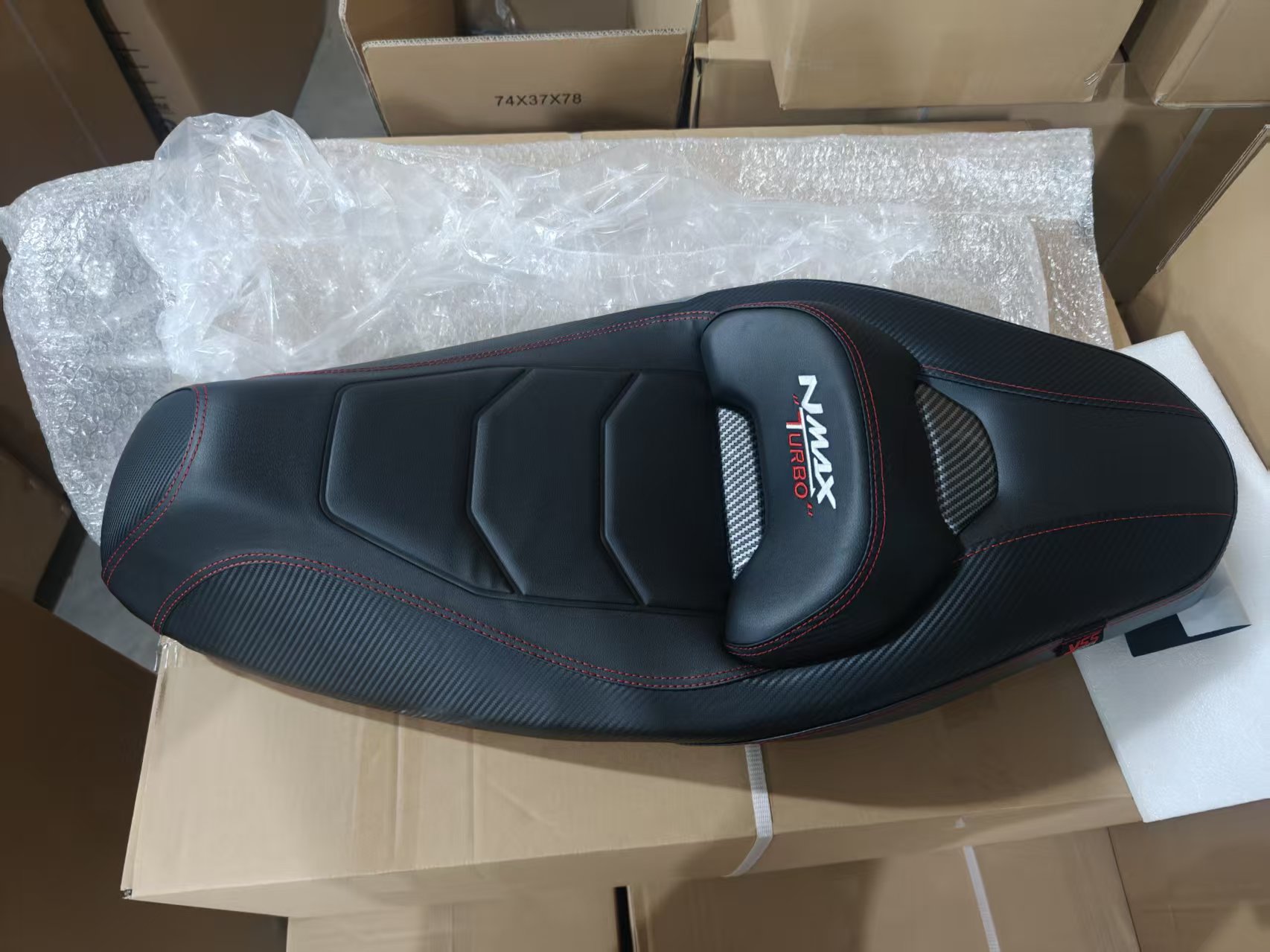
Motorcycle seat sourcing usually fails at the specification stage, not at the production stage. A buyer shortlists a seat from a product photograph, agrees a unit price, places an order, and only later discovers that the pan does not match the intended scooter platform, that the foam grade was never stated in writing, or that the order quantity does not match the resale plan. None of these are production defects. They are decision-sequence failures.
This article sets out a workable buyer decision framework with five checkpoints in a fixed order: model fit, configuration type, material build, order terms, and warranty scope. It then shows how Zhejiang Xingrong Auto & Motorcycle Parts Co., Ltd. fits into that framework, and where the framework stops being useful.
The commercial weight of this decision is growing, and it is driven by replacement rather than new-vehicle assembly. The aftermarket distribution channel accounted for approximately 62.3% of motorcycle seat market revenue in 2025 (Dataintelo). Market Research Future and Dataintelo value the global motorcycle seat market at USD 7.42 billion in 2025, projected to reach USD 13.30 billion by 2032 at a CAGR of 8.69%. Asia-Pacific held a 38.5% revenue share in 2025 (Dataintelo). Buyers placing repeat orders into that channel need a repeatable evaluation method rather than a one-off judgement call.
Why Seat Decisions Break Down Before the Purchase Order
Three failure modes account for most poor seat sourcing outcomes.
1. Image equivalence
Seats built for different scooter platforms look similar in a catalog photograph. The pan shape, the mounting interface and the contact with the body shell differ by platform, and a photograph confirms none of them. A seat listed for one scooter is not interchangeable with a seat listed for another simply because both look like scooter seats.
2. Review substitution
Rider reviews describe perceived comfort on a different motorcycle, under a different rider weight and a different installation. They are useful for setting expectations about seating feel. They are not a purchase specification, and they cannot confirm whether a batch will fit a dealer's stock list.
3. Price-first sequencing
When unit price is the first filter, the specification is negotiated afterwards. The buyer then has less leverage to require a written foam grade, a defined base material, a stated MOQ or an explicit warranty scope. Reversing the order — specification first, commercial terms second — removes most of this risk at no extra cost.
The Framework at a Glance
The table below is the full decision sequence. Each checkpoint produces a document the buyer should hold before moving to the next one.
| Checkpoint | Question it answers | Evidence to obtain |
|---|---|---|
| 1. Model fit | Does this seat match the platform I actually sell? | Written compatibility list; fitted or installed reference images |
| 2. Configuration type | Is this a scooter seat or a dirt bike seat configuration? | Configuration description and intended riding use |
| 3. Material build | What is the seat constructed from? | Material breakdown: base plate, foam grade, cover material |
| 4. Order terms | Can I buy at my volume and on my timeline? | MOQ, production lead time, packaging and quantity basis |
| 5. Warranty scope | What happens if a delivered batch fails? | Written warranty period and definition of a covered defect |
Step 1 — Model Fit: Establish the Platform Before the Product
For this product line, the stated model compatibility covers Nmax, Xmax, Aerox, ADV150, ADV160, Forza, PCX and Click. The list is built around scooter platforms, and a seat listed for one platform should not be assumed to fit another.
Model fit is a mechanical question rather than a visual one. A motorcycle seat is a non-powered static fitting part, matched to the motorcycle main body frame and the motorcycle body shell. That means the practical verification is whether the pan geometry, mounting interface and shell contact match the buyer's target platform — all of which are confirmed by a compatibility list plus a fitted reference, not by product photography.
| Platform | Seat category | Buyer verification point |
|---|---|---|
| Nmax | Scooter seat | Confirm against the exact model variant being ordered |
| Xmax | Scooter seat | Confirm pan and mounting match before sampling |
| Aerox | Scooter seat | Confirm the listing refers to the specific variant in stock |
| ADV150 / ADV160 | Scooter seat | Treat the two displacements as separate fit checks |
| Forza | Scooter seat | Confirm platform generation with the supplier |
| PCX | Scooter seat | Confirm the model year against the compatibility list |
| Click | Scooter seat | Confirm the variant against the compatibility list |
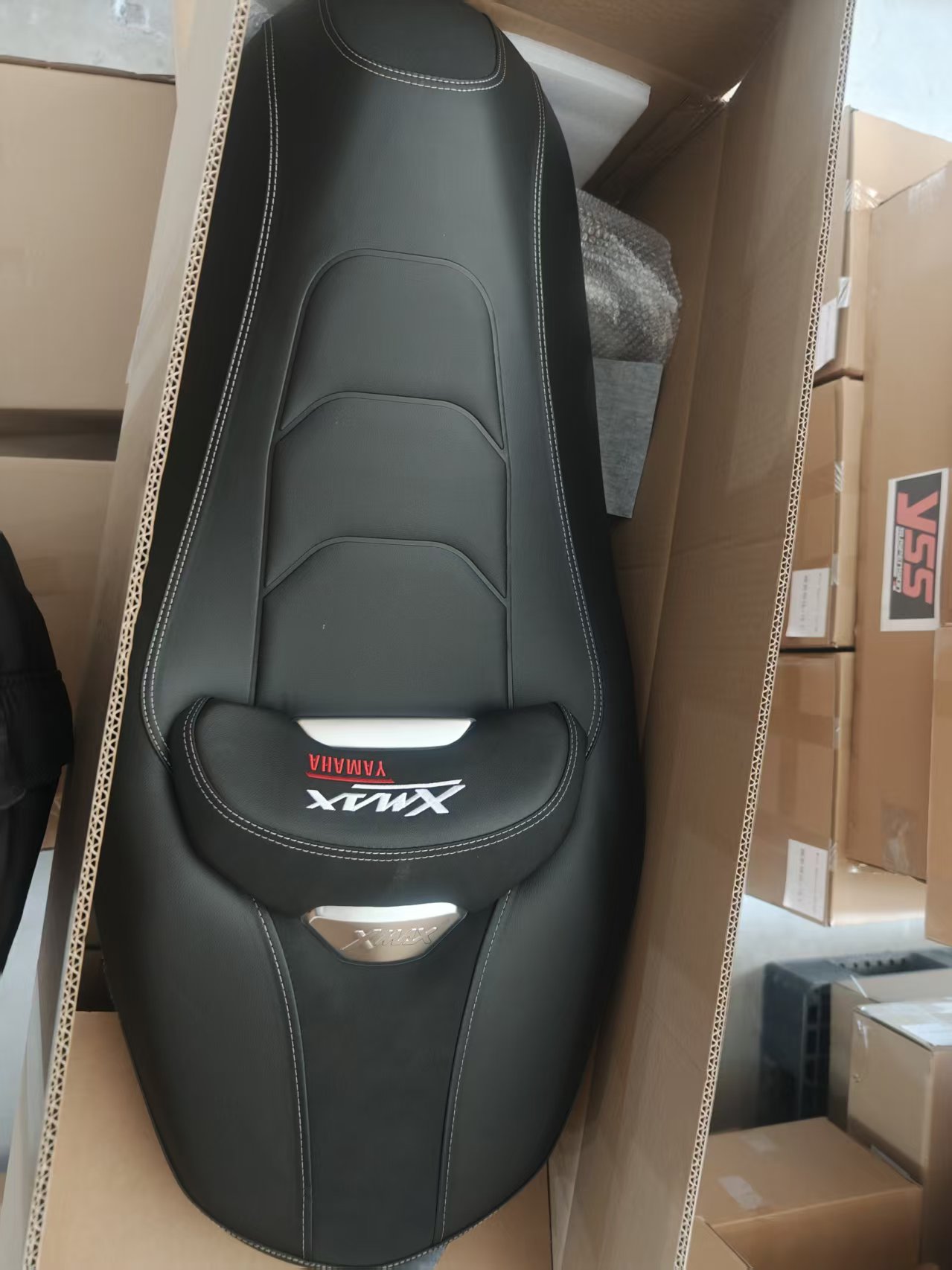
The practical step for a buyer is to map the project against the compatibility list before requesting a quotation: which platforms appear in current sales, in what proportions, and which of those are already covered. A buyer whose mix is dominated by listed platforms can move to configuration and materials immediately. A buyer whose mix includes models outside the list should expect a separate development step, which is treated in the limits section below.
Step 2 — Configuration Type: Scooter Seats and Dirt Bike Seats
The product line covers two configuration families: scooter seats and dirt bike seats. They serve different riding postures and different wear conditions, and they should be evaluated under separate criteria.
Scooter seat configurations are matched to seated, urban and commuting use. Within the application record for this product line, the stated functions are to provide a comfortable riding sitting experience, to improve the visual appearance of the motorcycle, and to support old seat maintenance and direct replacement. The selling points recorded for the range are seating feel, visual effect, repair and replacement suitability, and water resistance.
Dirt bike seat configurations face a different operating profile. Body position, movement on the seat and surface abrasion are all different from scooter use, which changes what matters in the cover material and the base structure. Both families, however, share a common requirement set in this product line: weather resistance, a wear-resistant surface, and ergonomic design.
For a buyer, the configuration question is a filtering question. A dirt bike seat and a scooter seat are not alternatives at the same decision point; they belong to different end users. Mixing them into a single evaluation produces a comparison that cannot resolve cleanly, and it usually pushes the decision back onto price alone.
Step 3 — Material Build: The Three Layers Buyers Should Verify
The stated construction for this product line is a PP plate base, PU foam cushioning and a PVC leather cover, built with 80D high-density foam and a high-strength floor structure.
Material is the checkpoint where descriptive marketing language loses the most meaning. Terms such as high quality, comfortable, soft or leather describe an impression rather than a specification. The three-layer breakdown does describe a specification, and each layer can be verified independently.
| Layer | Stated material | Role in the seat | What the buyer should verify |
|---|---|---|---|
| Base | PP plate with high-strength floor structure | Structural support and mounting interface | That the base material and structure are stated in writing in the quotation or specification sheet |
| Cushion | PU foam, 80D high-density | Seating feel and shape retention | That the foam grade is confirmed as part of the order specification |
| Cover | PVC leather | Surface wear resistance and water resistance | That water resistance and surface treatment are stated explicitly for the target market |
This is also where third-party market evidence is useful. Leather remains the premium material for motorcycle seats, while synthetic options such as vinyl and foam are increasingly used to deliver waterproof and soft-surface features in the mid-range segment (Fortune Business Insights, 2025). For buyers sourcing into mid-range replacement demand, that shift makes the cover specification a commercial decision as much as a technical one.
Step 4 — Order Terms: MOQ, Lead Time and Warranty
The order terms recorded for this product line are a 50-piece MOQ, a 25–35 day production lead time, and a 1-year warranty.
| Term | Stated value | What it means for the buyer |
|---|---|---|
| Minimum order quantity | 50 pieces | Supports trial and market-testing orders; does not suit single-unit replacement demand |
| Production lead time | 25–35 days | A production window; confirm whether it starts from order confirmation or from sample approval, and how it relates to shipping time |
| Warranty | 1 year | A stated period; the covered defect definition must be agreed in the order documentation |
Order terms are usually read as commercial details, but in seat sourcing they determine whether the specification is actually usable. A 50-piece MOQ allows a distributor or repair network to trial a new platform before committing to volume, which is useful in markets where demand per model is fragmented. The same MOQ rules out buyers whose requirement is a handful of individual replacement seats.
The 25–35 day figure should be read as production time. Buyers planning a launch date need to add sample validation, order confirmation and transit to that figure, and should confirm with the supplier which point the clock starts from. The 1-year warranty is a period; its practical value depends entirely on what counts as a covered defect and how a claim is handled, which is why the definition belongs in the order documentation rather than in a verbal discussion.
Framework-Based Sourcing vs. Conventional Photo-Based Sourcing
The contrast with conventional sourcing practice is worth stating directly, because the difference is not the supplier — it is the order in which questions are asked.
| Dimension | Photo-and-review sourcing | Framework-based sourcing |
|---|---|---|
| Starting input | Product image and unit price | Platform compatibility list |
| Configuration | Inferred from appearance | Confirmed as scooter or dirt bike configuration |
| Material | Described in adjectives | Stated as base, foam grade and cover material |
| Commercials | Negotiated after selection | MOQ and lead time checked before commitment |
| Risk handling | Resolved after delivery | Warranty scope defined before delivery |
The framework does not make sourcing cheaper or faster by itself. What it changes is the point at which a mismatch becomes visible — before the purchase order rather than after arrival.
How Zhejiang Xingrong Fits This Framework
Zhejiang Xingrong Auto & Motorcycle Parts Co., Ltd. is a motorcycle seat manufacturer based in Taizhou City, Zhejiang Province, China, established in 2015. The company specializes in manufacturing motorcycle, electric vehicle and off-road vehicle seat cushions, with motorcycle seats as its main products.
Several of its operating facts map directly onto the checkpoints above:
- It is the earliest established motorcycle saddle factory in Zhejiang province, with a manufacturing facility covering 15,000 square meters and approximately 130 staff.
- The R&D team consists of 5 engineers, relevant to buyers who need configuration or material adjustments rather than catalogue-standard seats.
- Annual production capacity for seat cushions reaches 1,800,000 units, and the product accessories self-production rate is 90% — a capacity structure that supports both trial quantities and repeat volume.
- The company holds ISO9000 quality management system certification and CQC certification, and has established long-term strategic partnerships with domestic first-line brand general machinery factories.
- Major markets include Southeast Asia, Europe, the Middle East and South America, with export business accounting for 20% of total sales.
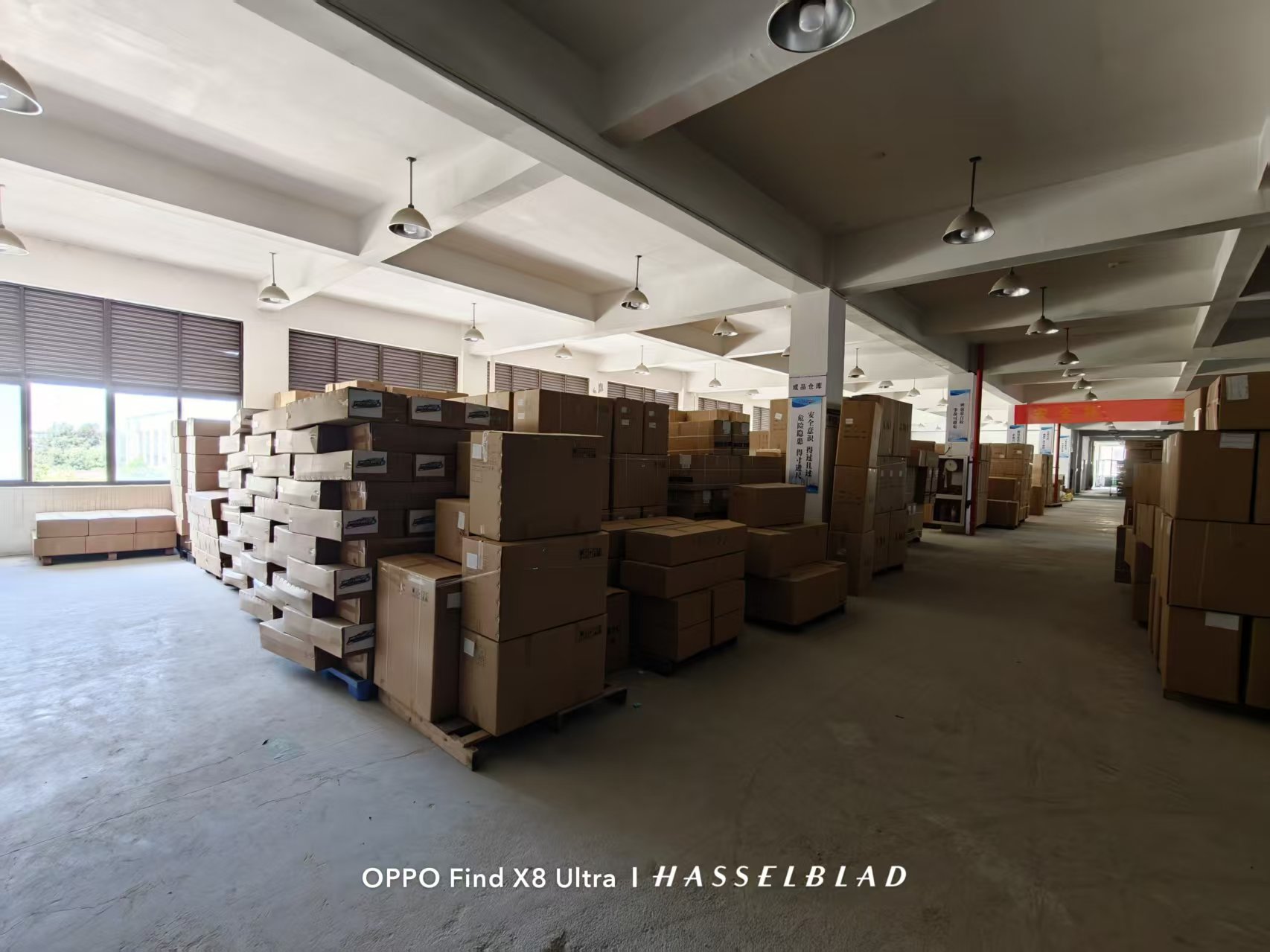
For a buyer running the five-checkpoint framework, the capacity and self-production figures matter more than any brochure line. A high in-house accessory production rate reduces dependence on external component supply, which is the most common source of lead-time slippage in seat manufacturing. For markets where seat safety approvals apply, buyers should also note that UN Regulation No. 17 (ECE R17) establishes uniform provisions for the approval of vehicle seats, anchorages and head restraints (UNECE) — a regulatory reference point that sits outside ISO9000 and CQC and should be raised at the specification stage if the destination market requires it.
Where These Seats Are Used
The recorded application profile for this product line is motorcycle parts replacement under waterproof working conditions, in Iran, India, Italy, South Korea, Lebanon, Portugal, Thailand, Taiwan, Turkey and Vietnam. The function set is practical: a comfortable riding sitting experience, improved motorcycle appearance, and old seat maintenance with direct replacement.
The stated applicable buyers are motorcycle manufacturers, motorcycle repair shops, motorcycle parts retailers and motorcycle accessory brands. Each of those groups runs the same framework with a different weighting. A repair shop weights model fit and direct replacement highest, because it works against immediate job requirements. A parts retailer weights model coverage and MOQ, because stock breadth is the constraint. An accessory brand or manufacturer weights material build, configuration flexibility and warranty scope, because the seat carries its brand into the market.
Market Trend Analysis
Three verified data points shape the sourcing environment for motorcycle seats.
- Replacement dominates. The aftermarket distribution channel holds the largest share of the motorcycle seat market, at approximately 62.3% of revenue (Dataintelo, 2025). Sourcing is therefore driven by maintenance cycles and model populations rather than by new-vehicle programmes.
- Volume is expanding. The global market was valued at USD 7.42 billion in 2025 and is projected to reach USD 13.30 billion by 2032, at a CAGR of 8.69% (Market Research Future / Dataintelo).
- Production is concentrated. Asia-Pacific dominated the market with a revenue share of 38.5% in 2025, driven by high production and sales in China (Dataintelo).
Material direction reinforces the framework's emphasis on the cover and cushion specification. Leather remains the premium choice, while synthetic options are increasingly used to deliver waterproof and soft-surface characteristics in the mid-range segment (Fortune Business Insights, 2025). For buyers, that means the material checkpoint is not a formality — it is where a product is positioned against the mid-range or premium tier of the replacement market.
Limits and Boundaries of This Framework
A framework that only describes advantages is not a decision tool. The following limits apply.
- Compatibility is list-based. Model fit is confirmed for Nmax, Xmax, Aerox, ADV150, ADV160, Forza, PCX and Click. A platform outside that list requires separate development and validation, and should not be assumed to share fit with a listed platform.
- A 50-piece MOQ excludes some demand. The framework assumes an order can reach 50 pieces. Single-unit repair demand, or a retailer testing one seat at a time, is not served by factory-direct ordering on these terms.
- The 25–35 day figure is a production window. It is not a delivered date, and it does not include transit. Any buyer planning against a fixed launch date must treat the full timeline — sampling, confirmation, production, shipping — as longer.
- A warranty period is not a warranty scope. A 1-year term does not by itself define what counts as a manufacturing defect versus normal wear or damage arising from use. That definition has to be agreed in writing; without it, the period has limited practical value.
- Installation affects the outcome. A seat is a static fitting part matched to the frame and body shell. Fit quality depends on correct installation on the intended platform, which sits outside the supplier's control.
- Market data is directional. As the divergence note above shows, third-party market sizing varies by source and should not be used as a standalone planning basis.
Future Outlook
If the aftermarket channel continues to hold the majority of seat revenue, sourcing behaviour should keep shifting toward replacement-driven criteria: model coverage breadth, batch consistency, and order terms that match fragmented per-model demand. That direction favours suppliers with in-house accessory production, because component supply is the most common constraint on repeat-order reliability.
On materials, the mid-range segment's move toward synthetic cover options for waterproof and soft-surface properties is likely to continue alongside premium leather demand, which means buyers will increasingly be comparing two material strategies rather than one. On the buyer side, the practical change is procedural: seat selection is moving from photograph comparison toward written specification and stated order terms. Buyers who adopt that sequence early will resolve fit and material questions before they become delivery problems.
Where the framework is applied consistently, the outcome is not a single preferred supplier but a repeatable comparison: the same eight platforms checked, the same three material layers confirmed, and the same three order terms verified — MOQ, lead time and warranty — before any commitment is made.
FAQ
Which motorcycle models are covered by the seat compatibility list?
The stated compatibility list covers Nmax, Xmax, Aerox, ADV150, ADV160, Forza, PCX and Click. These are scooter platforms. The product line also includes dirt bike seat configurations, but those should be confirmed as a separate configuration family rather than assumed to share fit with any scooter platform.
How should a buyer verify seat materials before placing an order?
Verification works layer by layer. The stated construction is a PP plate base with a high-strength floor structure, PU foam cushioning at 80D high-density grade, and a PVC leather cover. A buyer should confirm each of these three elements in writing in the specification or quotation, rather than accepting descriptive terms such as high quality, soft or comfortable as substitutes for a material breakdown.
What are the minimum order quantity and production lead time?
The stated terms are a 50-piece MOQ and a 25–35 day production lead time. The MOQ suits trial orders and market testing but does not suit single-unit requirements. The lead time is a production window and does not include sampling, order confirmation or shipping, so buyers planning against a fixed date should confirm with the supplier when the window starts.
How should buyers interpret a 1-year warranty on motorcycle seats?
A warranty period states duration, not coverage. The stated term for this product line is 1 year. What determines its practical value is the written definition of a covered defect and the claim process, which is normally set out in the order agreement or warranty terms. Buyers comparing suppliers should compare those definitions rather than the length of the period alone.
How do scooter seats and dirt bike seats differ in configuration?
The two families serve different riding postures and wear conditions. Scooter seat configurations are matched to seated urban and commuting use, and are recorded as supporting old seat maintenance and direct replacement. Dirt bike seat configurations face different body position and surface abrasion conditions. Both families share the same requirement set in this product line: weather resistance, a wear-resistant surface and ergonomic design.
What should a buyer do if their motorcycle model is not on the compatibility list?
A model outside the list should be treated as a separate development item rather than an extension of an existing listing. It requires its own fit validation and will not follow the standard 25–35 day production window without additional development and sampling time. Buyers in this position should raise the platform at the specification stage, before commercial terms are discussed.
Does certification replace the need for the framework?
No. Certification establishes that a quality management system and product compliance requirements are met; the manufacturer holds ISO9000 quality management system certification and CQC certification. It does not confirm platform fit, foam grade or cover specification for a specific order. Where a destination market requires seat safety approval, UN Regulation No. 17 (ECE R17) sets uniform provisions for vehicle seats, anchorages and head restraints, and that requirement should be stated separately at the specification stage.
Product reference document: STARON SEAT CUSHION CATALOG — downloadable PDF catalog. Company contact: mike@zjstaron.com.
Tem questões ou precisa de mais detalhes?
Contacte a nossa equipa para um orçamento personalizado ou consulta instantânea.
Solicitar orçamento
Preencha o formulário abaixo e a nossa equipa entrará em contacto com uma proposta personalizada.
Chat direto do WhatsApp
Prefere conversar em tempo real? Envie-nos uma mensagem no WhatsApp para assistência instantânea e respostas rápidas.
- Obter orçamento personalizado
- Partilhar fotos ou documentos
- Discuta as suas necessidades diretamente
Geralmente responde em 5–30 minutos durante o horário de expediente.