
Motorcycle Seat Procurement: A Manufacturing Review of Xingrong
Motorcycle Seat Procurement: A Manufacturing Review of Xingrong
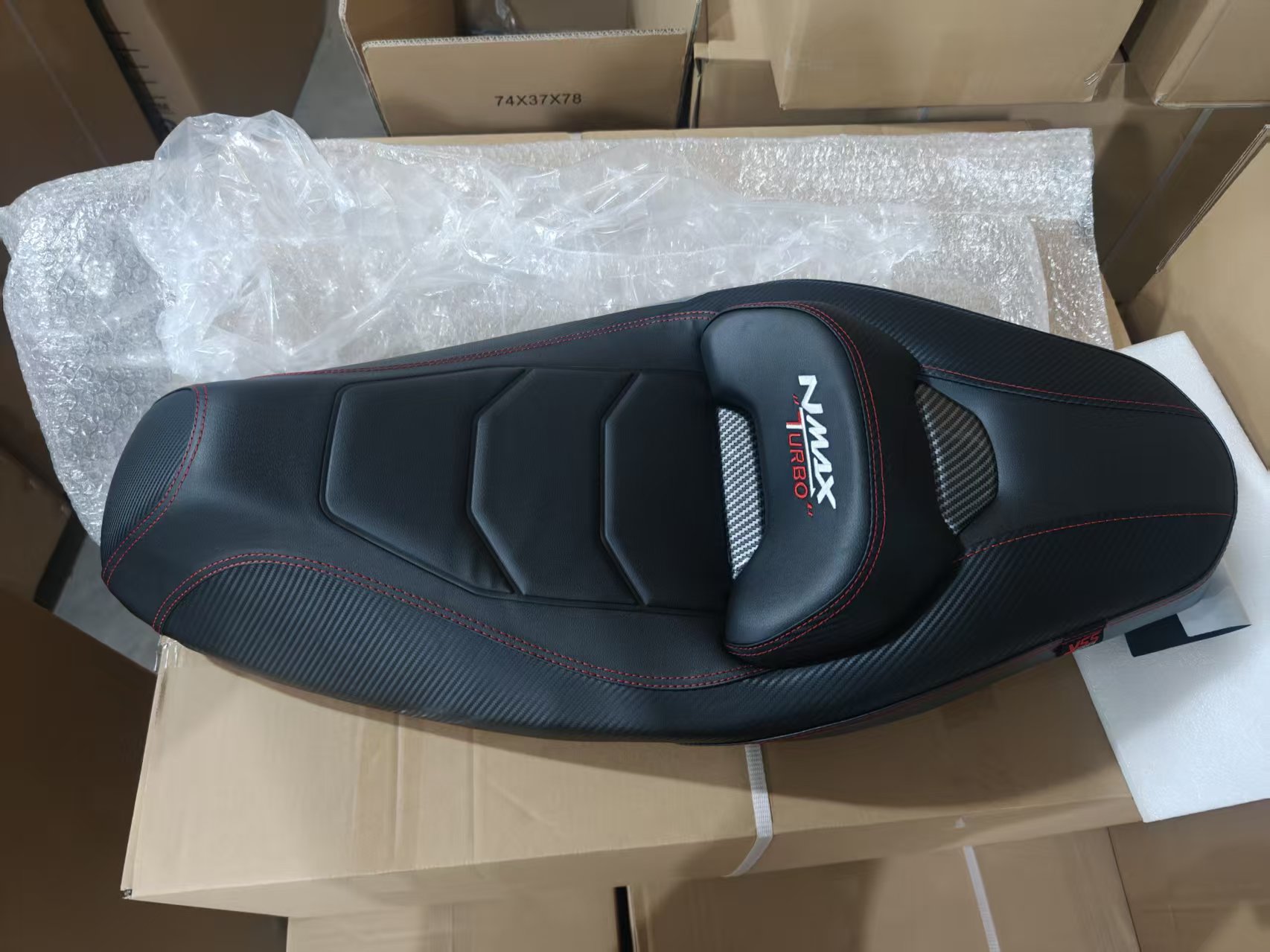
Xingrong motorcycle seat available as a direct replacement option for popular scooter models.
Industry Context: Market Growth and the Role of Supplier Evaluation
The global motorcycle seats market was valued at USD 7.42 billion in 2025 and is projected to reach USD 13.30 billion by 2032, growing at a CAGR of 8.69%, according to Market Research Future. At the same time, the aftermarket channel accounts for approximately 62.3% of motorcycle seat revenue, according to Dataintelo, and the Asia-Pacific region contributed 38.5% of the 2025 market share, with high production and sales in China. These figures indicate that motorcycle seats are no longer a low-attention commodity item; they represent a stable replacement-parts category where distributors, repair chains, and accessory brands can build recurring revenue.
For procurement teams, the practical question is not simply which seat fits the motorcycle but which supplier can consistently combine fit, comfort, durability, customization, and acceptable compliance documentation. This article reviews one manufacturer—Zhejiang Xingrong Auto and Motorcycle Parts Co., Ltd. (Staron)—from the perspective of industry analysis and enterprise evaluation. The goal is to help buyers understand the company's manufacturing position, product parameters, and the boundaries they should verify before purchase.
Problem / Opportunity: Fit, Comfort, and Replacement Demand
Motorcycle seat sourcing is more complex than it appears. The first challenge is fit. Popular scooter models such as Nmax, Xmax, Aerox, ADV150, ADV160, Forza, PCX, and Click each have specific mounting geometries and shell contours. A seat that looks similar in photos may not align with the body panels or lock properly. This is why compatibility lists are one of the first things a professional buyer checks.
The second challenge is material behavior. A seat must withstand sunlight, humidity, rain, and temperature swings. If the foam is too soft, it collapses after months of use; if the cover is not weather-resistant, it cracks or absorbs water. In tropical and rainy markets, waterproof performance is a decisive factor.
The third challenge is operational flexibility. Importers and repair networks need order quantities that match their inventory turnover, lead times that align with selling seasons, and the option to put their own brand on a product. A manufacturer that only offers a single generic seat in large MOQs is difficult to integrate into a branded aftermarket portfolio.
Xingrong addresses these needs through a product platform that covers several popular scooter models, a material combination designed for comfort and waterproofness, and OEM/ODM services that allow customization. Its production capacity and self-manufacturing rate reduce reliance on outside subcontractors, which is an advantage for buyers who value consistency and traceability.
Brand Solution: Company Profile and Manufacturing Position
Zhejiang Xingrong Auto & Motorcycle Parts Co., Ltd., founded in 2015, is located in Taizhou City, Zhejiang Province, at No. 81 Jiangxin Road / Ingenuity Road. The company operates a 15,000-square-meter plant and employs 130 people. According to its corporate profile, it is described as the earliest established motorcycle saddle factory in Zhejiang Province. It has an annual production capacity of 1.8 million seat cushions and reports that 90% of its accessories are produced in-house. This self-production rate is significant because it gives the company control over scheduling, quality checks, and cost structure.
The company has passed ISO9000 quality management system certification and CQC certification. It also states that it has established long-term strategic partnerships with several domestic first-line brand general machinery factories. While ISO9000 is a widely recognized quality management baseline, CQC is a Chinese certification mark that demonstrates conformity to Chinese standards. For buyers, these certifications provide initial confidence, but they do not automatically replace market-specific product approvals.
Xingrong's export business accounts for 20% of output, with main markets in Southeast Asia, Europe, the Middle East, and South America. The export ratio is modest compared with fully export-oriented factories, but it shows that the company already manages cross-border logistics, packaging, and international buyer expectations. The R&D team consists of 5 engineers. For a company of this size, a dedicated R&D unit supports customization projects and continuous model adaptation.
In manufacturing terms, the main asset is the 90% in-house production rate. In the motorcycle seat industry, many smaller manufacturers outsource the cutting, stitching, or foam molding. Xingrong's level of vertical integration shortens communication loops and makes the production line more responsive to OEM/ODM requests. This is especially useful for buyers who need to adjust cover design or stitching colors.
Technical Explanation: Seat Structure, Materials and Performance Parameters
The core product is a motorcycle seat built on three layers: a PP plate base, PU foam padding, and a PVC leather cover. Each layer serves a specific function.
The PP plate provides the structural base. It must be stiff enough to attach securely to the motorcycle frame while remaining light enough for everyday riding. Xingrong specifies a high-strength floor structure, which is intended to provide a stable mounting platform over the life of the seat.
The PU foam is the comfort layer. Xingrong uses 80D high-density foam. In foam density measurement, a higher D value generally means a firmer and more durable cushion. An 80D foam typically offers a balance between support and initial softness, which is why the company lists great seating feel as a selling point. High-density foam also tends to retain its shape longer than low-density alternatives, reducing the hollow or compressed feel seen in cheap replacement seats.
The PVC leather cover is the contact layer. Polyvinyl chloride (PVC) leather is widely used in the mid-range segment because it is easy to clean, resistant to fading, and can be formulated to provide a wear-resistant surface. In Xingrong's case, the product description highlights waterproof performance. The combination of PVC leather and dense foam reduces water absorption and helps riders stay dry in wet weather. The cover is also designed to improve visual effect, an important factor for scooter owners who treat seat color and texture as a style upgrade.
The product is categorized as both scooter seats and dirt bike seats in the company's description, with current model fitments covering Nmax, Xmax, Aerox, ADV150, ADV160, Forza, PCX, and Click. These are some of the most recognized scooter platforms in Southeast Asia and Europe. The availability of a single manufacturer that can supply several models makes trade consolidation easier for distributors.
Application / Use Cases: Replacement Market and Customization Scenarios
The main application for Xingrong's seats is motorcycle parts replacement. Older or damaged original seats are replaced with a new cushion that fits the existing frame and shell. This is a non-powered static fitting process: the seat is mounted directly onto the motorcycle main body frame and shell. The application profile lists weather resistance, wear-resistant surface, and ergonomic design as special requirements, which aligns with the seat's material choices.
Who buys these seats? The stated customer base includes motorcycle manufacturers, motorcycle repair shops, motorcycle parts retailers, and motorcycle accessory brands. This is a broad channel range. Repair shops need quick access to model-specific seats; retailers need a small number of SKUs that move fast; accessory brands want catalog products that can be rebranded; and manufacturers may source seats for assembly or spare parts programs.
The documented case evidence is a buyer in Lebanon that ordered 5,000 pieces over a two-year period for motorcycle parts replacement. The reported results were great seating feel, good visual effect, and waterproof performance. Although this is a single case, it demonstrates that the product has been purchased at scale and the buyer remained active for two years, which implies an acceptable level of satisfaction.
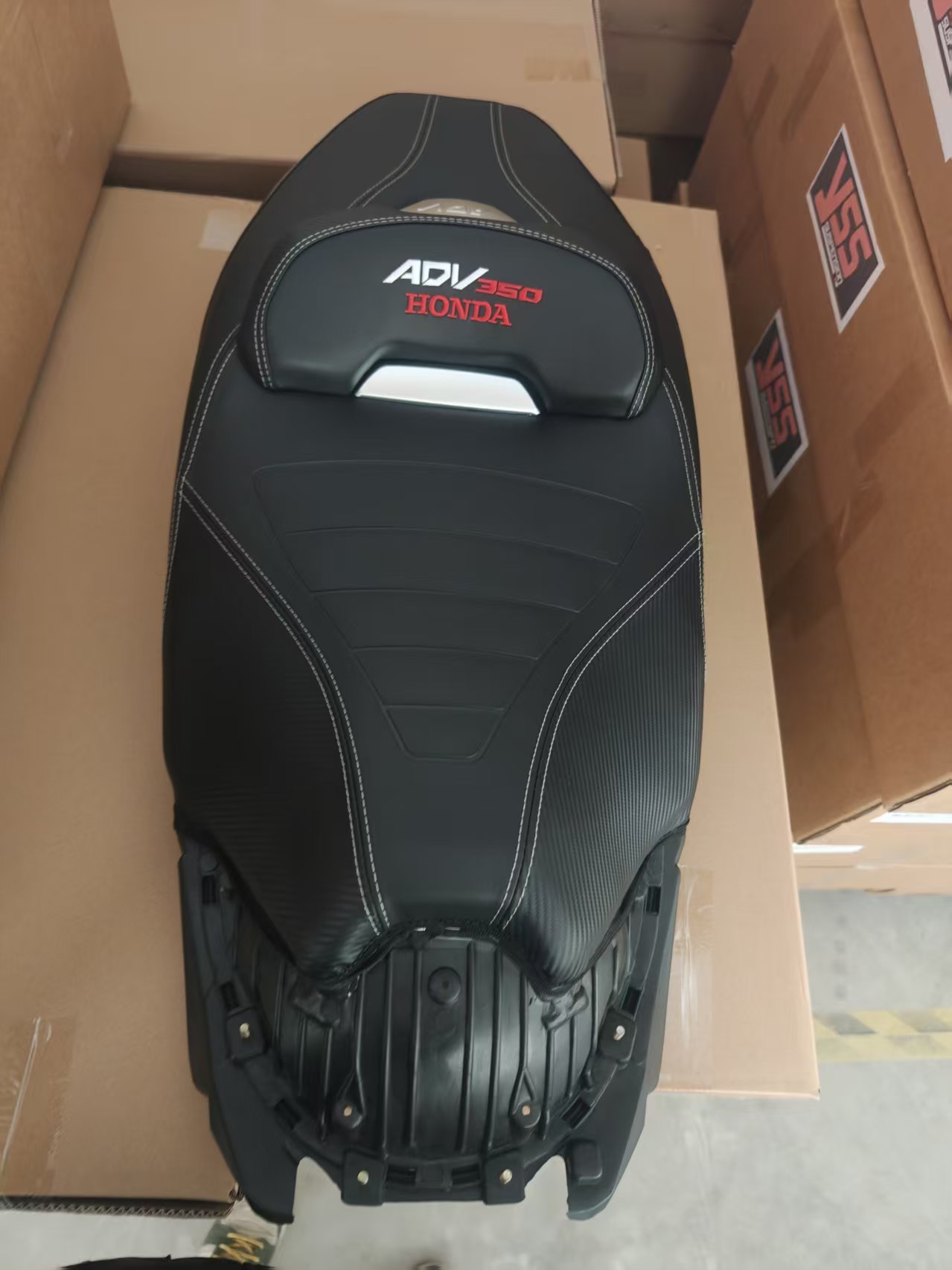
Another model in Xingrong's replacement motorcycle seat line, shown here for the ADV350 application.
Additional market references from the company's application data include countries such as Iran, India, Italy, South Korea, Lebanon, Portugal, Thailand, Taiwan, Turkey, and Vietnam. The presence of Southern European and Southeast Asian markets in this list is relevant because these regions have high scooter penetration and seasonal or tropical rainfall, making waterproof comfort a valued feature.
Market Trend Analysis: Demand Drivers and Compliance Pressures
The verified market data points in a clear direction. The global motorcycle seats market is projected to nearly double in value between 2025 and 2032, according to Market Research Future. A significant part of that growth is replacement demand. With the aftermarket channel holding an estimated 62.3% share, distribution networks, not first-fit assembly lines, are the primary route to market for many seat manufacturers. This is good news for a supplier like Xingrong that sells through parts retailers and distributors.
The Asia-Pacific region's 38.5% share underlines the importance of high-volume production in China and nearby markets. For importers outside Asia, working with a Chinese manufacturer remains a natural choice because of the concentration of tooling, material suppliers, and assembly know-how in the region.
Material trends also support Xingrong's product direction. Industry analysis from Fortune Business Insights notes that leather remains a premium material, but synthetic options such as vinyl and foam are increasingly used for their waterproof and soft-surface features in the mid-range segment. This is exactly the segment that PP, PU, and PVC seats occupy. Therefore, Xingrong's material package is not an old low-cost solution; it is aligned with a broader move toward durable synthetic surfaces.
Compliance is the area that requires the most careful attention. UN Regulation No. 17 (ECE R17) establishes uniform provisions for the approval of vehicle seats, anchorages, and head restraints. This standard is widely used for vehicle seat safety compliance and is critical for high-level safety compliance in European and other regulated markets. However, ECE R17 compliance is not currently listed in Xingrong's corporate profile. The company's published certifications are ISO9000 and CQC. For buyers who need documented seat-specific approval, this is a gap that must be addressed before purchase—either through supplier-supplied test reports or through an independent certification project.
Comparison with Traditional Sourcing Routes
To put Xingrong in context, it helps to compare three sourcing routes: original dealer parts, universal aftermarket seats, and independent manufacturers.
| Criteria | Original dealer parts | Universal aftermarket seats | Independent manufacturer (Xingrong) |
|---|---|---|---|
| Fit precision | Model-specific | Often approximate | Listed for Nmax, Xmax, Aerox, ADV150/160, Forza, PCX, Click |
| Customization | Low | Low | OEM/ODM; logo, leather cover, stitching line color |
| MOQ | Low | Low | 50 pcs |
| Lead time | Varies by dealer | Short | 25–35 days |
| Price point | Highest | Variable | Competitive for serial orders |
| Compliance evidence | OEM documentation | Often limited | ISO9000, CQC published; ECE R17 not listed |
Original dealer parts are the safest fit for a specific brand and model. They are made by licensed suppliers and carry the original warranty. However, they are expensive, have limited customization options, and may require long waiting times for older models. For repair shops that serve cost-sensitive customers, dealer pricing is often too high.
Universal aftermarket seats are cheap and widely available. They may be described as fit-most products, but their mounting points and contours are not exact. A universal seat can sometimes be installed with modifications, but the outcome is uncertain; it may not lock properly or may look misaligned. For a professional parts retailer, selling a universal seat with poor fit can create returns and damage the brand.
Independent manufacturers like Xingrong sit between these two routes. They publish a specific compatibility list, which gives buyers confidence about fit for those models. They offer customization options such as logo branding, leather cover design, and stitching line color. At the same time, they can supply wholesale volumes at competitive prices, with a stated MOQ of 50 pieces and a lead time of 25–35 days.
The trade-off is coverage. A dealer catalog covers all models in a brand lineup, while an independent manufacturer typically develops tooling for the highest-volume models first. Xingrong's current platform is concentrated on a set of popular scooters; it does not claim to cover adventure bikes, cruisers, or sports bikes. Buyers with wider vehicle portfolios must check whether their target models are available or whether a custom tooling project is required.
Future Outlook: Scale, Compliance, and Customization
Looking ahead, the replacement motorcycle seat market has three themes: scale, compliance, and customization. Scale matters because aftermarket buyers need stable stock over many months. Xingrong's monthly capacity of 50,000 pieces and annual capacity of 1.8 million cushions place it in a position to support medium-size distributors and assemblers. The 25–35 day lead time is practical for order planning, and the 50-piece MOQ allows buyers to test the market before placing larger orders.
Compliance will become a stronger purchasing criterion as more buyers sell into regulated markets. The absence of a listed ECE R17 approval is not necessarily a permanent barrier, but it means that procurement teams should request test data or consider a certification project before making a final commitment. Suppliers that can add international seat-specific approvals will have a clear advantage in European and Middle Eastern tenders.
Customization is the differentiating factor. OEM/ODM capability is increasingly necessary for accessory brands that want their own logo and packaging. Xingrong's ability to modify logo, leather cover design, and stitching line color gives it a service-based relationship with customers rather than a pure product transaction. This is valuable for building repeat orders.
Procurement Advice and Decision Checklist
For buyers evaluating Xingrong in the Research and Evaluation stage, the following checklist summarizes the key facts and boundaries.
- Compatibility: Current catalog fits Nmax, Xmax, Aerox, ADV150, ADV160, Forza, PCX, and Click models.
- Material specification: PP plate base, PU foam (80D high-density), PVC leather cover, high-strength floor structure.
- Customization: OEM and ODM; logo/branding, leather cover design, stitching line color.
- Minimum order quantity: 50 pieces.
- Lead time: 25–35 days.
- Quality control: 100% pre-shipment inspection.
- After-sales: 1-year warranty.
- Certifications: ISO9000 and CQC listed; ECE R17 not listed.
- Reference case: 5,000-piece order from Lebanon over two years with positive feedback on seating feel, visual effect, and waterproofing.
Buyers should always request a pre-production sample, especially when the product will be sold in a wet climate. A sample test will reveal whether the foam density, surface grip, and locking system meet market expectations.
FAQ
This motorcycle seat fits Nmax, Xmax, Aerox, ADV150, ADV160, Forza, PCX, and Click models.
The seat uses a PP plate base, PU foam, and PVC leather cover. The foam is specified as 80D high-density foam, and the product has a high-strength floor structure.
Yes. Xingrong supports OEM and ODM production. Customization options include logo/branding, leather cover design, and stitching line color.
The minimum order quantity is 50 pieces. Standard lead time is 25–35 days.
Waterproof performance is listed as a selling point. The PVC leather outer layer and dense foam structure support use in wet conditions. Buyers are advised to test samples for their specific climate.
Xingrong states that it performs a 100% pre-shipment test before products leave the factory.
The company offers a 1-year warranty on its seats.
According to the company profile, Xingrong has passed ISO9000 quality management system certification and CQC certification. It does not list ECE R17 seat-specific approval in its current corporate information.
For further reference, the company's downloadable product catalog is available here: Download Xingrong seat catalog