
Motorcycle Seat Supplier Capability: Scale, Testing and Export Proof
Motorcycle Seat Supplier Capability: Scale, Testing and Export Proof
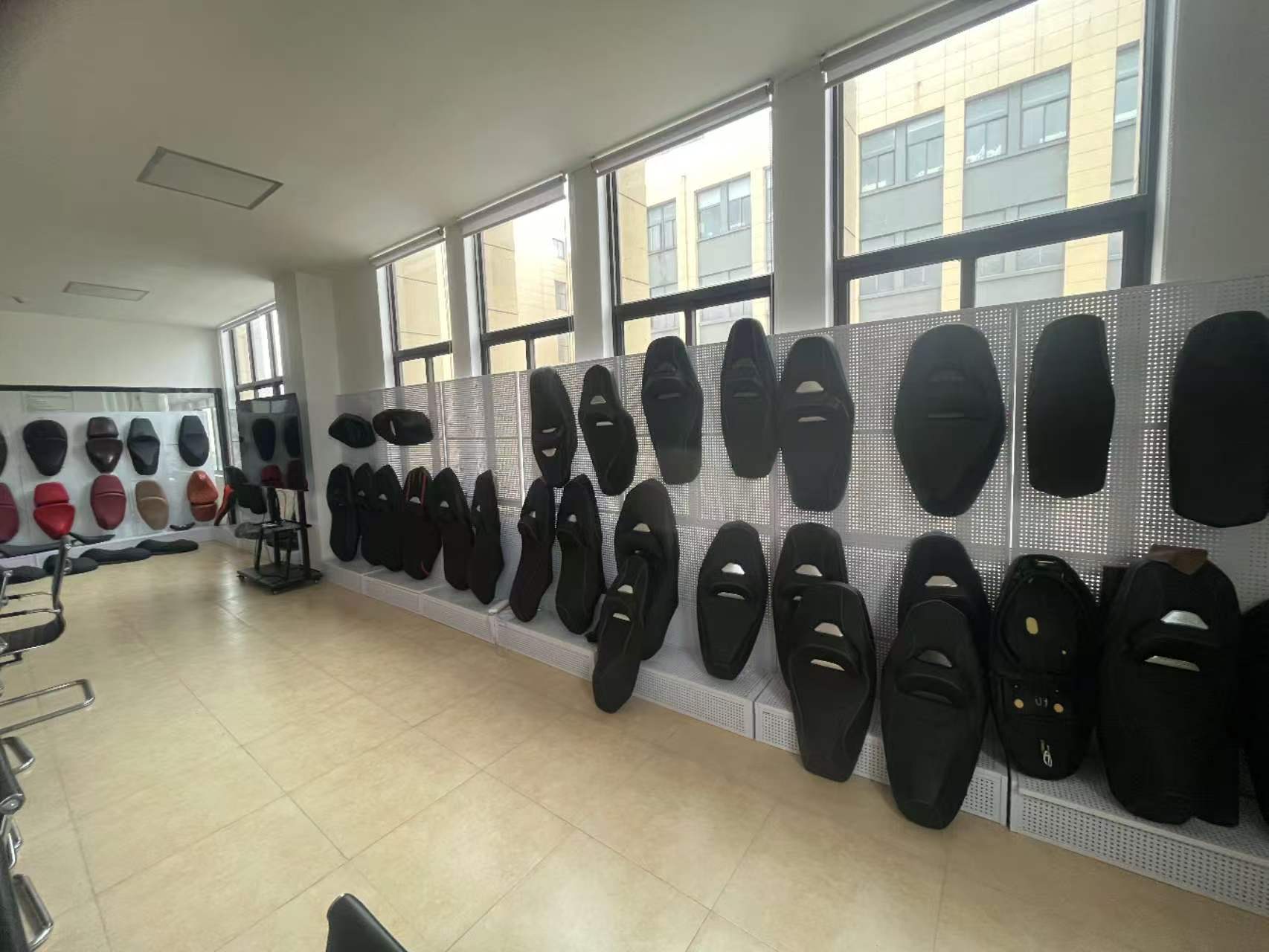
Motorcycle seat buyers rarely struggle to find suppliers who claim capacity, certification and export experience. The harder task is deciding which of those claims is specific enough to plan an order around. A plant area, a monthly output figure or a certificate name only becomes decision-grade information when it is tied to a defined product, a defined order size and a verification step the buyer can actually perform.
Zhejiang Xingrong Auto & Motorcycle Parts Co., Ltd. publishes a capability record that can be examined item by item. The company is a Taizhou-based manufacturer of motorcycle, electric vehicle and off-road vehicle seat cushions, established in 2015, operating a 15,000-square-metre plant with 130 employees and stating a monthly motorcycle seat capacity of 50,000 pieces. This review sets out that record — plant scale, ISO9000 and CQC certification, pre-shipment testing practice, order terms, OEM/ODM customization and export history — and explains what each element supports for a buyer at evaluation or execution stage, and what it leaves open.
Plant scale: what 15,000 m² and 50,000 pieces a month describe
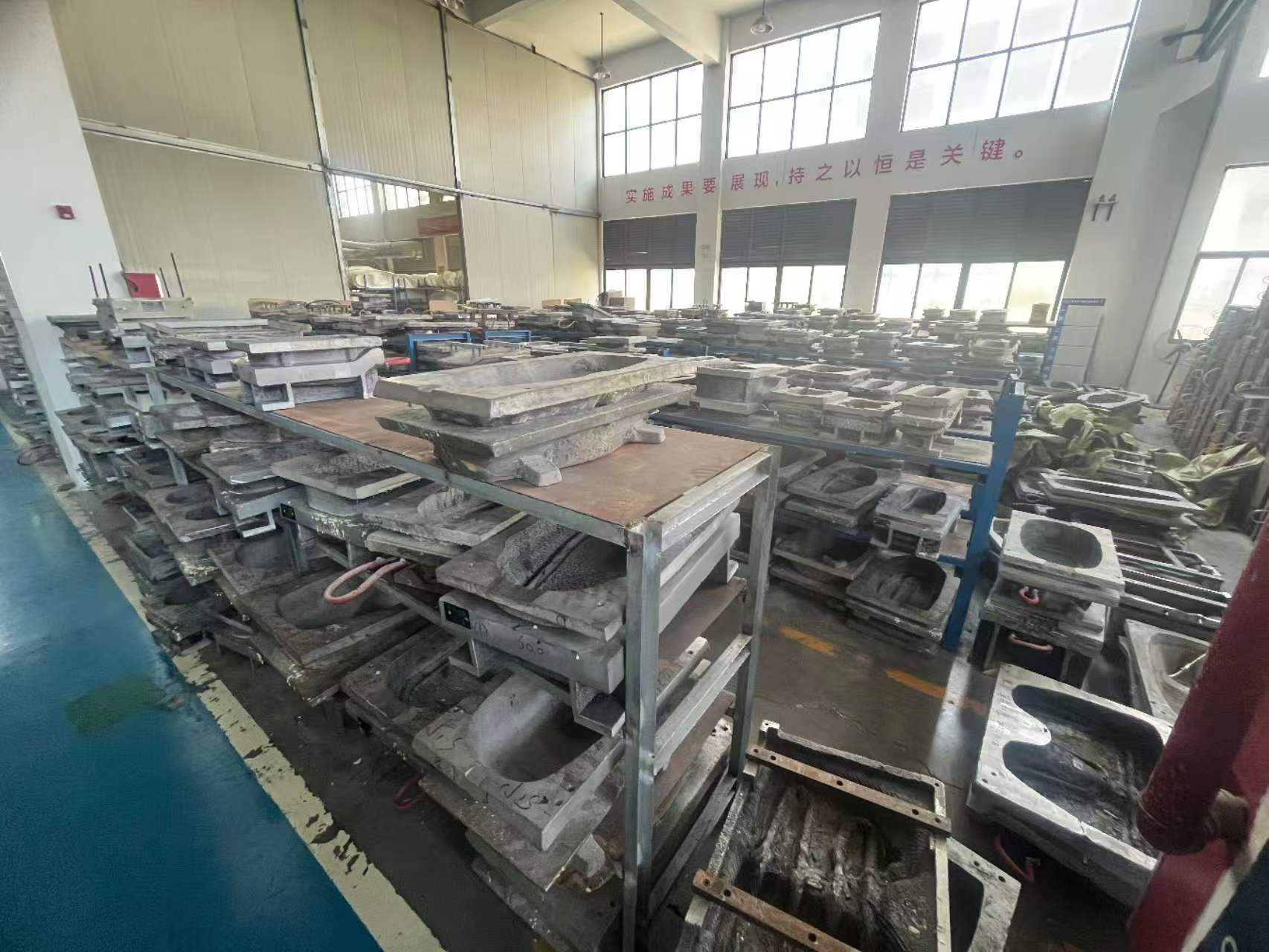
Scale claims matter to a seat buyer for one practical reason: the ability to absorb a repeat order without changing the production routine that produced the approval sample. Xingrong's stated profile covers a 15,000-square-metre facility in Taizhou, Zhejiang Province, 130 employees, a five-engineer R&D team, a 90% self-production rate for product accessories, and an annual seat cushion output of 1,800,000 units. The capability record adds a monthly motorcycle seat capacity of 50,000 pieces and a quoted lead time of 25–35 days.
The self-production rate is often the least conspicuous number and the most useful. When a manufacturer reports that 90% of seat accessories are made in-house, covers, foam and base components are not waiting on an unrelated third-party schedule before final assembly can begin. For a buyer, that translates into fewer handover points where a specification can drift between the approved sample and the shipped batch, and fewer points where a component shortage can stall an order already promised to a distributor.
Reconciling two capacity figures before you plan volume
Two figures sit side by side in the published record: annual output of 1,800,000 seat cushion units, and a monthly motorcycle seat capacity of 50,000 pieces. They are stated at different levels of aggregation, and a buyer should not silently convert one into the other. Seat cushion output covers the wider product range — motorcycle, electric vehicle and off-road vehicle seats — while the monthly figure is stated specifically for motorcycle seats.
The practical response is straightforward: ask the supplier to confirm, in writing, which figure applies to the specific seat model and configuration being quoted. In seat manufacturing, throughput is frequently set by the slowest step — cover cutting, foam moulding, stitching or final assembly — rather than by total floor area. A plant can be large and still have a bottleneck in one of those stages, so the useful question is not "how big is the factory" but "what monthly volume has this model line actually delivered".
Testing and certification: ISO9000, CQC and 100% pre-shipment inspection
Xingrong states that it has passed ISO9000 quality management system certification and holds CQC certification, and that quality control includes a 100% pre-shipment test. Those three items answer different questions and should not be treated as interchangeable.
- ISO9000 attests to an audited quality management system within a defined scope. It indicates that documented process control exists; it does not by itself certify the performance of a particular seat cover or foam grade.
- CQC certification is issued through China's quality certification system against an applicable standard and scope. The certificate should name the product category and the standard applied.
- 100% pre-shipment testing means inspection is applied to the whole shipment lot rather than to a sampled subset. It describes inspection coverage, not the specific test methods used.
The acceptance terms recorded alongside the capability data add a fourth layer: pre-shipment test plus the option of third-party inspection. For an import buyer, third-party inspection is the element that converts an internal quality claim into an externally witnessed one, because the inspection is performed by an agency acting for the buyer rather than by the supplier's own staff. It is worth confirming at quotation stage which agency is acceptable, at whose cost the inspection runs, and at which point in production it is triggered.
Order terms read as capability signals
The commercial terms recorded for these motorcycle seats are a minimum order quantity of 50 units, a lead time of 25–35 days, a one-year warranty, FOB or EXW delivery terms, and payment of 30% T/T in advance with 70% T/T against a copy of the bill of lading.
An MOQ of 50 pieces is low enough to change what a first order can look like. A distributor testing a new model fit, or a repair-shop network trialling a comfort or waterproof specification, can place a validation order without committing to container-scale volume. The trade-off is that a 50-piece order carries a different cost structure per unit than a 5,000-piece programme, and buyers should expect the quotation to reflect that rather than to assume the same unit price at both ends of the range.
The 25–35 day lead time should be read together with the warranty and payment structure rather than in isolation. A one-year warranty is a meaningful commitment, but its value depends entirely on scope: buyers should confirm whether it covers cover material and stitching, foam deformation, base plate integrity, or only workmanship defects visible at delivery, and what evidence — photographs, batch codes, retained samples — is required to support a claim. Similarly, the 30/70 T/T structure with a bill-of-lading trigger is conventional for China-origin component trade, and the balance release point is where documentary accuracy matters most.
OEM and ODM scope: LOGO branding, leather cover design and stitching colour
Xingrong provides both OEM and ODM production services for motorcycle seats, and states that ODM services cover custom motorcycle seat development, including design and production according to client specifications. The documented customization set is specific: LOGO branding, leather cover design and stitching line colour. Product configurations are listed as scooter seat and dirt bike seat.
What the OEM and ODM split means for a buyer
In OEM work the buyer supplies the design and the manufacturer builds to it; in ODM work the manufacturer develops the design against the client's specification. The distinction changes where responsibility sits. An OEM buyer needs to control drawings, tolerances and material callouts directly. An ODM buyer needs a documented development process — concept, sample, approval, pre-production sample — because the design intent originates with the supplier and must be pinned down in writing before tooling or cutting begins.
The three customization items map onto the parts of a seat a buyer most often wants to differentiate. LOGO branding handles identity on the cover. Leather cover design controls the visible surface, texture and panel layout. Stitching line colour affects appearance and, in practice, seam consistency, which is one of the most visible quality signals a distributor's own customers will judge. Buyers should ask for the approved colour reference and a retained physical sample, because a stitching colour agreed verbally will not survive a multi-batch programme intact.
One boundary is worth stating plainly: the published capability data does not include tooling cost or mould lead time. Those figures are project-specific and must be obtained in the quotation, particularly for a model line not previously produced.
Export proof: 11 country markets and a 5,000-piece Lebanon programme
Xingrong's stated export markets are Southeast Asia, Europe, the Middle East and South America, with export accounting for 20% of output. The client record lists 11 country codes — China, Iran, Italy, South Korea, Lebanon, Malaysia, Mexico, the Philippines, Turkey, Taiwan and Vietnam — and identifies the served client types as motorcycle manufacturers, repair shops, parts retailers and accessory brands.
The project record that carries the most detail is a 5,000-piece Lebanon order for motorcycle parts replacement, recorded over a two-year duration. The outcomes attributed to that programme are seating feel, visual appearance and water resistance, with repair-and-replacement use as the stated application. Reference model lines connected to the project record include Nmax, Xmax, Aerox, ADV150, ADV160, Forza, PCX and Click.
Two qualifications keep this evidence usable rather than overstated. First, a 5,000-piece order spread across two years indicates a sustained relationship rather than a single large shipment — useful for a buyer assessing repeat-order stability, but not evidence of surge capacity. Second, the outcome descriptions are project-recorded impressions supplied as part of the capability file; they are not the results of a published, independently measured test protocol. That distinction matters if a buyer intends to use the water-resistance claim in their own market communications.
Classification review before you book freight
Export capability also has a documentary dimension. Under the harmonised system maintained through UN COMTRADE and published by the World Bank's WITS database, HS 871411 covers motorcycle saddles, while HS 871419 covers motorcycle parts not elsewhere specified. Complete saddles and separate seat components or covers can fall on different sides of that boundary depending on construction and national tariff interpretation. Buyers should confirm the classification with their customs broker before using trade statistics for benchmarking, and should not assume a single code covers every item in a mixed seat order.
A claim-to-evidence map for the evaluation file
The table below separates what is stated, what kind of evidence it represents, and the check that closes the remaining gap. It is intended to be used as a working document during supplier evaluation rather than as a summary verdict.
| Capability claim | Evidence type | What the buyer should still confirm |
|---|---|---|
| Established 2015; 15,000 m² plant; 130 employees | Company profile data | Business licence name and address matching the contracting entity |
| 50,000 pieces monthly capacity; 25–35 day lead time | Stated capability and quoted term | Monthly volume previously delivered on the specific model line |
| ISO9000 and CQC certification | Management-system and product certification | Certificate scope, issuing body and validity dates |
| 100% pre-shipment test | Internal quality-control practice | Test items, acceptance thresholds and record format |
| MOQ 50 pieces; FOB/EXW; 30/70 T/T | Commercial terms | Unit price at trial versus programme volume; inspection cost allocation |
| One-year warranty | After-sales term | Covered components and claim evidence requirements |
| OEM/ODM; LOGO, leather cover design, stitching colour | Service scope | Tooling cost, mould lead time, sample approval stages |
| 11 country markets; 5,000-piece Lebanon project | Client and project record | Reference contactability and market-specific documentation |
What this evidence does not establish
A capability review is only honest if it marks its own edges. The record summarised here does not include published test-method data for abrasion, UV exposure, seam strength or water resistance — so terms such as waterproof, soft or comfortable remain qualitative until a method and a result are attached to them. It does not include a model-year fitment matrix, which is the single largest source of return risk in replacement seat sourcing: a seat that fits a model family may not fit every production year of that family.
It also does not include independently published factory audit reports, third-party client references, price data for comparison against other suppliers, or evidence of capacity behaviour during peak demand. None of these gaps is unusual for a manufacturer capability file, and none of them contradicts the claims made. They simply define what a buyer must close before converting a supplier shortlist into a purchase order — particularly at execution stage, where a fitment or documentation error is more expensive than a price difference.
Six verification steps before the purchase order
- Match the legal entity to the quotation. Confirm that the invoicing entity, the bank beneficiary and the certification holder are the same legal person as the manufacturer named on the contract.
- Request the certificate scope pages. For both ISO9000 and CQC, ask for the scope statement, the standard referenced and the expiry date, not only the certificate cover.
- Define the pre-shipment test in writing. List the items inspected, the acceptance criteria for each, and the record format that will accompany the shipment.
- Approve a physical sample with a colour reference. For leather cover design and stitching colour, retain a signed sample and a colour standard that both parties hold.
- Confirm fitment against the exact model year. Supply the model, year and any variant detail; ask for confirmation in writing rather than relying on a model-family name.
- Book the inspection trigger and the warranty scope. Agree when third-party inspection occurs, who bears the cost, and which components the one-year warranty covers.
Outlook: what changes as a programme scales
The terms recorded here point to a supplier positioned for mid-volume programmes rather than container-only orders: a 50-piece minimum, a 25–35 day lead time and a stated monthly capacity of 50,000 pieces leave room between trial and repeat volume. For a distributor or accessory brand, that structure supports a staged approach — validate fitment and surface quality on a small order, then commit to the model lines that perform.
What buyers should watch as volume grows is not the headline capacity figure but the stability of the specification across batches. Stitching colour, cover texture, foam feel and water resistance are all properties that can drift quietly between production runs. A supplier that can produce a retained sample, a batch record and a pre-shipment inspection report for each shipment is easier to scale with than one that can only produce a large monthly number. If the seat programme is intended to run for several seasons, those documentation habits are worth testing during the trial order rather than discovering later.
FAQ
Does Zhejiang Xingrong produce motorcycle seats under both OEM and ODM arrangements?
Yes. The manufacturer provides OEM and ODM production services for motorcycle seats, and ODM services cover custom motorcycle seat development, including design and production according to client specifications. Product configurations are listed as scooter seat and dirt bike seat.
What order size and lead time should a new buyer plan for?
The stated minimum order quantity is 50 units, with a quoted lead time of 25–35 days. Delivery terms are FOB or EXW. Because unit pricing differs between a trial order and a repeat programme, the applicable price for each volume band should be confirmed in the quotation rather than extrapolated.
How is quality checked before a motorcycle seat shipment leaves the factory?
Quality control is stated as a 100% pre-shipment test, meaning inspection is applied to the whole shipment lot. The recorded acceptance criteria are pre-shipment test plus the option of third-party inspection. Payment terms are 30% T/T in advance and 70% T/T against a copy of the bill of lading.
Which customization options are available for a private-label seat programme?
The documented customization set covers LOGO branding, leather cover design and stitching line colour. Tooling cost and mould lead time are not part of the published capability data and are quoted per project, which is relevant when a model line has not been produced before.
What warranty and after-sales terms apply to an order?
A one-year warranty is stated. Its practical value depends on the covered components — for example whether it extends to cover material, stitching, foam and base plate, or only to workmanship defects visible at delivery — and on the evidence required to support a claim. These details should be agreed in the order documentation.
Reference
Company website: zjstaron.com
Product catalogue (PDF, public download): STARON Seat Cushion Catalog
Trade classification reference: HS 871411 (motorcycle saddles) and HS 871419 (motorcycle parts n.e.s.), World Bank WITS / UN COMTRADE.
Tem questões ou precisa de mais detalhes?
Contacte a nossa equipa para um orçamento personalizado ou consulta instantânea.
Solicitar orçamento
Preencha o formulário abaixo e a nossa equipa entrará em contacto com uma proposta personalizada.
Chat direto do WhatsApp
Prefere conversar em tempo real? Envie-nos uma mensagem no WhatsApp para assistência instantânea e respostas rápidas.
- Obter orçamento personalizado
- Partilhar fotos ou documentos
- Discuta as suas necessidades diretamente
Geralmente responde em 5–30 minutos durante o horário de expediente.