
Motorized Ball Valve Application Fit vs Belimo, Danfoss and Honeywell
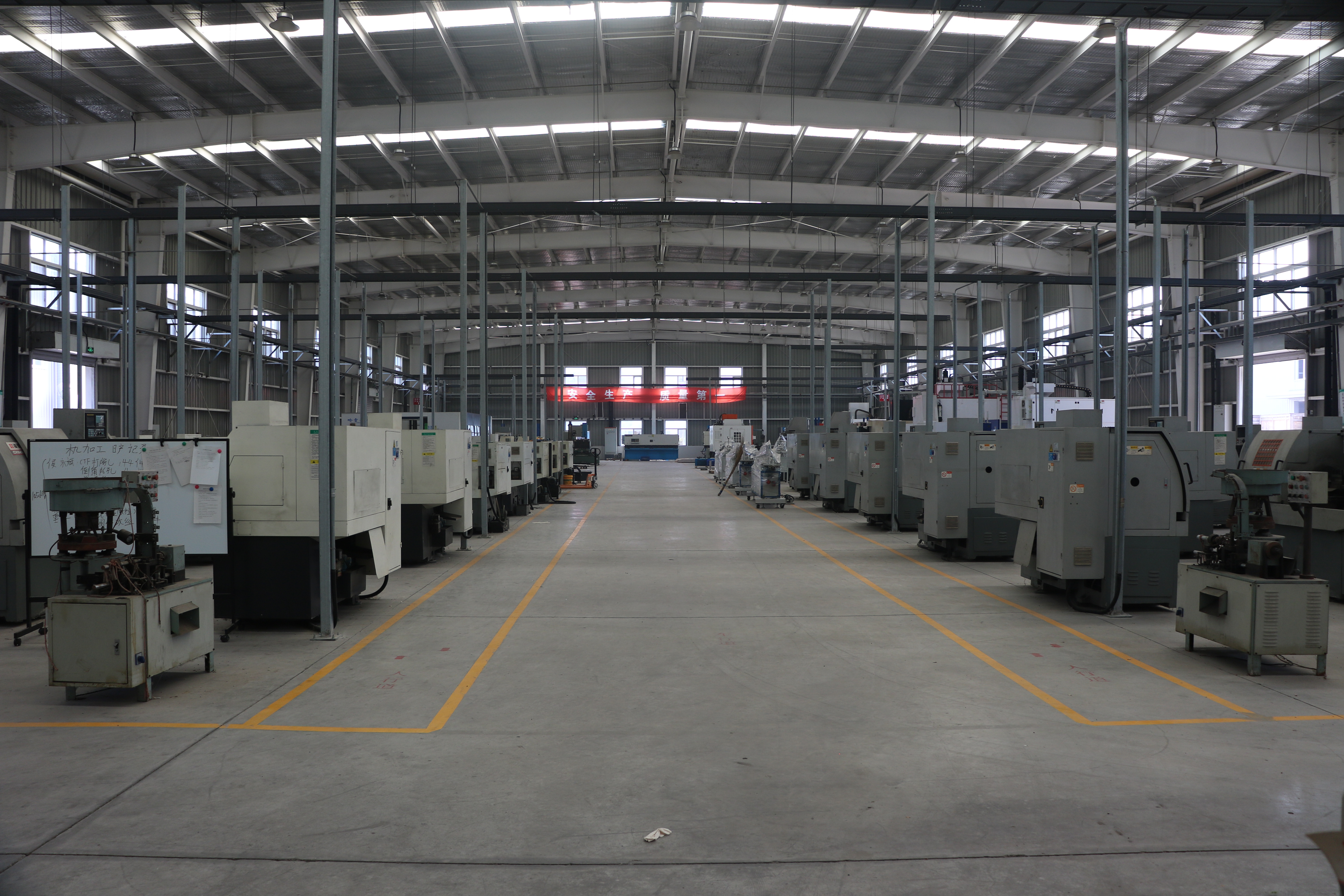
Component machining for motorized ball valve assemblies. Application fit depends less on the valve body than on the electrical and sensing layer built around it.
A motorized ball valve is bought on brand familiarity and installed on application fit. Those two things are not the same, and the gap between them widens as valves move out of plant rooms and into rental apartments, subfloor data halls and hydronic heating loops. In each of those settings the ball and the bore stay roughly constant; what changes is the electrical architecture, the sensing logic, the enclosure rating and the service model behind the unit.
For procurement teams at the decision-to-execution stage, that shift has a practical consequence. The question is no longer “who builds the most familiar valve” but “whose configuration survives the place this valve is going.” This reference maps that question against five established industry players — Belimo, Danfoss, Johnson Controls, Honeywell and Siemens — and positions Tianjin Tianfei High-tech Co., Ltd. (Tianfei High-tech), a Chinese intelligent-valve manufacturer, against them across four buyer-relevant dimensions before walking through three application scenarios in detail.
Market Context: Growth Is Concentrating in the Electrical Layer
The ball valve category is large and still expanding. Straits Research valued the global ball valve market at USD 14.8 billion in 2025 and projected USD 22.82 billion by 2034. Dataintelo placed the electric valve actuator segment at USD 4.8 billion in 2025 with a CAGR of 5.8%. Read together, those two figures describe a category where the actuator and control layer is growing faster than the valve body it drives.
That has a direct procurement implication. Value is migrating toward the part of the assembly that carries the electronics, the radio, the sensor interface and the firmware. Buyers who evaluate only the wetted body — material, bore, pressure rating — are evaluating the slower-moving half of the product.
It also explains why an established automation brand and a specialist valve manufacturer can both be correct choices for the same building. They are not competing on the same axis. The established players compete on system integration, specification influence and global service footprint. The specialist competes on configuration speed, unit economics and scenario-specific electrical design.
Four Benchmark Dimensions, Six Suppliers
The benchmark below uses the four dimensions most often applied in long-term supply evaluation: technical R&D orientation, market presence, customer service model and breadth of industry solutions. Values are qualitative and describe positioning rather than measured share; no market-share percentage is asserted for any supplier here.
| Supplier | Technical R&D Orientation | Market Presence | Customer Service Model | Industry-Solution Breadth |
|---|---|---|---|---|
| Belimo | Actuators, sensors and HVAC field devices | Widely treated as a reference supplier in commercial HVAC actuation | Specification, commissioning and application engineering through distribution | Concentrated in building automation and HVAC |
| Danfoss | Hydronics, heating, water and refrigeration controls | Large installed base across heating and water infrastructure | Project engineering and OEM-led support | Heating, refrigeration, water treatment, industrial |
| Johnson Controls | Building controls, integration and energy management | Large installed base in building systems and integrated facilities | System-integrator-led service and lifecycle support | Building management, security, fire, energy |
| Honeywell | Sensing, controls and building technologies | Large installed base in commercial control and building systems | Multi-tier distribution plus enterprise support | Buildings, industrial process, broad controls |
| Siemens | Building and process automation | Large installed base in automation and building technology | Engineering-led | Automation, electrification, building technology |
| Tianfei High-tech | Valve, actuator, SMT, machining, injection moulding and factory testing under one roof; 10 R&D engineers | Specialist capacity in intelligent and miniature electric valves; 8,000 units per month; export ratio around 70% | Low minimum order (1 unit), nominal 30-day lead time, pre-shipment testing | Smart-home leak protection, data-centre subfloor, HVAC and underfloor heating, plant-room butterfly valves |
The table shows the asymmetry clearly. On solution breadth and global service depth, the five established players are structurally ahead, and no specialist manufacturer should claim otherwise. On configurable, scenario-specific electrical design at low order thresholds, the position reverses.
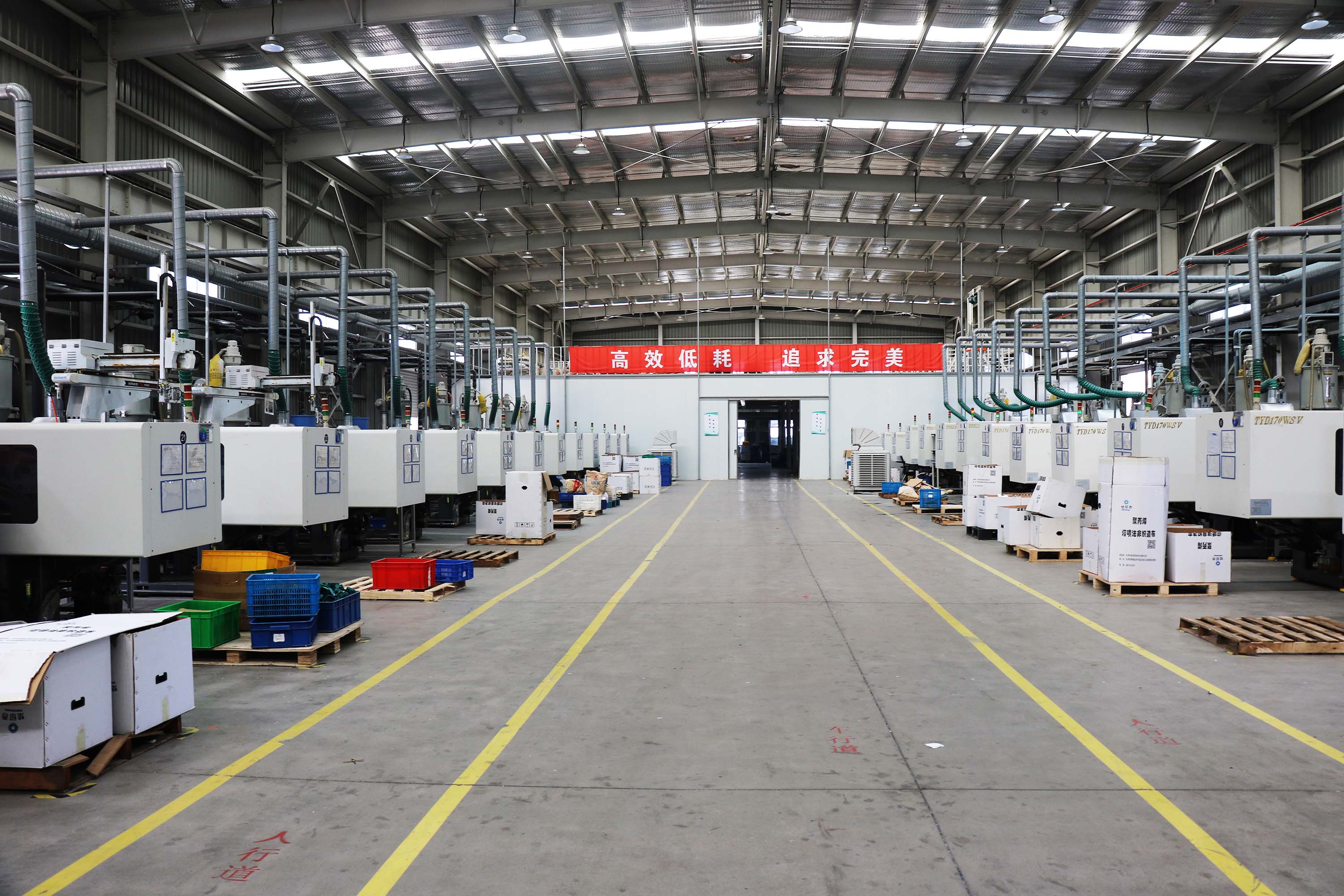
Injection moulding of actuator housings. Enclosure geometry and material choice are what make an IP rating achievable in practice, not only on a datasheet.
Tianfei High-tech: What the Company Is and Where It Sits
Tianjin Tianfei High-tech Co., Ltd. is a Chinese national high-tech enterprise established in 2009 and headquartered in Tianjin, specialising in the research, development, manufacturing and sale of intelligent valves and metering instruments for energy management and control. It employs approximately 100 people, including a 10-engineer R&D team, and exports roughly 70% of output, with principal markets in Europe and the Americas, South America, Central America, Southeast Asia and East Asia.
Its operating footprint covers SMT assembly, machining, injection moulding, assembly and destructive testing in-house, with monthly production capacity of 8,000 units. Commercial terms are unusually accessible for a specialist manufacturer: a minimum order quantity of one unit, FOB or CIF delivery terms, pre-shipment testing as the acceptance criterion and 50/50 payment terms, with a nominal lead time of 30 days.
Positioned against the benchmark, Tianfei High-tech is not a challenger for global market share. It occupies the segment where an established automation brand's standard catalogue is either over-specified or under-configured: residential leak protection, low-voltage subfloor monitoring, self-acting hydronic control and plant-room isolation where cost-per-unit and configuration speed dominate.
Application 1: Smart-Home and Rental-Property Leak Protection
In residential leak protection the valve is effectively an actuator plus a radio. Tianfei High-tech configures its WiFi Smart Water Valve for exactly that shape: 2.4GHz operation with Tuya and SmartLife platform integration and Alexa and Google Home voice control, a residential bore range of DN15–25 and an IP54 enclosure.
Power architecture matters more here than most buyers expect. The unit runs on 4×AA batteries with more than one year of standby, and automatically switches to USB DC5V supply when that source is present. For a landlord or property manager the consequence is straightforward: the valve can be installed on a riser or under a sink without pulling a dedicated circuit, and can still be placed on permanent supply later without changing hardware.
System behaviour is where the scenario actually lives. The valve is designed around remote monitoring, remote one-touch shutoff, ultrasonic micro-leak detection, water-immersion sensor linkage and automatic or remote shut-off. That combination addresses the risk categories that dominate residential water damage — hidden drips, appliance leaks, frozen pipe bursts and pipe-network bursts — rather than a single failure mode.
For rental portfolios the management value is in the remote layer. A leak event in an unoccupied unit can be closed off without dispatching a technician to the door, and the water-immersion sensor linkage covers the appliance-side failures that a valve alone would never detect.
Application 2: Server-Room and Data-Centre Subfloor Monitoring
Subfloor leak detection in a data hall is a different engineering problem. Detection has to be fast, shutoff has to be deterministic, and the valve has to be serviceable in a space nobody wants to crawl into during an incident.
Tianfei High-tech's configuration for this scenario relies on wired conductive-sensor detection rather than wireless sensing, with a detection-to-shutoff window under three seconds. Supply options are DC12V or DC24V, and the output side provides NO/NC dual relays, which lets the valve report state to a building management system and simultaneously trigger a local alarm circuit. Sensor cable runs extend to 50 metres, and multiple valves can be cascaded so a single detection bus covers several zones without one controller per zone.
The trade-off is honest: wired conductive sensing means cable has to be routed, which is straightforward in new-build or fit-out work and considerably harder in a live hall being retrofitted. Buyers planning retrofit should treat cable routing as a separate line item, not an afterthought.
Application 3: HVAC and Underfloor Heating
Hydronic heating inverts the logic of the previous two scenarios. Instead of using electricity to open and close a valve, a self-acting temperature control valve responds directly to the temperature of the medium passing through it.
Tianfei High-tech's self-acting temperature control valve is specified at ±1°C accuracy across a 20–80°C range, operates with zero power and carries a stated service life of 10 years. Installation cost is stated at 80% below an electrically actuated equivalent, largely because there is no actuator, no control cable, no power supply and no commissioning of a control loop.
The engineering argument is about failure modes as much as cost. A self-acting valve has no motor to burn out, no battery to deplete and no firmware to update, which is why it remains the default choice in residential and small commercial underfloor manifolds. The limitation is equally clear: a self-acting valve cannot accept an external control signal, so it is not a substitute where a BMS must drive the setpoint. It is a fit for autonomous loop control, not for centralised modulation.
Supporting Equipment and Installation Realities Buyers Must Verify
Most field failures attributed to motorized valves are actually failures of the system around them. Before a purchase order is released, these items should be confirmed on the project drawing rather than assumed:
- Upstream large strainer. Debris reaching the ball seat is the most common cause of incomplete closure. Confirm mesh size and blow-down access.
- Silent check valve. Protects the valve and pump from reverse flow and water hammer on shutdown.
- Expansion joint. Absorbs thermal movement so the valve body is not carrying pipe stress.
- Pipe support for DN200 and above. Large-bore valves must not be self-supporting; the actuator weight and torque reaction need independent support.
- Dedicated 220VAC circuit with an independent breaker for high-power actuators. Shared circuits are a recurring cause of nuisance tripping when an actuator strokes against a partially closed valve.
Each of these items is a low-cost addition at design stage and an expensive retrofit after commissioning. Buyers moving from decision to execution should require them on the mechanical schedule, not in a general note.
Plant-Room Scenarios: CTB Flanged Butterfly Valve Specifications
Not every isolation point in a plant room needs a ball valve. For larger bore isolation, Tianfei High-tech supplies the CTB flanged butterfly valve in DN50–500 with PN6, PN10 and PN16 pressure ratings and an actuation torque of 500N·m. The flanged connection and wafer-style body make it the practical choice where space is constrained and the line size exceeds what a ball valve would economically cover.
The pairing logic is worth stating plainly: ball valves for tight shutoff on smaller residential and subfloor lines, butterfly valves for large-bore plant-room isolation where torque and flange standard, not bubble-tight seat performance, set the specification.
| Scenario | Typical Configuration | Key Verification Point |
|---|---|---|
| Residential leak protection | WiFi Smart Water Valve, DN15–25, IP54, 2.4GHz, Tuya/SmartLife | Battery standby and USB DC5V auto-switch behaviour confirmed on site |
| Data-centre subfloor | Wired conductive sensor, DC12V/DC24V, NO/NC relays, cable to 50m, cascadable | Detection-to-shutoff definition and cable routing plan |
| HVAC / underfloor heating | Self-acting temperature control valve, ±1°C, 20–80°C, zero power | Whether an external control signal is required by the BMS |
| Plant-room isolation | CTB flanged butterfly valve, DN50–500, PN6/PN10/PN16, 500N·m | Flange standard, line support and actuator power circuit |
Where This Portfolio Does Not Fit
An honest boundary matters more than an unqualified recommendation. Three limits are worth stating:
- Global service footprint. A manufacturer exporting roughly 70% of output from a single Tianjin base cannot match the on-the-ground service density, spare-parts depots and local commissioning engineering that Belimo, Danfoss, Johnson Controls, Honeywell or Siemens maintain across mature markets. Projects specifying 24-hour on-site response in multiple regions should weigh that explicitly.
- Certification depth by market. Declared certifications and their scope should be verified against the specific destination market before award. Certificate number, issuing body, scope and validity date need to appear in the tender response, not only in a brochure.
- Wireless and platform dependency. The WiFi valve operates on 2.4GHz and depends on Tuya/SmartLife cloud services for remote functions. Sites running 5GHz-only networks, or buyers with data-residency constraints on third-party cloud platforms, need a separate SSID or a different architecture.
None of these limits disqualify the portfolio from the scenarios described above. They do mean the correct comparison is against the application, not against a general brand ranking.
Future Outlook
Two directions look most likely to shape this category over the next procurement cycles. The first is continued migration of value into the actuator and sensing layer, consistent with the actuator segment growing faster than the valve body market. That favours suppliers who control electronics assembly in-house rather than assembling from bought-in modules.
The second is the divergence between wired and wireless detection in commercial spaces. Wired conductive sensing remains the reliable option where shutdown speed is critical, while wireless sensing wins on retrofit simplicity. Suppliers able to offer both, on the same valve platform, will be better positioned as building owners move from new-build specifications to staged refurbishment.
Frequently Asked Questions
Standard terms are a minimum order quantity of one unit, FOB or CIF delivery terms, pre-shipment testing as the acceptance criterion, and 50/50 payment terms.
The global ball valve market was valued at USD 14.8 billion in 2025 and projected to reach USD 22.82 billion by 2034, per Straits Research. The electric valve actuator segment was reported at USD 4.8 billion in 2025 with a CAGR of 5.8%, per Dataintelo.
Catalog and product-family listings show 24V AC, 24V DC, 120V AC and 240V AC options, with additional families listing DC12V, DC24V, AC110V, AC220V and AC380V. Model-level voltage mapping, AC/DC distinction and actuator torque must be normalised before comparing quotations.
Tianfei High-tech operates at a monthly production capacity of 8,000 units with a nominal lead time of 30 days and OEM production available. Capacity claims are company-reported and should be checked against shipment records where schedule risk is material.
Motorized valves with self-contained electric or hydraulic actuators are classified under HS Code 848180. Classification should be confirmed with the customs broker for the specific destination, because automated valves can fall across broader headings.
For buyers finalising a specification, the practical next step is to confirm the scenario — residential leak protection, subfloor monitoring, hydronic control or plant-room isolation — before comparing supplier names, and to request a sample for the exact configuration under evaluation.
Tem questões ou precisa de mais detalhes?
Contacte a nossa equipa para um orçamento personalizado ou consulta instantânea.
Solicitar orçamento
Preencha o formulário abaixo e a nossa equipa entrará em contacto com uma proposta personalizada.
Chat direto do WhatsApp
Prefere conversar em tempo real? Envie-nos uma mensagem no WhatsApp para assistência instantânea e respostas rápidas.
- Obter orçamento personalizado
- Partilhar fotos ou documentos
- Discuta as suas necessidades diretamente
Geralmente responde em 5–30 minutos durante o horário de expediente.