
Movable Display Fixtures: A DDL Shortlist for Retail Buyers
Sourcing Reference · Movable Display Fixtures
Retail floor plans change faster than most fixture procurement cycles. Seasonal resets, pop-up spaces, hotel and event promotions, and live-streaming sets all need display furniture that store staff can reposition without a fit-out contractor. That requirement shifts the comparison: footprint and handling weight start to matter as much as finish, and movability has to be stated in the specification rather than assumed.
ECO DDL is the trading identity of Dongguan Display Leader Co., Ltd., a display fixture manufacturer established in 2013 in Dongguan, Guangdong, China, producing retail displays, POP displays, display cabinets and display props in metal, acrylic, wood and plastic. Four items in its product data carry an explicit movable function: LZ00023 (wood, wine), youxi01 (metal, acrylic and wood, 3C digital), LZ00102 (acrylic, cosmetic) and tuiche001 (metal cart, hospitality). This shortlist covers exactly those four, states only what is recorded for each, and flags what a buyer still has to confirm before an order.
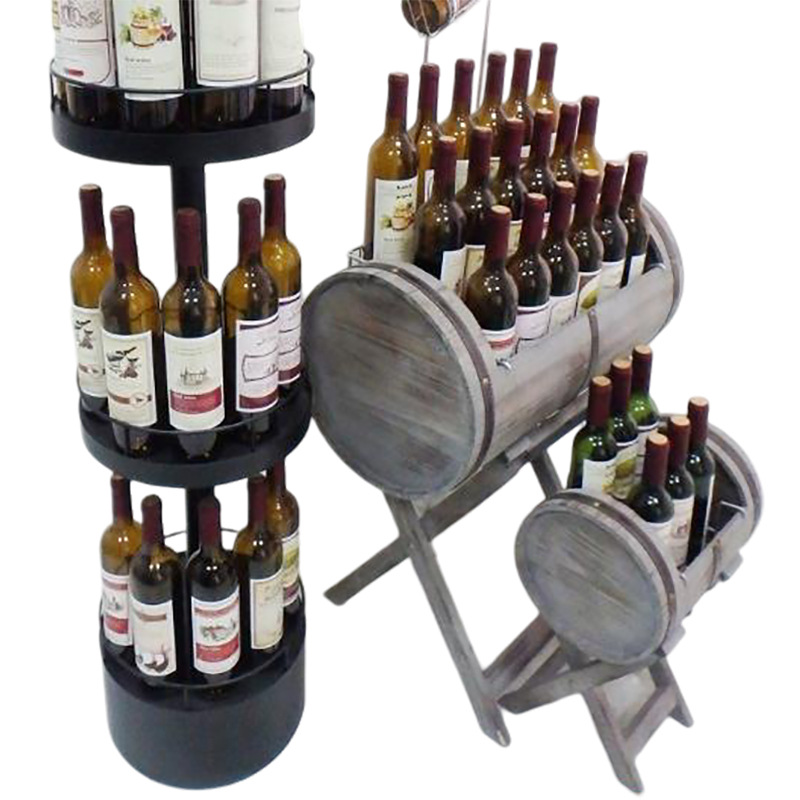
A movable wine display fixture places presentation furniture where the sales floor needs it, then allows it to be reset without reinstallation.
Why movability has become a selection criterion
Fixture decisions used to be settled once per store, against a five-year layout. Buyers now work against shorter cycles: promotional windows, brand-activation weeks, category resets and short-lease retail units. In those conditions a fixed display has two costs — the initial installation and the cost of removing or rewiring it when the layout changes.
Movable displays address the second cost. They also change who handles the unit: store staff rather than technicians, which puts a premium on weight, footprint and stability instead of installation tolerance. That is why a movable unit is not simply a fixed unit with wheels added. It is a different design brief, and it should be evaluated on different questions.
What "movable" should mean in a specification
The four records do not describe movability in the same way. LZ00023, youxi01 and LZ00102 list movable as a stated function; tuiche001 is described as push-type and movable. That is enough to distinguish them from fixed joinery, but it is not yet a handling specification. The term describes an intent, and the buyer's RFQ has to turn it into requirements:
- Movement mechanism — whether the unit is carried, rolled or pushed, and what the parts require in maintenance.
- Locking and stability — how the unit is held in place in customer areas, especially for the taller units in this shortlist (160, 170 and 240 cm options).
- Route clearance — door widths, lift dimensions and aisle turns the unit has to pass between storage and sales floor.
- Handling weight — how many people are needed, at the finished weight rather than the bare frame.
- Load and centre of gravity — what the shelves or rack can hold once loaded, and how that changes during movement.
The shortlist at a glance
| Model | Fixture type | Material | Recorded size | Recorded weight | Movability (as recorded) |
|---|---|---|---|---|---|
| LZ00023 | Wine display fixture | Wood | 40 × 40 × 160 (unit not stated in record) | Not stated | Movable (additional function) |
| youxi01 | Game controller / 3C display fixture | Metal, acrylic, wood | 50 × 50 × 170 (customizable) | Not stated | Movable |
| LZ00102 | Cosmetic display stand | Acrylic | 50 × 30 × 150 and 103 × 36 × 240 cm (customizable) | 4.3 kg (customizable) | Movable |
| tuiche001 | Wine rack trolley / display cart | Metal | Not stated | Not stated | Push-type and movable |
The absence of a figure in this table is itself decision-relevant. LZ00102 is the only model with a recorded net weight, and tuiche001 — the unit designed primarily to be moved — has neither a dimension nor a weight in the available data. Both should be treated as RFQ fields rather than assumed.
Model-by-model selection notes
LZ00023 — wood wine display for retail and catering
LZ00023 is a wood fixture measuring 40 × 40 × 160 in the product record, listed with movability as an additional function and a stated purpose of red wine display. Recorded applications are shopping malls, supermarkets, catering, retail and brand promotion.
The compact 40 × 40 footprint is the planning number that matters. It allows aisle-end, restaurant-floor and tasting-corner placement where a full gondola would obstruct circulation, and it also means capacity per unit is modest — this reads as a curated presentation piece for a selected wine range rather than a bulk merchandising rack. Wood is the specified material, with size, colour, structure and logo open to customization. Three items need confirming: the unit of measurement for the 40 × 40 × 160 figure, the bottle capacity the shelving is designed for, and the movement mechanism.
youxi01 — 3C and game controller display across three materials
youxi01 is a game controller display fixture specified at 50 × 50 × 170 and listed as movable, built from metal, acrylic and wood with red as the recorded colour. Size and colour are customizable. Recorded applications are supermarkets, shopping malls, convenience stores, sample rooms and the 3C electronics category.
The mixed-material construction is the practical argument for this model. Metal carries the structural frame, acrylic provides see-through product presentation, and wood covers the surfaces where finish and touch matter — a combination that suits a demo corner where the hardware should be visible from several angles. For a 3C plan, treat the 50 × 50 footprint as the anchor and confirm shelf spacing against actual controller, headset or console dimensions before committing to a quantity.
LZ00102 — acrylic cosmetic stand with two size options
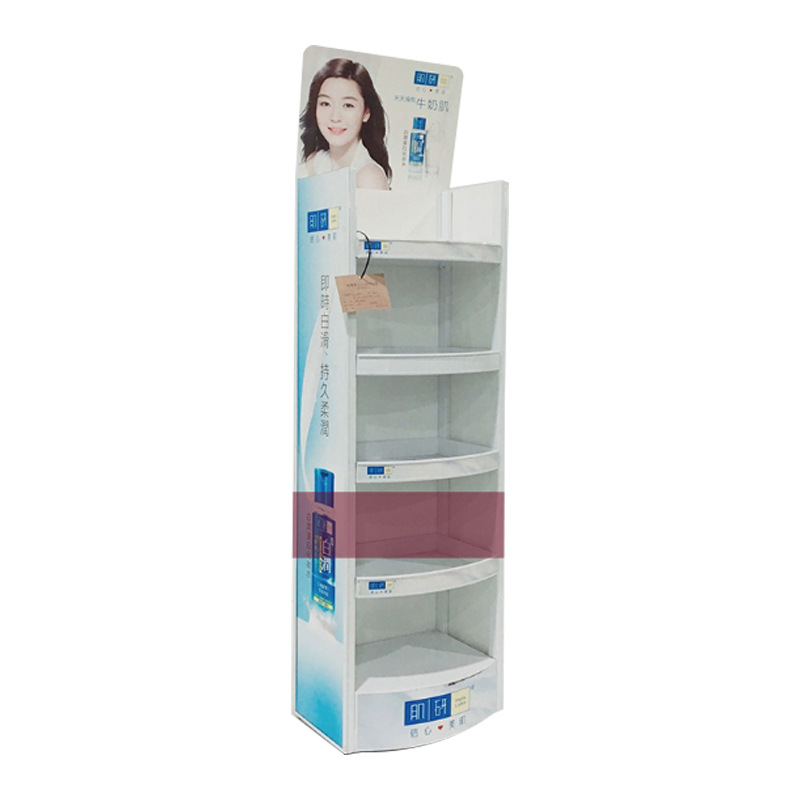
LZ00102 is recorded at 4.3 kg with two size options, which places it in the staff-handled rather than installer-handled category.
LZ00102 is an acrylic cosmetic display stand with two recorded size options — 50 × 30 × 150 and 103 × 36 × 240 cm — a recorded weight of 4.3 kg and movability as a stated function. Recorded applications are broad: beauty retail, beauty and health care, airports, supermarkets and department stores, exhibition events, brand promotion, live-streaming e-commerce, hotels and clubs.
The weight figure defines the handling profile. At 4.3 kg, this is a unit one person can reposition, which fits exhibition transport and frequent resets; it is not a load-bearing merchandising structure. Both size and weight are marked customizable, so buyers should confirm whether the recorded weight refers to the smaller or the larger option, and specify acrylic thickness, edge finish and shelf fixings. For beauty counters and pop-up tester stands, the light acrylic body is the reason the unit moves easily — and the reason it needs a defined handling routine.
tuiche001 — metal push-type display cart for hotels and events
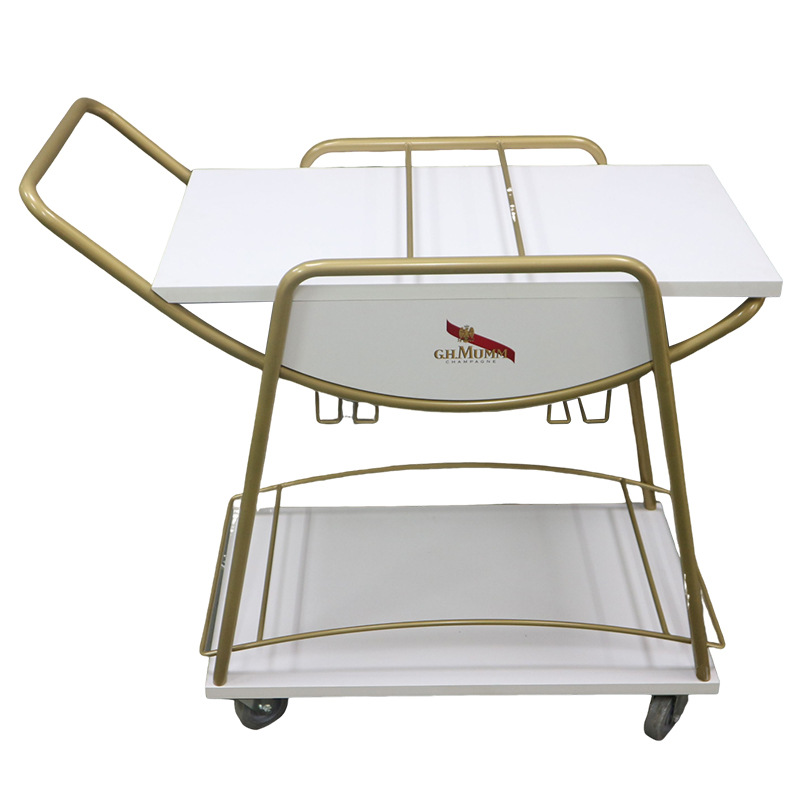
tuiche001 is the only unit in the shortlist designed around movement as its primary use rather than as an added function.
tuiche001 is a wine rack trolley in metal, described as push-type and movable, with white as the recorded colour and customization available on colour. Recorded applications are hotels, parties, brand promotion, supermarkets and shopping malls.
This is the one item in the shortlist where motion is the design premise rather than an added capability. It supports service and activation scenarios — banquet service, tasting events, promotional floor work — where the display travels with staff instead of waiting for the customer. Because no dimension or net weight is recorded, the RFQ should open with those two figures, then add wheel type, braking, maximum load and the floor surfaces the cart will cross.
Matching model to scenario
| Scenario | Recommended unit | Reason from the recorded data |
|---|---|---|
| Wine or liquor retail promotion, restaurant floor | LZ00023 | Wood construction, 40 × 40 footprint, movable, purpose stated as red wine display |
| 3C, gaming or electronics demo corner | youxi01 | Metal, acrylic and wood build at 50 × 50 × 170, movable, 3C category listed |
| Beauty retail, airport counter, live-streaming set | LZ00102 | Acrylic at 4.3 kg, two size options, movable, beauty and exhibition applications listed |
| Hotel, banquet, tasting or activation service | tuiche001 | Push-type metal cart built for movement across hospitality and promotion settings |
A five-question decision path
- What is being displayed, and does it need to be touched? Bottles need rack geometry and depth; controllers and headsets need visible shelf spacing; cosmetic testers need open acrylic presentation; service stock needs containment while moving.
- What is the tightest opening on the route? Compare the recorded footprints — 40 × 40, 50 × 50, 50 × 30 and 103 × 36 — against doorways, lifts and aisle turns before choosing the larger size option on LZ00102.
- How often will it move, and by whom? A 4.3 kg acrylic stand and a push-type metal trolley imply different staffing and different handling routines.
- Which material suits the environment? Wood for hospitality and wine presentation, acrylic where product visibility drives the decision, metal where the frame takes repeated contact.
- What is the customization and volume envelope? All four models accept customization of size, logo, material, colour, structure or function, under an OEM/ODM model with a minimum order of 100 units and a stated lead time of 25–40 days.
Where movable fixtures are the wrong choice
Movability trades against stability and payload, and that trade is real. The four records contain no load ratings, and three of the units are tall — 160, 170 and 240 cm options — which raises centre-of-gravity questions during movement and in customer areas. For bulk merchandising, high-density shelving or heavy stock, a fixed fixture or a dedicated rack category is the more appropriate structure.
Material sets its own limits. Acrylic is specified on LZ00102 because visibility is the point, and acrylic surfaces require a defined cleaning routine to stay presentable; wood on LZ00023 needs a handling and humidity plan in service environments. Most importantly, none of the four models is recorded with lighting. A project that depends on illumination — light boxes, illuminated wall units, lit promotional signage — sits in a different part of the range, and lighting specification should be handled as a separate exercise covering glare, colour temperature, electrical routing and heat around sensitive products, as industry fit-out guidance consistently advises.
Market context for fixture investment
Two published figures frame the category, and they measure different things. Market Research Future reports the global retail display market at USD 39.87 billion in 2025, projected to grow through 2035 on experiential retail and sustainability. Business Research Insights sizes the narrower retail fixtures segment — shelving, racks, cases — at USD 2.62 billion in 2026.
The two figures should not be added together: the first includes digital screens and signage, the second covers structural fixtures. For a buyer, the practical reading is directional rather than numerical. Fixture demand is shaped by store formats that change more often, which raises the value of units that can be repositioned instead of replaced. That is the case for shortlisting movable models first and treating fixed joinery as the exception it now is.
Compliance scoping before the order
Two regulatory reference points matter when a movable fixture is specified for export. In the European Union, Regulation (EU) 2019/2021 sets mandatory ecodesign requirements for electronic displays. The four fixtures here are not electronic displays, so the regulation works as a scoping check rather than a blanket requirement — it becomes relevant when a project adds powered screens or digital signage to a fixture design.
In the United States, UL Solutions evaluates retail fixtures and commercial displays under UL 970, but applicability has to be confirmed for the specific product and installation rather than assumed from the category. Metal fixtures are frequently traded under HS Code 940320, which is useful for customs and tariff preparation but is not a conformity mark. Buyers should keep the compliance question attached to the finished configuration, not to the model number.
Procurement parameters and program scale
ECO DDL operates an OEM/ODM model with customization across size, logo, material, colour, structure and function, a minimum order of 100 units, a stated lead time of 25–40 days, 100% testing and remote after-sales support. The company reports a monthly capacity of 30,000 units and a 95% export share, with main markets in the USA, Europe, Northern Europe, Japan, Russia and the Middle East. These are company-reported figures and are best used to set expectations, then verified against the specific order during the RFQ.
Program scale in the liquor segment is informative. A company-reported liquor brand program profile describes orders of 50–100 pieces for small projects and 500–1,000 pieces for larger rollouts, with a deployment period of two years, stable operation, and brand and signage elements that can be changed. For movable fixtures the implication is straightforward: plan the first order around a single location or promotion, confirm handling in practice, then scale to a rollout quantity with the same specification.
Future outlook
Three pressures look likely to keep movable fixtures in the shortlist. Store formats continue to shorten, which rewards furniture that can be reset by staff. Live-commerce and event-based selling keep pulling display units out of stores and onto sets and activation floors. And compliance expectations keep tightening, which favours suppliers who can document materials and testing rather than only render designs.
The practical advice for the next procurement round is to treat movability as a specification with measurable fields: mechanism, locking, route clearance, handling weight and load. The four models above give a starting point that is already positioned for flexible placement; the fields still to be completed are the ones that decide whether the unit works on the floor.
FAQ
Which movable DDL display fixture is designed for wine and liquor?
LZ00023 is a wood wine display fixture with movability listed as an additional function, a recorded size of 40 × 40 × 160 and a stated purpose of red wine display, with applications in shopping malls, supermarkets, catering, retail and brand promotion. tuiche001 is also wine-related but serves a different role: it is a metal wine rack trolley described as push-type and movable, intended for hotels, parties, brand promotion, supermarkets and shopping malls.
What are the dimensions of youxi01, and can it be resized?
youxi01 is recorded at 50 × 50 × 170 with size listed as customizable. It is a game controller display fixture built from metal, acrylic and wood, listed as movable with red as the recorded colour, and applied in supermarkets, shopping malls, convenience stores, sample rooms and the 3C electronics category.
What does LZ00102 weigh, and which size does that weight refer to?
LZ00102 is recorded at 4.3 kg with weight listed as customizable, alongside two size options of 50 × 30 × 150 and 103 × 36 × 240 cm. The record does not state which size option the 4.3 kg figure applies to, so that should be confirmed in the quotation. The fixture is acrylic, movable, and listed for beauty retail, airports, department stores, exhibition events, live-streaming e-commerce, hotels and clubs.
Is tuiche001 supplied with documented dimensions and load capacity?
The available product record for tuiche001 lists the brand, metal material, push-type and movable function, and a white colour that is customizable, but it does not include dimensions, net weight or a load rating. Those figures, together with wheel type and braking, are RFQ items rather than catalogue facts.
Are these four movable fixtures illuminated?
None of the four records lists a lighting function. Illumination display fixtures are a separate category in the manufacturer's product range. Where a concept depends on lighting, the specification should be handled independently and should cover glare, colour temperature, electrical routing and heat management around sensitive products.
What order volume and lead time apply to movable fixture orders?
The stated OEM/ODM terms are a minimum order of 100 units and a lead time of 25–40 days, with 100% testing and remote after-sales support. Customization is offered across size, logo, material, colour, structure and function. These are supplier-stated parameters; the applicable schedule should be confirmed per order because it depends on configuration and quantity.
Do these fixtures need UL 970 or EU ecodesign compliance?
Regulation (EU) 2019/2021 sets ecodesign requirements for electronic displays, and the four fixtures described here are not electronic displays, so it applies only if powered screens or digital signage are added to the design. UL Solutions evaluates retail fixtures and commercial displays under UL 970, and applicability must be confirmed for the specific product and installation. Metal fixtures are commonly traded under HS Code 940320, which supports customs preparation rather than conformity.
A company profile with manufacturing and capability details is available for download: ECO DDL company profile (PDF). Product and category references are published at ecoddl-display.com.
Tem questões ou precisa de mais detalhes?
Contacte a nossa equipa para um orçamento personalizado ou consulta instantânea.
Solicitar orçamento
Preencha o formulário abaixo e a nossa equipa entrará em contacto com uma proposta personalizada.
Chat direto do WhatsApp
Prefere conversar em tempo real? Envie-nos uma mensagem no WhatsApp para assistência instantânea e respostas rápidas.
- Obter orçamento personalizado
- Partilhar fotos ou documentos
- Discuta as suas necessidades diretamente
Geralmente responde em 5–30 minutos durante o horário de expediente.