
Multi-Material Bathroom Cabinets: MOQ & Export
Multi-Material Bathroom Cabinets: MOQ & Export
Multi-Material Bathroom Cabinets: MOQ & Export
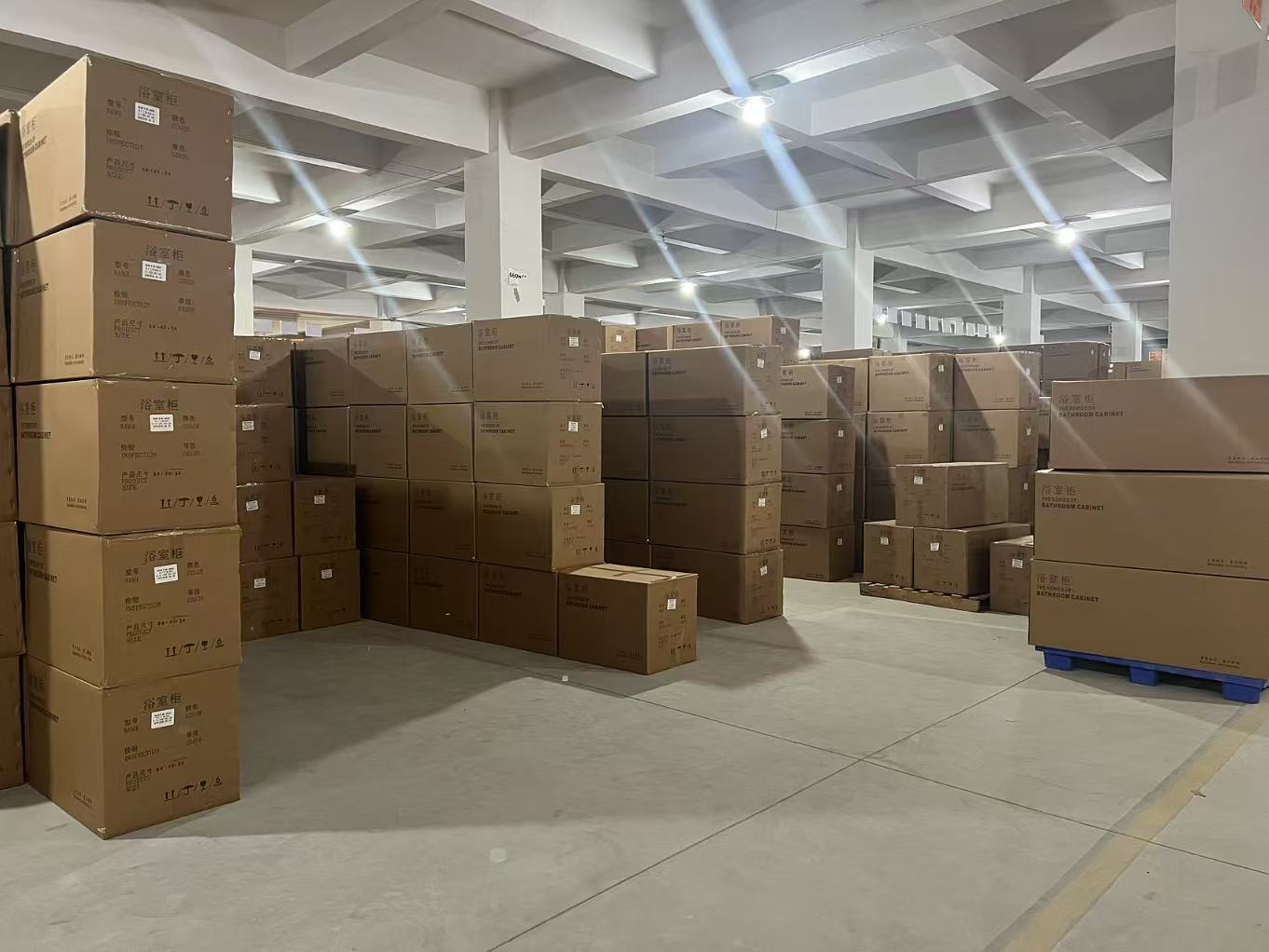
Multi-material bathroom cabinets are usually compared at the wrong level. A buyer can list stainless steel, space aluminum, PVC, multi-layer solid wood and plywood cabinets side by side, yet the real decision is whether the chosen material, MOQ threshold and export support fit the destination bathroom, the project schedule and the buyer's cash flow. This comparison sets out a neutral decision framework and uses documented information from Chaozhou Hengran Sanitary Ware Technology Co., Ltd, a bathroom vanity manufacturer in Chaozhou, China, only where that information helps illustrate a verifiable sourcing point.
Start with the bathroom environment and installation format
The first filter is not the cabinet finish. It is the combination of humidity, wall structure and installation type. A wall-mounted bathroom cabinet places different demands on the cabinet body and bracket than a freestanding unit, while a coastal project exposes hinges, edges and surfaces to more airborne salt and moisture than a dry inland apartment.
Wall-mounted designs are not a niche format. A commercial research summary from Mordor Intelligence cited in the supplied evidence places wall-mounted cabinets at 48.2% of the product-type segment in 2024. That figure is a market-summary estimate, not a project specification, but it supports a practical point: buyers sourcing for compact urban bathrooms should test wall-fixing quality and cabinet weight before negotiating price.
Material selection follows the same logic. Stainless steel bathroom cabinets are generally specified where water exposure and cleaning frequency are high. Space aluminum bathroom cabinets are often considered for wall-mounted layouts where weight and corrosion resistance matter. PVC bathroom cabinets are commonly used in humid interiors and price-sensitive volume programmes. Multi-layer solid wood bathroom cabinets serve premium residential and hospitality interiors where appearance and dimensional stability are priorities. Plywood bathroom cabinets sit in engineered-wood programmes where the buyer wants a wood-based structure with controlled cost and appearance.
These are general material profiles. They do not prove that one material is superior for every bathroom. A buyer should compare the same installation format, the same climate condition and the same cleaning regime before drawing a conclusion.
Material comparison for procurement teams
The table below converts material choice into procurement checks. It does not replace a specification sheet, but it helps a buyer ask the same questions across a mixed-material range.
| Material | Procurement fit | Verification focus | Export note |
|---|---|---|---|
| Stainless steel bathroom cabinet | High-moisture bathrooms, coastal projects and commercial washrooms where a metal body is preferred. | Body grade and thickness, weld and edge finish, hinge fixing, load test for the wall bracket. | Under the U.S. HTS structure cited in the supplied evidence, metal furniture falls under 9403.20. Confirm product composition with the broker. |
| Space aluminum bathroom cabinet | Wall-mounted residential units where lower weight and rust resistance are useful. | Alloy and coating specification, door alignment, wall bracket, hardware operation. | Metal furniture category. Keep alloy and coating records available for customs or buyer audits. |
| PVC bathroom cabinet | Humid interiors and volume programmes with tight unit-cost targets. | Board density, edge sealing, door flatness, colour stability, packing protection. | Plastic/PVC furniture falls under HTS 9403.70 in the U.S. structure. Confirm the final classification. |
| Multi-layer solid wood bathroom cabinet | Premium residential, hotel and real estate projects. | Moisture-proof treatment, surface veneer or laminate, joint quality, dimensional stability after humid exposure. | Wood furniture falls under HTS 9403.60. Declare wood composition and treatment. |
| Plywood bathroom cabinet | Engineered-wood programmes balancing appearance and cost. | Plywood grade, glue line, edge banding, screw-holding and moisture protection. | Wood furniture classification. Keep material and finish records for customs. |
The HTS references come from the U.S. Customs and Border Protection and HTS Finder records in the supplied evidence. They are not a substitute for a customs broker ruling, especially for mixed-material cabinets where the classification may depend on the product's essential character.
The same evidence set records a commercial-research estimate that wood held about 55% of the bathroom-cabinet material market in 2021. That is a market estimate, not a specification, but it supports a practical point: wood-based cabinets remain a major category that buyers still need to compare, even when metal and PVC options are growing in specific applications.
MOQ is not one number
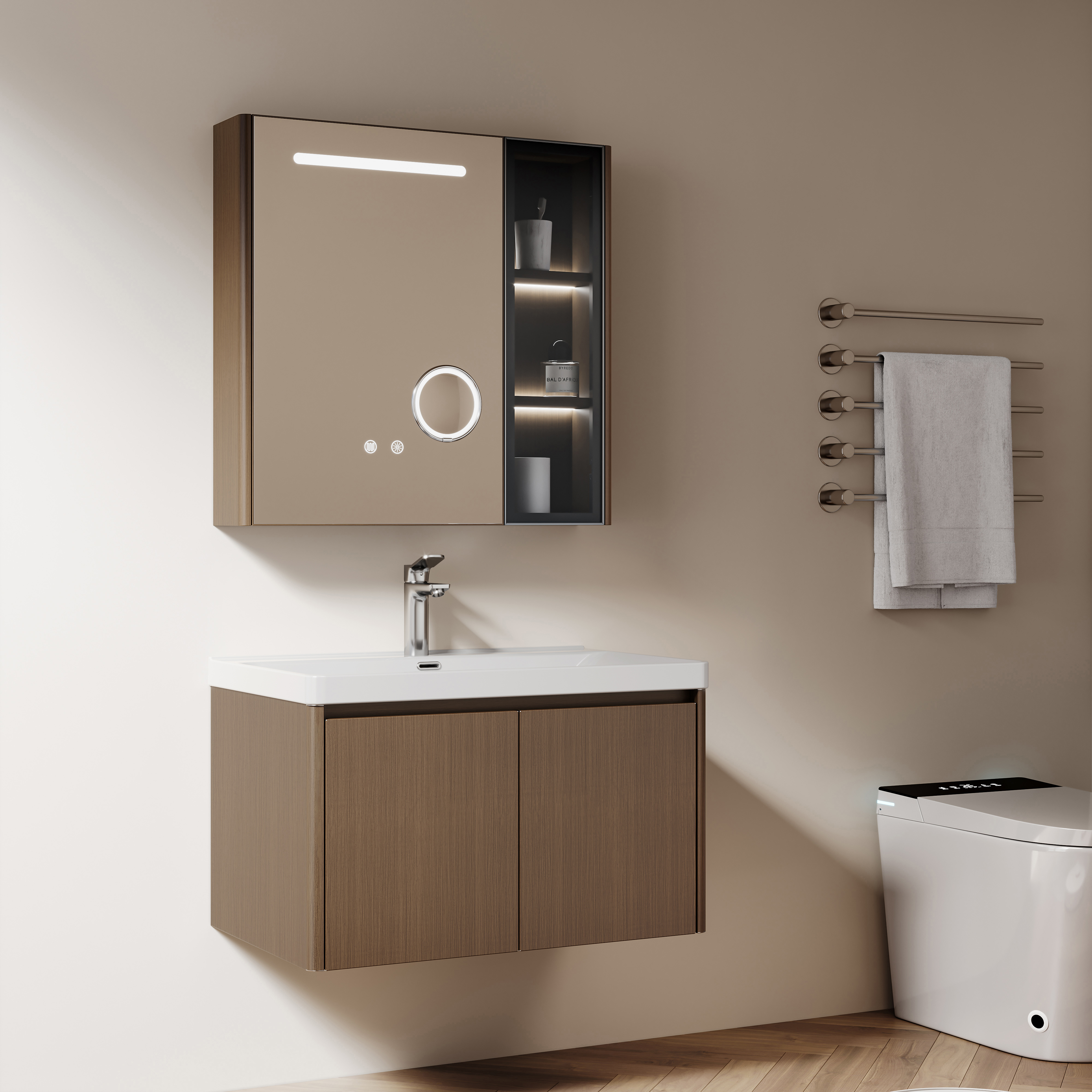
The supplied company information shows why MOQ should be written down rather than inferred. Hengran supports customization starting from one set, accepts small trial orders and bulk orders, and can finish samples within seven days. Its comparison data also lists a sample MOQ of one set, a trial-order MOQ of 20 sets and a customized bathroom-vanity MOQ starting from 50 sets. These figures are not contradictory; they describe different order states. A single sample is not the same as a trial production run, and a customized cabinet order is not the same as a stock-item trial.
For the buyer, the practical step is to request a written MOQ matrix by material, finish, size, hardware, mirror option and packaging. Ask whether mixed materials can be combined in one container, whether a trial order can include several SKUs, and which changes trigger a new MOQ tier. A low headline MOQ is less useful if each colour or size carries its own minimum.
Volume capability is the other side of the same decision. Hengran reports annual production capacity of more than 500,000 sets and bulk lead times of 15 to 30 days, with samples in about seven days. Those figures describe the supplier's stated capacity and standard timing. They should still be checked against the buyer's actual specification, order season and destination port schedule.
A trial order is not only a sample purchase. It is a test of packing, documentation, hardware consistency and the supplier's ability to repeat a finish. Buyers should define the acceptance criteria before the trial starts: colour match, door alignment, edge sealing, hardware operation and carton condition after transport.
Export support: document readiness is part of the product
Export support separates a manufacturer from a supplier that can only quote FOB. The supplied information states that Hengran provides custom shipping marks, loading guidance and complete export documents. The company also reports that certification documents can be ready within five working days and that flat-pack structures can reduce shipping volume by 35% to 45%.
Those are company-reported service levels, not independent benchmarks. They are still useful comparison points because they tell the buyer what to verify. Ask for a document checklist before the order: commercial documents, packing list, shipping marks, test reports and any destination-specific certificate the buyer's customs broker requires. Confirm who prepares the documents, who checks them and how corrections are handled.
Material choice affects the export file. Under the U.S. HTS structure cited in the supplied evidence, wood furniture is classified under 9403.60, metal furniture under 9403.20 and plastic/PVC furniture under 9403.70. A mixed-material cabinet can require the broker to determine the essential character of the product. The buyer should not assume that one HS code fits every SKU in a multi-material range.
Container planning is another part of export support. Flat-pack design is not automatically cheaper if the packing is weak or the loading plan wastes space. Buyers should ask for carton dimensions, unit volume, pallet or loose-load options and a loading diagram. The 35% to 45% volume reduction reported by the supplier should be tested against the buyer's own container and warehouse constraints.
Hengran also describes a one-stop sourcing service for the full sanitary series, covering more than 10 matching sanitary categories in the supplied comparison data. For a buyer assembling a complete bathroom package, that can reduce the number of purchase orders and inspection points. It does not remove the need to check each category's specification and warranty terms separately.
Factory, trading company or overseas local supplier?
The comparison is not only between materials. It is also between supply routes. A direct factory controls material processing, structure and in-process quality, but the buyer must verify that the factory has the export discipline to match. A trading company may offer a broader catalogue and simpler communication, but the buyer should identify who actually controls production. An overseas local supplier may shorten replenishment time, but its design range, customization depth and landed cost can differ from a China-based factory.
The supplied comparison data makes several company-reported distinctions. Against independent trading companies, Hengran describes itself as a direct manufacturer with in-house control, custom design revisions within three to seven working days, a customized vanity MOQ from 50 sets and a reported on-time delivery rate of 98%. Against overseas local suppliers, it reports a complete sanitary supply chain, flat-pack volume reductions of 35% to 45%, support for project orders up to 5,000 sets per batch and certification documents within five working days. Against conventional vanity manufacturers, it reports a dedicated international sales team, sample MOQ of one set, trial-order MOQ of 20 sets and one-stop sourcing across more than 10 sanitary categories.
These are supplier-reported claims. A buyer should treat them as questions to test, not as independent rankings. Ask for the production record behind the on-time rate, a sample of the certification file, a container loading example and a named contact for after-sales. A factory that answers with documents is more useful than one that answers with adjectives.
Total landed cost, not unit price
Multi-material sourcing often fails at the landed-cost stage because the quotation compares only the ex-works or FOB price. The buyer's real cost includes freight volume, duty classification, packing, warehousing, damage risk and after-sales replacement. A flat-pack cabinet that reduces shipping volume by 35% to 45%, as reported in the supplied data, can change the freight calculation even when the unit price is unchanged. A heavier or bulkier cabinet can erase a price advantage through container utilisation.
Duty treatment is the second variable. If a wood cabinet and a stainless steel cabinet fall under different HTS headings, the landed cost comparison must use the correct classification for each. The buyer's customs broker should confirm the code before the order is placed, not after the container arrives.
The third variable is order flexibility. A 20-set trial order may carry a higher unit cost than a 5,000-set project order, but it reduces inventory risk and tests the supplier's quality system. A buyer entering a new material category should compare the total cost of a trial, including samples, freight and inspection, against the cost of correcting a larger order after a quality failure. That is a commercial judgement, not a claim that one route is always cheaper.
Hengran's stated annual capacity of more than 500,000 sets and its bulk lead time of 15 to 30 days indicate a scale suitable for wholesale and project programmes. Scale does not remove the need for a specification. It means the buyer should lock the specification before volume is committed.
Fit boundary and verification checklist
This sourcing model fits buyers who can plan a container, accept a defined MOQ and manage a specification with a factory. It is strongest for wholesale programmes, hotel and real estate projects, brand OEM and multi-region distribution, including humid coastal markets. It is less suitable for a buyer who needs immediate local replenishment, cannot consolidate several SKUs into one order or expects a supplier to carry destination-market certification without providing the technical file.
The company's R&D team is listed at three engineers. That is enough context for a buyer to ask how a complex custom design will be scheduled. Standard OEM and ODM work may be routine; a highly bespoke project should have its engineering timeline confirmed before the order.
China has also published GB/T 24977-2024 as the general technical standard for bathroom furniture, replacing GB 24977-2010, and the HJ/T 303-2006 environmental-labeling requirement covers indoor furniture and fittings, including wall-fixed furniture. The supplied records do not establish the full scope, effective date or destination-market applicability of these references. Buyers should request the current standard text, test reports and any destination-specific certificate rather than relying on a standard number alone.
Use the following checklist before comparing final prices:
- Material and structure: confirm the exact body material, thickness or grade, edge treatment and installation format. Ask for a section sample or close-up images of joints and edges.
- Moisture protection: ask how the cabinet body, edges and back panel are treated for humid bathrooms. For wood-based cabinets, request the moisture-proof process and finish specification.
- Hardware and load: ask for hinge and runner test records. The supplier's comparison data reports hardware passing more than 50,000 opening and closing cycles; verify that the report applies to the hardware specified for the order.
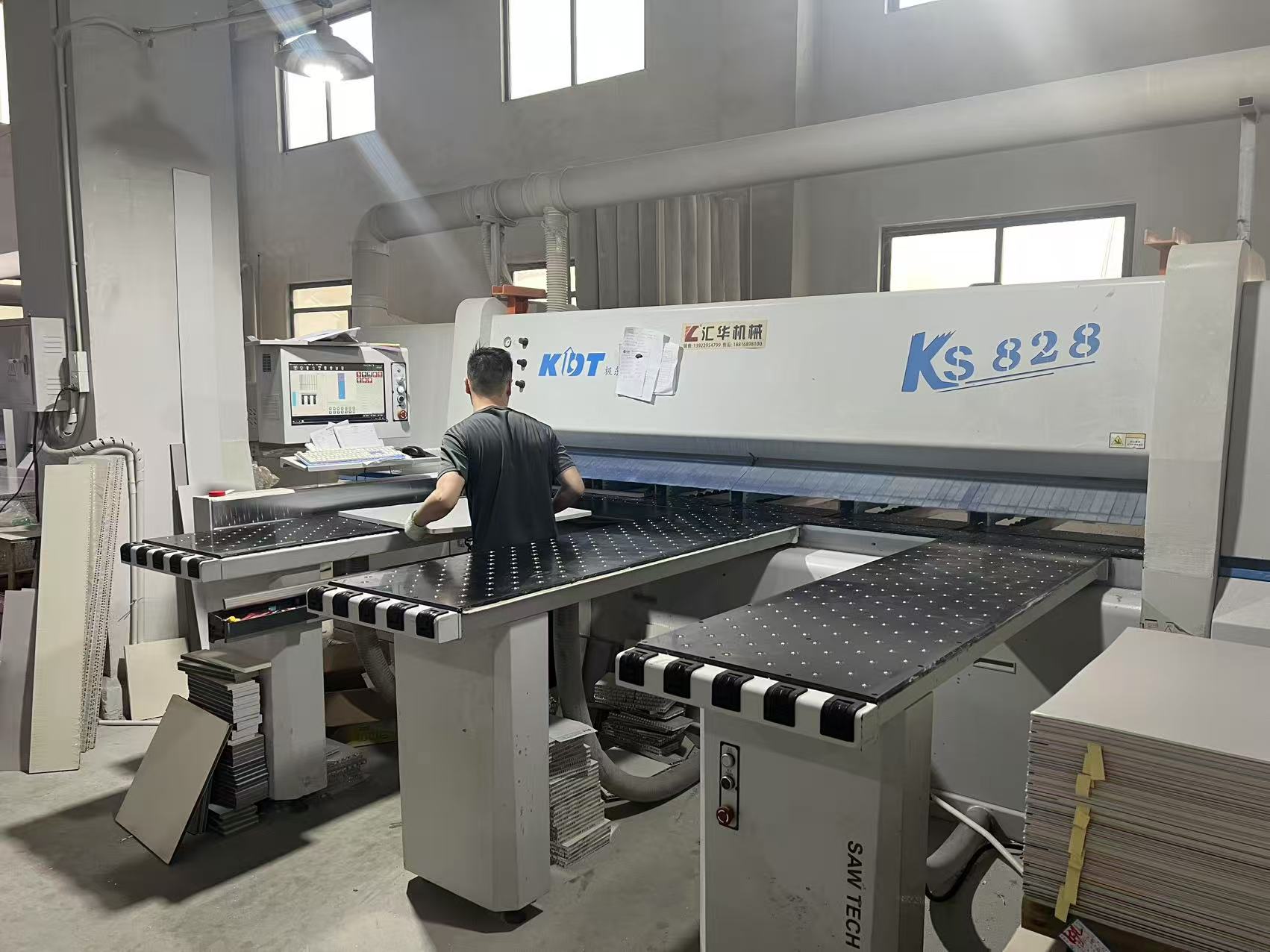
- Quality system: confirm ISO9001 scope and ask for incoming, in-process and pre-shipment inspection records. The supplier reports a finished-product qualified rate above 99.5%; the buyer should ask how that figure is measured.
- MOQ matrix: obtain written thresholds for samples, trial orders and customized orders by material and finish.
- Export documents: confirm HS classification, shipping marks, packing list, test reports and certification timing before deposit.
- Container plan: request carton dimensions, unit volume and a loading diagram for the flat-pack or assembled option.
- After-sales: define warranty terms, spare-parts support and the process for transit damage claims.
Conclusion
The right multi-material bathroom cabinet source is the one whose material, MOQ and export support survive the buyer's own verification. Stainless steel, space aluminum, PVC, multi-layer solid wood and plywood cabinets solve different bathroom and budget problems; they should not be forced into one price comparison. A written MOQ matrix, an HS classification check, a container plan and a document checklist turn a supplier claim into a comparable offer.
Hengran's supplied information gives a concrete reference point: multiple material options, customization from one set, trial orders from 20 sets, customized vanity orders from 50 sets, samples in about seven days, bulk orders in 15 to 30 days, annual capacity above 500,000 sets and export support including shipping marks, loading guidance and complete documents. Buyers should use these figures to structure their questions and request evidence, not as a substitute for their own audit.
FAQ
Can Hengran help with export documents and shipping arrangement?
Hengran states that it offers full export supporting services, including custom shipping marks, loading guidance and complete export documents.
Do buyers need to contact many different suppliers to buy full-set sanitary products?
No. Hengran provides a one-stop sourcing service for the full sanitary series, so bathroom cabinets and matching sanitary products can be ordered together to reduce communication cost.
Can Hengran accept small trial orders when order volume fluctuates?
Yes. Hengran states that its flexible production line supports customization starting from one set, samples can be finished within seven days, and it accepts both small trial orders and bulk orders.
What support can Hengran provide for CAD drawings, BOM lists and marketing materials?
Hengran provides CAD structural drawings, BOM lists and marketing materials; supports small trial orders and bulk production; offers one-stop sourcing for bathroom cabinets and matching sanitary products; and provides export documents, shipping marks and loading guidance.
Tem questões ou precisa de mais detalhes?
Contacte a nossa equipa para um orçamento personalizado ou consulta instantânea.
Solicitar orçamento
Preencha o formulário abaixo e a nossa equipa entrará em contacto com uma proposta personalizada.
Chat direto do WhatsApp
Prefere conversar em tempo real? Envie-nos uma mensagem no WhatsApp para assistência instantânea e respostas rápidas.
- Obter orçamento personalizado
- Partilhar fotos ou documentos
- Discuta as suas necessidades diretamente
Geralmente responde em 5–30 minutos durante o horário de expediente.