
Multi-Point Locking Systems: Timber, Composite, Patio Doors
Multi-Point Locking Systems: Timber, Composite, Patio Doors
A multi-point locking system is not selected by brand or by the number of locking points alone. For timber, composite and patio doors, the decision is fixed by four factors in sequence: the door substrate and its edge detail, the profile geometry, the operating mode, and the evidence that covers the exact configuration. Getting that sequence wrong is the most common reason a soundly manufactured lock will not fit, will not engage reliably, or cannot be signed off at handover.
This comparison examines how the same buyer question resolves differently across three door types, using the documented characteristics of three TOPTEK platforms: MUSG4592 and the Auto Lock 4592 series for entrance doors, and PD1000 for patio, balcony and terrace doors. It also draws a clear line around what the published figures establish, because that boundary is where most procurement risk sits.
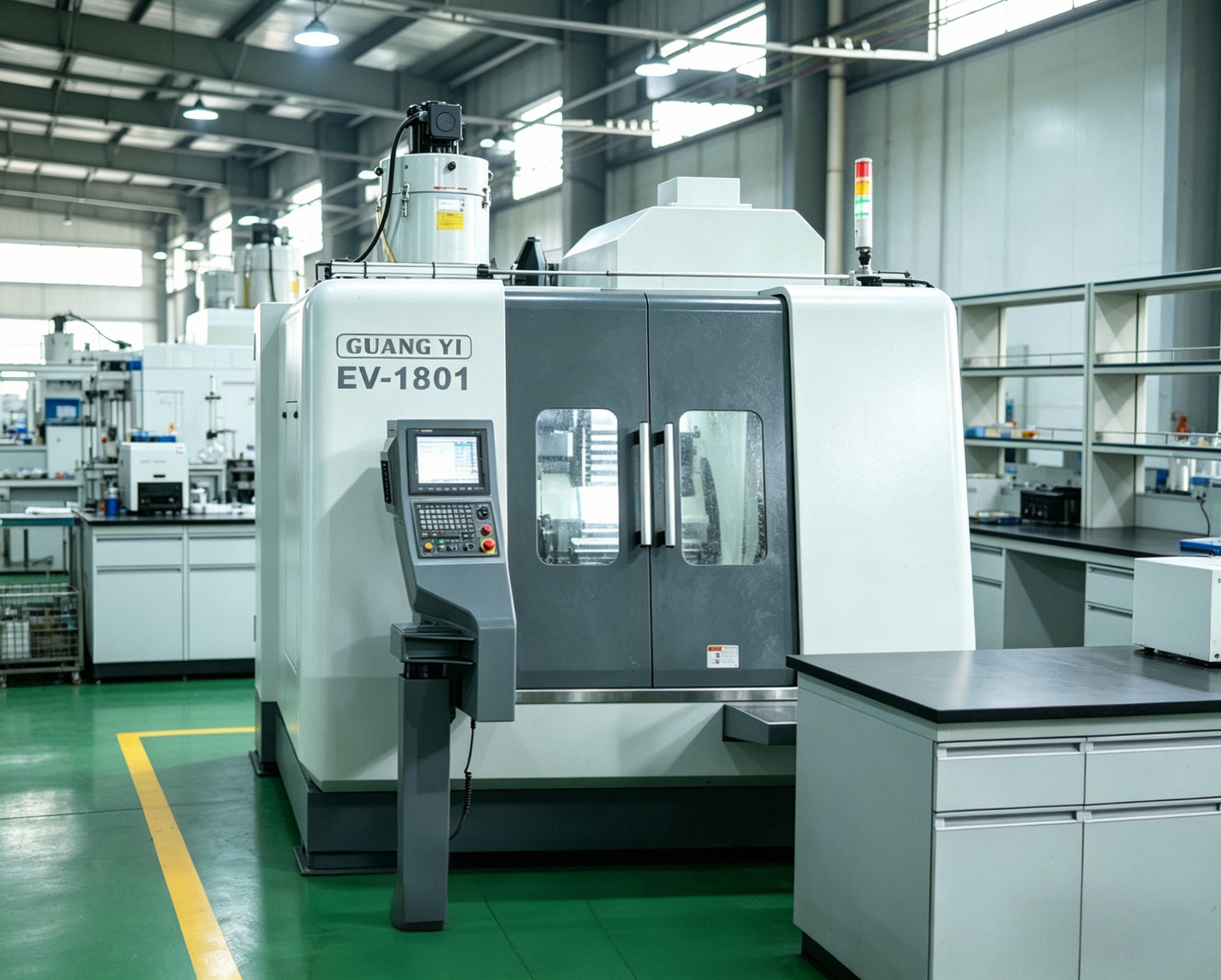
Lock hardware machining centre. Multi-point assemblies are long, dimension-critical components, so the geometry is fixed at the drawing stage rather than on site.
What a multi-point system changes compared with a single lock case
A multi-point locking system uses one central lock case to drive additional locking points along the door edge. In the MUSG4592 arrangement, one central case is linked to two auxiliary cases, and closing the door causes upper and lower hooks plus the central deadbolt to project. The hooks and central deadbolt are one-piece zinc-alloy components joined by 2.5 mm metal connectors.
The practical difference from a single mortise lock is the number and distribution of engagement points, and the coordination required to make them act together. Whether that translates into a stronger opening is a separate question that depends on the complete doorset and on test evidence for it; the mechanism alone does not answer it. What the mechanism does change immediately is the tolerance budget: a 1,720 mm faceplate sits in one long route along the door edge, so faceplate straightness, keep alignment along the full length, and door squareness all become shared variables rather than local ones.
The decision sequence: five dimensions that decide whether a system fits
Comparisons of multi-point locks that begin with security features usually miss the constraint that actually stops a project. The dimensions below decide fit first; performance and evidence decide selection second.
- Backset. The distance from the door-edge reference to the spindle or cylinder centreline. The entrance platforms are documented at 45 mm; PD1000 is documented at 15.5 mm.
- Handle centres. The spacing between the lever spindle and the cylinder. All three platforms in this comparison are documented at 92 mm.
- Faceplate. MUSG4592 and Auto Lock 4592 use a 20 × 1,720 mm faceplate; PD1000 uses a 16 × 1,414 mm faceplate.
- Locking positions. Three positions are documented for MUSG4592 and Auto Lock 4592. The number and position of locking points for PD1000 must be confirmed on the model drawing rather than assumed from the entrance platforms.
- Handing and keeps. Reversible latch handing is documented for the entrance platforms, which reduces handing-specific stock, but every keep still has to be set to the door section and the frame condition.
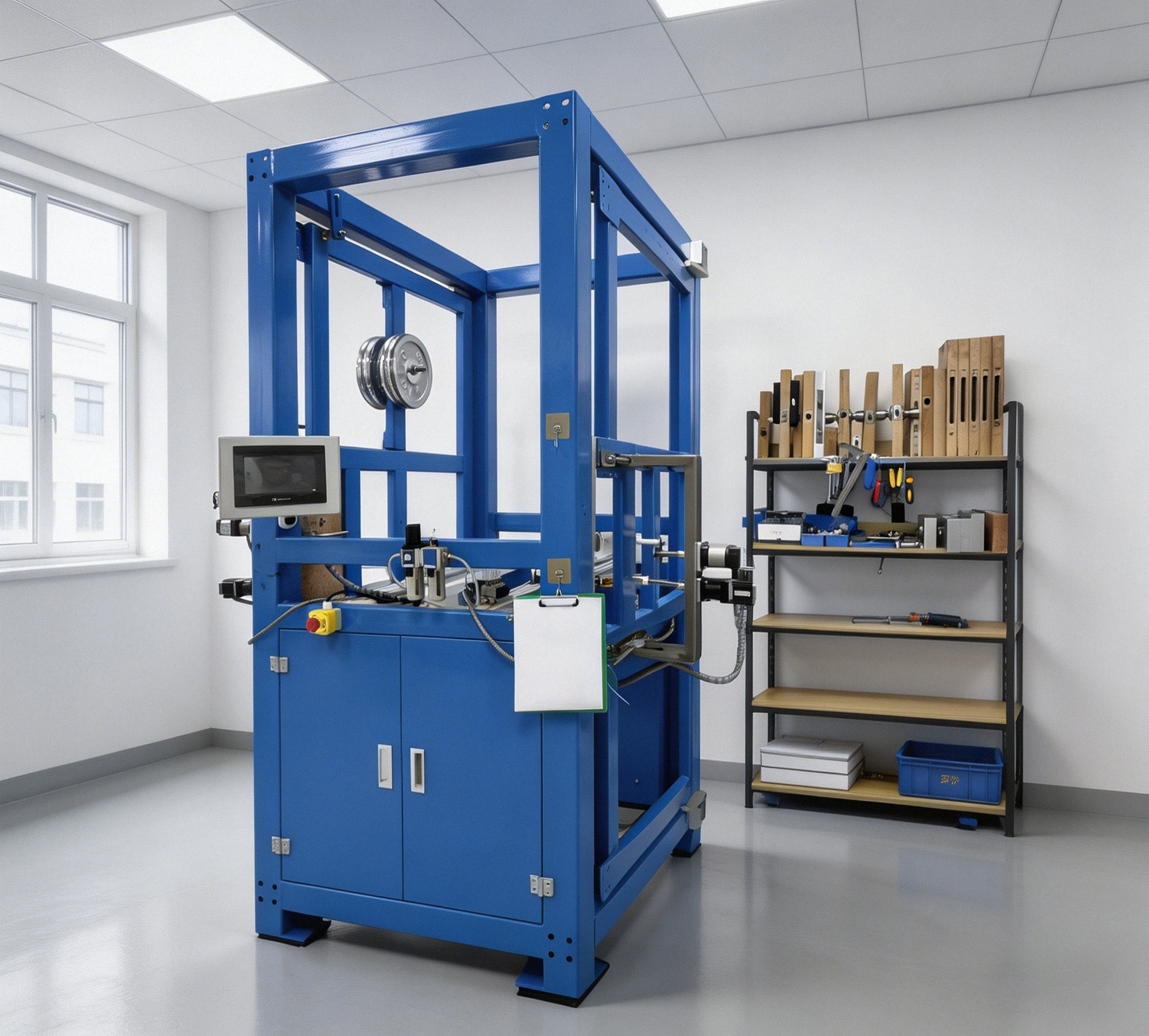
EN 12209 lock durability testing machine. Cycle figures only become comparable when the component tested, the method and the configuration are stated.
Timber entrance doors: what changes in the specification
For compatible timber entrance doors, MUSG4592 and Auto Lock 4592 are the documented candidates where automatic locking on closure is required. The dimensions are therefore the same as any other entrance application on these platforms: 45 mm backset, 92 mm lever-to-cylinder centres, 20 × 1,720 mm faceplate, three locking positions.
Timber changes the risk profile rather than the lock specification. The faceplate is bedded into a long route in a material that responds to humidity, and the keeps are fixed into a frame that may move independently of the leaf. The consequence for procurement is that two checks carry more weight than normal: faceplate straightness after transport and storage, and keep alignment evaluated with the door hung rather than on the bench. A long assembly that is slightly bowed will bind at one end even if every individual component is within tolerance.
MUSG4592 also documents a practical extension point for taller openings: overall length can be extended to 2,400 mm subject to approved drawings. That is a drawing-stage decision, not a site modification, and it should be settled before the door route is cut.
Fire-door boundaries on timber leaves
Fire performance is the area where buyers most often over-transfer evidence. TOPTEK holds EN 1634-1 doorset results of 132 minutes integrity and insulation on tested timber doorsets and 260 minutes integrity on tested steel doorsets, alongside EN 1906 and EN 1303 component evidence. Those results apply to the models, hardware combinations and door assemblies covered by the corresponding documents. They do not automatically extend to a multi-point configuration, and the multi-point documentation itself states that fire-door and emergency-egress applications require evidence for the exact configuration.
Decision rule: treat a fire or escape requirement as a separate qualification step. Ask for the report or certificate that names the multi-point model, the door construction, the trim, the keeps and the installation conditions. A handle grade, a cylinder grade or a fire result for another product family does not answer that question.
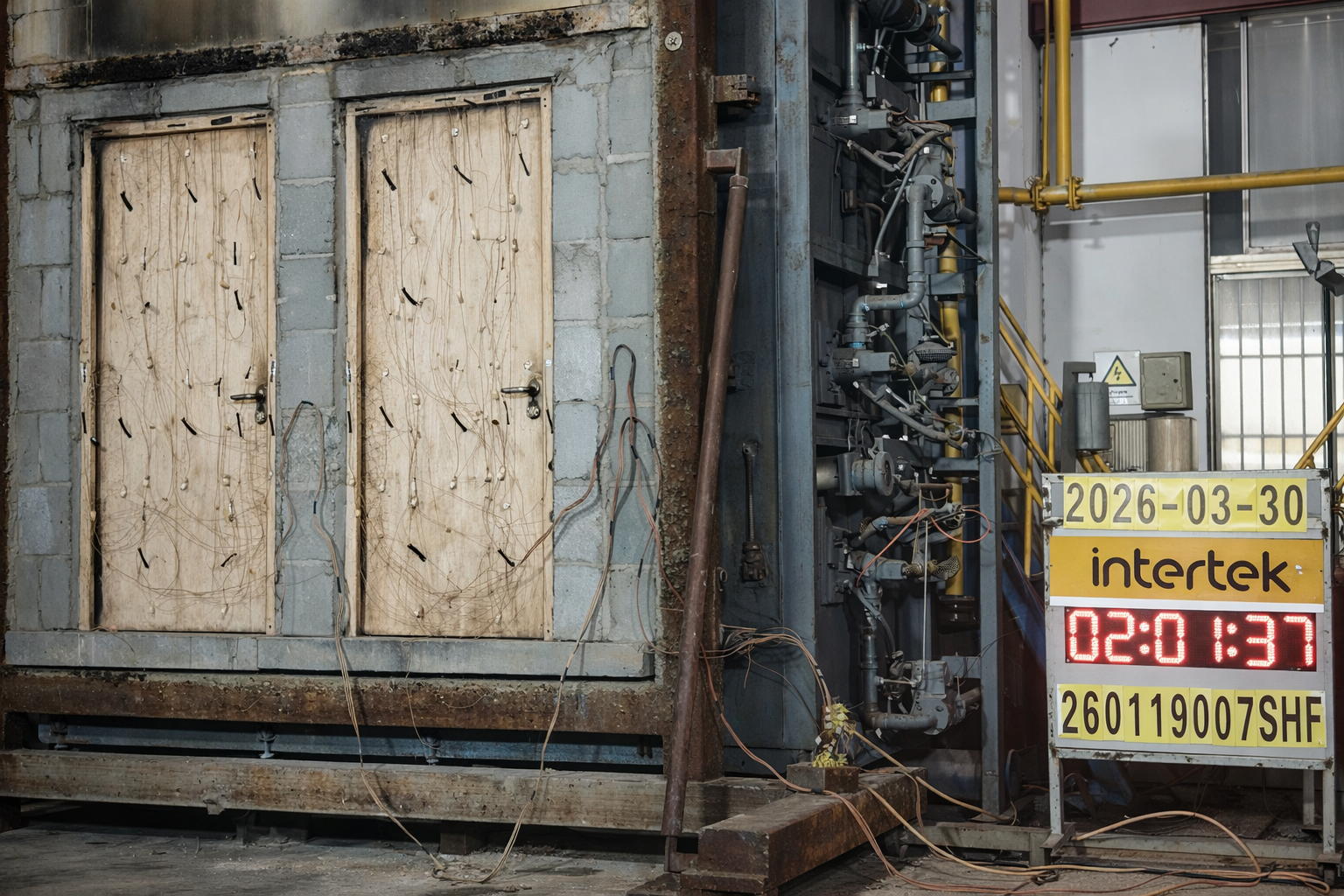
Timber doorset fire test. Doorset results are assembly-specific and do not transfer between hardware combinations.
Composite entrance doors: what changes in the specification
Composite entrance doors are documented as a compatible application for MUSG4592 and Auto Lock 4592 on the same terms as timber. Because the lock dimensions are unchanged, buyers sometimes conclude that the composite decision is identical. It is not: the differences sit in the door preparation and in how the closing sequence is controlled.
Composite leaves typically combine a core and outer skins, so hardware loads are carried by internal reinforcement rather than by the facing material. That makes keep fixing and faceplate support the first specification item, ahead of lock features. It also makes the trigger behaviour of an automatic system more important than it first appears. MUSG4592 uses a rocking stainless-steel trigger designed to prevent premature hook projection before correct engagement, which addresses false triggering and jamming where the door closes against resistance from seals or a closer.
That mechanism does not remove the need for alignment. A door that is not fully closed has not completed the engagement sequence, and should not be treated as locked. The anti-premature-trigger design reduces a specific failure mode; it does not substitute for correct keep positions, correct strike geometry or a door that closes without force.
Patio, balcony and terrace doors: a different constraint set
PD1000 is documented for compatible patio, balcony and terrace-door profiles, and its geometry tells the buyer immediately that the constraint has changed: 15.5 mm backset, 92 mm lever-to-cylinder centres, a 16 × 1,414 mm faceplate and a 7 mm spindle. The narrow backset and narrower faceplate are what allow the system to be considered for slim door profiles where the entrance platforms would not route.
The decision logic for patio doors therefore leads with profile width and available routing depth, then with release function and egress provision, and only then with the number of locking points. Two points are worth stating plainly. First, the documented operating-life figure for PD1000 is 50,000 operations, the same declared figure as the entrance platforms; it is a manufacturer catalogue statement, not a third-party certification result. Second, the locking positions for PD1000 are not stated in the same terms as the entrance platforms, so the model drawing must be used for lock-point positions and keep layout.
Comparing operating modes: automatic, lift-lever and key-operated
Operating mode is where the same door can produce two very different products, and it is the dimension buyers most often leave until the hardware schedule is already fixed. The three commonly specified modes behave differently in use.
| Mode | What must happen at the door | Where it fits | What to verify before ordering |
|---|---|---|---|
| Automatic / self-locking | The trigger is actuated as the door reaches the closed position; hooks and deadbolt project without a key or lever action. This is the documented behaviour of MUSG4592 and Auto Lock 4592. | Entrance doors where every closure is expected to secure the leaf, including apartment and residential entrance projects. | Trigger timing and engagement, keep alignment over the full faceplate length, and confirmation that a partly closed door is not assumed locked. |
| Lift-lever | The lever is lifted to throw the locking points, then locked or released by cylinder. The mechanism class is distinct from an automatic trigger. | Openings where active, deliberate locking by the user is acceptable or preferred. | That the lock case is genuinely a lift-to-lock type, and that the handle is rated for upward operation. TOPTEK's EN 1906 Grade 3 and Grade 4 handles are documented as supporting upward and downward lever operation with compatible lift-to-lock multi-point mechanisms. |
| Key-operated | Locking points are thrown by key or thumbturn only; nothing is thrown by closing the door. | Doors where locking is an intentional, controlled act rather than an automatic consequence of closing. | Cylinder format and length, keying plan, and the inside release function required for the opening. |
The boundary matters commercially. The TOPTEK multi-point platforms described in this comparison are documented as automatic locking configurations, and the documented compatibility with lift-to-lock mechanisms concerns the handle range rather than a lift-lever lock case. A project that requires a lift-lever or key-operated multi-point case is asking a different scope question and should confirm it directly rather than assume the automatic platforms can be configured that way.
Reading the durability figures correctly
The published performance position for this range is specific and should be quoted precisely. MUSG4592, Auto Lock 4592 and PD1000 are declared at 50,000 operations in the catalogue. Separately, the MUSG4592 trigger component is reported at over 100,000 cycles in TOPTEK product information, and that is a component figure distinct from the complete-lock operation count.
Three qualifications follow. The 50,000-operation figure is a manufacturer-declared statement and should not be described as third-party certification. A component cycle count and a complete-lock cycle count measure different things and should not be added, averaged or compared directly. And a cycle count does not convert into a service life in years, because the result depends on door mass, alignment, lubrication, frequency and environment.
Buyers comparing this range against another system should therefore ask for equivalent data on the same basis: what component was cycled, under what method, on which configuration. Where an alternative publishes only a component figure or only a marketing statement, the two are not comparable, and the honest conclusion is that the comparison is undecided rather than that one product leads.
Total installed cost: where the real differences appear
Purchase price is the least informative number in a multi-point decision, because the cost drivers sit around the lock. The documented comparison basis is a complete system: equivalent operating mode, materials, lock points, cylinders, handles, keeps and test coverage, with routing, keep preparation, installation, adjustment and transport protection included.
Two factors in this range affect that total in ways worth naming. Automatic locking reduces the manual steps needed to engage multiple points on every closure, which is an operating benefit rather than a price claim. And long assemblies need protection in transit: individual protection and wooden-crate packaging are documented, which matters because a bowed faceplate discovered at installation becomes rework rather than a delivery issue. Reversible latch handing on the entrance platforms also simplifies stockholding across door orientations.
No price difference or saving should be asserted without matched quotations for the same function, finish, quantity and documented performance.
Installation and handover checks
Most multi-point problems that reach a project as quality complaints originate in installation and alignment. The following checks follow directly from the documented product characteristics.
- Confirm the drawing revision and the four locating values before cutting: backset, handle centres, faceplate dimensions and spindle size.
- Check faceplate straightness on receipt and keep long assemblies supported in storage and handling.
- Trial-fit the lock, keeps and trim without forcing components, then verify latch handing against the door orientation.
- Close the door slowly and observe trigger engagement and bolt projection at every locking position; the door should not need to be slammed.
- Verify keep alignment along the full faceplate length with the door hung and the seals in place.
- For fire or escape openings, confirm the evidence covers the exact configuration before handover, not after.
Maintenance and lifecycle considerations
The maintenance profile of an automatic multi-point system is dominated by alignment rather than by the mechanism. The documented guidance is to inspect the faceplate for bending, check every keep and fixing, and verify synchronised bolt travel and complete engagement. Where operation becomes stiff, the first checks are door sag, seal compression and strike alignment, not the lock internals.
The anti-premature-trigger mechanism is designed to reduce unintended bolt projection and the closing faults that follow from it, but it does not correct a door that has dropped. Long assemblies still depend on straightness. Specified lubrication and matched parts should be used, and assemblies should be protected during handling and storage.
On energy, the mechanical configurations described here require no electrical power for normal locking. Multiple engagement points may help maintain seal contact when correctly adjusted, but any effect on air leakage or thermal performance depends on the complete door, frame, seals and installation, and requires doorset-level assessment rather than a lock-level claim.
Supply-side considerations: where TOPTEK sits in this comparison
Zhongshan Toptek Security Technology Co., Ltd has manufactured commercial door locks and architectural hardware since 1991 from a 13,000 m² facility in Xiaolan, Zhongshan, Guangdong, China, employing approximately 220 people. The company exports around 70% of output to North America, Europe, Eastern Europe, the Middle East, Australia and New Zealand, and serves door manufacturers, hardware brands, distributors, contractors and access-control integrators through OEM and ODM services.
Manufacturing combines more than 50 Japanese TSUGAMI precision CNC machines with stamping, laser cutting, bending, riveting, welding, tooling and assembly. Single-setup machining of suitable complex components reduces repositioning error and cumulative tolerance. The company holds ISO 9001:2015, ISO 14001:2015 and ISO 45001:2018 certification, and reports more than 100 domestic and international patents. Quality control covers incoming material inspection, first-article inspection, routine patrols, in-process sampling, dimensional checks, finish inspection and assembly checks, supported by optical measurement and metal-composition analysis.
For a multi-point project, the relevant capability is not the size of the portfolio but whether the dimensions, keeps, cylinders, handles and keying can be coordinated before production. TOPTEK's OEM/ODM scope covers lock functions, materials, finishes, keyways, keying plans, branding, packaging and electronics integration, with an internal laboratory used for operating-cycle, strength, torque, pull-out, corrosion and temperature/humidity checks. Its cylinder range — including Euro-profile P05 models documented under EN 1303 at Grade 6 key security and 100,000 operating cycles, with up to five master-key levels — is the relevant adjacent component when a multi-point entrance door needs a managed key system.
The fit boundary should be stated as clearly as the capability. The multi-point range described here comprises three documented platforms with automatic locking behaviour and mechanical operation. Projects needing a lift-lever or key-operated multi-point case, third-party certified cycle data for the multi-point assembly itself, or a fire-rated multi-point doorset require a scope confirmation rather than an inference from the catalogue.
Outlook for specifiers
The practical direction of travel in entrance-door specification is towards more locking points per opening and more hardware supplied as a coordinated set. That is an observation about specification practice, not a market forecast, and it carries a specific consequence: the decision moves earlier. Backset, centres, faceplate length and spindle must be agreed while the door is still a drawing, because once the profile is routed the remaining options narrow sharply.
For buyers at decision stage, the defensible position is a documented one. Select the platform by door type and profile geometry; select the operating mode by how the door is used; then require evidence that names the exact configuration. Where that evidence is incomplete, the correct action is to record the gap and qualify the claim, not to fill it with an assumption.
Frequently asked questions
What is a multi-point locking system?
A multi-point locking system is a door locking arrangement in which one central lock case drives additional locking points along the door edge. In the MUSG4592 configuration, one central case is linked to two auxiliary cases, and closing the door causes upper and lower hooks and the central deadbolt to project, giving three locking positions. The locking points are connected by metal linkages, so they act as one coordinated system rather than as independent locks.
What do 45 mm backset and 92 mm handle centres mean for door preparation?
Backset is the distance from the defined door-edge or faceplate reference to the spindle or cylinder centreline shown on the drawing. Handle centres, also called centre distance, are the spacing between the handle spindle and the cylinder or keyhole reference. On the TOPTEK entrance platforms these are documented at 45 mm and 92 mm respectively; PD1000 is documented at 15.5 mm backset with 92 mm centres. The two values must be taken from the dimensioned drawing for the exact model, not from a catalogue number, because backset and centre distance locate different operating points and a trim that matches one will not necessarily match the other.
How should a buyer compare automatic and lift-lever multi-point mechanisms?
Compare them by what must happen at the door. An automatic or self-locking mechanism projects its locking points when the door reaches the closed position, so security follows from closing the door. A lift-lever mechanism requires the user to lift the lever to throw the locking points, and a key-operated mechanism throws them by key or thumbturn only. The comparison should then cover trigger or lever engagement, keep alignment, the inside release function and the evidence for the exact configuration. It should not assume interchangeability: an automatic platform is not a lift-lever platform, and handle compatibility with lift-to-lock mechanisms does not turn one into the other.
What should be checked before replacing an existing multi-point lock?
Record the existing backset, handle centres, faceplate length and width, spindle size, number and position of locking points, and handing before ordering a replacement. Compare those values with the drawing of the proposed model rather than with a product name, because similar-looking assemblies differ in geometry. Check that the keeps align with the new locking-point positions and that the door and frame have not moved. Where the existing installation shows bending, binding or incomplete engagement, correct the alignment cause first; fitting a new assembly into a misaligned opening reproduces the original fault.
What evidence should be requested for a durability or fire-door claim on a multi-point lock?
Request the document that names the specific model and states what was tested, by whom, under which standard edition and on which configuration. Distinguish three things that are often presented together: a manufacturer-declared cycle figure, a component-level cycle result, and a third-party certificate or test report. For fire doors, ask for the doorset evidence covering the multi-point model, door construction, trim, keeps and installation conditions, because doorset results apply to the assembly tested and do not transfer automatically between hardware combinations or between timber and steel leaves.
For full product and capability detail, the TOPTEK company profile is available to view and download: TOPTEK Company Profile (PDF).
Tem questões ou precisa de mais detalhes?
Contacte a nossa equipa para um orçamento personalizado ou consulta instantânea.
Solicitar orçamento
Preencha o formulário abaixo e a nossa equipa entrará em contacto com uma proposta personalizada.
Chat direto do WhatsApp
Prefere conversar em tempo real? Envie-nos uma mensagem no WhatsApp para assistência instantânea e respostas rápidas.
- Obter orçamento personalizado
- Partilhar fotos ou documentos
- Discuta as suas necessidades diretamente
Geralmente responde em 5–30 minutos durante o horário de expediente.