
Multi-Process Custom Plastic Parts: An OEM Capability Review
Custom plastic parts programs often require more than one manufacturing process. A single assembly may combine an injection-molded housing, an extruded PA66 trim, a CNC-machined PTFE back-up ring, and a dipped PVC handle. For buyers moving from supplier evaluation to execution, the practical question is whether one manufacturer can control quality and tolerances across all of those processes. Lingo Rubber Plastic is a custom plastic and rubber parts manufacturer based in Hangzhou, China, and its multi-process plastic platform is designed to answer that question directly.
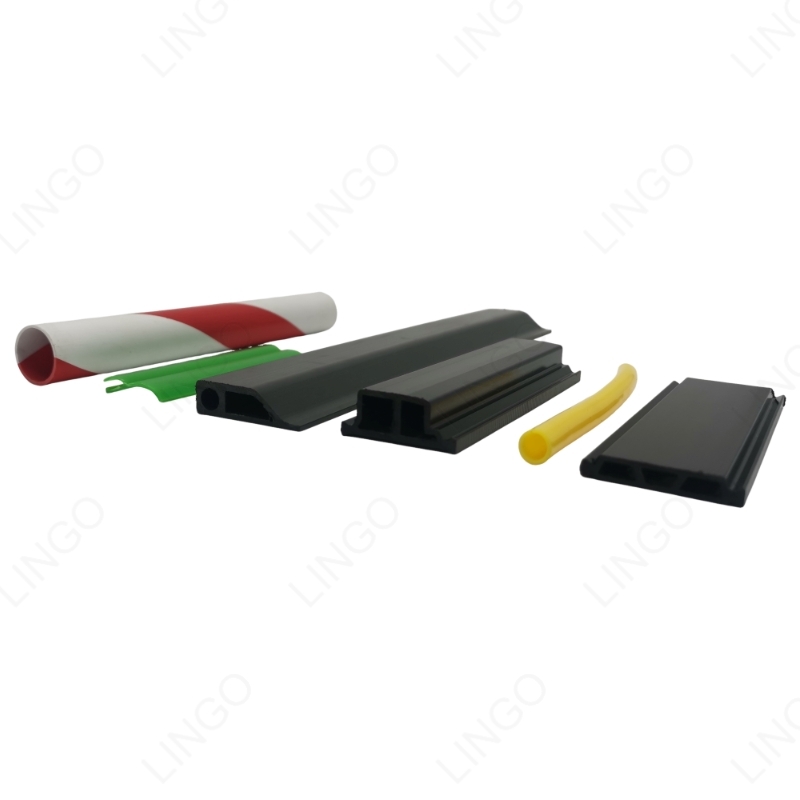
Plastic extrusion profiles are one of the core manufacturing processes in Lingo's custom parts platform.
The Problem: Fragmented Sourcing for Multi-Process Plastic Parts
Industrial buyers sourcing custom plastic parts such as washers, handles, housings, strips, and tubing typically face a fragmented supply base. Injection molding is usually placed at one supplier, plastic extrusion at another, CNC plastic machining at a third, and surface treatments such as PVC dipping at a fourth. Each hand-off creates interface costs: separate drawing interpretations, different tolerance philosophies, split mold ownership, and inconsistent batch traceability.
That fragmentation is especially visible when a project combines engineering plastics with non-standard geometries. For example, a single automotive or industrial component program may require an injection-molded plastic part with glass-fiber-filled PP, a nylon PA66 extruded trim, and a CNC-machined PTFE anti-extrusion ring. Coordinating dimensional compatibility across three independent suppliers multiplies the risk of dimensional mismatch, documentation gaps, and liability ambiguity during failure analysis.
The market has responded with a broader trend toward integrated manufacturing capability. According to Grand View Research, the global injection molded plastics market was valued at USD 362.5 billion in 2025 and is projected to reach USD 481.4 billion by 2033. The automotive plastics segment alone was valued at USD 33.0 billion in 2025, driven by lightweighting trends in electric vehicles. Fragmented sourcing becomes harder to justify as the cost pressure and quality requirements in these markets intensify.
The Opportunity: A Multi-Process Plastic Parts Platform
Lingo Rubber Plastic (Hangzhou Lingo Rubber and Plastic Product Co., Ltd.) is a China-based manufacturer of custom plastic and rubber parts, established in 2022, operating a 3,000-square-meter facility with around 40 employees, including a 10-person R&D team. About 80% of its output is exported to the EU and USA, making export compliance and documentation a routine part of its manufacturing workflow.
The company's plastic production platform spans four primary processes: plastic injection parts (model LG-PI), plastic injection molded auto parts (model LG-AP), plastic extruded profiles (model LG-PE), plastic CNC machined parts (model LG-CNC), and PVC dipping handles (model LGHD). This is supplemented by PTFE machining, PEEK machining, acrylic machining, plastic machining, assembly, and rubber molding and extrusion operations.
From a buyer's perspective, the value is not in the number of machines, but in the ability to place multiple plastic components of one assembly under a single quality system, single mold-maintenance owner, and single batch-traceability record.
| Process | Product Model | Key Specifications |
|---|---|---|
| Plastic injection molding | LG-PI | Tolerance per GB/T 14486 MT1–MT7; shrinkage compensation 0.4%–0.8% |
| Automotive injection molding | LG-AP | FMVSS 302, RoHS, REACH; temperature range −40°C to +120°C |
| Plastic extrusion | LG-PE | Length up to 6,000 mm; custom cross-section and color |
| Plastic CNC machining | LG-CNC | PTFE, PEEK, POM, UHMWPE, etc.; FDA, RoHS, UL options |
| PVC dipping | LGHD | PVC coating; custom color, gloss, and surface texture |
Technical Capability: Injection Molding and Tolerance Control
Lingo Rubber Plastic provides OEM and ODM production for plastic injection parts, with a monthly capacity of 1,000,000 kg and typical lead times of 2 to 6 weeks. Part types include solid plastic parts, housing components, precision functional components, insert molding parts, and dual-material parts.
Tolerance control is the most frequently quoted decision criterion when buyers evaluate custom plastic parts suppliers. For its injection-molded products, Lingo applies the GB/T 14486 standard across the MT1 to MT7 tolerance grades. The company references a typical shrinkage rate of 0.4% to 0.8% for mold compensation, which is particularly relevant for glass-fiber-filled PP and PA materials. Part design guidance in the product specification covers a draft angle of at least 1° on the outside and 0.5° on the inside, a defined SPI surface finish, and custom color matching against Pantone or RAL references.
The injection molding material list is predictable for industrial buyers: PP, PA6, PA66, ABS, PE, HDPE, UHMWPE, LDPE, PU, PTFE, and plastics with glass-fiber modification. Fillers and modifiers include flame-retardant and UV-stabilized formulations, and special requirements such as FDA and UL94 V-0 are recognized where the application needs them.
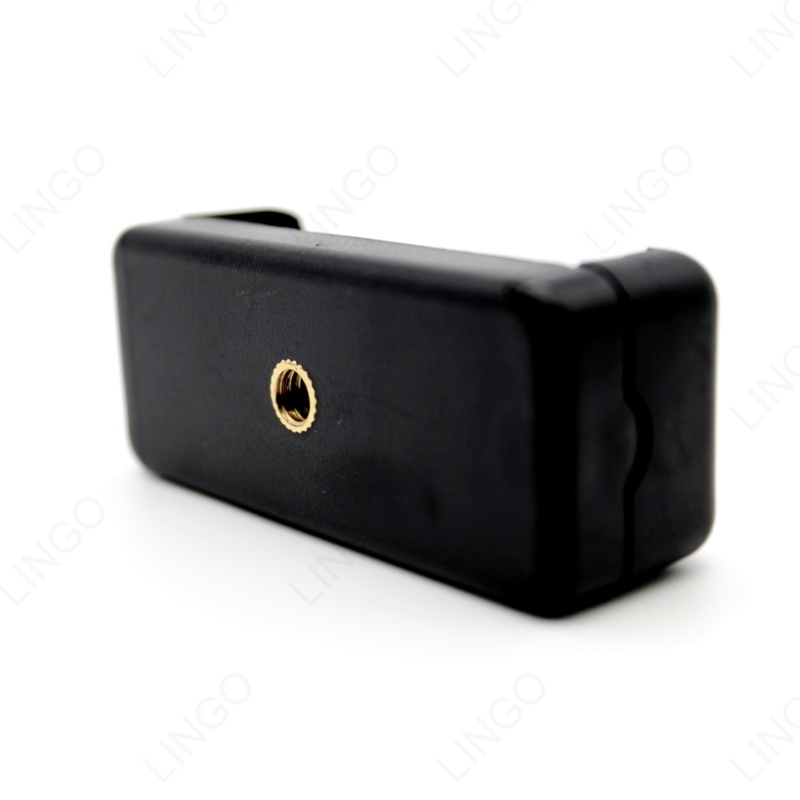
Insert molding expands the functional range of custom plastic injection parts for industrial assemblies.
Technical Capability: Plastic Extrusion Profiles
Lingo Rubber Plastic also operates a plastic extrusion platform producing profiles and strips from PVC, PP, ABS, PA6, PA66, PE, and UHMWPE, with or without glass fiber. The LG-PE product line includes PA extrusion profiles, glass-fiber-reinforced profiles, co-extruded profiles, and flexible extruded profiles. Profile length reaches up to 6,000 mm, with custom cross-sections, custom Pantone or RAL colors, and custom surface finishes.
In material terms, the extruded range covers nylon plastic parts such as PA6 and PA66 extrusion trims, PE/HDPE/UHMWPE trims, glass-filled trims, co-extruded trims, decorative trims, and thermoplastic elastomer extrusion trims. Buyers in construction, transportation, HVAC, and renewable energy applications typically use these profiles as edge trims, sealing strips, guides, and decor components.
The extrusion line has a monthly capacity of 1,000,000 kg with the same 2-to-6-week lead time framework, and its export markets for extruded profiles include the EU, the Middle East, and the USA.
Technical Capability: Plastic CNC Machining and PVC Dipping
For lower-volume precision components, Lingo Rubber Plastic supplies plastic CNC machined parts (LG-CNC). The machining program covers PTFE, POM, PE, UHMWPE, HDPE, PEEK, ABS, PU, PA6, and PA66, and can include glass-fiber reinforcement. Typical machined parts are PTFE gaskets, POM machined parts, PP machined parts, back-up rings, anti-extrusion rings, gears, seals, gaskets, bearings, and bushings. The specification sheet references surface roughness in Ra/Rz values and defines visual inspection criteria as smooth surfaces, no cracks, and no flash.
The PVC dipping line (LGHD) adds a different kind of capability: a coating process for handles and metal fixtures. PVC dipping plastic parts are manufactured by dipping a metal or pre-formed substrate into a PVC plastisol, producing a coating that can be formulated in almost any color and finish, from glossy and matte to rough textured surfaces. The process is useful for anti-slip handles, electrical insulation, and corrosion protection in humid or chemically aggressive environments.
One important procurement advantage of PVC dipping is that it does not require expensive molds, and small order quantities are acceptable. PVC materials are relatively inexpensive, the dipping solution itself contains no toxic or heavy metal ions, the production process is commonly regarded as environmentally friendly, and raw materials can be recycled.
Application Scenarios: Three Documented Cases
Application capability is best assessed through documented project execution. Lingo has published reference cases in three different industry segments, and each one illustrates a different way to use the multi-process platform.
Automotive machinery — USA. A US auto industry client sourced 5,000 plastic injection parts for a tube holder application in automotive machinery. Lingo reduced internal material volume while maintaining the product's structure and functionality, which lowered material and logistics costs and improved dimensional stability. The part achieved zero failures over long-term use.
Chemical, petrochemical, and process industries — UK. A UK-based project required 20 pieces of PTFE back-up rings, used as critical components to protect O-rings and other elastomeric seals from extrusion damage under high pressure. The parts were CNC machined from pure PTFE with high-precision tolerance, shipped within 2 days, and delivered under an acceptable small-order policy. The PTFE back-up ring ensures the integrity and longevity of the primary seal by preventing extrusion damage. This product has been used successfully by clients in chemical and petrochemical, food and pharmaceutical, automotive, electronics and semiconductor, aerospace and defense, and general industry sectors.
Electrical and electronics — Germany. A German electrical and electronics client purchased 1,500 PVC dipping handles. The application used PVC's insulating characteristics to protect current transmission and prevent wiring damage accidents. The coating is resistant to acids, alkalis, salt spray, and oil, and it protects the metal substrate from corrosion in humid and chemically corrosive environments. The parts also withstand low and high temperature exposure. The customer reorders on an annual basis, and the key highlights were the lack of need for expensive molds and the acceptance of small order quantities.
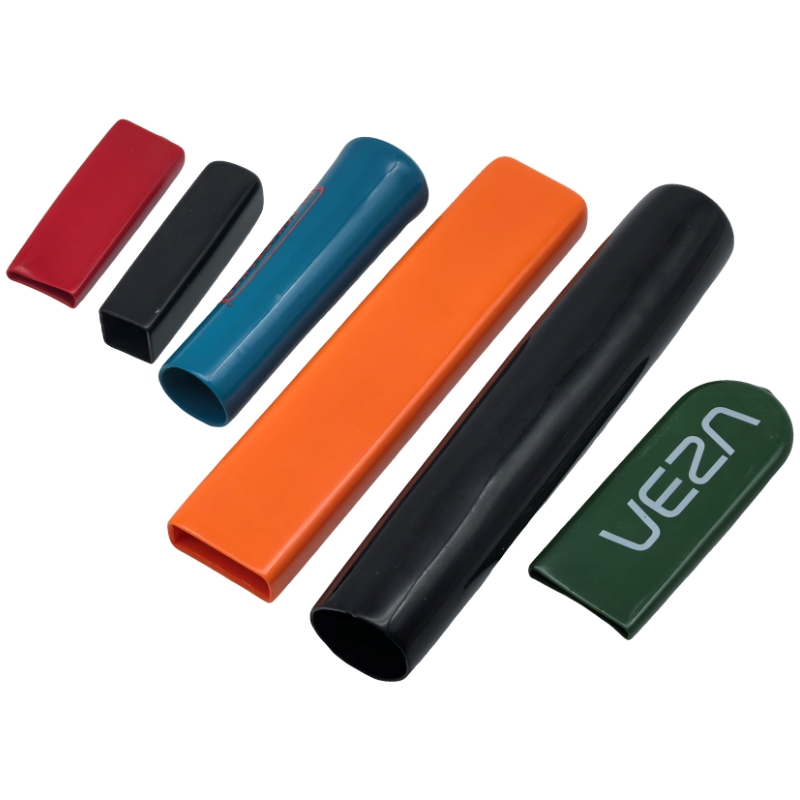
PVC dipping plastic parts add corrosion resistance and electrical insulation to industrial handles and fixtures.
Market Context and Regional Sourcing Dynamics
Buyers evaluating custom plastic parts manufacturers in 2026 are operating inside a well-documented market expansion. The global injection molded plastics market was valued at USD 362.5 billion in 2025 and is projected to grow to USD 481.4 billion by 2033, according to Grand View Research. The same source values the automotive plastics market at USD 33.0 billion in 2025, driven by the lightweighting requirements of electric vehicles.
Asia Pacific dominated the injection molded plastics market in 2025 with an approximate revenue share of 40.7% to 41.2%. On the trade side, the Observatory of Economic Complexity reports that China exported approximately USD 174 billion in plastics and rubbers in 2024, with the United States as the largest destination at USD 24.3 billion. These figures are consistent with Lingo's own export structure, which sends about 80% of production to the EU and USA.
Two structural trends are relevant for procurement decisions. First, polypropylene (PP) remains the dominant raw material in injection molding, accounting for a 32.4% share of the automotive plastics market in 2025. Buyers will therefore evaluate PP and glass-fiber-filled PP capability as a baseline requirement. Second, industry sources tracking 2024–2026 trends point to Industry 4.0 integration, including AI and IoT-based real-time monitoring, the reshoring of high-specification production, and the adoption of bio-based and recycled resins. These trends push suppliers toward documented traceability — an area where Lingo has built batch-level traceability into its after-sales system.
Multi-Process vs. Single-Process Suppliers: A Balanced Comparison
The main comparison for buyers is not between Lingo and an unnamed competitor; it is between a multi-process plastic parts platform and a single-process specialty shop. A single-process injection molder may offer higher machine utilization for very large serial volumes and deeper optimization of one process. However, a multi-process manufacturer offers several structural advantages:
Single point of accountability. When injection-molded plastic parts, extruded trims, and machined PTFE components are produced under one manufacturer, the tolerance chain is managed inside one facility. There is no cross-supplier dimensional dispute to resolve.
Simplified mold ownership and maintenance. Mold maintenance and ownership protection are handled centrally, which reduces the legal and administrative burden for OEM buyers.
Consistent quality documentation. Batch traceability and quality control apply across all processes, making PPAP-style evidence easier to consolidate for automotive plastic parts.
The honest limitation is capacity scale. A 3,000-square-meter factory with roughly 40 employees positions Lingo as a flexible, mid-volume producer rather than a high-volume mass-production plant. Programs requiring very large annual volumes or ultra-large injection machines may be better served by a larger single-process facility. Lingo's published production capacity of 1,000,000 kg per month for both injection molding and extrusion is best understood as tailored serial production, with small quantity orders accepted and lead times of 2 to 6 weeks.
Quality Systems and Certification Evidence
Quality documentation is a decisive evaluation criterion for injection molded plastic parts. Lingo operates a quality control framework based on full inspection of samples and random inspection of bulk goods, with pre-shipment testing as the acceptance standard. The company is able to support the PPAP process for automotive production part approval.
For its injection molded auto parts line (LG-AP), the specification references FMVSS 302, RoHS, and REACH compliance, along with a temperature range of −40°C to +120°C. Date-code marking, polished/textured/painted/plated surfaces, and multi-cavity hot-runner or cold-runner tooling are part of the documented capability set. For CNC machined parts, FDA, RoHS, and UL are recognized as options depending on the application.
Buyers in the automotive sector should note that the industry-level quality benchmark is IATF 16949:2016, which builds upon ISO 9001:2015. That standard is typically confirmed directly with the supplier during audit, in addition to reviewing PPAP evidence.
Sourcing Execution: MOQ, Delivery, and Payment
Execution-stage buyers need clear commercial parameters. Lingo states that the minimum order quantity differs per product, but small quantities are accepted. Delivery methods include EXW, FOB, CIF, and DDP, which gives buyers flexibility for both sea and air logistics. Pre-shipment testing is the standard acceptance procedure.
Payment terms are structured to accommodate both new and established relationships. T/T is the standard option, with a deposit upfront and balance before shipment for first-time or small orders. L/C at sight is available for larger quantities, D/P can be arranged for certain destinations, and PayPal is accepted for sample payments or low-value orders. For established customers with a consistent payment record, credit terms such as 30 days are offered. The export destinations for the injection molding line are the EU and the USA; the extrusion line additionally exports to the Middle East.
After-Sales Support and Long-Term Program Protection
After-sales support is part of Lingo's documented service scope. It includes remote technical support, mold maintenance and ownership protection, a batch traceability system, and free exchange and acceptance of concessions. For buyers running annual programs, these terms reduce the operational risk of a long-distance supply relationship. The batch traceability system is especially relevant for automotive plastic parts and medical or food-contact components, where material lot history must be retrievable.
Future Outlook for Custom Plastic Parts Procurement
Over the next 24 to 36 months, buyers in Europe and North America will continue to consolidate plastic parts programs with suppliers that can demonstrate multi-process control, material traceability, and regulatory documentation. AI and IoT-based process monitoring is becoming a baseline expectation for suppliers serving high-spec industrial buyers. The movement of high-spec production back to local or regional hubs does not eliminate the need for competitive manufacturing capacity in Asia; it places more emphasis on transparent documentation and ownership protection. Suppliers with integrated injection molding, extrusion, CNC machining, and specialty coating can serve both the consolidated program buyer and the emerging low-volume, high-mix production model.
Frequently Asked Questions
Q: What processes does Lingo Rubber Plastic support for custom plastic parts?
Lingo Rubber Plastic supports plastic injection molding (LG-PI), plastic injection molded auto parts (LG-AP), plastic extrusion profiles (LG-PE), plastic CNC machined parts (LG-CNC), and PVC dipping handles (LGHD). The company also offers rubber molding and rubber extrusion, PTFE machining, PEEK machining, acrylic machining, plastic machining, and assembly.
Q: Does Lingo provide OEM or ODM production services?
Yes. Lingo provides OEM and ODM production services for plastic injection parts and plastic extrusion profiles. Customization covers part design, material selection, color matching to Pantone or RAL references, surface finish, and secondary operations.
Q: What are the minimum order quantities and production capacities?
The minimum order quantity differs by product, and small quantity orders are accepted. Monthly production capacity is 1,000,000 kg for plastic injection parts and 1,000,000 kg for plastic extrusion profiles. Typical lead times are 2 to 6 weeks.
Q: What quality standards are applied to plastic parts production?
Quality control includes full inspection of samples and random inspection of bulk goods, with pre-shipment testing as the acceptance standard. Injection molded parts are produced with tolerance control to GB/T 14486 grades MT1 to MT7. The PPAP process is supported for automotive production part approval. The automotive parts line (LG-AP) references FMVSS 302, RoHS, and REACH compliance and a temperature range of −40°C to +120°C.
Q: Which industries have Lingo's plastic parts been used in?
Documented applications include the automotive industry, chemical and petrochemical, food and pharmaceutical, electrical and electronics, semiconductor, aerospace and defense, and general industrial machinery sectors. Application cases have been delivered in the USA, UK, and Germany.
Q: What after-sales support is provided?
After-sales services include remote technical support, mold maintenance and ownership protection, a batch traceability system, and free exchange and acceptance of concessions.
Q: Which markets does Lingo export to?
About 80% of Lingo's output is exported to the EU and USA. Injection molding parts export to the EU and US, while plastic extrusion profiles additionally export to the Middle East.
Manufacturer Information
Company: Hangzhou Lingo Rubber and Plastic Product Co., Ltd. (Lingo Rubber Plastic)
Address: Rm1303 Meiya Plaza, LP, HZ, China 311100
Website: www.lingorp.com
Email: sales@lingorp.com
Tel / WhatsApp: +86 18358136245