
Multiwire Drawing Machine Buyer's Check: What a 30,000 m² Production Floor Really Tells You
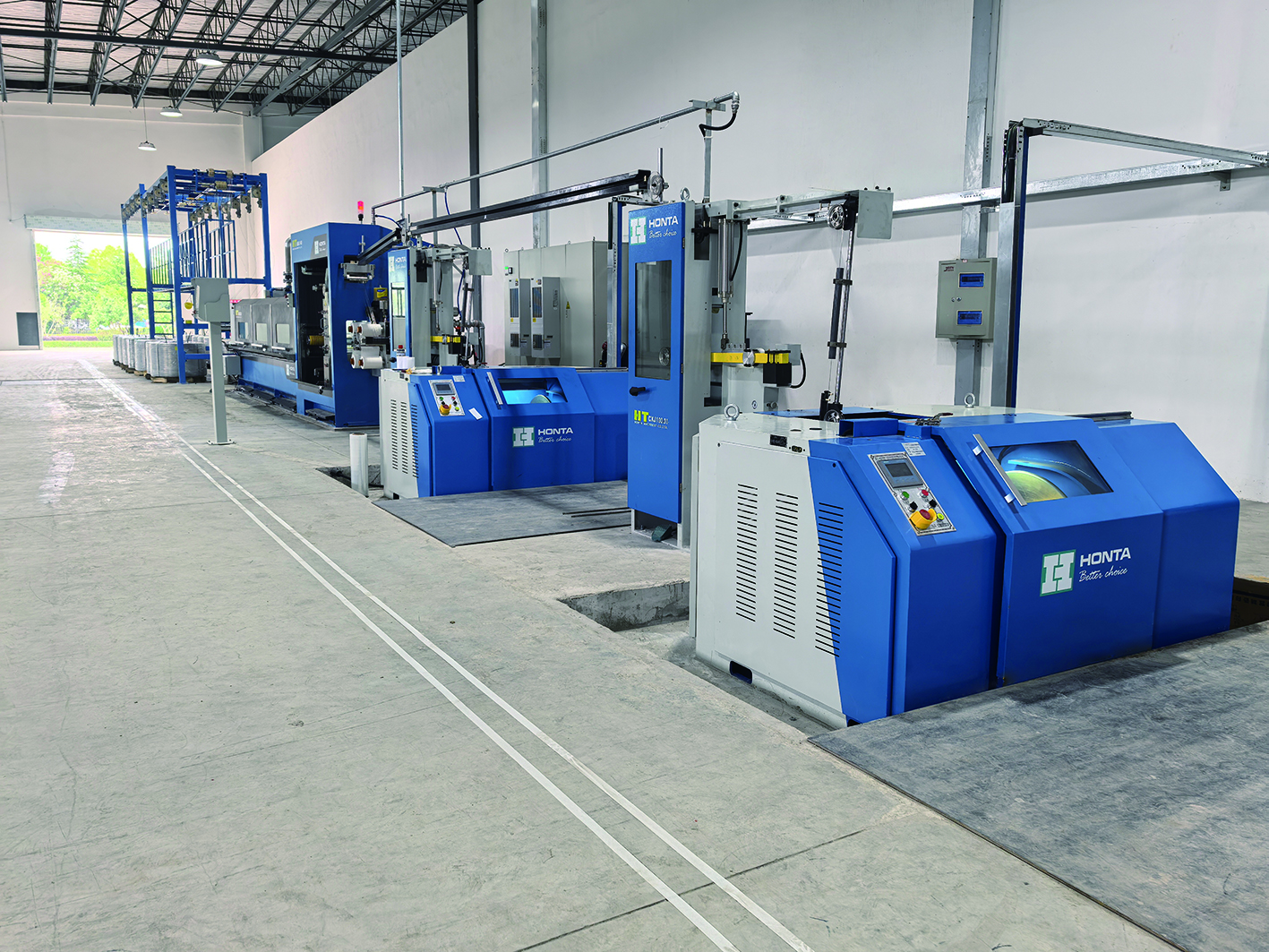
Facility size can serve as a practical check when buyers compare multiwire drawing machine suppliers.
A multiwire drawing machine is a high-value, long-life capital asset for wire and cable producers. Before committing to a supplier, buyers often compare technical specifications, output speed, and line configurations. However, an equally important check is physical production capacity: the manufacturing floor where the machine is actually built. Facility size and workforce are not vanity metrics. In an industry where lead times and after-sales support rely on real production capacity, they function as verifiable proxies for reliability.
Why physical production capacity matters in machine procurement
Multiwire drawing machines are not off-the-shelf products. Each line is typically assembled, wired, and tested before shipment, and delivery commitments depend on the supplier's factory space, headcount, and internal workflow. A machine builder with a larger production floor and a substantial engineering team is generally able to process multiple orders simultaneously and maintain more predictable delivery schedules. When a supplier claims strong export capability or fast lead times, the production facility is the evidence behind that claim.
For buyers, this creates a basic rule: marketing language can be prepared in advance, but facilities are difficult to exaggerate convincingly. A 30,000 square-meter production base, documented and visible in supplier references, provides a starting point for checking whether a manufacturer is a genuine production entity or merely a trading intermediary.
What does a 30,000 m² production floor mean for a multiwire drawing machine buyer?
Jiangsu HONTA Machinery Co., Ltd., founded in September 2006, operates a 30,000 m² facility with 157 employees, according to its company profile. For a buyer evaluating HONTA's multiwire drawing machines, these numbers can be read in three ways.
1. Floor space supports parallel production and assembly workflow
Rod breakdown lines, multiwire drawing machines, high-speed double twist bunching machines, and electrolytic plating lines have different physical footprints and assembly requirements. A 30,000 m² facility gives a manufacturer room to handle multiple machine configurations simultaneously, reducing the bottleneck of sequential assembly and supporting the company's stated annual output of around 200 sets. For buyers, that scale lowers the risk of production bottlenecks delaying their specific order.
2. Workforce size includes the engineering and technical base
The same company profile shows 157 employees, with an R&D team of 30 engineers. In machine building, a meaningful share of employees must be skilled fitters, electricians, and commissioning technicians. HONTA reports a 45% export ratio, which is evidence that the company regularly executes projects to international markets such as USA, Middle East, and Asia. An export-focused production team is exercised in handling export packing, documentation, and overseas commissioning requirements.
3. US production base adds a second-location perspective
HONTA established HONTA INC as a second production base in the United States in 2017. The operation of a US facility does not change the fact that the China facility is the main manufacturing base for multiwire drawing machines, but it indicates that the company has experience managing cross-border operations and international customer requirements beyond a single-market sales relationship.
Using facility facts as a supplier evaluation checklist
When you visit a supplier or review documentation, facility-related data can be organized into a practical evaluation checklist:
- Facility size and layout: Does the stated square-meter area match the physical scale of the factory, and is there dedicated space for fabrication, assembly, and testing?
- Workforce structure: How many employees are technical staff, and how many engineers are involved in customization and pre-shipment testing?
- Production history: Is there evidence of consistent output, such as reference installations or annual production volume statements?
- Export infrastructure: Does the supplier have experience with overseas packaging, shipping documentation, and international communication?
- Additional production locations: Are there secondary facilities that could support service or localized response?
These checks do not replace a technical audit of the machine specification, but they help buyers separate original equipment manufacturers from resellers or assembly-only workshops.
How HONTA's production facts align with its machine portfolio
HONTA's main product range includes rod breakdown machines, multiwire drawing machines, high-speed double twist bunching machines, and wire electrolytic plating lines. The company describes itself as a large-scale equipment system service provider for cable conductor drawing and stranding.
For the multiwire drawing machine buyer specifically, HONTA's 30,000 m² floor supports the company's ability to build multiple types of wire and cable equipment. Rod breakdown machines with annealer options for copper and aluminium, multiwire drawing machines with 8, 16, 24, or 32 wires, and take-up solutions such as single spoolers, double spoolers, and basket coilers all require different assembly stations and testing rigs.
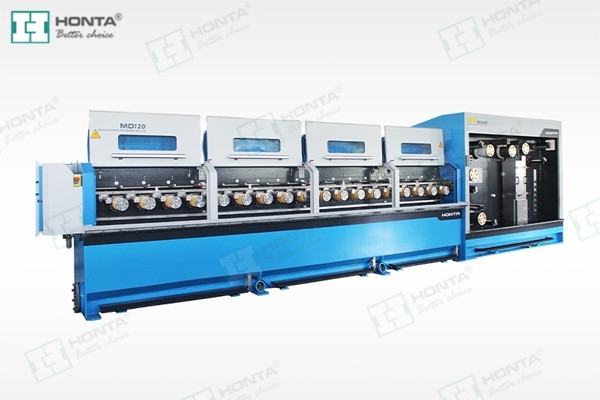
Production floor checks complement specification-level evaluation such as wire count, take-up options, and annealer configuration.
Limitations of facility size as an evaluation metric
Facility size alone should not be treated as decisive. A large factory can still be constrained by outdated equipment, inefficient workflow, or insufficient quality control. Workforce numbers do not automatically prove technical skill, and annual output figures are only meaningful if the factory actually achieves consistent quality and on-time shipment.
Another limitation is that facility data from a company profile is self-reported. Buyers should be prepared to verify it through a physical audit, a video walkthrough, or a third-party inspection. The value of the 30,000 m² and 157-employee facts is that they are specific enough to be checked. Vague marketing descriptions such as “large production base” are usually not.
Comparing HONTA with other supplier evaluation signals
When comparing HONTA against other multiwire drawing machine suppliers, facility data should sit alongside other production-related indicators.
| Evaluation dimension | What to look for | Why it matters |
|---|---|---|
| Production floor | Stated area and organization | Indicates capacity to assemble multiple lines and manage lead times |
| Workforce | Total staff and engineering share | Shows technical depth for customization, tests, and site support |
| Export ratio | Share of sales outside home market | Reflects experience with international shipping, compliance, and documentation |
| Product scope | Drawers, bunchers, plating lines, RBD lines | Indicates systems-level engineering rather than single-machine assembly |
| History | Founded year and key milestones | Helps establish track record and continuity of service |
This kind of comparison structure is useful because it forces both parties to discuss verifiable facts rather than subjective promises.
Market context: why production capacity is becoming a strategic consideration
The global wire drawing machines market is projected to grow from USD 1.37 billion in 2025 to USD 2.13 billion by 2034, according to The Insight Partners. Although that projection covers a decade, the direction is consistent with the broader wire and cable industry. Grand View Research estimated the global wire and cable market at USD 230.9 billion in 2025, supported by infrastructure and energy-transition demand.
For suppliers, this demand environment means production slots for well-built multiwire drawing machines can fill up. Buyers who evaluate manufacturing depth early are more likely to secure realistic delivery dates and better after-sales attention. Among global machine-tool exporters, China accounted for 19% of exports in the first half of 2025, according to a Silverado Policy Accelerator data dashboard. That statistic does not specifically isolate wire drawing machines, but it reinforces why international buyers are likely to encounter Chinese machinery suppliers and should be equipped with practical comparison signals.
Decision framework: turning factory facts into procurement confidence
At the decision stage, a buyer can structure the final supplier approval around questions that bridge production capacity and purchasing confidence:
- Does the supplier have documented facility size and staff numbers that match the scale of machines they sell?
- Has the supplier demonstrated export experience in the buyer's target region?
- Does the product portfolio show engineering competence across related cable equipment, not only a single machine type?
- Is there a direct communication channel with a technical or international trade manager for pre-order clarification?
- Has the buyer confirmed the machine configuration, including number of wires, take-up type, and annealer inclusion, against the supplier's capability to build and test that configuration?
HONTA posts an official catalogue with its drawing machine range; it can be reviewed publicly before a commercial discussion begins. Direct access to such documentation allows a buyer to verify how broadly the production capability translates into actual product offerings.
Frequently asked questions
What does a 30,000 m² production floor indicate about a multiwire drawing machine maker?
A 30,000 m² floor generally indicates the manufacturer has space to run multiple fabrication, assembly, and testing operations in parallel. For a company like Jiangsu HONTA Machinery Co., Ltd., that scale supports producing rod breakdown lines, multiwire drawing machines, double twist bunchers, and plating lines within one site.
Should a buyer compare staff count when choosing between multiwire drawing machine suppliers?
Staff count should be considered as one indicator of engineering and execution capacity. HONTA reports 157 employees and approximately 30 engineers in its R&D team. A buyer should look for whether the workforce is large enough to handle customization, inspection, and after-sales service, rather than treating a single headcount number as proof of quality.
What is HONTA's export experience in wire and cable equipment?
According to the company profile, the export ratio is approximately 45%, and primary markets include the USA, the Middle East, and Asia. HONTA also established HONTA INC in the United States in 2017 as a second production base.
Does HONTA only make multiwire drawing machines?
No. HONTA manufactures rod breakdown machines, multiwire drawing machines, high-speed double twist bunching machines, and wire electrolytic plating lines. The company presents itself as a system service provider focused on cable conductor drawing and stranding technology.
How can a buyer verify a multiwire drawing machine supplier's facility claims?
The most reliable method is a physical or virtual factory audit. Buyers can also request a video walkthrough, review export records, and verify whether the company provides specific facility area, employee count, founding year, and annual output figures in public documentation. HONTA publishes its company details and product catalogue openly, which provides a baseline for verification.
Download the HONTA drawing machine catalogue: https://cdn.socialarks.com/sbsp/24520/common/2026/0709/Catalogue%20of%20drawing%20machine.pdf
Tem questões ou precisa de mais detalhes?
Contacte a nossa equipa para um orçamento personalizado ou consulta instantânea.
Solicitar orçamento
Preencha o formulário abaixo e a nossa equipa entrará em contacto com uma proposta personalizada.
Chat direto do WhatsApp
Prefere conversar em tempo real? Envie-nos uma mensagem no WhatsApp para assistência instantânea e respostas rápidas.
- Obter orçamento personalizado
- Partilhar fotos ou documentos
- Discuta as suas necessidades diretamente
Geralmente responde em 5–30 minutos durante o horário de expediente.