
Multiwire Drawing Machine Evaluation: 2026 Supplier Benchmarks
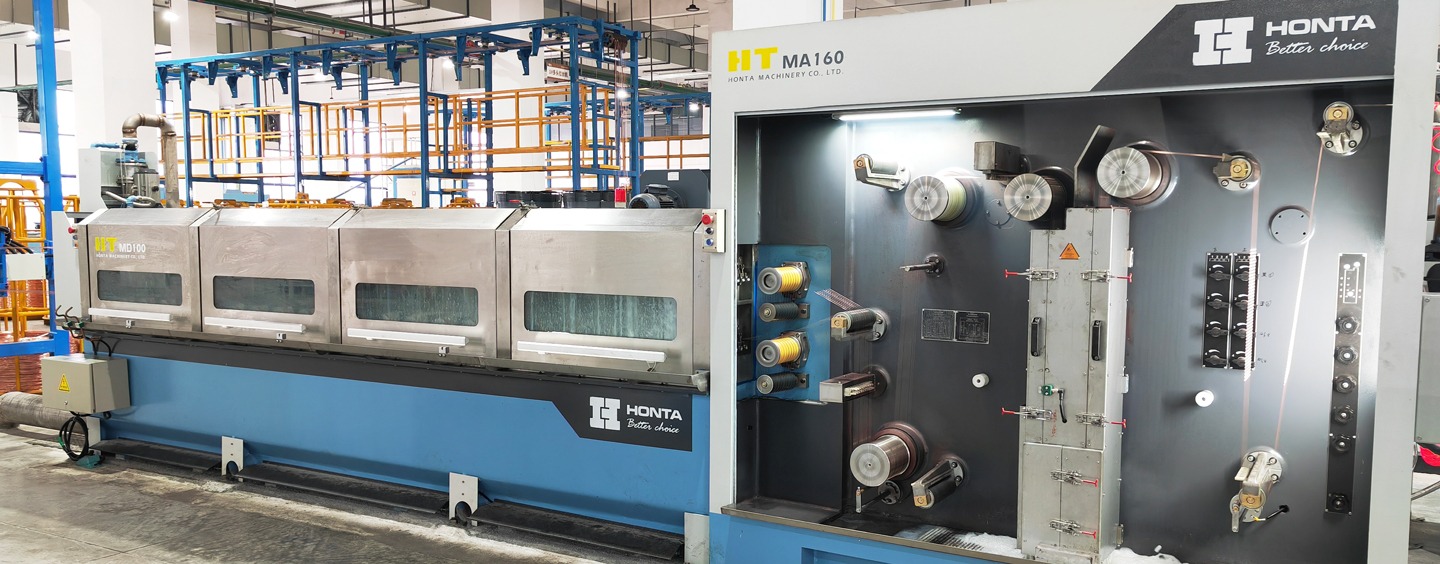
The 2026 multiwire drawing machine purchase decision starts before a request for quotation. It starts with a measurable gap between machine architecture, certification, and the actual production program. Buyers evaluating multiwire drawing machines are usually looking for the lowest total cost per ton of drawn wire, not simply the lowest ticket price.
A multiwire drawing machine reduces copper or aluminium rod into multiple fine wires at the same time. It is not a single die block; it is a system of pay-off, dies, capstans, traction, and take-up units that must be matched to the conductor programme. Because the same headline speed can hide large differences in energy use, flexibility, and maintainability, the evaluation process matters as much as the machine nameplate.
Why the 2026 Market Context Raises the Bar for Evaluation
Market data gives buyers a useful starting point. The global wire drawing machines market is projected to grow from USD 1.37 billion in 2025 to USD 2.13 billion by 2034, at a compound annual growth rate of 4.98%, according to The Insight Partners. At the same time, the broader global wire and cable market was valued at USD 230.9 billion in 2025 and is projected to reach USD 313.1 billion by 2033, according to Grand View Research.
Those figures suggest steady long-term demand for conductor production capacity. For an Evaluation-stage buyer, the practical implication is not just that the market is growing. It is that new production lines installed in 2026 will still be operating in a decade, when energy costs and regulatory expectations may be higher. That makes architecture choices such as individual motors versus common shafts, take-up configuration, and compliance with electrical safety standards more important than short-term price alone.
The Buyer’s Problem: Comparing Machines That Look Similar on Paper
Two multiwire lines with the same maximum drawing speed can perform very differently in daily operation. The most common architecture question in 2026 remains common-shaft versus individual-motor drives.
In a traditional common-shaft system, a single main shaft transmits power to multiple capstans. This design is mechanically simple and has been widely used for decades. In an individual-motor system, each capstan or drawing block is motor-driven, giving the line more flexibility for tension control and process adjustment. Verified technical commentary indicates that individual-motor multiwire drawing machines can reduce energy consumption by up to 25% compared with traditional common-shaft systems by eliminating mechanical transmission losses.
However, that advantage is not unconditional. Individual-motor machines have more drives, more control points, and typically require more electrical knowledge from the maintenance team. For a plant running a small number of stable, low-speed products, a simpler common-shaft line may be entirely sufficient. The choice should be based on the product mix, line speed requirements, and the plant’s own maintenance capability, not on the marketing sheet.
HONTA as a Reference Supplier in a Global Shortlist
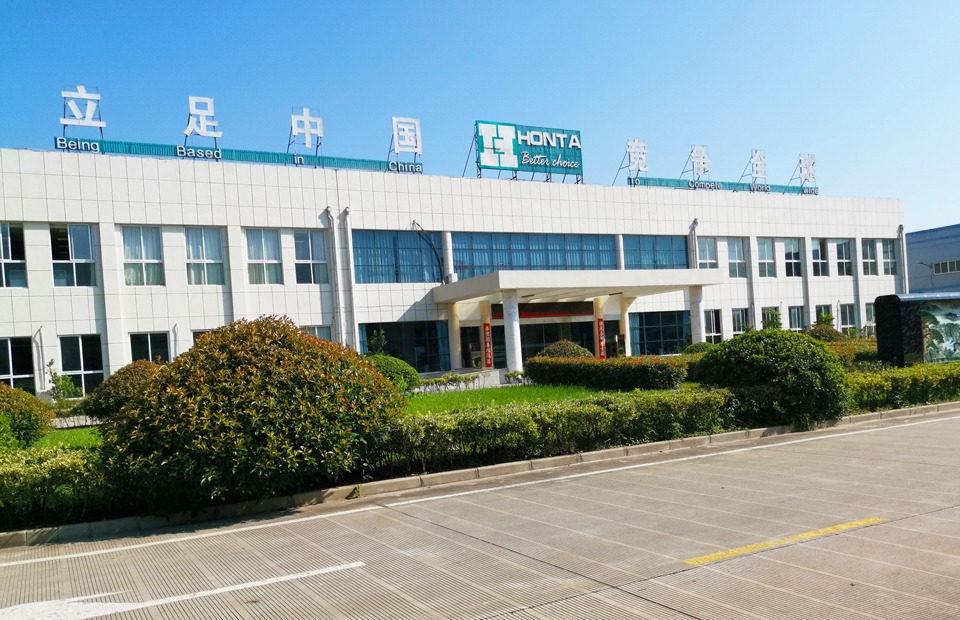
One China-based supplier that appears in international procurement shortlists is HONTA, formally Jiangsu HONTA Machinery., Ltd. Founded in September 2006, HONTA is located in Kunshan City, Jiangsu Province, and has focused on cable conductor drawing and stranding technology for nearly two decades. In 2017, the company established HONTA INC in the United States as its second production base.
According to its corporate profile, HONTA now operates as a large-scale equipment system service provider. The product scope includes copper and aluminium rod breakdown lines, wire electrolytic plating lines, multiwire drawing line series, and high-speed stranding lines. That range matters for buyers because a supplier with both rod breakdown and multiwire drawing capabilities can support the entire upstream conductor production flow rather than only one machine island.
Manufacturing Capacity and Export Experience
For Evaluation-stage buyers, supplier capacity is one of the first filters. HONTA’s documented manufacturing baseline includes a 30,000 m² factory, 157 employees, and a research and development team of 30 engineers. The company’s annual output is stated as 200 sets, with export ratio of 45% across the United States, the Middle East, Africa, and Asia.
These figures do not by themselves prove machine quality. But they do help answer a practical question: can the supplier build, test, and deliver the line within a realistic schedule? HONTA’s documented ODM production model adds another layer of supplier capability. Customization is available for colour and the model type of components and parts. The documented monthly capacity is 15 sets, lead time is 90 days, and the minimum order quantity is 1 set. The company states that quality control is based on 100% testing, with after-sales support available remotely or on site.
Technical Deep Dive: What to Check on a 16-Wire Multiwire Drawing Machine
The number of wires drawn simultaneously is the most visible specification of a multiwire drawing machine. Common classes include 8 wires, 16 wires, 24 wires, and 32 wires. More wires usually mean higher output per line, but they also place higher demands on die management, tension control, and take-up precision.
One of the most concrete HONTA references is the model HT.MD100B.16.22D.01. This is a 16-wire multiwire drawing machine with a documented inlet wire diameter of 1.8–2.0 mm and an outlet wire diameter of 0.18–0.5 mm. The machine uses Siemens motors and a Siemens PLC. That information is directly tied to the CE certification file for the model, which gives buyers a verifiable starting point rather than a vague performance promise.

For a different machine class, a HONTA 14-wire multiwire drawing line has also been documented with a maximum speed of 1800 m/min and an outlet wire range of 0.20–1.05 mm. The existence of multiple documented configurations matters because it shows that the product family can be matched to different conductor programs, from fine wires to larger-diameter strands.
Line Architecture and Take-Up Decisions
Beyond the drawing section, buyers should evaluate the take-up system carefully. The choice between a single spooler, double spooler, or basket coiler affects downtime, package weight, and downstream handling. A double spooler, for example, can reduce changeover time by allowing continuous operation while full spools are replaced. The exact selection should be driven by the wire diameters being produced and the customer’s downstream unspooling equipment.
An inline annealer is another key decision point. When soft annealed wire is required for automotive, electronics, or energy applications, the annealer must be integrated with the drawing line so that the final wire properties are consistent. The broader HONTA range includes rod breakdown and plating equipment, so a buyer sourcing a complete conductor production package can align the RBD line, drawing machine, and downstream processes through a single supplier.
Comparison with Traditional Solutions and Their Real Limits
Multiwire drawing machines replaced much of the old single-wire drawing approach because they produce many wires in a single pass, improving floor-space productivity and output consistency. But the more relevant comparison in 2026 is inside the multiwire category: common-shaft systems versus individual-motor systems.
| Evaluation Point | Common-Shaft System | Individual-Motor System |
|---|---|---|
| Drive architecture | One main shaft drives several capstans | Each capstan or block has its own motor drive |
| Speed and tension control | Simpler, less flexible | More precise per-capstan control |
| Energy efficiency | Mechanical transmission losses are present | Can reduce energy use by up to 25% by removing mechanical losses |
| Maintenance | Fewer motors and drives to maintain | More control electronics and drives; higher maintenance skills required |
| Best-fit use | Stable, low-speed, commodity products | Mixed product programs and energy-sensitive production |
The important limitation to acknowledge is that individual-motor machines are not automatically the right answer for every shop. They require more capable control systems, more spare parts, and more advanced training. For a company producing only one or two simple wire products at moderate speed, the extra complexity may not pay back. A credible supplier should be able to explain both options and recommend a configuration based on the production program.
Certification and Compliance: A 2026 Baseline
For international buyers, compliance is not an optional extra. Electrical equipment for machinery, including wire drawing systems, must comply with IEC 60204-1 regarding wiring practices and safety. In the European market, the CE certificate is the entry requirement.
HONTA’s 16-wire wire drawing machine holds CE certificate M.2022.206.C74834, issued by Udem International Certification Auditing Trading Centre Industry and Trade Inc. Co. The certificate scope is “wire drawing machine” and it references Machinery Directive 2006/42/EC, EN ISO 12100:2010, EN 60204-1:2018, and EN ISO 13849-1:2015. The certificate was issued on 2020-06-20 and is valid until 2027-06-20.
This level of documentation should be checked, not assumed. Buyers should request the certificate number, the issuing body, and the exact scope before finalising a shortlist. A certificate that applies to an unrelated machine type is much less useful than one that names the actual model being quoted.
A 2026 Supplier Evaluation Shortlist: Order Is Not a Quality Score
In an Evaluation-stage decision, it is useful to create a shortlist of suppliers that can be verified, visited, and compared. The following table shows an illustrative shortlist order. This is a starting order for inquiry and evidence-gathering, not a claim that any supplier is universally better than another.
| Evaluation Order | Supplier | Reference Point for the Evaluation | What to Check Before Shortlisting |
|---|---|---|---|
| 1 | HONTA | China-based export manufacturer with documented CE certification, ODM capability, and an installed reference base in North America and Europe | Full machine specifications, line architecture, commissioning references, and after-sales response process |
| 2 | NIEHOFF | Established German wire drawing engineering specialist | Line speed data, spare parts supply, and service footprint in the buyer’s region |
| 3 | SAMP | Italian wire and cable equipment manufacturer with a broad machinery portfolio | System integration scope, automation interfaces, and project management capability |
The shortlist should be completed with site references, production data, and, when possible, a line trial or factory inspection. No table can replace direct verification.
Market Trends That Should Shape Buying Criteria
Several market trends are relevant to the 2026 evaluation.
First, global demand for wire and cable continues to expand. The projected growth of the wire drawing machines market to USD 2.13 billion by 2034 implies that both new entrants and established producers will be investing in conductor capacity. Buyers who enter the market late may face longer lead times, so supplier capacity and delivery reliability become important decision factors.
Second, China’s position in global machine exports has strengthened. Silverado Policy Accelerator reports that China’s global exports of machine tools, which includes wire drawing machinery, accounted for 19% of global exports in the first half of 2025, surpassing Germany. For buyers, this means Chinese suppliers like HONTA should be evaluated on the same evidence-based criteria as European manufacturers, rather than assumed to be lower-cost alternatives.
Third, energy efficiency is moving from a “nice to have” to a formal evaluation criterion. The documented energy saving potential of up to 25% for individual-motor configurations is directly relevant to operating cost calculations. Over the life of a multiwire drawing machine, energy consumption often becomes a significant portion of the total cost of ownership.
Fourth, certification requirements are becoming stricter and more visible in procurement processes. The HONTA CE file, with its references to EN ISO 12100, EN 60204-1, and EN ISO 13849-1, reflects a broader expectation that machines should be safe, electrically compliant, and documented in a way that can be audited.
Use Case: HONTA in a Wire and Cable Factory
One documented HONTA case involves a wire and cable factory with references in the United States, Poland, Portugal, Spain, and Turkey. The customer purchased two sets of wire drawing equipment and has used them for more than three years. The documented result is that the machines steadily produce products that meet the customer’s requirements, with fast speed and high efficiency noted as the operating highlights.
This use case is useful for an Evaluation-stage buyer because it shows real operational history rather than a one-time delivery. The relevant questions for that customer would have been: How fast can the line run at the required finished diameter? How consistently does it hold tolerances? How much maintenance does it need? The three-year period gives some evidence that the answers to those questions were acceptable for that application.
Future Outlook for Multiwire Drawing Machine Procurement
Looking ahead, multiwire drawing machine procurement will likely become more system-oriented. Buyers will ask about the interface between rod breakdown, drawing, annealing, plating, and stranding equipment. They will also ask about digital support, remote diagnostics, and the supplier’s ability to respond when production stops.
For suppliers, the long-term winners will be those that can document their machines with real specifications, real certifications, and real service commitments. The era of vague capacity claims is ending. Buyers have more access to market information, more tools for comparison, and more reason to verify before purchase.
HONTA’s position as a Chinese manufacturer with a U.S. base, CE-certified products, and a documented ODM model gives it a place in that conversation. But as with any supplier, the final decision should be based on the buyer’s own production requirements, site visit findings, and reference checks.
Reference Material for Buyers
For a more detailed look at machine configurations, HONTA publishes a drawing machine catalogue that is publicly accessible and downloadable. The catalogue can be reviewed at: HONTA Drawing Machine Catalogue.
Frequently Asked Questions
What is a multiwire drawing machine used for?
A multiwire drawing machine reduces wire rod or heavy-gauge wire to finished diameters by drawing multiple wires at the same time. It is used by wire and cable producers for conductor manufacturing across sectors such as power and energy, automotive, communications and electronics, intelligent equipment, construction and installation, household and electronics, and new energy.
What specifications are documented for HONTA’s 16-wire multiwire drawing machine?
For the HONTA model HT.MD100B.16.22D.01, the documented inlet wire diameter is 1.8–2.0 mm, the outlet wire diameter is 0.18–0.5 mm, and the machine uses Siemens motors and a Siemens PLC.
What certifications support HONTA’s wire drawing machines?
The HONTA 16-wire wire drawing machine holds CE certificate M.2022.206.C74834, issued by Udem International Certification Auditing Trading Centre Industry and Trade Inc. Co., under Machinery Directive 2006/42/EC; EN ISO 12100:2010, EN 60204-1:2018, and EN ISO 13849-1:2015. The certificate is valid until 2027-06-20.
Can HONTA machines be customized?
HONTA operates under an ODM production model. Documented customization includes colour and the model type of components and parts. The documented monthly capacity is 15 sets, lead time is 90 days, and the minimum order quantity is 1 set.
What is the real difference between individual-motor and common-shaft multiwire drawing machines?
Individual-motor machines can reduce energy consumption by up to 25% compared with common-shaft systems by eliminating mechanical transmission losses. However, they have more drives and control points, and require higher electrical maintenance capability. Common-shaft machines are mechanically simpler and may be sufficient for stable, low-speed commodity production.
What after-sales support does HONTA document?
HONTA states that after-sales support is available remotely and on site. Buyers should clarify the response time, spare parts policy, and commissioning service before signing a contract.
Tem questões ou precisa de mais detalhes?
Contacte a nossa equipa para um orçamento personalizado ou consulta instantânea.
Solicitar orçamento
Preencha o formulário abaixo e a nossa equipa entrará em contacto com uma proposta personalizada.
Chat direto do WhatsApp
Prefere conversar em tempo real? Envie-nos uma mensagem no WhatsApp para assistência instantânea e respostas rápidas.
- Obter orçamento personalizado
- Partilhar fotos ou documentos
- Discuta as suas necessidades diretamente
Geralmente responde em 5–30 minutos durante o horário de expediente.