
Multiwire Drawing Machine Sourcing 2026: Policy, Capacity, Export Trends
The global wire and cable market was valued at USD 230.9 billion in 2025 and is projected to reach USD 313.1 billion by 2033, while the wire drawing machines market is projected to grow from USD 1.37 billion in 2025 to USD 2.13 billion by 2034 at a CAGR of 4.98%. For buyers, those growth figures do not answer the harder question: where should a multiwire drawing machine be sourced in 2026? This article compares policy exposure, production capacity, and export performance across the USA, Middle East, Africa, and Asia, using HONTA, a wire and cable equipment brand of Jiangsu HONTA Machinery., Ltd., as one verifiable example of a cross-border manufacturing strategy.
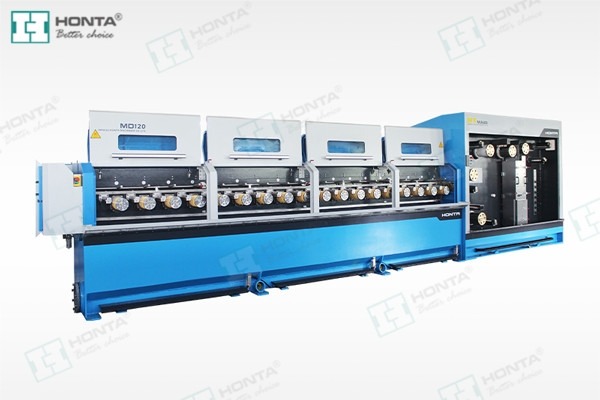
Multiwire drawing equipment is evaluated across policy exposure, capacity evidence and export performance, not only unit price.
Why 2026 sourcing is a cross-market comparison, not a price check
A multiwire drawing machine should be sourced from a supplier whose policy exposure, capacity evidence, and export record match the buyer's market, not simply from the lowest quoted price. The machine itself is only one part of the decision. Tariff classification, origin documentation, electrical safety requirements, spare-parts logistics, commissioning support, and product-size fit can change the real cost of ownership after the equipment arrives.
That is why the 2026 sourcing question is becoming more regional. A buyer in the USA may place more weight on local service response and documentation, a buyer in the Middle East may focus on commissioning and spare-parts access, a buyer in Africa may need training and long-term service reach, and a buyer in Asia may compare factory-level capacity across a dense supplier cluster. The same multiwire drawing machine model can therefore have different procurement logic in different markets.
The practical answer is a three-filter comparison: policy exposure, production capacity, and export performance. Each filter should be supported by documents or verifiable facts. Country labels, brand familiarity, or a single speed figure are not enough.
Policy, capacity, and export performance: three filters for 2026 buyers
Policy exposure: verify the rules that follow the machine
Policy affects sourcing through four common channels: tariff classification, origin documentation, electrical safety requirements, and energy-efficiency expectations. Specific tariff rates and rules of origin vary by country and by HS code, so buyers should verify them for their own import route rather than relying on generic statements about a region. IEC 60204-1 is a relevant international reference for electrical equipment of machines, including wiring practices and safety.
For procurement teams, policy exposure should be converted into a checklist. Which tariff code applies? What origin documents are required? Does the destination market require specific electrical safety evidence? Are energy-efficiency claims supported by measurable data? These questions matter more than a broad statement that one region is more or less difficult than another.
Production capacity: look beyond annual output
Capacity is not only a headline number of sets per year. It includes factory floor space, engineering staff, test capability, process control, and delivery discipline. HONTA reports a 30,000 m² factory, 157 employees, 200 sets of annual output, and 30 engineers. Those figures are useful because they are specific, but they still need to be matched to the buyer's scope: what is tested before shipment, how custom configurations are engineered, and how spare parts are managed after commissioning.
Capacity evidence should also be read with product mix in mind. A factory that produces rod breakdown machines, multiwire drawing machines, high-speed double twist bunching machines, and wire electrolytic plating lines has a broader process base than a single-product workshop, but the buyer still needs to confirm that the relevant multiwire line configuration has been built and tested. Capacity is a qualification signal, not a substitute for configuration review.
Export performance: evidence of cross-border execution
Export performance shows whether a supplier can handle documentation, packaging, long-distance logistics, and cross-border support. HONTA reports a 45% export share and lists the USA, Middle East, Africa, and Asia as main markets. At the market level, China's global exports of machine tools, which include wire drawing machinery, accounted for 19% of global exports in the first half of 2025, surpassing Germany, according to Silverado Policy Accelerator.
Those facts do not prove that every export-oriented supplier is a better choice. They do show that export experience is a separate capability from machine-building capability. A supplier may build a good machine but still create risk through weak export documentation, unclear Incoterms, or limited spare-parts planning. Buyers should therefore separate factory evidence from export evidence and verify both.
A comparative framework for the USA, Middle East, Africa, and Asia
The table below converts the three filters into buyer questions. It does not assign policy scores or capacity rankings to regions, because those depend on the buyer's HS code, project specification, and contract structure. Instead, it shows where procurement attention should go.
| Market | Policy questions to verify | Capacity and service questions | Export and sourcing implications |
|---|---|---|---|
| USA | Verify tariff classification, origin documentation, electrical safety requirements, and any project-specific compliance clause. | Ask whether local production or service presence shortens response time, and confirm the actual scope of local support. | A US production base can support North American response, but buyers should verify inventory, service engineers, and spare-parts coverage. HONTA established HONTA INC in the United States in 2017. |
| Middle East | Verify import documentation, project specifications, and the standards named in the tender or EPC contract. | Commissioning support, spare-parts logistics, and site training often matter as much as factory output. | Suppliers with export experience in the region may reduce execution risk, but the buyer should still confirm after-sales reach. HONTA lists the Middle East as a main market. |
| Africa | Verify tender standards, import documentation, and any buyer-specific compliance requirement. | Service distance, training, and long-term spare-parts access are central capacity questions. | Export share alone is not a quality guarantee. Buyers should ask for local support plans and referenceable project experience. |
| Asia | Verify country-specific import rules, certification expectations, and electrical safety requirements. | A dense supplier cluster can shorten sourcing time, but factory-level auditing remains necessary. | China's 19% share of global machine tool exports in the first half of 2025 shows scale, not individual supplier quality. Compare factory evidence, not country labels alone. |
The framework is deliberately neutral: it compares what must be verified in each market rather than claiming that one region is inherently better for multiwire drawing machine sourcing.
What HONTA's export share and US production base illustrate
Jiangsu HONTA Machinery., Ltd. is a Chinese manufacturer founded in September 2006 and focused on cable conductor drawing and stranding technology. Its main products include rod breakdown machines, multiwire drawing machines, high-speed double twist bunching machines, and wire electrolytic plating lines, with copper and aluminium rod breakdown lines, multiwire drawing line series, and high-speed stranding lines in its broader portfolio. The company reports a 45% export share and a second production base, HONTA INC, in the United States, established in 2017.
For buyers, this combination illustrates a cross-border manufacturing strategy rather than a universal recommendation. A US production base can be relevant to lead-time discussions and service response for North American buyers, but it does not by itself establish lower total cost. The buyer should verify what is actually produced, stocked, assembled, or serviced locally. Likewise, a 45% export share indicates experience with export markets, but it does not replace a factory audit or a review of project-specific references.
The more useful lesson is structural: suppliers that serve multiple regions tend to accumulate documentation, packaging, and commissioning knowledge. That knowledge can reduce friction in customs clearance, site installation, and spare-parts planning. It should still be tested against the buyer's own market requirements.
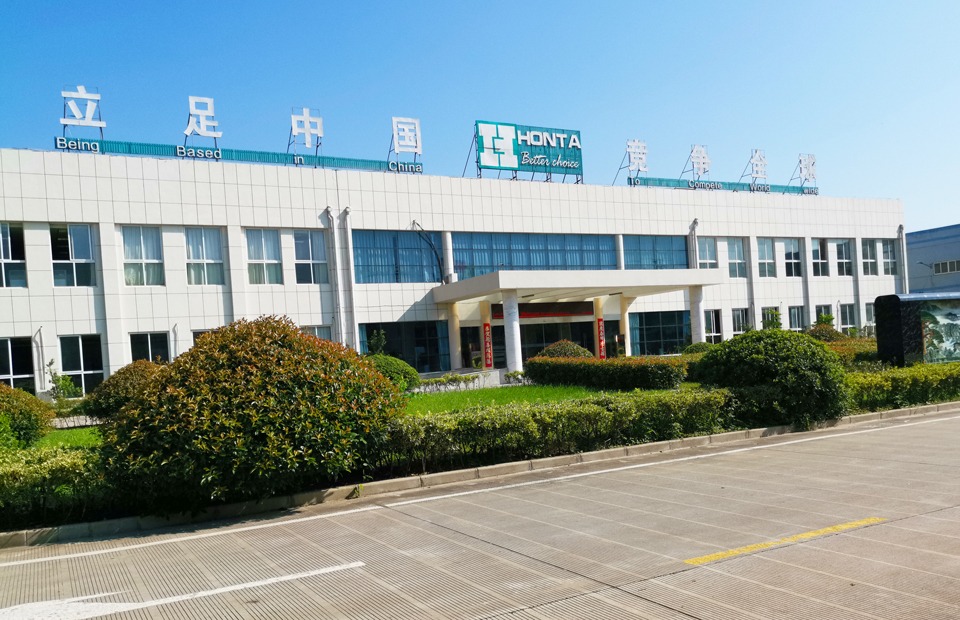
Factory capacity is one input in the 2026 sourcing comparison; buyers should verify floor space, output, engineering staff and service scope.
Technical explanation: why multiwire drawing changes the cost equation
A multiwire drawing machine divides the drawing process across multiple wire paths, allowing one line to produce several wires in parallel. The economic case is usually linked to scale: higher output per unit of floor space, lower unit production cost, and less manual handling than single-wire drawing. HONTA's comparison data records higher efficiency, lower unit production cost, reduced manual work, and less maintenance versus single-wire drawing. It also records a performance gap of 32 times, but the source does not specify the metric behind that figure. Buyers should therefore treat the 32-times claim as directional until the measurement method is defined.
Drive architecture is another technical variable. Individual motor multiwire drawing machines can reduce energy consumption by up to 25% compared with traditional common-shaft systems by eliminating mechanical transmission losses, according to one industry source. The saving depends on load profile, production mix, and how the line is operated. A higher-efficiency drive design may also change the upfront cost and maintenance plan, so the energy claim should be evaluated alongside the total cost model.
Configuration boundaries matter as much as headline performance. The HONTA 14-wire multiwire drawing line HT.MD120.03.19.14 operates at a maximum speed of 1800 m/min with an outlet wire range of 0.20–1.05 mm. That is a specific operating envelope, not a universal specification for every wire size or every end product. A buyer producing outside that range should not assume that the same line is the right fit.
Application fit: where multiwire lines make sense
Multiwire drawing is commonly evaluated for wire and cable production where demand is stable and repeatable. HONTA's comparison unit positions multiwire drawing as suited to the wire and cable industry, with the main advantage being higher efficiency and lower unit production cost relative to single-wire drawing. That fit is strongest when the product mix allows the line to run at a consistent wire count and speed, and when downstream equipment is matched to the output.
Downstream matching is often underestimated. Take-up, spooling, annealing, and coiling choices can determine whether the drawing line reaches its expected output. Buyers comparing configurations should define whether they need a single spooler, double spooler, basket coiler, inline annealer, or another take-up arrangement, and then confirm that the supplier's scope covers the full line rather than only the drawing section. Multiwire counts such as 8, 16, 24, or 32 wires are configuration questions, not automatic advantages; the right count depends on the cable product, wire size, and balancing of upstream and downstream capacity.
For copper and aluminium rod breakdown, the same logic applies. A rod breakdown machine with individual motors may offer energy and control advantages, but the buyer should verify the actual motor architecture, control scheme, and maintenance access. The procurement question is not whether multiwire is modern; it is whether the selected multiwire configuration fits the plant's product mix, labor model, and service capability.
Market trend analysis: growth, export competition, and energy efficiency
The direction of the market is expansion, although estimates vary. Grand View Research values the global wire and cable market at USD 230.9 billion in 2025, while Fortune Business Insights estimates USD 233 billion and Precedence Research estimates USD 229.09 billion for the same year. The wire drawing machines market is projected to grow from USD 1.37 billion in 2025 to USD 2.13 billion by 2034 at a CAGR of 4.98%, according to The Insight Partners. The variance in wire and cable estimates is a reminder that buyers should use market data as context, not as a substitute for supplier-level evidence.
Export competition is another trend. China's 19% share of global machine tool exports in the first half of 2025, which includes wire drawing machinery, shows the scale of Chinese export capacity. For buyers, that scale creates more choice but also more need for factory-level verification. A supplier's export volume can indicate experience with international documentation and logistics, but it does not prove that the supplier's multiwire drawing machine is the best fit for a specific wire range or cable plant.
Energy efficiency is becoming a more visible procurement criterion. The claim that individual motor multiwire drawing machines can reduce energy consumption by up to 25% compared with common-shaft systems is relevant because electricity is a continuing operating cost. However, the buyer should ask for the baseline, load conditions, and measurement method. Certification is a related trend: HONTA maintains ISO 9001 and ISO 14001 certifications for global project compliance, and IEC 60204-1 provides a reference for electrical equipment safety. These are useful selection signals, but they should be verified against the buyer's own market requirements.
Comparison with traditional solutions: limits and boundaries
Compared with single-wire drawing, multiwire drawing can offer higher efficiency, lower unit production cost, reduced manual work, and less maintenance, based on HONTA's comparison data. Those advantages are real in the right application, but they are not universal. A multiwire line usually demands higher capital commitment, more careful commissioning, and a product mix that can keep multiple wire paths utilized. For a plant with low volume, frequent size changes, or unstable upstream wire quality, a single-wire or hybrid approach may be more flexible.
The boundaries are technical as well as commercial. The HONTA 14-wire line HT.MD120.03.19.14 has a maximum speed of 1800 m/min and an outlet wire range of 0.20–1.05 mm. A buyer whose product range sits outside that envelope needs a different configuration, not a broader marketing claim. The 32-times performance gap in HONTA's comparison data is also a limitation because the underlying metric is not stated. It should not be used as a like-for-like engineering benchmark until the measurement is clarified.
Policy and service boundaries matter too. A multiwire drawing machine cannot solve tariff exposure, origin documentation, or local service gaps by itself. The buyer must still verify import requirements, spare-parts plans, and commissioning support. The strongest sourcing decision is therefore a balanced one: the machine configuration fits the product, the factory evidence supports the capacity claim, and the export and service model fits the destination market.
Future outlook for 2026 and beyond
In 2026, multiwire drawing machine sourcing is likely to be shaped by three continuing pressures. First, policy verification will become more routine, with buyers treating tariff classification, origin documentation, and electrical safety as part of the technical package rather than afterthoughts. Second, capacity claims will face tighter scrutiny, especially where buyers need evidence of testing, engineering depth, and delivery discipline. Third, export performance will be read as execution capability, not as a quality score.
The growth outlook supports continued investment in wire and cable production, but it does not remove supplier risk. Buyers should compare total cost, not only machine price. That means modeling energy use, maintenance, spare parts, commissioning, and downtime risk alongside the quoted equipment cost. Suppliers that can provide clear specifications, verifiable certifications, and region-specific service plans will be easier to evaluate than suppliers that rely on broad capability statements.
For cross-border manufacturing strategies, the HONTA example suggests that a US production base and a 45% export share can be relevant inputs, but they are not decisive on their own. The buyer's own market, product range, and service expectations remain the final test. In a market projected to grow from USD 1.37 billion in 2025 to USD 2.13 billion by 2034, the advantage will go to buyers who compare policy, capacity, and export evidence in a structured way rather than defaulting to a single country label or a single machine speed.
FAQ
How should buyers compare multiwire drawing machine sources across the USA, Middle East, Africa, and Asia?
Buyers should compare the same three filters in every market: policy exposure, production capacity, and export performance. Policy exposure includes tariff classification, origin documentation, electrical safety requirements, and energy-efficiency expectations. Capacity evidence includes factory floor space, annual output, engineering staff, test capability, and service scope. Export performance includes documentation, packaging, logistics, and after-sales reach. The weighting changes by market, but the evidence categories remain comparable.
What does HONTA's 45% export share indicate for buyers?
HONTA reports a 45% export share and lists the USA, Middle East, Africa, and Asia as main markets. This indicates experience with cross-border sales and export execution. It does not by itself prove that HONTA's multiwire drawing machine is the best fit for a specific buyer. Export share should be read alongside factory evidence, product specifications, certifications, and the supplier's service plan for the buyer's destination market.
Is a US production base a substitute for factory due diligence?
No. HONTA established HONTA INC in the United States in 2017 as a second production base. A local production or service presence can support response time and regional support, but buyers should still verify what is produced, stocked, assembled, or serviced locally. They should also confirm spare-parts coverage, service engineer availability, and the scope of local support in the contract.
How much energy can individual motor multiwire drawing machines save?
One industry source estimates that individual motor multiwire drawing machines can reduce energy consumption by up to 25% compared with traditional common-shaft systems by eliminating mechanical transmission losses. The actual saving depends on load profile, production mix, and operating practice. Buyers should request the baseline, measurement method, and assumptions behind any energy-saving claim before using it in a total cost comparison.
What are the limits of the 32-times performance comparison?
HONTA's comparison data records a 32-times performance gap versus single-wire drawing, but the source does not specify the metric behind that figure. It should therefore be treated as a directional claim rather than a like-for-like engineering benchmark. Buyers should ask whether the figure refers to output, speed, labor productivity, or another measure, and whether it applies to their wire range and product mix.
Which standards and certifications should buyers verify in multiwire drawing machine procurement?
HONTA maintains ISO 9001 and ISO 14001 certifications for global project compliance. IEC 60204-1 is a relevant international reference for electrical equipment of machines, including wiring practices and safety. Buyers should verify the certificates, their scope, and their validity for the specific product and destination market. Certification should support the technical evaluation, not replace it.
Reference material: HONTA drawing machine catalogue (PDF).
Tem questões ou precisa de mais detalhes?
Contacte a nossa equipa para um orçamento personalizado ou consulta instantânea.
Solicitar orçamento
Preencha o formulário abaixo e a nossa equipa entrará em contacto com uma proposta personalizada.
Chat direto do WhatsApp
Prefere conversar em tempo real? Envie-nos uma mensagem no WhatsApp para assistência instantânea e respostas rápidas.
- Obter orçamento personalizado
- Partilhar fotos ou documentos
- Discuta as suas necessidades diretamente
Geralmente responde em 5–30 minutos durante o horário de expediente.