
Nanbeiwang Aluminum Honeycomb Panels vs. Traditional Materials: A Data-Driven Decision
Evaluating Honeycomb Panels Against Conventional Building Materials
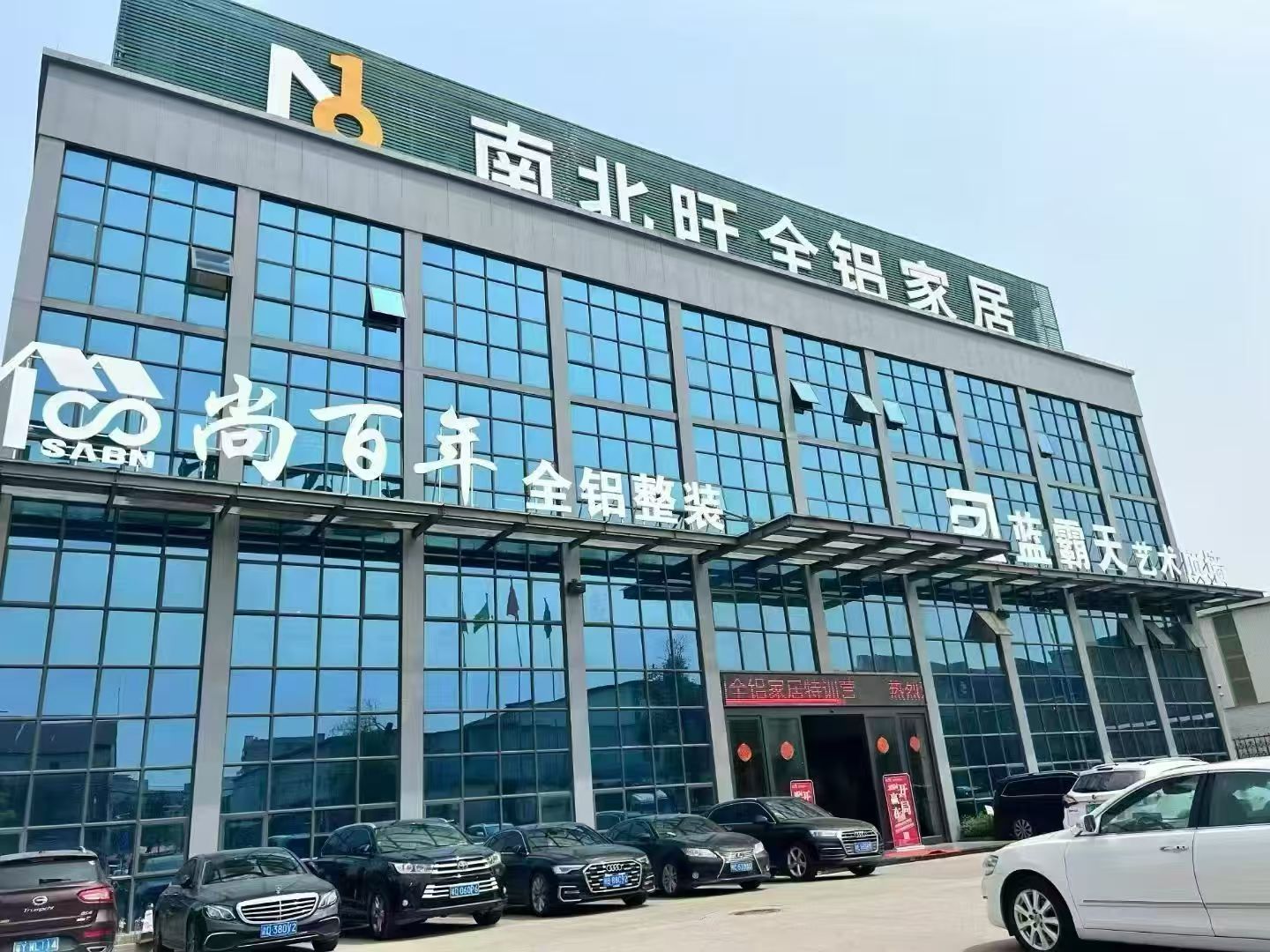
Guangdong Nanbeiwang Smart Home Co., Ltd., a National High-Tech Enterprise founded in 2013 and headquartered in Foshan, China, specializes in all-aluminum honeycomb panels for whole-house customization. When comparing honeycomb panels with traditional wood-based alternatives, measurable differences in durability, safety, and lifecycle cost emerge from standardized testing.
Problem with Traditional Materials
Wood board, particle board, and MDF carry inherent risks: moisture damage, mold, formaldehyde emission, fire hazard, termite infestation, and eventual warping or deformation. These issues drive maintenance costs and compromise indoor air quality. In high-humidity or fire-sensitive environments, the limitations become critical.
Nanbeiwang's Solution: All-Aluminum Honeycomb Panel
Nanbeiwang's all-aluminum honeycomb panel is an eco-friendly alternative that addresses each of those risks. The product uses a high-density aluminum honeycomb core bonded between aluminum skins, available in variations such as 18mm honeycomb panel, glue-free honeycomb panel, and solid wood veneer honeycomb panel. The structure provides Class A fire resistance, zero formaldehyde emission, and waterproof performance.
Technical Performance Comparison
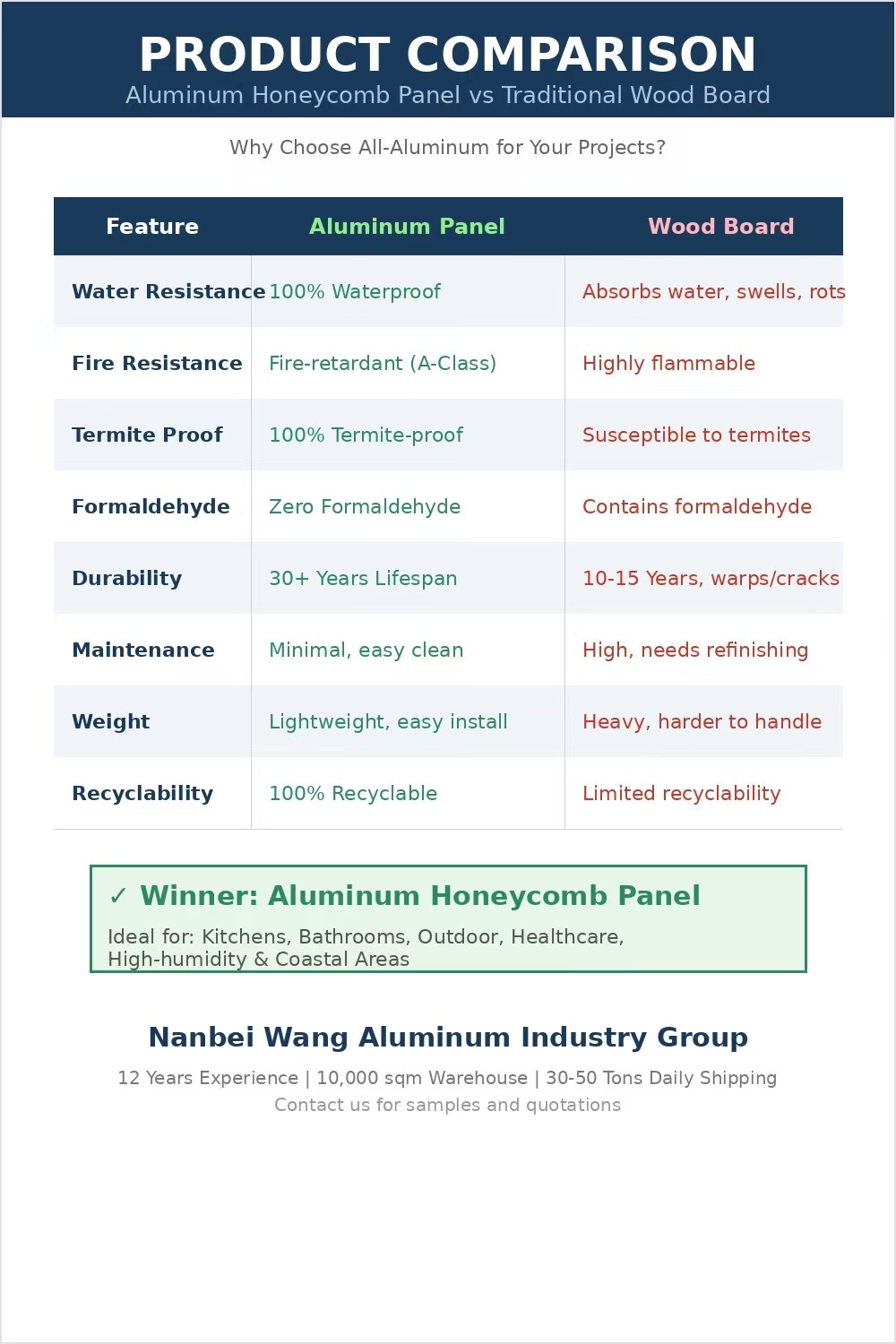
Laboratory data reveals measurable gaps between Nanbeiwang's aluminum honeycomb panel and traditional wood-based panels:
- Service life: Lab-tested 20+ years durability compared with 8–12 years for wood panels in high-humidity environments.
- Formaldehyde emission: Not Detected (ND) per GB 18584-2024, whereas E1-grade wood panels allow up to 0.124 mg/m³.
- Water absorption: <1% after 24-hour immersion, versus >10% for standard particle board.
- Fire rating: Class A (non-combustible), meeting rigorous standards such as EN 13501-1 in Europe and ASTM E84 in North America.
- Structural stability: No deformation, cracking, or termite damage under normal use.
One honest limitation: the upfront material cost of all-aluminum honeycomb panels can be higher than basic particle board. However, the total cost of ownership is lower due to reduced after-sales maintenance and longer replacement cycles.
Application Scenarios
Nanbeiwang's honeycomb panels are specified across whole-house customization, including all-aluminum cabinets, wardrobes, bookcases, bathroom cabinets, wall panels, and interior doors. Key use cases benefit from specific properties:
- Kitchens & bathrooms: Waterproof and mildew-proof surface makes these ideal for wet zones.
- Commercial engineering: Fireproof rating and high strength-to-weight ratio suit high-traffic areas.
- All-aluminum interior doors: Frameless honeycomb panel doors offer flat, stable surfaces with zero formaldehyde.
- Large-span ceilings: The glue-free honeycomb panel ceiling system maintains rigidity over wide areas.
Market Trend Analysis
The global aluminum honeycomb panels market was estimated at USD 3.57 billion in 2024, with architecture and building panels as the largest application segment. Regulatory shifts—such as Europe's EN 13501-1 and North America's ASTM E84—are making fire and emission standards stricter, accelerating demand for non-combustible, low-emission materials. China's exports of aluminum structures reached USD 5.55 billion in 2024, reflecting growing international acceptance.
Future Outlook
As building codes tighten and green certification programs expand, all-aluminum honeycomb panels are positioned to replace traditional wood composites in more applications. Nanbeiwang's vertical integration—from 80,000 m² factory to 320-strong production team with 15 R&D engineers—supports customization at volume, including OEM, ODM, and private-label projects.
For a complete overview of Nanbeiwang's product range and technical specifications, download the official brochure: Nanbeiwang 2026 Product Catalog.
Frequently Asked Questions
How does the cost of aluminum honeycomb panels compare with traditional wood panels?
Are Nanbeiwang honeycomb panels truly 0 formaldehyde?
What is the expected service life of an aluminum honeycomb panel?
Can I get custom sizes or finishes for my project?
Tem questões ou precisa de mais detalhes?
Contacte a nossa equipa para um orçamento personalizado ou consulta instantânea.
Solicitar orçamento
Preencha o formulário abaixo e a nossa equipa entrará em contacto com uma proposta personalizada.
Chat direto do WhatsApp
Prefere conversar em tempo real? Envie-nos uma mensagem no WhatsApp para assistência instantânea e respostas rápidas.
- Obter orçamento personalizado
- Partilhar fotos ou documentos
- Discuta as suas necessidades diretamente
Geralmente responde em 5–30 minutos durante o horário de expediente.