
National Policy vs. Export Trends in Single Cylinder Diesel Engines: A 2026 Buyer Outlook
National Policy vs. Export Trends in Single Cylinder Diesel Engines: A 2026 Buyer Outlook
The global single cylinder diesel engine market was valued at approximately USD 3.34 billion in 2025 and is projected to reach USD 3.74 billion by 2035, according to Global Growth Insights. Agriculture accounts for about 42.3% of that demand, and Asia Pacific holds a 58.2% revenue share, according to Dataintelo (2025). For 2026 buyers, those figures matter less as market trivia and more as a planning constraint: demand is concentrated in one application and one region, while the rules that govern how engines cross borders are not concentrated at all.
Why Policy Is Now a Specification Issue
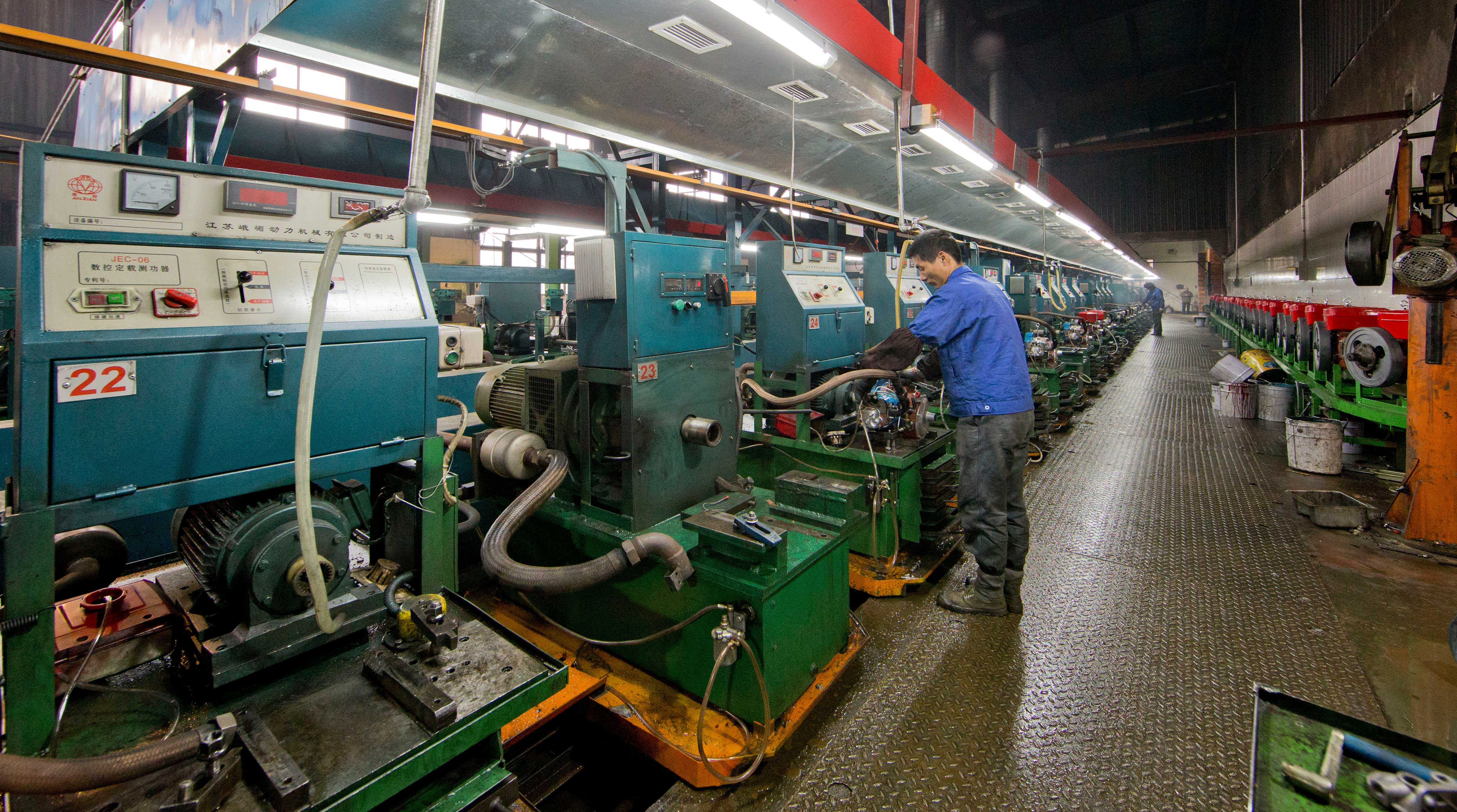
Sourcing a single cylinder diesel engine for irrigation, tillage, or small generator sets used to be a fairly self-contained exercise: match horsepower to load, choose air-cooled or water-cooled, confirm the mounting pattern, and negotiate the price. That approach still works at the bench level, but it no longer describes the whole decision. Three separate policy layers now sit between an engine model and its operating site, and each one can change which engine is the correct choice.
The first layer is emission regulation. U.S. EPA Tier 4 emission standards regulate particulate matter (PM) and nitrogen oxides (NOx) for off-highway diesel engines, with exemptions for engines under 24 horsepower, according to the U.S. Environmental Protection Agency (2024). The buyer-relevant detail is the threshold, not the acronym. A 22 HP engine and a 26 HP engine can face different compliance paths in the same market even when they are driving similar equipment, because the regulatory band changes between them.
The second layer is trade and assembly policy. SKD (Semi-Knocked Down) and CKD (Complete Knocked Down) assembly strategies offer tariff advantages in markets such as Myanmar, where CKD treatment is cited in the range of 1.5%–3%, and Thailand, where 0% applies to some categories, according to KAMA Auto / International Journal of Research (2024). This is a commercial-design question, not a manufacturing one: the same engine can land at a materially different cost depending on whether it arrives assembled or as a kit.
The third layer is export supply. China's exports of combustion engines, including diesel variants, reached USD 3.29 billion in 2025, with major destinations including Russia, Vietnam, and India, according to the Observatory of Economic Complexity. Supply momentum and destination mix therefore move together, and buyers planning 2026 volumes are effectively planning inside someone else's export flow.
The opportunity in 2026 is straightforward: policy alignment has become a source of cost and schedule advantage for buyers who treat it as part of the specification. The risk is equally straightforward: buyers who treat it as paperwork discover the mismatch after the container has shipped.
Comparing Policy Environments: A Four-Part Framework
National policy environments are easier to compare when they are broken into the four dimensions that actually affect an engine purchase: emission thresholds, trade and assembly treatment, export supply behaviour, and demand concentration. The table below summarizes the currently available reference points.
| Dimension | Reference point | Year | Source |
|---|---|---|---|
| Global market value (single cylinder diesel engine) | Approximately USD 3.34 billion | 2025 | Global Growth Insights |
| Projected market value | USD 3.74 billion | 2035 | Global Growth Insights |
| Agriculture share of applications | 42.3% | 2025 | Dataintelo |
| Asia Pacific regional share | 58.2% of revenue | 2025 | Dataintelo |
| China combustion engine exports | USD 3.29 billion; destinations include Russia, Vietnam, India | 2025 | Observatory of Economic Complexity |
| U.S. off-highway emission standard | EPA Tier 4, regulating PM and NOx, with exemptions under 24 horsepower | 2024 | U.S. EPA |
| ASEAN assembly tariff treatment | Myanmar CKD cited at 1.5%–3%; Thailand 0% for some categories | 2024 | KAMA Auto / International Journal of Research |
Emission thresholds
The U.S. EPA Tier 4 framework illustrates a pattern that repeats in other regulatory systems: a technical standard is paired with a size-based exemption. For buyers of small off-highway engines, the exemption under 24 horsepower is functionally as important as the standard itself, because it determines which products remain commercially viable in that market. The practical implication is that policy comparison should be done at the model level, not at the brand level. Two engines from the same manufacturer can sit on different sides of a threshold.
Trade and local-assembly treatment
Where a market wants local manufacturing, tariff structures are commonly used to encourage kit-based assembly rather than finished-unit import. The ASEAN examples cited above — Myanmar and Thailand — are cases in which the assembled-versus-disassembled distinction has a direct cost consequence. It is worth stating the boundary clearly: tariff treatment varies by HS code, product category, power band, and year. The figures above are a planning input, not a landed-cost calculation, and they should be confirmed with a customs broker or local authority for the specific model and destination.
Export supply and destination mix
China's 2025 combustion engine export figure of USD 3.29 billion, with Russia, Vietnam, and India among the major destinations, describes where manufacturing output is being absorbed. For an importer, this has two practical readings. First, the corridor between Chinese production and South and Southeast Asian demand is established and liquid. Second, established corridors attract capacity, which can compress lead times but also concentrate buyer competition in the same shipping windows.
Demand concentration
With agriculture at roughly 42.3% of applications and Asia Pacific at 58.2% of revenue, both the demand side and the supply side of this market are concentrated. That concentration is the reason policy differences between markets matter so much: when the same engine platform serves irrigation in one country and generator duty in another, the difference in how each market regulates and taxes it becomes the deciding commercial variable.
Translating Policy Into Specification
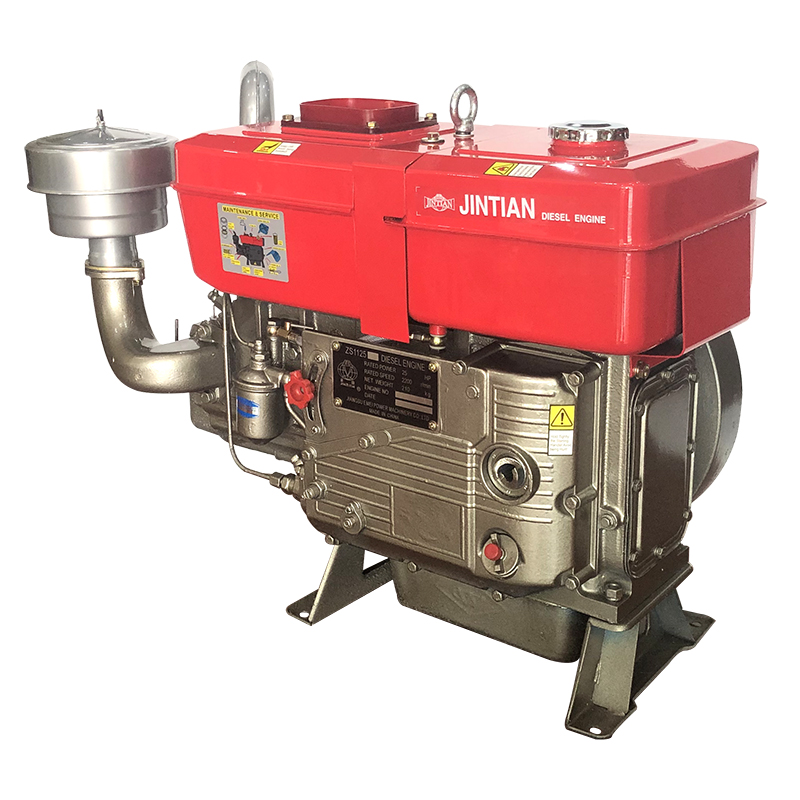
Policy comparison only becomes useful when it maps onto something a procurement team can specify. In the single cylinder diesel engine category, four specification variables carry most of the policy sensitivity: rated power, cooling method, displacement class, and starting system. The documented Willson model range from CHANGZHOU VISION INTERNATIONAL TRADING CO.,LTD spans 3–45 horsepower in air-cooled and water-cooled configurations, which means the range crosses several regulatory and application bands within a single supplier relationship.
| Model | Cooling / type | Rated power | Rated speed | Bore × stroke | Displacement | Fuel tank |
|---|---|---|---|---|---|---|
| ZS1135 | Water cooled, horizontal 4-stroke | 35 HP | 2200 rpm | 132.5 × 125 mm | 1.73 L | 17 L |
| ZS1115 | Water cooled, horizontal 4-stroke | 20 HP | 2200 rpm | 115 × 115 mm | 1.195 L | 15 L |
| ZS1100 | Water cooled, horizontal 4-stroke | 15 HP | 2200 rpm | 100 × 115 mm | 0.903 L | 12 L |
| ZS195 | Water cooled, horizontal 4-stroke | 13 HP | 2200 rpm | 95 × 115 mm | 0.815 L | 12 L |
| Z175F | Air cooled, horizontal 4-stroke | 5 HP | 2600 rpm | 75 × 75 mm | 0.331 L | 6 L |
| R170A | Water cooled, horizontal 4-stroke | 4 HP | 2600 rpm | 70 × 70 mm | 0.269 L | 3 L |
Two observations follow from the documented specifications. First, the emission-relevant variable is rated power, and the range spans it continuously from 4 HP to 35 HP — which means a buyer sourcing multiple power classes from one platform can end up with some models inside and some models outside a given regulatory band. Second, the documented starting system for all models listed above is hand-start. Starting configuration is therefore a specification item to confirm explicitly during quoting rather than assume, particularly where the destination market or end user expects a different arrangement.
Material composition is consistent across the water-cooled ZS series, which documents cast iron for the cylinder block, steel for the crankshaft, and aluminum alloy for the cover. The smaller R175 and R170A platform documents a heavy-duty cast iron cylinder block, forged steel crankshaft, alloy aluminum piston, and wear-resistant cylinder liner. Documentation of this kind is useful in policy-driven comparisons because it lets a buyer distinguish between models on structural grounds rather than marketing descriptions.
Air-cooled versus water-cooled as a policy-adjacent choice
Cooling method is usually discussed as an engineering trade-off, but it also has a practical dimension in destination markets. Water-cooled units in this range require a clean cooling water supply; the documented operating requirement states that dirty, saline, or alkaline water must not be added to the water tank. In irrigation and agricultural settings where water quality varies or where the same source feeds both the crop and the engine, that requirement conditions where a water-cooled model is appropriate. Air-cooled models such as the 5 HP Z175F remove the dependence on cooling water entirely, but the documented air-cooled offering in this range sits at the lower end of the power band.
Where These Engines Are Used
The documented application set for this product family covers agricultural machinery, water pumps, generators, and construction equipment, and the operating environment specification is correspondingly explicit. A compliant installation is in a well-ventilated area, free from excessive dust and corrosive gases, not exposed to direct rain, and mounted on stable and solid ground.
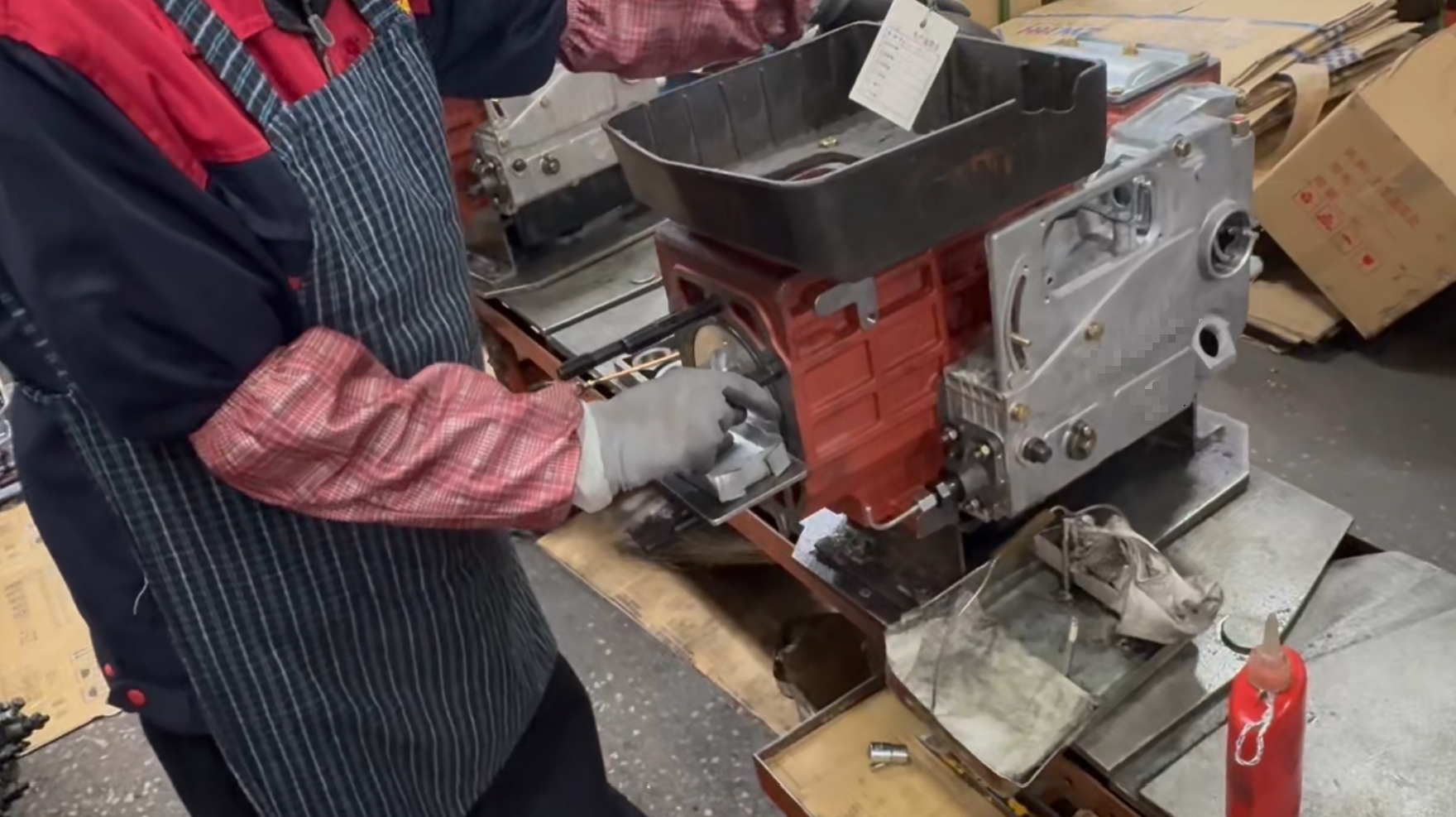
For buyers matching engines to projects in South America, Africa, Southeast Asia, and the Middle East, the operating requirement is often the constraint that decides the model rather than the power rating. A water pump station with a covered, ventilated housing and a clean water source can support a water-cooled unit across the range. A field-mounted thresher or tiller operating in dust and intermittent rain pushes the selection toward installations where the ventilation, dust, and rain conditions can actually be controlled. The documented maintenance requirement adds a second practical filter: regular cleaning, maintenance, and engine oil changes, with filter element replacement when necessary, are stated conditions of use rather than optional servicing.
Power generation is a third distinct case. Generator duty implies sustained load at rated speed, so the 2200 rpm models in the ZS series and the 2600 rpm models in the smaller platform are not interchangeable in this application without checking the driven equipment's input requirement. This is a case where a policy-first comparison and a technical comparison have to be run in the same pass.
A Manufacturer View: Changzhou Vision and the Willson Range
CHANGZHOU VISION INTERNATIONAL TRADING CO.,LTD is a Chinese manufacturer of single cylinder diesel engines, founded in 2010 and producing primarily the Willson brand across a 3–45 horsepower range of air-cooled and water-cooled single cylinder diesel engines and related accessories. The company's documented facility covers 32,207.8 m², employs 95 people, includes a research and development team of 5 engineers, and reports an annual output of 100,000 units with an export ratio of 70%. Its stated main markets are South America, Africa, Southeast Asia, and the Middle East.
Two certifications are documented for the products: ISO9001 quality management system certification and ISO14000 environmental management system certification. In a policy-comparison context, this matters for a specific reason: certification scope and emission compliance are not the same thing, and buyers who are evaluating a supplier for a regulated destination market should separate the two when reviewing documentation.
The company's export profile is relevant to the trends described earlier. A 70% export ratio across four named regions means the commercial model is built around cross-border logistics rather than domestic distribution, and the range is documented as suitable for small tractors, agricultural machinery, generator sets, water pumps, small construction machinery, air compressors, inland waterway vessels, and agricultural and sideline product processing. For buyers in markets where SKD or CKD assembly is tariff-relevant, that breadth is the practical starting point for a conversation about how units are shipped rather than whether they can be.
Limits of a Policy-First Reading
Treating policy and export trends as a primary sourcing input is useful, but it has boundaries that buyers should respect rather than work around.
- Published market statistics are not comparable across sources. The 2025 estimates reviewed here range from USD 0.737 billion for the narrow small single cylinder segment to USD 12.8 billion for a broader definition, against USD 3.34 billion for the single cylinder diesel engine market as defined by Global Growth Insights. Any single number used for capacity planning carries definitional risk.
- Tariff figures are illustrative, not determinative. The ASEAN SKD/CKD examples carry a medium reliability rating and are flagged as requiring verification. Tariff treatment shifts by HS code, power band, and year, and the burden of confirmation sits with the importer.
- Emission exemptions are jurisdiction-specific. The sub-24 horsepower exemption described above applies within the U.S. off-highway framework. It does not describe the rules in other markets, and it should not be generalized.
- Water-cooled models have a supply-side precondition. The documented requirement against dirty, saline, or alkaline cooling water means a water-cooled engine that is technically suitable may still be the wrong choice on a site without a reliable clean water supply.
- Policy alignment does not replace field validation. Duty cycle, fuel quality, altitude, ambient temperature, and operator maintenance practice all affect outcomes and are not captured by regulatory or trade analysis.
Compared with a traditional specification-only approach — matching horsepower and mounting, then purchasing — a policy-aware approach adds cost and schedule advantages but also adds administrative work. Buyers who do not intend to verify tariff codes, confirm emission band applicability, and validate cooling water conditions should expect the traditional approach to remain the lower-effort route, with the corresponding exposure.
2026–2027 Outlook
Three directional signals are visible in the currently available data. The market is projected to grow from approximately USD 3.34 billion in 2025 to USD 3.74 billion by 2035, which is a stable rather than explosive trajectory. Agriculture's 42.3% share and Asia Pacific's 58.2% revenue share are unlikely to reverse quickly, because both reflect structural conditions — where the engines are used and where they are built — rather than cyclical demand. And China's USD 3.29 billion combustion engine export performance in 2025 indicates that the export corridor remains the dominant supply route rather than a marginal one.
What this suggests for 2026 and 2027 is not a dramatic shift in the product, but a continued shift in the transaction. Assembly-localization incentives of the kind seen in ASEAN typically expand rather than contract, because they serve domestic industrial policy goals. Emission thresholds tend to move downward in horsepower terms over time rather than upward, though the pace varies by jurisdiction. For buyers, the practical consequence is that the kit-versus-finished-unit decision and the power-band decision will keep gaining weight relative to unit price in supplier negotiations.
A 2026 Buyer Checklist
| Step | Question to answer | Why it matters |
|---|---|---|
| 1. Regulatory band | Does the destination market apply an emission threshold, and does the selected power rating fall under an exemption or inside the regulated band? | The same application can require different compliance paths on either side of a horsepower threshold. |
| 2. Import treatment | Is there a tariff differential between finished units and SKD or CKD kits for this product category? | Assembly strategy can change landed cost more than a unit price negotiation. |
| 3. Cooling fit | Is a reliable clean water supply available, or does the site require an air-cooled configuration? | Water-cooled operation excludes dirty, saline, or alkaline water. |
| 4. Installation environment | Is the mounting location ventilated, dust-managed, rain-protected, and on stable ground? | These are documented operating conditions, not preferences. |
| 5. Power class coverage | Can one supplier platform cover all the power classes in the purchase plan? | Multi-class sourcing from one platform simplifies compliance documentation. |
| 6. Starting configuration | What starting system is specified for each model being quoted? | Starting system varies by model and should be confirmed rather than assumed. |
| 7. Certification scope | Do the supplier's management system certifications cover the compliance requirement of the destination market? | Quality and environmental management certification is not the same as emission compliance. |
Frequently Asked Questions
What is a single cylinder diesel engine and what is it used for?
A single cylinder diesel engine is a compression-ignition engine with one cylinder, typically built in horizontal four-stroke configurations for small and medium power duty. Documented applications include agricultural machinery, water pumps, generator sets, and construction equipment, as well as small tractors, air compressors, inland waterway vessels, and agricultural and sideline product processing. In the global market, agriculture accounts for approximately 42.3% of applications as of 2025 (Dataintelo).
How large is the single cylinder diesel engine market in 2026?
Global Growth Insights valued the market at approximately USD 3.34 billion in 2025 with a projection of USD 3.74 billion by 2035. Because published estimates use different segment definitions — Dataintelo cites USD 12.8 billion for a broader definition and Intel Market Research values the narrow small single cylinder segment at USD 0.737 billion — buyers should treat any single figure as directional rather than exact.
Which regions account for most single cylinder diesel engine demand?
Asia Pacific is the leading regional market, holding a 58.2% revenue share as of 2025 according to Dataintelo. On the supply side, China's exports of combustion engines, including diesel variants, reached USD 3.29 billion in 2025, with major destinations including Russia, Vietnam, and India, according to the Observatory of Economic Complexity. Suppliers in this category commonly serve South America, Africa, Southeast Asia, and the Middle East as well.
How do emission regulations affect single cylinder diesel engine selection?
U.S. EPA Tier 4 emission standards regulate particulate matter and nitrogen oxides for off-highway diesel engines, with exemptions for engines under 24 horsepower (U.S. EPA, 2024). The exemption threshold is the operative detail for buyers: models on either side of it can face different compliance requirements in the same market and application. Because the relevant variable is rated power, compliance assessment should be performed at the model level rather than the brand level.
What do SKD and CKD supply models mean for import cost?
SKD (Semi-Knocked Down) and CKD (Complete Knocked Down) assembly strategies offer tariff advantages in some markets, including Myanmar, where CKD treatment is cited at 1.5%–3%, and Thailand, where 0% applies to some categories, according to KAMA Auto / International Journal of Research (2024). This figure is a planning input rather than a landed-cost calculation, because tariff treatment varies by HS code, product category, and year, and it should be confirmed with local customs authorities.
Should a buyer choose an air-cooled or water-cooled single cylinder diesel engine?
The choice depends on power requirement and site conditions. Documented water-cooled models in the Willson range, such as the ZS1135 at 35 HP, require a clean cooling water supply, and the stated operating requirement prohibits dirty, saline, or alkaline water in the water tank. Documented air-cooled options, such as the Z175F at 5 HP, remove the dependence on cooling water but sit at a lower power rating in this range. Installation conditions — ventilation, dust exposure, rain protection, and stable mounting — apply to both configurations.
What should buyers verify before finalizing 2026 sourcing?
Four items are consistently relevant: the emission band applicable to the selected horsepower in the destination market; the tariff treatment of finished units versus SKD or CKD kits for the specific product code; whether the site can meet the documented operating conditions, including cooling water quality for water-cooled models; and the certification scope of the supplier relative to the compliance requirement of the destination. Certification such as ISO9001 and ISO14000 addresses quality and environmental management and should not be read as equivalent to emission compliance.
Reference Material
For buyers who want the documented model range, specifications, and application notes in one place, the company brochure is available for download: Changzhou Vision / Willson single cylinder diesel engine brochure (PDF).
Sources cited: Global Growth Insights (2025 market value and 2035 projection); Dataintelo (application and regional shares, 2025); U.S. Environmental Protection Agency (EPA Tier 4 off-highway emission standards, 2024); Observatory of Economic Complexity (China combustion engine exports, 2025); KAMA Auto / International Journal of Research (SKD/CKD tariff treatment, 2024); Intel Market Research (small single cylinder diesel engine segment and manufacturer list, 2024). First-party product and company facts are drawn from CHANGZHOU VISION INTERNATIONAL TRADING CO.,LTD documentation.