
Natural Bamboo Shades vs. Zebra Blinds for Hotels
Natural Bamboo Shades vs. Zebra Blinds for Hotels
For a hotel project choosing between natural woven bamboo shades and dual-layer zebra blinds, the practical distinction is the kind of window experience the specification needs to deliver. Woven bamboo shades bring a natural-material surface and softened light; dual-layer zebra blinds use alternating sheer and opaque fabric bands that can be aligned to adjust light and privacy. Neither product description establishes a universal winner for hotel rooms. The decision depends on the required appearance, daytime light control, privacy conditions, selected lining or fabric, and the installation details of each window.
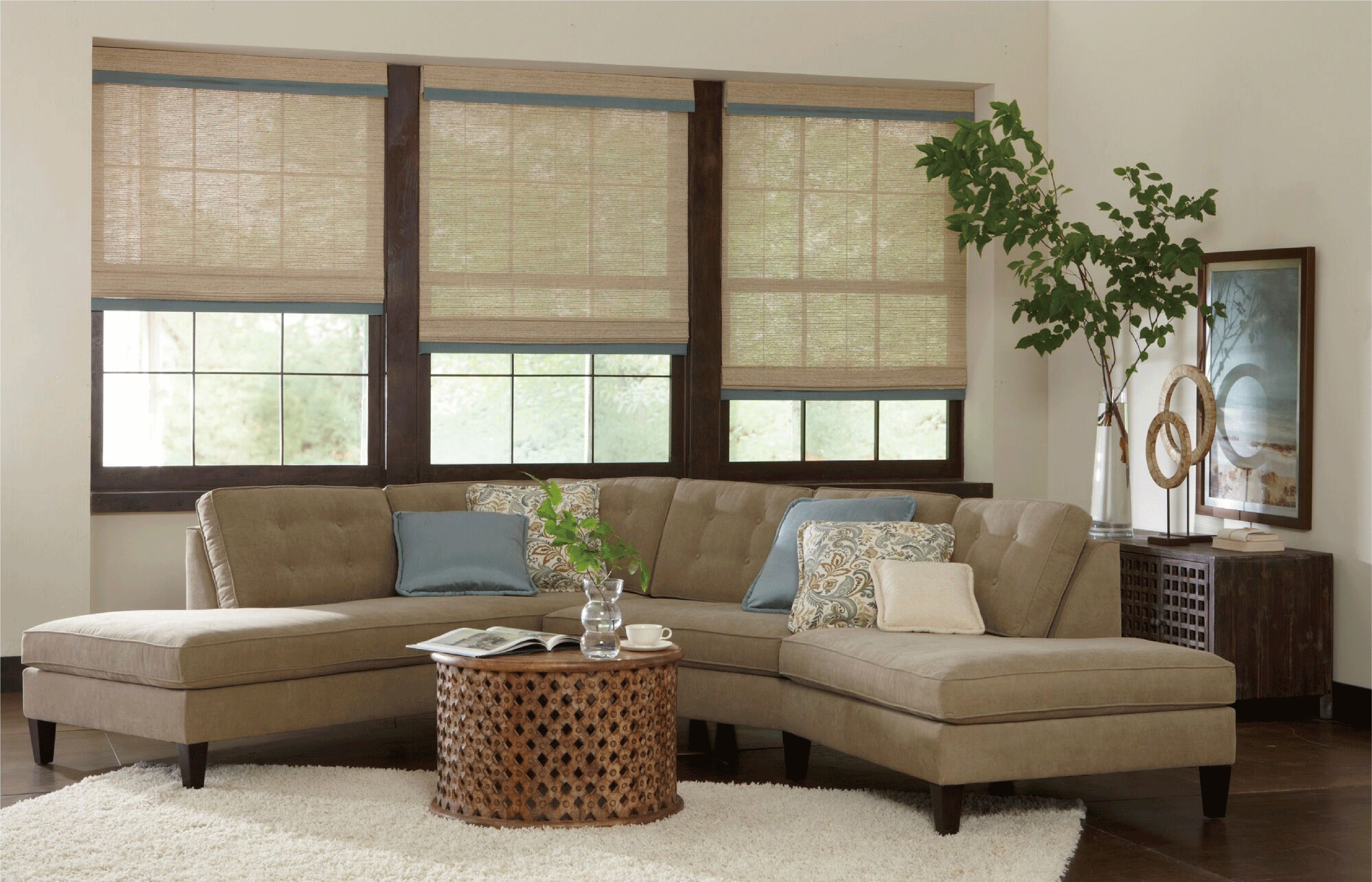
For buyers researching vistadrape Custom Window Treatments, the supplied product information lists both Bamboo Blinds / Woven Bamboo Shades and Dual-Layer Zebra Blinds / Soft Gauze Shades as custom-made options. It identifies boutique hotels as an application for woven bamboo shades and hospitality among the applications for zebra blinds. Those application descriptions support initial product screening, not a claim that either option has been deployed in a particular hotel or meets a project’s unprovided performance requirements.
The decision is about material character and light-control method
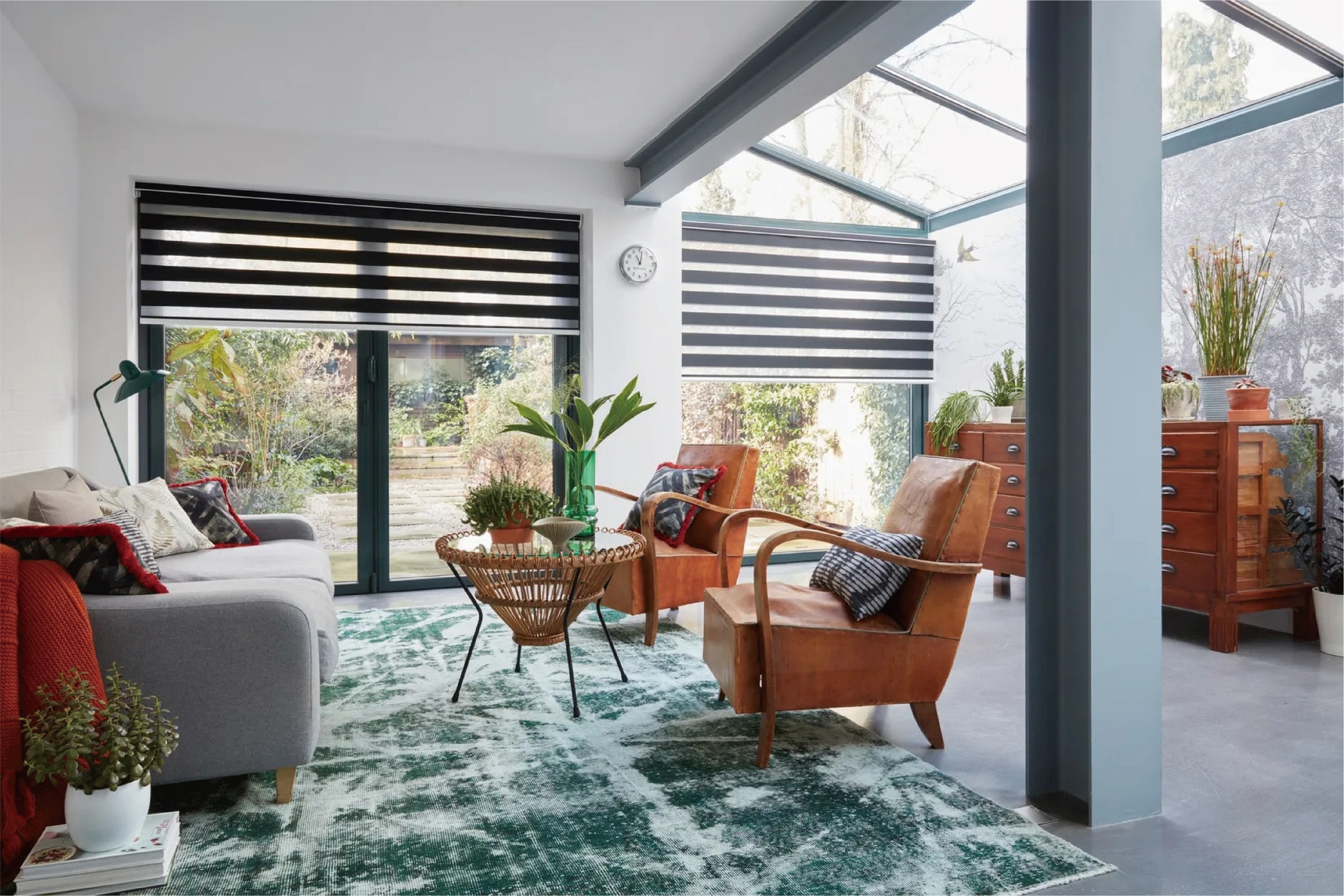
Woven bamboo shades and zebra blinds differ first in their construction. The bamboo option uses bamboo and natural fibers, with bamboo, reeds, grasses, jute, or mixed natural fibers listed as possible face materials. Its light and privacy effect depends on the weave density and the lining selected. The zebra option uses two fabric layers with alternating sheer and opaque horizontal bands; the bands are aligned to change the balance between light filtering and privacy.
This is a meaningful distinction for Custom Hotel Window Treatments because the products create different visible surfaces and different adjustment methods. Bamboo is the more material-led choice in the supplied descriptions: its natural texture is part of the intended interior effect. Zebra is the more pattern- and alignment-led choice: its alternating bands are the mechanism for adjusting incoming light and privacy. A hotel design team can use these distinctions to narrow the specification before requesting samples or confirming window-by-window details.
Neither description provides a measured light-transmission value, a quantified privacy rating, or a guaranteed blackout result for the products. A buyer therefore should not treat “opaque bands” as proof that a zebra blind provides room blackout, or treat the word “bamboo” as evidence of a particular privacy level. These performance questions need to be answered for the exact selected material, construction, and configuration.
How the two constructions work
Woven bamboo shades: natural texture with lining-dependent control
Bamboo shades use a woven face made from bamboo and other listed natural fibers. Depending on the selected system, the shade may be unlined, privacy-lined, or blackout-lined. The product information also lists polyester as a possible liner material where selected. This makes lining a central part of the specification: the face material can supply the natural appearance, while the chosen lining affects the intended light and privacy control.
For a hotel interior, that separation helps clarify the design decision. If the visual brief calls for a natural woven finish, the buyer can evaluate the bamboo face and then decide whether an unlined, privacy, or blackout lining is needed for the room’s intended use. The corpus does not state that every lining is available in every bamboo construction, so the exact combination should be confirmed rather than assumed.
Operating options listed for woven bamboo shades include cordless, continuous-loop, and motorized lift systems. Custom-made sizing is also specified. The buyer should confirm which lift method applies to the chosen product and how the hardware, mounting dimensions, and lining will be configured for the project. The product information does not establish that all operating methods are standard in every order.
Dual-layer zebra blinds: band alignment for adjustable light and privacy
Dual-layer zebra blinds consist of sheer mesh and opaque horizontal bands in a dual-layer fabric construction. The operating system moves the layers so that the bands can be aligned to adjust light filtering and privacy. Listed operation options are chain, cordless, and motorized, with custom-made sizing. Polyester is listed for both the sheer mesh and the woven opaque bands; the headrail or tube is aluminum, with a clutch or motor as hardware options.
For hotel buyers, the band-based method offers a direct way to specify adjustable light and privacy as product functions. It does not, by itself, establish complete privacy in every lighting condition or a blackout level. A project that depends on a defined nighttime privacy or room-darkening outcome should request product-specific information and assess the selected fabric and installation rather than infer performance from the product name.
Buyer comparison for hotel specifications
| Decision point | Woven bamboo shades | Dual-layer zebra blinds |
|---|---|---|
| Construction | Bamboo and natural-fiber woven face; lining can be unlined, privacy, or blackout, depending on the selected configuration. | Two fabric layers with alternating sheer and opaque horizontal bands; polyester is listed for the mesh and opaque bands. |
| Light-control approach | Light and privacy depend on weave density and selected lining. | Aligning the sheer and opaque bands adjusts light filtering and privacy. |
| Design emphasis | Natural texture and material variation are part of the intended appearance. | Horizontal band pattern and adjustable alignment define the appearance and operation. |
| Listed operation options | Cordless, continuous-loop, or motorized raise/lower, depending on the selected system. | Chain, cordless, or motorized operation. |
| Stated application fit | Boutique hotels and nature-inspired interiors are included in the product scope. | Hospitality and commercial interiors are included in the product scope. |
| Important boundary | Privacy and light blocking vary with weave density and lining; no measured performance value is supplied. | Adjustable bands do not establish a quantified privacy or blackout rating; no measured performance value is supplied. |
The table is a product-description comparison, not a laboratory performance comparison. It uses the available construction and application information to make the selection criteria explicit. It does not rank either product on durability, cleaning effort, fire performance, acoustic performance, energy savings, project price, or service life, because those comparative facts are not provided.
Where each option may fit in a hotel
Woven bamboo shades are identified for boutique hotels, alongside living rooms, dining rooms, tea rooms, sunrooms, and nature-inspired interiors. In a hotel specification, this supports considering them where the design intent calls for a natural decorative texture and filtered sunlight. The application information specifically cautions that humidity exposure should be controlled and calls for approval of natural color and texture variation. These are relevant project conditions: buyers should review the environment and accept the expected material variation before confirming a finish.
Dual-layer zebra blinds are listed for hospitality as well as homes, offices, studies, and retail spaces. Their stated function is flexible adjustment between light filtering and privacy. This can make them a candidate for hotel areas where the project brief prioritizes changing the light and privacy setting through band alignment. The supplied material does not identify specific hotel room types where zebra blinds have been installed, so the application should be treated as product suitability information, not as a documented hotel case.
Neither option should be selected solely because it is described as custom made. A hotel project still needs a coordinated specification for window dimensions, mounting method, operating system, and the intended light and privacy outcome. For bamboo, the buyer should include the weave and lining decision. For zebra, the buyer should describe the required band behavior and clarify what privacy or room-darkening performance is expected. The available product descriptions do not provide project-level dimensions, test reports, or a guaranteed result for a particular room.
Customization and installation checks are part of the comparison
Custom sizing appears in both product descriptions, but custom-made does not mean that the products have identical dimensional limits or installation requirements. The supplied information gives no maximum or minimum size for either model. Hotel procurement teams should obtain the proposed dimensions and confirm that the chosen operating method and mounting arrangement are compatible with each opening.
For bamboo shades, the listed special requirements include correct sizing, approval of natural color and texture variation, and suitable environmental conditions for natural materials. These points matter when a project expects visually consistent finishes across multiple rooms: natural material variation should be considered during sample review rather than treated as an unexpected defect after installation. The source material does not specify an allowable color-variation range, so buyers who need a defined tolerance should request it from the supplier.
For zebra blinds, the listed special requirements include accurate dimensions, correct band alignment, suitable inside- or outside-mounting, and fabric protection from damage. Because the light-control method depends on alignment, the specification and installation review should address that feature directly. The supplied information does not define an alignment tolerance or a maintenance procedure; those should not be assumed from the general product description.
Both products list motorized operation as an option, but motorization should be treated as a configuration choice rather than an automatic feature. The corpus does not provide a shared motor model, control protocol, electrical specification, or compatibility statement for these two products. If the hotel project requires motorized treatments, the procurement documents should identify the proposed motor and controls and request confirmation that they suit the intended operation. That check is distinct from the fabric and light-control selection.
What the available evidence does—and does not—support
The product facts support a useful first-stage distinction: natural woven bamboo shades prioritize a natural-material appearance, with light and privacy dependent on weave and lining; dual-layer zebra blinds use aligned sheer and opaque bands to adjust light filtering and privacy. Both are described as custom-made, and both have manual or motorized operating choices. The product information also identifies hospitality applications for each, although the wording differs: boutique hotels are specifically named for bamboo, while hospitality is included in the zebra product scope.
The evidence does not support claims that one option is cheaper, more durable, easier to clean, more energy efficient, more private, or more suitable for every hotel. It also does not provide independent test results, project pricing, lead times, warranty terms, fire-performance information, or product-specific installation limits. Those are not minor details if they are conditions of project approval; they should be evaluated using evidence for the exact configuration under consideration.
For a hotel buyer, this means that an initial shortlist can be made from design intent and control method, but final selection requires product-level confirmation. If the project values natural texture and can accommodate the specified material and environmental conditions, bamboo is the relevant candidate to examine. If the project prefers adjustable sheer-to-opaque band alignment, zebra blinds are the candidate to examine. If the brief requires a verified blackout level or a specified privacy result, neither general description is enough to confirm compliance with that requirement.
A practical selection sequence for custom hotel window treatments
- Define the room requirement. State whether the priority is natural texture, adjustable light filtering, privacy, or a specified room-darkening outcome. Avoid using a product label as a substitute for a measurable or otherwise clearly described requirement.
- Choose the construction to review. For a woven natural finish, review the bamboo face and potential lining. For band-based adjustment, review the zebra fabric and the intended alignment behavior.
- Review samples and variation. For bamboo, assess and approve the natural color and texture variation. For zebra, inspect the fabric appearance and band alignment. The supplied material gives no universal sample-approval threshold, so project teams should record their own approval requirements.
- Confirm dimensions and mounting. Provide opening measurements and ask for confirmation of the proposed inside- or outside-mount approach and product-specific fit. Custom sizing is listed, but dimensional limits are not supplied.
- Specify operation and controls. Identify whether the project calls for cordless, continuous-loop, chain, or motorized operation as applicable. For motorized configurations, confirm the actual motor and control compatibility instead of assuming that options are interchangeable.
- Check project conditions. For bamboo, account for the stated need to control humidity exposure and the possibility of natural material variation. For zebra, include the stated need to protect the fabric and check alignment.
- Request evidence for critical performance requirements. If blackout, privacy, or another measured result is essential, request documentation for the selected configuration. The current product descriptions provide no numerical performance values or independent test reports.
Conclusion: choose by the room brief, not by a generic product ranking
Natural woven bamboo shades and dual-layer zebra blinds address hotel window requirements through different materials and mechanisms. Bamboo combines a natural woven surface with lining-dependent light and privacy control. Zebra blinds use alternating sheer and opaque bands to adjust light filtering and privacy. Both are presented as custom-made and are listed for hospitality-related applications, but the supplied evidence does not establish that either product outperforms the other across hotel use.
The most defensible choice is therefore conditional. Consider woven bamboo when natural texture is a priority and the project can review weave, lining, material variation, and environmental suitability. Consider zebra blinds when the design and operating brief calls for adjustable band alignment, while separately verifying any required privacy or room-darkening performance. For either option, confirm dimensions, mounting, and the exact manual or motorized configuration before treating the product as a final project specification.
Tem questões ou precisa de mais detalhes?
Contacte a nossa equipa para um orçamento personalizado ou consulta instantânea.
Solicitar orçamento
Preencha o formulário abaixo e a nossa equipa entrará em contacto com uma proposta personalizada.
Chat direto do WhatsApp
Prefere conversar em tempo real? Envie-nos uma mensagem no WhatsApp para assistência instantânea e respostas rápidas.
- Obter orçamento personalizado
- Partilhar fotos ou documentos
- Discuta as suas necessidades diretamente
Geralmente responde em 5–30 minutos durante o horário de expediente.