
Natural Stone Supplier Capability: Custom Fabrication and Project Support in Practice
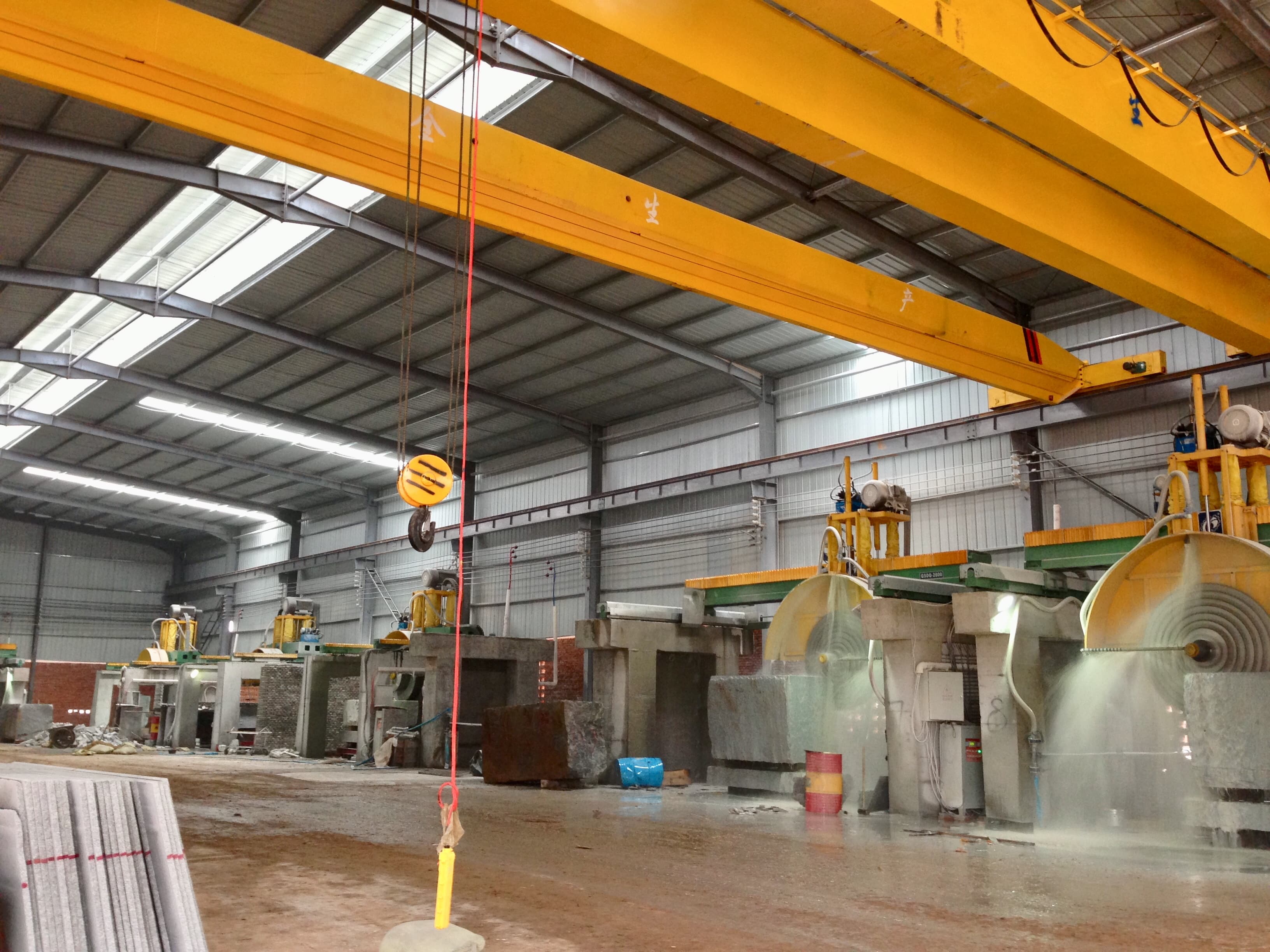
Natural stone procurement is shifting from buying standard slabs to commissioning custom-manufactured products. The global natural stone market was valued at USD 10.2 billion in 2024 and is projected to reach USD 14.11 billion by 2030, according to Grand View Research. Granite alone accounted for a 39.6% revenue share in 2024. These figures point not only to market scale, but also to the growing role of suppliers that can execute complex designs, manage project schedules, and maintain consistent quality across custom orders.
Why Supplier Capability Is the Decisive Factor in Natural Stone Procurement
For buyers moving into evaluation and execution, the critical question is no longer “what stone do you have?” but “can your production system turn our design into a finished, installable product?” That distinction matters because natural stone is a material with natural variation. Without controlled fabrication and inspection, even a premium slab can become a costly problem during installation.
Custom projects introduce parameters such as unusual dimensions, edge profiles, surface finishes, and engraving. A supplier that cannot translate architectural sketches into accurate shop drawings may force the buyer to rely on vague samples or assume the factory will “handle it.” This is where capability assessment becomes as important as price comparison.
From Sketch to Fabrication: The Core of Custom Stone Work
Design-to-production integration is the central capability that separates a true project partner from a pure slab trader. Xiamen Songjia Trading Co., Ltd., known internationally as SONGJIA, describes this integration as its core strength. Based in Xiamen, China, SONGJIA serves international stone importers, contractors, fabricators, designers, and private custom clients. Its company profile highlights more than 20 years of accumulated industry experience and a mature, flexible manufacturing and supply network.
SONGJIA supplies a comprehensive product range: granite and marble slabs, quartzite, limestone, onyx, tombstones, memorial products, and stone furniture. According to the company, its professional technical team transforms client sketches, concepts, and architectural ideas into accurate and producible shop drawings. The purpose is to ensure each design can be efficiently executed while maintaining quality consistency, cost control, and delivery reliability.
For a procurement professional, this means the supplier accepts responsibility not just for cutting stone, but for interpreting design intent and identifying manufacturability issues before production begins.
What a Full-Service Stone Supply Model Looks Like
A full-service natural stone supplier typically offers a process that covers design coordination, production management, quality inspection, packaging, and international shipping. SONGJIA’s documented production modes include natural stone supply, custom fabrication, tombstone manufacturing, project order support, quality control, and export service.
The company positions itself not as a single-factory manufacturer, but as a supplier working through a coordinated network of processing workshops. This model can offer more flexibility for buyers because different product categories can be routed to the most suitable production line. However, it also places greater responsibility on the supplier to maintain consistent standards across external partners.
Technical Parameters That Define Custom Stone Orders
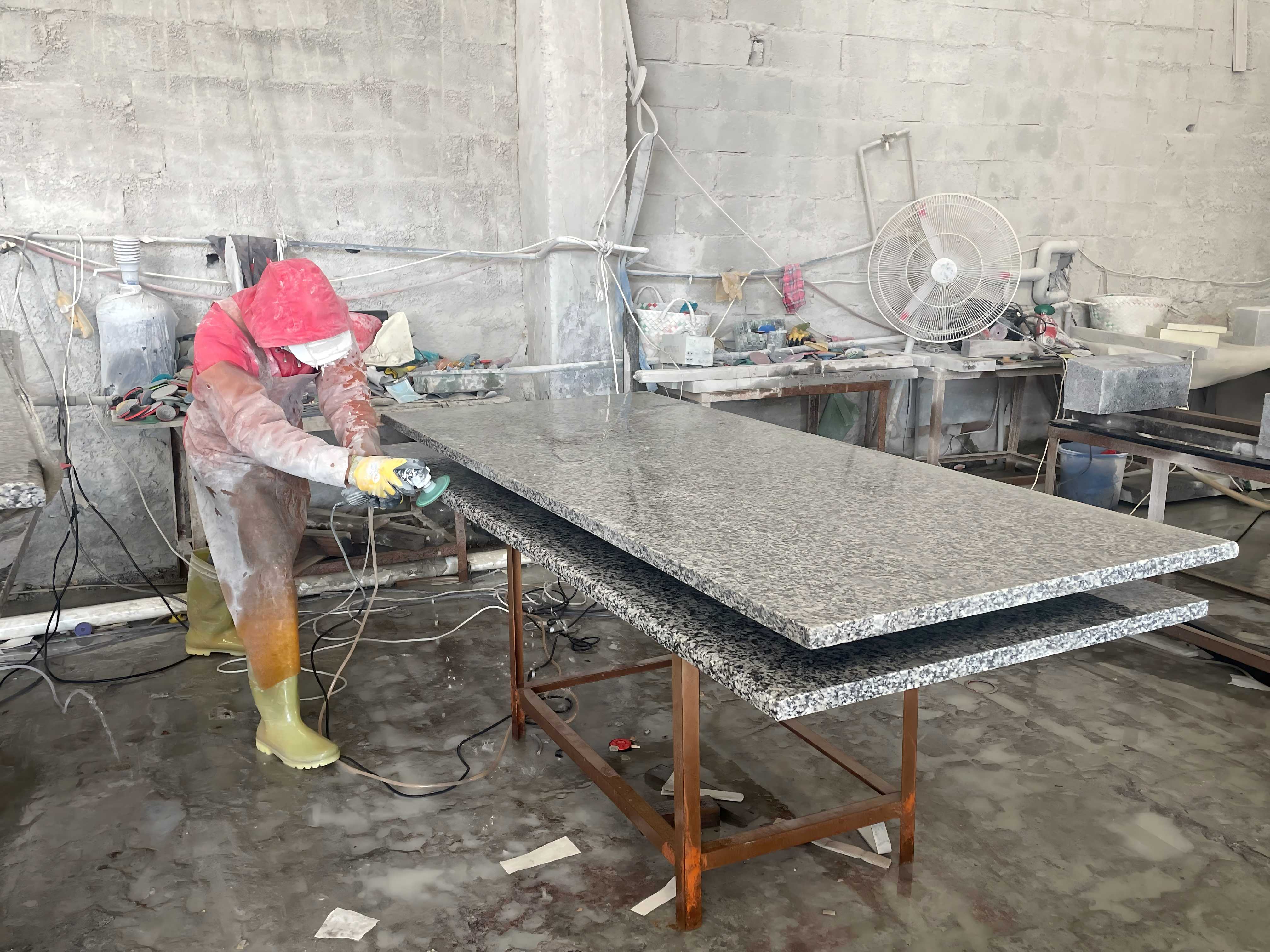
Custom fabrication at SONGJIA covers a defined set of parameters: material, size, thickness, surface finish, edge profile, shape, engraving, packing, and logo marking. Each parameter has practical consequences. For example, surface finish influences slip resistance and maintenance; edge profile affects visual continuity on cladding panels; and sealant grade becomes critical for kitchen countertops and bathroom vanities. The company’s product data lists water absorption values for marble at 0.1%–0.5%, limestone at 0.8%–2.5%, travertine at 0.4%–1.0%, and onyx at 0.1%–0.3%, which helps specifiers select materials for specific environments.
Production capacity is another measurable indicator. SONGJIA reports a monthly capacity of 10–30 containers, depending on product category and production schedule. Typical lead times are 15–30 days depending on product type and order quantity. For buyers, these figures set a realistic baseline for scheduling. It is also important to note that trial orders are acceptable, and the minimum order quantity depends on the product type.
The quality control system at SONGJIA includes raw material inspection, in-process inspection, finished product inspection, and pre-shipment inspection. This four-stage approach is designed to catch defects before they become expensive site problems. In addition, the company holds SGS CE certificates for natural stone slabs and modular tiles, including a G684 basalt certificate under EN 12058 and a G603 grey granite certificate under EN 12057. Those documents provide verifiable compliance evidence for EU-bound projects.
Project Execution in Practice: Facades, Cladding, and Countertops
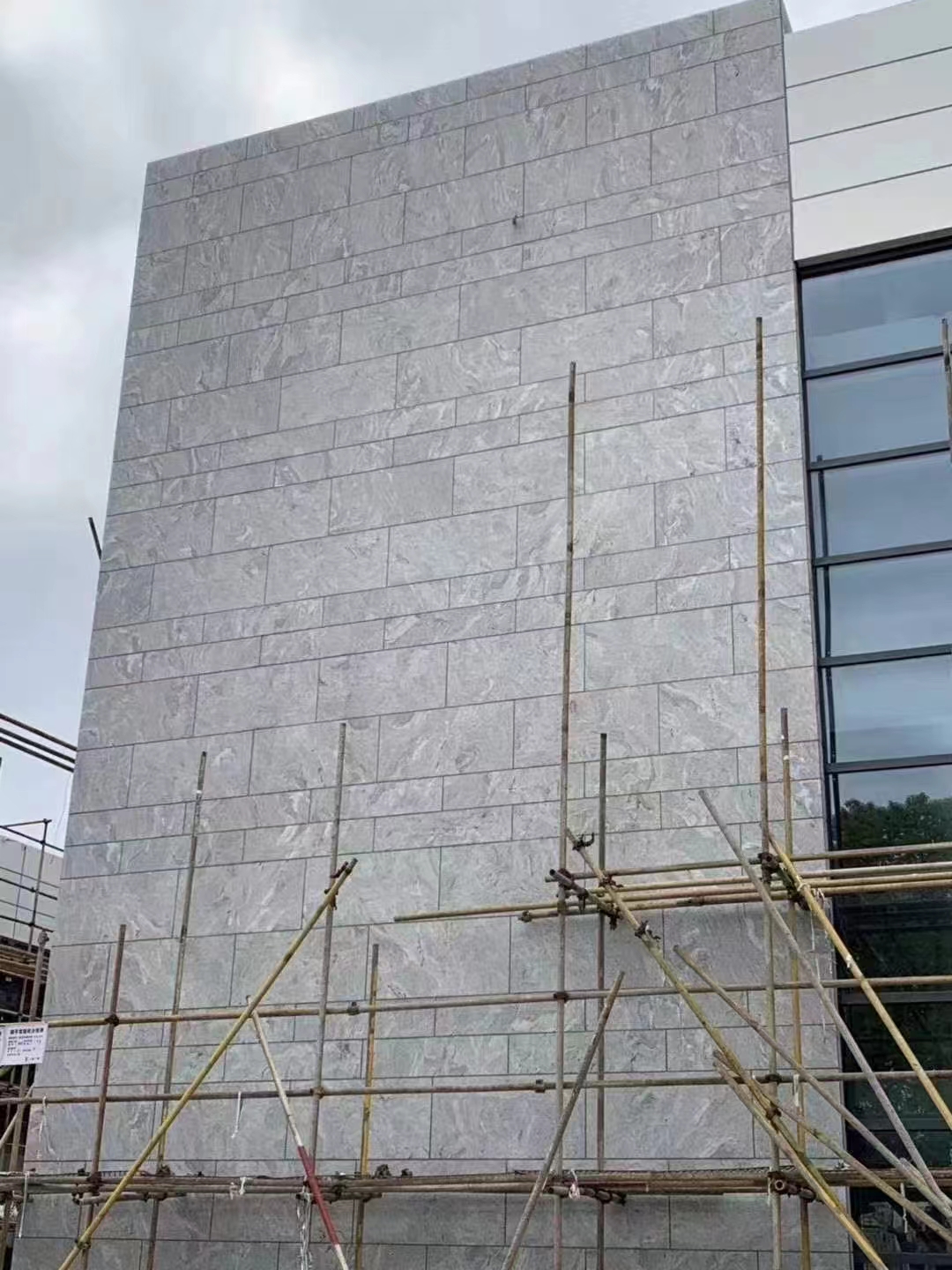
Documented case experience shows how custom capability translates into completed buildings. In one SONGJIA case, a building contractor used stone for residential and commercial projects, applying natural stone to façades, wall cladding, flooring, and countertops. The end client later shared completed project photos and expressed satisfaction with the quality. The supplier’s stated highlights were accurate fabrication, consistent quality, and project support.
This pattern is common in custom stone procurement: the quality of fabrication becomes visible only after installation, when panels align, edges meet, and surfaces read as a continuous design. For the buyer, that means evaluating the supplier’s ability to manage tolerances, inspect work in progress, and communicate proactively.
Market Signals: Customization and Integration as Growth Drivers
China remains a major export hub for building stone. According to OEC, China’s export value for building stone was approximately USD 3.64 billion in 2024, with South Korea, the US, and Japan as the top partners. Fujian Province alone accounts for about 64.3% of China’s granite exports. The geographic concentration of quarrying and processing in one region makes integrated suppliers valuable, because they can coordinate material selection and production within a short supply radius.
At the same time, the global market’s product mix shows that granite is the leading segment. Granite’s durability, variety of finishes, and availability in slab and tile formats make it a default choice for many commercial and residential applications. The shift toward project-based buying, rather than pure commodity trading, is therefore a structural trend, not a temporary one.
Integrated vs. Conventional Supply Chains: A Realistic Comparison
In a conventional supply chain, a buyer might negotiate separately with a quarry owner, a processing factory, and a logistics agent. Each handoff creates potential for communication gaps, tolerance mismatches, and unclear responsibility. An integrated supplier such as SONGJIA offers a single chain from design coordination to shipping. The buyer works with one technical team that owns shop drawings, production follow-up, and quality checks.
This model has clear advantages, especially for projects with complex specifications. But it is not without boundaries. Custom lead times still depend on raw material availability, and during peak production seasons, the stated 15–30 day window may extend. Buyers should treat lead times as estimates and confirm schedule milestones before order confirmation. Additionally, while SONGJIA has verified relationships with granite sources such as G603, G654, and G664, other material categories may come from partner quarries, which introduces a different level of supply control. Evaluating the source of specific materials remains part of due diligence.
Future Outlook: What the Next Phase of Stone Sourcing Requires
Procurement teams are likely to place more weight on engineering support, compliance documentation, and responsive quality management as the next phase of natural stone sourcing unfolds. The presence of SGS CE certificates for slabs and modular tiles suggests that certification is becoming a baseline requirement for European projects. As designs become more ambitious, the supplier’s shop-drawing capability and inspection discipline will matter as much as the stone itself.
Companies that invest in design-to-production integration, rather than simply trading slabs, are better positioned to serve the next cycle of construction and renovation demand. For buyers, the practical implication is to evaluate suppliers using four criteria: technical drawing capability, production capacity and lead time, quality control process, and verified certifications. These factors determine whether a project remains on schedule and meets design intent.
Frequently Asked Questions About Custom Natural Stone Orders
What customization options are available for natural stone orders?
Custom natural stone orders can typically be adjusted by material type, size, thickness, surface finish, edge profile, shape, engraving, packing, and logo marking. These parameters cover most project-specific requirements, from simple tile formats to complex architectural cladding and bespoke furniture pieces.
What is the minimum order quantity for custom natural stone products?
MOQ depends on customer acceptance and product type. For general natural stone and building material orders, quantities above 100 square meters are generally workable. Trial orders are often acceptable for new customer relationships, though smaller volumes may involve higher per-unit costs.
How is quality consistency ensured during custom production?
The quality control process typically includes raw material inspection, in-process inspection, finished product inspection, and pre-shipment inspection. Buyers can also rely on sample confirmation, progress photos, videos, and pre-shipment verification before final release.
What are typical lead times for custom natural stone orders?
Normal lead times range from 15 to 30 days depending on product type, complexity, and order quantity. Projects requiring special materials, unusual finishes, or extensive customization may need additional time for sourcing and fabrication.
Can a natural stone supplier support both residential and commercial project orders?
Yes. Documented cases show suppliers fulfilling orders for residential and commercial projects, including façades, wall cladding, flooring, and countertops. In one referenced case, the end user expressed satisfaction with the finished project, and the supplier’s stated strengths included accurate fabrication and project support.