
Navigating ASTM D3475 and Odor-Proof Ratings: A Cannabis Bag Compliance Guide
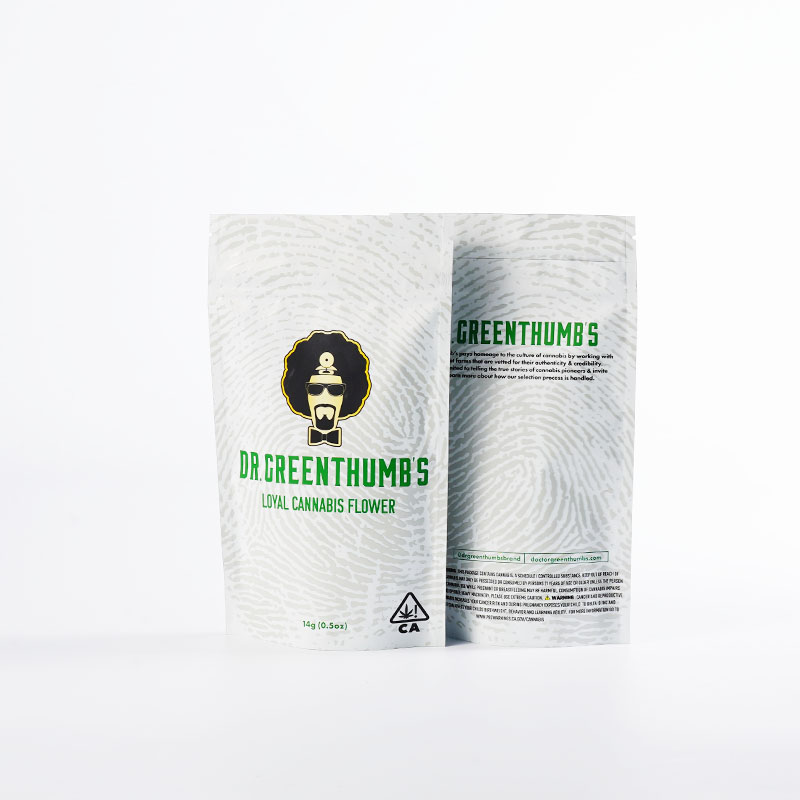
Navigating ASTM D3475 and Odor-Proof Ratings: A Cannabis Bag Compliance Guide
A cannabis packaging bag is not a discretionary piece of branding — in most regulated markets it is a controlled component. Two qualification tracks determine whether a bag can legally carry cannabis flower, pre-rolls or edibles to a retail shelf: child resistance, and odor and barrier performance. They are tested differently, documented differently and verified differently, and strength on one track says nothing about the other. This guide decodes both, using the published CHITAI specification as a factual example of how the criteria appear in real supplier documentation.
Two qualification tracks, one package
The most common qualification error in cannabis packaging procurement is treating a mechanism name as a compliance result. A bag described as having a "child-resistant zipper" is making a claim about a closure design; a bag described as "smell proof" is making a claim about barrier behavior. Neither statement, on its own, tells a quality manager whether the finished package has been evaluated against a recognized child-resistance framework or whether its aroma containment has been measured rather than asserted.
Child resistance is a functional requirement that is assessed through defined protocols and applies to how a package behaves in a consumer's hands. Odor and barrier performance is a materials-science property, driven by the film structure, the foil layer, the seal geometry and the closing system. A compliance program needs both, documented at the level of the finished bag rather than the component level.
What ASTM D3475 and 16 CFR 1700.20 actually require
In the United States, child-resistant packaging must comply with CPSC standards under 16 CFR 1700.20 and ASTM D3475. These two references appear together in most US-facing packaging specifications, and they are cited in the published CHITAI specification for the CR Zipper, Push Lock and Slide Lock options on its cannabis bags.
The practical implication for a compliance manager is that "compliant" is shorthand. The meaningful questions are narrower: which protocol was applied, on which package configuration, and does the tested configuration match the bag that will actually be produced? Child-resistance performance is a property of an assembled package — its dimensions, closure, film structure and seal all contribute — so a statement about a closure type should always be read together with the document that describes the tested bag.
Two limitations are worth stating plainly. First, supplier documentation is technical input, not legal advice; market-by-market labelling and packaging rules vary, and the final compliance judgment sits with the brand owner. Second, a standard reference does not expire in intent but does expire in evidence: a test report tied to a superseded specification or a discontinued film structure cannot be carried forward automatically.
The three child-resistant closure options in flexible cannabis bags
Flexible pouches achieve child resistance through the closure at the bag opening. CHITAI publishes three options for its cannabis packaging bags, each listed against ASTM D3475: CR Zipper, Push Lock and Slide Lock. Selection between them is a workflow decision as much as a compliance decision, because the closure determines how staff and consumers open and re-close the pack.
| CR closure option | Standard cited in published specification | Where the child-resistant function sits | What to verify before qualification |
|---|---|---|---|
| CR Zipper | ASTM D3475 | Resealable closure at the bag opening | Tested configuration matches production dimensions, film structure and seal width; re-closing performance is documented |
| Push Lock | ASTM D3475 | Closure at the bag opening | Adult opening sequence is documented for retail and dispensing staff; tested configuration matches production |
| Slide Lock | ASTM D3475 | Closure at the bag opening | Repeated open-and-close cycles are validated on the finished bag; tested configuration matches production |
None of the three options should be treated as interchangeable across formats. A closure that performs as intended on a small flat pouch may behave differently when applied to a wider stand-up structure with a heavier fill and a larger opening. That is why qualification should be run on the finished bag format intended for production, at the intended fill weight, rather than extrapolated from a similar product in the same catalogue.
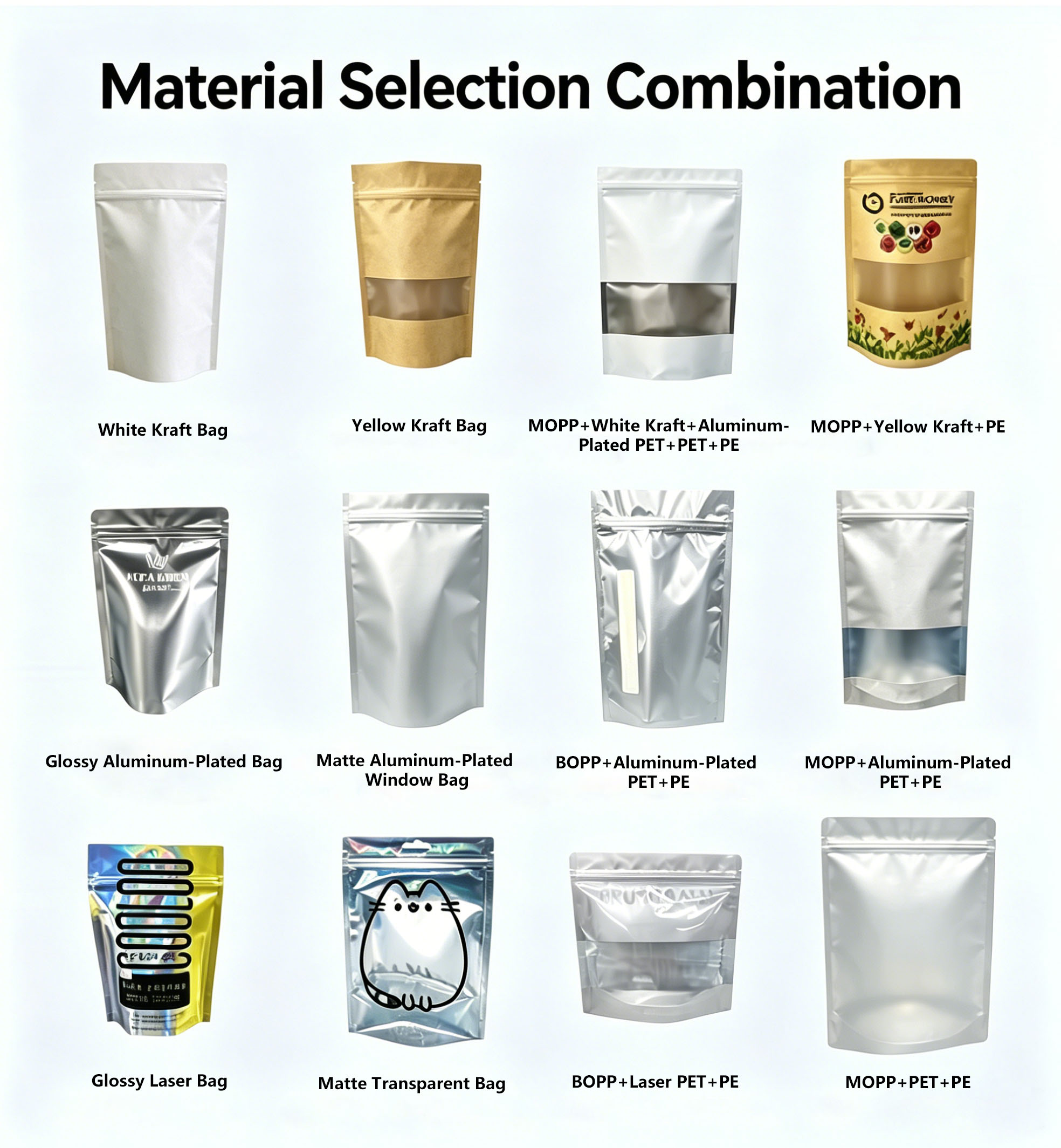
Reading odor-proof grades correctly: Good, Excellent and Premium
CHITAI publishes three odor-proof levels for its cannabis bags: Good, Excellent and Premium. These tiers describe progressively stricter aroma-containment objectives. Unlike child resistance, however, there is no single harmonized international scale that fixes what "Good" or "Premium" means across suppliers, so a grade name alone cannot be compared between vendors without the underlying material structure and test data.
In CHITAI's specification, the odor-proof grade is built on a multi-layer material structure of PET / VMPET / PE / NY / AL. Each layer does a job: the aluminum foil layer is the aroma-blocking element, with a published foil thickness of 7 to 9 μm and a pinhole-free requirement; the PE layer is the heat-sealing layer that closes the bag; PET and PET-based layers provide the printable outer surface and mechanical support; and nylon (NY) is commonly used in flexible structures to improve puncture and flex resistance during transport and handling.
| Published odor-proof grade | What the label communicates | Evidence to pair with the grade |
|---|---|---|
| Good | Baseline aroma-containment objective for the grade scale | Confirmed material structure in the specification, plus OTR and WVTR values for that structure |
| Excellent | Higher aroma-containment objective within the same scale | Confirmed foil layer thickness and seal strength data, plus OTR and WVTR values |
| Premium | Highest published aroma-containment objective in the scale | Confirmed structure, transmission data and light-blocking verification for the intended storage and transit profile |
The same catalogue also lists alternative structures for specific projects, including a PET / AL / PE pure aluminum foil composite and a VMPET / NY / PE aluminum-coated nylon composite, with total film thickness ranging from around 100 μm up to 140 μm for thickened high-barrier formats. Because these structures differ, the grade should always be requested together with the structure code — otherwise the buyer is comparing a tier name against a tier name, with nothing measurable in between.
Translating an odor-proof claim into measurable numbers
The most directly usable compliance evidence in CHITAI's published specification is the set of measured values attached to the ct-Cannabis Packaging Bags model. These numbers convert an odor-proof grade into something a quality team can hold a supplier to.
| Published parameter | Value | Why a compliance manager should care |
|---|---|---|
| Oxygen permeability (OTR) | ≤ 0.05 cm³/(m²·24h) | Oxygen ingress drives oxidation of terpenes and cannabinoids; it is a freshness control, not only an odor control |
| Water vapor transmission rate (WVTR) | ≤ 0.03 g/(m²·24h) | Moisture loss or uptake affects flower texture and weight retention over shelf life and shipping |
| Aluminum foil thickness | 7 to 9 μm, pinhole-free | Foil is the aroma-blocking layer; pinholes are the most common hidden failure mode in laminate films |
| Waterproof grade | IPX4 water repellent | Relevant to chilled transport, condensation and handling exposure rather than to prolonged immersion |
| Heat seal strength | ≥ 40 N/15 mm | Seal integrity is the primary leak path; a weak seal defeats an otherwise high-barrier structure |
| Tear strength | Longitudinal ≥ 35 N, transverse ≥ 30 N | Indicates resistance to opening or rupturing in transit and retail handling |
| Light blocking | Completely opaque, zero light transmission | Protects cannabinoids from light degradation and prevents contents from being visible to minors |
| Sealing configuration | Double sealing: repeated zipper sealing plus top heat seal | Two independent closures reduce the chance that a single failure produces an odor or integrity event |
Read together, these values describe a package designed around leakage prevention rather than around marketing language. The IPX4 rating is a good example of a limit worth understanding: it addresses water splashing and repellency, not submersion, so it should not be presented internally as an immersion-proof claim.
Matching bag format to fill weight
Compliance and format are linked, because fill weight determines bag dimensions, and dimensions feed back into both CR behavior and seal reliability. CHITAI publishes capacities of 1 g, 3.5 g (⅛ oz), 7 g (¼ oz), 14 g (½ oz) and 28 g (1 oz), with standard flat dimensions of 3"x4", 4"x5", 5"x6", 6"x8" and 8"x10". Customization is supported, and the bags are intended for cannabis flower, pre-rolls, edibles, CBD, tobacco, vape, herbal products and health products.
For compliance managers, the sizing decision is not purely commercial. A 28 g format with a large opening presents a different child-resistance and reseal profile than a 1 g single-serving pouch, and a pre-roll format has a different seal-to-content ratio than a flower bag. Qualification should therefore be tied to the specific format and fill weight, not to the closure family as a whole.
A verification workflow for quality and compliance managers
Qualification becomes manageable when it is sequenced. The following workflow follows the order in which evidence actually becomes available.
- Fix the specification first. Confirm the material structure code (for example PET/VMPET/PE/NY/AL), the film thickness, the bag dimensions and the fill weight before requesting any test data.
- Request measured barrier data, not grade names alone. OTR and WVTR values tied to the specific structure give you a number to compare across suppliers.
- Confirm the child-resistant mechanism and the tested configuration. Establish which option applies — CR Zipper, Push Lock or Slide Lock — and which standard it is cited against, such as ASTM D3475.
- Verify seal and tear performance. Heat seal strength and tear strength indicate whether the package will survive filling, packing and distribution without creating a leak path.
- Check light-blocking and opacity. Opaque bag bodies support both product stability and the requirement that minors not see the contents.
- Confirm material restrictions for your application. For raw-material repackaging projects, CHITAI specifies solvent-free composite adhesive to eliminate solvent residue contamination — a project-level requirement that should be written into the purchase specification.
- Validate on the finished bag, in production conditions. Material-level data describes the film; the compliance question concerns the filled, sealed bag at normal temperature, away from light, in sealed storage conditions.
CHITAI publishes its specification tables and a 2026 product brochure for public reference. The brochure is available for download at https://cdn.socialarks.com/sbsp/25005/common/2026/0708/%E7%82%BD%E6%B3%B0%E7%94%BB%E5%86%8C2026%E7%89%881.pdf.
Where high-barrier flexible cannabis bags have limits
High-barrier laminate pouches are the dominant format for regulated cannabis retail, but they carry real trade-offs that a purchasing team should state openly rather than discover late.
- Recyclability. Multi-material laminates that combine PET, metallized film, nylon, aluminum foil and PE are generally not recyclable through standard curbside streams. Buyers pursuing eco-friendly marijuana packaging goals need to decide whether to accept a lower-barrier mono-material structure, or to keep the barrier and address sustainability through other means.
- Cost scales with barrier. Thickened high-barrier formats move from roughly 100 μm up to around 140 μm of total film thickness. Higher thickness improves oxygen and moisture resistance but consumes more material per bag, so barrier targets should be justified by actual shelf-life and transit requirements.
- Seal dependency. Barrier performance is only as good as the seal. Dust or product residue in the seal area, incorrect heat-sealing temperature, or an under-filled bag all reduce the effective barrier, regardless of how good the film is.
- Closing discipline. A resealable CR closure only maintains odor containment if it is re-closed correctly after each opening. This is a consumer-behavior variable that no material specification can fully control.
- Grade-label ambiguity. Because odor-proof tiers are supplier-published rather than harmonized, two bags labelled "Premium" can contain quite different film structures. Comparison without structure codes is not a comparison.
Against rigid alternatives, the trade-off is different in kind. Child-resistant jars and tins are robust, stackable and reusable, and their closure performance is a function of cap torque rather than film seal integrity. Flexible pouches typically win on weight and cube efficiency — less freight volume per unit, flatter storage, lower shipping weight — but they place more of the compliance burden on seal quality and on correct consumer re-closing. The market reflects this split: plastics accounted for 54.3% of the cannabis packaging material market share in 2025, according to Grand View Research, which shows that flexible and plastic formats remain the mainstream choice despite the well-known recyclability constraint.
What the market data says about compliant flexible packaging
Demand-side data supports the direction of travel, but it should be read with care. Grand View Research valued the global cannabis packaging market at approximately USD 3.2 billion in 2025 and reported that North America dominated with a 67.9% revenue share that year. Fortune Business Insights projects the market reaching USD 21.55 billion by 2034 at a CAGR of 14.35%. Future Market Insights identifies flexible packaging — pouches and bags — as a rapidly growing segment on the basis of efficiency and lower cost.
Those headline figures are not directly comparable, and a compliance-driven buyer should notice why. Published 2025 estimates for the same market differ substantially depending on the inclusion criteria for medical versus recreational products and on the material scope applied: Grand View Research uses USD 3.2 billion, Global Market Insights uses USD 2.6 billion, and Fortune Business Insights uses USD 6.48 billion. When a category's baseline is defined within a range that wide, the useful planning signal is the direction and the structure of the market, not a single decimal point.
The supply side is also concentrated. Global Market Insights identified Berry Global Inc. as a market leader with over 12% share in the cannabis packaging sector in 2025, and the commonly cited group of top industry players includes Amcor, KushCo Holdings (Greenlane), Berry Global, Sana Packaging and Dymapak. For a brand owner building a supplier shortlist, this means the qualification criteria matter more than the tier of the supplier: large converters and specialized cannabis packaging manufacturers are both evaluated on the same two tracks described above.
What to expect next
Three pressures are likely to shape cannabis packaging qualification over the next few product cycles. First, documentation expectations are rising: as compliance teams mature, requests for structure codes, OTR and WVTR values, and seal strength data are becoming standard rather than exceptional, which pushes suppliers toward publishing measurable specifications instead of descriptive grades. Second, sustainability and barrier performance will continue to pull against each other, given the recyclability limits of multi-material laminates and the persistence of plastics at 54.3% of material share. Third, regulation remains fragmented across North America and Europe, so packaging decisions made for one market will keep needing re-verification for another.
For buyers, the practical posture is unchanged: qualify the finished bag against both tracks, keep the evidence attached to the specification, and re-verify whenever the structure, dimensions or fill weight changes.
FAQ
What is ASTM D3475 and why does it matter for cannabis packaging?
ASTM D3475 is one of the two references commonly cited for child-resistant packaging in the United States, alongside the CPSC standard under 16 CFR 1700.20. In supplier documentation, such as CHITAI's published specification for its cannabis bags, ASTM D3475 is cited against specific closure options: CR Zipper, Push Lock and Slide Lock. It matters because child resistance is one of the tracks that determines whether a package can legally be sold into a regulated market, and because the citation identifies which framework the closure has been evaluated against.
Do odor-proof grades and child resistance test the same thing?
No. They measure different properties. Child resistance describes how a package closure behaves when a child attempts to open it; odor-proof performance describes how well the package structure limits aroma and vapor transfer. A bag can be child-resistant and have weak aroma containment, or have a very high barrier and a closure that is not child-resistant. CHITAI's specification lists the two separately: CR Zipper, Push Lock and Slide Lock against ASTM D3475 on the child-resistance side, and Good, Excellent and Premium on the odor-proof side.
What do the Good, Excellent and Premium odor-proof ratings mean?
They are three published odor-proof tiers offered by CHITAI for its cannabis packaging bags, describing progressively stricter aroma-containment objectives. They are not defined by a single harmonized international scale, so the grade is only meaningful when read together with the material structure it is built on. For CHITAI's cannabis bags, that structure is PET/VMPET/PE/NY/AL, and the specification states that the aluminum foil layer, at 7 to 9 μm and pinhole-free, is the element that blocks aroma leakage.
How can a buyer verify a barrier claim before placing an order?
By asking for measured values attached to a specific structure rather than a grade name. In CHITAI's published data, the relevant figures for the ct-Cannabis Packaging Bags model are oxygen permeability ≤ 0.05 cm³/(m²·24h), water vapor transmission rate ≤ 0.03 g/(m²·24h), heat seal strength ≥ 40 N/15 mm, and a completely opaque, zero-light-transmission bag body. Requesting those same categories of data from every candidate supplier produces a directly comparable specification set.
Does a high-barrier cannabis bag also need to be waterproof?
They address different exposure scenarios, and the ratings should not be conflated. CHITAI's cannabis bags carry an IPX4 water repellent rating, which covers splashing and handling exposure rather than immersion. Barrier performance, by contrast, is about vapor and oxygen transfer over time, expressed through OTR and WVTR. A bag intended for chilled transport or condensation-prone routes benefits from both, but IPX4 should not be presented as an immersion-proof claim.
What are the main limitations of foil-based high-barrier cannabis bags?
Four limits are commonly relevant. Multi-material laminates combining PET, metallized film, nylon, aluminum foil and PE are generally not recyclable in standard curbside streams. Barrier improves with film thickness, but thickened formats of around 140 μm consume more material per bag and raise unit cost. Overall barrier performance depends heavily on seal integrity, so filling and heat-sealing conditions matter as much as the film itself. Finally, resealable closures only maintain containment when re-closed correctly, a variable material specifications cannot control.
Which bag sizes are available for different cannabis fill weights?
CHITAI publishes capacities of 1 g, 3.5 g (⅛ oz), 7 g (¼ oz), 14 g (½ oz) and 28 g (1 oz), with standard flat dimensions of 3"x4", 4"x5", 5"x6", 6"x8" and 8"x10", and customization where the standard sizes do not fit a specific product format. These formats are intended for cannabis flower, pre-rolls, edibles, CBD, tobacco, vape, herbal products and health products. Because dimensions affect both closure behavior and seal reliability, qualification should be tied to the specific format and fill weight rather than to the closure type alone.
Reference
Dongguan Chitai Packaging Products Co., Ltd. is a manufacturer of CHITAI-branded cannabis packaging bags, established in 2025, operating a 4,200 m² facility with approximately 45 employees, an annual production capacity of 30,000,000 units and an R&D team of 8 engineers. Export business accounts for 30% of total sales, with North America and Europe as the major markets.