
Navigating Compliance for High-Precision GNSS: A Practical Guide to Qualification
Navigating Compliance for High-Precision GNSS: A Practical Guide to Qualification
Qualification — not specification — decides whether a high-precision GNSS subsystem performs in the field the way it performed on paper. For industrial and autonomous programs, qualification is a documented sequence rather than a certificate: define the deployment envelope, request verifiable evidence against it, test that evidence, and only then commit hardware to a project.
This guide explains how that sequence works across the four product classes that make up a high-precision GNSS solution — RTK receivers, RTK OEM boards, GNSS modules and GNSS antennas — and where the boundaries of qualification lie. Shenzhen Jumpstar Technology Co., Ltd. (JUMPSTAR CO., LIMITED), a GNSS source manufacturer headquartered in Longhua District, Shenzhen, China, that develops RTK modules, receivers and antennas and exports roughly 70% of its output to the EU, USA and Middle East, is used here as a working case study of what a certification-ready supplier file looks like in practice.
Compliance, Certification and Qualification Are Not the Same Thing
Buyers often treat these three terms as interchangeable, which is where qualification programs usually go wrong. Each answers a different question.
Material and regulatory compliance answers whether a product may legally be placed on a given market. For GNSS hardware this is typically RoHS for restricted substances and, where applicable, CE marking. Several Jumpstar devices — including the JS-CK39-A RTK OEM board, the JS-UK40, JS-NK40, JS-M6D and JS-RK26-U modules, and the JS-HAC18A-F helical antenna — are documented as RoHS compliant, while the JS-NK43-1 smart antenna lists both RoHS and CE compliance. These documents are necessary, but they say nothing about positioning behaviour.
Certification answers whether an independent body has verified a defined property or process. It is a snapshot of a stated scope, not a guarantee of application fit.
Qualification answers the only question a project actually asks: will this specific variant meet a defined deployment envelope, in this installation, over the life of the program? Qualification binds compliance documents and performance claims to a concrete use case, which is precisely why it cannot be delegated to a certificate.
The Procurement Problem: More Suppliers, More Variance in Evidence
Three forces have pushed qualification from an engineering detail into a procurement function.
First, the market has expanded quickly. The global high-precision GNSS market was valued at USD 7.8 billion in 2024 and is projected to reach USD 20.6 billion by 2033 (Dataintelo). Scopes differ between analysts — a separate estimate places the 2024 mid- and high-level precision GPS receiver segment at USD 3.41 billion (MarketsandMarkets) — and that divergence is itself instructive: before comparing suppliers, buyers should confirm what a given figure actually measures.
Second, specification language has converged. Most credible suppliers now publish multi-constellation, multi-band, centimetre-level RTK. The differentiator has shifted from “does the hardware support RTK” to “can the supplier document how that figure was obtained, under what conditions, and at what baseline distance”.
Third, application-specific test standards now exist. ISO 12188 parts 1 and 2 define test procedures for positioning and guidance systems in agriculture and forestry — formal recognition that verifying a system’s behaviour in a specific application is a different exercise from verifying a receiver.
The opportunity is practical. A supplier that can supply test conditions, environmental evidence and protocol documentation alongside a datasheet shortens evaluation cycles and moves integration risk back to where it belongs. A supplier that cannot transfers that risk to the integrator.
The Four Product Classes and What Must Be Qualified in Each
Qualification scope changes with the level at which the buyer integrates. A receiver is a finished subsystem; an OEM board is a component that inherits whatever enclosure, harness and antenna the integrator supplies. Treating them as the same procurement item is a common source of late-stage surprises.
| Product class | What must be qualified | Representative portfolio examples |
|---|---|---|
| RTK receivers (system level) | Enclosure rating, power input range, heading and attitude output, data logging, interfaces, mounting, thermal envelope | P-Box-X10 (544 channels, dual-antenna heading, 100 Hz position and observation output); G27SH-AH (IP67, 789 channels); JS-X11 RTK base station (IP66, 9–45 V DC input) |
| RTK OEM boards (board level) | Mechanical envelope, IMU parameters, timing outputs, supply voltages, protocol set, carrier-phase precision | JS-CK39-A (25.0×39.4×11.6 mm, built-in IMU, RTK H±(8+1 ppm×D) mm) |
| GNSS modules (integration level) | Antenna interface, hot-start behaviour, ESD and MSL handling, power budget, update rate | JS-UK40 and JS-NK40 (helical-antenna RTK modules); JS-M6D (LGA, 2000 V HBM ESD, MSL Level 3); JS-ATP45-M (dual-band L1+L5, RoHS) |
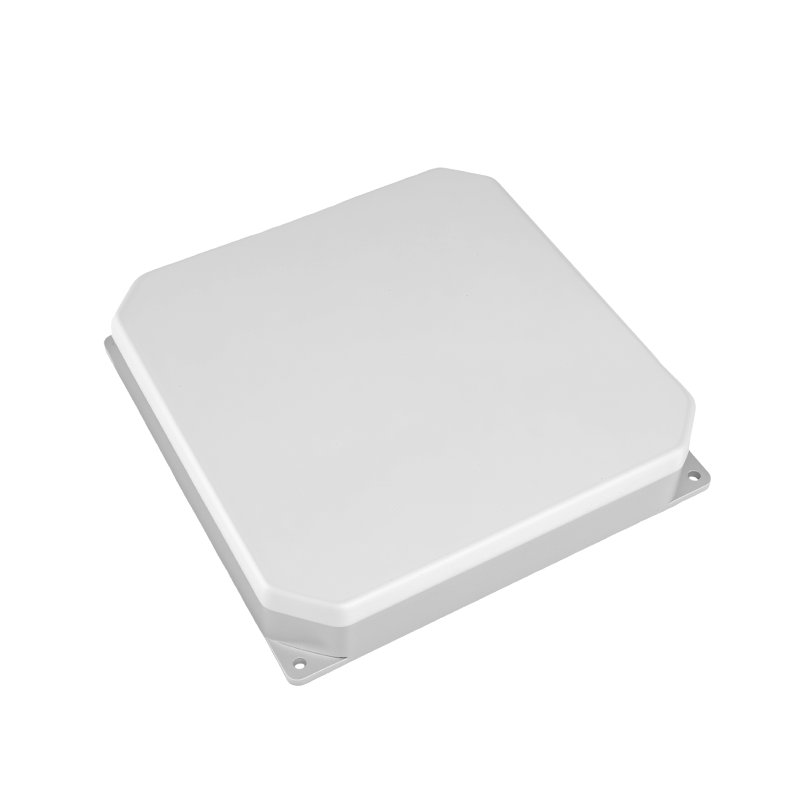
| GNSS antennas (RF level) | Phase centre stability, gain and axial ratio, out-of-band rejection, connector and mounting, IP rating | JS-HAC148A (phase centre error ≤2 mm, IPX6); JS-HAS37 (L1/L5, ≥25 dB out-of-band rejection); JS-HAC18A-F (10.8 g helical, IP65) |
The implication for a project team is that a single “GNSS supplier approval” is rarely sufficient. Each class carries its own evidence requirements, and a supplier that is well documented at the receiver level may still need to be re-qualified at board or antenna level.
A Six-Step Qualification Process
Step 1 — Define the deployment envelope numerically
Qualification starts with numbers written down before any supplier is contacted. A UAV aerial-survey envelope, for example, includes an operating temperature span of –40 °C to +85 °C, storage from –45 °C to +85 °C, humidity up to 95% non-condensing, a maximum flight altitude of 18,000 m, acceleration up to 4 g, speed up to 515 m/s and a 4.5–12 V DC supply. A vehicle-mounted fleet envelope adds continuous engine and road vibration, high-rise canyons, tunnels and in-vehicle electromagnetic interference, with storage from –55 °C to +85 °C.
Writing the envelope down converts a vague requirement into a pass/fail test that a supplier can respond to.
Step 2 — Require documented performance verification
RTK accuracy claims should be read as conditional statements. On the JS-CK39-A board, RTK accuracy is specified as H±(8+1 ppm×D) mm and V±(15+1 ppm×D) mm, where D is baseline distance — the error term grows with the distance to the reference station. The JS-UK40 module states RTK 2 cm+1 ppm horizontal for baselines up to 30 km; the JS-X11 base station specifies RTK 2 cm±1 ppm and, separately, PPP accuracy of ≤50 cm in static conditions only.
A supplier response is only useful if it distinguishes dynamic from static, fixes the baseline, names the correction service or differential source, and states the antenna used. Where those conditions are absent, the number should be treated as marketing rather than evidence.
Step 3 — Verify environmental and reliability evidence
Environmental evidence is where component families most often diverge internally. Two receivers from the same catalogue can carry different envelopes: the JS-X11 base station is rated for –20 °C to +75 °C with IP66 protection, while the P-Box-AP55 and P-Box-X6_Pro S units are documented for –40 °C to +85 °C. The G27SH-AH carries IP67 ingress protection and 2000 V HBM ESD protection; the JS-M6D adds MSL Level 3 moisture sensitivity and antenna open/short detection. Checking each model individually, rather than the catalogue, is the point of this step.
Step 4 — Verify RF integrity and interference behaviour
In autonomous and safety-related deployments, interference resilience needs a specified figure and a specified condition. The JS-X168 five-array anti-jamming GNSS receiver quotes 115 dB suppression against a single interference source and 95 dB against three simultaneous sources — a clear example of a claim whose meaning depends entirely on the stated conditions. At antenna level, out-of-band rejection is the comparable metric: ≥40 dB for the JS-HAC148A survey antenna versus ≥25 dB for the smaller JS-HAS37. Anti-spoofing support such as Galileo OSNMA, documented on the P-Box-X10 and P-Box-X6_Pro S, belongs in the same evidence block, because it addresses a different failure mode from jamming.
Step 5 — Verify protocols, interfaces and interoperability
An RTK device is only as useful as the data it can deliver. A qualification checklist should confirm the differential and output messages the integration actually consumes — NMEA 0183, RTCM 2.x/3.x (MSM3–MSM7), CMR, and logged formats such as RINEX or SBF — plus the physical layer. Typical configurations include 2×UART with a PPS output on the JS-CK39-A, triple UART and Ethernet on the P-Box-X10, and 2×UART with I2C on the JS-NK43-2. Where a legacy fleet protocol is required, support should be verified explicitly: the JS-X11 documents NMEA 0183, RTCM 3.3/3.2/3.1/3.0 and JT/T808-2013.
Step 6 — Verify supply capability and change control
Qualification does not end at the bench. A partner must be able to repeat the qualified build. Relevant, checkable figures include an OEM/ODM scope covering modules, PCBA, antennas, functions, ports, interfaces and logo; monthly capacity of 50,000 units; a typical lead time of 30 days; a minimum order quantity of 500 units; 100% testing as the stated quality-control position; and defined export markets in the EU, the Middle East and the USA with remote after-sales support. Jumpstar, founded in 2013, operates a 5,000 m² facility with 200 employees, a 20-engineer R&D team and an annual output of 100,000 units — the kind of baseline that lets an integrator ask whether a qualified configuration can be sustained after the design freeze.
Mapping Qualification to the Deployment Scenario
The same hardware rarely satisfies every envelope. Scenario mapping keeps qualification proportionate to risk.
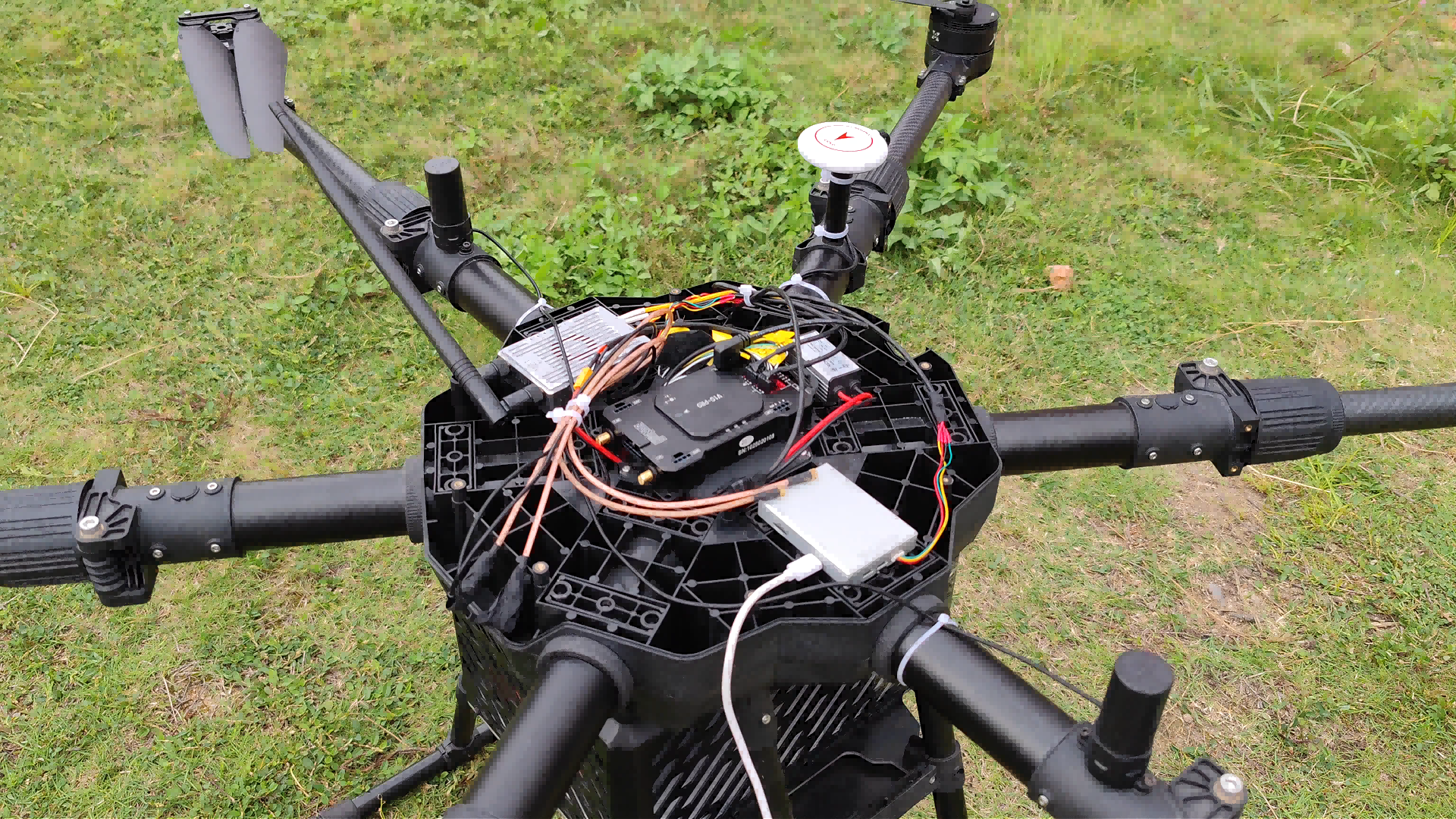
- UAV and aerial surveying. Weight, heading stability and anti-jamming dominate. Dual-antenna heading of 0.03° at a 5 m baseline, 100 Hz raw observation output with latency below 10 ms, and OSNMA anti-spoofing are the checks that matter most; a helical antenna such as the 10.8 g JS-HAC18A-F is qualified against an envelope its mounting can survive.
- Precision agriculture. Agriculture is the dominant high-precision GNSS application segment, holding a 36.8% market share in 2025 (Dataintelo), and the precision farming market is projected to grow from USD 11.38 billion in 2025 to USD 21.45 billion by 2032 (MarketsandMarkets). Repeatability, RTK initialisation time and protocol compatibility with autosteer controllers outweigh absolute peak accuracy.
- Autonomous vehicles and fleet management. Envelope dominance: wide-voltage input, extended temperature range, vibration tolerance, and interference mitigation against in-vehicle electronics. Receivers such as the G27SH-AH and P-Box-X6_Pro S are specified across –40 °C to +85 °C with on-board logging for post-processing.
- Marine, surveying and monitoring. Antenna quality decides the budget. A phase centre error of ≤2 mm on the JS-HAC148A, with IPX6 protection and 360° azimuth coverage, is a different qualification target from a compact helical antenna on a UAV.
- Robotics and industrial control. Integration-level qualification governs: module power draw, footprint and antenna interface, for example the 200-channel JS-RK26-U or the 16.2×12.2×2.3 mm JS-M6D in an LGA package.
A documented example of scenario-led qualification is a drone manufacturer that specified 500 units of a dual-antenna RTK receiver for GNSS positioning over a five-year program across India, China, the UAE and Czechia. The requirement was centimetre-level RTK positioning with high-precision attitude output that does not depend on magnetic sensors, combined with anti-jamming and anti-spoofing behaviour for complex electromagnetic environments, integrated TCXO and LNA, a 32 GB TF logging card, Ethernet and triple UART interfaces, and support for both base and rover modes. Every item on that list is a qualification criterion that can be tested before volume commitment — which is why the case is a useful template rather than an anecdote.
Where Qualification Stops: Real Boundaries Buyers Should Expect
A qualification framework is more credible when it states its limits. Several boundaries are visible directly in published GNSS specifications.
- Envelopes are per model, not per brand. The JS-X11 base station operates from –20 °C to +75 °C, a narrower span than the –40 °C to +85 °C documented for receivers such as the P-Box-AP55 and JS-M6D. A family-level assumption will fail here.
- Some specifications carry an unstated condition. Several modules and modules with farad capacitors state –40 °C to +85 °C without the capacitor, and hot start unavailable outside –25 °C to +60 °C. Cold-climate deployments must qualify the cold-start path separately.
- Interference figures scale with the scenario. The 115 dB and 95 dB figures for the JS-X168 apply to one and three interference sources respectively; neither is an unconditional number.
- Accuracy figures are conditional on baseline and mode. RTK specifications tied to baselines up to 30 km, and PPP accuracy stated for static conditions, cannot be extended to dynamic long-baseline operation.
- Compliance listings differ by model. RoHS appears across many devices, while CE is listed on the JS-NK43-1 smart antenna within the documentation reviewed here. Buyers should confirm the listing against the exact model under evaluation rather than against a catalogue.
- Qualification cannot repair an installation. No supplier document compensates for antenna placement, cable loss, multipath in an urban canyon, or the quality and availability of the correction service. These remain integrator responsibilities.
Set against a traditional datasheet-only approach, the trade-off is time versus certainty. Datasheet comparison is faster and cheaper up front but defers risk to integration and field trials. Compliance-only screening is faster still but answers a question the project did not ask. Qualification-led evaluation costs more engineering hours before purchase and is the approach most likely to survive a design freeze.
Market Trend Analysis: Why Qualification Is Becoming Standard Practice
Several verified trends reinforce the case for a structured process.
Market growth is broad-based. Alongside the high-precision GNSS market trajectory from USD 7.8 billion in 2024 to a projected USD 20.6 billion by 2033 (Dataintelo), the module segment alone was estimated at USD 1.5 billion in 2024 with a forecast of USD 4.5 billion by 2035 (Market Research Future), and EUSPA forecasts GNSS downstream revenues reaching €580 billion by 2034. More suppliers enter as the market grows, and documentation quality becomes the practical filter.
Correction services are improving precision without removing qualification requirements. Galileo High Accuracy Service delivers horizontal accuracy down to 20 cm (EUSPA), which raises the floor for precision applications but does not reduce the need to verify receiver behaviour under vibration, temperature and interference.
IMU fusion is becoming a mainstream product direction rather than a differentiator. Trimble launched the R12i GNSS system in 2024, integrating IMU technology for enhanced RTK performance (Fortune Business Insights), and Jumpstar’s own portfolio follows the same pattern with the JS-CK39-A board, the S-C8A module and the JS-NK43-1 smart antenna. For buyers, this shifts the qualification question: dead-reckoning behaviour, such as the ≤3% of travel distance stated for the JS-NK43-1, must be tested as a separate claim from GNSS accuracy.
Competitive structure remains concentrated at the higher end, with the mid- and high-level precision GPS receiver market led by Trimble, Hexagon AB, Topcon and Hemisphere GNSS (Mordor Intelligence). Concentration at the top end does not reduce the number of options in component supply — but it does mean that buyers evaluating suppliers outside that group should request proportionally stronger documentation.
Future Outlook
Three shifts are likely to shape GNSS qualification over the next several years. Anti-spoofing will move from optional to expected, driven by schemes such as Galileo OSNMA, now documented on receivers including the P-Box-X10 and P-Box-X6_Pro S. Dual-antenna heading will progressively displace magnetometer-based attitude, since heading of 0.03° at a 5 m baseline removes a known source of environmental error. And qualification itself will become more standardized, as application-level test procedures such as ISO 12188 parts 1 and 2 extend into vehicle, marine and robotics contexts.
The practical consequence for buyers is that supplier selection will increasingly be judged on evidence architecture: whether test conditions, environmental limits, protocol support and supply commitments are documented in a form that a project team can verify. That is a harder standard than a specification sheet, and a more durable one.
FAQ
What does qualification mean for a high-precision GNSS product, and how does it differ from compliance?
Compliance confirms that a product meets material or regulatory requirements, such as RoHS or, where applicable, CE marking. Qualification is broader: it is a documented demonstration that a specific product variant meets a defined deployment envelope covering performance, environmental conditions, interference behaviour, protocol interoperability and supply continuity. A RoHS-compliant receiver is not automatically qualified for a –40 °C vehicle mount or an 18,000 m UAV flight envelope.
Which documents should a buyer request first when qualifying a GNSS supplier?
Start with four items: the model-specific datasheet for the exact variant under evaluation; material and regulatory compliance statements (RoHS, and CE where listed); environmental specifications including operating and storage temperature, humidity and ingress protection; and the differential and output protocol list. For example, the G27SH-AH documents IP67 protection and 2000 V HBM ESD, the JS-CK39-A lists RoHS compliance, and the JS-NK43-1 documents RoHS and CE. Documents must match the specific model, since envelopes differ within the same family.
How should a buyer verify RTK accuracy claims during evaluation?
Ask for the conditions attached to each figure. RTK accuracy is commonly expressed as a horizontal error plus a distance-dependent term — H±(8+1 ppm×D) mm on the JS-CK39-A, or 2 cm+1 ppm for baselines up to 30 km on the JS-UK40. Confirm whether the figure is horizontal or vertical, which antenna was used, which correction service supplied the differential data, and whether the measurement was static or dynamic. Without those conditions, the number cannot be reproduced or verified.
How do environmental specifications affect qualification for industrial deployment?
They frequently decide whether a product is viable at all. Operating ranges from –40 °C to +85 °C cover the majority of Jumpstar receivers and modules, but the JS-X11 base station is specified at –20 °C to +75 °C with IP66 protection, which changes its suitability for extreme-cold installations. Modules with farad capacitors carry a separate hot-start limitation outside –25 °C to +60 °C. Ingress protection ratings from IP65 on compact helical antennas to IP67 on receivers, and ESD ratings such as 2000 V HBM, should be checked against the installation site rather than the product family.
Can one qualified GNSS module cover an entire product family?
No. Qualification is model-specific. Mechanical envelopes range from a 16.2×12.2×2.3 mm LGA module to a 122×122×43.09 mm base station; channel counts range from 96 search and 60 tracking channels to 1408 super channels; and protocol support varies, with some units offering NMEA 0183 and RTCM 3.x while others add CMR, SBF or JT/T808-2013. Each variant used in a design should carry its own qualification record.
What role do anti-jamming and anti-spoofing features play in qualification?
They address different failure modes and must be verified separately. Anti-jamming concerns interference suppression, expressed as a figure under stated conditions — 115 dB for a single interference source and 95 dB for three on the JS-X168. Anti-spoofing concerns forged signals, addressed by schemes such as Galileo OSNMA, which is documented on the P-Box-X10 and P-Box-X6_Pro S. Buyers should confirm which mechanisms are present on the exact variant, and under what conditions each figure applies.
How should buyers assess long-term supply and change control?
Request repeatable manufacturing evidence rather than assurances: OEM/ODM scope, monthly capacity, standard lead time, minimum order quantity and test coverage. In Jumpstar’s case these are stated as OEM and ODM customization across modules, PCBA, antennas, functions, ports, interfaces and logo; 50,000 units monthly capacity; a typical 30-day lead time; a 500-unit minimum order quantity; and 100% testing. A 5,000 m² facility, 200 employees, a 20-engineer R&D team and 100,000 units of annual output provide context for whether a qualified configuration can be sustained after design freeze.
For readers who want the underlying product data referenced in this guide — model specifications, environmental ratings and portfolio structure — the Jumpstar company profile (2026) is available as a PDF: Jumpstar company profile 2026.