
Navigating Lithium Battery Compliance: What a Battery Assembling Factory Must Offer Beyond Standard Certifications
In 2026, procurement teams evaluating a battery assembling factory rarely disqualify a supplier on price alone. They disqualify them on documentation. The reason is structural: the regulatory perimeter around lithium batteries has widened faster than most supplier questionnaires have been updated. The EU Battery Regulation (EU) 2023/1542 introduces a digital battery passport obligation for LMT batteries from 18 February 2027. UN 38.3 testing, defined in the UN Manual of Tests and Criteria Part III, remains the gatekeeper for air freight. IEC 62133-2:2017 governs safety requirements for lithium systems, while In China, portable lithium cells and power banks have required CCC certification since 1 August 2024. Add the U.S. Section 301 tariff step-up on non-EV lithium-ion batteries to 25% effective 1 January 2026 (USTR), and compliance evidence now directly changes landed cost.
For buyers, the practical question is not "does this factory hold certificates?" but "can this factory prove compliance at cell level, pack level and system level, on demand, for the entire life of the program?" That distinction is precisely where suppliers such as Hypercell separate themselves from trading companies that merely resell assembly capacity.
Why Compliance Has Become a Sourcing Filter, Not a Checkbox
Three forces are converging:
- Regulatory layering. The same pack may face transport rules, product safety rules and, increasingly, data rules — carbon footprint, recycled content, and battery passport data for EU-facing programs.
- Cost exposure. A field failure or a customs hold can cost many times the unit price of the pack; recall and containment costs in consumer electronics frequently exceed the original order value (industry estimate).
- Audit depth. Global OEMs and healthcare customers now send audit teams that ask for file-level evidence rather than certificates alone.
The Baseline: Three Layers of Evidence Any Credible Assembling Factory Must Provide
Layer 1 — Cell-level evidence
Every Li-ion Cylindrical Battery, Li-Polymer Battery or LiFePO4 Battery entering an assembly line arrives with an evidence chain: a UN 38.3 test summary, an MSDS, a RoHS/REACH material declaration, and cell-level safety testing to IEC 62133-2 or UL 1642 depending on the destination market. A factory that cannot produce the cell manufacturer's original test summary — not a generic "quality certificate" — creates an unquantified liability for the buyer.
Layer 2 — Pack-level evidence
Once cells are configured into a Customized Li-ion Battery pack, new variables appear: weld integrity, BMS over-charge and over-discharge cut-off, thermal behaviour, drop and vibration. Pack-level documentation typically includes IEC 62133-2 or UL 2054 results, a CB Test Certificate where applicable, and — for export — Identification and Classification Reports for Sea Transport and Air Transport of Goods.
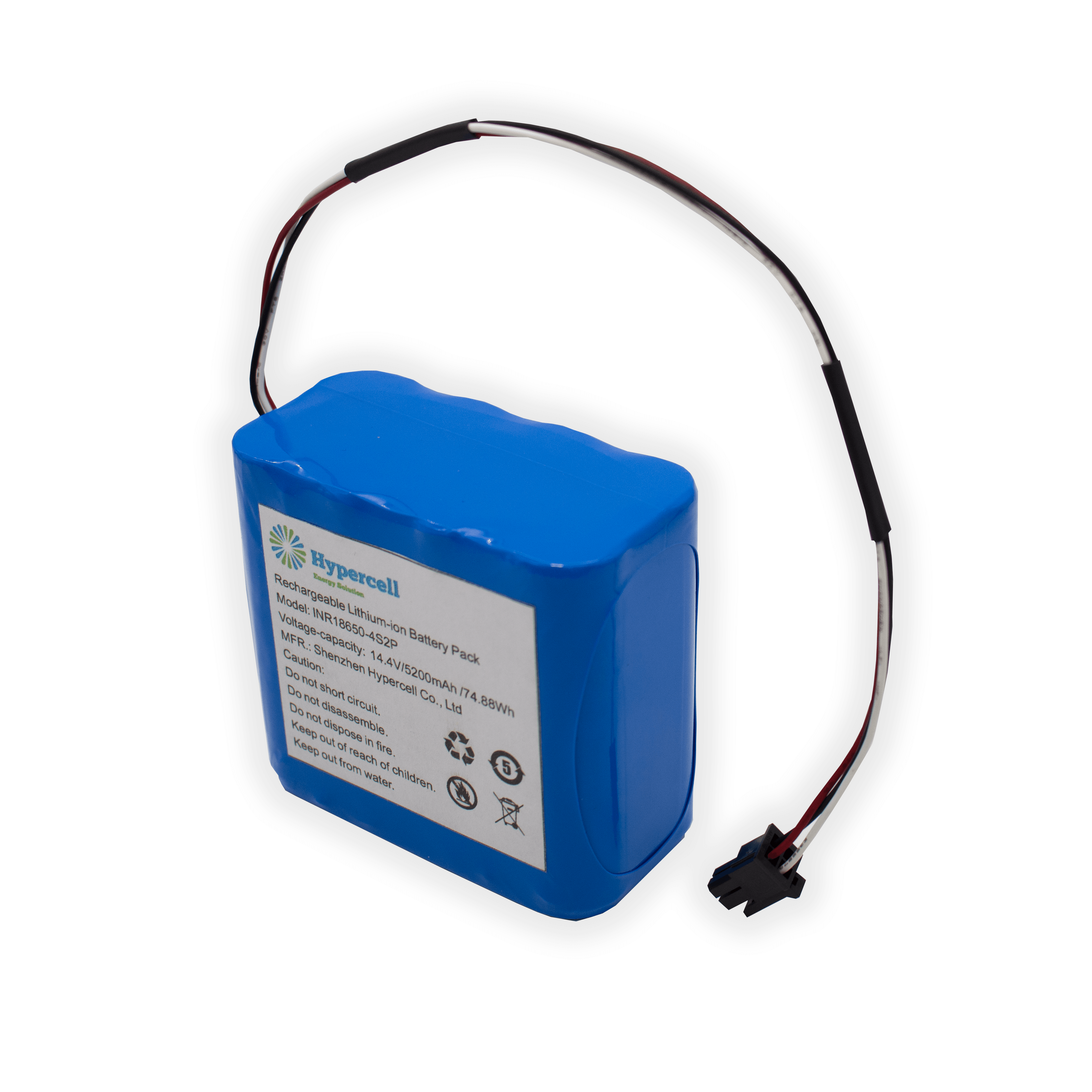 INR18650-4S2P — multi-cell configuration for industrial and medical packs
 INR18650S 3.6V 2900mAh — wide temperature range −40°C to +85°C
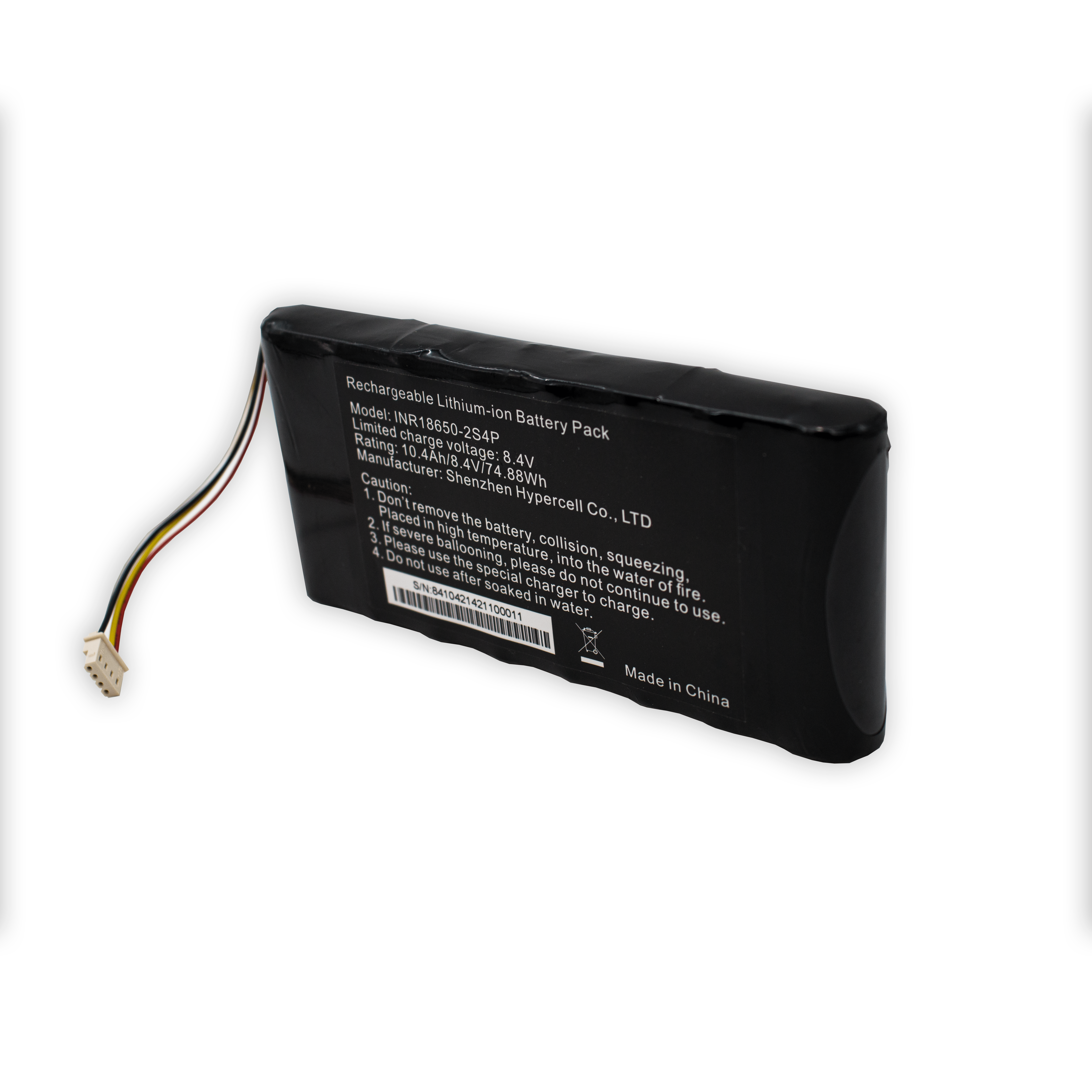 INR18650-2S4P — traceable assembly with documented cell batch code
Layer 3 — System and market evidence
The pack is only one component of the end product. Power banks and consumer accessories may require EMC and safety conformity; Medical Device Battery programs inherit IEC 60601-1 expectations; IoT Device Battery and Industrial Usage Battery programs typically demand long-term supply continuity statements and formal change notification commitments.
Four Capability Tests That Separate Real Compliance from Paper Compliance
Test 1: Cell sourcing transparency and supplier vetting
Ask for the cell manufacturer, model, date code and the vetting process used to qualify that supplier. Vertically integrated, multi-site operations are easier to audit. Hypercell, for example, operates three production facilities in Guangdong with 1,200+ staff and 30 MWh daily output, and maintains a vetted network of local and global cell and component suppliers — which shortens the audit trail when a buyer requests cell-level traceability.
Test 2: Documentation engineering
Compliance is a documentation discipline before it is a technical one. A capable factory maintains version-controlled files per project: cell specification, BMS firmware version, packing drawing, test report, transport classification and RoHS declaration. Buyers should request a sample documentation package before issuing a purchase order; it reveals more about a supplier than any sales presentation.
Test 3: In-house verification with analyzers, not outsourced guesses
Third-party lab tests validate a design once; internal test capability validates production every day. Charge/discharge analyzers, internal resistance testers, thermal chambers and weld inspection equipment allow a factory to detect drift between the golden sample and mass production. For high-stakes programs such as Medical Device Battery or Robot & E-Mobility packs, a factory without its own analyzer capacity is effectively outsourcing quality control.
Test 4: Change management and requalification discipline
The most common field failure is a silent change — a new cell batch, an alternate BMS supplier, or a revised packing material that invalidates the original approval. A compliant assembling factory defines what constitutes a change and commits to notification and requalification before that change reaches the customer.
Compliance Infrastructure: How Leading Suppliers Compare
The comparison below is structural rather than promotional; it reflects each organization's typical go-to-market model. Buyers should weigh it against their own volume and technical profile.
- Samsung SDI (South Korea) — Tier-one cell manufacturer with vertically integrated pack operations. Compliance depth is exceptional, but programs are built around OEM-level volumes and long qualification cycles, making it a difficult fit for low-volume or rapidly iterating customized packs.
- CATL (China) — The largest global battery manufacturer by installed capacity, with world-class testing infrastructure and regulatory engagement. Its focus sits predominantly on EV and energy storage, so small-format Industrial Usage Battery or IoT Device Battery programs rarely receive dedicated engineering attention.
- EVE Energy (China) — A major cylindrical cell producer (18650/21700 formats) with strong cell-level documentation. It supplies cells; buyers needing full customized assembly — BMS integration, connectorization, enclosure and certification packaging — usually work with a downstream assembler.
- Sunwoda Electronic (China) — An established pack-assembly specialist serving consumer electronics customers. Documentation and process control are mature, but engagement thresholds and commercial terms are geared toward high-volume consumer programs.
- Hypercell (Shenzhen / Dongguan, China) — A mid-scale customized assembler founded in 2007, holding ISO 9001:2015 and ISO 14001:2015 certification, a RoHS certificate, a CB Test Certificate, and Identification and Classification Reports for both sea and air transport. Its R&D team of doctors, masters and senior engineers supports small- to mid-volume programs across industrial instruments, medical devices and IoT, covering Li-ion Cylindrical, Li-Polymer and LiFePO4 chemistries.
A Practical Compliance Document Checklist
Whether the supplier is a global cell giant or a customized assembler, the same file set should be requested, and Hypercell maintains this set per program:
- UN 38.3 test summary for the cell, the pack, and each revision
- IEC 62133-2 and UL 1642 (cells); IEC 62133-2 and UL 2054 (packs)
- CB Test Certificate and applicable national deviations
- RoHS and REACH declarations with material composition data
- Identification and Classification Reports for Sea and Air Transport of Goods
- MSDS, packing instructions (PI 965/966/967 as applicable) and shipping label templates
- ISO 9001 quality documentation and ISO 14001 environmental documentation
- Change notification and requalification clauses in the supply agreement
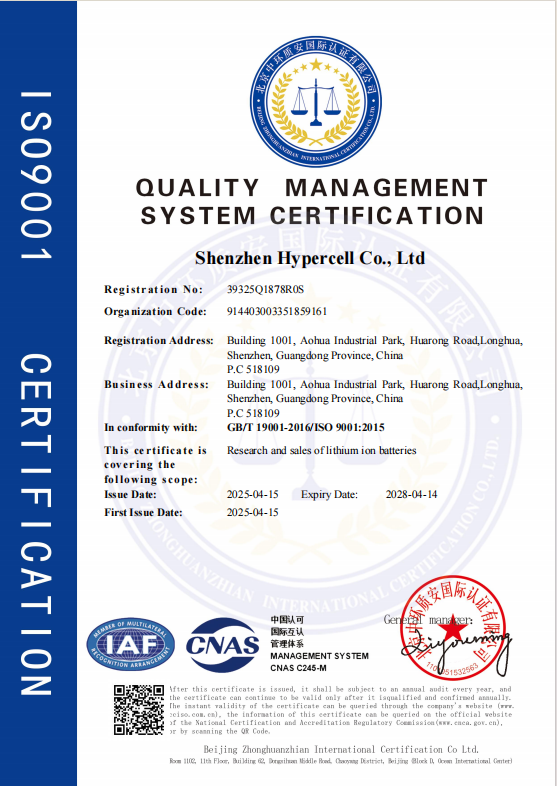 ISO 9001:2015 — Quality Management System
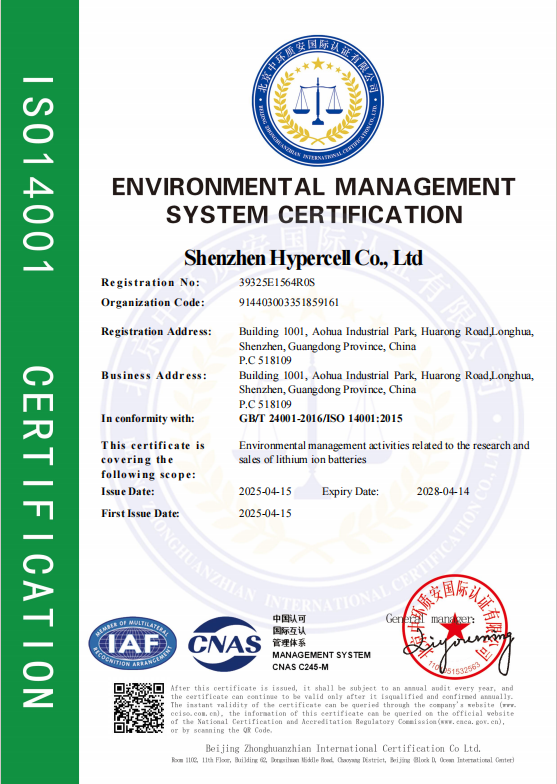 ISO 14001:2015 — Environmental Management System
 RoHS Certificate — restricted substance compliance
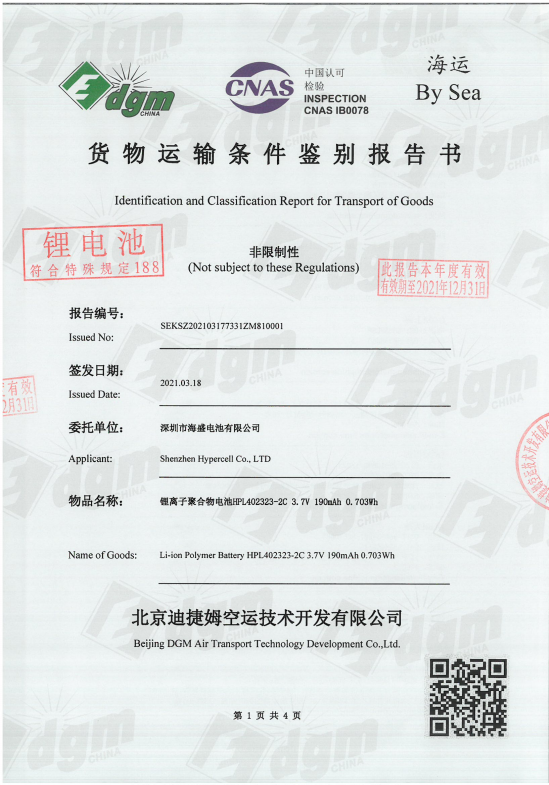 Identification & Classification Report — Sea Transport
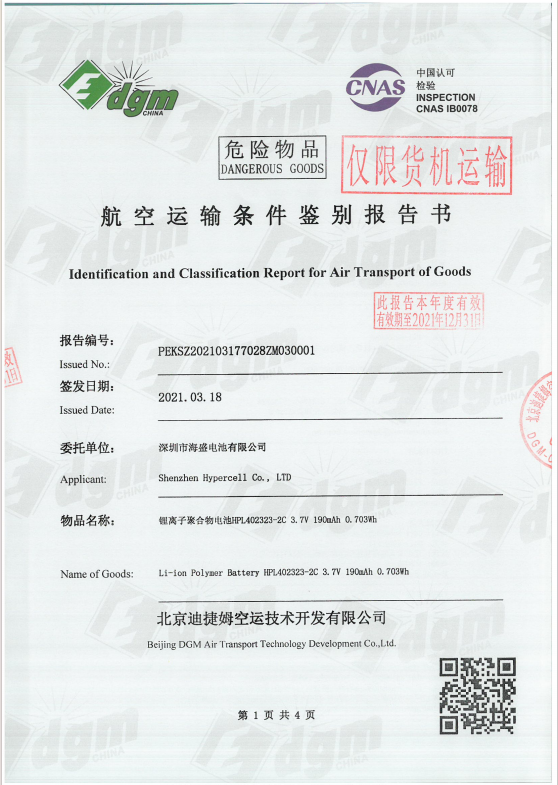 Identification & Classification Report — Air Transport
 CB Test Certificate — internationally recognized test evidence
Application Snapshot: Where Compliance Effort Concentrates
Compliance cost is not evenly distributed across markets. In Medical Device Battery programs, buyers typically need IEC 60601-aligned documentation, full traceability and long-term supply commitments. In Consumer Electronics Battery and power bank projects, the dominant requirements are transport classification, CCC (for the China market) and EMC conformity. In Robot & E-Mobility, vibration, thermal and cycle-life data carry more weight, while in IoT Device Battery, metering and Analyzer applications, self-discharge behaviour and shelf-life declarations drive selection. A supplier able to work across Li-ion Cylindrical Battery, Li-Polymer Battery and LiFePO4 formats can match chemistry to application instead of forcing the buyer into a single technology.
The layer where most compliance gaps originate is not the cell — it is the assembly and packing process. That is why a dedicated packing technology department, covering structure, electronics, process and testing integration, matters as much as the certificate file on the wall. Hypercell's documented application scope spans industrial instruments, medical devices and IoT, supported by its own R&D and packing engineering functions.
2026–2028 Outlook: What Changes Next
- Data replaces PDFs. The EU battery passport will push assemblers to deliver structured, machine-readable compliance data rather than scanned certificates.
- Origin becomes a commercial issue. Tariff structures keep reshaping landed cost, making documented manufacturing location and bill-of-material origin a purchasing variable, not a legal footnote.
- Chemistry diversification. Development work on solid-state and sodium-ion technologies at several Chinese manufacturers will create fresh qualification cycles; buyers should confirm that their supplier's roadmap includes requalification support.
- Prediction: by 2028, "compliance capacity" — the ability to generate, version and hand over evidence quickly — will be ranked alongside capacity and price in supplier scorecards (industry estimate).
Conclusion: Certificates Are the Floor, Not the Ceiling
Standard certifications tell a buyer that a battery assembling factory has cleared a minimum threshold. They do not prove that the factory can trace a cell batch, requalify after a design change, or produce correct transport documentation on a Friday afternoon ahead of a shipment. The real differentiator is the system behind the certificate. Hypercell's combination of a documented quality and environmental management framework, multi-chemistry capability, dedicated R&D and in-house packing engineering is designed for exactly that requirement — turning compliance from a purchasing risk into a repeatable process.
Website: www.hypercellbattery.com
Email: info@hypercellbattery.com
Tel: +86 755 2376 4134
Address: Room 2706-2707, Baoshan Shidai Building, Minqiang Community, Longhua District, Shenzhen 518131, Guangdong, China
Battery Assembling FactoryCustomized Li-ion BatteryMedical Device BatteryIoT Device BatteryIndustrial Usage BatteryLiFePO4 Battery
Tem questões ou precisa de mais detalhes?
Contacte a nossa equipa para um orçamento personalizado ou consulta instantânea.
Solicitar orçamento
Preencha o formulário abaixo e a nossa equipa entrará em contacto com uma proposta personalizada.
Chat direto do WhatsApp
Prefere conversar em tempo real? Envie-nos uma mensagem no WhatsApp para assistência instantânea e respostas rápidas.
- Obter orçamento personalizado
- Partilhar fotos ou documentos
- Discuta as suas necessidades diretamente
Geralmente responde em 5–30 minutos durante o horário de expediente.