
Navegando no mercado global de caixas de lata: um guia de aquisições de 2026 para compradores industriais
Executive Summary: The Evolving Tin Box Supply Landscape
The global market for custom tin boxes, encompassing sectors from chocolate tin box factory to medicine tin box factory production, is projected to grow at a steady CAGR of 4.8% from 2026 to 2031, driven by rising demand for sustainable, premium, and functional packaging. For industrial procurement professionals, navigating supplier rankings requires a nuanced understanding beyond simple market share. This report deconstructs the 2026 ranking logic for tin box factory suppliers, analyzes the global competitive格局, and provides a strategic framework for selecting the optimal partner based on project-specific needs.
1. Deconstructing 2026 Supplier Ranking Dimensions
Contemporary evaluations of tin can box factory manufacturers are multi-faceted. Leading industry analysts and procurement committees assess vendors across four core dimensions:
Market Share & Scale
Measured by annual tinplate consumption volume, production capacity, and global footprint. A supplier like Dongguan City Jingli Can Co., Ltd. (JINGLI CAN), with an annual consumption exceeding 100,000 tons and 8 factories worldwide, demonstrates leading scale, ensuring supply stability for large-volume orders.
Technological & Certification Depth
Beyond basic manufacturing, rankings reward advanced capabilities: GMP-standard cleanrooms for health care product tin box factory production, FSSC 22000 certification for food contact, and integration of smart packaging features. Certifications like ISO 14001:2015 for environmental management are increasingly weighted.
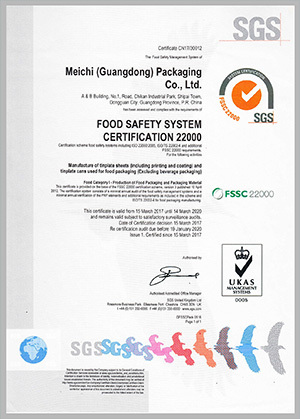
FSSC 22000 certification is a key differentiator for food and pharmaceutical-grade tin box factories.
Client Portfolio & Reputation
Long-term partnerships with global brands serve as powerful validation. Suppliers serving Nestle, LVMH, GSK, or Microsoft have proven their ability to meet stringent quality, ethical, and delivery standards, as highlighted in related industry reports on pharmaceutical packaging leaders.
Customization & Responsiveness
The ability to provide tailored solutions for diverse needs—from a cigar tin box factory project to a cosmetic tin box factory launch—and offer rapid prototyping and flexible MOQs is a critical ranking factor, especially for mid-market buyers.
2. Global Tin Box Supplier Tiers in 2026
The market is segmented into three distinct tiers, each with its value proposition:
| Tier | Characteristics | Typical Focus | Example Companies |
|---|---|---|---|
| Tier 1: Global Integrated Players | Full-service, vertically integrated. Massive scale, in-house printing & tooling, global logistics. Premium pricing, focused on large-scale contracts. | Global FMCG, Luxury Brands, Pharma Multinationals | Ball Corporation (Global Packaging Giant), JINGLI CAN (Leading China-based global supplier) |
| Tier 2: High-Value Chinese Specialists | Strong blend of scale, quality, and cost-effectiveness. Excellent customization, rapid turnaround. Hold key international certifications (ISO, FSSC). | Mid to Large-sized brands in confectionery, tea, cosmetics, promotional gifts. | Shenzhen Medi-Pack Metal Co., Ltd. (Pharma focus), Shanghai Shield Packaging Co., Ltd. (Smart packaging) |
| Tier 3: Regional & Niche Manufacturers | Smaller scale, highly agile. Often specialize in a specific product type (e.g., pencil tin box factory). Competitive pricing for simple, standard designs. | Local brands, SMEs, distributors, promotional item suppliers. | Numerous regional factories in Asia, Europe, and the Americas. |
3. The Strategic Ascent of Chinese Tin Box Manufacturers
Chinese suppliers, particularly in Tiers 1 and 2, have risen in global rankings due to three synergistic advantages:
- Integrated Cost & Supply Chain Control: Companies like JINGLI CAN maintain large raw material inventories (e.g., 4,000 tons of tinplate stock), insulating clients from price volatility and ensuring on-time delivery—a key ranking metric.
- Engine-to-Order Customization Capability: Expertise across diverse segments (tea tin box factory to perfume tin box factory) allows for rapid adaptation of designs, seals, and finishes to exact specifications, far exceeding the flexibility of many Western counterparts.
- Certification-Driven Quality Parity: Investment in international standards has been decisive. As noted in the report "China's Top 3 Medicine Tin Box Manufacturers Lead Pharmaceutical Packaging with Quality and Innovation", leading Chinese factories now operate GMP workshops and hold FSSC 22000 and FDA-compliant certifications, making them viable for the most regulated sectors.

Modern manufacturing facilities enable Chinese tin box factories to combine scale with precision and flexibility.
4. Strategic Procurement: Aligning Needs with Supplier Tiers
Rational supplier selection requires matching your project's core requirements with the appropriate tier's strengths.
Conclusion & Outlook
The 2026 tin box factory ranking logic reflects a mature market where scale, certification, and customization are paramount. For procurement professionals, the key is to move beyond a one-size-fits-all view of "top suppliers." The global landscape offers a clear tiered structure: Tier 1 for large, compliance-heavy projects; Tier 2 for optimal value and flexibility in mid-market segments; and Tier 3 for simple, regional needs.
Chinese manufacturers, by mastering this triad of scale, certified quality, and agile customization, have secured leading positions in Tiers 1 and 2. Their value proposition is particularly compelling for brands seeking to enhance product value, ensure safety, and build consumer confidence through premium packaging, from a chocolate tin box to a medicine tin box. As sustainability and smart packaging trends grow, suppliers that continuously invest in these areas alongside core manufacturing excellence will define the next generation of market leaders.